

Transport
During the past two weeks, we learned more about air, land and sea transport.
We have been working on our fine motor skills during arts and craft time by making a truck out of different shapes and then we learned more about the traffic light (red means stop, orange means slow and green means go) we made our own traffic light by sticking tissue paper in the right order.
During Numeracy, we played the road number game. The students loved using a toy car to trace the numbers that they are learning about. We had to start at the “go” sign and stop at the “stop” sign. By doing this they will have an in-depth sense of how shapes of numbers are formulated. We also used shapes to make different modes of transport. The students had great fun sorting the colourful blocks and making different modes of transport out of Play dough.
Literacy was all about the “t” and “p” sound. The students enjoyed tracing the sounds they have learned so far.
Martie van Dyk
Pre-Reception Teacher

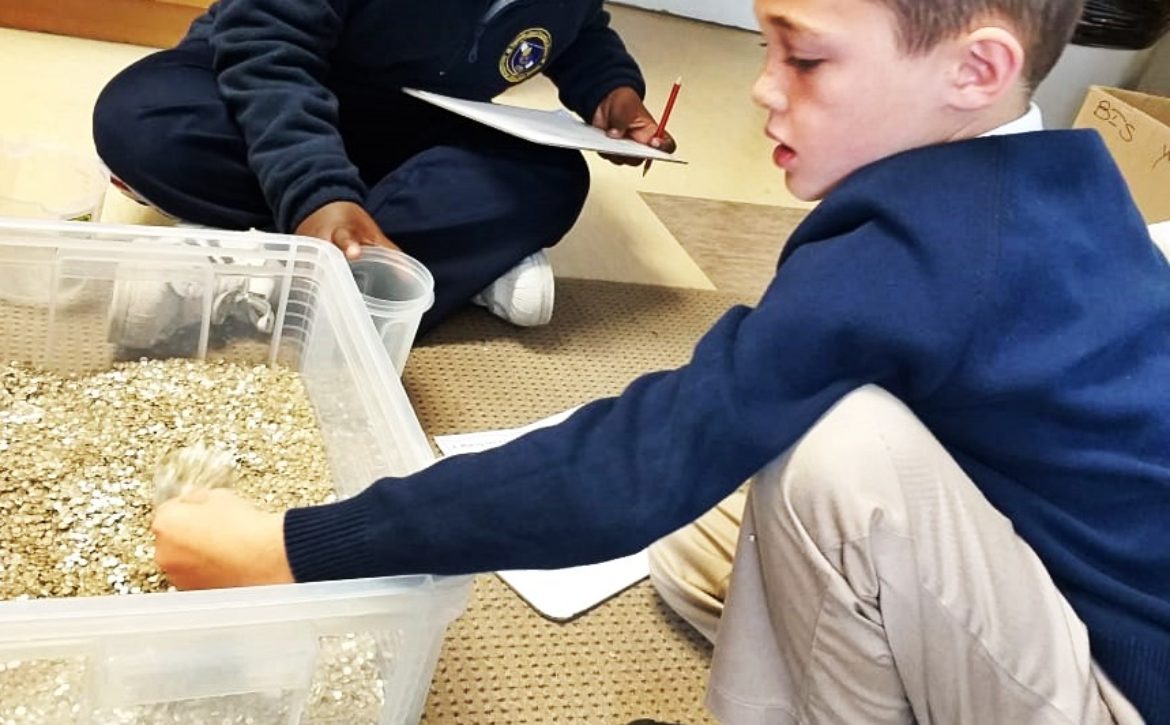

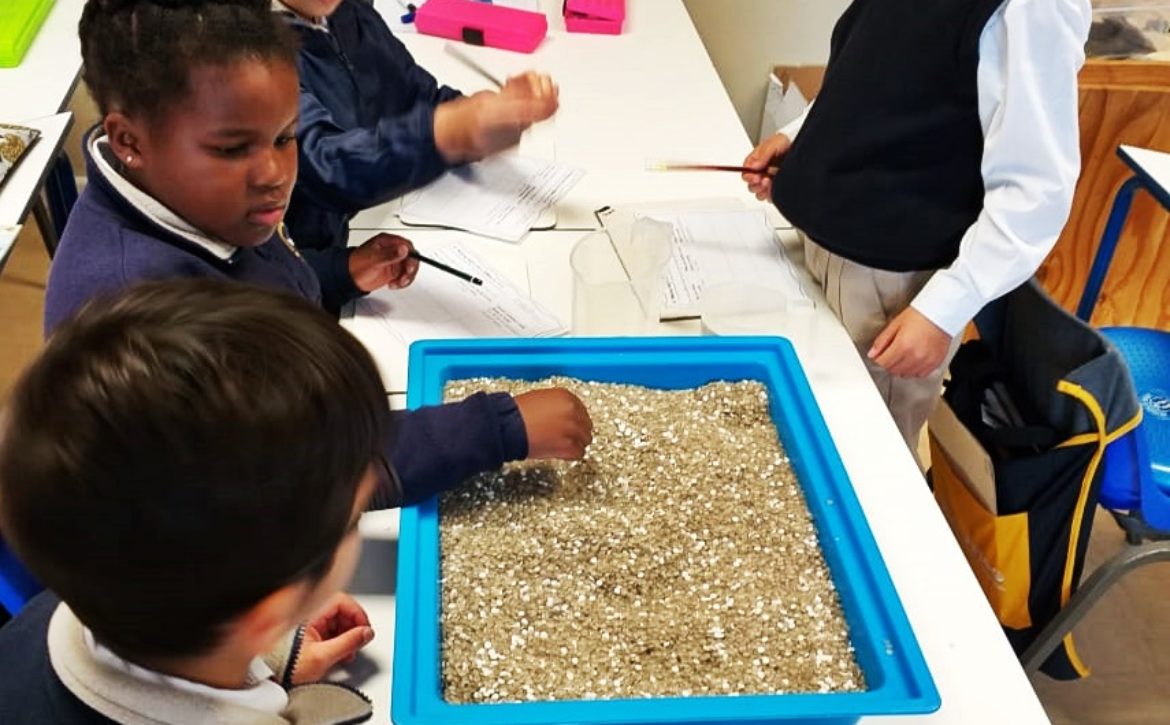

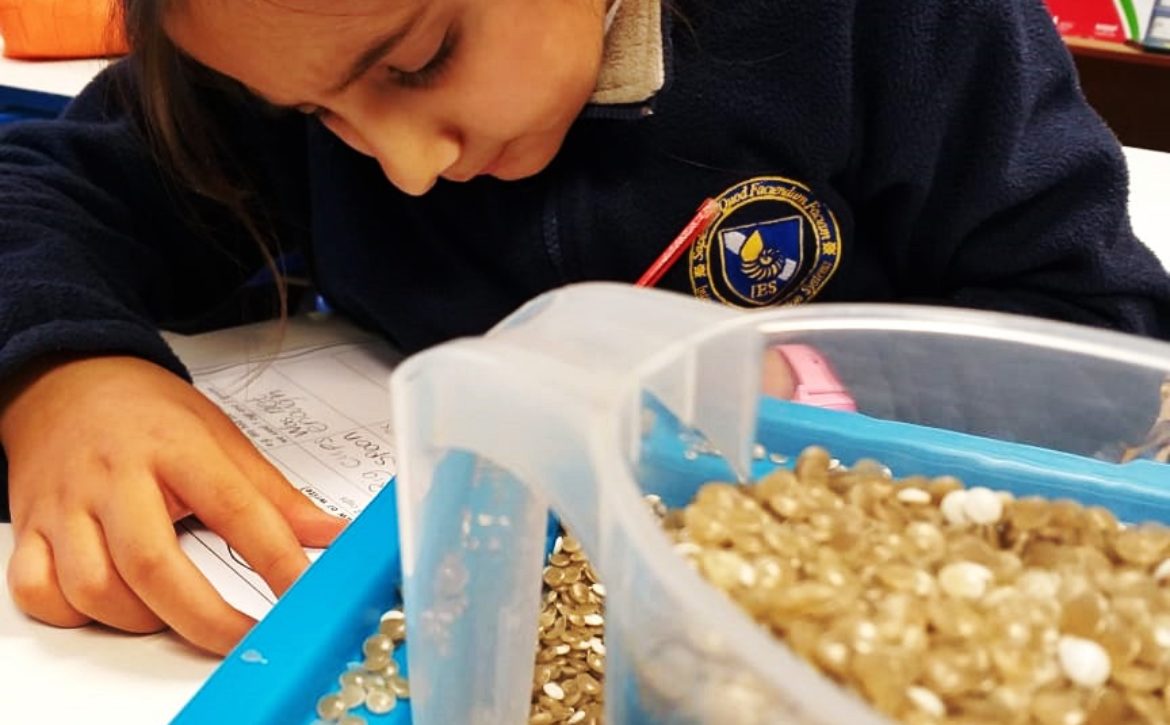
Capacity for Capacity
What is the difference between Volume and Capacity?
Capacity is the amount a container can hold if completely full to the brim.
Volume is the actual amount in the container e.g. 500ml.
The Year 2’s explored Capacity and Volume using different sized containers and “dragon tears” (plastic chips used in recycling plants). They were learning how to fill a container to the litre or half litre mark. Some students quickly put two and two together and discovered that two half litres make up one litre.
I must say, it was a joy as a teacher to watch the Year 2’s exploring and discovering on their own terms. Although the task was set out for them clearly, with the use of a worksheet to guide them, the rest of the learning was up to them.
This discovery learning approach, also described as Active Learning, has many benefits for students:
– It helps students to take charge of their own learning
– Students become independent thinkers
– Problem solving and intellectual abilities of students is enhanced
– Students are more motivated, interested and satisfied with what they are learning
Active Learning for the win!
Gillian Baker
Year 2 Teacher