
Yes, Year 9 students are allowed to focus on Photography for their IGCSE Art & Design course and it is not too late to start.
Do you love taking photographs and playing around with the images?
IGCSE Photography is for creative students who love photography and image manipulation. The photography coursework requirements are the same as the IGCSE Art.
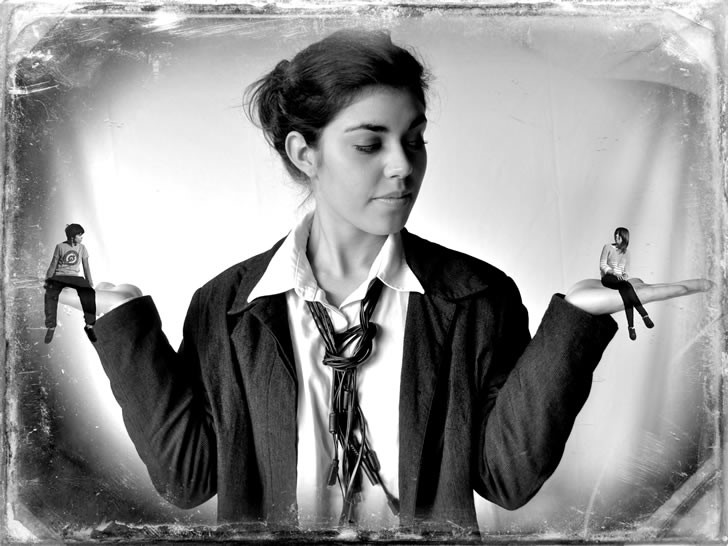
This image was awarded 1st place in the Youth Section at the Huntly Artz Festival in 2012. (Credit: Photography by Melissa Kelsey, ACG Strathallan. NZ. From www.studentartguide.com)

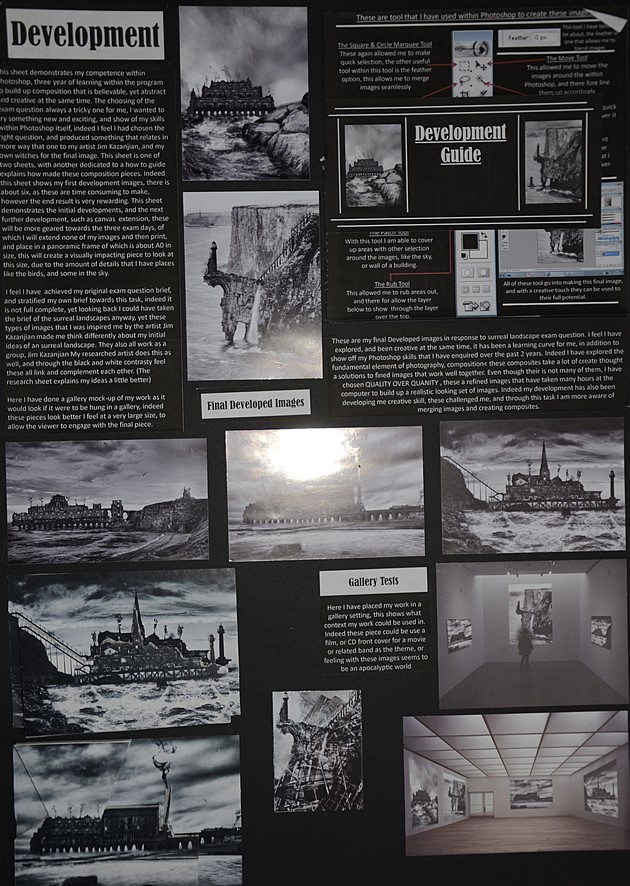
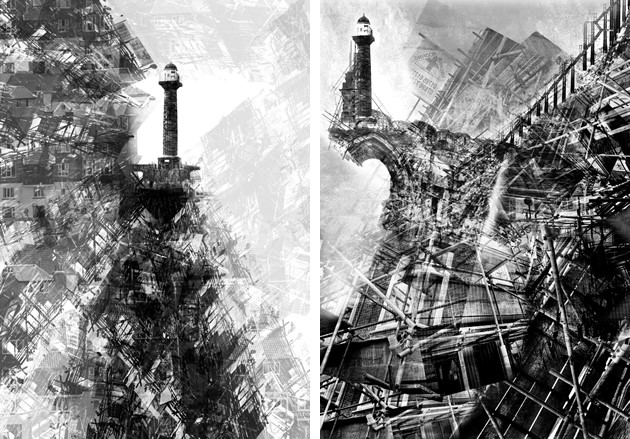

These coursework pages are excellent examples of how to approach a project in a riveting and original way: combining local imagery to create breathtaking fantasy scenes.
Students are required to research photographers and develop their own ideas. They will learn how to experiment with cameras, studio lighting and editing. They are required to have an entry level SLR camera with a standard 18-55 camera and access to a colour printer.
Candidates are taught how to use traditional and new media processes to produce outcomes such as photomontage, printed photography, and digital photography. Their photographic artworks will be in colour and black & white.
The Photography curriculum guides students in responding to the influences and characteristics of the world around them in creating photographic artworks. They explore the traditional and contemporary genres of photography and a range of techniques.
The curriculum includes the study of:
- Shutter speeds
- Aperture
- ISO
- Exposure
- Depth of field
- F-stop
- Digital editing and postproduction with Photoshop
All Art Photography candidates complete two components:
Component 1
This coursework is completed in Year 9 and 10 and counts 50% of their total mark. There are two parts to the coursework:
- a portfolio and
- a final outcome.
Component 2
This component is done in exam sessions in a total of 8 hours. Component 2 is completed in the third term of Year 10 and counts 50% of their total mark.
The four Cambridge assessment objectives count 25% each.
The Assessment Objectives (AOs) are:
- Record, 25%: Record ideas, observations, and insights relevant to intentions as work progresses.
- Explore, 25%: Explore and select appropriate resources, media, materials, techniques, and processes.
- Develop, 25%: Develop ideas through investigation, demonstrating critical understanding.
- Present, 25%: Present a personal and coherent response that realises intentions and demonstrates an understanding of visual language.
Riaan Vosloo
IGCSE, AS and A Level Art and Design Teacher
Read More
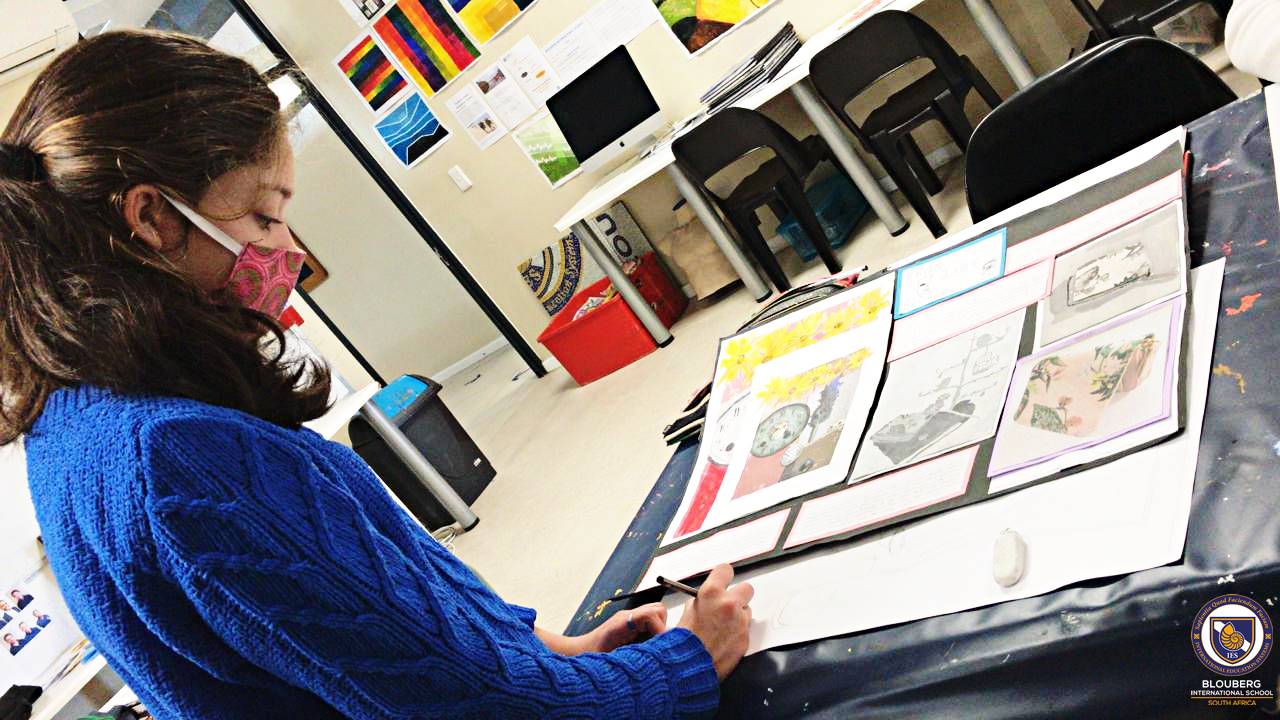
Not only drawing and painting
Cambridge Art and Design is not just one subject; it is many subjects. The syllabus covers a wide range of artistic activity divided into broad areas of study: Painting & related media, Non-traditional media, Mixed media, 3-D Painting, New Media, Printmaking, Three-dimensional studies, Photography and digital media, Graphic communication and Textile or Fashion Design and Craft design.
What is non-traditional media?
Non-traditional media include a wide range of modern materials that are used together or combined with traditional materials. They include collage, textiles, and waste materials. Collage artists often collect magazine photographs and coloured papers which enables them to choose a range of shapes and colours for their work.

BRC Designs’ Capped Out Chair consist of hundreds of salvaged bottle caps layered over a structure composed of 99% recycled steel finished with a white powder coating. The soda bottle caps are attached using zip ties, giving the chair a colourful and comfortable surface for sitting. The Capped-Out Chair is part of a collection also includes a spiky fruit bowl made from bottle tops and zip ties.

“The Scrabble Game, January 1”, 1983, David Hockney, photographic collage.
In the early 1980’s, English painter David Hockney began creating intricate photo collages that he called “joiners”. His collages consists of compositions made up of photographs.
3-D Painting
Combining painting with 3-D objects has been popular since Cubism. Picasso and Braque added small pieces of card, wood, and metal to their canvas. By painting this assemblage, the viewer must try and work out what is real and what is painted, and what is 2-D and what is 3-D.

One person’s trash can be another person’s treasure. Kirkland Smith makes assemblages with an overwhelming array of “found” objects. Smith’s assemblages have been displayed individually at environmental conferences and meetings, but more often are collected and displayed simply for their aesthetic appeal.
Three-dimensional studies
Three-dimensional (3-D) studies include a large variety of materials and approaches for creating art. These studies involve working in 3-D forms with one or more materials rather than on a flat, 2-D surface. This means you need to be particularly aware of space, volume, and form. 3-D studies can include: sculpture, ceramics, theatre and set design, environmental and architectural design, product design and craft design.
3-D studies can also overlap with other areas of art depending on which materials you work with. For example, a sculpture made of fabric might also be described as textiles.
Theatre design / Set design or Environmental / Architectural design
Theatre and set design involve creating ideas to support performances or productions of drama, dance, or music. This can include design work such as: a stage set or scenery, props or accessories, costumes, masks, and headdresses.
Like other areas of 3-D studies, you can present your work in various formats, including: photographs, digital images, scale drawings and 3-D scale models.
You can choose any aspect of theatre or set design as your focus, which will help to decide the materials and scale of your work. For example, if you enjoy working with fabrics and have an interest in fashion, you can design a costume for a character in a performance. Alternatively, you can make a stage set for a production as a scale model. You may also design the lighting for a stage production and consider what impact this has on the audience.

A set design for “Trick or Treat” by scenic designer, Michael Ganio.
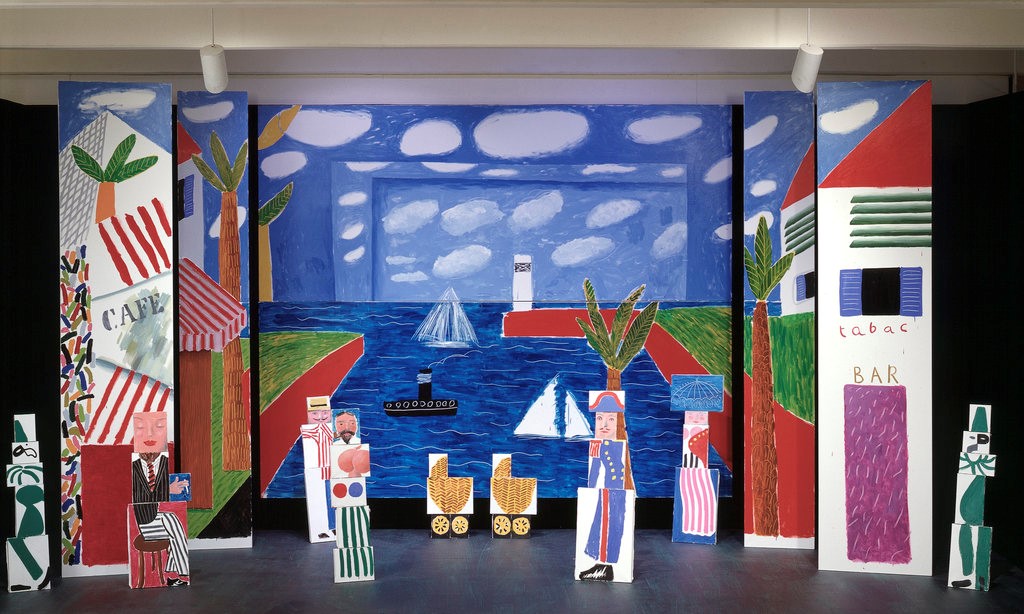
Small scale stage set design with painted environment with separate elements based on the set design for Poulenc’s opera, The Breasts of Tirésias, 1983 by David Hockney.
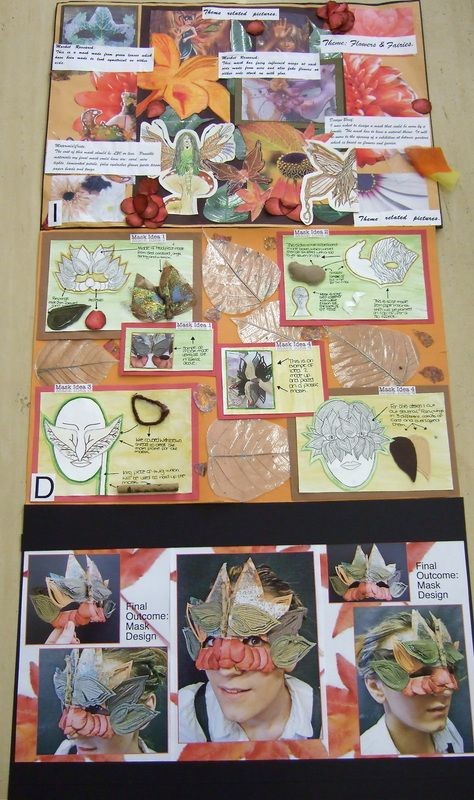
IGCSE design using craft to make designs for a mask.
What is environmental and architectural design?
Environmental and architectural design involves creating ideas on a large scale. It includes designing new buildings, structures, or spaces that people can use. This type of 3-D design is about enhancing the surroundings in which people live and work.
You could design for a domestic, commercial, or retail space, you might also consider designing a garden or landscape. Creating sustainable and environmentally friendly design can also be a consideration.

IGCSE Art project using corrugated cardboard
You can use the following techniques to present your work, or any other technique that you think is useful or relevant: scale models, scale drawings, CAD, and photo montage.
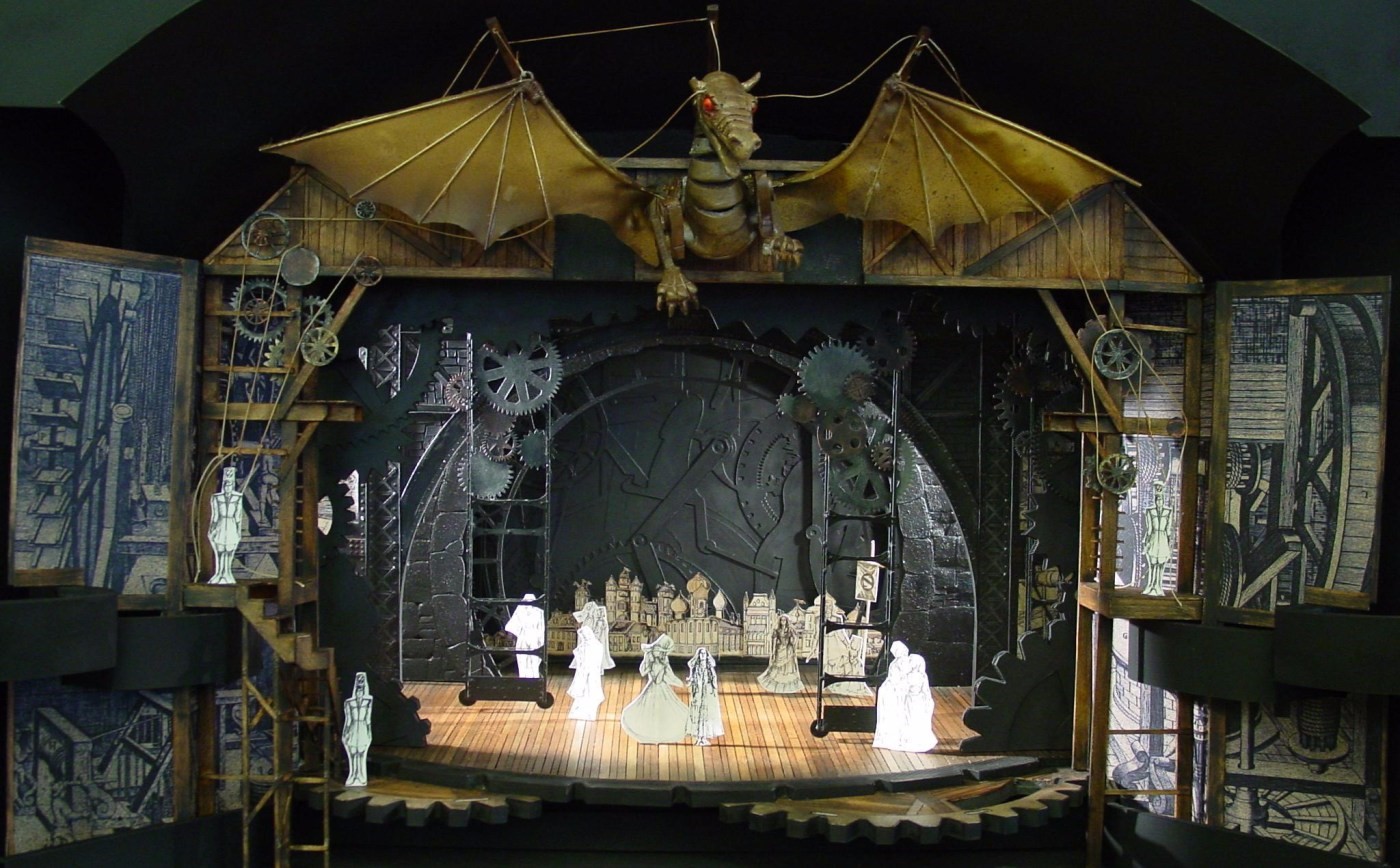
Set design for “Wicked” by Tony Award winner, Eugene Lee, and Edward Piece.
Product design
Product design involves inventing new items that are either functional, decorative or both. Most products overlap between the categories. Products are often created in response to a design brief. This means that the design of a product involves solving any problems and requirements that are necessary to fulfill the brief. This process includes selecting the right materials and making sure the product functions properly, as well as looks attractive. It must also include making sure that the product is cost-efficient.

Product designs

Product designs
Like other areas of 3-D design, product design can range in scale from small to exceptionally large. You may decide to design a large-scale product such as a piece of furniture, but you do not need to make a full-sized model. You can communicate your designs as a scale model. However, you do need to show your understanding of how the full-size product would be made. This should include any manufacturing processes or specific techniques that are required to make the outcome. You must also use 2-D techniques to record the various stages of your work and ideas.
Craft design
Craft design covers many types of skillful making by hand. Like most areas of 3-D studies, craft can be either functional or decorative, or both.
Examples of craft design are jewellery, wire and metalwork, paper mâché, mosaic, puppet-making and local craft such as basket weaving.

IGCSE Craft design
Jewellery
Jewellery is any sort of design object that can be worn on the body. It is usually fairly small scale but can also be quite large and elaborate. Consequently, jewellery is often linked with fashion design. Examples of jewellery are rings, necklaces or pendants, bracelets or bangles, earrings, and brooches or badges.
Traditional materials for making jewellery include wood, metal, glass, clay, precious stones and natural fibers or products such as shells, seeds, bone, or seedpods.
Modern materials and creative techniques use other materials such as plastic, paper, recycled materials, resin, and fabrics.
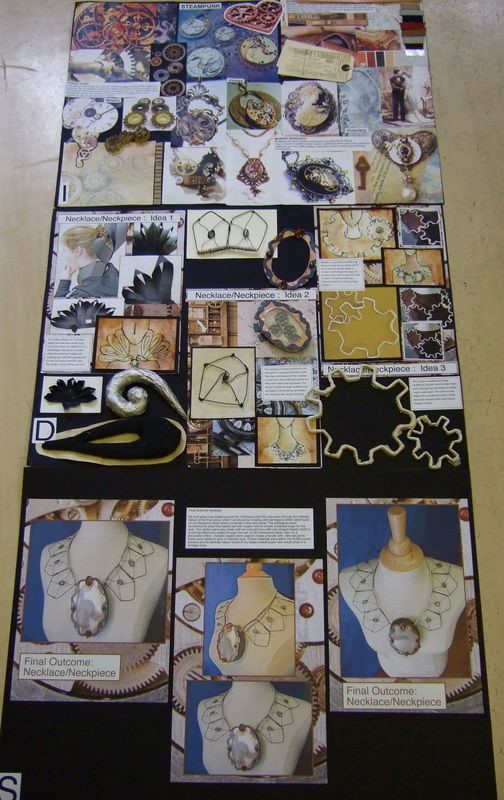
Jewellery design
The use of digital technology has also enabled some designs to be mass-produced. An example of this is plastic jewellery that has been laser-cut into a pattern so that the same design can be cut out in the same pattern lots of times.
Constructed textiles
Traditional textiles are made from yarns that are woven, knitted, crocheted, knotted, felted, or fused together. The yarns are placed close together to form a solid fabric, or spaced to form a more open structure. Constructed textiles can be large or small scale, handmade, or mass-produced by machine. They can be two-dimensional, like a carpet, or three-dimensional, like a yurt.
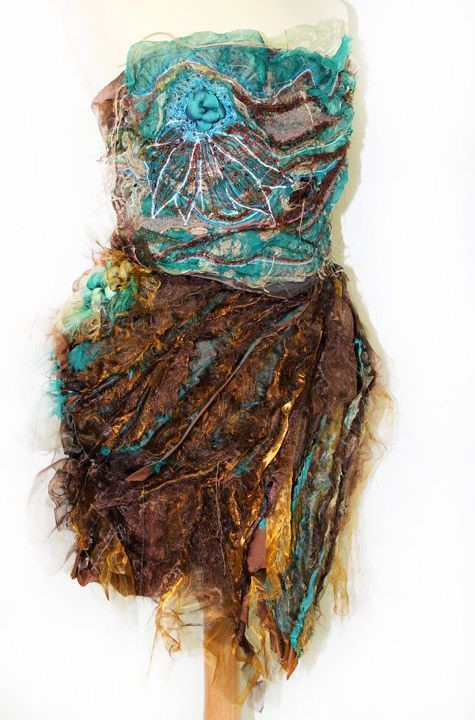
Fashion design with constructed textiles
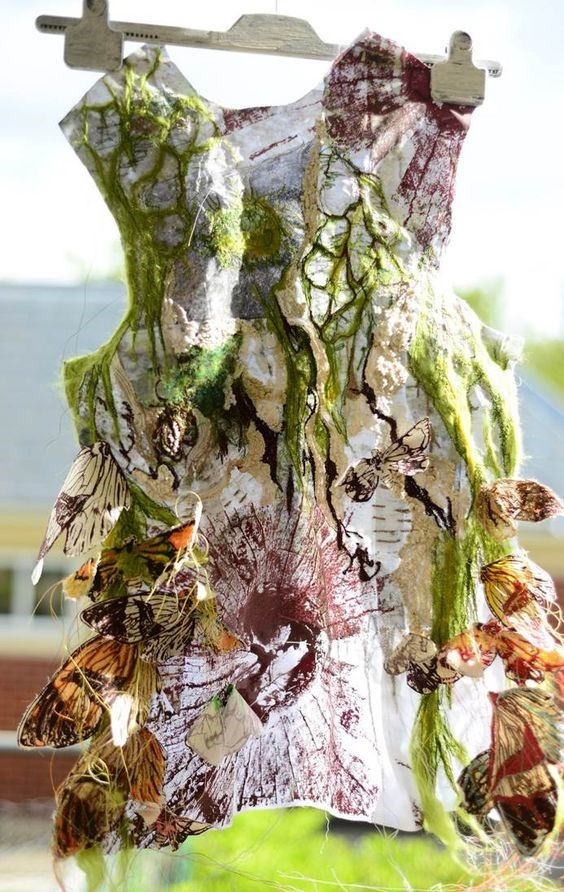
Fashion design with constructed textiles
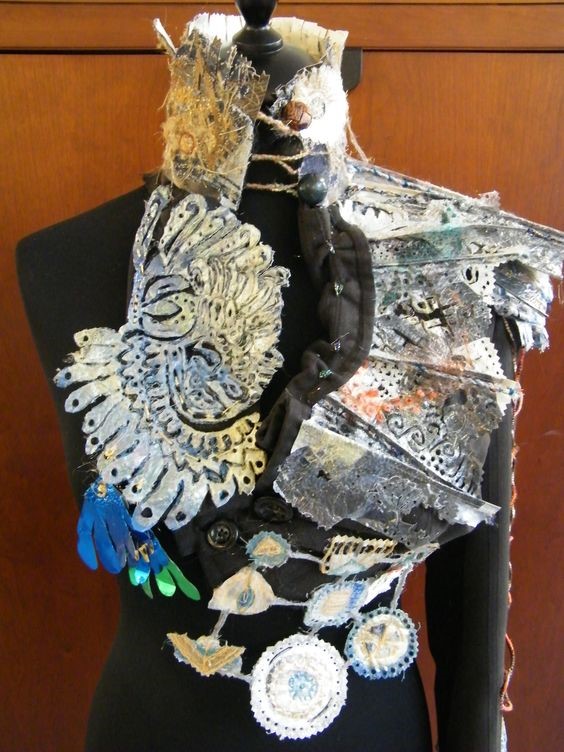
Jewellery design with constructed textiles
Riaan Vosloo
IGSCE/AS & A Level Art and Design Teacher

Shades And Tones
The High School Art students discovered the magic of creating colours in a variety of shades and tones.
Learning how to mix colour is a matter of knowing the right steps and with practice, the process becomes almost instinctive. Having some knowledge of colour theory is good, but in practice, when you pick up your paintbrush, the theories do not help that much.
Colour theory helps us to understand the possibilities of colour in art and design and appreciate the different ways that artists use colour. The effects of light fascinate some artists; some are interested in the symbolic meaning of colour; and some use colour to express their emotions.
Colour theory in art can be summed up under three headings: Colour as Light, Colour as Symbol and Colour as Emotion. A knowledge of Colour Terms helps us to express how this visual element is used in art and design. It gives us the vocabulary to clearly state our feelings about an artwork or design.
Understanding the placement of the colours on the colour wheel will help you to name any given colour. The name of a colour is called “hue”. In painting and drawing, artists name their colours as “red-violet,” “blue-green,” “yellow-green,” etc.
Do not confuse the commercial names of wall paint colours with “hue,” because they do not necessarily tell you much about the colour and they are often misleading.
Students used scientific thinking to observe, predict and compare, and they experimented with cause and effect. “What will happen if we mix all three primary colours together?” “How much yellow do you need to add to make green?” “Can I make the exact same colour twice?”
They used problem-solving skills and came up with ideas for what to do when the colour they were mixing did not turn out quite the way they had hoped. The students used mathematical concepts such as more and less, and devised ways to measure how much paint they were adding.
When mixing colours and painting, students used a multitude of fine motor skills like squeezing, pouring and mixing, and worked on controlling those skills. It is not always easy to pour just a little bit of colour! They had hands on learning and experience with primary, secondary and tertiary colours, as well as tints, and shades. “What happens if you add white?” “What about when you add black?”
The Year 8 Art students also learned how to create form by acquiring the skills to do different shading techniques. Once they realised it is a matter of seeing lights and darks, and all the tonal varieties in between, they produced drawings that made us all very proud.
Riaan Vosloo
High School Art Teacher
