Year 11 Leadership Inting
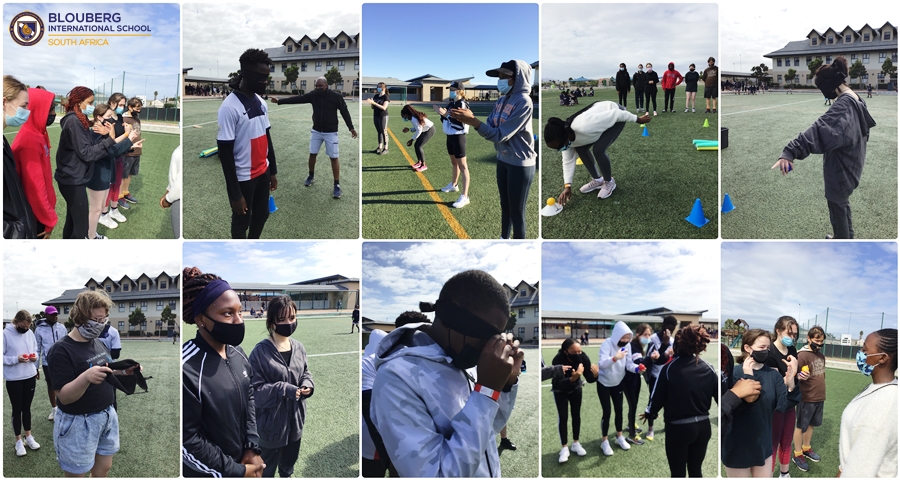
On the 7th and 8th of October, instead of the usual Year 11 annual leadership camp, we participated in an inting hosted on the school grounds. This forged a space for us to develop our team building and leadership skills, and it also unified us as a year group.
Camp instructors came from their stomping grounds at High Africa Adventure Centre, bringing along with them several pieces of equipment for interactive and physically challenging activities. These not only tested our physical abilities and how we navigated around the capabilities of our fellow classmates, but also quickly revealed just how limited our patience is!
For both days, we were spilt into two teams, the members changing slightly each day. This illuminated the strengths and weaknesses each person brought to the team dynamic, and how they could be utilised to ultimately bring the teams to victory. At the end of each day, a winning team, as well as an outstanding leader and camper were chosen. Through games such as “red light, green light”’ with a teddy bear (this stirred an uproar of frustration!), as well as “pool noodle hockey” and a spin on the popular “musical chairs” game, we were able to establish and nurture new ways of communication.
There was an abundance of mind-bending tasks that tested our trust in each other’s abilities, as well as in ourselves. The skill to integrate oneself into team environments was introduced to us, driven by games that included illustrating a story out of a random assortment of picture cards and constructing a sailboat out of geometric wooden pieces. Whether we were human chess pieces or building strange structures with melting marshmallows and brittle spaghetti straws, one thing was for certain: we couldn’t have grown closer as a class after that week.
Yes, we embarked on this inting with the intention of becoming confident leaders, a goal we certainly achieved! However, we also came out as stronger teammates and more self-assured individuals. Communication and trust were qualities that we learned are vital to becoming a valuable team member; also, the skill to be able to listen and follow, as well as to lead. But most importantly, I believe we were reminded of how our individual uniqueness and defining qualities can be used to realise and achieve a common goal.
Kazimla Dyakalashe
Year 11 Student and 2022 SRC Member


Read More

Business Studies Simulation Game
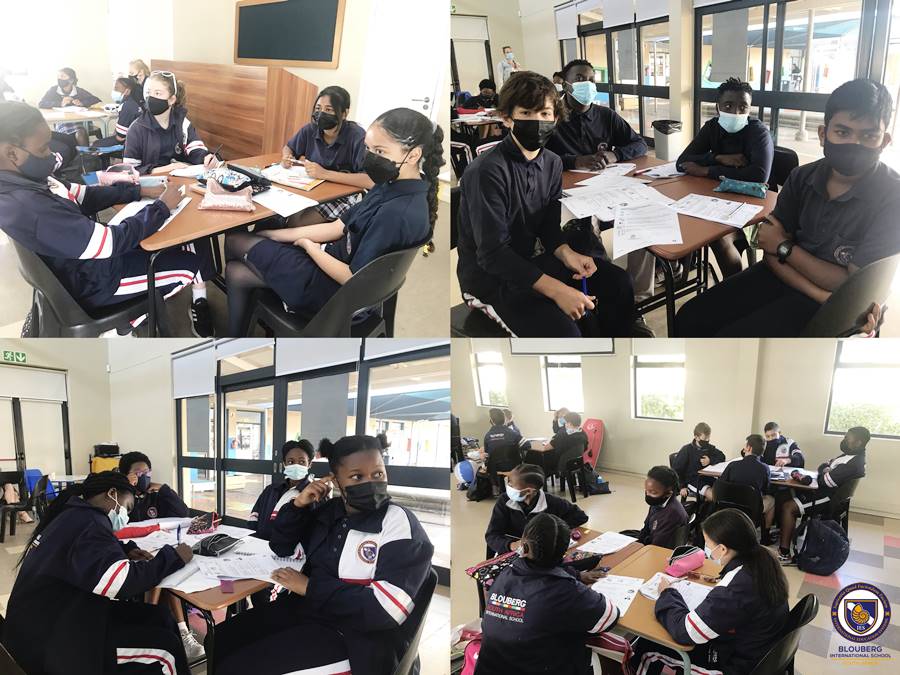
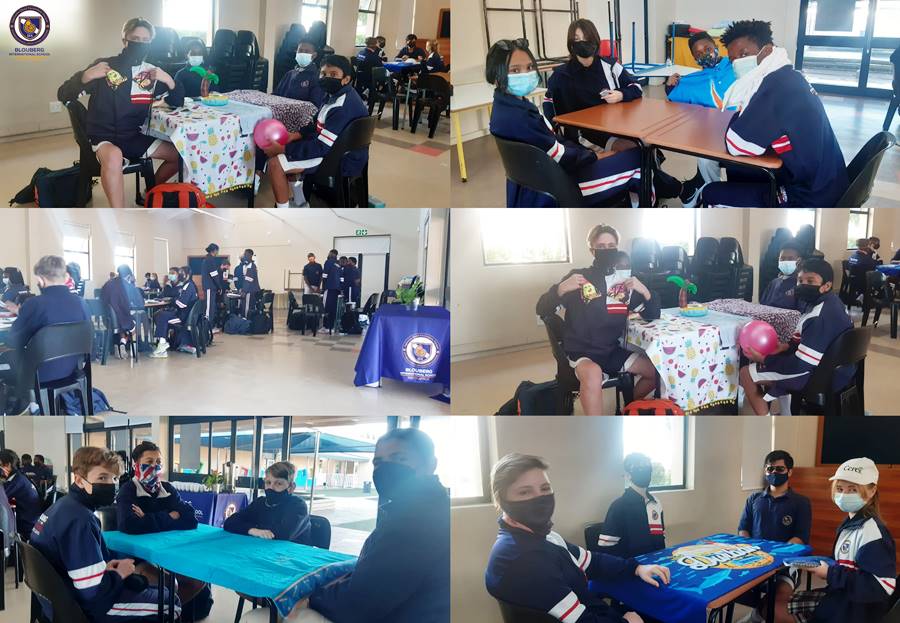
On Thursday and Friday last week, the Year 7 and 8 students participated in the Banango Traders Business Simulation Game run in affiliation with the Johannesburg School of Finance. This initiative is a great opportunity for students to improve and test their business knowledge by running a virtual business.
The event brought out our students’ competitive nature as they competed in teams against one another in order to generate the highest profit. Many congratulations to the teams in each year group that won and the Year 7s for making the most profit out of the two groups.
“The business stimulation taught us the importance of quick thinking and taking risks in business,” is just one of the examples of positive feedback that was received by the students.
The students undoubtedly left with a first-hand appreciation for entrepreneurs and a new, energetic enthusiasm for starting their own businesses. We definitely have a couple of budding entrepreneurs amongst this group!
Caroline Grix
High School Business Studies Teacher



The importance of Mathematics
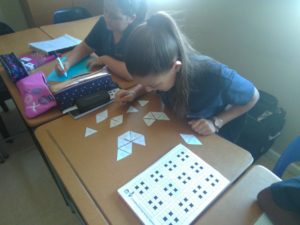
When teaching mathematics to high school students, I have often heard them complain, saying things like, “Why do we have to learn this?” or “How will this help us after we graduate from high school?” The misconception of the importance of mathematics for high school students resides in their inability to project the skills that they use in class into real life.
The purpose of mathematics to students is for them to experience and use the concepts in everyday life. Math is useful in more career paths than you would think. Any career that involves money, or budgeting uses mathematics. You can reference www.weusemath.org to see a list of careers that use mathematics everyday.
Mathematics helps students develop critical thinking skills, the process of creating a plan to solve a large scale situational problem can be applied to variety of tasks, such as planning an event, or applying for a grant. However, students are caught up in learning standards and then being assessed on them. To many students, the purpose of math is to learn a skill that leads to a grade on a report card.
“I want my students to see that mathematics can help them better understand and describe the world around them.”
There is real-life application of almost every form of mathematics. It does not mean that every student will use every piece of mathematics that they learn, but it does mean we can show them how we can use that bit of mathematics to understand and explain something around us.
I want my students to learn to write slope-intercept form equations, but even more, I want them to see that you can use that equation to make projections in business when you know your profit per customer and a monthly loss. Then students can say, “I probably shouldn’t open this business if I need 200 customers a day to break even…”
I want them to know how to make complex ratios, but I would much prefer that they use complex ratios to help them understand how much of a pop song is the chorus. Then they can say, “Oh, that’s why the chorus gets stuck in our heads.”
I want my students to be able to solve two-step equations, but even more I would love them to use those equations to decrypt messages and then try to crack someone else’s message. Then my students can say, “Oh, that is how encryption works!” and “Algebra really is used for something!”
I implore you to show your child the true purpose of math. Help them see that math is here to help them better understand and explain the world around them.
Reference: https://blog.gradeslam.org, https://www.nctm.org/Publications/Mathematics, https://ubiquity.acm.org/article
Prepared by
Hebert Tapfuma (Mr)
(Department of Mathematics)