
The Importance of Sensory Play
Children use their senses to explore and try to make sense of the world around them. They do this by touching, tasting, smelling, seeing, moving and hearing. Providing opportunities for children to actively use their senses as they explore their world through ‘sensory play’ is crucial to brain development – it helps to build nerve connections in the brain’s pathways. This leads to a child’s ability to complete more complex learning tasks and supports cognitive growth, language development, gross motor skills, social interaction and problem solving skills.
Five reasons why sensory play is beneficial:
- Research shows that sensory play builds nerve connections in the brain’s pathways, which lead to the child’s ability to complete more complex learning tasks.
- Sensory play supports language development, cognitive growth, fine and gross motor skills, problem solving skills, and social interaction.
- This type of play aids in developing and enhancing memory.
- Sensory play is great for calming an anxious or frustrated child.
- This helps children learn sensory attributes (hot, cold, sticky, dry)
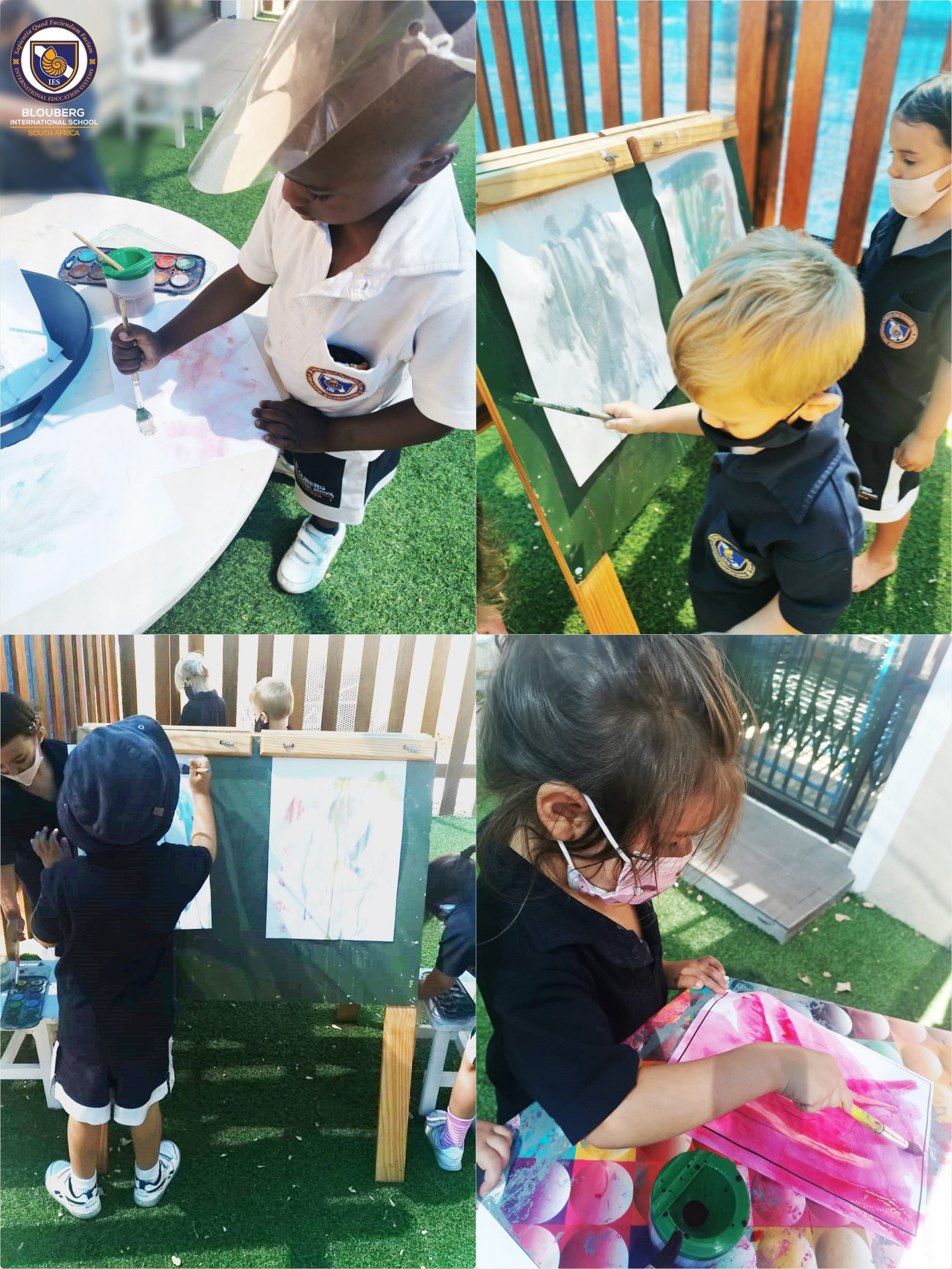
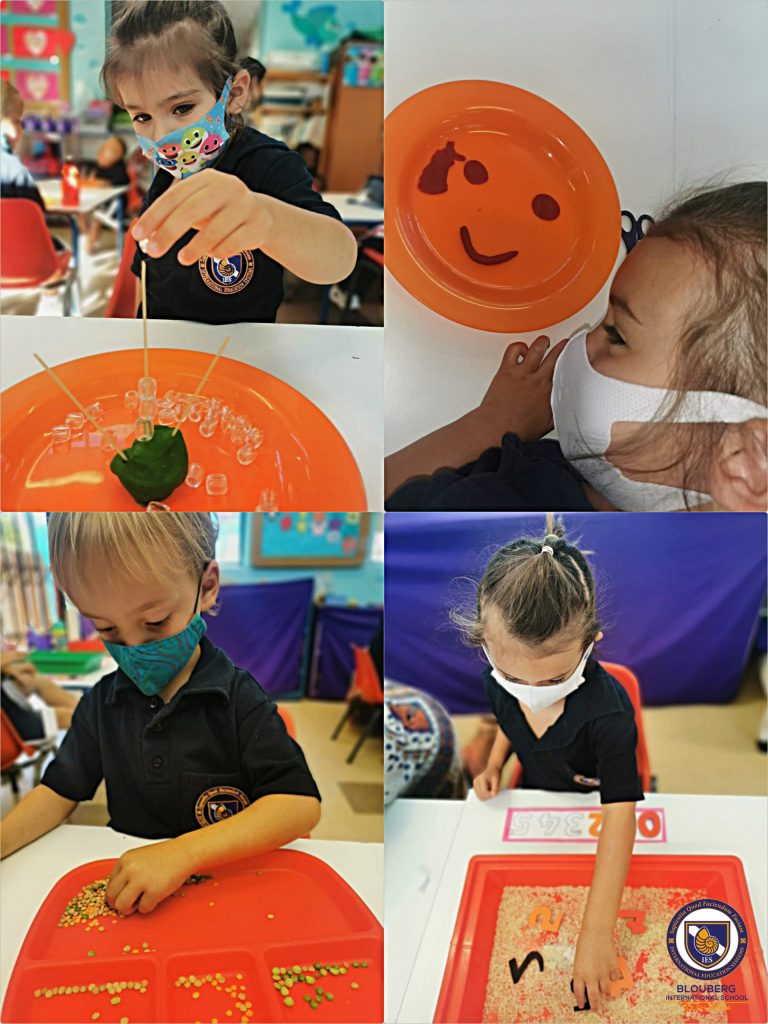
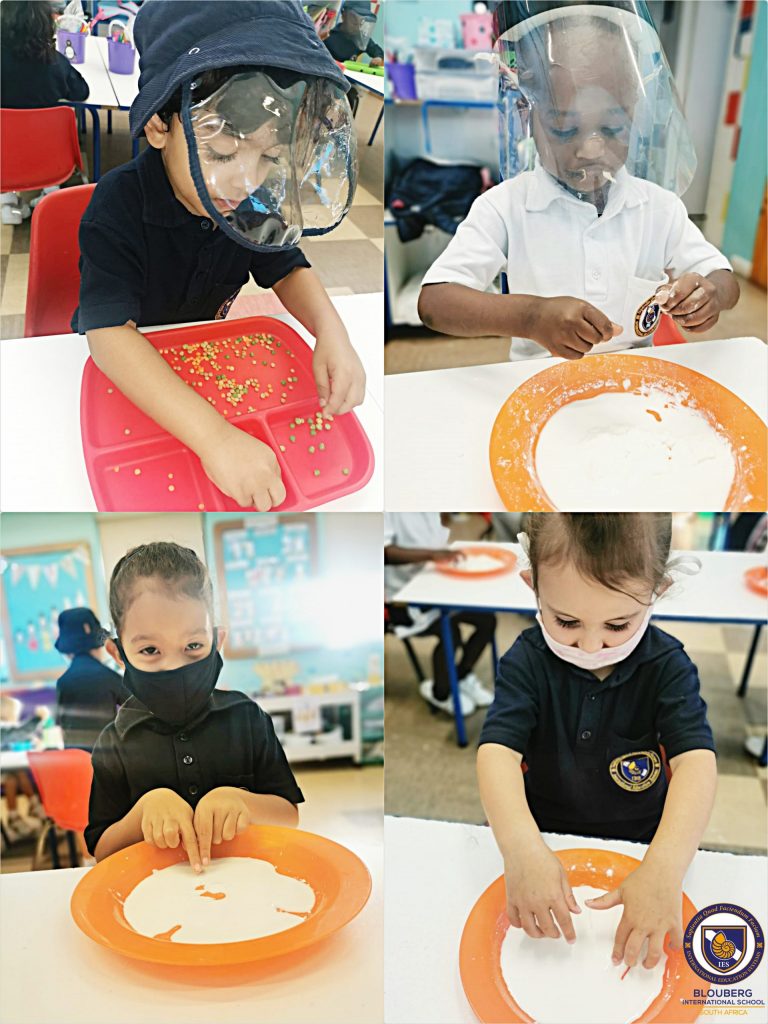
In the Nursery and Pre-Reception classes we incorporate sensory play and fine motor activities into students’ daily programme. Play dough is used as part of the heavy work component of a sensory diet. It can also help improve a child’s fine motor skills. They are encouraged to squeeze, stretch, pinch and roll the play dough and even cut the play dough with scissors.
Different types of painting can also help strengthen hand eye coordination and manual dexterity. Finger painting gives the student an opportunity to use their hands and get messy. Painting with a brush helps them learn to hold a brush and gain greater control using it as a tool.
The students also get to look for numbers covered in rice and play in corn flour mixed with water. A fun and messy activity enjoyed by most of the students!
Cindy Nunan
Nursery & Pre-Reception Teacher


The Building Blocks of Early Learning
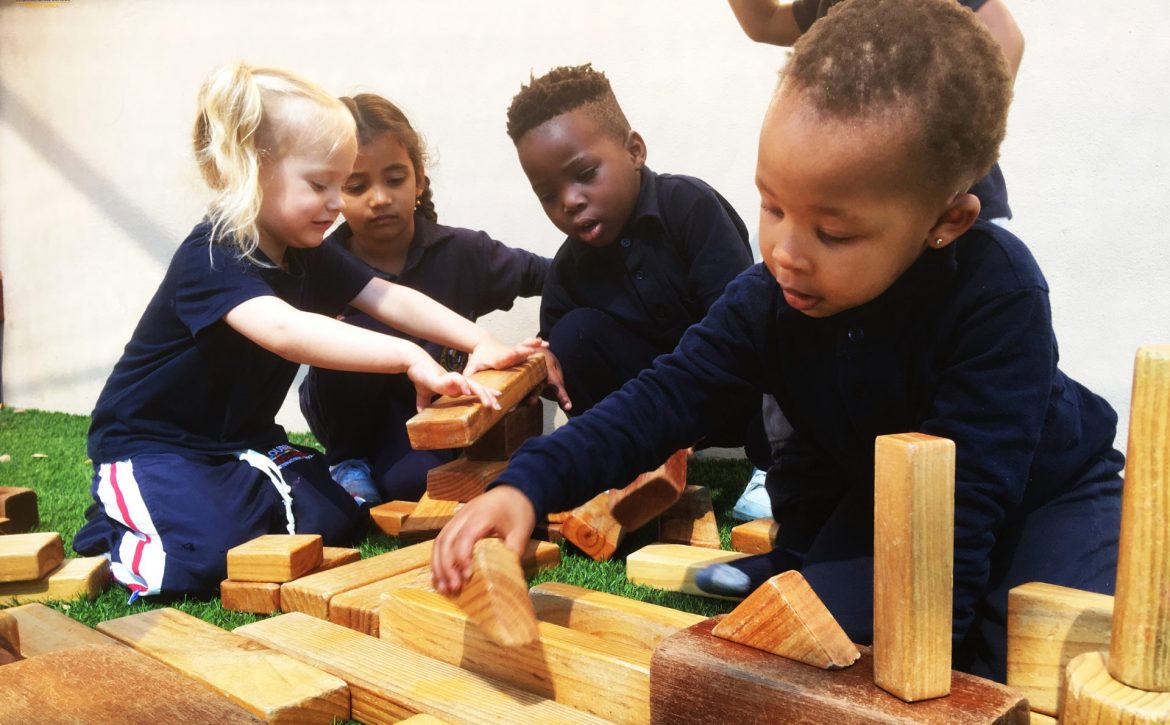
The Nursery class is enjoying building blocks. They have been working together to make big towers, learning to share with each other while cooperating for a greater goal.
We have been learning about different shapes and discussing what shapes the blocks are. At this stage we are investigating squares, rectangles and triangles.
A few benefits of building blocks include:
- Improves hand-eye coordination by learning to place the block on the block tower in such a way that does not topple the tower.
- Teaches early math and engineering skills through hands on learning.
- Spatial awareness.
- Improves fine motor skills.
I wish to encourage parents to spend time with your children, building with a variety of blocks and Lego. Such a simple activity can have a tremendously positive impact on learning.
Jacky Billings
Nursery Teacher