
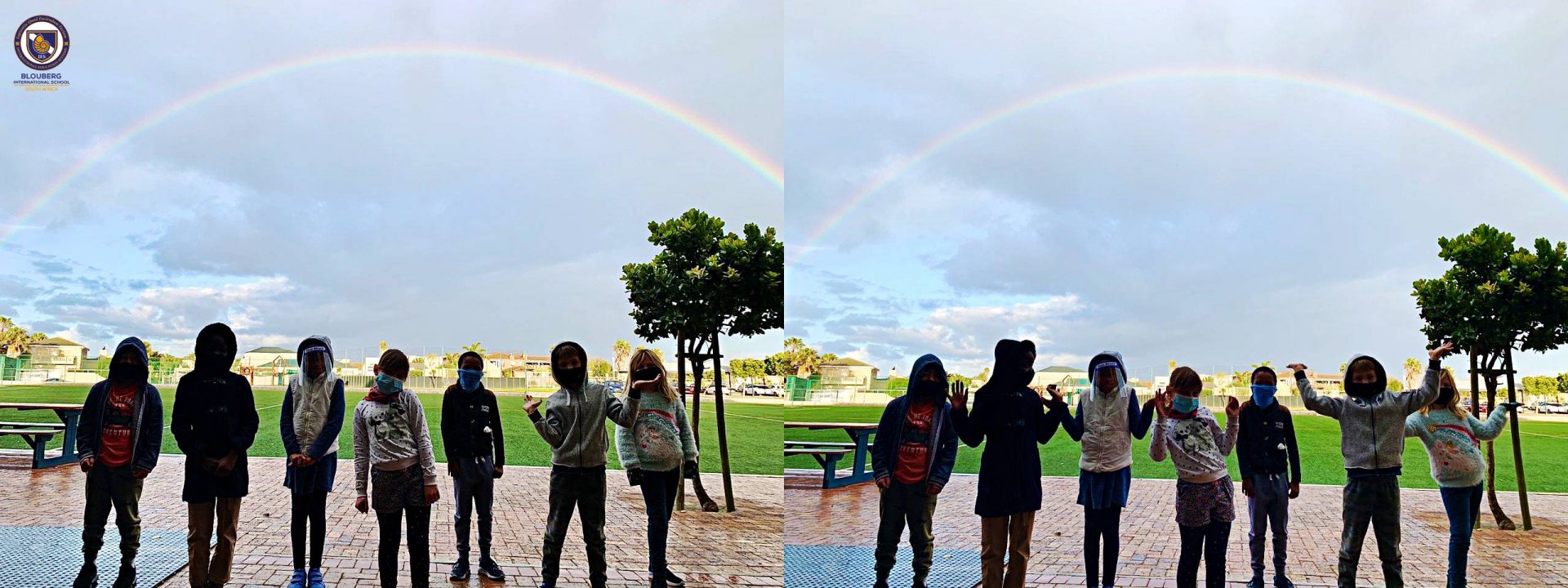
From the Principal’s Desk, 6 August 2020
Dear Parents
We may all feel overwhelmed at times and begin to second guess our decisions and the value and purpose of our actions.
Ms. Kiley and I met this week to discuss the challenges, and possible solutions, faced by our teachers and students. As a school we are blessed to have a counselor who can offer guidance to students and staff alike. It is important that although times are not easy, we focus on the positive aspects and not the negative.
On Wednesday afternoon the primary school teachers met for a workshop lead by Ms. Kiley and facilitated by Mrs. Cindy Arenstein. Teachers were given the opportunity to raise concerns and offer solutions to the challenges of dual teaching. After a productive discussion, each staff member was given a stone and encouraged to write on it a message of positivity and give it to another staff member. This was an awesome way of encouraging each other and strengthening the bond amongst staff members. We should all be looking for ways to encourage one another, to engender trust and build a sense of community. For children, this comes naturally, but as adults it is often a skill which must be remembered and developed.
Our staff are committed to ensuring the safety of our students and maintaining the protocols we have in place. We remind our students continuously about social distancing during break and in class and we ask that you remind them at home as well. This is all very unfamiliar to them and constant reminders are necessary until social distancing becomes habitual.
Our year 10 and year 12 students are starting their mock exams in a week. We are confident that they will be ready to write their final examinations in the October/November Cambridge sitting.
As we are preparing for a much-needed long weekend, I would like to encourage you with the following quote from Anne Frank.
“Everyone has inside them a piece of good news. The good news is you don’t know how great you can be! How much you can love! What you can accomplish and what your potential is!”
Have a wonderful long weekend with your family.
Kind regards
Edna
Read More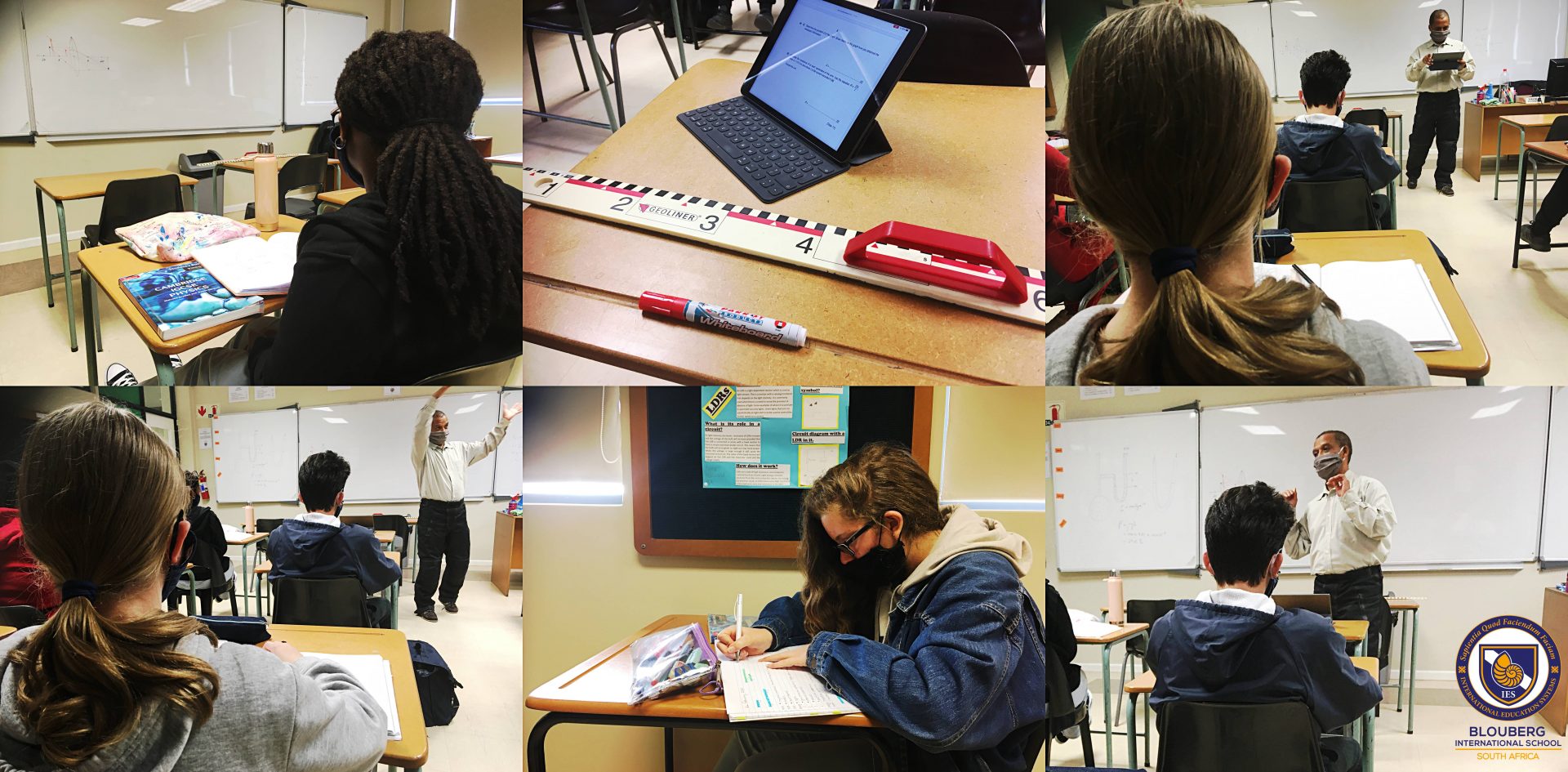
The Importance of Physics to Society
The future of any country and its contribution to the global economy is linked to its ability to develop its human capital in the field of science and engineering. Through its scientists and engineers, it is able to develop infrastructure for trade and industry.
In order to pursue a career in science and engineering one needs to have the ability to think analytically. The student, in Physics, studies an array of interesting topics ranging from matter, energy and their interactions. Physics is an international enterprise, which plays a prominent role in the future progress and survival of humanity.
Support for Physics and research is important because:
- Physics is an exciting intellectual adventure that inspires young people and expands the frontiers of our knowledge about Nature.
- Physics generates fundamental knowledge needed for the future technological advances that will continue to drive the economic engines of the world.
- Physics contributes to the technological infrastructure and provides trained personnel needed to take advantage of scientific advances and discoveries.
- Physics is an important element in the education of chemists, engineers and computer scientists, as well as practitioners of the other physical and biomedical sciences.
- Physics extends and enhances our understanding of other disciplines, such as the earth, agricultural, chemical, biological, and environmental sciences, plus astrophysics and cosmology – subjects of substantial importance to all peoples of the world.
- Physics improves our quality of life by providing the basic understanding necessary for developing new instrumentation and techniques for medical applications, such as computer tomography, magnetic resonance imaging, positron emission tomography, ultrasonic imaging, and laser surgery.
All educational institutions should thus promote physics as a subject with fervor and commit the necessary resources to create the infrastructure where students will be able to explore and satisfy their quest for scientific knowledge and solutions to everyday challenges.
Patrick Katzen
High School Physics Teacher
Read More

Year 3 Are Writing Japanese Poetry!
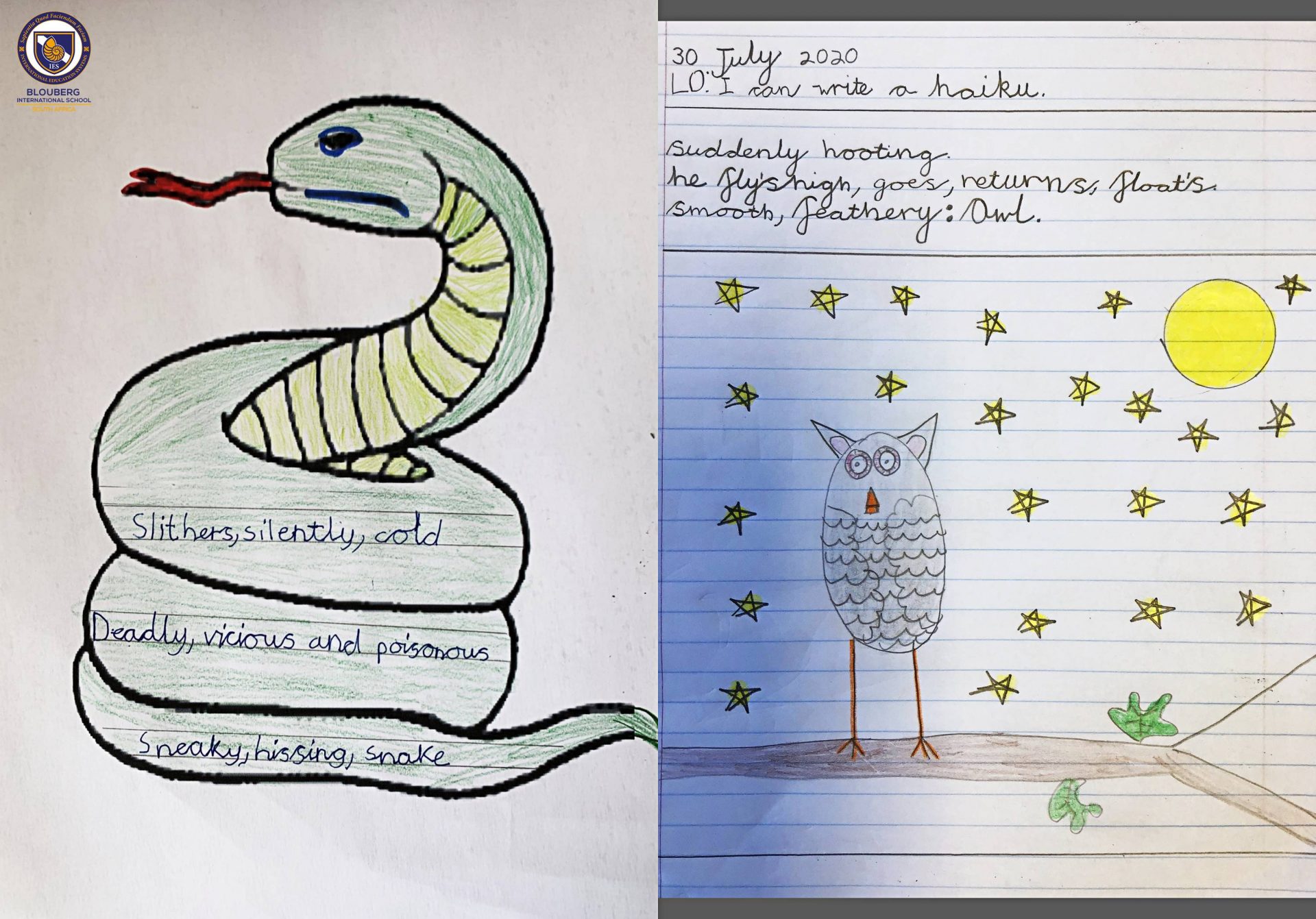
This term, Year 3 have completed an English unit called Poems from around the world. In this unit, the students read and performed different poems from around the world. They investigated how poems are linked to places and explored the words and sounds in the poems. At the end of the unit, they needed to copy the style of a poem and write a poem of their own.
We decided to focus on Japanese poetry and the students wrote their very own Haiku’s. A Haiku is a Japanese poem with a total of just 17 syllables and three lines… but that’s not all. Line 1 must have 5 syllables, line 2 must have 7 syllables and line 3, 5 syllables again.
Year 3 took on the task with great zest and promptly chose an animal each to write about. Next they created a word bank which had to include noun phrases and adjectives. Once the creative juices started flowing, they set about arranging their word bank into a Haiku. The results were amazing!
Well done, Year 3! We’ll make poets of you yet!
Mandy Goch
Year 3 Teacher
Measuring Fun
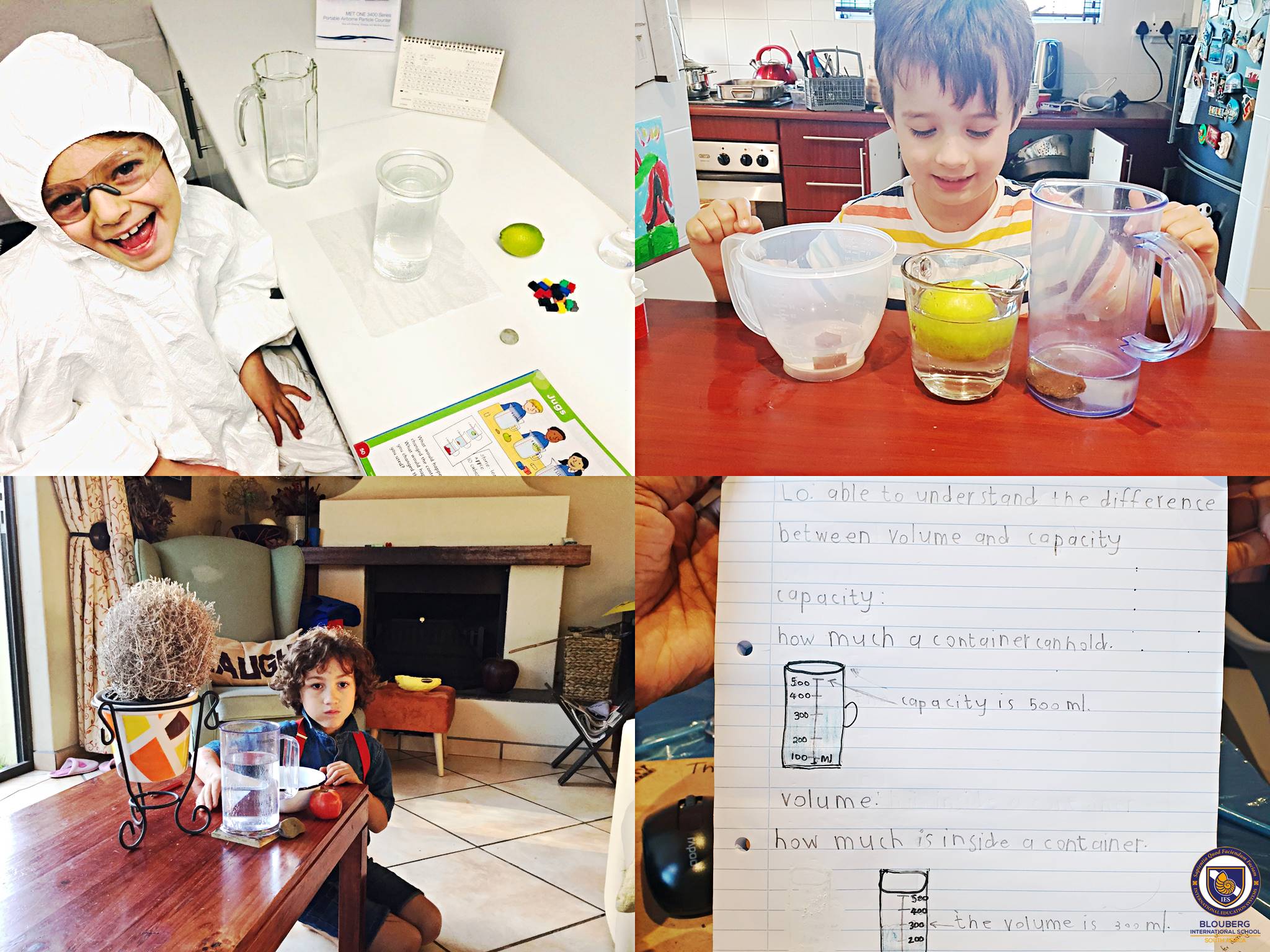
Learning Maths can be fantastic fun, as the Year 2 classes discovered this week.
We have been exploring volume and capacity and the difference between the two. In class we had some practical examples, experimenting with stones, Lego blocks, rice and water, in an attempt to identify which would float or sink. The students at home were asked to use items they have available to them to conduct experiments.
They had great fun predicting the outcomes of the different experiments. Some even remembered the Science topic about materials and could accurately predict the outcome and record their findings.
We are very proud of all our students for doing such great work!
Kim Coetzer
Year 2 Teacher


From the Principal’s Desk, 31 July 2020
Dear Parents
It is the end of the third week of term 3 and all our year groups have been phased in as per our return to school plan. Although all students are not at campus, we are well on our way to running at full capacity again.
There have been quite a few changes this term: from the morning routine and the way classes are conducted, to the collection of students in the afternoon. Despite the changes, disruptions, and uncertainties, we remain positive and in good spirits.
I wish to thank all our parents for adhering to our Covid protocols when dropping and collecting students. Please remember that if you wish to meet with a staff member, you need to book an appointment beforehand and go directly to the front office for the screening process. This is for your own protection as well as the health and safety of our staff.
To ensure the health and safety of our students and staff, we conduct risk assessments and screening throughout the day. The questions that arose this week, regarding quarantine procedures and contact with possible cases, led me to address the following in this week’s editorial.
Direct contact and casual contact
The issue of direct contact and casual contact is important to understand. Any direct contact with a positive case will result in such a person being isolated for a period of 14 days and possibly even tested, should he/she experience any symptoms of Covid-19. Direct contact in this case would mean physical contact with a positively tested person or someone sharing an immediate space (within 1,5m without wearing a mask) or shared such a person’s belongings. By merely sharing a classroom or workspace does not constitute direct contact. Such a situation is regarded as casual contact, without any risk as all the necessary health and safety precautions are strictly observed regarding social distancing, the wearing of masks and the washing and sanitizing of hands.
I wish to re-iterate that there is no shame in contracting the virus as it can happen to anyone and no stigmatization will be tolerated at our school. We all need to continue exercising the necessary health and safety measures such as the wearing of masks, proper social distancing, regular sanitizing, and thorough washing of hands. The school is sanitized regularly according to all protocols.
Let us be mindful that we are in this together and it is only through understanding and cooperation that we will endure this time of hardship.
“Character cannot be developed in ease and quiet. Only through experience of trial and suffering can the soul be strengthened, ambition inspired, and success achieved.” – Helen Keller
I wish you all a wonderful weekend.
Kind regards
Edna
Read More
Exploring Countries
This week our theme was countries around the world. We enjoyed leaning about the following countries:
South Africa– After locating South Africa on the map, the students learned that Johannesburg is the largest city in South Africa and that Cape Town is known as the Mother City as it was the first western settlement established in our country. There are 11 official languages in South Africa, but English, Xhosa and Afrikaans are widely used. We also know that South Africans eat a wide variety of foods similar to most western countries. Some traditional foods are biltong, rusks, potjiekos, braai, samp and beans, melktert and bobotie. The South African flag represents the coming together of our Rainbow Nation in the new democratic South Africa. The students loved decorating the South African flag.
China- The students discovered that China is the fourth largest country and that the capital city of China is Beijing. The national flag consists of a red background and five golden-yellow stars. The Chinese are known for eating a wide variety of foods. The staple foods however, are rice and noodles accompanied by vegetable or stir fried meats. The Lantern Festival is a fun festival where people flock to the streets with a variety of lanterns under the full moon, watching Lion or Dragon dancing and lighting up fireworks. The students made a dragon during art and craft time.
Australia- We did Aboriginal Art while we learned more about Australia. Australia is the only country that is also a continent. It is also one of the driest places on earth. It is a multicultural country and they have cuisine from all over the world including Greek, Middle-Eastern and Asian food as well as good English fish and chips.
Russia- We made a Russian cityscape collage during art and craft time. We learned that Russia is the world’s largest city. Russians enjoy eating caviar or fish eggs, served on little pancakes called ‘blini’ topped with sour cream. Borscht, a hearty soup made from beetroot is also very popular during the cold winter.
We enjoyed learning about these countries and we will discover more about France, England, Spain and America next week.
Martie van Dyk
Reception Teacher
