

Matric Dance 2021
Student Account:
The 2021 Matric Dance was a night not to be forgotten. It was a lovely end for our Matric Class, and an unforgettable sendoff before the start of our exam season. The Aquarium could not have been a more invigorating and mystical venue for such a night, and the presence of the varying sea creatures left most of us in awe. The food provided by the aquarium was delicious and inclusive for everybody, and left everybody satisfied. Lots of dancing and smiles were the biggest take-away of the night, and it was highly enjoyable for all.
Written by Matric student – Gabrielle Luyt
Student Account:
On Friday the 17th of September, the matrics of 2021 attended the formal Matric Farewell. It was hosted at the aquarium and although a different location it was certainly unique! It was so special seeing everyone arrive with their fancy cars, and beautiful dresses and suits, and we had Mr Swart, the teachers, some Year 11s and the parents awaiting our arrival. It was nerve wracking walking up but all the cheers and familiar faces definitely helped!
We soon said goodbye to the parents and began our night inside. There was a professional photographer there and she did an amazing job taking all the pictures and really making them look beautiful. We took lots of pictures in front of the huge shark tanks, and the fishes and sharks accompanied us in the background of most of our photos! She made us all feel really comfortable and I’m sure we’ve got photos no other matric dance has gotten before!
After photos, we stepped into the hall where we would be having dinner. There were round tables positioned throughout the room and they were decorated beautifully and elegantly. The matrics were treated with a buffet of food options, drinks and delicious desserts. I was definitely full at the end of the night! Our favourite, chosen music played throughout the evening and a large portion of our night was spent dancing together as a year group and having fun as our last night together!
Overall I had a lovely time at the Matric farewell and I’m glad I got to spend the night with my peers. It was definitely a special night, and one I will not forget!
Written by Matric student – Chloë Goldman
Read More

Valedictory and SRC 2022
Although things looked a little different at BIS this term, we are so fortunate that our students were able to attend school for the majority of the term. Thank you to everyone who supported the staff and students through this journey.
We will continue to ensure that the curriculum is comprehensively covered, ensuring that we stay on track for the rest of the academic year.
Our sincere thanks go to the teachers for all their hard work with the planning and delivery of the online lessons, as well as the teaching of the students in the classroom.
On Wednesday, we held a special Valedictory & Prize-Giving Awards Ceremony on the school campus for the Matric Class of 2021, joined online by students and parents. Ceremonies like this one enable us to pause as we recognize, acknowledge, and celebrate our students’ success and development.
We also had the pleasure of announcing the 2022 SRC Leadership Team:
Remy Wang
Michael Mkandawire
Rifqah Price
Kazimla Dyakalashe
Savanna Prinsloo
We are so incredibly proud of all the year 11 students who nominated themselves and gave speeches a few weeks ago. Whether they have received a formal position or not, they will all be incredible leaders for our school in 2022. I have no doubt that they will work hard to make our school an even better place by upholding our school’s values throughout the year.
This holiday is a short one, and I hope that you have time to rest and recuperate.
We look forward to welcoming our students back to school on Wednesday, 29th September.
Carmen de Villiers
High School Coordinator

The upcoming Cambridge IGCSE and AS/A Level examinations and how to prepare for them
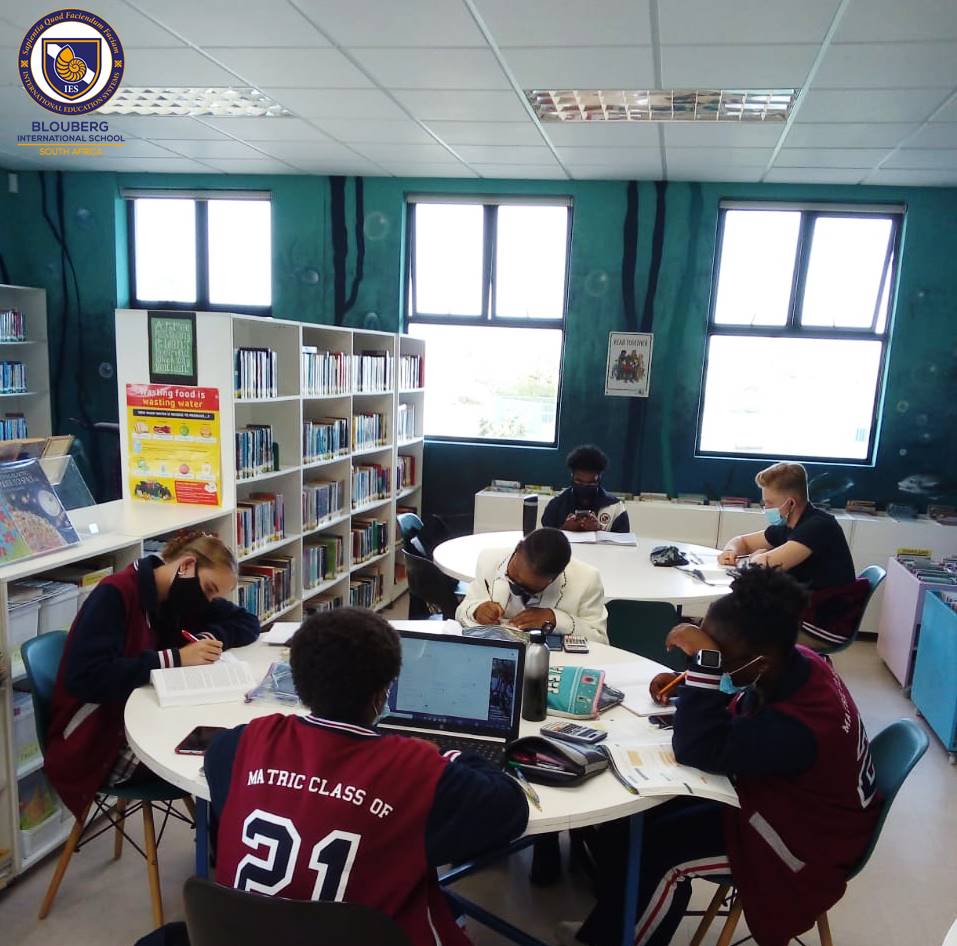
The October/November Cambridge IGCSE and AS/A Level examinations are fast approaching, with the first examinations already taking place on 28 September 2021. It is vital that students prepare themselves for these examinations.
Below are some helpful hints and tips for preparing for the examinations:
- Familiarise yourself with your examination timetable.
- Ensure that you know exactly:
– what work will be covered in each subject;
– the format of each examination paper;
– the time allocation;
– the equipment that may be needed for the examination (e.g. calculator for mathematics).
- Get copies of old examination papers and worksheets.
- By now, all your notes should be up to date and you should have all that you need to study effectively for the examinations.
- Prepare your study area. Some things to consider are:
– have a good source of light;
– have lots of paper available;
– a clear work surface;
– coloured pens if you prefer to use colour;
– light or unobtrusive music if you prefer to learn with music.
- Keeping healthy! Eat fresh foods such as fruit and nuts. Pile up on the vegetables in the evenings and drink plenty of water and fruit juice to keep the flu at bay. The brain needs to be fed well to perform at its optimum.
- Try not to nibble on too many chocolates and sweets while studying.
- That said, the odd sweet or chocolate will provide an energy boost when you feel really tired.
- Getting a good night’s rest is also important. Sleep will rejuvenate you and keep you going.
Devising a Revision Timetable:
If you plan your revision carefully, you will enjoy the feeling of being well prepared for the examinations, secure in the knowledge that you have done your best and have covered all the work.
- Create a calendar for this purpose, using bright colours/larger paper etc.
- Start by marking in the dates and times of your examinations.
- Shade in the dates and times when you know you have other commitments, e.g. sports fixtures/family function.
- Work out how much time you would need per section per subject. Remember to spend more time on those subjects you find more difficult.
- Using a pencil, begin to draw up your revision timetable by writing in the subject and the sections that you wish to cover each day.
- You could leave a revision time blank each week, as a “safety net” for work not covered as planned. This may be as a result of those unforeseen circumstances that make life interesting.
- Do not get stressed out if you don’t stick rigidly to the timetable. Sometimes you start by expecting to cover too much at one time. The main idea is to get you to focus on the work that needs to be covered and to work towards a goal.
- Be sure to timetable rest and relaxation.
- Before changing subjects, take a longer break of about 20 – 30 minutes and try to get outside or do something different.
Study Methods:
Each one of you will have your own method of studying and it is important that you feel comfortable with your chosen style. It is equally important that you admit if your method has not worked in the past.
Here are some tips that you may like to try out. These are tried and tested methods.
- Start by reading through a section from beginning to end. This will give you an overview of what is to come. Focus on headings and pictures and diagrams.
- Ask questions as to the content of the section (why, what, when, where, how and who?). This will help to get your mind in touch with the main areas within each section (e.g. What do I need to know about this topic? What exactly is this text about? How does this section link up with what I have just studied?).
- Re-read the passage with the aim of answering your questions. Look up words you do not understand, refer closely to graphs and diagrams, highlight important ideas in colour, etc. Do not try to make notes at this stage.
- Aim to check that you have understood the work. Think about the passage and focus on key points. Re-read the passage, making notes on the relevant material. This may take the form of block notes or diagrammatic notes e.g. mind maps/spider diagrams.
- It is a good idea to redo mathematics exercises and worksheets as well as work through past papers.
- Diagrams can become excellent forms of summary in subjects such as geography and biology. A diagram should be drawn clearly with large labels for easy identification.
- When encouraging a difficulty concept, try to break it up into smaller units and talk your way through the steps of the problem.
- If you have difficulty remembering something, pin up key words on your bedroom wall or cupboard door as a constant reminder. Each time you walk past the word, stop, and ask yourself a question or two about it to trigger a response.
- In language, you need to understand the rule to apply it, e.g. rules for the past and present tense.
- Review. Aim to ensure that you remember what you have learned by reviewing worksheets/past papers/testing yourself with questions that you set or working with a friend and testing each other verbally.
Just before the examination:
- Get a good night’s sleep.
- Have a good breakfast.
- Arrive at the venue with time to spare.
- Make sure you have the right equipment, tissues, watch, etc.
During the examination:
- Don’t rush into answering questions.
- Read the instructions at the beginning to ensure that you know how to answer all the questions and how many questions to answer.
- Read through the questions carefully.
- If there is a choice of questions, make your choice carefully. Underline key words in the questions.
- Stick to the time plan given to you by your teacher.
- At the end of the examination, if you have time, read through your paper to check that you have answered all the questions.
I would like to wish all students the best with their 2021 examinations.
Julian Harrison
Cambridge Examinations Officer
Read More
Fun – Useful – Interactive – Comprehensible – Accessible
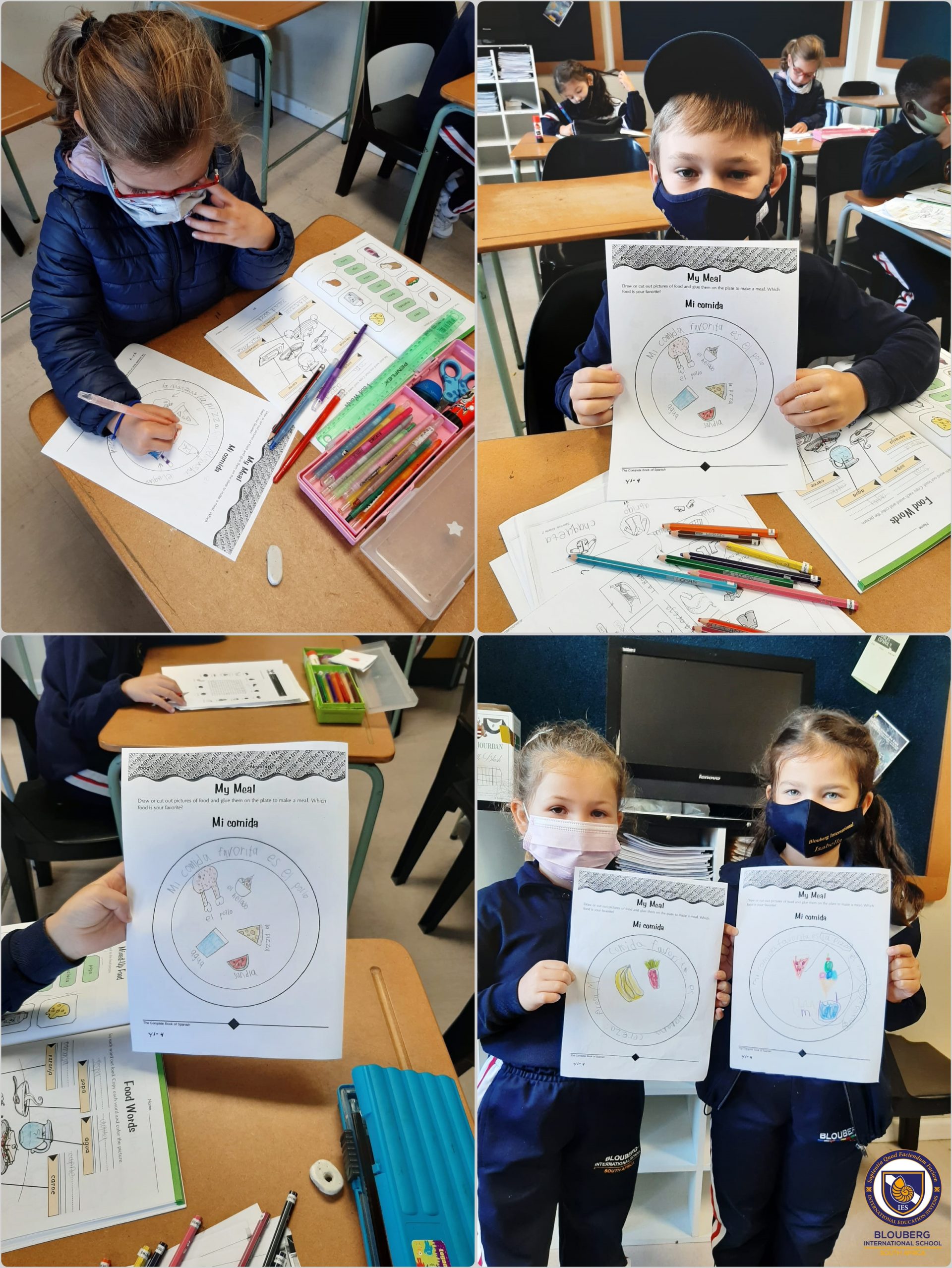
Many people think that the teachers have a lot of holidays during the year, well that can be true – what they do not know is that perhaps half of that time or sometimes more, we are researching new ways of presenting our subjects and the content in a more attractive format for our students.I believe that we need to allow ourselves time to explore new methods of teaching and, as a second language educator, my goal is to try to minimize the specific grammar that the students need to learn or at least present it to them in a more appealing way.
In addition, the ways that they learn have changed completely with the new technologies and the use of electronic devices. The time that they are able to “hold” their attention on you is scarily short.
For all these reasons, I personally believe that by creating your materials you can connect better with your own students and adjust the content to the topics that you are explaining in class. I also feel more confident and passionate about resources of my own creation.
When I am in the process of designing these new materials, I always have the below points in mind:
Make it as FUN as possible: The materials need to be fun in content and format, so you can connect easily with the students. They need to “forget” that they are learning another language. Engaging them from the beginning. This will also help to increase their participation in the lessons – key factor in their learning.
The materials need to be USEFUL: In my view, this means that the students can apply what they are learning to real life situations, ordering food, going shopping, booking a hotel room, and introducing themselves. So, the question that I will ask myself is: Are the material useful as well as fun? Will I be using these expressions in a Spanish speaking country if I was their age?
Create INTERACTION: When creating a story your students need to be part of it. Just to read the story to them it is not enough, they can finish the story, you ask questions about what is going on, or you can create a similar story with them.
Firstly, introduce all the vocabulary, adjectives, verbs, or expressions to them so it is COMPREHENSIBLE – that needs to be familiar for them to keep the focus and understanding. Creating the story with the topics and grammar that they are learning during the term will help me with this point: story at the school (school objects and subjects, facilities at the school, adjectives related with the teachers), going shopping (clothes, colours.) translate it with them first and then we read it again, answering basic or more complex questions depending on the year group.
Finally, all the materials must be ACCESSIBLE: I continue posting all the materials in Google Classroom, so my students can always access these, and they can send back their stories or questions.
Javier Vidal
Spanish Teacher

High School German
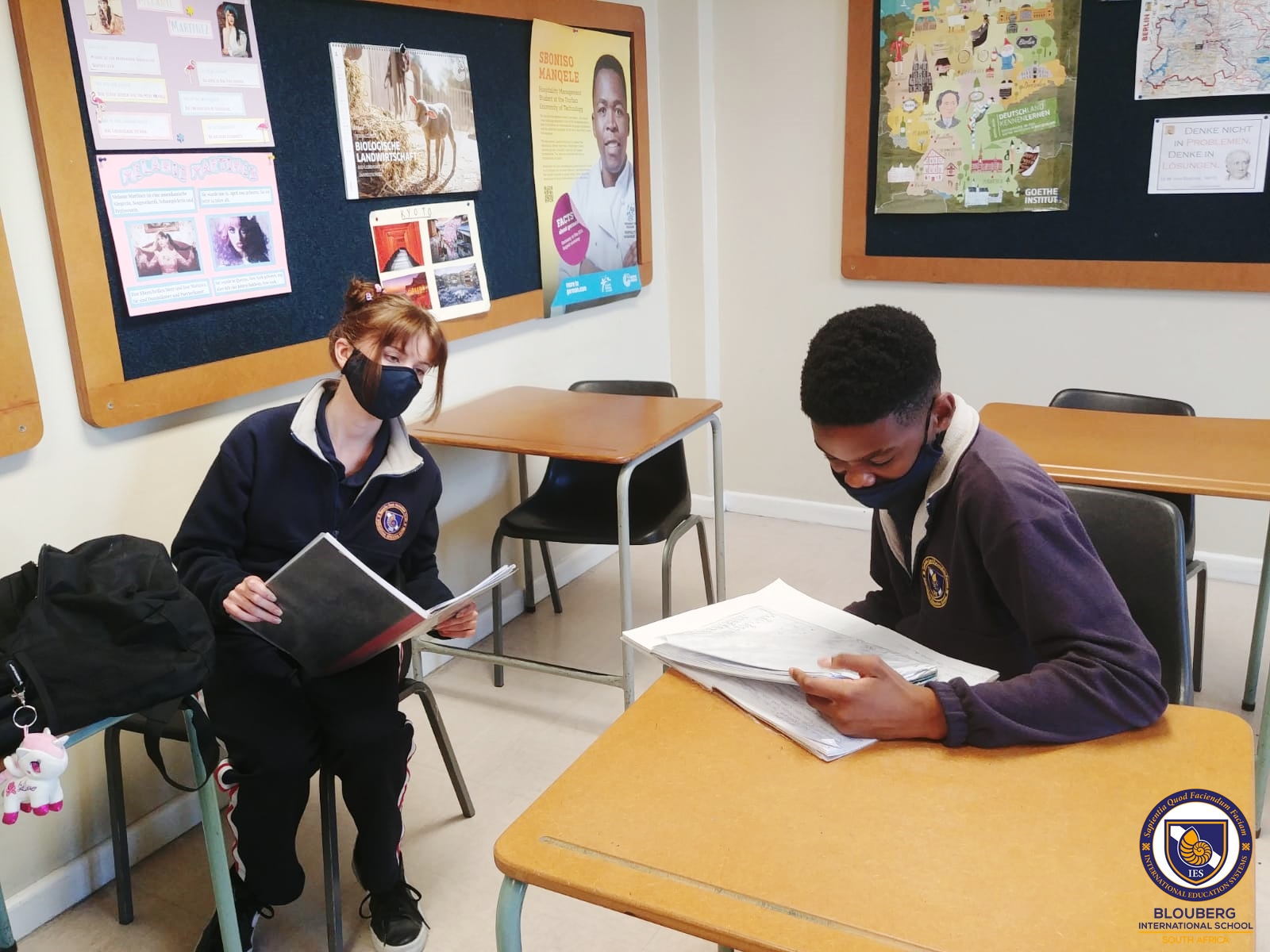
Did you know that German is the most widely spoken mother tongue in Europe? It is also spoken in many German-speaking communities around the world, including South Africa. An impressive 1000 German companies are world leaders in their business. When it comes to science and research, Germany is also right at the front of the pack. In the last 100 years, more than 70 Nobel Prizes have been awarded to Germans, solely in the field of natural science and medicine. It is also a popular place to study; German degrees are highly valued by employers worldwide.
Not everyone realises the doors that German can open – be it in business, science or education, not to mention gaining access to the rich cultural heritage of original German literature.
The Cambridge syllabus aims to foster not only a knowledge of the language but also to create cultural awareness and sensitivity. This is an invaluable skill to have and makes for well-rounded, empathetic individuals with a broad outlook on life.
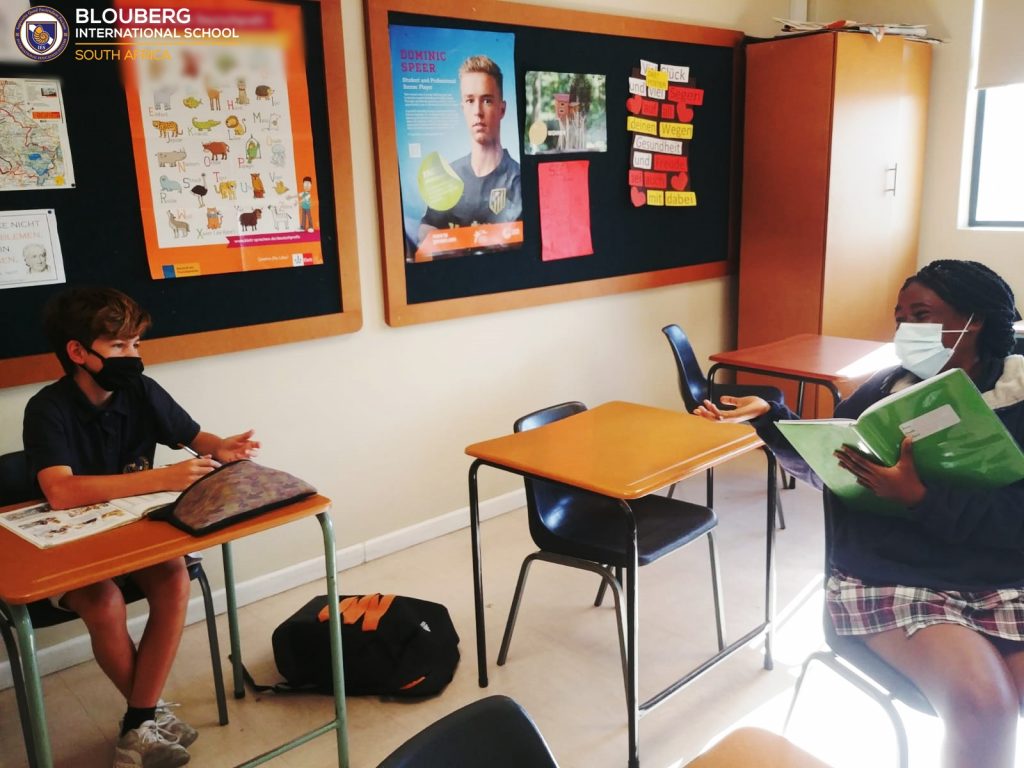
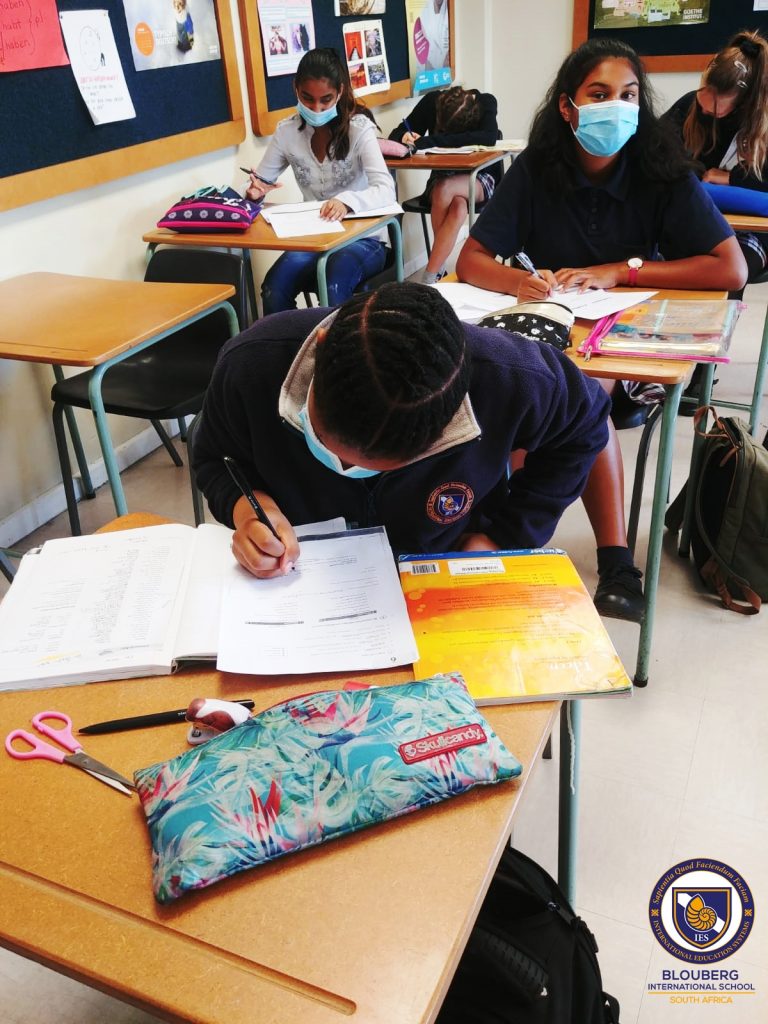
I have included some snapshots of this term’s German classes.
Renate Yotti
High School German Teacher
Welcome Back To Term 2
The High School staff welcomes all students and parents to the second term of 2021!
We hope you all enjoyed the well-deserved holiday. We also wish to extend a special welcome to our new principal, Mr. Andre Swart and wish him the very best for his first term at BIS.
Term 2 is a busy and important term. June examinations for Year 7, 8, 9, 11 and 13 start on the 7th of June 2021 and the Year 10 and 12 students start their Prelim examinations on the 31st of May 2021. Prelim examinations are extremely important in preparing students for the final IGCSE and AS Level examinations at the end of the year.
The High School will have online parent/teacher meetings next week and parents are encouraged to book with the relevant subject teachers. A letter has been sent on Engage regarding the online meetings and how to book.
Thank you for your ongoing support.
Julian Harrison
Head of Academics High School

What The IGCSE’s Taught Me
Our top achiever in the 2020 IGCSE’s recounts her experience and shares some advice with future candidates:
“A famous author once wrote “People say nothing is impossible, but I do nothing every day.” That author was Alan Alexander Milne, the creator of the “Bear of Very Little Brain”. A bear who would sit around all day, doing absolutely nothing but he enjoyed every second of it. So, if there was one thing I learned in the 2-year course that is IGCSE, it was that I needed to relax more, to take everything in my stride and to not worry so much about the little things. To take everything step-by-step, day-by-day, and before you know it, you’ll be running.
I remember in Year 9, when the concept of IGCSE was first introduced, everything became overwhelming. I found it tremendously difficult in the beginning. At first, I wasn’t able to grasp most of the concepts for certain subjects and I was very confused most of the time. I’d never say anything though because no-one in my class ever seemed like they were having trouble, so I assumed it was just me struggling. Thankfully I had my friends, parents and teachers to tell me otherwise. My previous idea of studying consisted of working all day at school, then coming home and doing the same thing. It took a lot to make me realise that this wasn’t going to work for me anymore.
So, by Year 10, I changed the way I studied. I stopped studying for long hours on end and began working for shorter periods of time with a little too many breaks. I found that I study better when I’m relaxed and not putting any pressure on myself. I study consistently through the year and study in moderation. In class, I told myself that I was going to start asking as many questions as it took for me to understand because understanding a concept makes remembering it easier. I’d try to make notes for my subjects in a separate book, to make them clear and orderly on paper hoping it would appear that way in head as well. I found the use of different highlighter colours made certain sections of information easier to recall during an exam because it had a colour associated to it. I tried my best in class to understand the concept first before I made notes on it so that when I did, all I had to do was solidify the ideas onto paper. My dad would make fun of my highlighters saying , “At school all I had was a pen, one that wrote if I was lucky.” But I’d like to think that it was the highlighters and the stacks of cue cards with equations that helped me retain the information better. I realised it was also very important to take care of myself first before my schoolwork, through staying healthy and remembering that school is not all there is to focus on. For me , staying relaxed, calm and enjoying my childhood would be my top priority. Getting all A’s was unexpected , my goal is simply to do the best I can.
“The forest through the trees” is something my parents would have me repeat to myself. It reminded me to look at the bigger picture and focus on the important things. Stressing about the small tests and assignments wasn’t going to do anything except burn me out before the race was even over.
My advice to other students would be: “Start where you are. Use what you have. Do what you can.” – Arthur Ashe “
Rifqah Price,
Year 11 Student
Blouberg International School

Rifqah Price, Blouberg International’s Top IGCSE Student 2020