

Revision For Success!
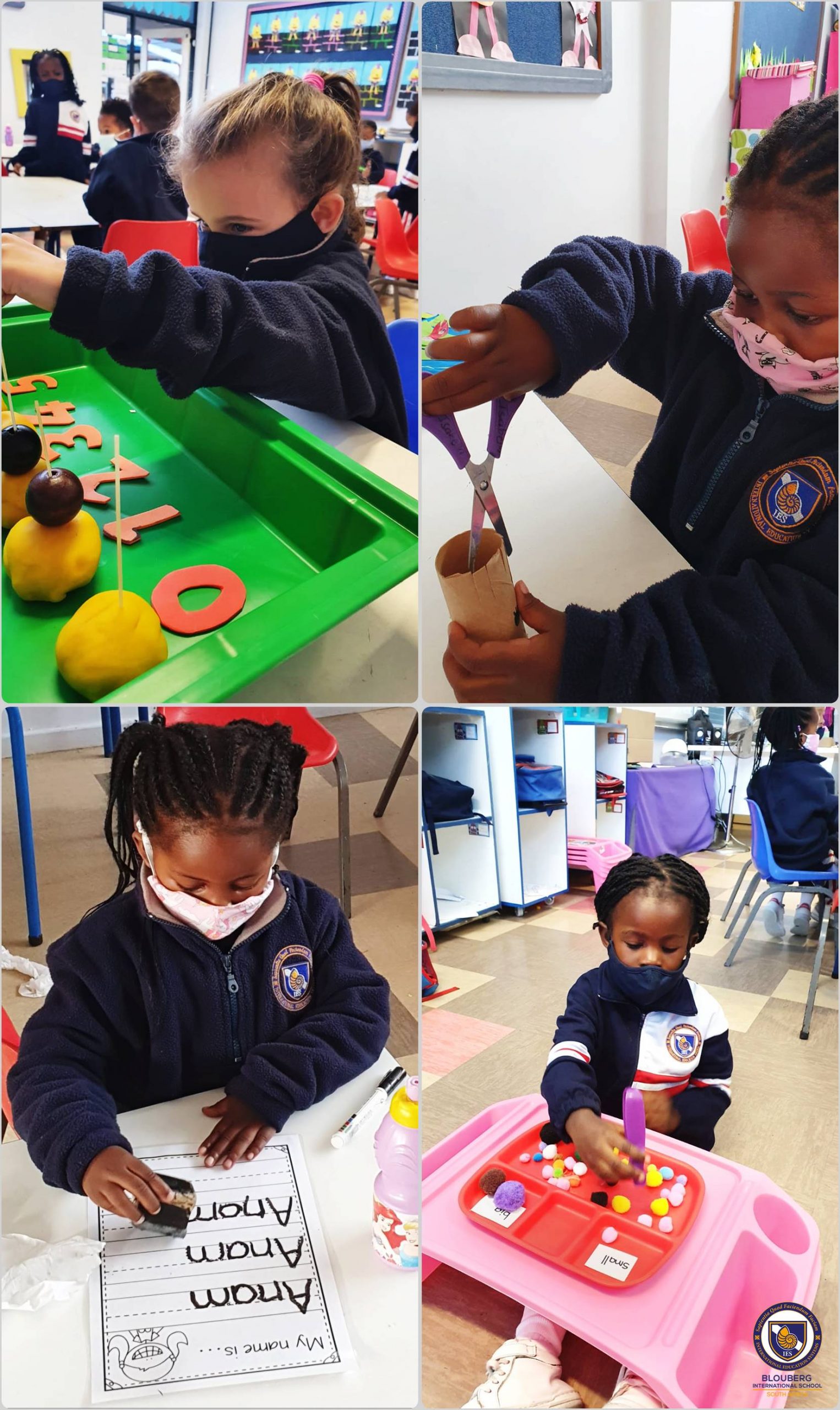
During the last few days of school, we spent a lot of time consolidating some of the work covered over the first two terms. The students used letter and number cards, playdough, whiteboards and markers and educational games to demonstrate their knowledge and developing skills. Some of the educational games we played were pattern match, colour recognition, shapes recognition and we have even learned how to write our own names!In Literacy, we learnt about all the Jolly Phonics and the sounds they make. Linking sounds to letters, naming and sounding the letters of the alphabet. A student cannot learn to read without proper knowledge of phonics. It is the foundation for success in reading. The students make a connection between the words we put together and what they look like in print. Phonics skills are necessary to jump-start the process of learning to read, but reading by sight is more efficient.
In Numeracy, we learnt about colours and shapes (2D) within our environment. We learnt about patterns, recognizing and recreating various patterns using a repeated sequence. We learnt about numbers, counting and using developing mathematical ideas and methods to solve practical problems. We even learnt about addition and subtraction and the correct vocabulary associated with them through number rhymes. Students have attempted to write for a variety of purposes, using features of different forms.
Martie van Dyk
Pre-Reception teacher


Jolly Phonics Fun
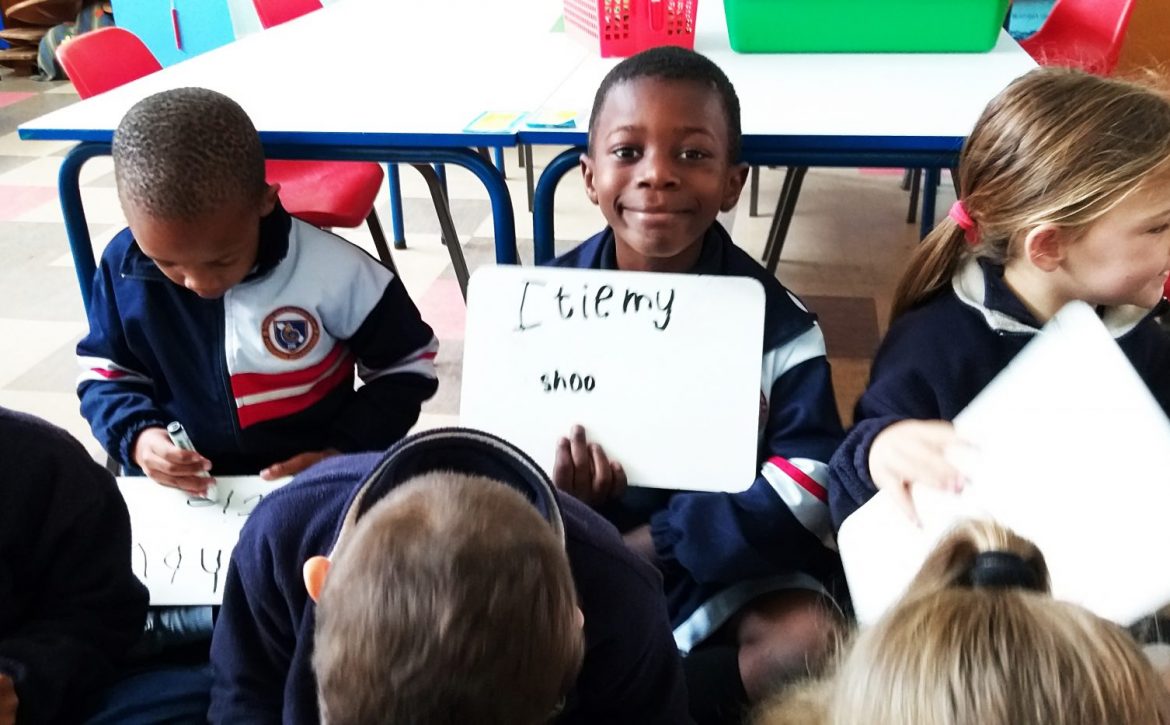
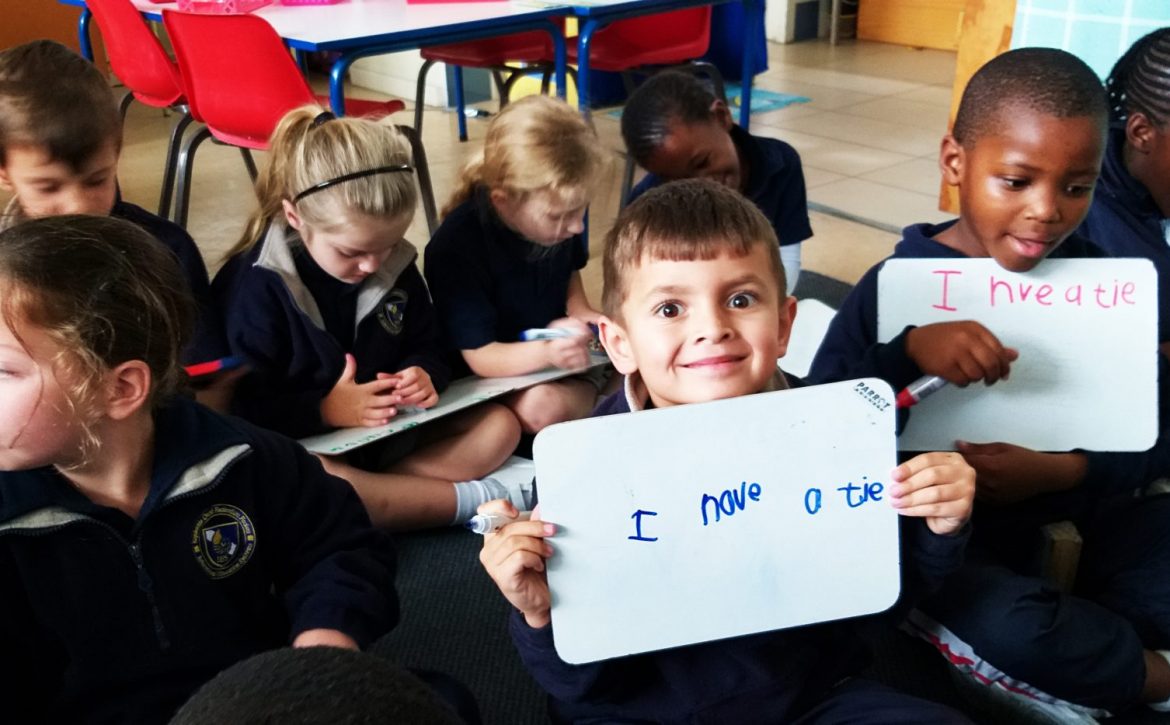
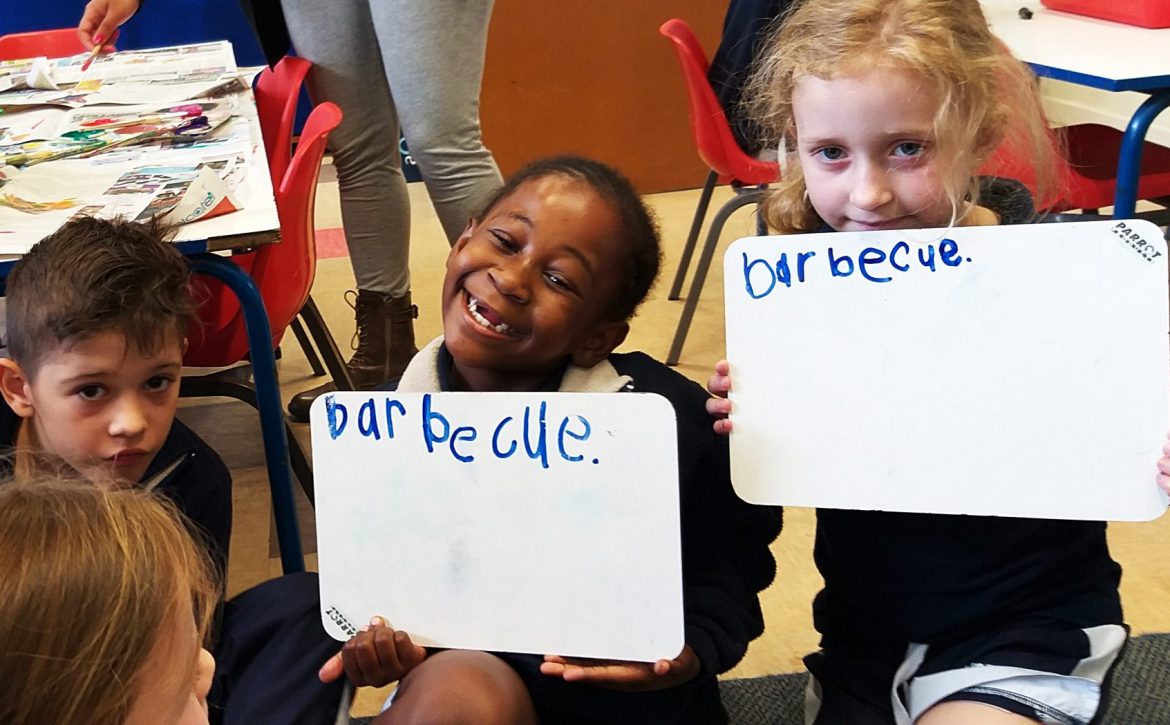
We do our Jolly Phonics lesson in the mornings. Each child gets a whiteboard, marker and duster and comes to the mat. We then write a letter sound down on the top of the board such as the blended sound ‘ai’. The teacher chooses a word. Sometimes they need to ‘unjumble’ a nonsense word to make a real word that the teacher has written on the board. For instance the nonsense word ‘arin’ becomes the real word “rain” when ‘unjumbled’.
Most often during these lessons we use “arm blending” to sound out a word the teacher has given. In arm blending the first sound is on the shoulder, middle sound on the elbow and last sound on the hand. So the word coat can be sounded out on the arm as ‘c’- ‘oat’- ‘t’ …coat. Once the students have sounded out the word together on their arms they are now ready to write the word.
Sometimes we put in sound buttons under the words. Single sounds get one dot below and blends get a line underneath. For example the sound buttons for the word coat would be ( . _ . ) .
We then write a sentence using the word. Sometimes the students have to ‘unjumble’ a sentence and sometimes they write their own sentence. When the students are finished they hold up their boards for the teacher to see and the teacher gives guidance about correct spelling of words and punctuation.
The students find these lessons very rewarding, because even more complex words can be easily sounded out using the arm blending technique. For longer words we use put the sounds in between the shoulder and elbow or between the elbow and hand. For example, the word “throat” will have the letter ‘r’ occurring between the shoulder and elbow and the word “sound” would have the letter ‘n’ occurring between the elbow and hand.
The students always feel a great sense of accomplishment as they begin writing words they could never have dreamed of writing before. They really love showing off their work on their whiteboards to both their teachers and friends and we always end up having a lot of Jolly Phonics fun.
Bronwen Nuthall
Reception Year teacher