
Monsters
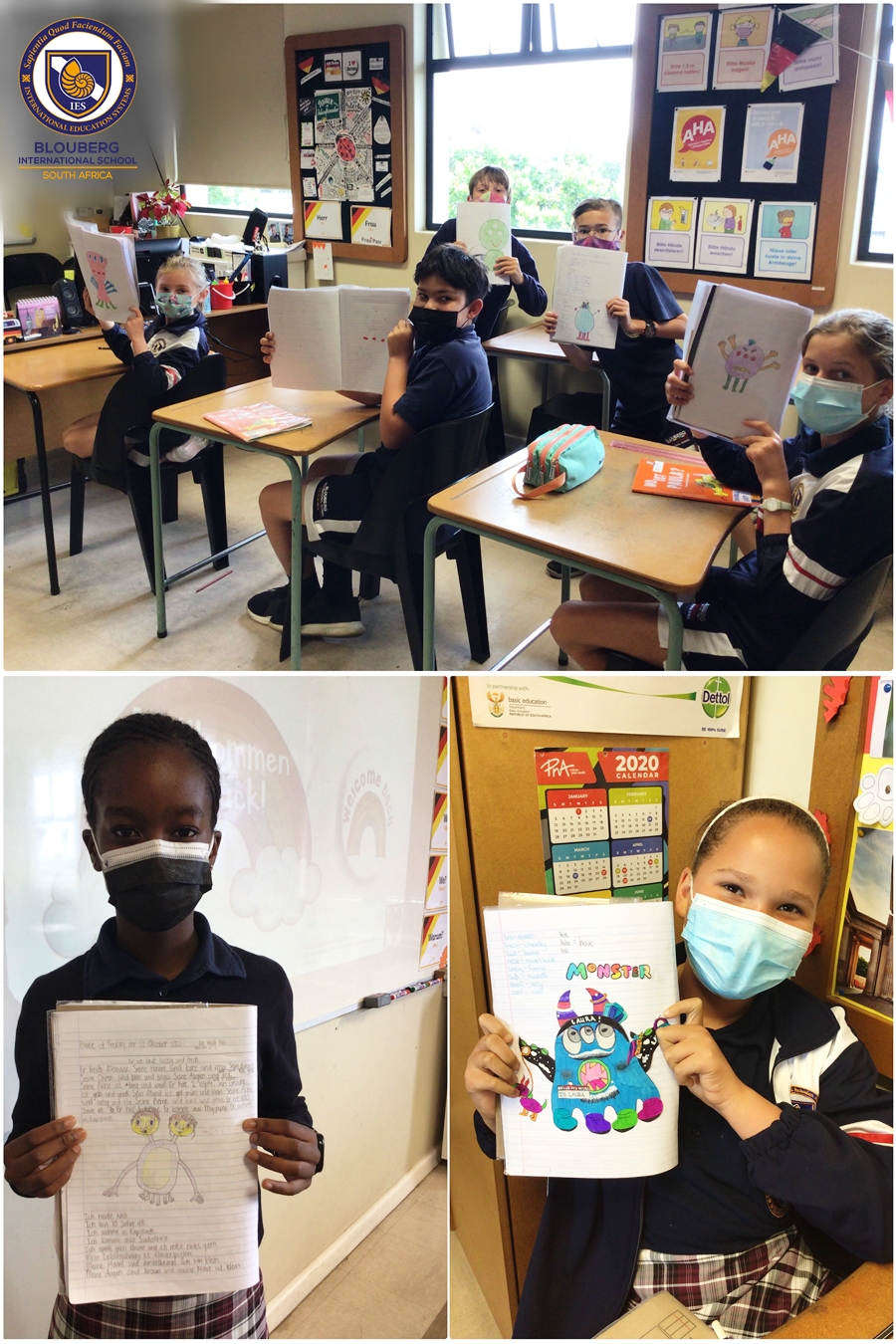
The key to learning any language is practise. Therefore, oral presentations are a pivotal part of the German lesson and gives all the students the opportunity to show what they have learnt in class and to practice their pronunciation. This term in Year 5, we learnt all the vocabulary for naming and describing the body as well as describing the character of a person.
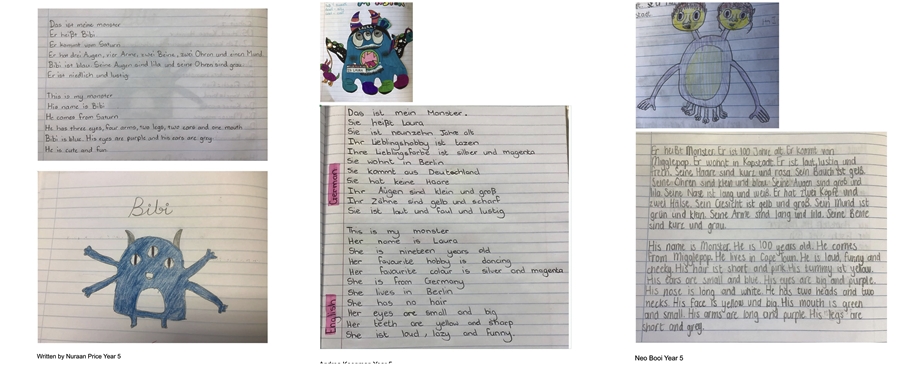
The project was to design a monster as colourful and different as possible and then to describe the monster using all the vocabulary including numbers, colours, plurals and grammar learnt in class.
The oral included a general introduction about the student and a description of their own body including colour of hair and eyes. A vital component to a good oral was using the sentence construction and vocabulary exactly as learnt in class so that all the students were able to understand the presentations.
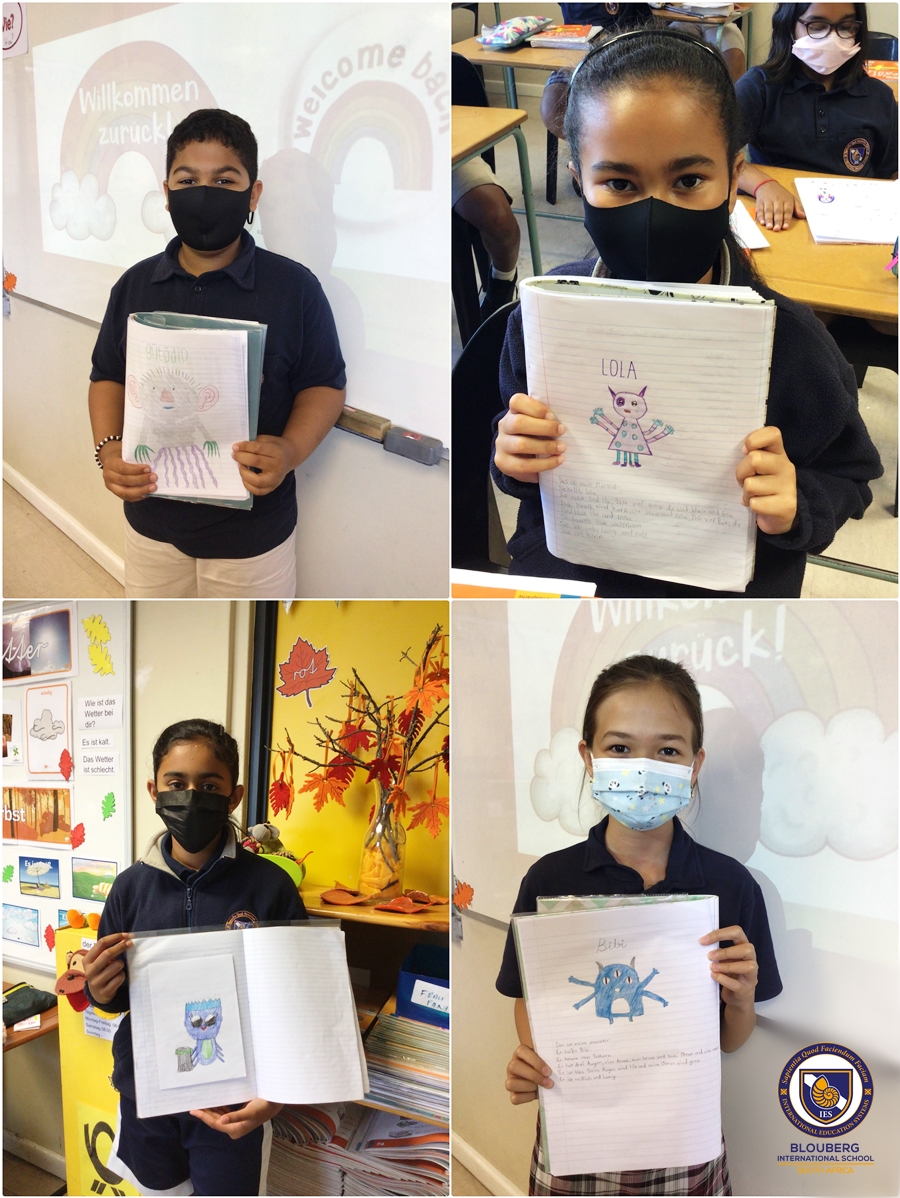
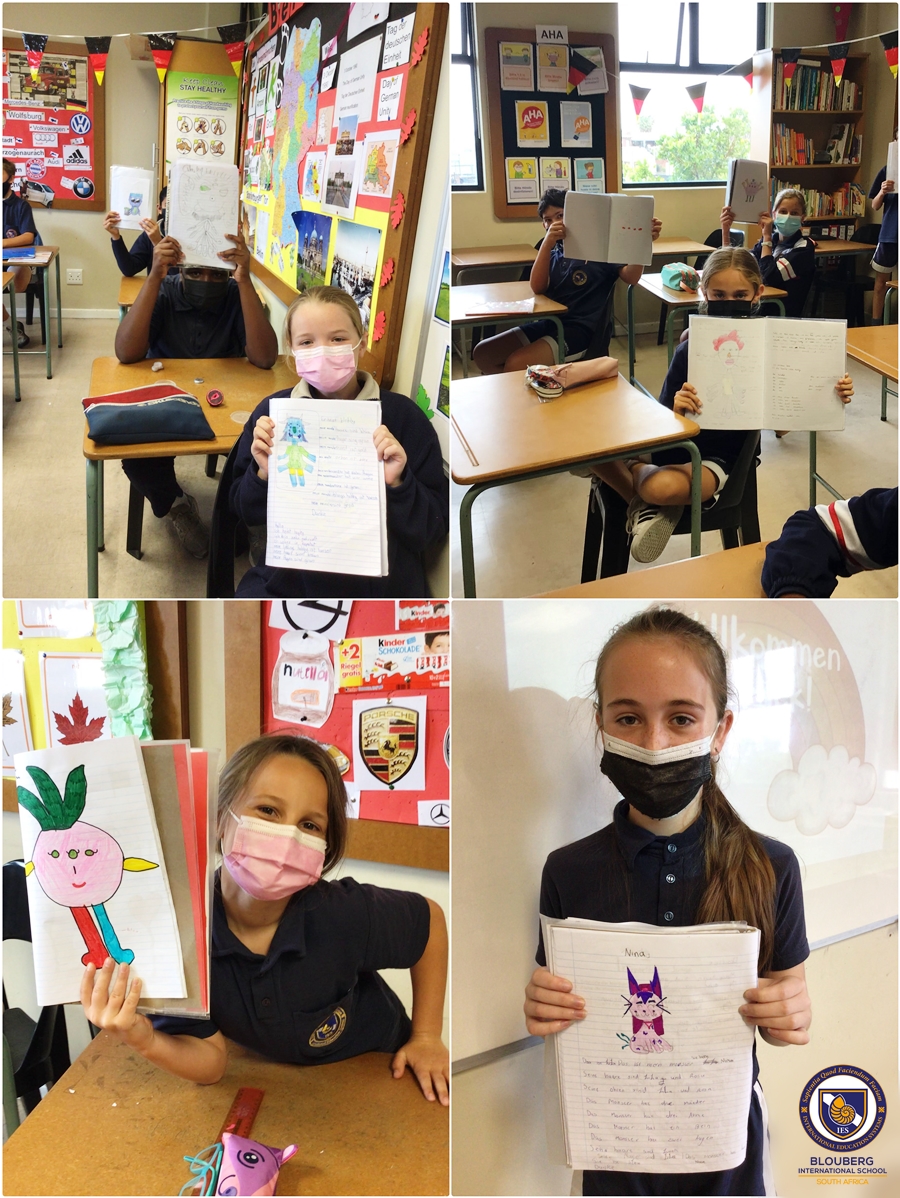
The Year 5’s invented many very interesting and original looking monsters and they were given very creative names. We were introduced to Gütädid, Laura, Bibi, Lola, Yu-de-cuta 1782, Nina, Blobby and Cerberus to name a few.
They came from very interesting places, as far as Pluto, and as close as Cape Town. They were very creative with all the colours then carefully naming them in German. They included many interesting amounts of body parts; 4 legs, 6 arms, 3 eyes, 2 heads and 2 necks. The description of the character of the monster included many similarities with the students themselves e.g. laut ,lustig und frech (loud, funny and cheeky). We also tested our listening skills, as the class was asked questions about the monster’s description to show understanding of what was presented.
Please see some examples of the students’ work in the photos attached. They did a great job in their presentations.
Well done Year 5’s and looking forward to continuing the journey in German with you next year in Year 6!
Frau Kerstin Pani
Primary School German Teacher

Read More

Sound & Vibrations
Experi-Buddies came to visit Year 1, to teach us about sound and vibrations, which we are learning about in our Science this term.
The students had a lot of fun experimenting in class, making sounds using balloons, marbles, water in glasses and spoons hanging on string.
Sound is an integral part of a child’s development. In fact, the Parenting Research Centre says, “Sound is critically important to the way children learn about their world.”
The Inting was such a great tool to help our students grasp the concepts even more comprehensively. Perhaps ask your child if they can explain sound and vibrations to you, their first-hand knowledge might just surprise you.
Charlotte Cronje
Year 1 Teacher


Year 2 Loves Brain Breaks!
Students are easily distracted, but regular, short breaks can help them focus, increase their productivity, and reduce their stress.
Students, particularly young ones, often struggle with staying focused for long periods of time. In a 2016 study, psychologist Karrie Godwin and a team of researchers measured how attentive elementary students were during class, and discovered that they spent over a quarter of the time distracted, unable to focus on the teacher or the current task. Shorter lessons, however, kept students’ attention high: Teachers found it more effective to give several 10-minute lessons instead of fewer 30-minute ones.
I have found this to be an extremely worthwhile exercise. Even if it’s just to get them to stand up and stretch, or have a quick run-around the playground, or even a lively dance to some music.
Our class has a few favourites. I can recommend to parents to have a look at a website called ‘Go Noodle’. There are some really good ideas, even to do at home.
Kim Coetzer
Year 2 Teacher
Read More