
Year 7 and 8 Cultural Outing
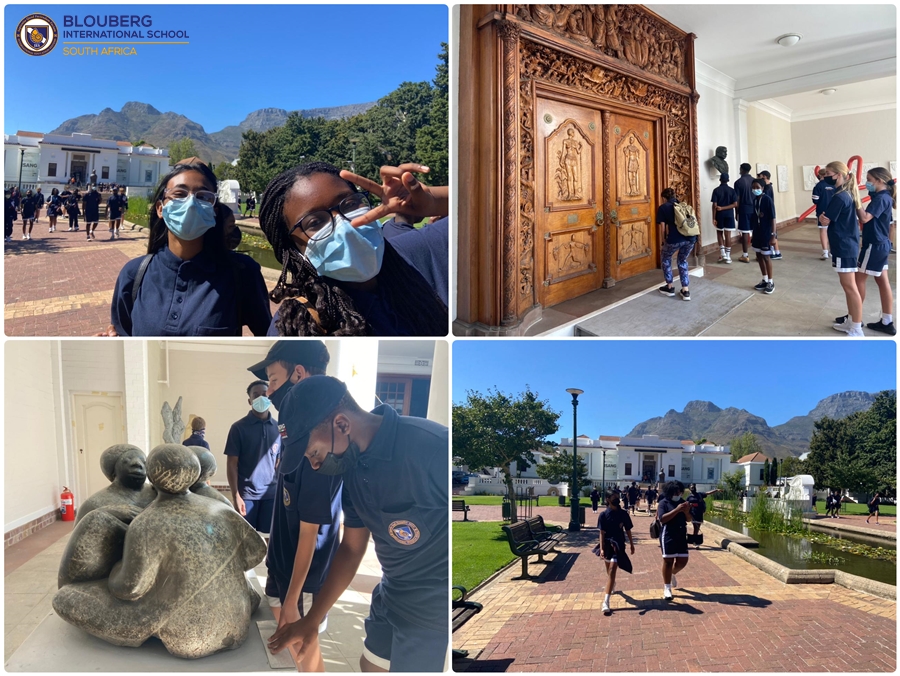
It is always a treat when the students are able to take some time away from their every day school routine for rejuvenation and energy. This is exactly what happened on Friday, 18 February, when the Year 7 and Year 8 students went on a cultural tour to Gardens and the Foreshore, where they visited the Iziko National Gallery and the Artscape theatre.
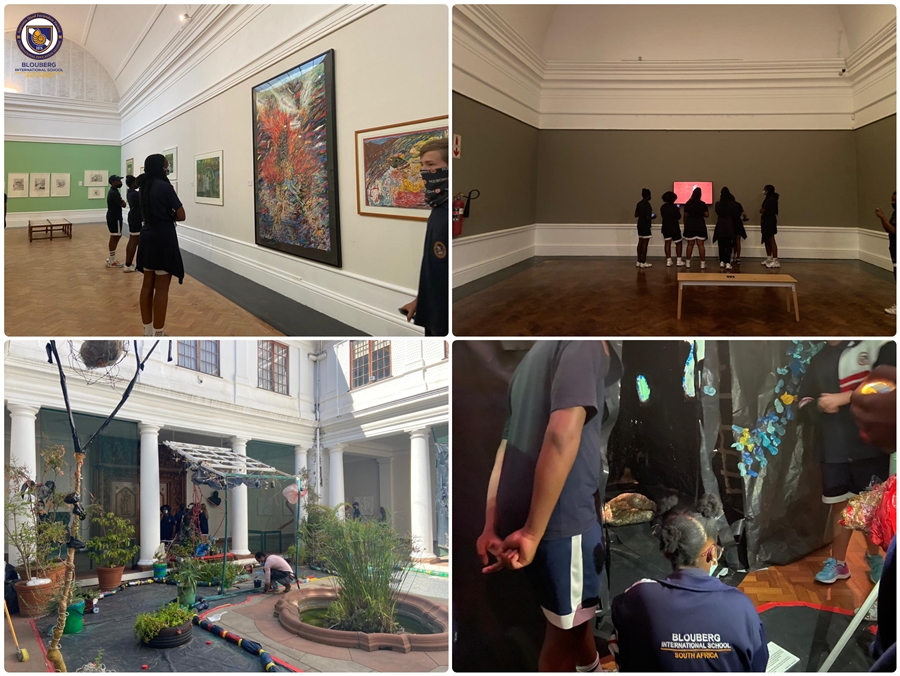
We were able to see two exhibitions at the National Gallery, “Drawing from the Collection” and “Tribute”.
“Drawing from the Collection” showcases a variety of drawings and works on paper from the Permanent Collection of Iziko South African National Gallery. The artworks represent an eclectic number of visual artists working in different styles and stretches across history and countries to provide an overview of drawing as a medium.
“Tribute” is an active display. Here we could interact with artworks especially chosen to support their classroom practice.
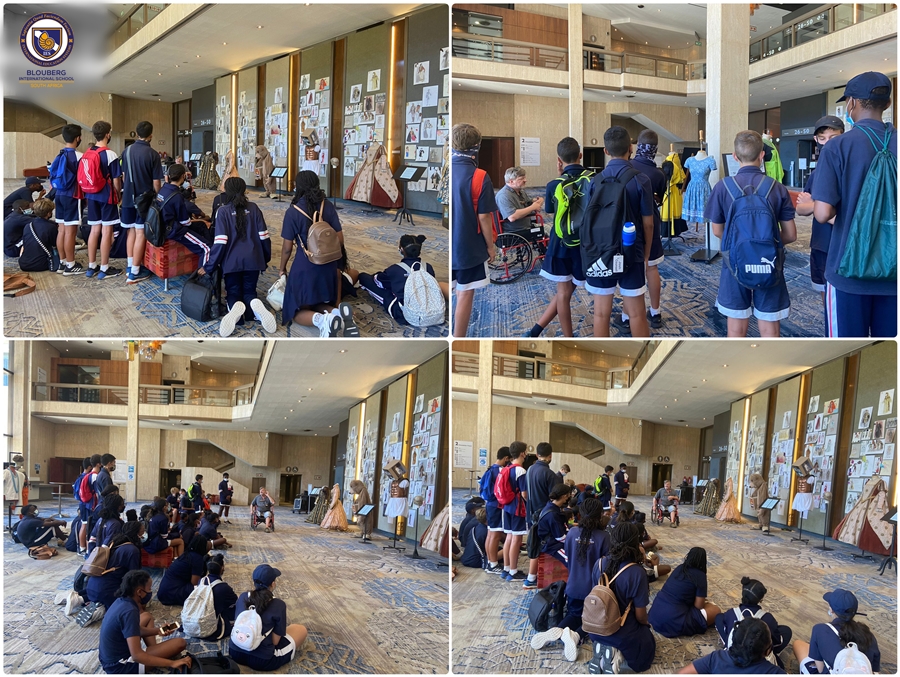
Our next stop was the Artscape Theatre in the Foreshore, where we had a guided tour of the costume exhibition. The exhibition portrayed the unforgettable moments for various productions dating back from 1971 to the present day.
After we had our fill of culture, we refuelled at the Food Court of the popular V&A Waterfront. This concluded our Cultural outing. With transport by Elwierda, we made our way back to Blouberg International School safe and sound.
Riaan Vosloo
IGCSE, AS and A Level Art and Design Teacher




Read More
What role do physicists play in the advancement of human civilisation?
If it weren’t for physicists, the world as we know it, would be a very different place. I cannot imagine what life is like for the uncontacted North Sentinelese tribe which has none of our modern technology. If all modes of transportation and communication ceased to exist for a minimum of 30 days, how would your life be? Would the human race survive? It is these types of questions that drive physicists to constantly develop new technologies. Most of the cutting-edge technology used in the 20th century was developed by physicists collaborating with professionals from various disciplines. For example, in 1938, Lise Meitner and Otto Frisch discovered nuclear fission, which was used to build nuclear bombs and is used today in nuclear power plants to produce electricity for our homes and businesses.
A degree in physics equips one with analytical and problem-solving skills, which are in high demand. These skills also offer a background for understanding an increasingly technological society. Physics degree-holders wind up in a wide range of jobs, many outside of academia. Physics grads often work in the private sector and sometimes at government laboratories. “Financial institutions are always on the lookout for physics majors since they have the perfect blend of strong math skills and the training in how to apply math to modelling real-life problems,” says Jed Macosko.
Look at the evolution of computers: the first computer had a processing speed of 1 MHz, but through understanding quantum physics, the fastest computer to date, can process data at 100 million times faster than the classical computer.
Physics is the study of nature itself. The more we understand nature, the more we can advance as a civilisation.
Brian Sizani
IGCSE, AS and A Level Physics and Mathematics Teacher


Read More
Hands On Physics
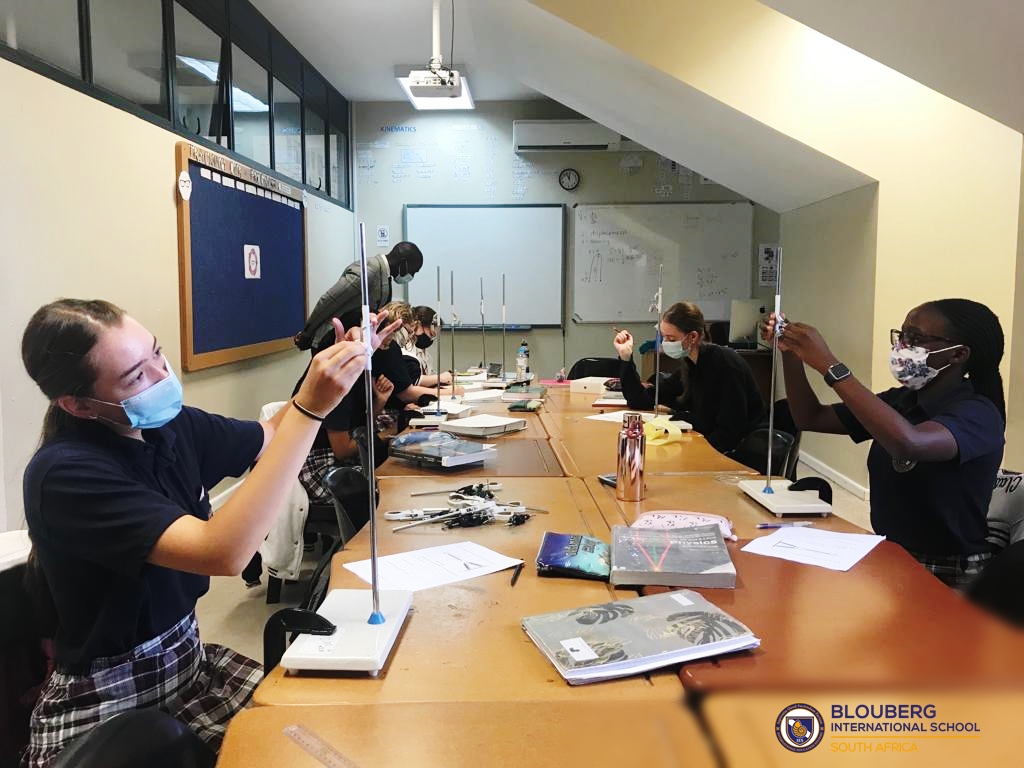
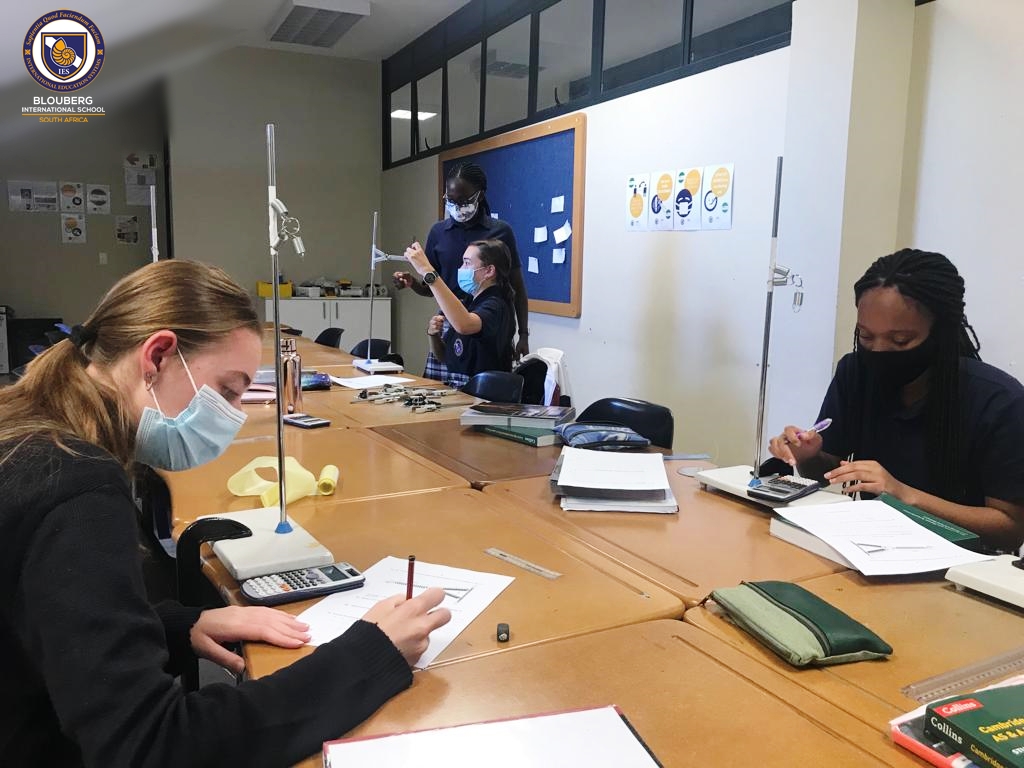
I often hear people say, “Physics is hard” or “it’s for intelligent individuals” and I beg to differ. When we were toddlers, we were curious, we asked questions frequently, we were hands on and our parents encouraged us to explore the world around us. As we progressed into adolescence, some of us stopped asking questions and started believing everything we see or hear.
Many neurological studies have shown that curiosity enhances people’s abilities to learn and retain new information. Physics is for curious people. Anyone who isn’t afraid to ask “foolish questions” such as why the sky is blue, what causes ocean waves, are we the only human beings in the universe, etc., can be a good physicist.
In a quest to find answers to nature’s great mysteries one needs to have an enquiring mind. Great physicists have strong scientific ability. They have an analytical approach to solving any problem.
This term the focus was on developing the students’ scientific skills such as:
- Problem solving skills, other technical skills
- Mathematical skills applied to physical systems
- Analyzing and modeling physical process
- Gathering data, making testing models and predictions
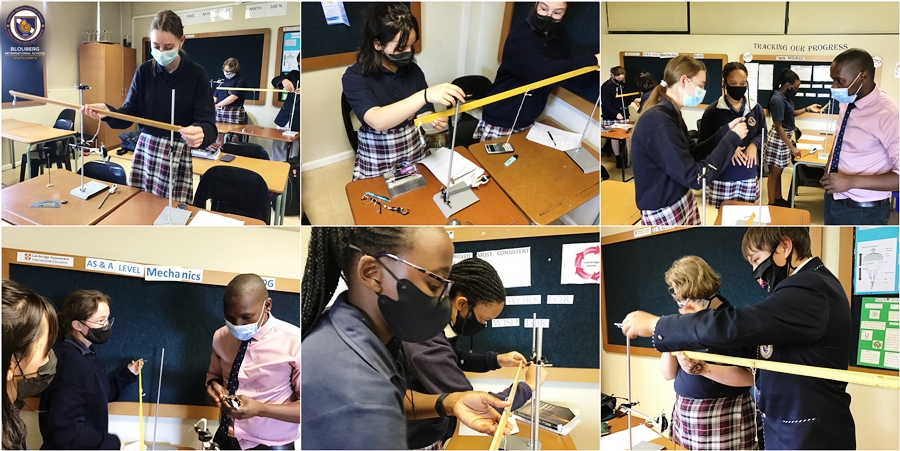
The year 9 students were given a task to build a model of a periscope for SA NAVY. A periscope is an instrument for observation over, around or through an object or obstacle, it is usually used in land and sea warfare by the military. The underlying physics concept is internal reflection of light.
In year 11, the students are making a remote-controlled toy car. This project will help them understand how motors work, the role of rheostats in a circuit and they will also get to do a bit of engineering while at it.
All these HANDS ON projects are aimed at developing the above mentioned scientific skills. Whether or not students continue with physics post high school, they will have these essential skills for any field of work.
Brian Sizani
IGCSE, AS and A-Level Physics Teacher
Read More
Year 5 Measuring Shadows
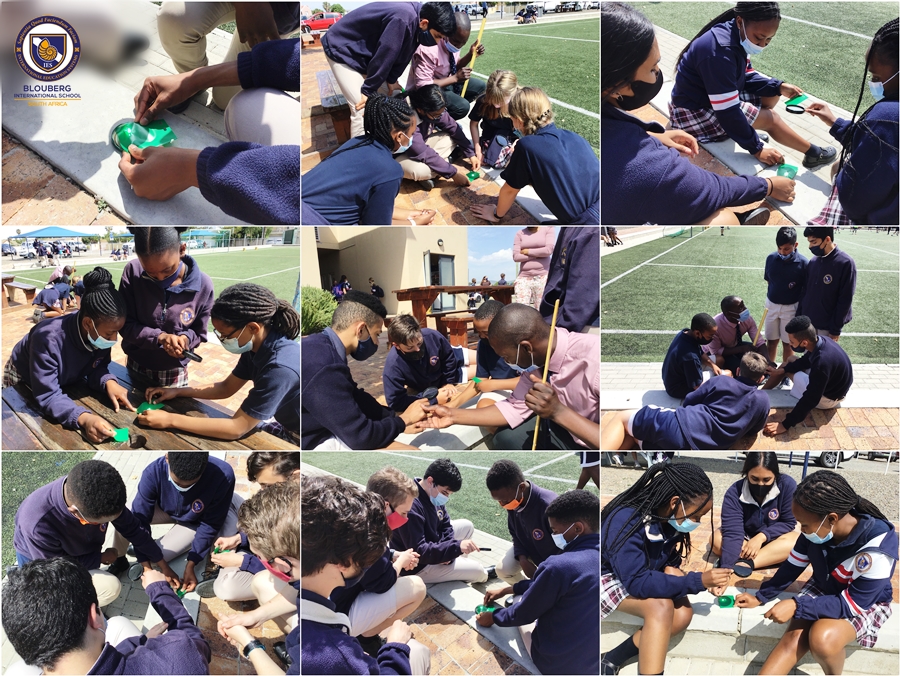
Over the past few weeks, the Year 5’s have been looking into shadows; How they are formed, what factors affect their size, and how they change in position and size throughout the day.It is one thing to listen to someone else’s conclusion as to why things work the way they do, but another to investigate it yourself – and our budding scientists have been doing just that! What happens to a shadow when the light source moves further away from the object? Well, ask any of our Year 5’s and they will not only be able to explain it but demonstrate it as well.
Working in pairs, our little investigators hypothesized their predictions and set out to read and record as much data as they could in order to make it a fair test. From these results, they drew conclusions about how the distance between a light source and an object affects the size of it’s shadow – and had buckets of fun while doing so!
Robyn Pieters
Year 5 Teacher


Chemistry
At BIS students can choose Chemistry as a subject from Year 9. This provides students with a unique opportunity to have more variety in high school as Chemistry and Physics can be taken separately instead of as a single subject. Students can choose between Chemistry and History and between Physics and Art. This often results in some interesting subject combinations such as Chemistry and Art or Physics and History.
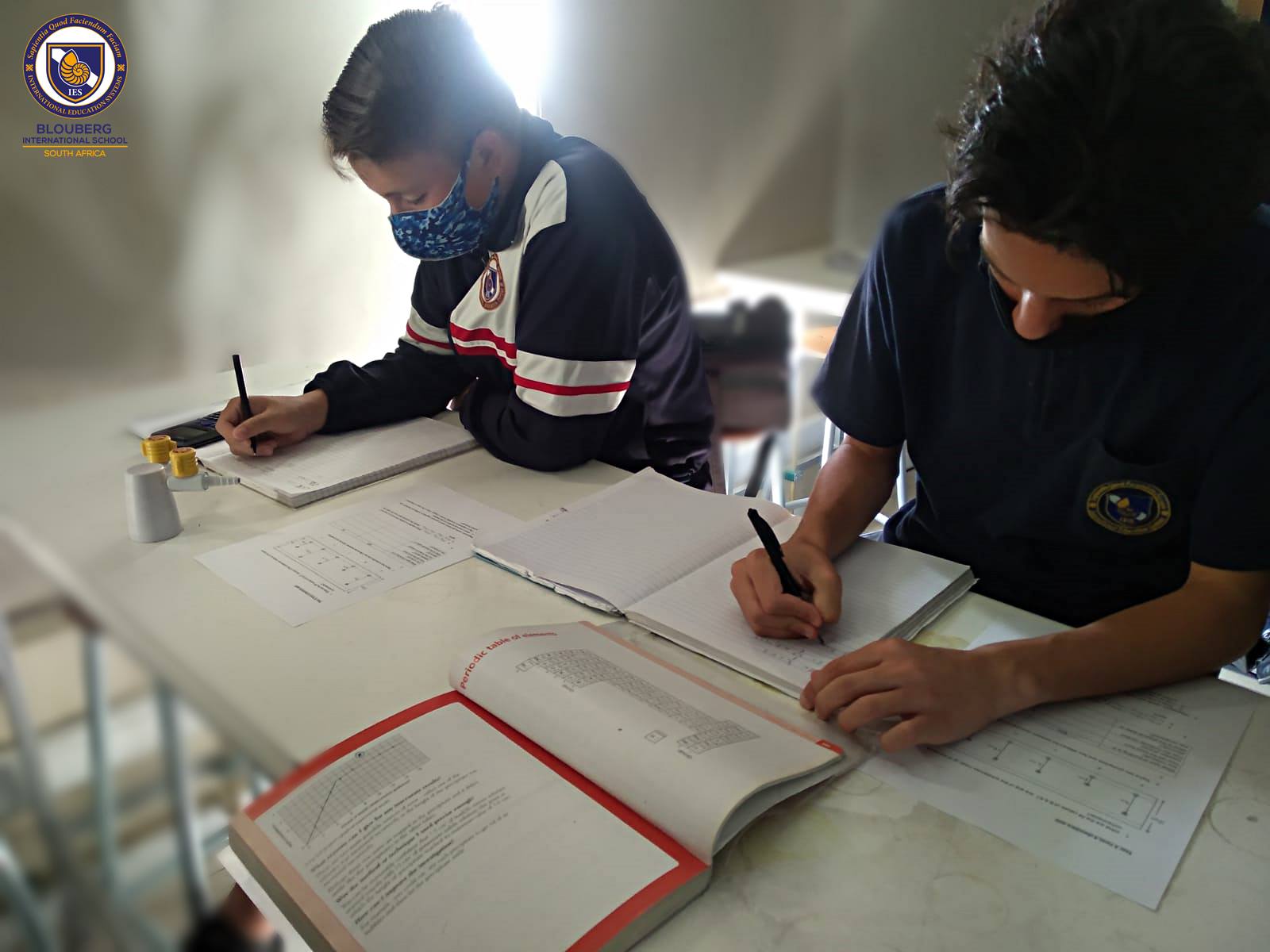
After a long period of online lessons, it is exciting to have the Chemistry students back in the classroom. Since BIS is privileged to have a well-equipped science laboratory, Chemistry practicals can now take place again.
This term the Year 9’s have been revising electrochemistry and enthalpy changes, whilst the Year 11’s have been revising chemical equilibrium, Hess’s Law and Maxwell-Boltzmann distributions.
Philippa Gogh
High School Chemistry Teacher


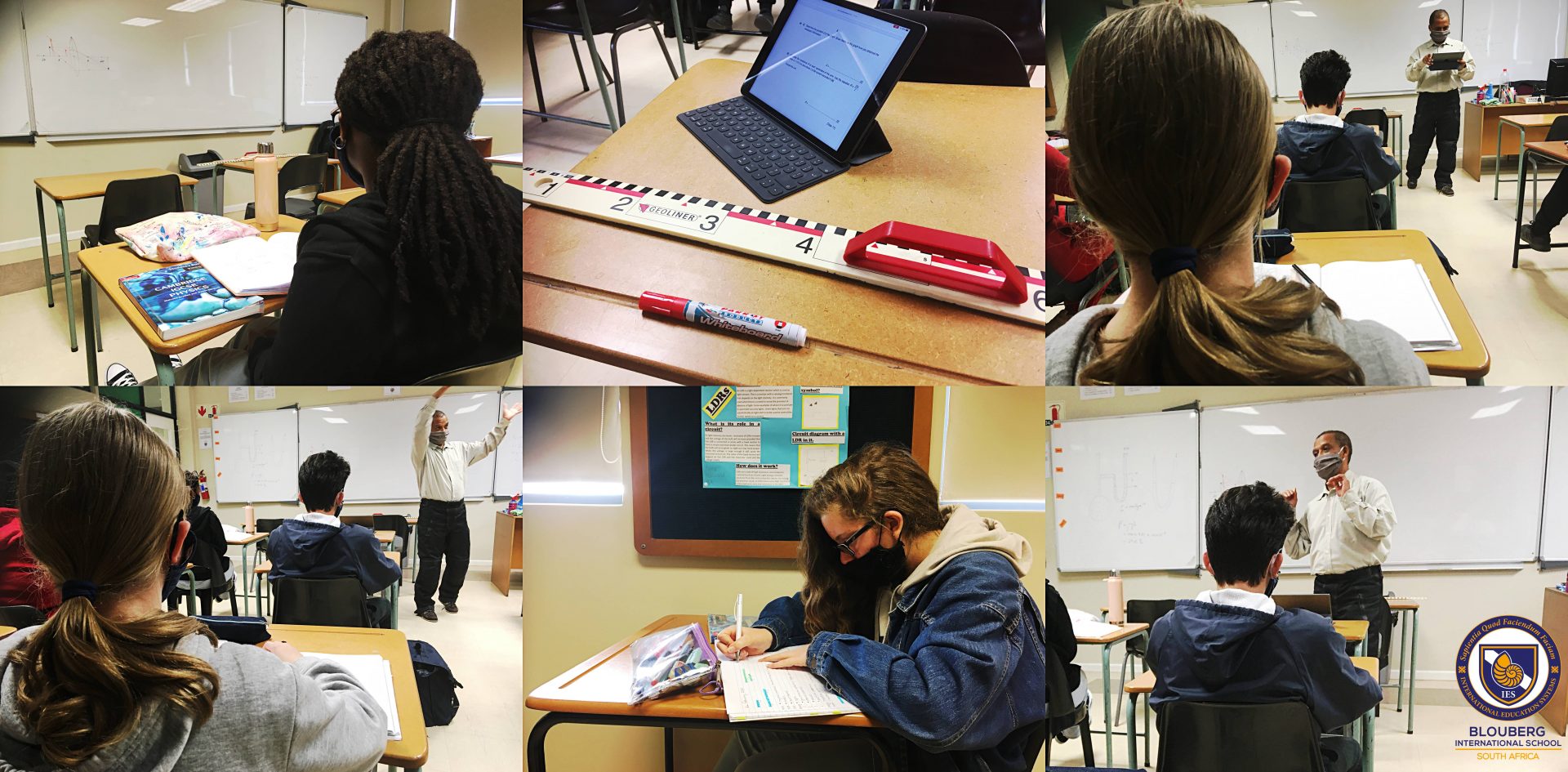
The Importance of Physics to Society
The future of any country and its contribution to the global economy is linked to its ability to develop its human capital in the field of science and engineering. Through its scientists and engineers, it is able to develop infrastructure for trade and industry.
In order to pursue a career in science and engineering one needs to have the ability to think analytically. The student, in Physics, studies an array of interesting topics ranging from matter, energy and their interactions. Physics is an international enterprise, which plays a prominent role in the future progress and survival of humanity.
Support for Physics and research is important because:
- Physics is an exciting intellectual adventure that inspires young people and expands the frontiers of our knowledge about Nature.
- Physics generates fundamental knowledge needed for the future technological advances that will continue to drive the economic engines of the world.
- Physics contributes to the technological infrastructure and provides trained personnel needed to take advantage of scientific advances and discoveries.
- Physics is an important element in the education of chemists, engineers and computer scientists, as well as practitioners of the other physical and biomedical sciences.
- Physics extends and enhances our understanding of other disciplines, such as the earth, agricultural, chemical, biological, and environmental sciences, plus astrophysics and cosmology – subjects of substantial importance to all peoples of the world.
- Physics improves our quality of life by providing the basic understanding necessary for developing new instrumentation and techniques for medical applications, such as computer tomography, magnetic resonance imaging, positron emission tomography, ultrasonic imaging, and laser surgery.
All educational institutions should thus promote physics as a subject with fervor and commit the necessary resources to create the infrastructure where students will be able to explore and satisfy their quest for scientific knowledge and solutions to everyday challenges.
Patrick Katzen
High School Physics Teacher
Read More
Online Class Quiz Games
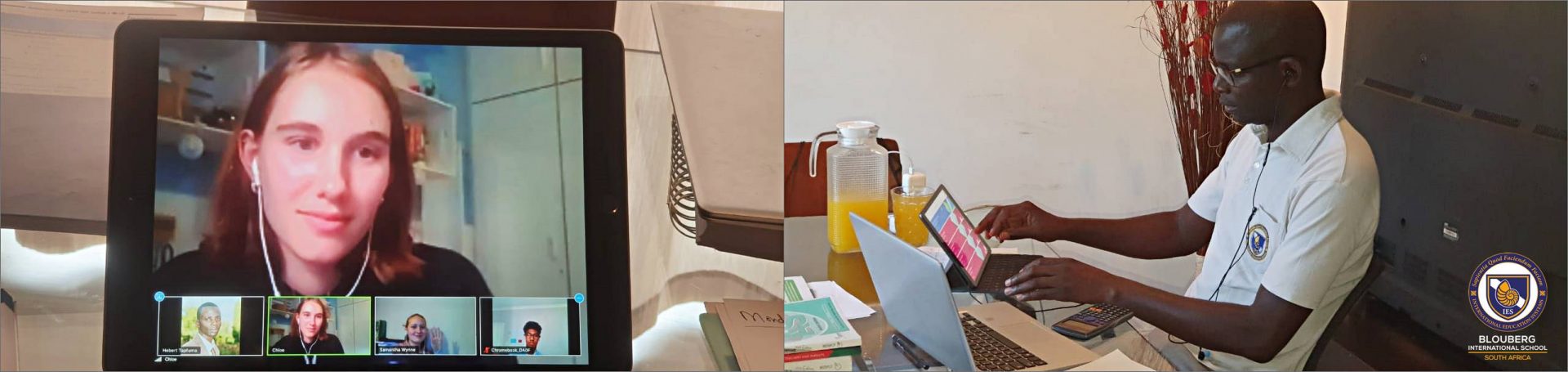
The world has inevitably changed how we teach and how students access, share and facilitate information. Mathematics has been fun for most our students, with the assistance of great websites like Quizizz, Kahoot, and SPARX, which allow students to be interactive while learning. The most popular way of teaching has been the use of pre-recorded videos, either from specialist providers such Khanacademy or produced by teachers themselves. The latter have typically involved teachers delivering lessons backed by PowerPoint presentations on Zoom, the most popular screen and video recording software.
I love hosting classroom quiz games. They can be great for formative assessments and a tool to help students review before a test. You’ve probably used (or at least heard of) the multiplayer gaming website Kahoot. There’s a lot to like about Kahoot: it’s free, works in web browers on tablets, computers, and smartphones, and you can input your questions (or copy a pre-made quiz from their library).
Quizizz is an alternative to Kahoot, and there’s also a lot for educators and students to enjoy. It is very similar to Kahoot, with a few key differences. Just like Kahoot, the teacher (or host) chooses a quiz to begin. A five digit game code is provided. Players (students) use their browsers to join.quizzizz.com and input the game code, along with their names. If students are using smartphones or tablets, I display the join link as a QR code.
Kahoot is designed to show multiple choice questions on a large screen, and students respond by clicking buttons on their devices that correspond to the answers they want to choose.
Quizizz takes a different approach. No projector is necessary because students see questions and answer options on their own screens. The question order is randomized for each student, so it’s not easy for students to cheat. With Quizizz, students don’t have to wait for the whole class to answer a question before they continue to the next one.
So, Quizizz is student-paced while Kahoot’s pace is determined by the teacher or host. This is the major difference and can be a benefit depending on the situation. If you want to pause after each question, then Kahoot is better. The class can stop and discuss after each question, immediately addressing misconceptions. With Quizizz, students zip through questions at their own pace, limiting all discussion to after all questions have been answered.
This pandemic has showed us all how important the bond between teacher, student and parent is. It is because of the parents that we are successful at implementing various strategies outside of classroom, since they are the ones who have more contact time with their kids.
I want to thank all the parents that have supported us throughout this unusual journey.
Brian Sizani
High School Mathematics and Physics Teacher


Physics – What is it?
Physics is a branch of science concerned with the nature and properties of matter and energy. The subject matter of physics includes mechanics, heat, light and other radiation, sound, electricity, magnetism, and the structure of atoms. The world of Physics is an exciting but daunting field of study and spans many different aspects of our universe.
We develop different theories to understand and predict the world around us. Experiments are then conducted to validate or disprove our original theory. Theory, without practice would be very boring and very difficult. For this reason, we conduct regular experiments and visit industry where many of the theories can be seen in action and the power of our knowledge be harnessed to benefit mankind.
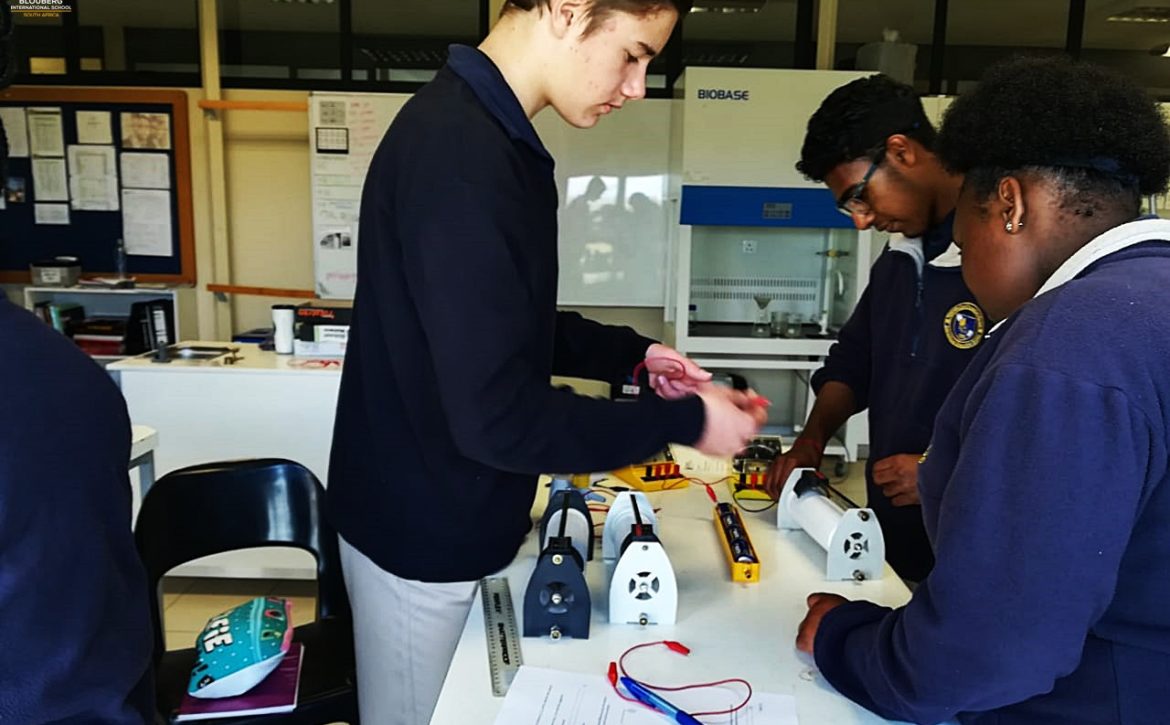
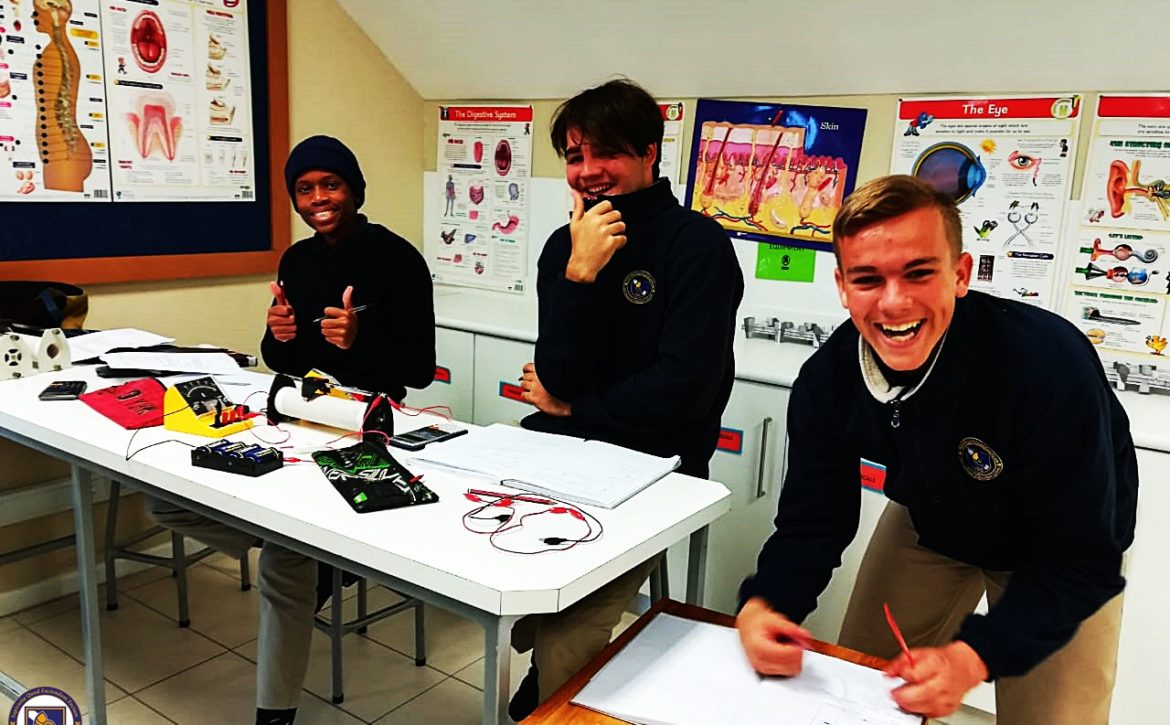
Our Year 10 & 11 students recently conducted experiments to prove Ohm’s Law. Definition: a law stating that electric current is proportional to voltage and inversely proportional to resistance.
For more information on the application of physics follow the link to this brilliant article.
https://www.topuniversities.com/student-info/careers-advice/what-can-you-do-physics-degree
Patrick Katzen
High School Physics Teacher
Read More