
Kindness
“Kindness is something anyone can give without losing anything of themselves”
As a year 3 group, we have been focussing on kindness in our skills week. Mrs Cronje and Ms Blake’s class have adopted kindness jars. Inside of these jars are wonderful stories of kindness that our children have either been involved in or acts of kindness that they have received.
Here are some of them:
“My sister helped me do a back-bend. Thank you Umi”
“I helped my friend build a puzzle”
“I calmed my friend down and it helped her”
“We gave R20 to the office that we found. We were honest”
“I helped my friend when she got hurt”
“I was looking for my eraser and Keona gave me hers. I did not ask for it but it was very kind”
“I helped my friend build a puzzle”
“I used ice words to my friends and my friends helped my alot”
“I helped my friend”
“My friend gave me a health Pokemon card”
“I helped lots of people to clean their desks”
“In Science my friend and I helped each other”
“I gave play-dough to my friend”
“My friend was being kind to me”
“It was my birthday and I gave everyone their favourite doughnut”
“My friend had nobody to play with so I played with him”
Even if we don’t have physical kindness jars in our homes, why not begin to collect your kindness memories in your heart?
“Carry out a random act of kindness, with no expectation of reward, safe in the knowledge that one day someone might do the same for you.” – Princess Diana
Carol Blake
Year 3 Teacher


Read More
Kind, Caring and Encouraging
This week has been extra special to the BIS family, as we have been celebrating the BIS Kindness Challenge for 2023. This wonderful initiative was introduced by our amazing school counsellor, Kayla Smith, and is targeted at the Year 4 to 12 students.
The goal is to spread kindness throughout our school this month, ensuring that it is a value our students and staff uphold at BIS.
Students are encouraged to show each other kindness by doing a variety of challenges and tasks. Some of these activities include:
- The Kindness Challenge: There are multiple random acts of kindness that students are challenged to complete. Such as: Write a list of 5 things that you love about yourself or Make sure your pets know how much they’re loved!
- A Kindness Tree: This tree will be popping up on a display board and it is going to blossom with the handprints of students containing kind messages and pictures.
- Mirror Motivation: Teachers will leave a motivational or kind message for students that will be added to the bathroom mirrors.
- Kindness Stone: Students decorate a stone with kind words that will be added to our garden.
- Chain of Kindness: Students had to reflect and write down a time that someone was kind to them. This will be added together to form a long kindness paper chain.
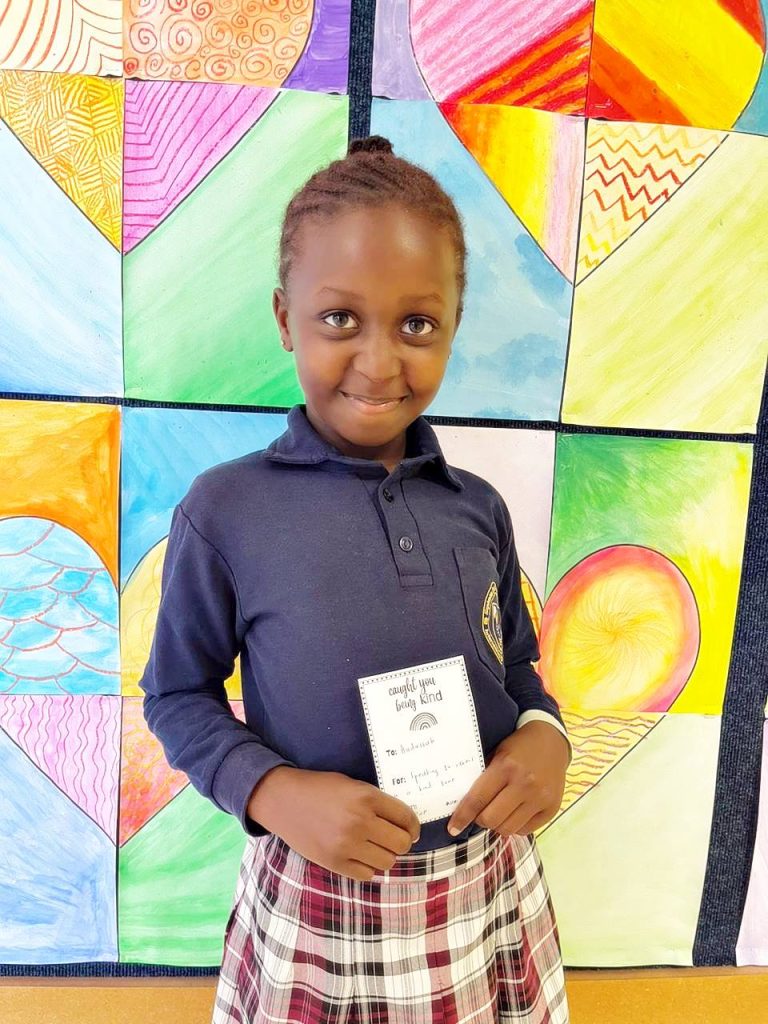
- “Caught you being kind” vouchers: These are given to students when they complete random acts of kindness. This will be kept for a surprise towards the end of the Kindness Challenge!
Class 5RdP has our very own No Drama Llama Award that is handed out at the end of every week to a student that has shown kind, caring and encouraging behaviour.
We look forward to seeing the entire school participate in the BIS Kindness Challenge and spread kindness like confetti!
“If you have good thoughts they will shine out of your face like sunbeams and you will always look lovely!” – Roald Dahl
Ria du Plessis
Year 5 Teacher and Coordinator






Planting the seeds of knowledge!
Planting the seeds of knowledge!
A little seed for me to sow.
A little seed to make it grow.
A little hole, a little pat
A little wish and that is that.
A little sun, a little shower.
A little while,
And then a flower!
What do seeds need to grow? This was the question posed to our Year 5’s in our first Science lesson this term.
But… instead of telling the students, we decided to let them discover it for themselves. Using their knowledge of what a fair test is, the students investigated by setting up their own scientific enquiry. In groups, they were supplied with four plastic cups, soil, 12 seeds and a little water. Together a discussion was held on what the independent, dependant and control variables would be. Once they reached a consensus, students set about planting their seeds. Two samples were placed in a warm place in the classroom – one with water and one without. The two remaining samples made their way into their teacher’s fridge-one with water and one without.
Predictions were made and arguments put forward, but only time will tell. For the next couple of weeks, students need to water some of the seedlings and keep a vigilant eye on any possible germination before they can reach a conclusion. Watch this space!
Well done Year 5’s!
Mandy Goch
Year 5 Teacher


Read More

The Egyptian Wesekh
Term 4 is always the most exciting for our Year 3’s. This is because they have seen previous Year 3 “Egyptian’s” strutting the school grounds in all their Egyptian finery and they just can’t wait to start learning about Ancient Egypt. We kicked off the term investigating Egypt’s geographical features, the pyramids, Nile River, Egyptian civilization, Pharaohs, as well as their gods and goddesses.
Our Year 3’s have also already begun planning for Egypt Day and have created a beautiful jewellery accessory known as a Wesekh that they can wear on the day. The jewellery of ancient Egyptians held religious and symbolic significance and was treasured for its beauty and power against evil and death. It was buried with men and women because the Egyptians expected to enjoy wearing their finery in the afterlife.
We started our Wesekhs by looking at various real examples and discussing their features and designs, looking in particular at shape, symmetry and colour. Students then went ahead and designed their necklace by first deciding on a shape and then layout. The next step was to decorate the Wesekh by using anything that sparkled including old costume jewellery, glitter, beads and precious stones that the students collected. The results were stunning!
Be sure to keep an eye out for these amazing accessories on the 12th of November when Year 3 steps out in style on Egypt Day!
Mandy Goch
Year 3 Teacher

Read More
Exploring Seed Dispersal
This term, the Year 5’s have been learning about the different ways seeds are dispersed. We looked at seed dispersal by animals, humans, wind and water. Seeds must be dispersed so they have enough space, water and light to grow into a new plant.
Fun Facts about Seeds:
- The largest seed in the world is the double coconut. It can measure up to 50cm (1.6ft) around the middle! Some coconuts have floated 2,000km over the sea before they find dry land!
- Seeds provide the world’s daily food. Your breakfast cereal and toast, your pasta or pizza lunch and your rice dish for tea all started life as seeds from different grasses.
- Some orchid seed-pods hold 3 million seeds.
- Kapok is soft, fluffy stuff that comes from a seed-case. Years ago it was used to fill life jackets, because it is light, strong and waterproof. Nowadays, modern plastics have replaced it.
- Some seeds found in frozen soil in Canada were grown and produced flowers – the seeds were thought to be more than 10,000 years old!
- There are some very dangerous seeds, such as those that come from deadly nightshade; two berries could kill you. Even more dangerous are the seeds from the Castor-oil plant.
- Most oak trees don’t grow acorns until they are at least 50 years old. If you have planted an acorn, how old will you be before you can plant its acorns?
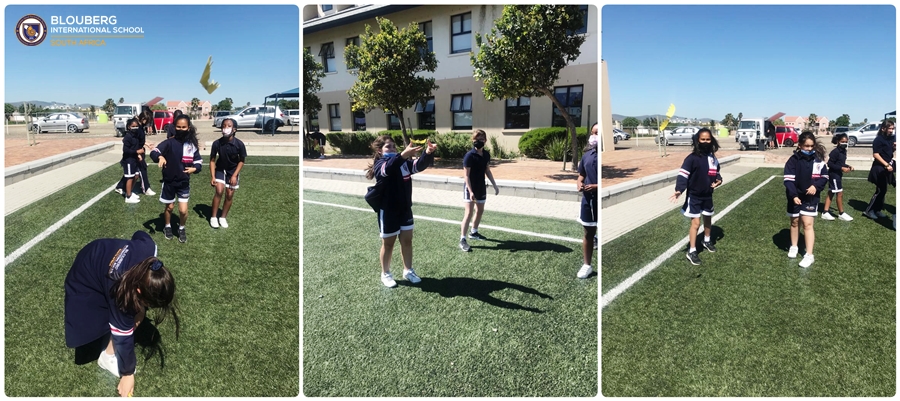
My class (Year 5NM) recently decided to create our very own papery wing shaped seeds to test out how the wind would carry it. We designed different shapes of wings that we attached to a bean seed. We made sure to use paper, making the wings light and feathery, easy to be moved by the wind.
The results of this experiment were great! Students went outside and put their wing shaped seeds to the test. They were exhilarated to get hands on experience with seed dispersal.
Seeds are so interesting and we will certainly never think of them as just seeds ever again.
Nadia Mahomed
Year 5 Teacher

Read More

Cool Beans!
Towards the end of last term, the Year 5’s began to explore the life cycle of plants, and investigated which factors are needed in order for a seed to begin to germinate, as well as what happens in the beginning stages of a plant’s life! We conducted an experiment where we gave two batches of seeds warmth and water, but only gave one batch of seeds air. Through this investigation, we learnt that seeds need all three factors, water, warmth AND air to germinate, as the seeds with air began to germinate, while the other batch did not!
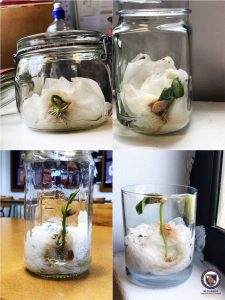
Just before the holidays, the Year 5’s “planted” their very own bean seeds in a clear jar with paper towel and some water. The seeds were left in a nice sunny, warm spot and given water when needed. On return to school, the kids were thrilled to see just how much their bean babies had grown! By the end of the holidays, all the seed coats had split open, most had grown in intricate series of roots, and a few had even grown a tall shoot with the first two leaves! After such an eventful introduction to the topic of plant life cycles, we just can’t wait to see what else we will be learning about our wonderful world in Science this term!
Robyn Pieters
Year 5 Teacher
Read More