
Sensory Day
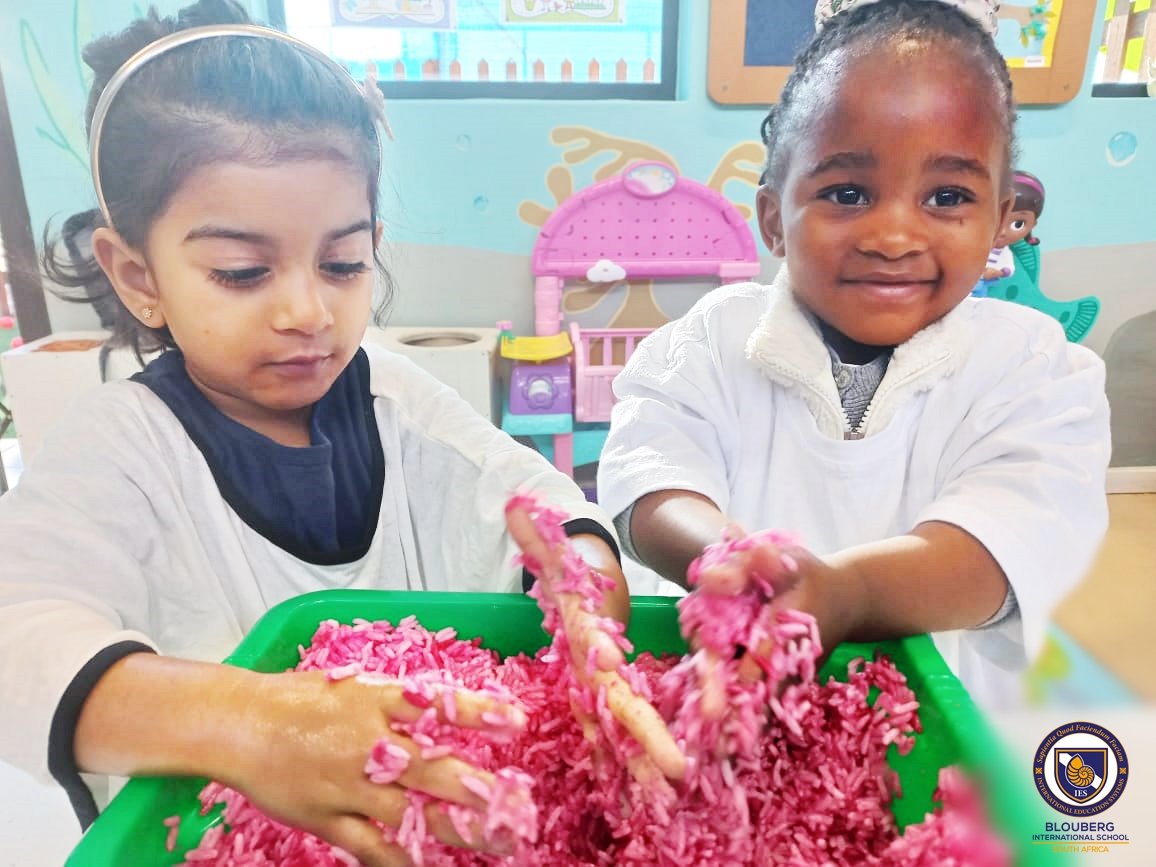
Even though it was messy, and oh the clean-up was a delight, the toddlers thoroughly enjoyed every minute of exploring the colourful spaghetti, the mushy sago and the sticky rice. They were able to hop out of the ‘clean class’ box and just enjoy making a mess.
Sensory play is an important part of childhood and there are really no limits to what you can use in your sensory activities. However, nature and food can often be your best friend when it comes to sensory play.
To help you keep your youngster busy during the holidays, here are a few great sensory play ideas for home:
- For keeping their hands busy:
- Soapy Jars: Fill a plastic peanut butter jar halfway with water, a pinch of dish soap and food colouring. Seal it tightly, and let your toddler roll it/shake it around outside.
- To explore their sense of smell (ages 4-6):
- Smell it and guess: Blend up six different fruits/vegetables in small quantities and pour them into separate dishes. Allow your little one to taste and guess.
- For co-ordination and organisation:
- Alphabet scoop and transfer: You will need alphabet magnets or water-safe letters, a storage container, a wooden spoon, two dish buckets and water. Pour enough water into your container to allow the letters to float and allow your child to scoop each letter out individually. You can practice various beginner literacy activities with them!
- To assist with emotions, and to keep them calm:
- Place beach sand or regular sand into a big container and hide small toys in the sand. Make sure the toys are all of the same themes. Once they have been able to scoop out each toy, engage with them to create a fantasyland on the sand. It’s like a zen garden for kids.
Jo-Anne Dickason
Nursery Teacher


Read More
The Importance of Sensory Play
Children use their senses to explore and try to make sense of the world around them. They do this by touching, tasting, smelling, seeing, moving and hearing. Providing opportunities for children to actively use their senses as they explore their world through ‘sensory play’ is crucial to brain development – it helps to build nerve connections in the brain’s pathways. This leads to a child’s ability to complete more complex learning tasks and supports cognitive growth, language development, gross motor skills, social interaction and problem solving skills.
Five reasons why sensory play is beneficial:
- Research shows that sensory play builds nerve connections in the brain’s pathways, which lead to the child’s ability to complete more complex learning tasks.
- Sensory play supports language development, cognitive growth, fine and gross motor skills, problem solving skills, and social interaction.
- This type of play aids in developing and enhancing memory.
- Sensory play is great for calming an anxious or frustrated child.
- This helps children learn sensory attributes (hot, cold, sticky, dry)
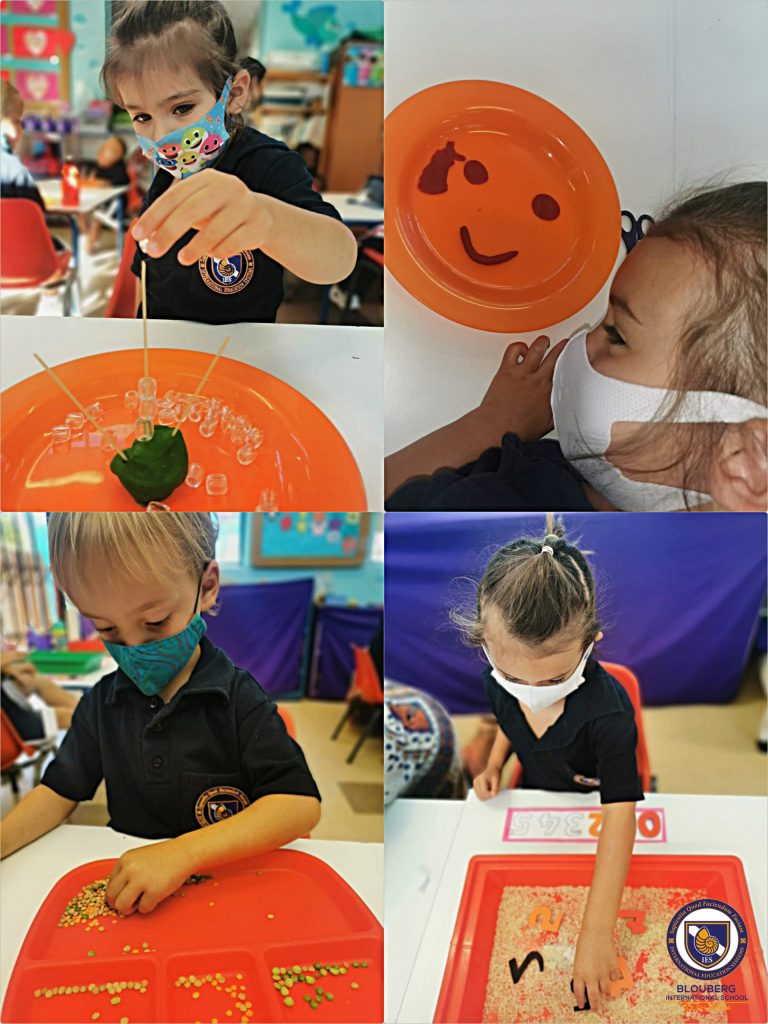
In the Nursery and Pre-Reception classes we incorporate sensory play and fine motor activities into students’ daily programme. Play dough is used as part of the heavy work component of a sensory diet. It can also help improve a child’s fine motor skills. They are encouraged to squeeze, stretch, pinch and roll the play dough and even cut the play dough with scissors.
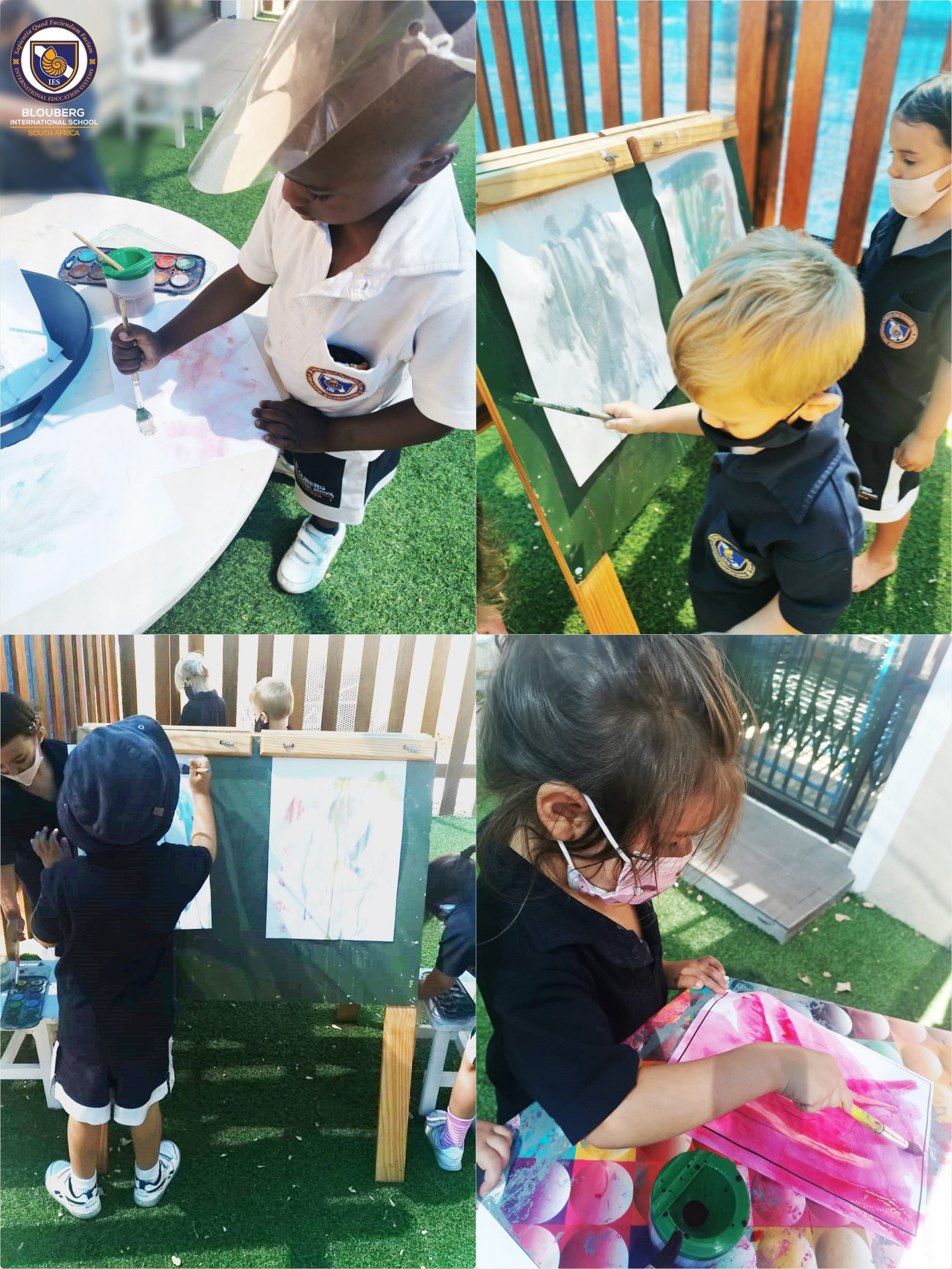
Different types of painting can also help strengthen hand eye coordination and manual dexterity. Finger painting gives the student an opportunity to use their hands and get messy. Painting with a brush helps them learn to hold a brush and gain greater control using it as a tool.
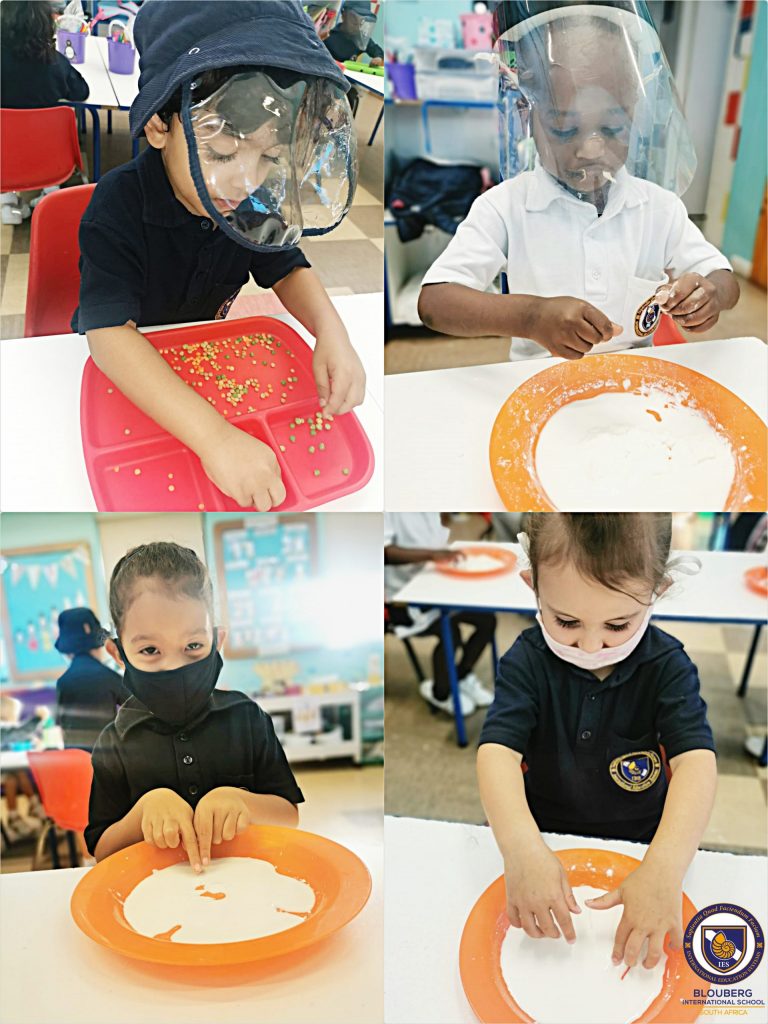
The students also get to look for numbers covered in rice and play in corn flour mixed with water. A fun and messy activity enjoyed by most of the students!
Cindy Nunan
Nursery & Pre-Reception Teacher
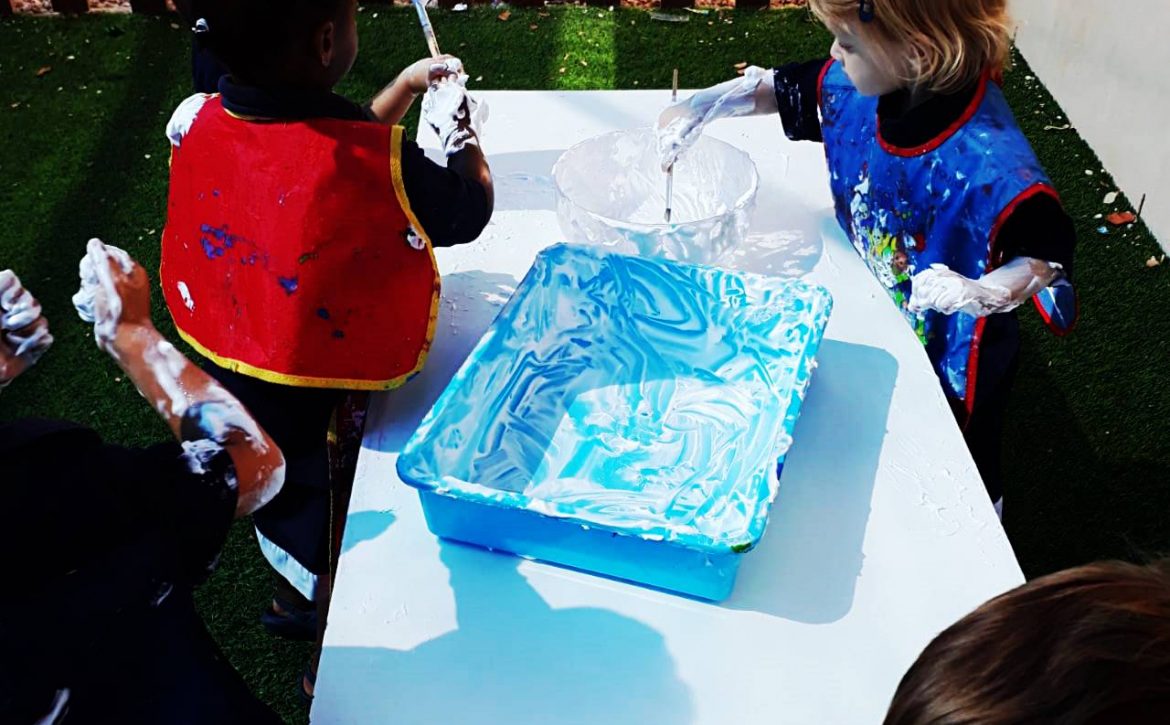
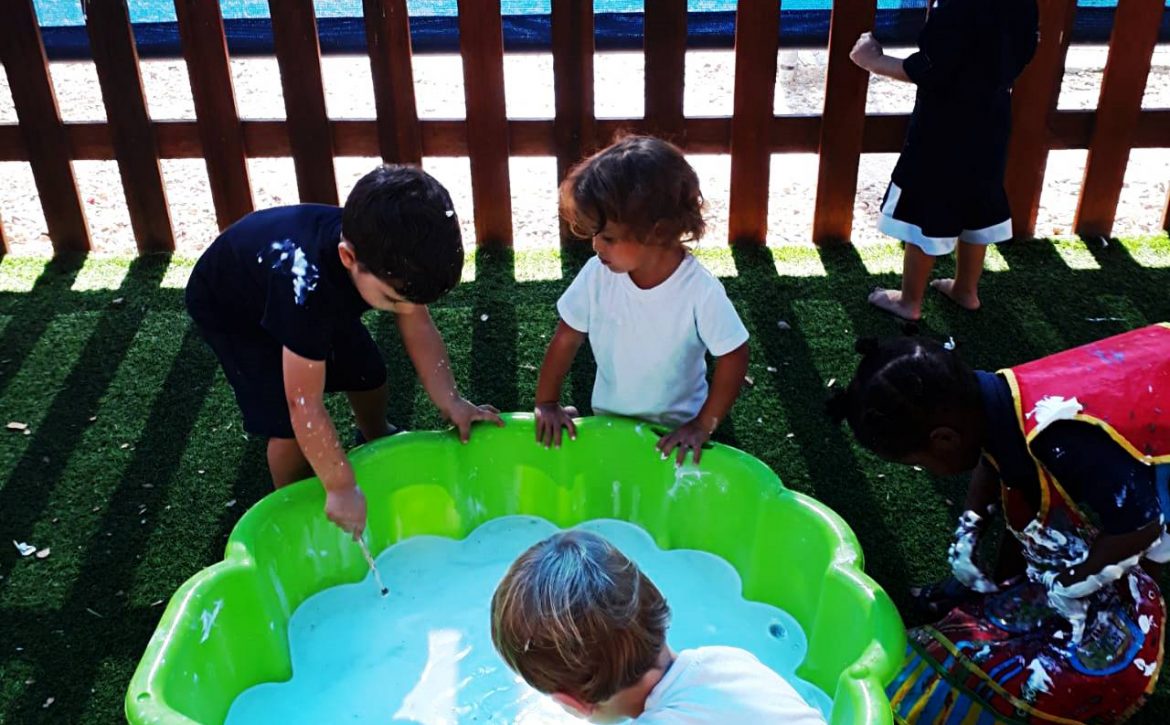
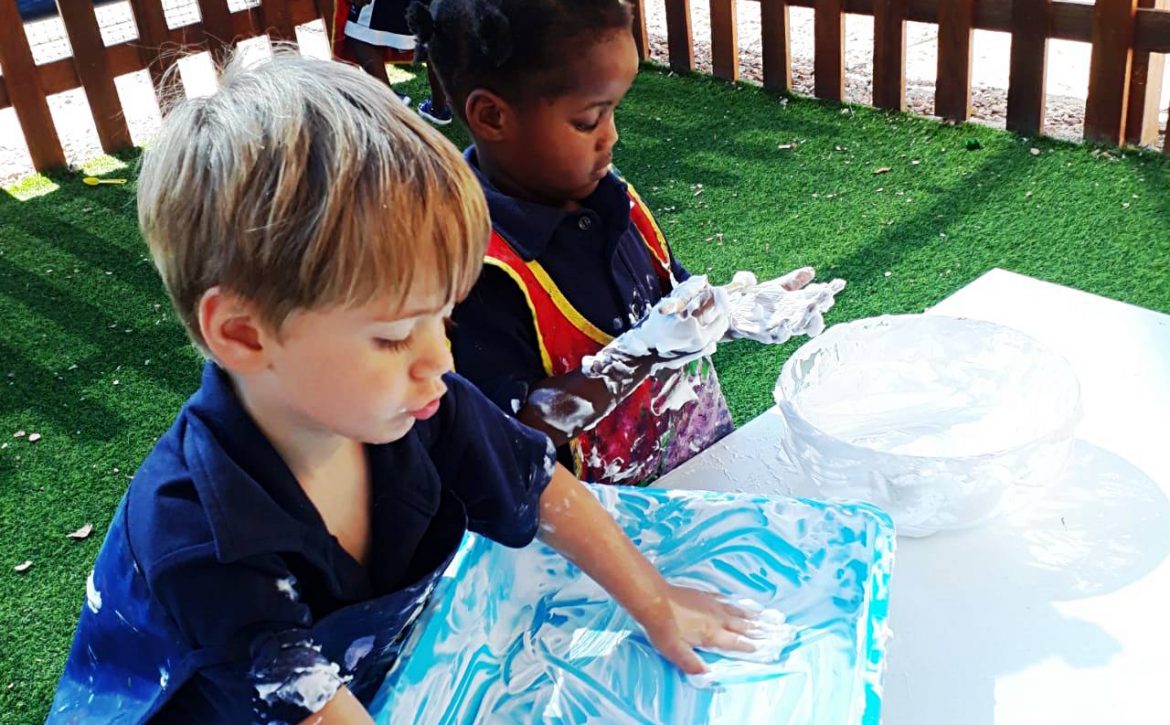
Sensory Play in the Nursery
Why do we engage in Sensory Play?
From birth through to early childhood, children use their senses to explore and try to make sense of the world around them. They do this by touching, tasting, smelling, seeing, moving and hearing.
Children and even adults learn best and retain the most information when they engage their senses. Many of our favorite memories are associated with one or more of our senses: for instance, the smell of a summer night campfire or a song you memorized the lyrics to with a childhood friend. Now, when your nostrils and eardrums are stimulated with those familiar smells and sounds respectively, your brain triggers a flashback memory to those special times.
- Research shows that Sensory Play builds nerve connections in the brain’s pathways, which lead to the child’s ability to complete more complex learning tasks.
- Sensory Play supports language development, cognitive growth, fine and gross motor skills, problem solving skills, and social interaction.
- This type of play aids in developing and enhancing memory.
- Sensory Play is great for calming an anxious or frustrated child.
- This helps children learn sensory attributes. (hot, cold, sticky, dry)
I wish to encourage parents to get messy with their children at home to make learning more fun.
Jacky Billings
Nursery Teacher