Developing listening, speaking, reading, comprehension and writing skills in the Spanish class
The general objective in the Spanish Class this year is to develop the intellectual, personal, and professional abilities of the students. They need to acquire basic language skills (listening, speaking, reading and writing) to be able to communicate with speakers of the target language: Spanish.
One of the most relevant aspects in my opinion is to create active listeners: The students will acquire necessary listening skills to follow and comprehend discourse such as lectures, conversations, interviews and discussions.
They will produce a written response based on the information listening texts and they will learn to use strategies to listen actively: taking notes, preparing questions and providing feedback.
Regarding speaking skills, the objective is to develop adequate speaking skills to communicate effectively in different situations about different and relevant topics in real life situations: at the restaurant, shopping for clothes, at the travel agency, booking a flight or reserve a hotel room or introducing ourselves for the first time.
For their writing skills, the idea is to develop important writing skills that will enable them to produce academic texts required in their respective year groups. Use the correct linguistic structures and grammar when expressing their thoughts.
The students will be able to write grammatically accurate basic and complex sentences using the subject’s pronouns, verbs and adjectives correctly. Also promoting creative writing for example: the script of the role-plays or writing the lyrics for the introducing myself rap project in year 6.
Creating habits and improving their confidence: In every lesson, the year 3 to year 5 students are writing and then reading to the class information about the date, the time, how they are feeling, the season of the year, the weather, clothes that they are wearing and school subjects for the day.
Reading and comprehension exercises: The students will analyse and synthesize information presented in different sources: stories, comics, articles and news. The students will identify words and/or phrases related to the topic.
To improve in their reading and comprehension skills they must learn the question words or interrogative questions: what, where, when, why, how, how much/many, who and which, to be capable of understanding what they need to answer.
After answering all the questions about the text, the class will participate in discussions about their own experiences, to increase their knowledge and vocabulary about the specific topic they need to participate in these conversations.
The role plays help them to develop collaboration and interaction skills and creative writing and thinking. The students also prepare questions for the class to increase their interaction and participation.
Javier Vidal
Spanish Teacher
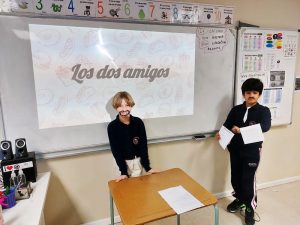
PHOTOS: Travel agency orals: Promoting one of the Spanish Speaking Capitals. Students were even encouraged to dress up for the role-play activity.

Read More

Creating community in the Spanish class
Building community is one of the most important aspects in the Spanish class.
Personally, I have the feeling that I have failed in the past to build a more positive environment with certain year groups that would have improved the quality of my Spanish lessons and the learning experience of my students.
For that reason, my main objective for this last term and for the whole 2023 is to improve that relationship with my students, focusing on making genuine connections.
This aspect based on my experience is key to creating a better dynamic in the class, a class where the students can find a safe place with low levels of stress and zero anxiety.
My first step to achieve this goal will be to give them the opportunity during this last term of asking me questions in Spanish through an activity that I have called: Interviewing the Spanish teacher.
I think that by giving them certain details about my family, pets, travels, favourite things, and memorable moments will help me to build better connections with them.
Generating an excuse to start a conversation
Secondly, I am planning to have more conversations with the students about things and topics that interest them, of course they must be able to understand the message to start a conversation and the teacher must be the facilitator of the language acquisition.
Introduce more projects that interest them and topics that would like to talk about.
Some of the Term 4 projects:
Year 5 and 6 – Interviewing the teacher. Every student can ask me one question in Spanish.
Year 5 – This is me: the students are going to introduce themselves in groups of two having little conversations asking each other’s names, ages, nationalities, place of residence and grade.
Year 6 – Interviewing a classmate: Asking questions about his or her favourite food, music and sport.
Other little thing on my list that helps to connect and establish better relationships with them:
· What would my students like to be called? Are they using other names rather than the ones on your class list?
· How much do I know about them? Hobbies; sports that they practice; siblings…
Learning about each other
The students can also learn about each other to create bonds with other classmates over common interest they may not have discovered yet
From little conversations to great conversations
Engage them in a follow-up conversation, simplest way is by using WHY? so, they can express themselves further.
Making learning fun, useful and interactive
In this article’s featured photographs you will find some special moments of the Year 5 and 6 students performing their role-play activities: At the restaurant and at the clothing shop.
At the end of each role-play, the group has been asking questions in Spanish to their classmates about their stories promoting their interaction.
I look forward to a wonderful term of building a strong community in the Spanish class.
Javier Vidal
Spanish Teacher Primary School



Read More

Teamwork Makes The Dream Work!
The Year 4s have been learning about Making Peace and Helping People To Belong as part of our Global Perspectives unit.
We’ve explored important questions such as:
- What makes a good friend?
- What causes arguments or conflict between people?
- How can I maintain good relationships and resolve conflict with others?
It doesn’t really matter what age you are, you will always have to collaborate and work together with others, whether it’s in a social, professional or family environment. We’ve focussed mainly on our own behaviour and what we can do to be a good friend and help prevent or resolve conflict.
“We are not a team because we work together. We are a team because we respect, trust and care for each other.” – Vala Afshar
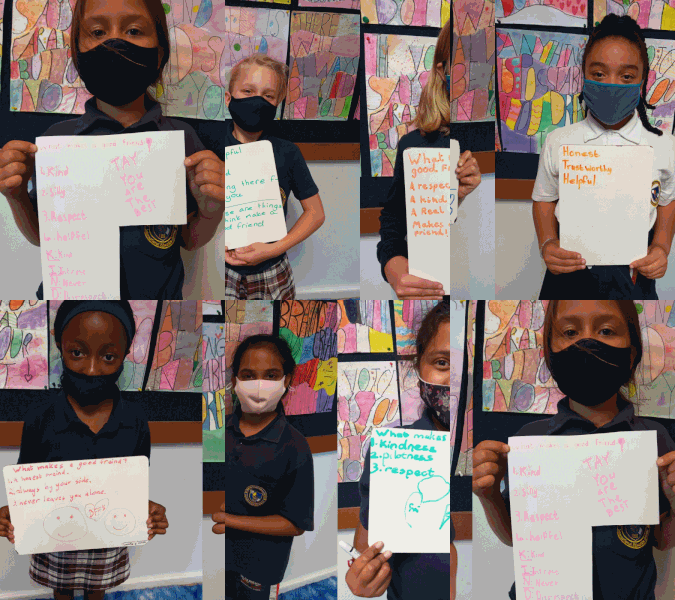
Take a look at the words students shared of qualities that a good friend would have. We also integrated Global Perspectives with our Art where they had to create a collaborative, puzzle artwork. The students did a wonderful job working together and encouraging each other – whilst having fun!
We are so thankful to have such a wonderful team at BIS: the students, parents, teachers, assistants, maintenance staff, sport coaches, administration and principal.
You are all appreciated and valued!
Ria du Plessis
Year Teacher