The key benefits of ‘gamification’
Using ‘gamification’ in learning a second language
‘Gamification’ is fast emerging as an effective technique to engage learners and create immersive learning experiences. ‘Gamification’ is about more than just playing it is “the use of game thinking and game mechanics in non-game contexts to engage users in solving problems”.
***(resource: Wikipedia/gamefication)***
The key benefits of ‘Gamification’:
Better learning experience: The learner can experience “fun” during the game and still learn if the level of engagement is high. A good ‘gamification’ strategy with high levels of engagement will lead to an increase of retention of vocabulary fundamental in the process of learning a new language.
Better learning environment: ‘Gamification’ provides an effective, informal learning environment. This leads to a more engaged learning experience that facilitates better knowledge retention once again. Also helps the language teacher to maintain the attention and interest of the class for longer periods.
Instant feedback: It provides instant feedback so that learners recognize what they already know or what they should know and so facilitates better learner engagement.
***(resource: https://elearningindustry.com/6-killer-examples-gamification-in-elearning) (https://www.google.com/amp/s/elearningindustry.com/power-gamification-in-hr/amp)***
To ensure success of ‘gamification’ we (teachers and parents) need to work together to capture and retain learner’s attention allowing them to play the games and listen to the songs at home. Go to www.rockalingua.com
Playing the games and listening to the songs – challenges, engages and entertains them: It will be a weekly challenge with a ranking that will show the students results.
– Third week: Days of the week challenge.
– Fourth week: The numbers challenge.
Everyone loves games. Albert Einstein himself indicated: “they are the most elevated form of investigation”. He knew games are avenues for something deeper and more meaningful than a childish waste of time. Oftentimes, playing games are the first method children use to explore higher-order thinking skills associated with creating, evaluating, analyzing, and applying new knowledge.
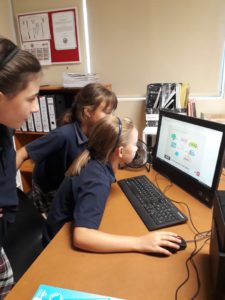
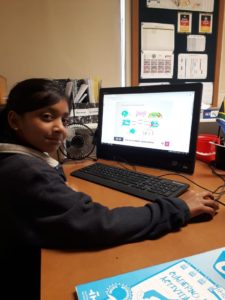
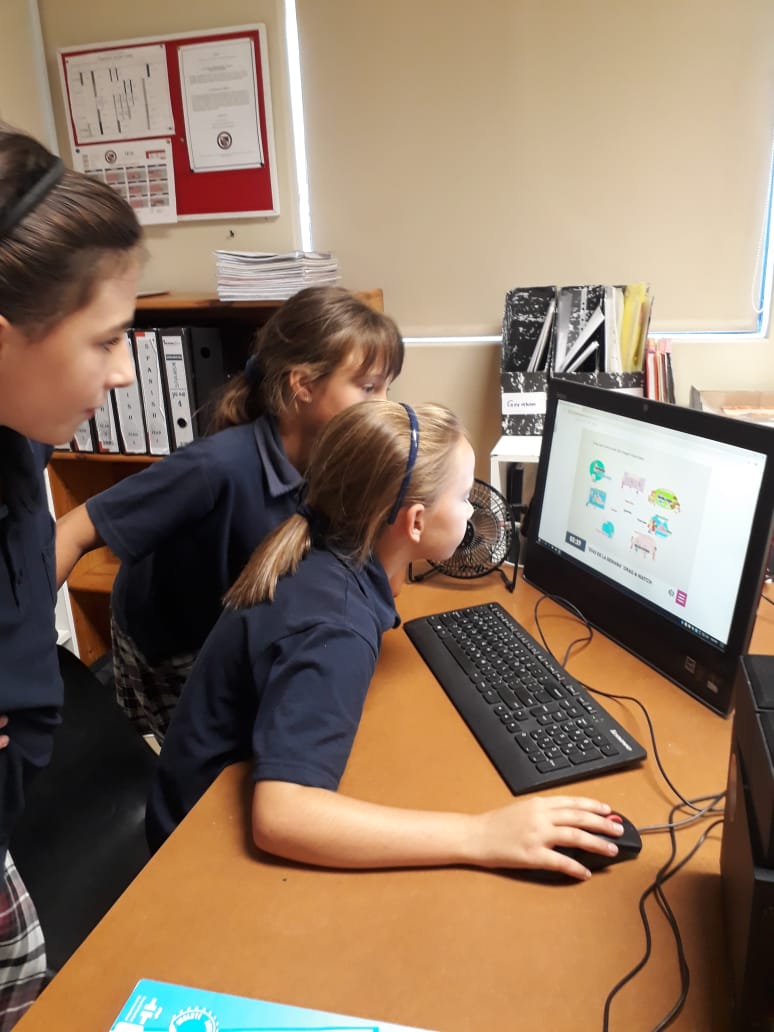
‘Gamification’ in an educational context: While students are playing, I am collecting data, tracking progress and reward to build a positive class culture. Students become eager to participate and learn the vocabulary that they need in order to improve their results in the games, and when students show interest, they make learning a new language; – a game worth playing.
Days of the week challenge results Year 4 to 6:
-Best Year 6 time: 1st Gabrielle Adamson: 0,14”; 2nd Riley Hanning: 0,15”; 3rd Michael Zurnamer: 0,16”
-Best Year 5 time: 1st Faith Chivaka: 0,13”; 2nd Ayesha Hassen 0,14”; 3rd Amanda Nkomo: 0,15”
-Best Year 4 time: 1st Krishangi Naidu: 0,15”; 2nd Sanam Srikewal 0,16”; 3rd Isabella Lockhart 0,17”
Weekly champion:
Faith Chivaka (Year 5): 0,13”. Congratulations Faith!
Written by
Profesor Javier Vidal
Primary School Spanish Teacher