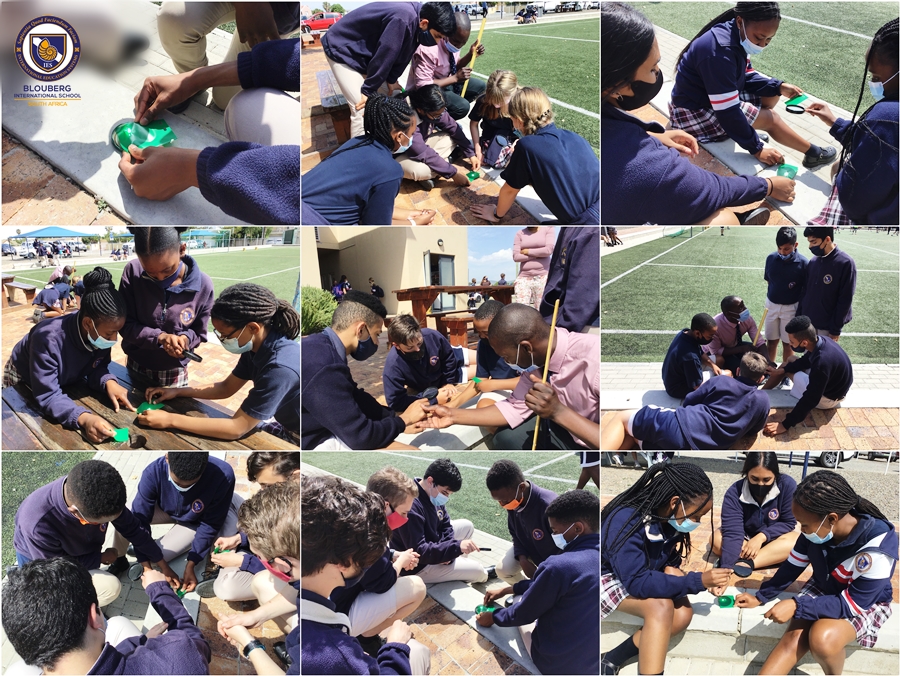
Hands On Physics
I often hear people say, “Physics is hard” or “it’s for intelligent individuals” and I beg to differ. When we were toddlers, we were curious, we asked questions frequently, we were hands on and our parents encouraged us to explore the world around us. As we progressed into adolescence, some of us stopped asking questions and started believing everything we see or hear.
Many neurological studies have shown that curiosity enhances people’s abilities to learn and retain new information. Physics is for curious people. Anyone who isn’t afraid to ask “foolish questions” such as why the sky is blue, what causes ocean waves, are we the only human beings in the universe, etc., can be a good physicist.
In a quest to find answers to nature’s great mysteries one needs to have an enquiring mind. Great physicists have strong scientific ability. They have an analytical approach to solving any problem.
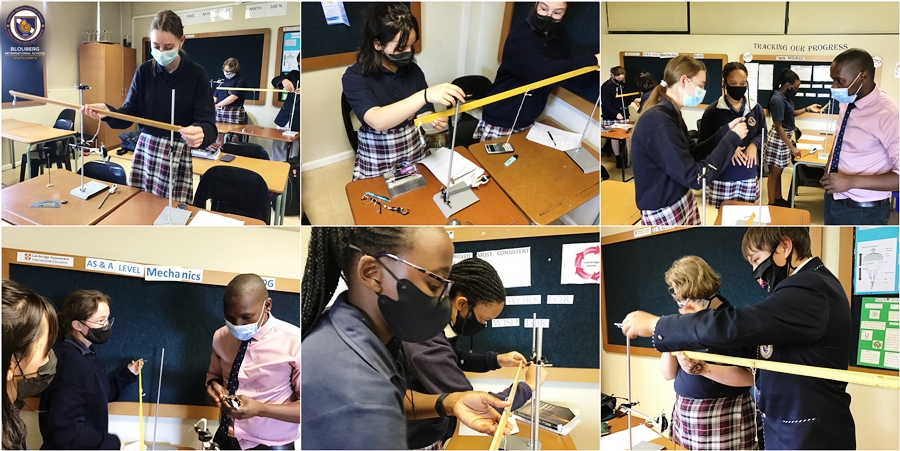
This term the focus was on developing the students’ scientific skills such as:
- Problem solving skills, other technical skills
- Mathematical skills applied to physical systems
- Analyzing and modeling physical process
- Gathering data, making testing models and predictions
The year 9 students were given a task to build a model of a periscope for SA NAVY. A periscope is an instrument for observation over, around or through an object or obstacle, it is usually used in land and sea warfare by the military. The underlying physics concept is internal reflection of light.
In year 11, the students are making a remote-controlled toy car. This project will help them understand how motors work, the role of rheostats in a circuit and they will also get to do a bit of engineering while at it.
All these HANDS ON projects are aimed at developing the above mentioned scientific skills. Whether or not students continue with physics post high school, they will have these essential skills for any field of work.
Brian Sizani
IGCSE, AS and A-Level Physics Teacher