
Welcome to Cape Town. Come join the party!
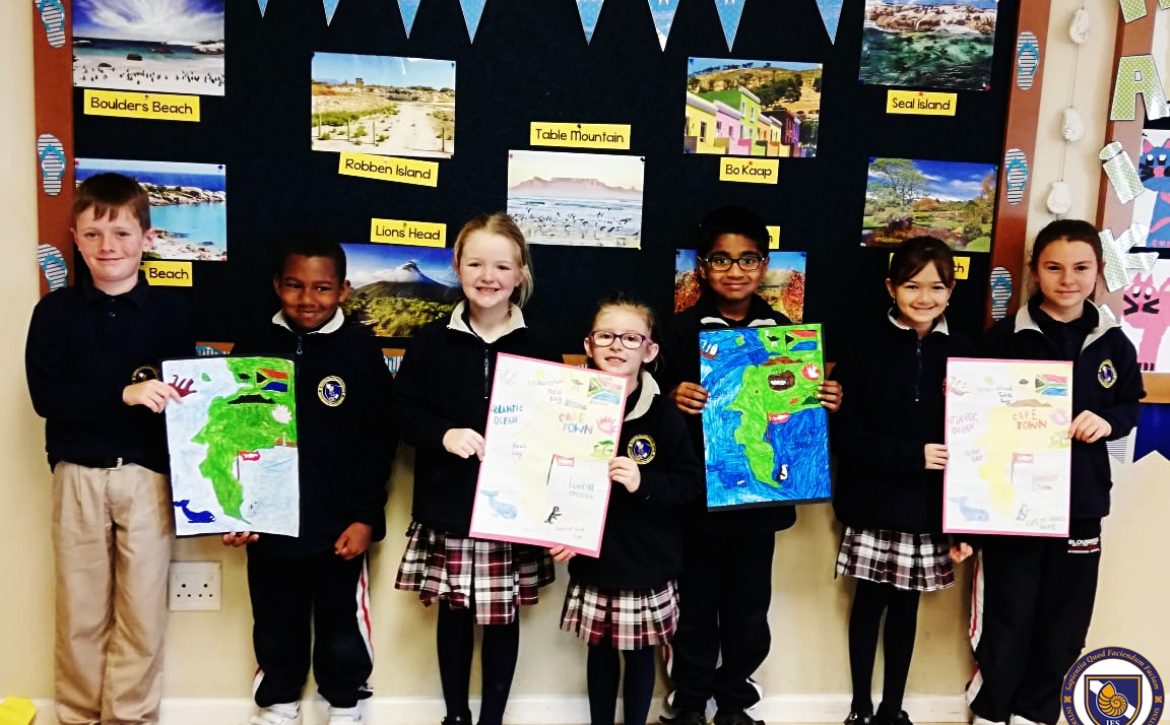
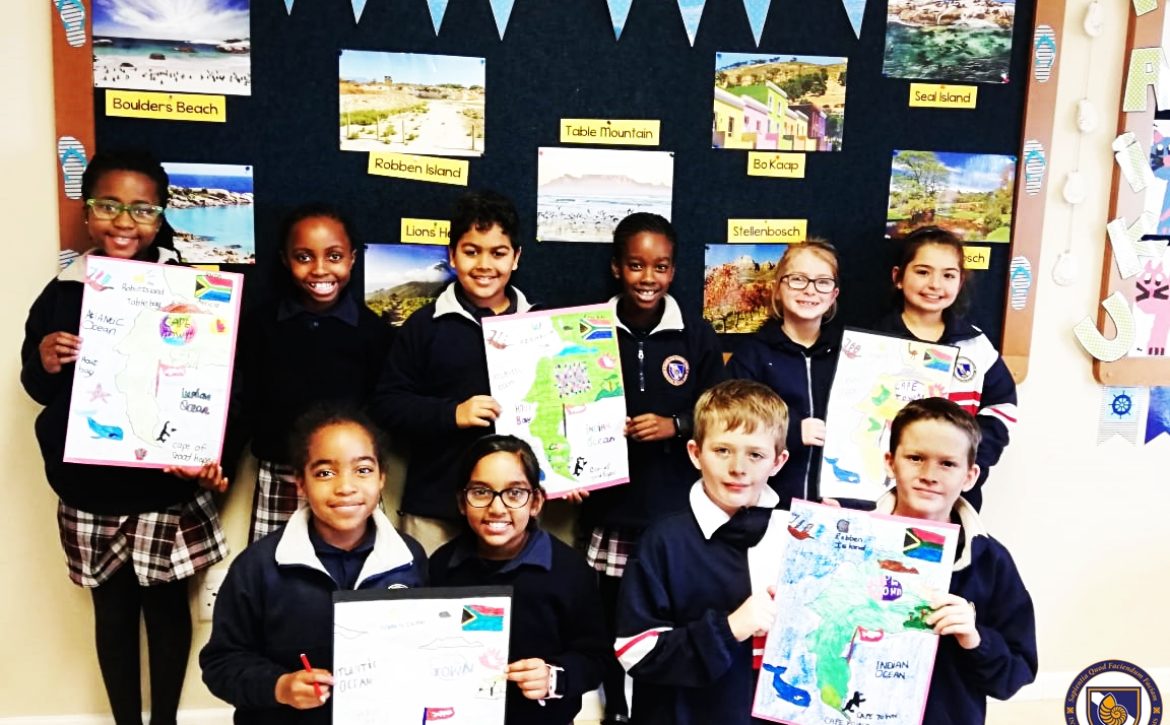
The Year 3 classes are learning about our beautiful city and all its history as part of the “Local Environment” component in their History lessons. Crowned by the majestic Table Mountain, Cape Town is a vibrant city full of heritage, diversity and spirit. Thousands of people flock to the city each year to enjoy all that Cape Town has to offer. We spoke about Boulder’s Beach, Table Mountain, Clifton Beach and Kirstenbosch Gardens.
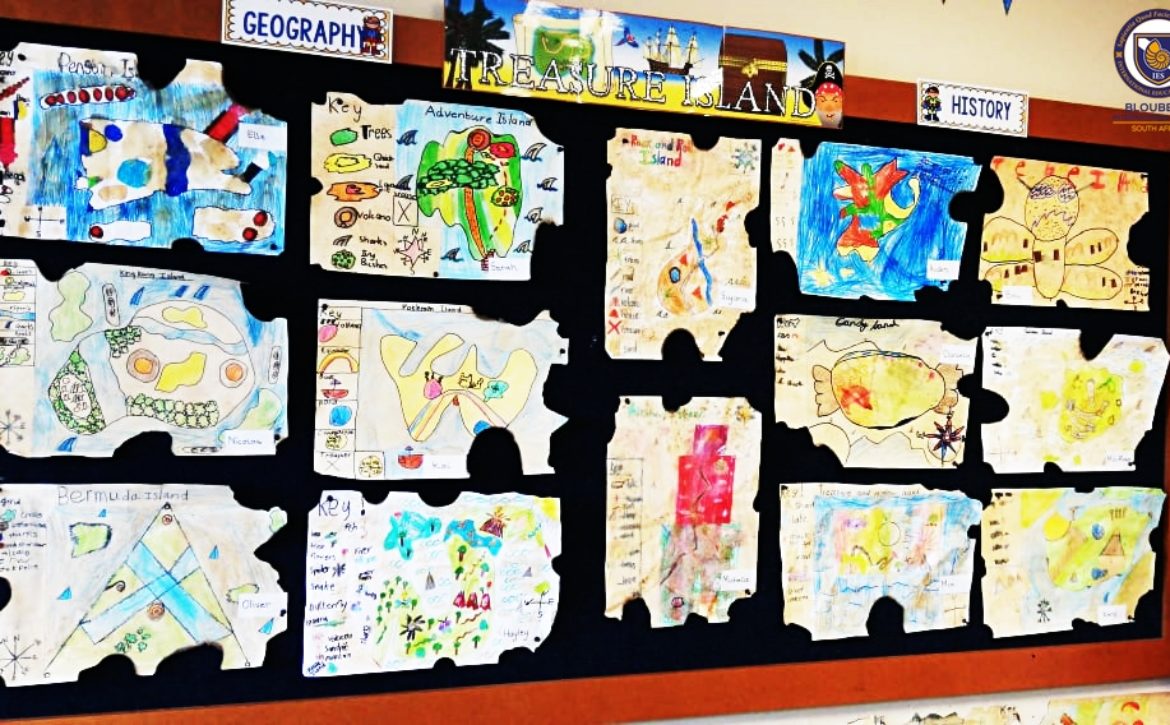
During the past few weeks, the students have learnt about the history of the town and its historical landmarks. They have looked at aerial views of the city, satellite images and how to read keys and street maps. They drew aerial maps of their classrooms and even designed their own treasure maps.
To end off the unit the Year 3 classes will be going on an outing to the Chavonnes Battery Museum at the V&A Waterfront and take a ride on the Big Wheel.
Yvette Fourie
Year 3 teacher
So What Is Computer Science?
It has been an exciting three terms for our computer science students. We are currently fostering skills in problem solving and looking at how computer science fits into the bigger scheme of things.
So what is computer science?
Computer science is the study of processes that interact with data and that can be represented as data in the form of programs. It enables the use of algorithms to manipulate, store, and communicate digital information.
Why the sudden hype around, and spike in interest in, the coding field? How does this field of study benefit the student?
There are so many reasons to learn coding from job opportunities, critical thinking skills and creative outlets. Programming teaches problem-solving skills, offering challenges which develops resilience in the students. Coding teaches students how to think and instills a love of mathematics.
Margaret Mead said “Children must be taught how to think not what to think”
Too often we give students the answers to remember, instead of problems to solve. Although computers are an everyday tool for the 4th industrial revolution generation, it is extremely important that we train our next generation to think like humans and not like machines.
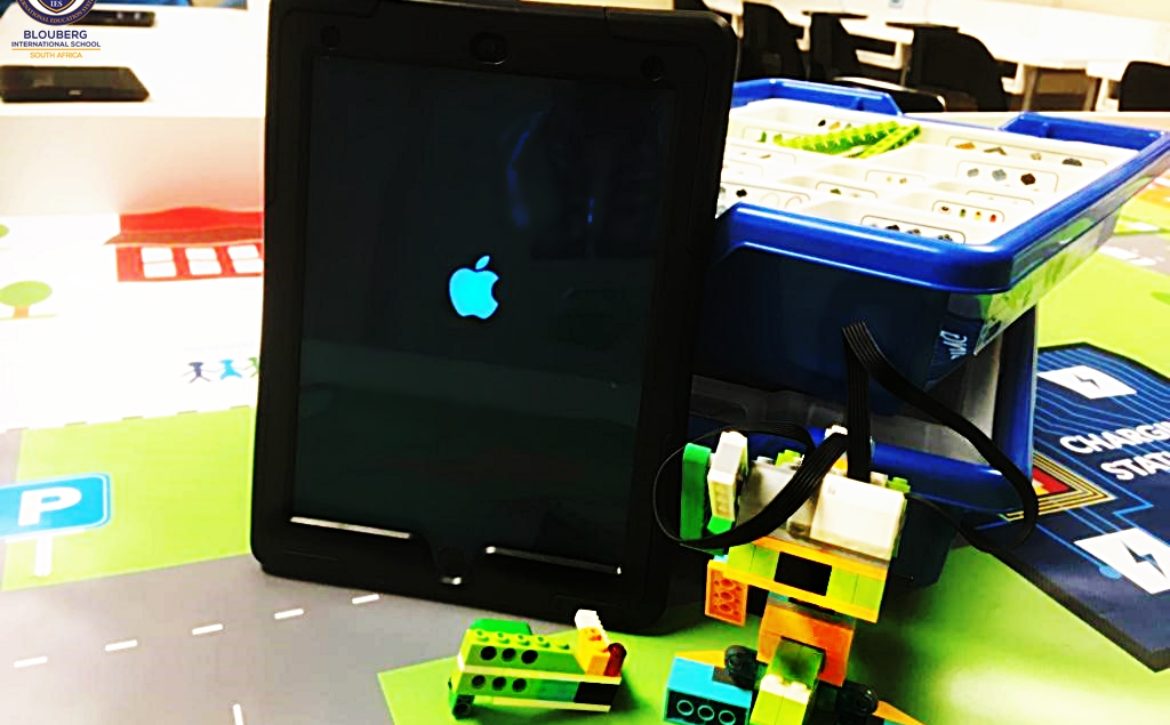
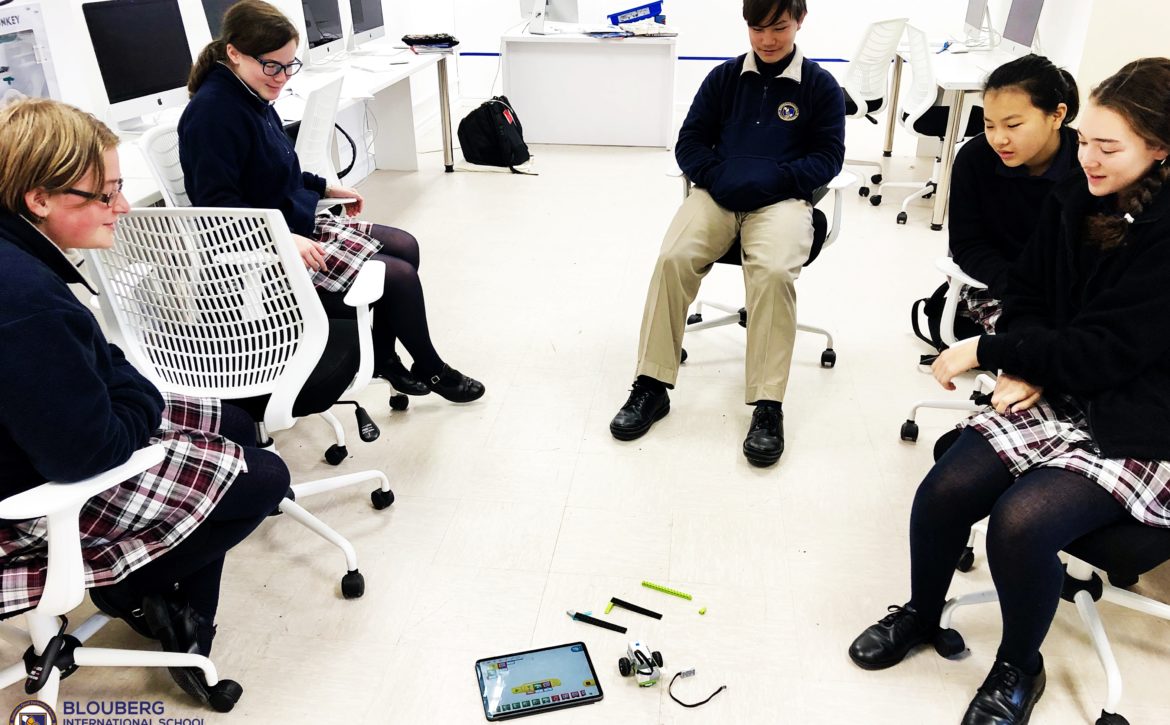
Our Year 9 IGCSE computer science group did a practical demonstration showing how sensors are used in a computer system to create warning and action programs. Traditionally, this concept is taught through textbook-learning, without any practical application. At Blouberg International however, we are fortunate to have technologies which allow our students to experiment with the practical application of their learning, bringing the content alive!
We look forward to creating the next great software developers and mechanical engineers.
Gemayel Kroukamp
IGCSE & AS Computer Science

Creating Our Own Poetry in Year 1
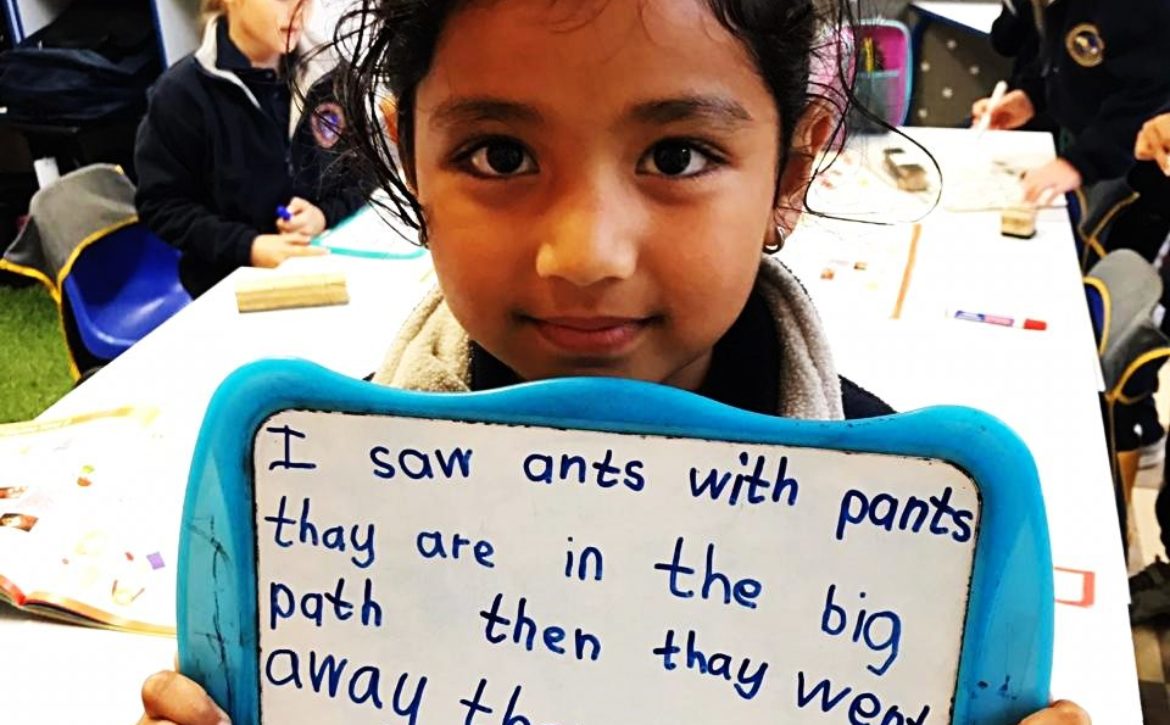
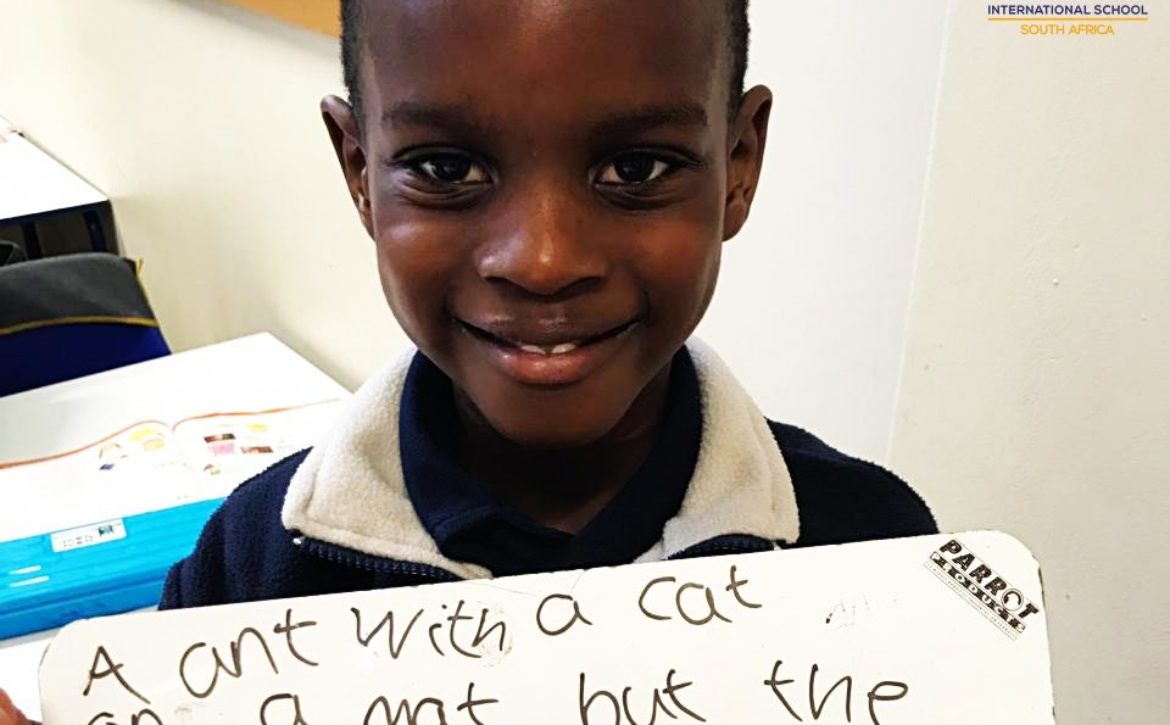
In Year 1 we have been learning about poetry. Poetry is so important because it helps us understand and appreciate the world around us. Using poetry, as teachers, enables us to teach our students how to write, read and understand any text.
Poetry uses powerful imagery, can be inspiring and can elicit powerful emotions, giving students a healthy outlet for their emotions.
Reading original poetry aloud in class can foster trust and empathy in the classroom community, developing speaking and listening skills. In our class the students had copious amounts of fun creating and writing their own rhymes and poems.
Charlotte Cronje
Year 1 Teacher

When Dinosaurs Ruled The Class
Our theme for the week in Foundation Stage was Dinosaurs. We started making a K-W-L chart during circle time. A K-W-L chart is a visual chart that helps students organise information before, during and after a new theme. We use it in our class to establish what we already know, what we still want to know and at the end of the theme we will discuss what we have learned. We wrote down what we already knew about Dinosaurs. We then as a group discussed what we wanted to know about Dinosaurs. At the end of the week we completed our chart by writing down what we learned about Dinosaurs.
We sang songs, read wonderful books about Dinosaurs and learned new words. The word list includes: extinct, prehistoric, paleontologist, carnivore, herbivore and fossil.
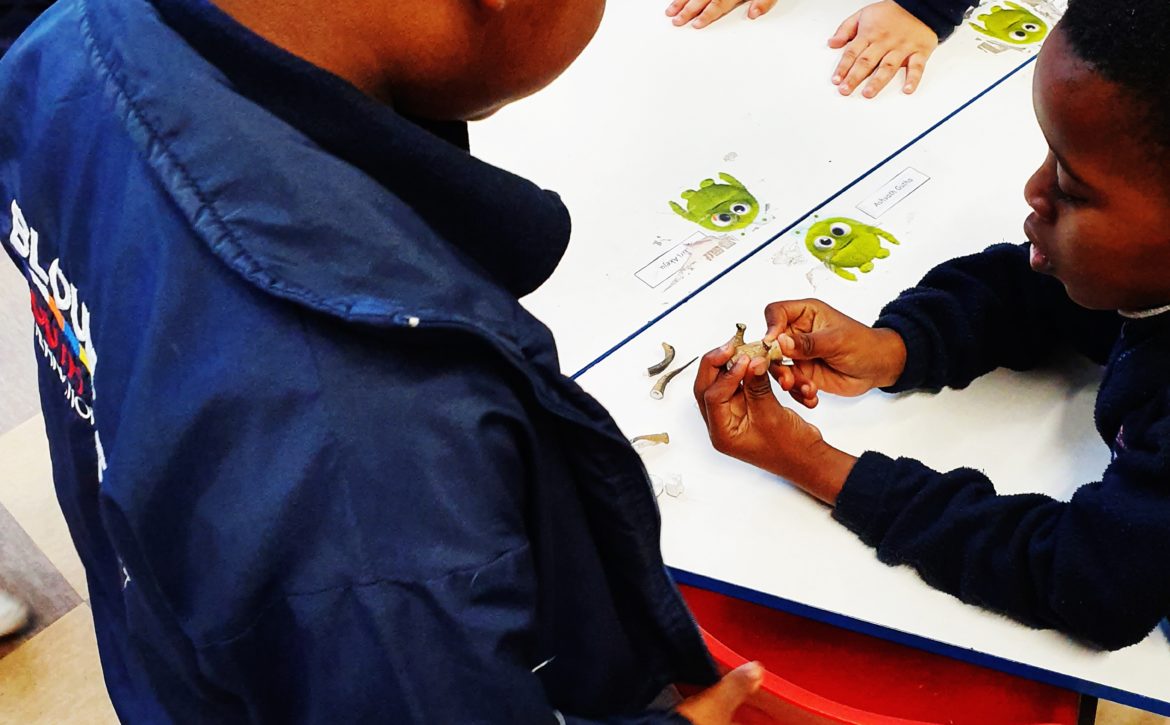
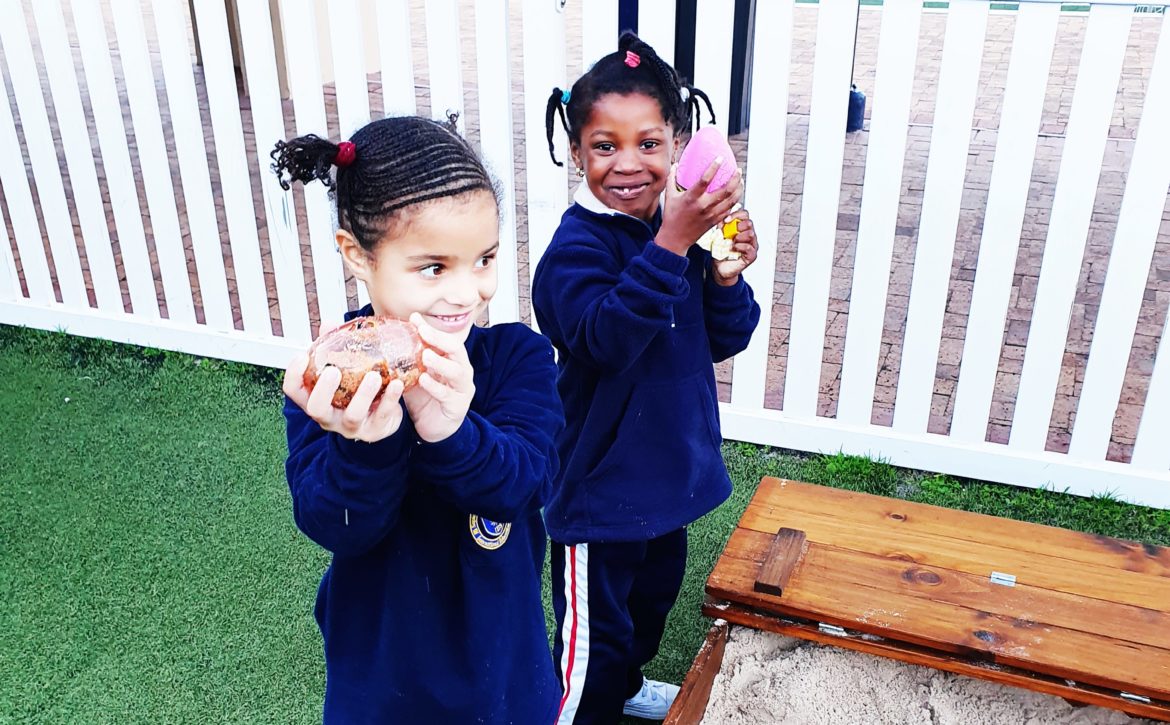
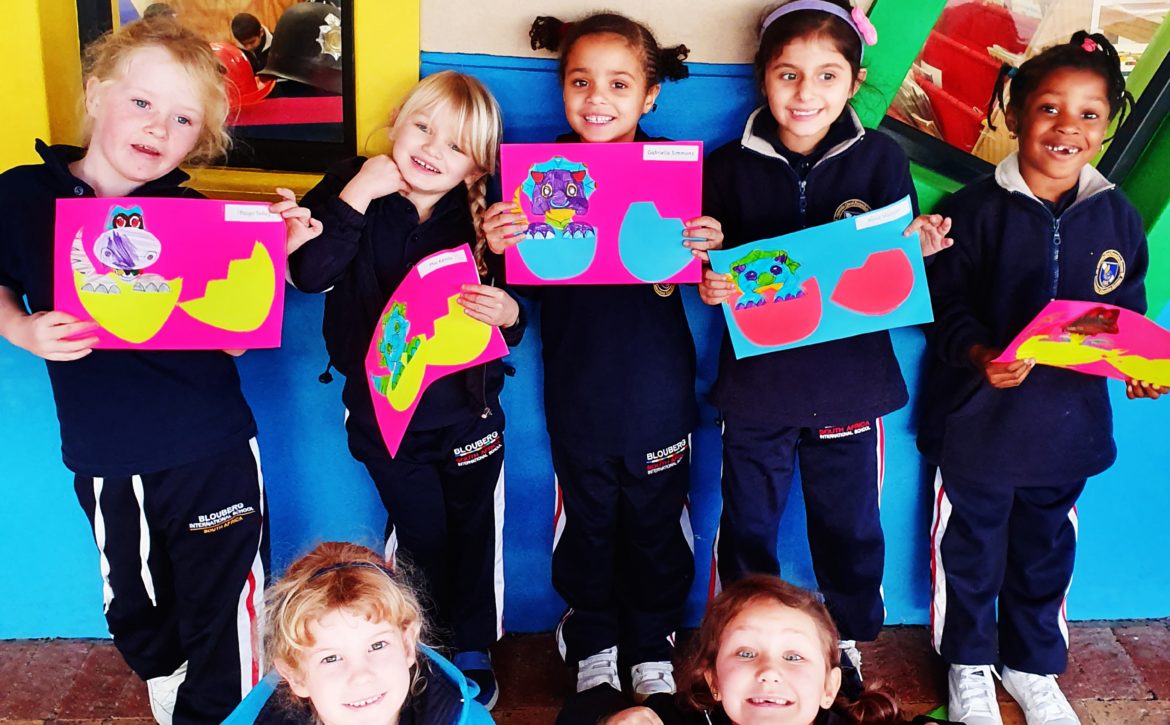
During Art the students had the option of making a hatching Brontosaurus or a Triceratops. We also used our fine motor skills to cut out Tyrannosaurus footprints. We went on an “Archaeological dig” in our sandpit. Using brushes, we acted like Paleontologists and uncovered Dinosaur eggs. We tried our best to piece the Dinosaurs back together. We also had to wait patiently for our Dinosaurs pets to hatch.
During our Numeracy lessons we played with a variety dinosaur counters to reinforce our sorting, adding and subtracting skills.
Learning about these amazing creatures from the past was a great adventure.
Martie van Dyk
Reception Year Teacher
From The Principal’s Desk, 15th August 2019
Dear Parents
At Blouberg International we are privileged to have teachers who have a vested interest in our school and the community. Our teachers do not focus solely on the classes they teach, but have innovative ideas about improving our school. They are passionate about seeing their students, and our larger school community, grow and develop. Their ideas and plans are always welcomed by management as it is indicative of their commitment to our school.
I have decided to introduce a Leadership Panel where, once a month, key stakeholders will brainstorm a SWOT analysis (strengths, weaknesses, opportunities and threats analysis) for the school. It is through this collaborative process that we intend to identify the changes that need to take place on a regular basis to avoid stagnation.
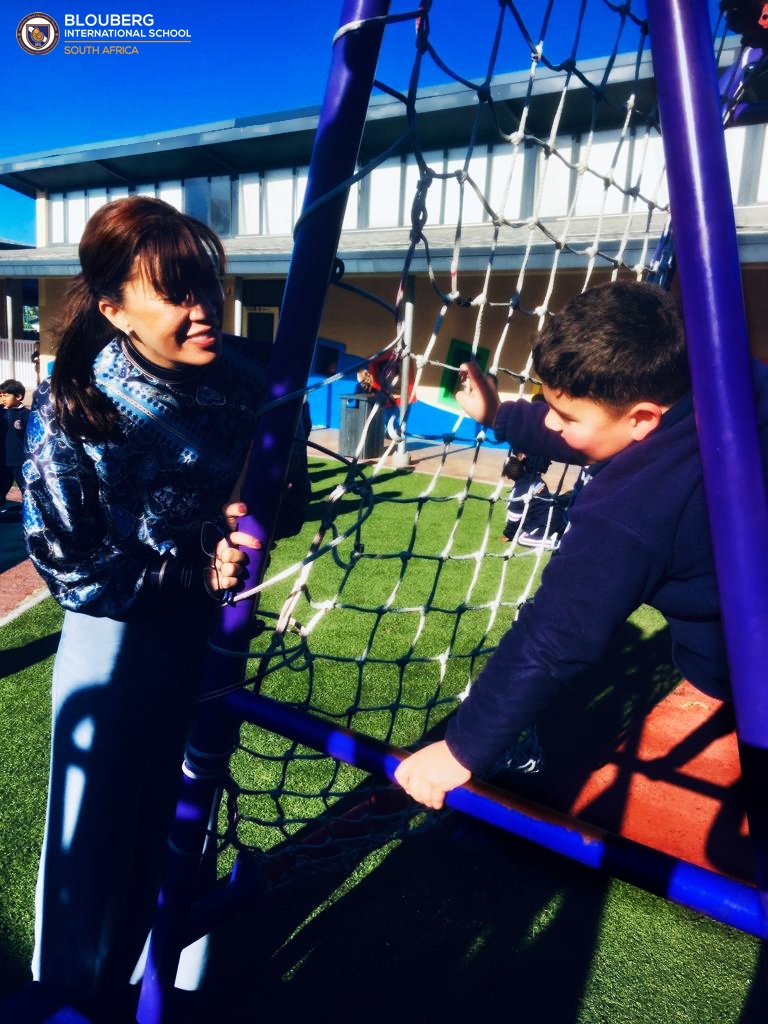
I am happy to announce that the second jungle gym for our Key Stage 1 and 2 students is almost complete. I know they are awaiting it eagerly and I am sure it will bring them a lot of enjoyment.
This week we received letters of motivation from our Year 11 students in which they declared their interest in serving on the Student Representative Council (SRC) in 2020. Our students’ passion for their school was evident in these letters and we are looking forward to the finalisation of the voting process.
With only a few weeks left before our Year 10 and 12 students begin their final examinations, emotions are running high and we are doing our utmost to support their academic and emotional needs during this challenging time.
Please remember that we have another exciting Interactive Curriculum Morning happening this Saturday, 17th August. I hope many of our parents will attend, as I am certain it will be another successful and informative morning.
Next week we celebrate Book Week, as well as offer support to the students involved in the West Coast Song Festival.
I wish you all a wonderful weekend.
Regards
Edna

From The Principal’s Desk, 8 August 2019
Dear Parents
“Happiness is a choice, why are you not choosing it?”
Jill Mansfield
I was reminded again this week that we are in control of how we respond to negative situations and people. We all have days where we are in high spirits and other days that are low. How we deal with those days is up to us! Happiness is a choice!
As we celebrate National Woman’s day tomorrow, let us choose to celebrate; be joyful and be the reason others smile! Let it be your intention to make someone’s day!
In South Africa, we celebrate Women’s Day on the 9th of August as this day marks the anniversary of the Women’s March of 1956 to the Union Buildings in Pretoria in protest of the pass laws.
Today we celebrate women for more than just the march in 1956. We celebrate them for their individuality and life-giving role. Women are integral in teaching our girls about their unique role in life! Let us celebrate our grandmothers, mothers and daughters to be more!
A reminder that we will have another fun interactive morning on the 17th of August 2019. Please come and join our staff as we learn more about what is happening in our class rooms.
Enjoy the long weekend ahead and stay warm and dry.
Regards
Edna
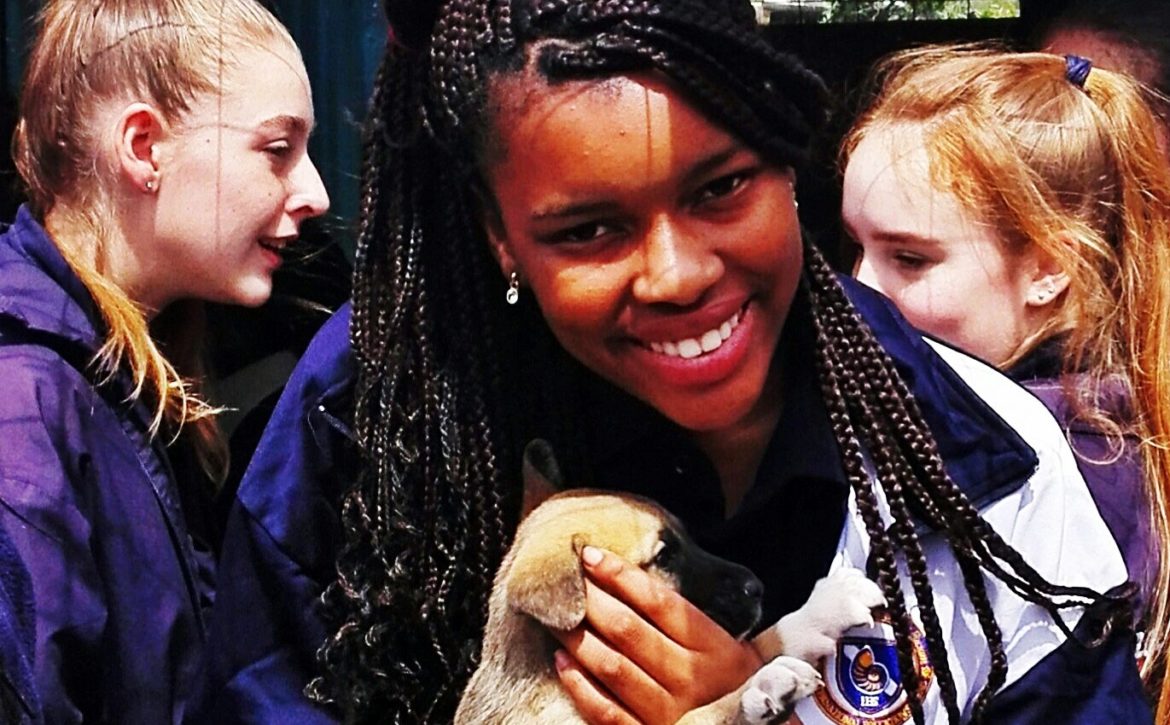

Opportunities for BIS Interact Club Members
Being part of an Interact Club gives our students wonderful opportunities such as the Rotary Short-Term and Long-Term Youth Exchanges for University students. Thousands of young people from different countries meet each other every year and experience other countries’ culture, thus planting the seeds for a lifetime of international understanding.
The Rotary Youth Exchange programmes are open to youth with leadership skills, as well as interpersonal skills, such as flexibility and a willingness to try new things, that will enable them to be excellent ambassadors.
The Ryla Camp is another excellent example of what an Interact Club member can benefit from. Ryla stands for Rotary Youth Leadership Awards. This yearly camp aims to:
- Demonstrate Rotary’s respect and concern for youth
- Provide an effective training experience for selected youth and potential leaders
- Encourage leadership of youth by youth
- Recognize publicly young people who are rendering service to their communities
Young people from various Interact clubs get together and enjoy activities such as hiking, leadership training and survival adventures.
For more information on the Ryla Camp, Interactors may contact our teachers in charge of BIS Interact Club, Elena Berger and Janine van Niekerk.
RYLA Facebook Page
Elena Berger
High School Teacher



From The German Classroom – Science Week 2019
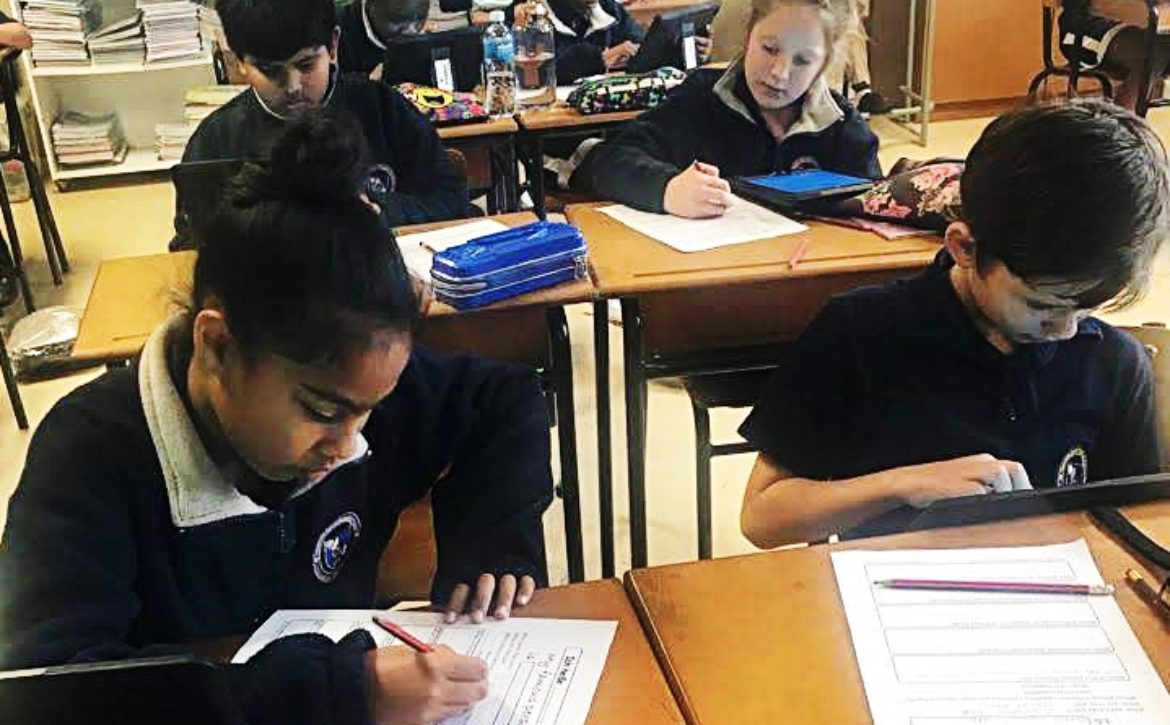
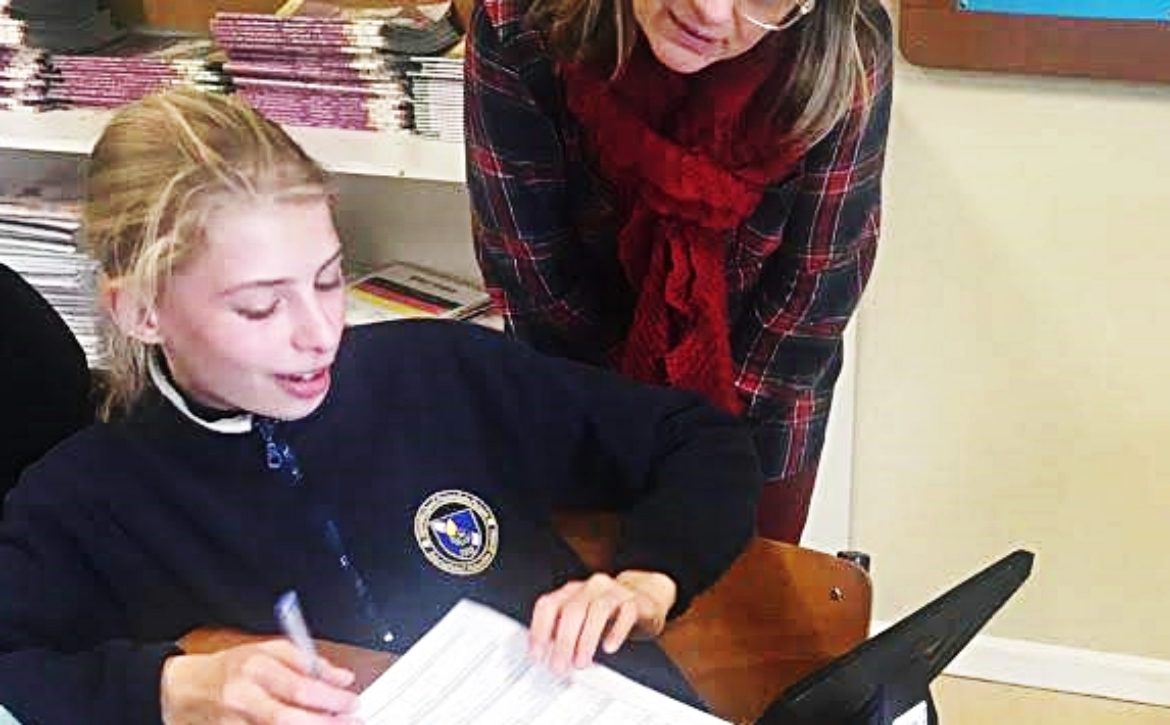
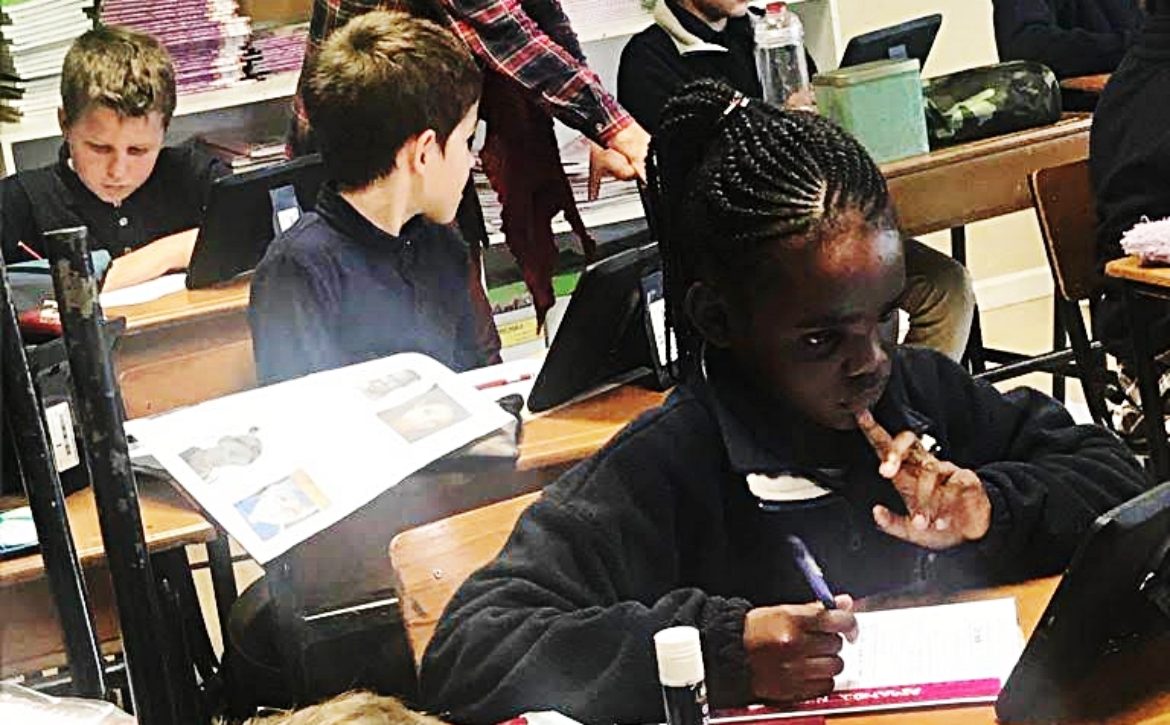
For Science week the Year 5 and Year 6 students were each given the task to research one German Scientist. With great excitement the students could use the Ipads for this in their classroom.
Many students were amazed that Albert Einstein was in fact German and that so many scientific theories and discoveries in the medical field e.g. Fahrenheit, Merkel cells, Alzheimer’s , Bunsen burners, the Bergius process and the Haber-Bosch process, were then named after these scientists; Daniel Gabriel Fahrenheit, Friedrich Sigmund Merkel, Alois Alzheimer, Robert Bunsen, Friedrich Karl Rudolf Bergius, Fritz Haber and Carl Bosch.
Most of these theories the students will learn about in the future when they enter High School and in Higher Education. Over 60 German Scientists and innovators were researched by the students and they each gave the student a new perspective on Science and Innovators from Germany.
Frau Kerstin Pani
German Teacher

Year 6 Outing to Heart Of Cape Town Museum 2019 – Student Feedback
Year 6 outing to the Heart of Cape Town Museum
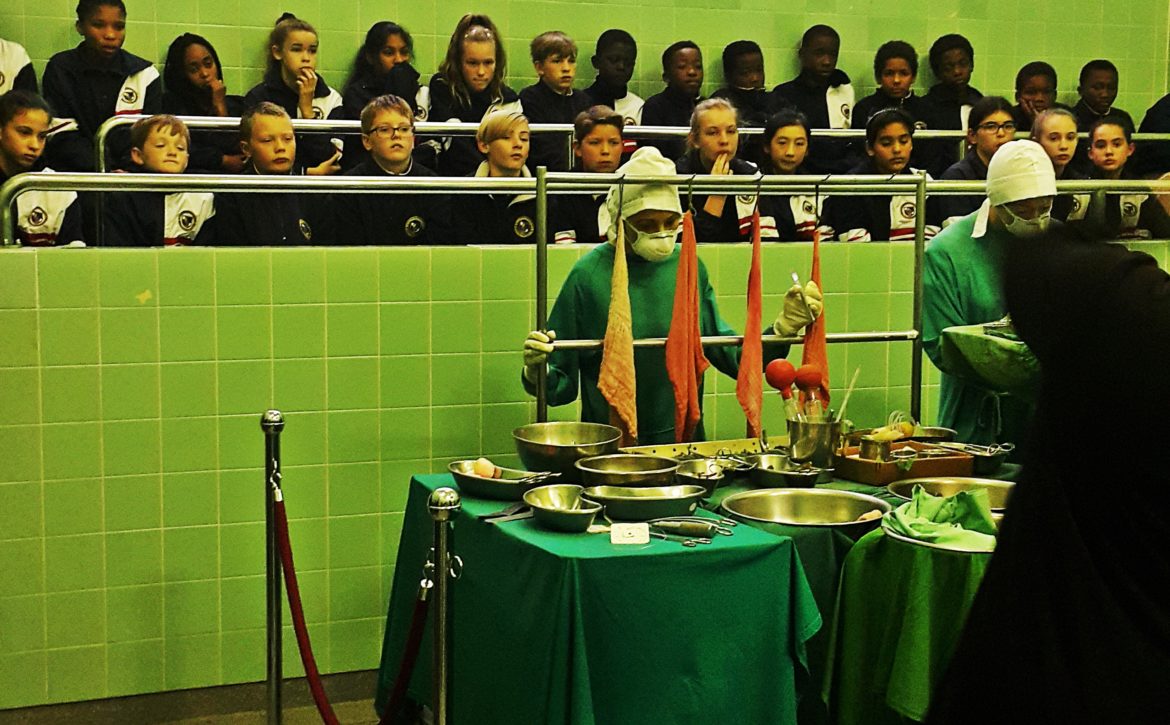
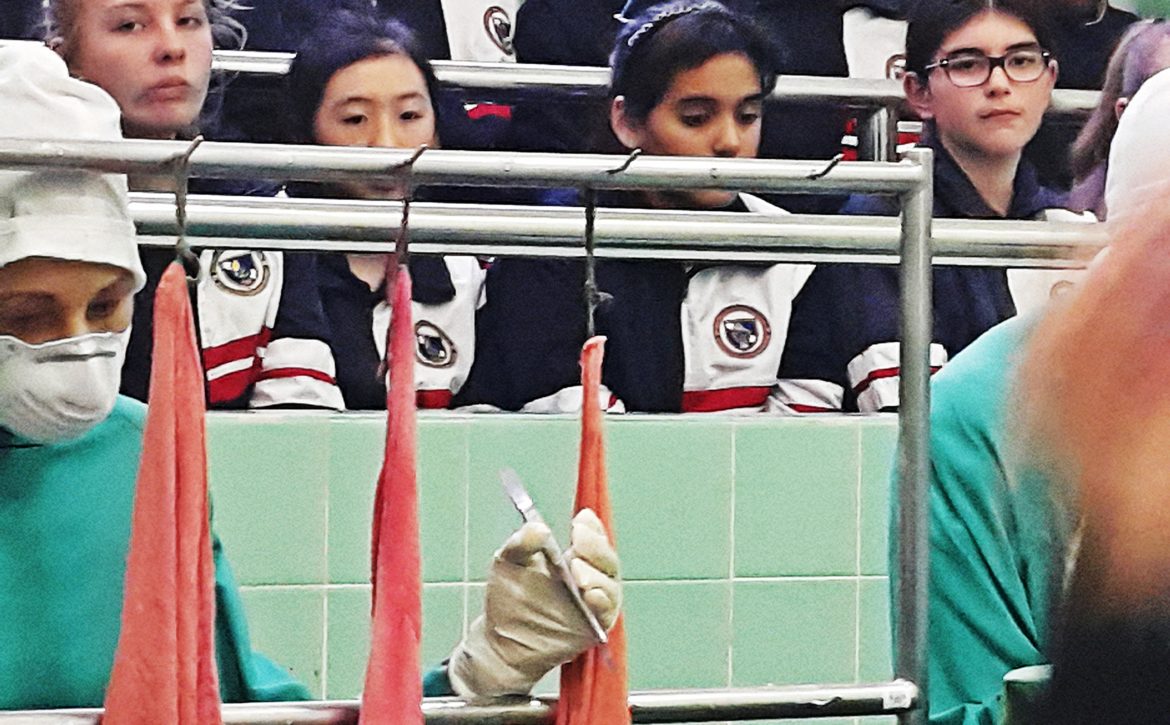
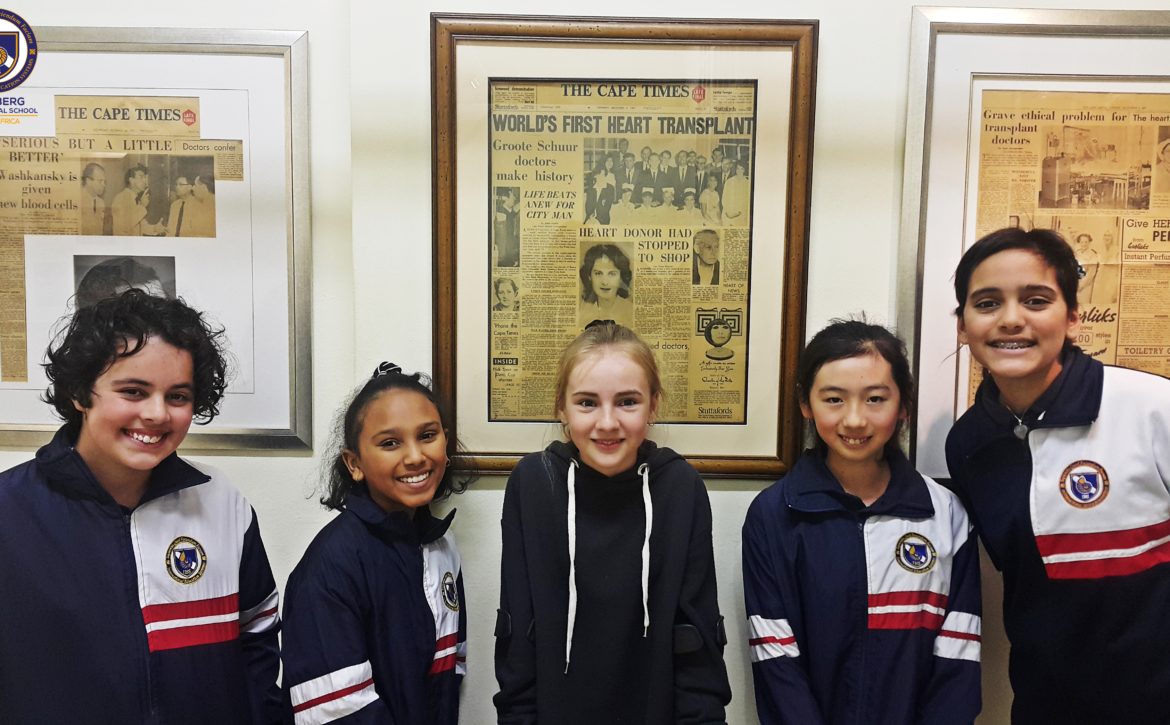
On the second of August 2019, the Year 6 classes went on an outing to the Heart of Cape Town Museum, one of the city’s most exciting tourist destinations. The first successful heart transplant took place here.
The Year sixes learnt about Christiaan Barnard’s journey to becoming the first person to perform a successful heart transplant. Following that, the classes were introduced to realistic silicone sculptures based on the real people involved in the operation. The Year sixes even saw real human hearts preserved in containers. What a few children found most fascinating was going into the actual room where the first heart transplant was held.
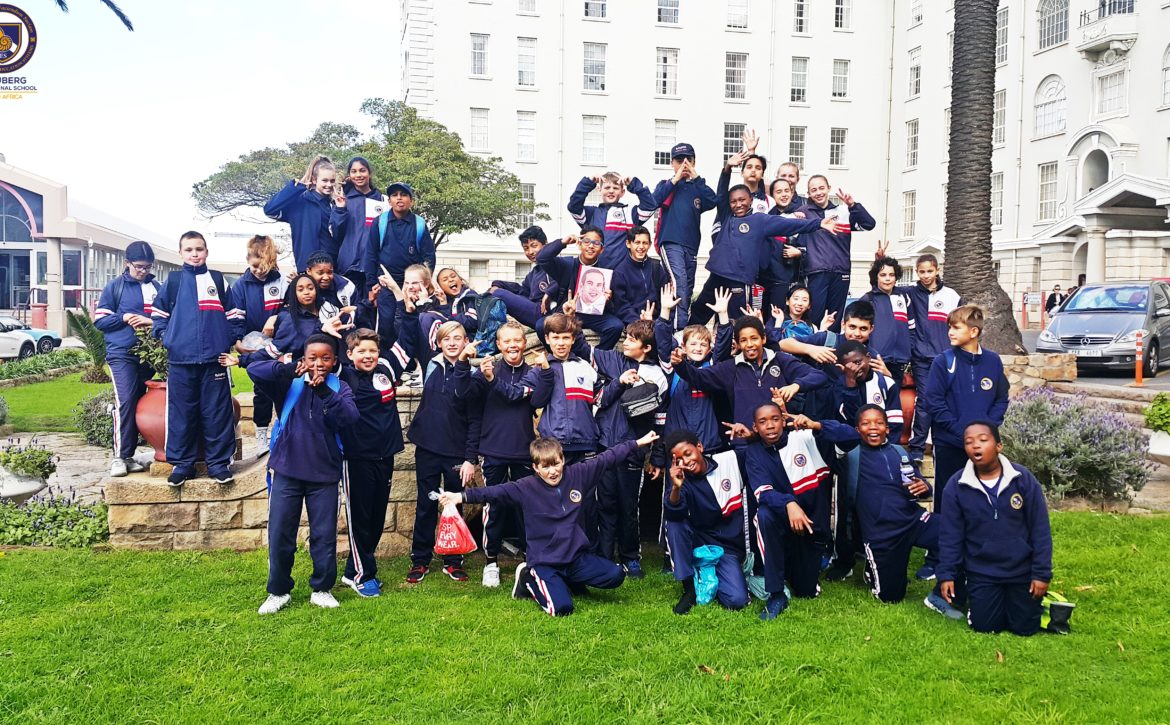
Ending the day off, the classes grabbed their packed lunches and ate on the grass outside the hospital. Unfortunately, the Year sixes then had to board the bus and end the outing.
written by Lina Moyo and Chloe Ralph (Y6)
Read More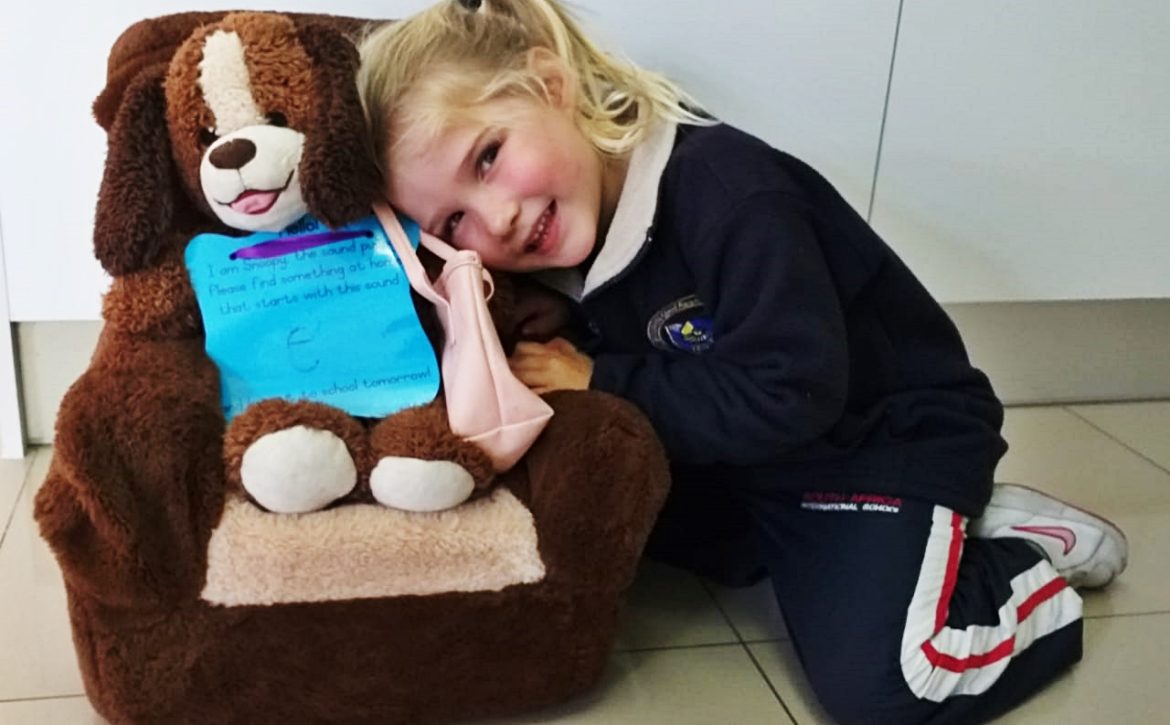

The “Sound Puppy”
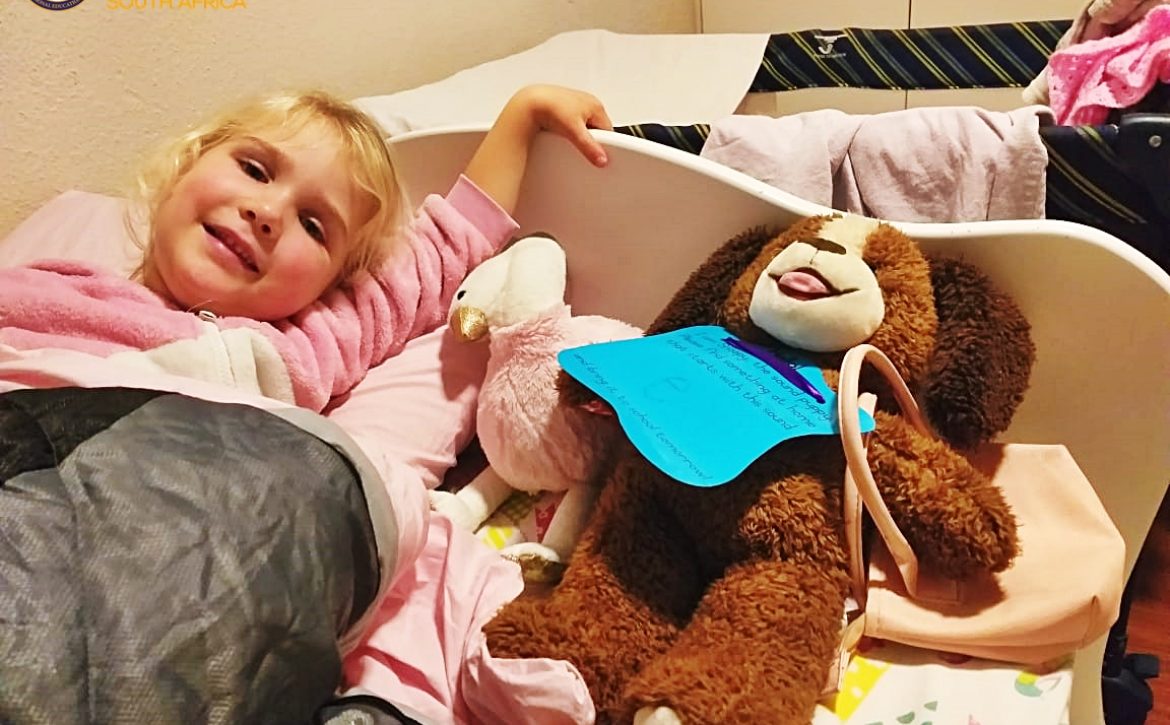
The alphabet is simply a collection of letters and sounds but the building blocks of language. In order to become literate, our students must be able to recognise each letter as well as the sounds connected with that letter. Once armed with that knowledge, then a student is well on the road to reading and literacy.
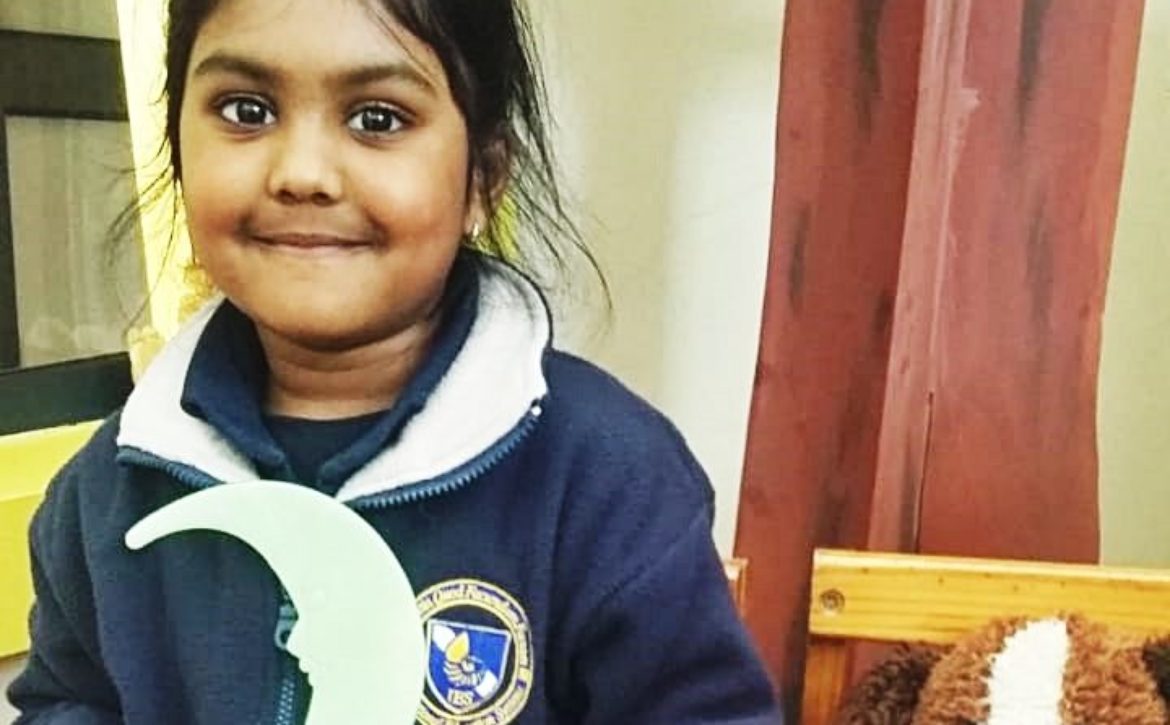
Our Pre-Reception class is learning their letters and initial sounds of words. They are very excited to have a turn to take the “Sound Puppy” home They then find something that begins with the letter we are learning about that week and put those items in the puppy’s bag. They can’t wait to tell the other students and teachers of the things they found at home beginning with the sound of the week.
The Jolly Phonics programme teaches the students to read and write using synthetic phonics. It is a comprehensive programme, based on the proven, fun and multi-sensory synthetic phonics method that gets students reading and writing from an early age.
“Literacy is one of the greatest gifts a person could receive.” – Jen Selinsk
Cindy Nunan
Pre-Reception Teacher