Revision For Success!
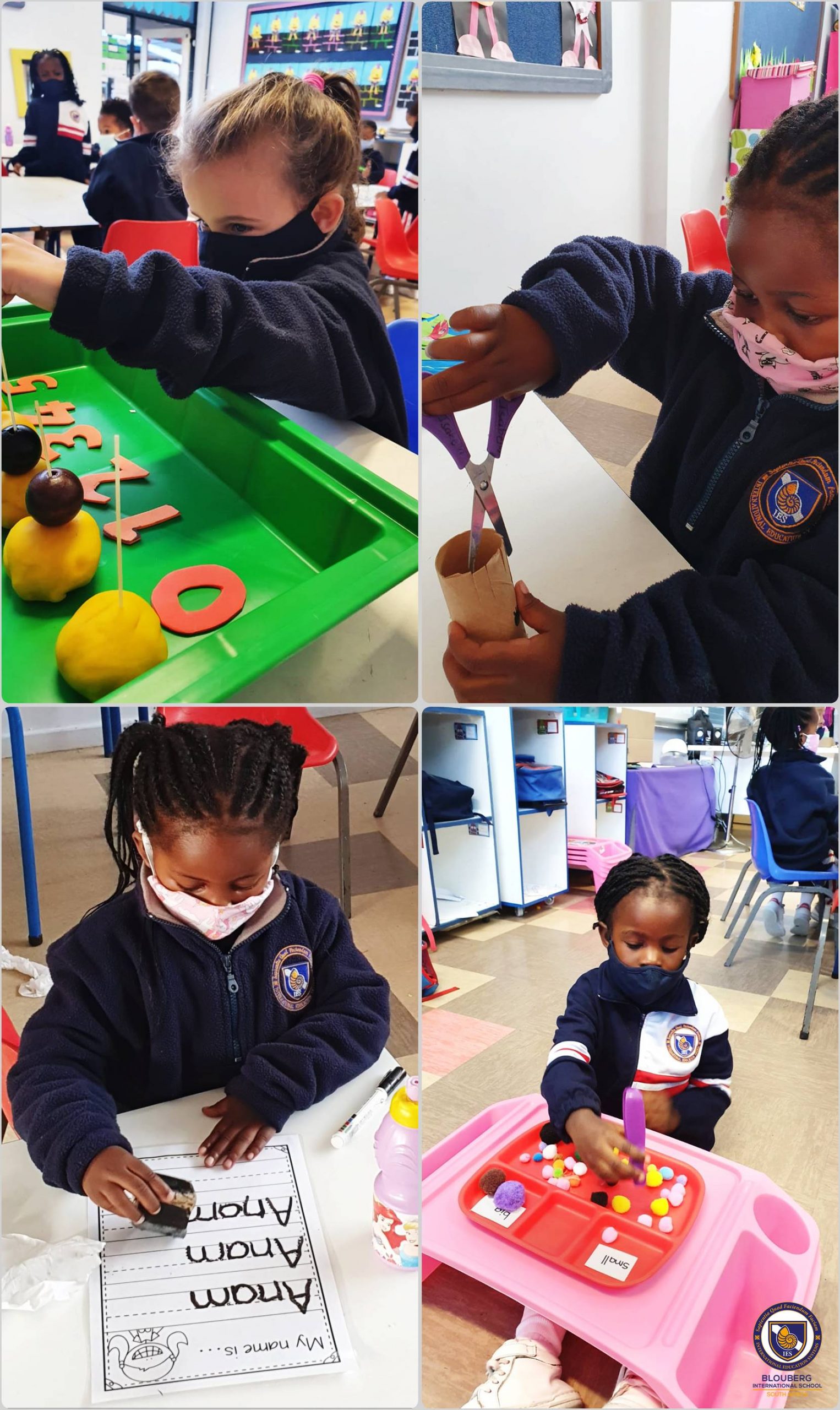
During the last few days of school, we spent a lot of time consolidating some of the work covered over the first two terms. The students used letter and number cards, playdough, whiteboards and markers and educational games to demonstrate their knowledge and developing skills. Some of the educational games we played were pattern match, colour recognition, shapes recognition and we have even learned how to write our own names!In Literacy, we learnt about all the Jolly Phonics and the sounds they make. Linking sounds to letters, naming and sounding the letters of the alphabet. A student cannot learn to read without proper knowledge of phonics. It is the foundation for success in reading. The students make a connection between the words we put together and what they look like in print. Phonics skills are necessary to jump-start the process of learning to read, but reading by sight is more efficient.
In Numeracy, we learnt about colours and shapes (2D) within our environment. We learnt about patterns, recognizing and recreating various patterns using a repeated sequence. We learnt about numbers, counting and using developing mathematical ideas and methods to solve practical problems. We even learnt about addition and subtraction and the correct vocabulary associated with them through number rhymes. Students have attempted to write for a variety of purposes, using features of different forms.
Martie van Dyk
Pre-Reception teacher

All About Recipes
“Cooking with kids is not just about ingredients, recipes and cooking. It’s about harnessing imagination, empowerment and creativity” – Guy Fiery
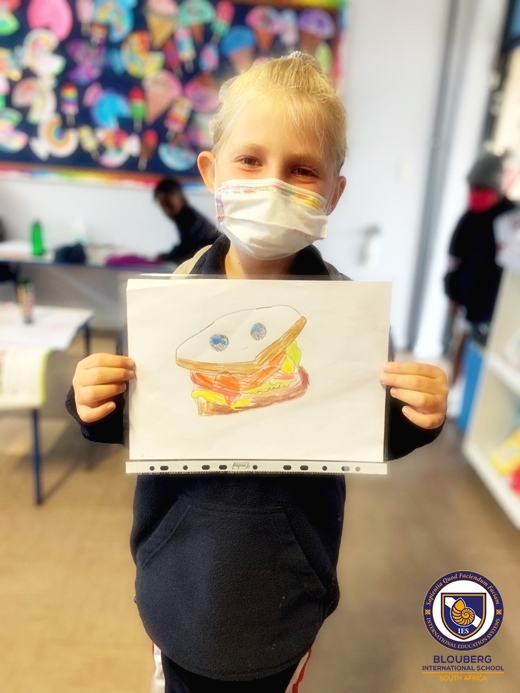
Last week for Show and Tell, our Year 2’s were asked to each bring a favourite recipe with them to school that they could chat to their class about. They were expected to tell their friends about the ingredients you would need as well as the method and instructions needed to create your culinary masterpiece.
Some leaners made beautiful posters, some drew their own pictures of their desired recipes and others even went as far as actually making their dish at home and bringing some to school to show us. Some exciting recipes included chocolate brownies, sandwiches, banana bread, cupcakes and even some chocolate cake.
Following instructions in any area of life can help young children learn and practice some basic math concepts and build language skills. In this specific area, following a recipe and the experience of creating meals with family and friends can help to build self-confidence and lay the foundation for an understanding in where food comes from, how we use it to express ourselves as well as a good practice in healthy eating habits.
We immensely enjoyed exploring each learner’s foodie favourites. So much fun was had!
Siobhan Hendry
Year 2 Teacher


Year 5 Measuring Shadows
Over the past few weeks, the Year 5’s have been looking into shadows; How they are formed, what factors affect their size, and how they change in position and size throughout the day.It is one thing to listen to someone else’s conclusion as to why things work the way they do, but another to investigate it yourself – and our budding scientists have been doing just that! What happens to a shadow when the light source moves further away from the object? Well, ask any of our Year 5’s and they will not only be able to explain it but demonstrate it as well.
Working in pairs, our little investigators hypothesized their predictions and set out to read and record as much data as they could in order to make it a fair test. From these results, they drew conclusions about how the distance between a light source and an object affects the size of it’s shadow – and had buckets of fun while doing so!
Robyn Pieters
Year 5 Teacher


Fun – Useful – Interactive – Comprehensible – Accessible
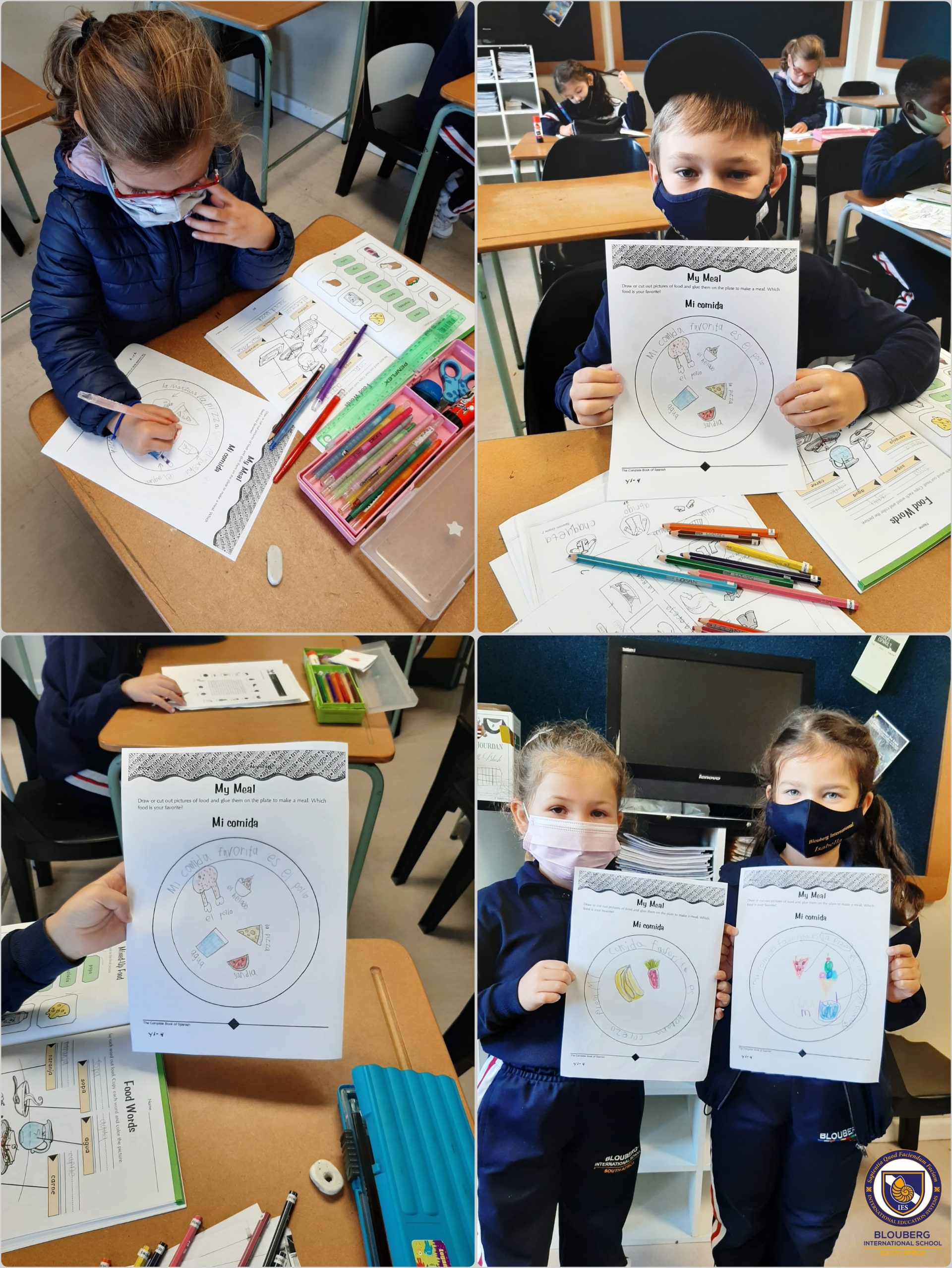
Many people think that the teachers have a lot of holidays during the year, well that can be true – what they do not know is that perhaps half of that time or sometimes more, we are researching new ways of presenting our subjects and the content in a more attractive format for our students.I believe that we need to allow ourselves time to explore new methods of teaching and, as a second language educator, my goal is to try to minimize the specific grammar that the students need to learn or at least present it to them in a more appealing way.
In addition, the ways that they learn have changed completely with the new technologies and the use of electronic devices. The time that they are able to “hold” their attention on you is scarily short.
For all these reasons, I personally believe that by creating your materials you can connect better with your own students and adjust the content to the topics that you are explaining in class. I also feel more confident and passionate about resources of my own creation.
When I am in the process of designing these new materials, I always have the below points in mind:
Make it as FUN as possible: The materials need to be fun in content and format, so you can connect easily with the students. They need to “forget” that they are learning another language. Engaging them from the beginning. This will also help to increase their participation in the lessons – key factor in their learning.
The materials need to be USEFUL: In my view, this means that the students can apply what they are learning to real life situations, ordering food, going shopping, booking a hotel room, and introducing themselves. So, the question that I will ask myself is: Are the material useful as well as fun? Will I be using these expressions in a Spanish speaking country if I was their age?
Create INTERACTION: When creating a story your students need to be part of it. Just to read the story to them it is not enough, they can finish the story, you ask questions about what is going on, or you can create a similar story with them.
Firstly, introduce all the vocabulary, adjectives, verbs, or expressions to them so it is COMPREHENSIBLE – that needs to be familiar for them to keep the focus and understanding. Creating the story with the topics and grammar that they are learning during the term will help me with this point: story at the school (school objects and subjects, facilities at the school, adjectives related with the teachers), going shopping (clothes, colours.) translate it with them first and then we read it again, answering basic or more complex questions depending on the year group.
Finally, all the materials must be ACCESSIBLE: I continue posting all the materials in Google Classroom, so my students can always access these, and they can send back their stories or questions.
Javier Vidal
Spanish Teacher


June Exams 2021
The June exams are fast approaching and many students will be starting to feel the pressure. Perhaps the best way to counter exam stress is to come prepared. To this end, I have ten guidelines students can follow that will go a long way to helping them feel prepared and confident for each exam.
- Print a copy of their exam timetable and put it in a prominent and safe place.
(Exam timetables can be found on Engage). - Compile and stick to a study timetable.
- Give yourself sufficient study time for each subject.
- Identify topics you find most challenging and, if necessary, ask for assistance from the subject teacher. It is best not to leave this to the day before.
- Utilize effective study methods rather than simply reading the textbook. Summaries, mind maps and flash cards are examples of alternative study methods.
- Avoid pulling “all-nighters”.
- Limit your social calendar and put your phone on silent when you are studying.
- Avoid fad diets so as to maximize energy and concentration.
- Pack the necessary equipment for each exam, including a spare pen.
- Arrive punctually for each exam.
Parents should also be involved in their child’s exam preparation. We know from our own experience as students how easy it is to become distracted and bored. Encourage regular study sessions with short breaks, physical activity and healthy eating. Do not be afraid to check up on your child’s exam preparation progress, even if they are in their final years of school.
I wish students all the best for their exams and I hope that they have a safe and enjoyable holiday.
Sheila Marais
High School Teacher

From the Principal’s Desk, 24 May 2021
Dear Parents
MORNING DROP OFF
I am very aware of the frustrations around morning drop off times. The gravel area is of concern, but is being attended to and you will see a difference soon. Next week’s newsletter will explain more.
Please may I ask that parents not get out of their cars at the “drop and go” in the main parking lot. This means we should have school bags placed strategically in the car so the young ones can easily access the bags when they get to school. If we limit each car’s stopping time, this will greatly assist the situation.
Thank you for your patience in this regard.
FEATURE PHOTO
Our main newsletter photograph features Mrs Mandy Goch. Five/Six facts that not everyone knows:
1. She is Portuguese.
2. She is a very enthusiastic reader and always has a book in her hand. Her favourite books include The Elephant Whisperer (Lawrence Anthony) and Pillars of the Earth (Ken Follett)
3. She worked for many years in a model agency, managing the careers of models.
4. She can eat an entire large bag of NikNaks all by herself.
5. She is a bit of a perfectionist and as a child would change clothes regularly if she spotted one speck of dirt on her outfit.
6. Her school day starts with a laugh and ends with one.
IES CHIEF ACADEMIC DIRECTOR VISIT
Our IES Chief Academic Director, Mr Darryl Lottering, is currently in South Africa. He has been visiting Blouberg and engaging with students and teachers. He will be at school again on Monday, 24th May.
Darryll would also like to offer our parents an opportunity to speak with him. We are, therefore, having a parent meeting on Monday, 24th May at 5.30pm. This meeting will be limited to 50 people and there are still “spots” available. If you would like to attend this meeting, please email me at andre.swart@iesmail.com.
The meeting will take place in the Junior Hall.
WEEKLY THOUGHT: Your Attitude
“The only disability in life is a bad attitude.” – Scott Hamilton
This certainly makes us think about what we view as a disability, doesn’t it?
Maybe Hamilton is hitting the nail on the head.
Whenever I meet a person with a disability, it always amazes me how the individual usually (if not always) insists that they do not want to be treated as a disabled person. Their vigour for life truly is always inspiring…
Then, on the other hand, we sit with individuals who have everything going for them: youth, health, fitness, opportunities, etc., but who will find every imaginable excuse to disqualify themselves from doing certain things. In stark contrast to those who actually have disabilities, these able-bodied people display bad attitudes towards life, and it is these attitudes that will end up hampering any possibility of growth, development and ultimate success.
To grow, thrive, develop, and enjoy each of life’s precious possibilities, we need to ensure that we have the right attitude – always, and in all circumstances. Individuals who do so are the ones who will live meaningful lives and have a deep sense of purpose, regardless of their circumstances.
Do you have a disability? Before saying “No”, first make sure to check your attitude towards life.
Have a wonderful week, it is time to unpack those winter items…
Andre
Read More

Teamwork Makes The Dream Work!
The Year 4s have been learning about Making Peace and Helping People To Belong as part of our Global Perspectives unit.
We’ve explored important questions such as:
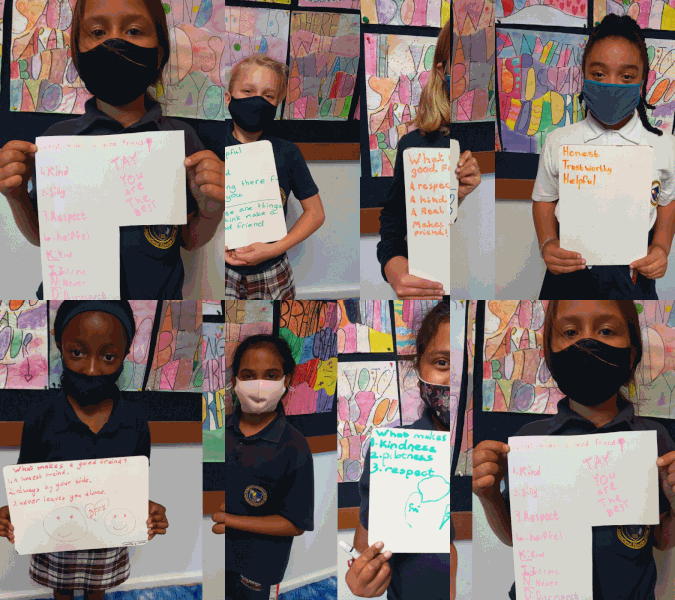
- What makes a good friend?
- What causes arguments or conflict between people?
- How can I maintain good relationships and resolve conflict with others?
It doesn’t really matter what age you are, you will always have to collaborate and work together with others, whether it’s in a social, professional or family environment. We’ve focussed mainly on our own behaviour and what we can do to be a good friend and help prevent or resolve conflict.
“We are not a team because we work together. We are a team because we respect, trust and care for each other.” – Vala Afshar
Take a look at the words students shared of qualities that a good friend would have. We also integrated Global Perspectives with our Art where they had to create a collaborative, puzzle artwork. The students did a wonderful job working together and encouraging each other – whilst having fun!
We are so thankful to have such a wonderful team at BIS: the students, parents, teachers, assistants, maintenance staff, sport coaches, administration and principal.
You are all appreciated and valued!
Ria du Plessis
Year Teacher


Teaching Young Learners About Endangered Animals
“We all have a responsibility to protect endangered species, both for their sake and for the sake of our own future generation” – Loretta Lynch
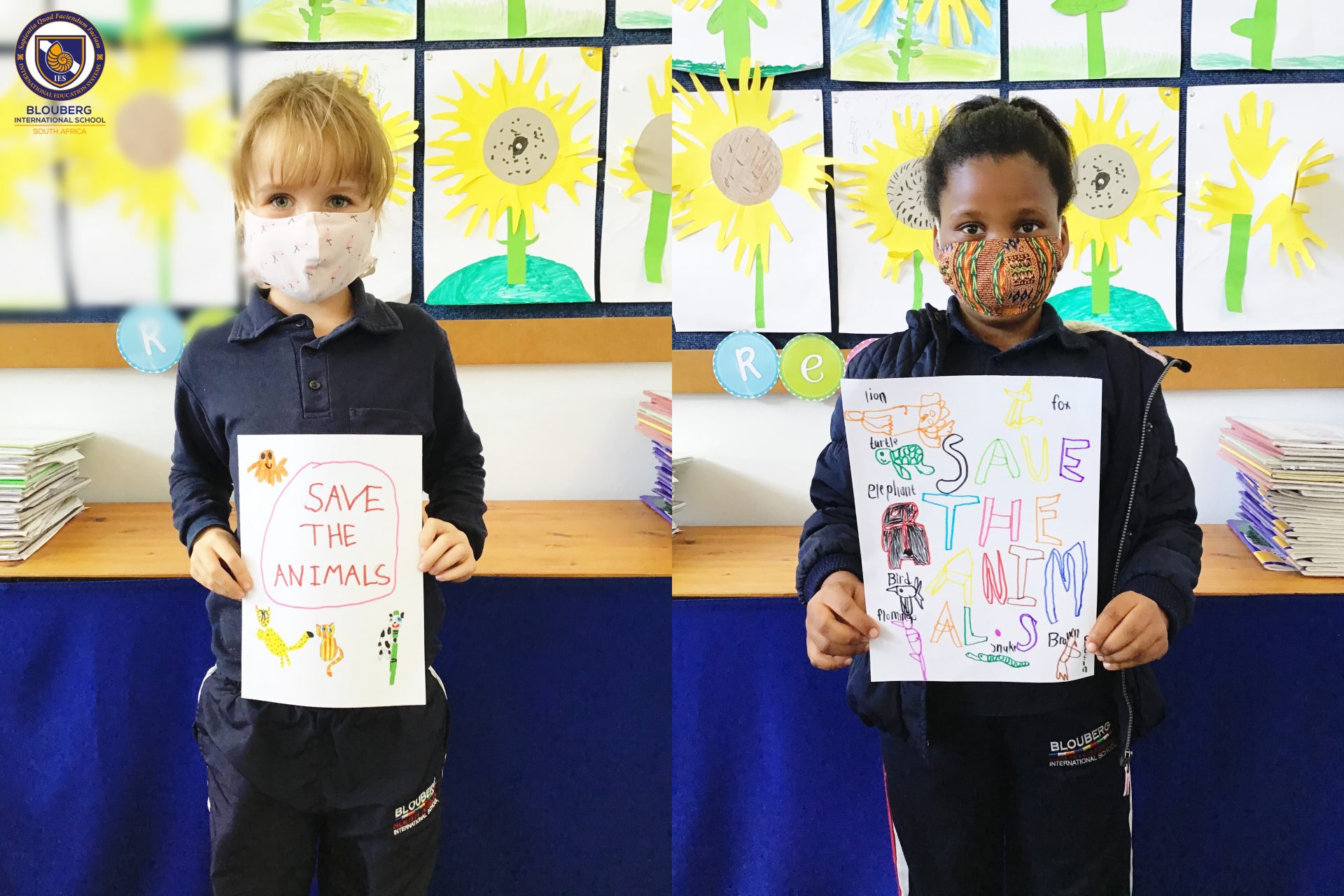
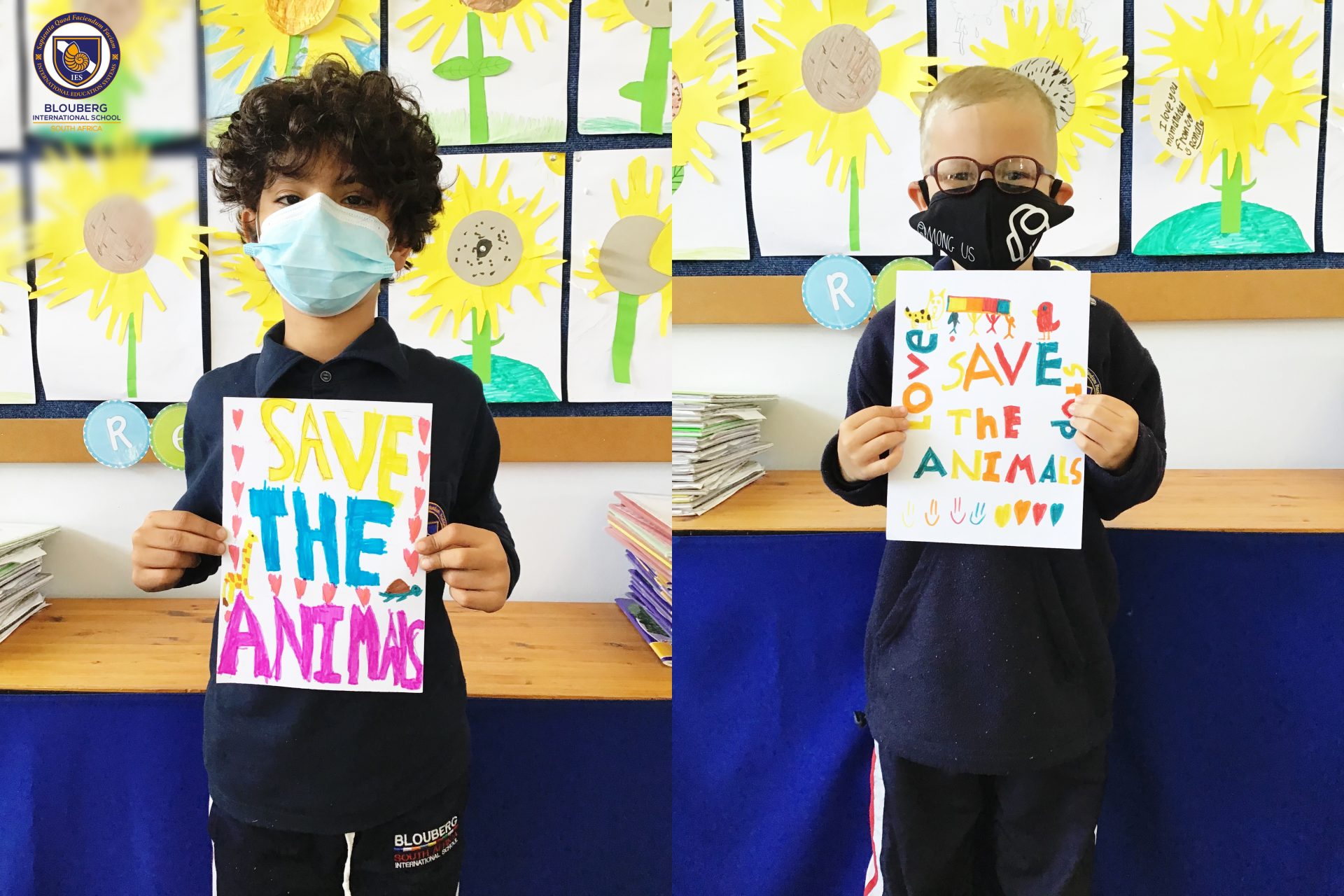
The Year 2 teachers have been expanding the knowledge of learners on endangered and extinct species during Global Perspectives. We hope for our learners to gain an understanding of the importance in protecting the animals around the world.
Teaching young learners about extinction and endangered animals creates natural curiosity and fascination about the world around them. They need to realise from a young age that every year a few species end up extinct and this is largely as the result of human activities. Teaching learners to care about and protect animals and their habitats is one of the best ways in which we can help prevent more species from becoming extinct as the children of today are the leaders of tomorrow.
As parents and teachers, we are familiar with the importance of how poaching, climate change, deforestation and urbanization have led to the decline in species. That is why it is of utmost importance and our responsibility as adults to teach our children lessons about endangered and extinct species.
“Animals should not require our permission to live on earth. Animals were given the right to be here long before we arrived.” – Anthony Douglas Williams
Erin Hierse
Year 2 Teacher

Cambridge International AS and A Level Afrikaans
The Cambridge International AS Level Afrikaans syllabus enables learners to achieve greater fluency, accuracy and confidence in the language as it is spoken and written, and improve their communication skills.
They learn how to improve their use of Afrikaans in a variety of situations, understanding how to read texts and other source materials, and how to extract information, initiate conversations and respond to questions both orally and in writing.
In the Afrikaans class we want everyone to share in the creation and enjoyment of Afrikaans culture, specifically literature, and the development of the language as an intellectual instrument.
One of our AS-topic areas for 2021 is Kos en Drank (Food and Drink)
The Afrikaans language is expressive, rich and unique to South Africa and its food words are as intriguing as the items they describe.
We put compiled a list of our favourite Afrikaanse KOS-words.
Potjie: Direct translation: little pot. A traditional stew slow-cooked in a cast-iron three-legged pot over the coals of a fire.
Slaptjips: Direct translation: floppy chips. Potato fries.
Frikkadelletjies: Little meatballs.
Koeksister: Traditional dough braids that are deep fried and soaked in syrup. Try the classic recipe.
Melktert: A traditional South African recipe for a cinnamon-topped custard tart in a sweet pastry crust.
Naartjie: A sweet and easy-to-peel citrus fruit indigenous to South Africa.
Padkos: Direct translation: road food. Food that you eat while on a journey, usually homemade and containing boiled eggs for comedic effect.
Poffertjies: Fritters or profiteroles. Direct translation: little puffs.
Spookasem: Direct translation: ghost’s breath. Candy floss.
Ystervarkie: Direct translation: little porcupine. Lamingtons (sponge cake dipped in chocolate sauce and rolled in coconut).
When it comes to South African food, Afrikaans has the best descriptive words to make your mouth water! Afrikaans is undeniably and deliciously vivid.
Carmen de Villiers
Afrikaans Department High School
Emergent Literacy In Reception Year
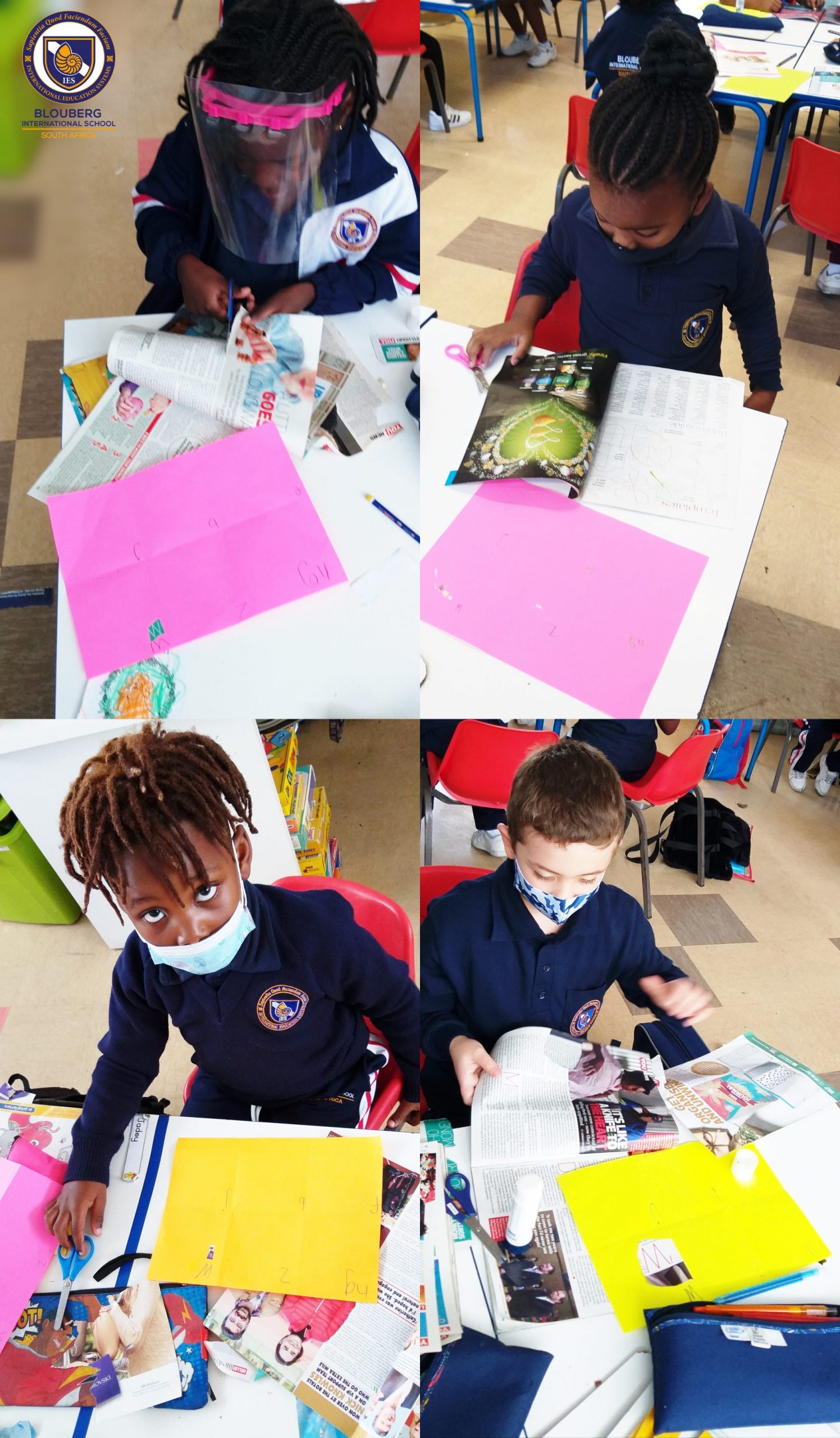
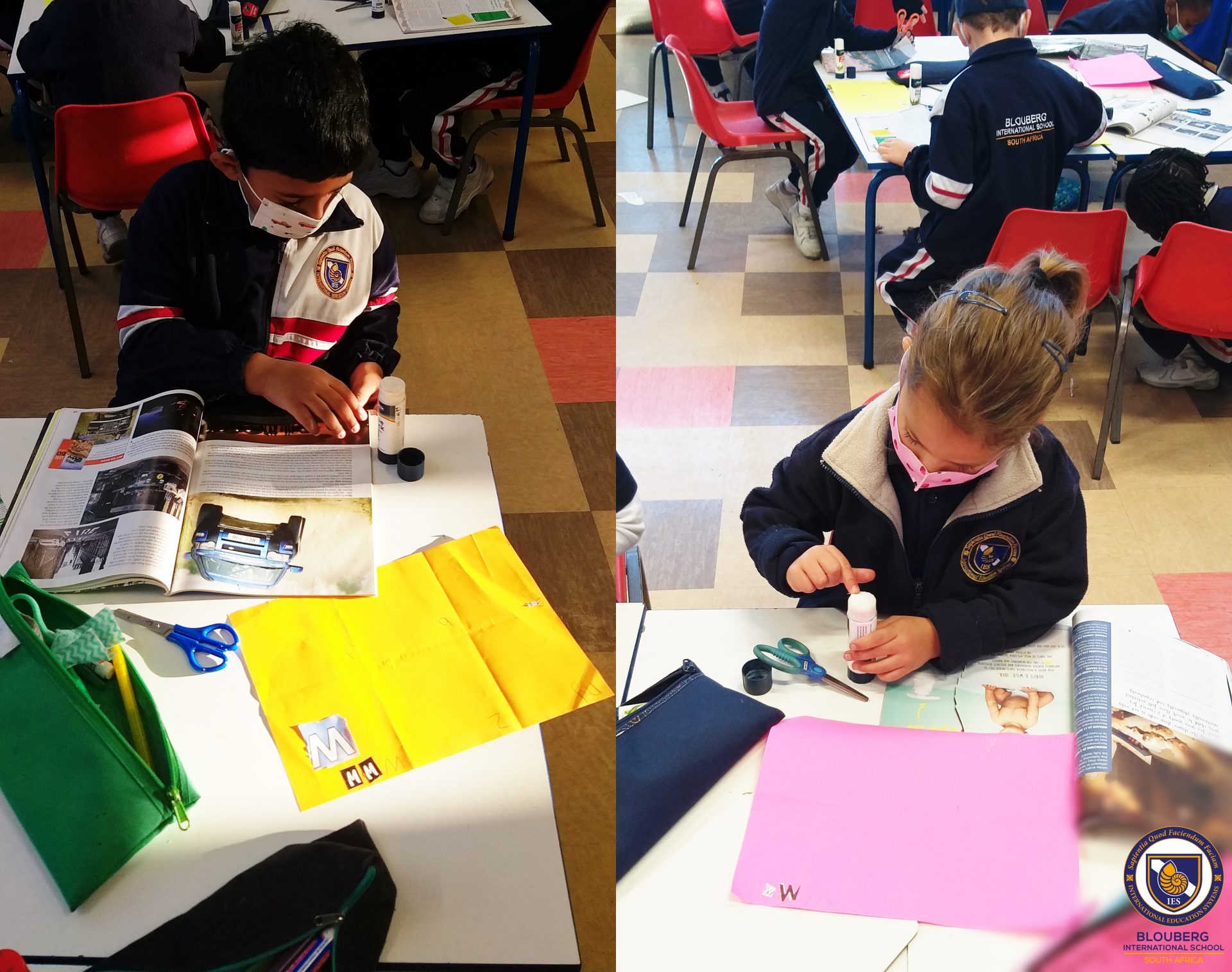
Our Reception students have been enjoying revising the letter sounds they have learnt by paging through magazines to look for the letter sounds. Once found they need to cut them out and paste the sound to match the sound on a colourful page.
This task is part of emergent literacy and combines quite a number of important skills such as fine motor skills, hand eye co-ordination, visual memory and letter recognition skills. As they page through the magazines students are exposed to letters in other fonts and also need to make the link between upper and lowercase letters.
Here are some fun ways to develop letter recognition at home:
- Writing letters on bathroom tiles using bath crayons.
- Writing with a whiteboard marker on a sliding door or mirror.
- Looking for known letters (and perhaps words) on number plates and signs in the community.
- Playing I spy to identify objects at home that begin with a specific letter (remember to use the phonetic sound (example: mmm, not ‘em’).
- Finding letters on a shopping catalogue.
- Writing letters in something fun on a tray, such as custard, chocolate pudding or dry substances such as icing sugar, jelly powder, rice or salt.
- Writing letters using a pointer finger on a steamed up mirror.
- Making letters out of playdough.
- Making letters out of salt dough and cooking it.
- Making letters with sweets on iced cupcakes.
- Finding letters in letter pasta.
- Writing simple words using Jelly Tot letters.
For more great ideas have a look at our Foundation Stage Pinterest Page: https://pin.it/1Of5Yuy
Bronwen Nuthall
Reception Year Teacher