Egypt Day 2020
I want to see Egypt and raft down the Nile.
I want to see all of their stones in a pile.
I’ll meet an old Pharaoh and wear his cool hat
Or eat with the woman who knew the first cat.
But while I wait (since it might be a while)
I’ll dress my dog up in that white mummy style (by Steve Hanson)
And that is exactly what our Year 3’s did and boy did they dress up to the nines! After weeks of learning all about the history, geographical features, Egyptian society, pharaohs and pyramids, it was finally time to hold our iconic Egypt Day! We were graced by the presence of pharaohs, queens and even a few mummies.
Our day kicked off with an Egyptian Best Dressed Fashion Show. The students strutted their outfits to the tune of ‘Walk Like an Egyptian’ and our esteemed judges chose the three best dressed Egyptians.
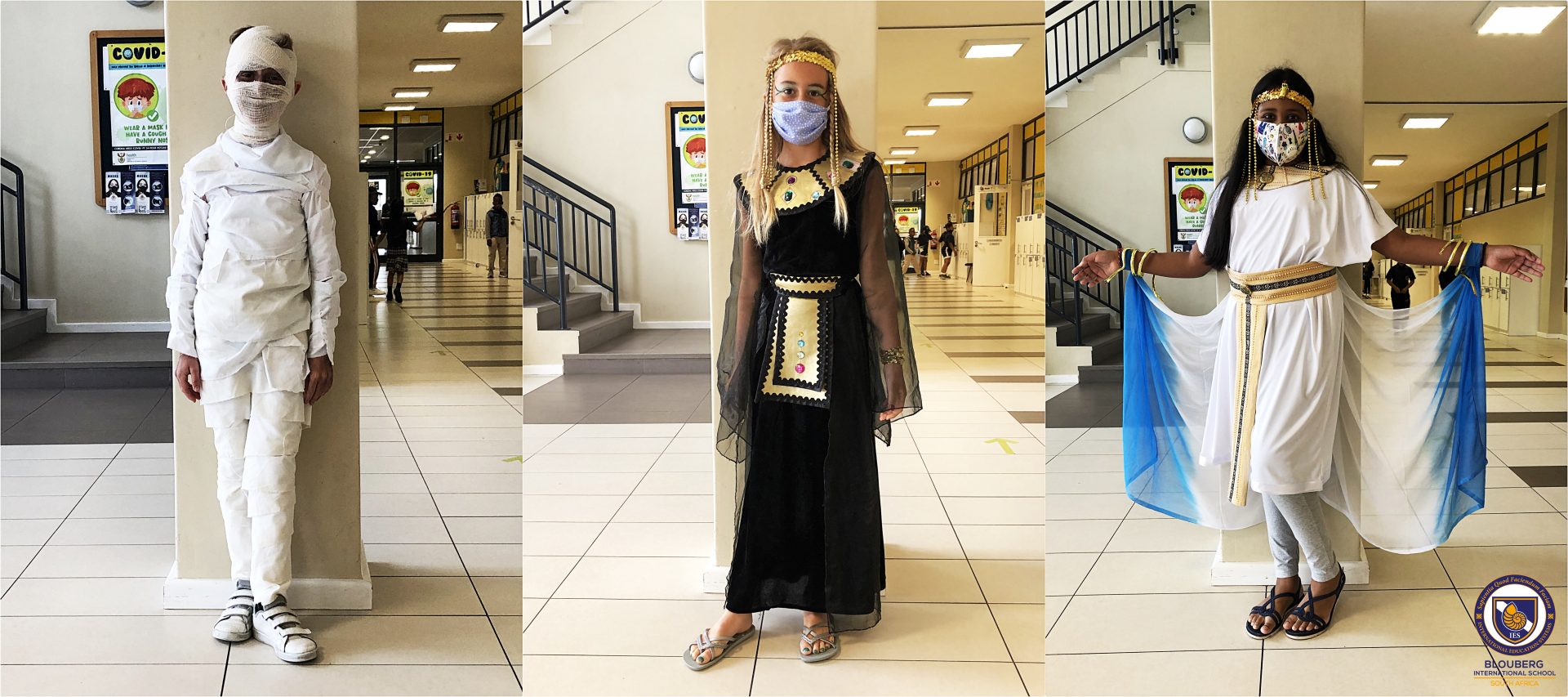
PHOTO: (Left to Right) Alistair Mouton, Breanna Leonard, Mia Govender
After all that hard work it was time to eat. Each student was supplied with a specialised food box and feasted on a selection of middle eastern/Egyptian cuisine. There were dates, falafel balls, mini pitas, humus, grapes and a juice to quench their thirst. YUM!
Once our Egyptians were satiated it was time to do some belly dancing with Nadia from the School of Belly Dance. Suffice it to say, that we DO have some VERY talented male belly dancers!
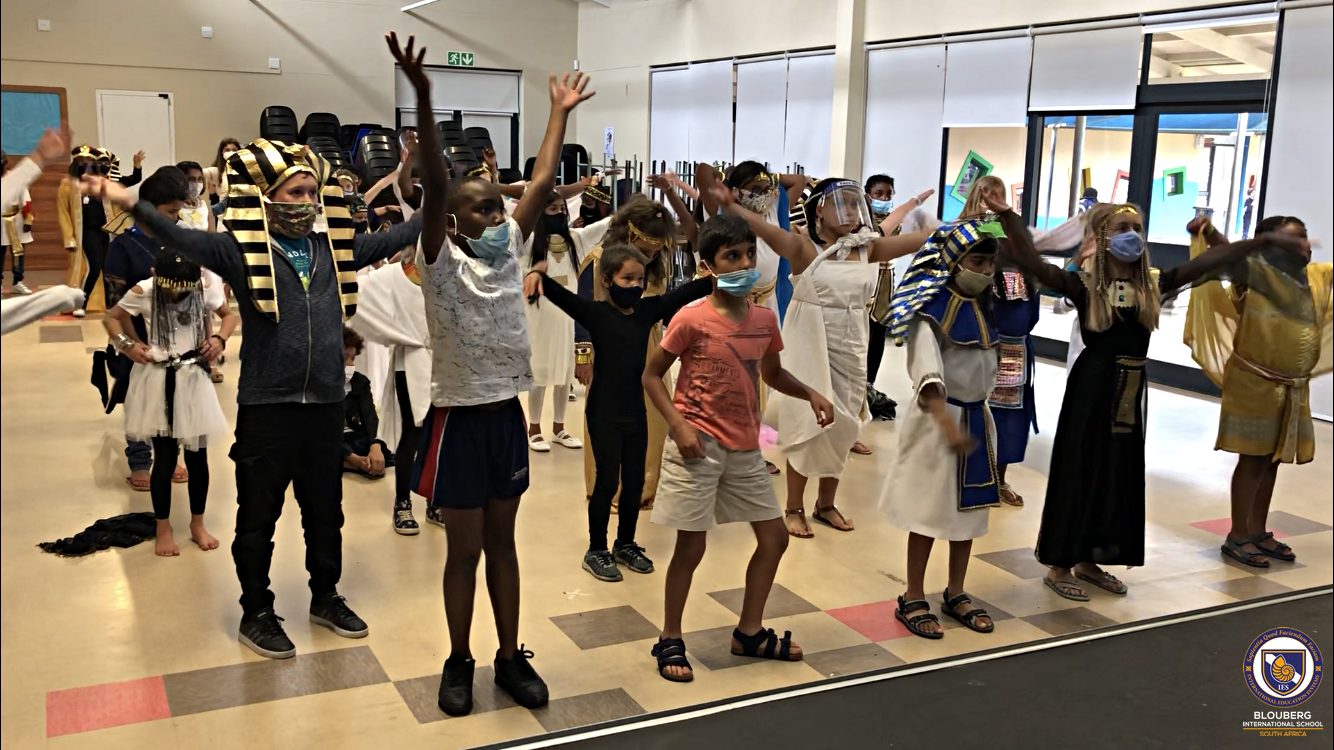
PHOTO: (Left to Right) Oliver Smith, Wesley Silva, Joshua Munsamy, Alie Ibrahim Zaki and Sehan Singh
The day ended with the Year 3’s finally settling down to watch the iconic movie, Prince of Egypt. A fabulous day was had by all and we had some exhausted Egyptians making their way home!
Mandy Goch
Year 3 Teacher

International Barnaby Bear Day 2020
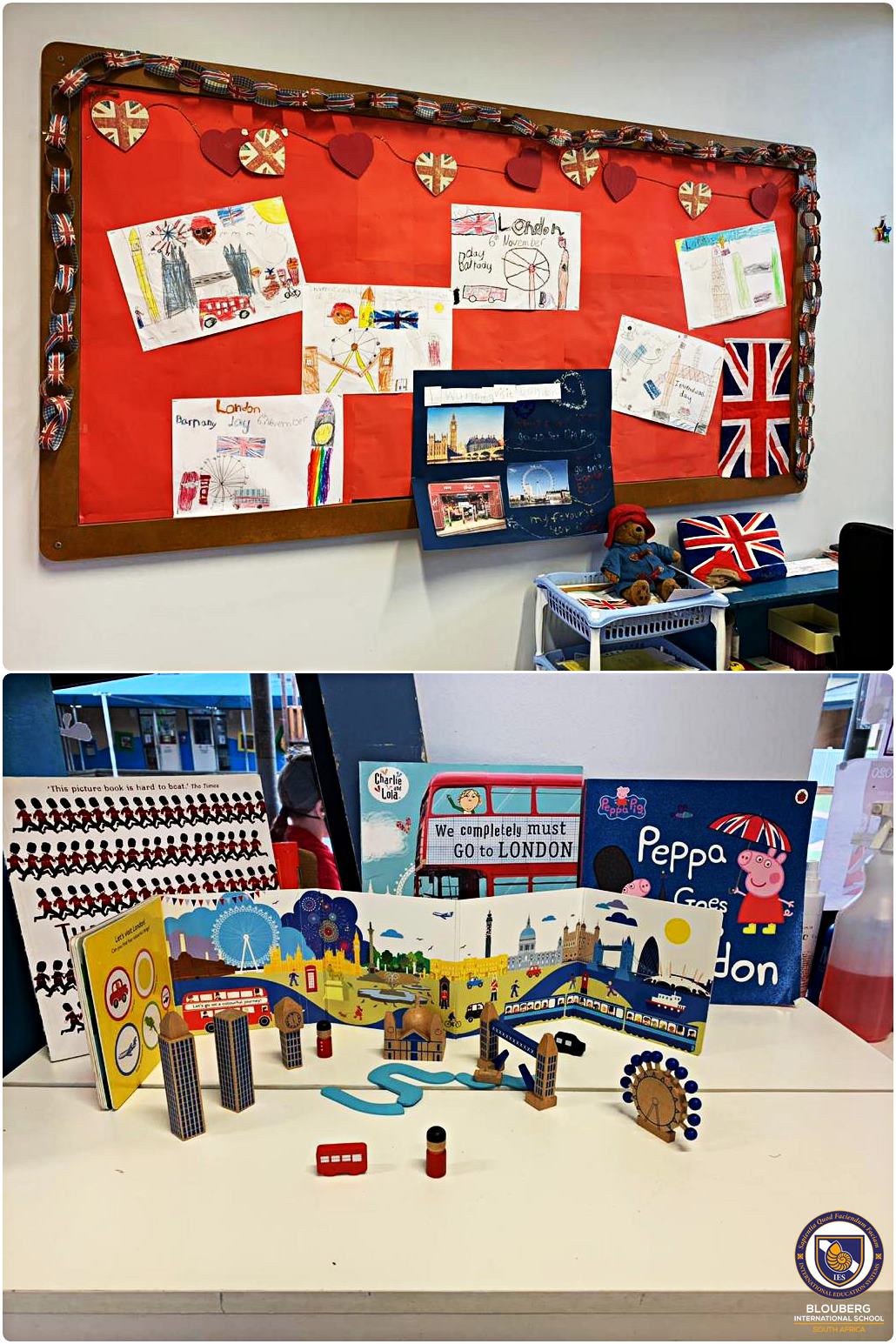
This term in Geography we learnt about the travels of Barnaby Bear. On Friday, the 6th of November 2020, we held an ‘International Barnaby Bear Day’, where we celebrated the places that he has travelled to. Despite the rain, we were still able to have fun and enjoy the day.
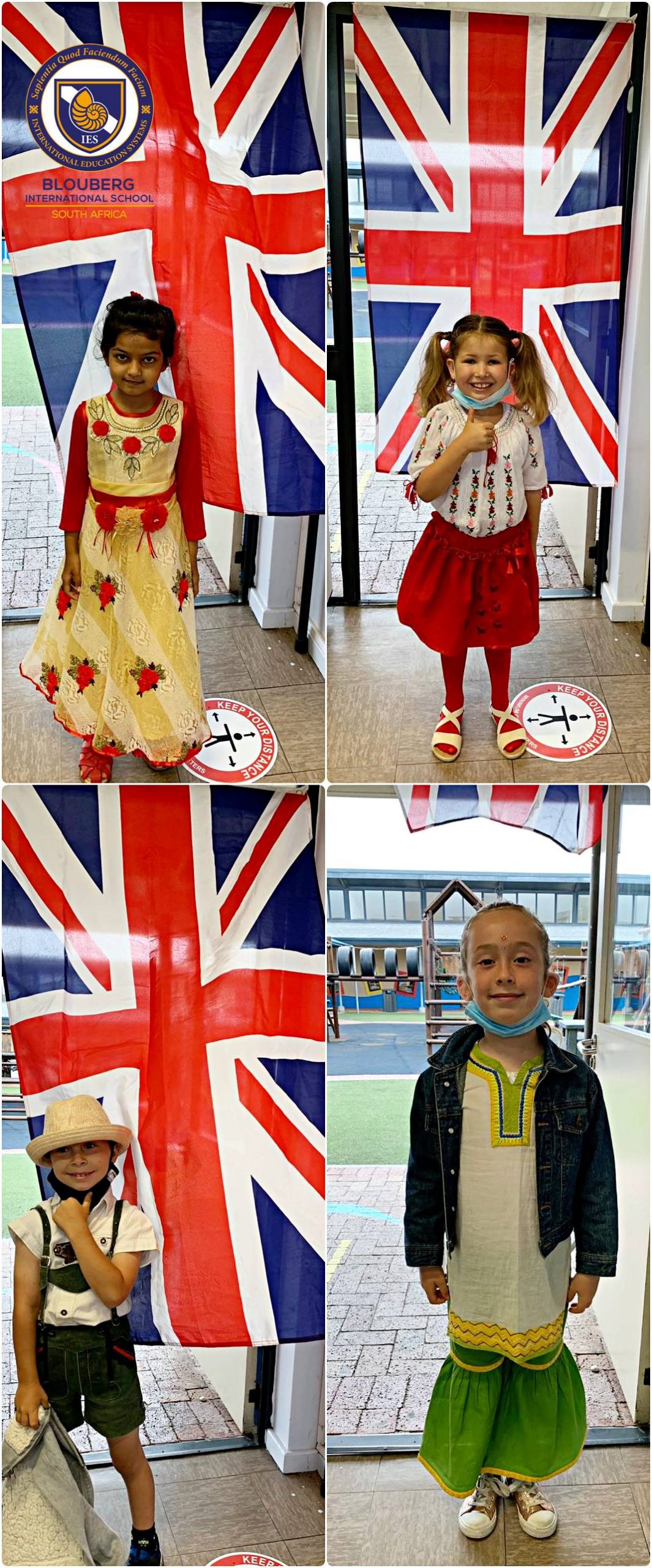
The Year 1’s came to school dressed up in the clothes worn by the people in a country of their choice. They all looked wonderful, celebrating their own cultures as well as the cultures and heritage of other countries.
Each Year 1 student had a chance to present and talk about their selected country, the culture, what is found in the country, the people and most of all, the food they eat. Some children brought food from their chosen country. It was really interesting seeing what they brought, and hearing what they had to say about each country.
For some of the activities during our special ‘International Day’, Mrs. Cronje read stories from London and the famous landmarks, Mrs. Cordner taught the students how to do line dancing to the famous song, ‘Achy Breaky Heart’, and the students coloured in pictures from Mexico.
It was a lovely day and we all learnt so much! Thank you to the students and the parents for all the effort they put in to make the day so memorable.
Wendy Menton
Year 1 Teacher

We Love Our Pets
For the next few weeks the Foundation Stage students are learning about Pets.
This week, one of my Pre-Reception students, Jan Pani (5 years old), brought his hamster Matt to school for the day. He showed the other students how he cares for his pet. We were very entertained by the little hamster, even though he slept most of the day. Jan and his sister Mia also have a pet rabbit called Hiccup. They wished for a bunny for Christmas. Mia wrote a letter to Santa asking for one. On Christmas day they found Hiccup in their garden. He is so cute! Jan said he would also LOVE to have a tarantula as a pet, I am not sure what his mother would think of that!
Aaron April (5 years old) showed us his pet fish and parrot. His fish are all called Nemo. His parrot’s name is Sky. Sky loves dancing and singing. The April family have had Sky sins Aaron’s birth and Sky and Aaron are growing up together. Aaron also loves horses and goes riding as often as he can.
Jadey Howes (5 years old) has two dogs, Axle and Harley! She says they are brother and sister Staffies. She helps her mom and dad every day to take care of them by feeding them dog food and filling up their water bowls. She likes to brush their short hair with the doggie brush and gives them both BIG, tight hugs. Harley, the black dog, likes scratches on her tummy, while Axle gets very jealous and always pushes his sister out of the way so that he can get all of Jadey’s attention. Jadey loves both her dogs so much and likes to give them doggie treats when they have been very good. They have so much fun playing together outside!
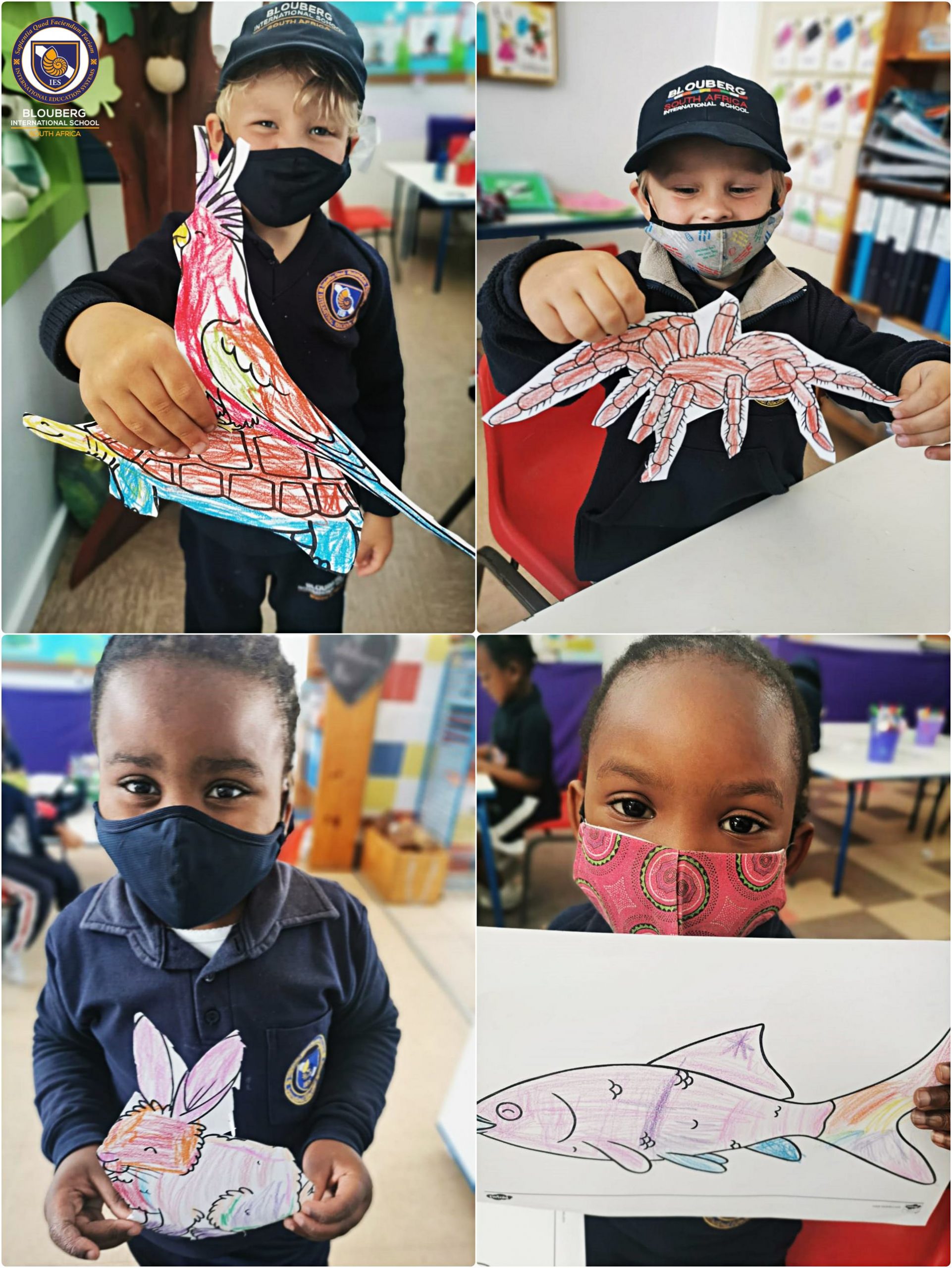
We spoke about all the different pets you can look after. The students were amused and fascinated by all the animals. Pet animals can range from the usual ones we know of, to some unique ones. Some of the students chose to have fish, birds, a guinea pig, mice, rabbits, a tortoise or even a snake as a pet.
Pets provide so many benefits for children!
– Feeding and caring for a pet encourages childhood responsibility.
– They provide a connection to nature and teach respect for other living things.
– Sharing the love and care of a family pet forges an additional common bond among siblings.
– Cuddling a pet is knowns to reduce stress, loneliness and anxiety.
Cindy Nunan
Pre-Reception Teacher
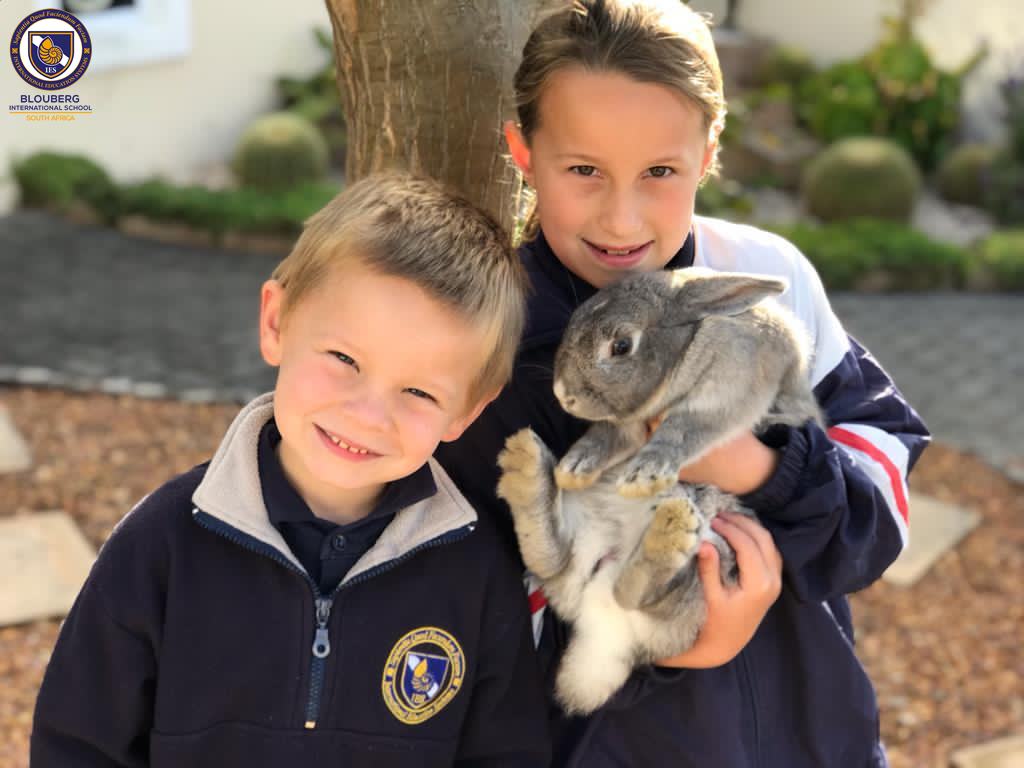
PHOTO: Jan and Mia with their pet rabbit.
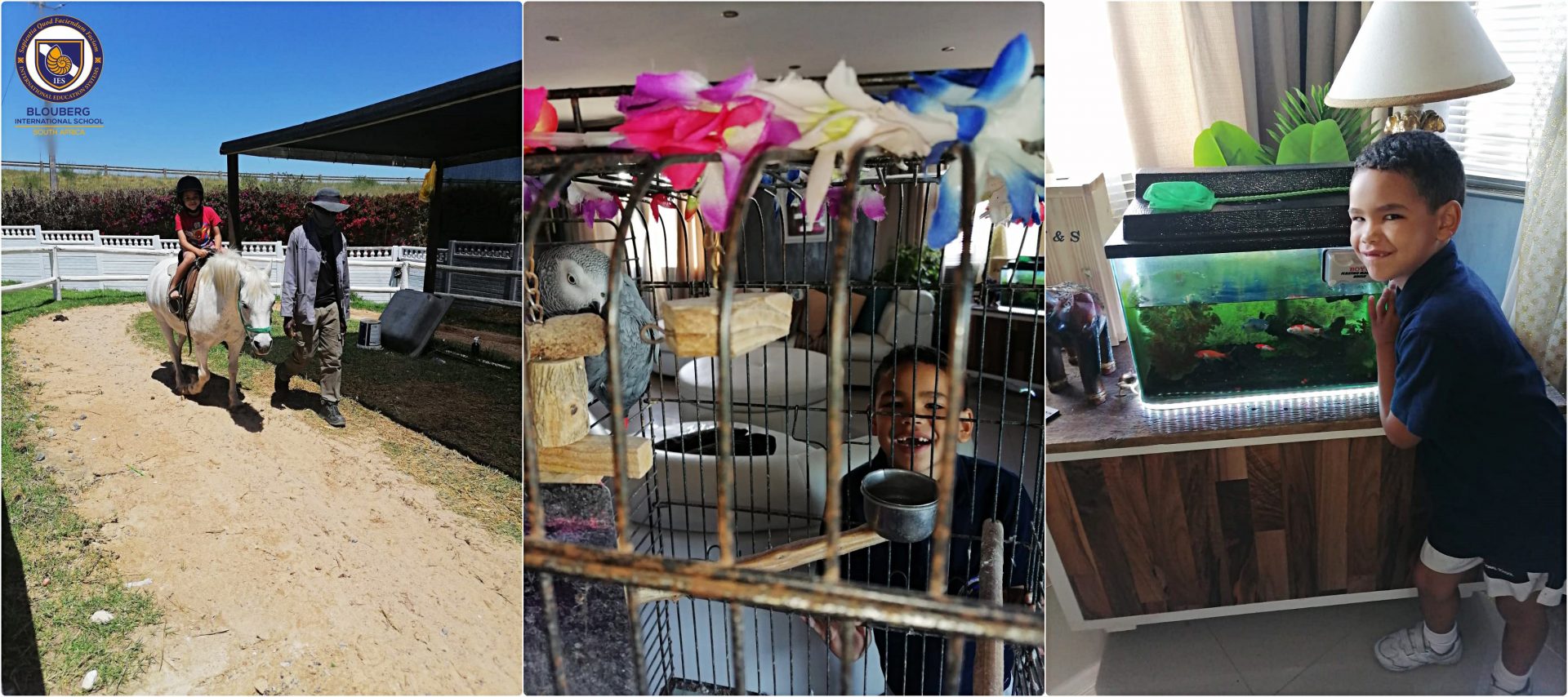
PHOTO: Aaron showing off his amazing pets.
From the Principal’s Desk, 6 November 2020
Dear Parents
I am, and have always been, a firm believer in lifelong learning. As the world evolves around us and we are expected to move with the times, it is an especially important skill to be teachable in all areas.
Lifelong learning is when we learn new skills actively throughout our lives and it is so important that we nurture this passion for knowledge in our children. An important lesson to take from this difficult year is the necessity of adaptability and the importance of broadening our skill set. Stagnation and complacency are simply not an option.
In our staff meeting this week, I emphasized the importance of keeping abreast of changes and developments to the Cambridge curriculum. One of the areas we are exploring is the introduction of Global Perspectives as a subject in the primary school. Global Perspectives is a subject which develops the important transferable skills of critical thinking, research, and collaboration.
We are currently exploring many different opportunities for our students and we will keep you up to date about enhancements in the Cambridge curriculum and in our own subject-offering. I hope you are as excited about it as we are. Our teachers are enthusiastic about the recent developments in the curriculum and are equipping themselves for the challenges of the new academic year.
This week is the halfway mark of progression tests in the primary school. Year 5 will start their progression tests on Monday 9th November and Year 6 will start their progression tests on Monday 16th November. I am sure that both parents and students are grateful to have a weekend ahead of us.
In the famous words of Albert Einstein,
“Wisdom is not a product of schooling but of the lifelong attempt to acquire it.”
I wish you all a wonderful weekend.
Regards
Edna
Read More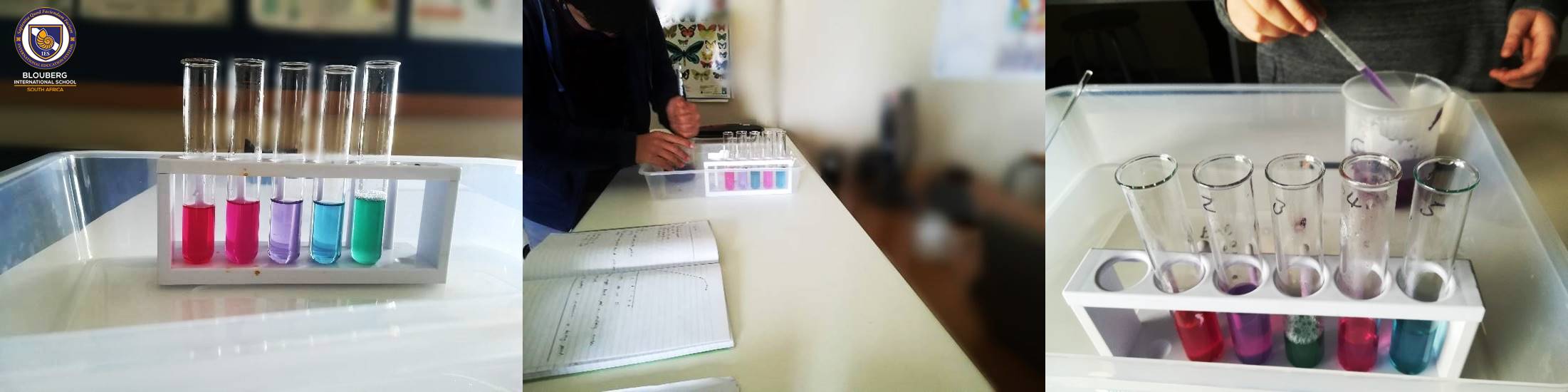
Year 7 ScienceBiology
The subject ScienceBiology is the amalgamation of three different areas of science namely: Biology, Chemistry and Physics. During each term we cover work from all three areas.
Biology is the study of living organisms where we delve into the structure of cells and how they are arranged to ultimately form different organisms. We look at how these organisms are adapted to live in different habitats and how human activities are impacting fragile ecosystems. Lastly, we discuss the concept of species and the systems that biologists use to classify organisms into different groups, based on features they have in common.
Chemistry is the study of chemical substances that form the Earth and our Universe. We learn about the different states of matter and the changes occurring in the particles of matter when it changes from one state to another. Next we compare the differences between metals and non-metals, as well as studying the properties of different materials such as plastic and glass. Another interesting area of Chemistry is investigating material changes. We studied acids and alkalis and did a practical investigation on the effect they have on substances called indicators. Red cabbage juice is an example of an indicator which changes to different colours, depending on whether it is added to an acidic or alkaline solution. Students had to make their own red cabbage indicator in class and add it to a variety of unknown solutions. They had to observe the colour change to find out whether a solution was acidic (pink/red colour), alkaline (green/blue colour) or neutral (purple colour). Much fun was had and students unexpectedly stumbled upon neutralization reactions when they added the acidic and alkaline solutions together at the end of the experiment and saw the colour change back to purple. We ended the Chemistry section of the book by studying the different types of rocks and minerals that make up the Earth and how different processes can weather them away over time. When certain types of rock weather away they reveal the fossils of organisms that lived millions of years ago. These fossils tell cryptic stories that gives a glimpse of what life on Earth was like in the distant past.
Physics is the study of nature and properties of matter, energy, and forces. Students investigate forces in a variety of practical ways. One practical challenge was for students to lift a plastic container using only rice and a chopstick. Thanks to the force of friction between the rice and chopstick, students were able to achieve the seemingly impossible. We continued delving into the world of Physics by discussing different stores of energy as well as energy changes. Energy does not disappear, but simply changes from one form to another. The last part of Physics covered in Year 7 investigates astronomy and how far we have come in our understanding of our planet, solar system and galaxy. It gave us a true sense of how tiny we are in the universe when comparing the size of Earth to some of the largest stars discovered so far.
ScienceBiology takes students on a very diverse educational journey and lays the foundation for all three areas of science on which to build in future years.
Marlene Feltoe
Year 7 ScienceBiology Teacher

Year 3 Mummies
In History and Geography this term, the Year 3’s have been learning about the Ancient Egyptians and their country. This has been a thoroughly exciting topic to learn about and one that the students have embraced with great enthusiasm.
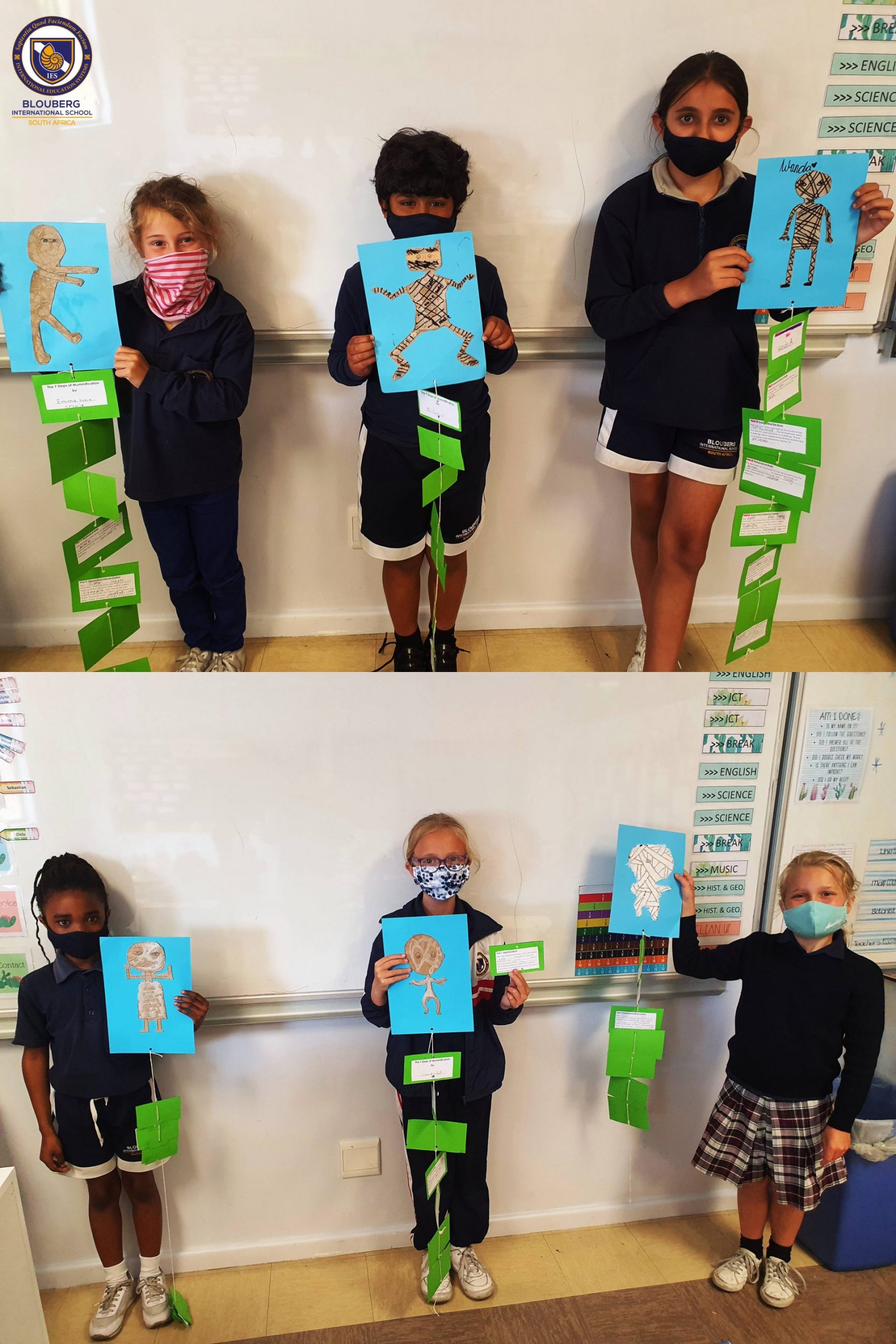
This past week, the Year 3 students had the opportunity to make their own mummy by drawing the outline of one and using their cold glue skilfully in creating its bandages. After this, the students learned about the many steps to the mummification process and included these steps beneath their mummy creation.
Even though this activity got quite messy, much enjoyment was derived from it!
Alexia Holmes
Year 3 Teacher
Why Should We Teach Children About Pollution And Waste?
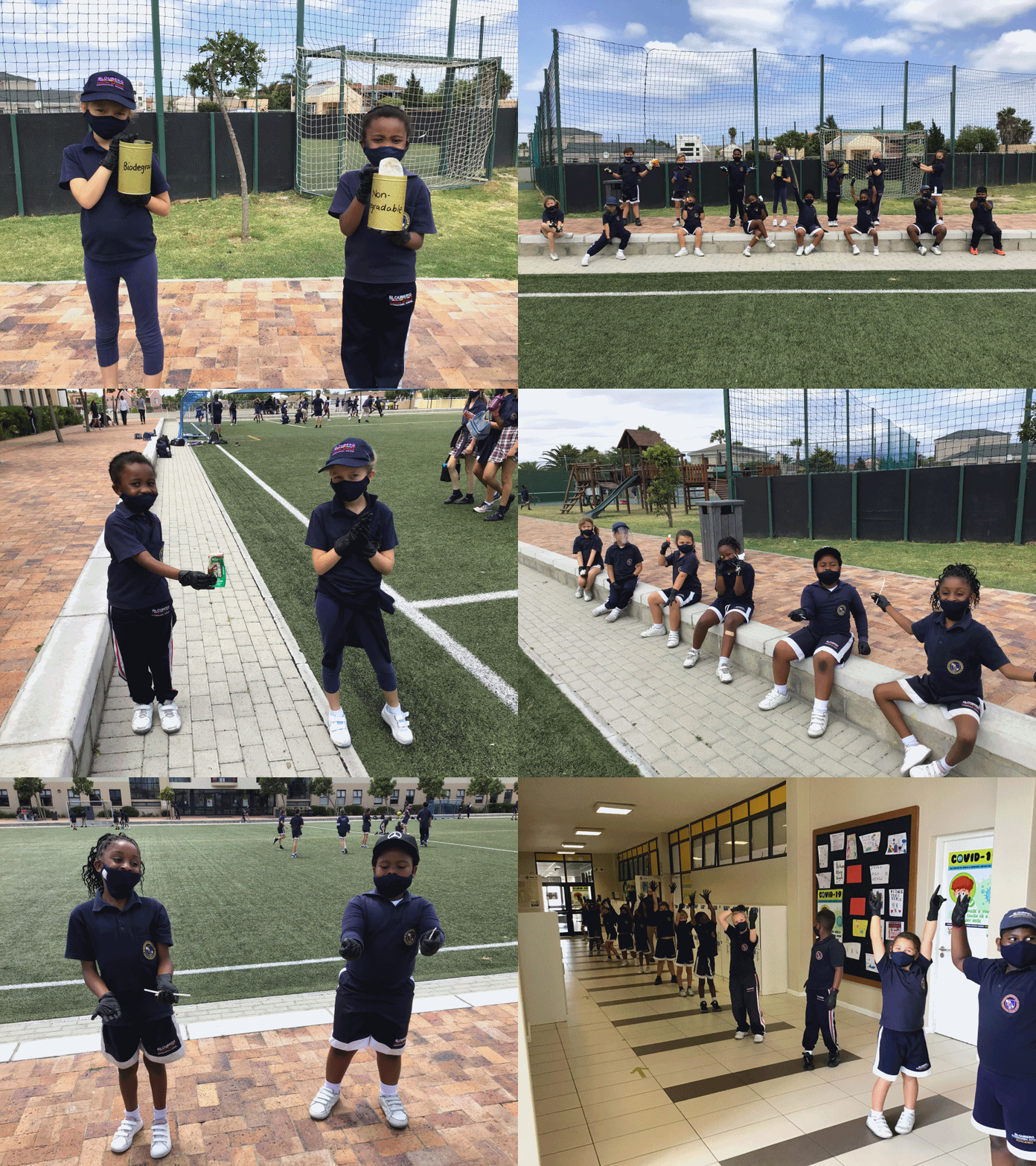
The Year 2 students have been learning about pollution and waste over the past few weeks in Science and they have been taking the topic very seriously.
The teachers find it a very important topic for students to learn about as it benefits not only the students, but also the environment around us. Pollution affects our health and welfare every single day as it directly relates to the status of our environment, therefore making it an exceptionally important topic to have knowledge on, from a young age.
A crucial part of development is that students learn that they have a choice and the power to make a difference in the world.
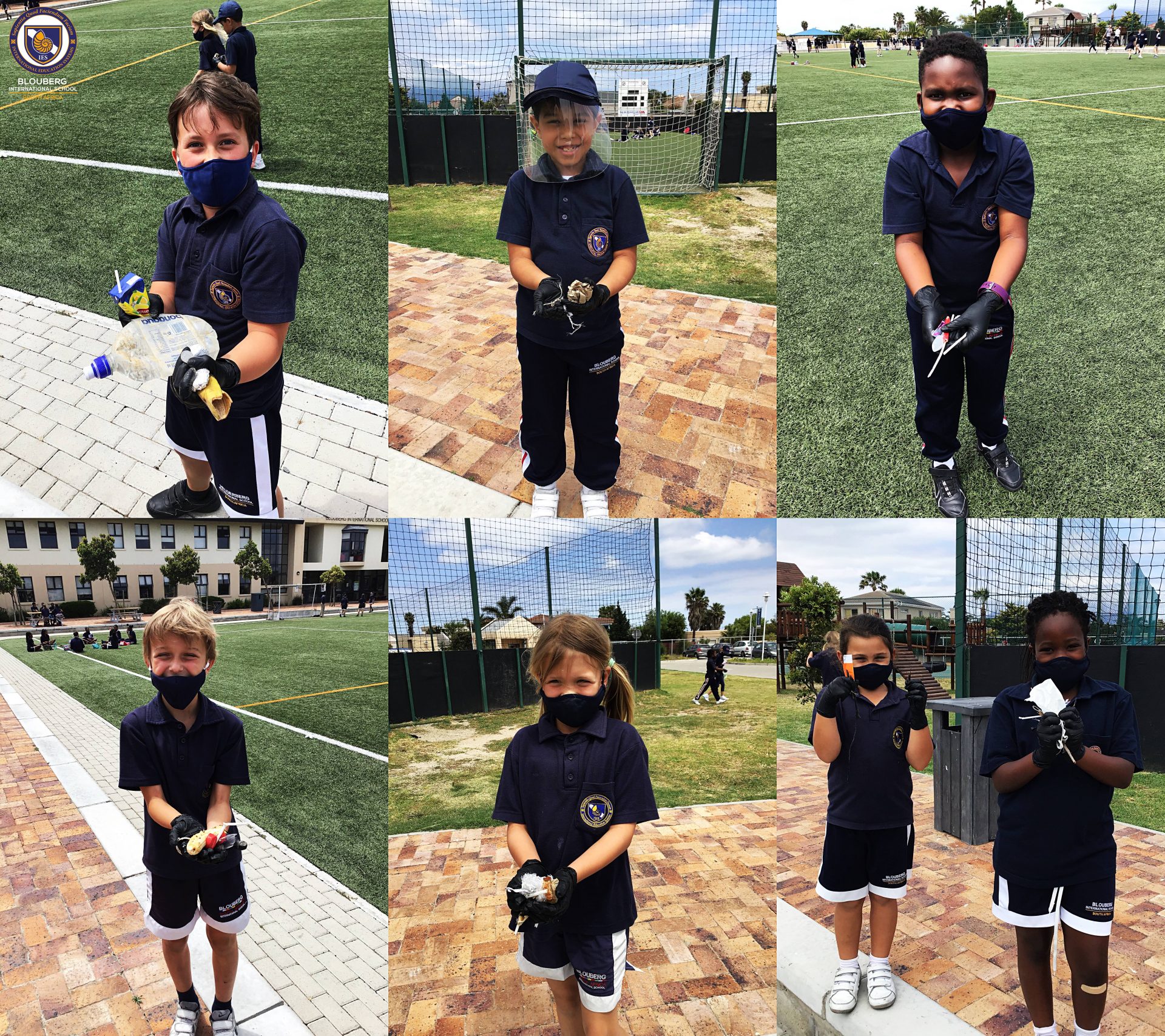
The Year 2 teachers took the students outside to collect litter around the school and then discussed the different types of waste they had found (fruits, paper, and plastic). We also discussed which of the waste was biodegradable and which were non-biodegradable. This was a fun activity of learning new information and Year 2 thoroughly enjoyed it.
Erin Hierse
Year 2 Teacher
Science Investigation
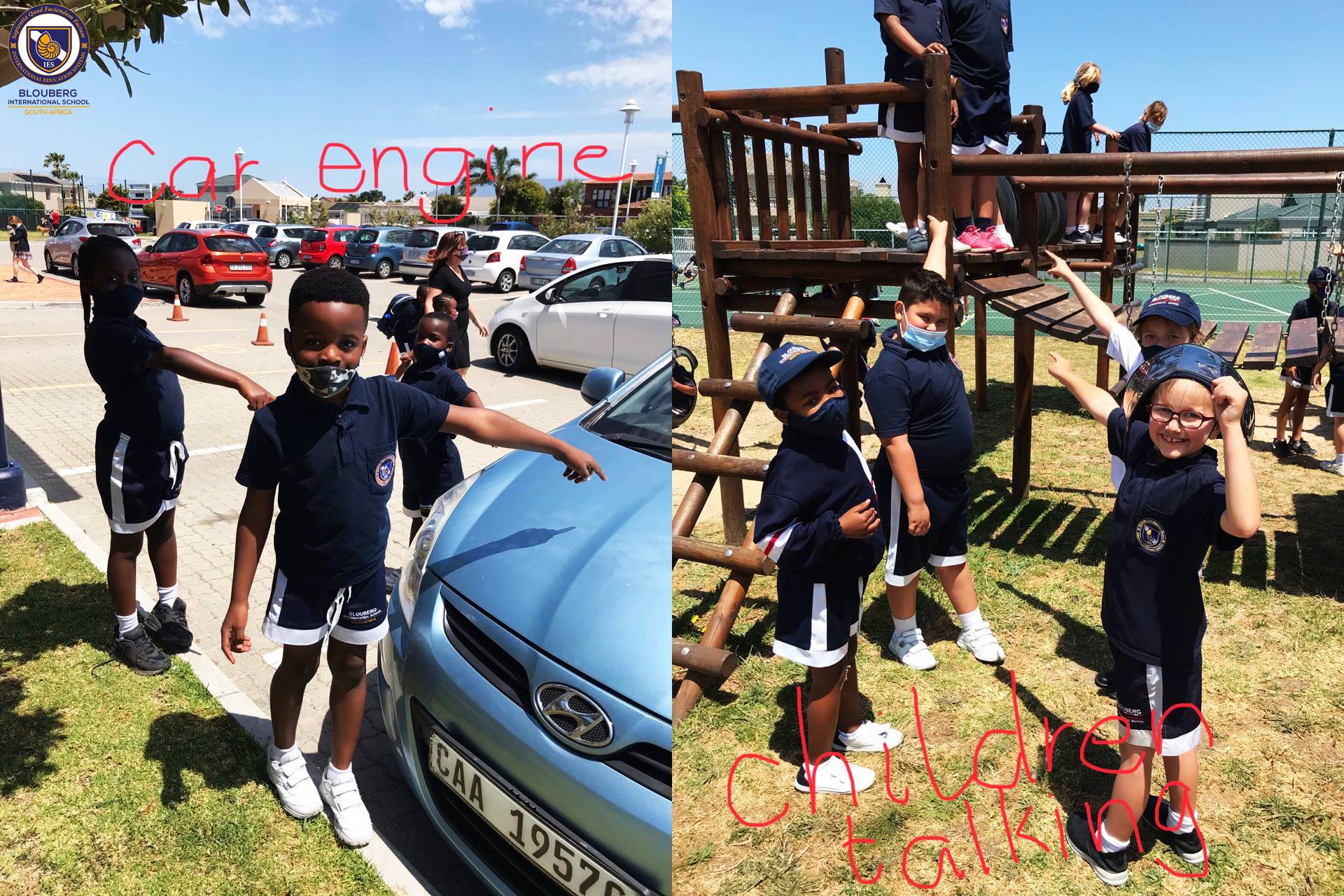
An important part of science is collecting and recording data. The Year 1 students are learning about Sound and Hearing. During this theme they have learnt to recognise sources of sounds.
Armed with Ipads, the students went out onto the playground to photograph different sources of sound. When they had collected their data they shared the photos with their peers, explaining the source of the sound. The students then recorded their observations, by drawing the sources of sound they had photographed.
When students learn to record and report on data collected, it helps them make sense of what they have observed, thus giving them greater insight into the topics we cover.
All in all our little scientists had so much fun exploring and reporting their findings, we look forward to doing this again soon.
Ann Cordner
Year 1 Teacher

From The Principal’s Desk, 30 October 2020
Dear Parents
In my last few newsletters, I have avoided writing anything about the Covid-19 pandemic. I thought it best to shift to a more positive, student-centric focus.
Unfortunately, in the last few weeks there has been an increase in the Western Cape and the Parklands area specifically identified. Although we have only had one positive case, a student, we need to remain vigilant.
It is our duty to ensure that we follow the protocols prescribed by WCED and the Department of Health. Our year 10 and 12 students are writing their external Cambridge examinations and it is crucial they remain in good health. Should they test positive or be in contact with a positive case it will affect their ability to complete the examination series. We thus ask that you maintain rigorous protocols at home.
Students must always maintain social distancing. As much as they may wish to socialize and mingle closely with friends, it just takes one positive case to change the course of their lives.
We are also acutely aware that the process of dropping and collecting students at school can be very frustrating. Parents must please use the demarcated parking bays and not double park. Our neighbors, and the area around the school in general, has been negatively affected by the queues of cars trying to enter the school property at certain times of the day. We have sent letters in the past regarding this issue and respectfully ask you to adhere to the guidelines. We can make someone’s day or ruin it entirely by our own actions. Let us be mindful of one another in an already difficult and frustrating time. Let us be the kindness someone might need today.
Have a wonderful weekend ahead.
Edna
Read More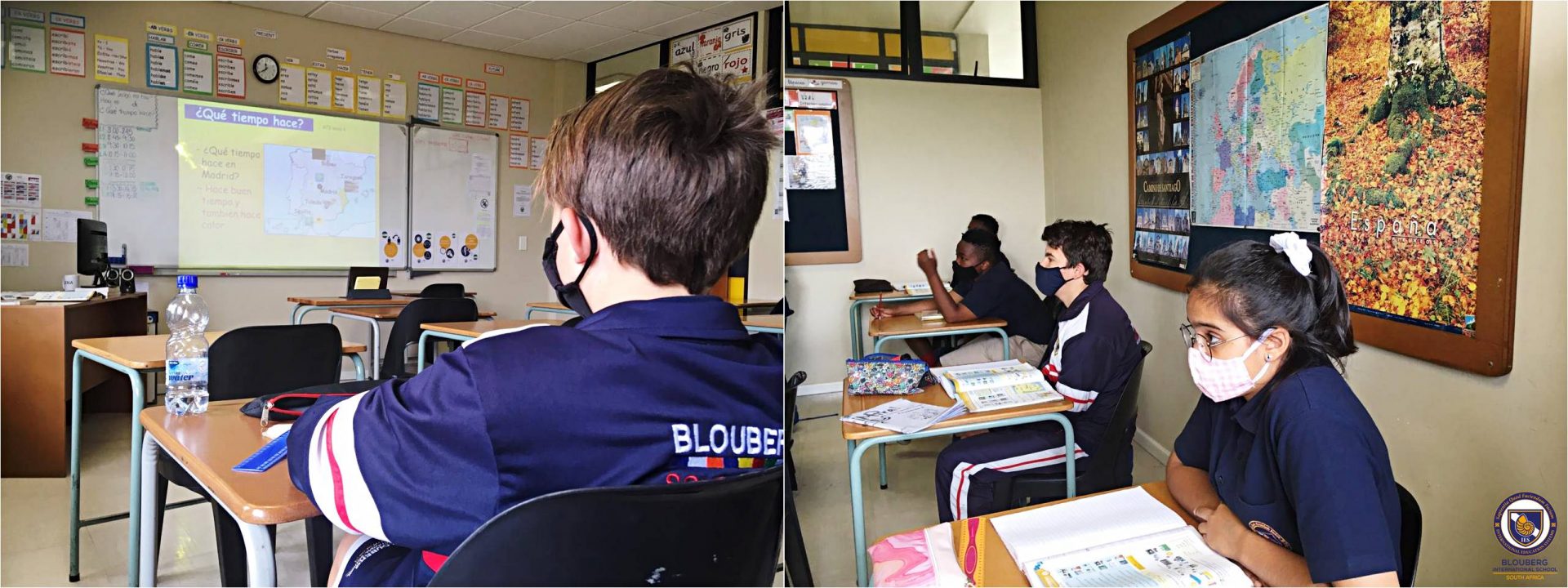
From The Spanish Classroom
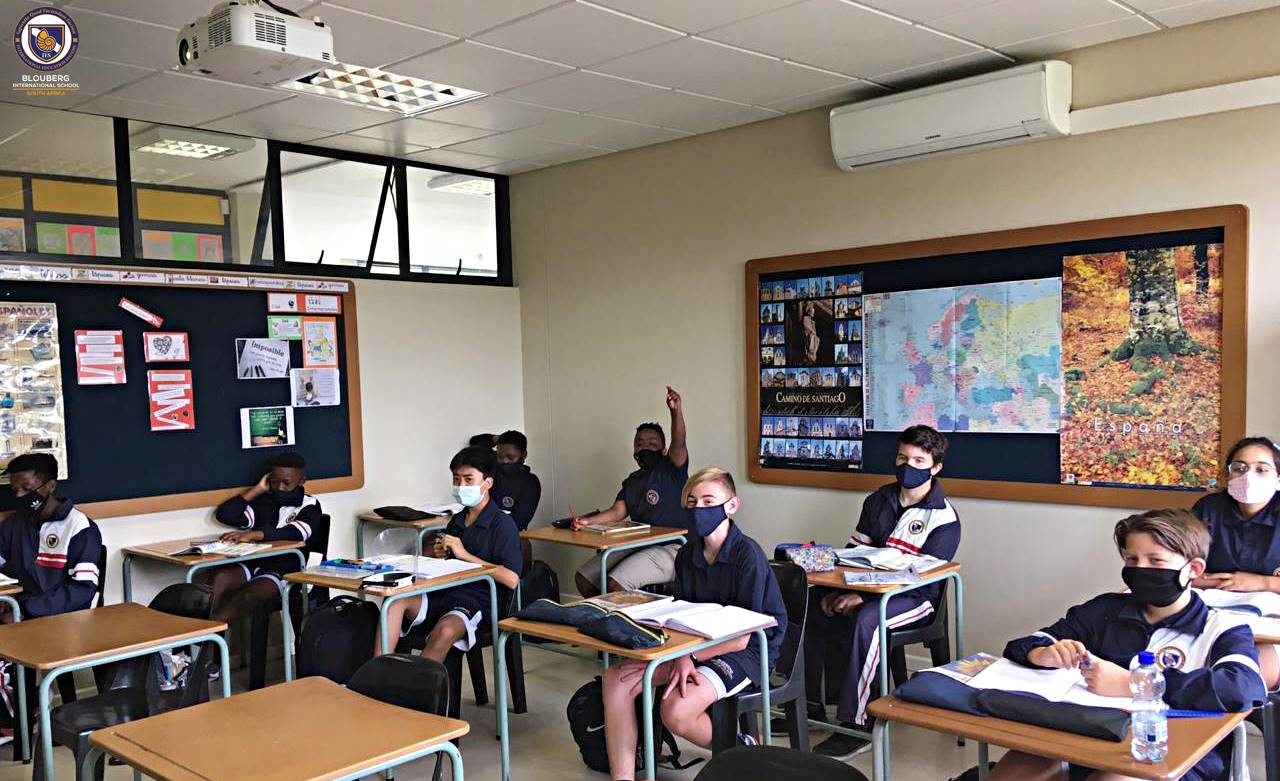
As I look back on the early days of an academic year, I am always amazed at how far we have come. This year is no different. Despite the huge challenges of a pandemic no one was prepared for, my students improvised, adapted and marched on. Their innate resilience and positive energy is what makes my day as a teacher.
This term, the Year 7’s learned to describe their city, ask about places in town, make and respond to invitations and talk about the weather. The Year 8’s are learning about the city of Barcelona, what there is to see and do there, all types of shops and what can be bought there.
We are now learning to ask and give directions. The Year 9’s are travelling around the world, describing past holidays, and planning future destinations, including making reservations for different types of accommodation.
The Year 11’s have researched the topic of ‘The Environment’ and we are discussing how, as individuals, we can contribute to a more sustainable way of life.
The Year 10’s and Year 13’s are now writing their external IGCSE and A Levels exams. I wish them all the very best and I extend my good wishes to all BIS students for the final exams.
Elena Berger
High School Spanish Teacher