
Announcing the First BIS Exceptional Eisteddfod Experience (Grade 1- Grade 13)
It is with great excitement that we are offering an internal Eisteddfod at BIS this year.
Eisteddfod literally means a sitting (eistedd = to sit), a reference to the hand-carved chair traditionally awarded to the best poet in the ceremony during the first Eisteddfod in 1176 in Wales.
An Eisteddfod offers a chance to build confidence and skills through performing to an audience, and provides helpful notes from expert adjudicators from outside our school. Whether you can sing, dance, act, recite or play an instrument, it’s a unique opportunity to meet others in the same field and compare performances.
Performing in an eisteddfod gives participants:
- A goal to work towards.
- Greater focus to their practice.
- Expert feedback from external experts – the comments being more useful than the marks.
- Performance experience – because of COVID, the opportunity to perform to an audience has been restricted. An internal Eisteddfod offers a chance to play to a group of people, while maintaining correct procedures.
- A chance to build confidence and skills.
- An opportunity to see and share with others taking part.
The “rating” of the candidate is then expressed in different “levels” of awards (diploma, gold, silver, bronze, etc.), which indicates the candidate’s progress in terms of his own knowledge, skills and understanding relevant to the particular genre.
We would like to encourage our students to take advantage of this great opportunity.
“The moment you doubt whether you can fly, you cease for ever to be able to do it.” ― Peter Pan


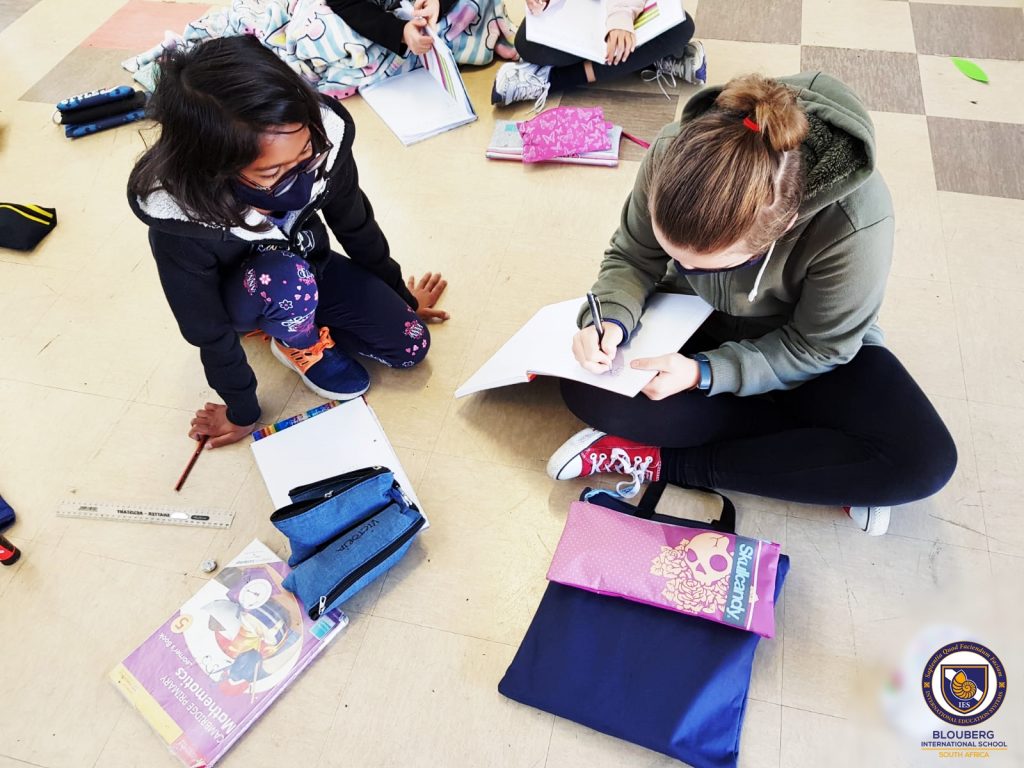
Year 5 Effective Studying Workshop
This term is a big one for the Year 5s. It marks the first year of upper primary school – and with it, the dreaded June exams! Exams don’t necessarily have to be stressful though – after all, they are intended to help us by showing us where we are confident in our work, and where we still need some help. Through preparing thoroughly for exams, we can focus more on their benefits, rather than on the stress they can cause – and so our Year 5 Inting this term focused on just that.
First, we practiced setting up a timetable to organise our studying, fitting in all the work we need to study, without having to cram and stress. Organising our time is the first step in combating exam stress – it breaks the work into manageable chunks, and shows us that we actually do have time to fit in everything we need to. After all, how does one eat an elephant? One bite at a time, of course!
We also spoke about preparing ourselves, inside and out, to make sure that we are in the best frame of mind for learning. The first step to doing this is making sure that you are healthy, so your brain can function at its best. This means enough food, water, rest and exercise – after all; healthy body, healthy mind! Speaking of the mind, we practiced the power of positive thinking. We made positive mantra cards to remind us of our goals, and how amazing each of us is. We also learnt a few grounding exercises, for when the stress does get a bit much – or for when our brain seems to be running in circles.
Finally, we looked at some study techniques, thinking about various ways of studying (and trying a few out while we were at it). Whether you enjoy studying by organising your notes into mind maps, or by teaching your teddy bear how to multiply and divide, it’s a good idea to have a few different study methods in your study toolkit.
Above all, we learnt that when it comes to studying for exams, everyone is different. What works for one of us might not work for another – and part of developing into an independent learner is figuring out what works for you. Hopefully all our Year 5s are a few steps further on that exciting journey!
Hannah Kirkaldy
Year 5 Teacher


The Importance Of A Mother
While getting the Year 3 students to make their Mother’s Day cards and record a special message, it really brought it home to me how important a mother really is.
The students were so excited to make the card and discussed amongst themselves what their mother’s favourite flower is, what they love to do etc. It was so difficult for them to decide what made their mother so special. They had so many amazing reasons why their mom was special to them.
I looked around the internet to find the perfect way to explain how important a mother is, and I found something written by Dr. Ashock Verma. I really found his explanation true and profound in so many ways.
He wrote:
“Mother stands for someone unique:
M – Motivator and the Modulator of her kids
O – Omnipotent & Omnipresent for her kids
T – Teacher – she is the first & foremost teacher
H – Helper – she helps her kids in every way
E – Explorer – she explores the hidden talent in her kids
R – Reliable – she is the most trustworthy & reliable person”
There is really no other way to explain the importance of a mother than what he wrote. Being a mother is such an extraordinary gift, one that keeps on giving. I hope that your Mother’s Day was just as special as mine.
Wendy Menton
Year 3 Teacher

Read More

Year 2 ICT Lesson Fun
“The mind, once enlightened, cannot again become dark.” – Thomas Paine
In ICT class, our Year 2 students have been having some fun learning about algorithms. In computer science, programming and mathematics, an algorithm is a sequence of instructions.
They received some instructions to follow on how to create a robot. Some of the instructions included drawing the head, face and body of a robot as well as creating a fun background and even more importantly – giving their robot a name!
The students learnt how they can use algorithms to describe ordinary activities in our everyday life. For example, we can consider a recipe as an algorithm for cooking a particular food. This will help them to understand how coding works when we code games and programs.
At this stage, the students are using the iPads to create some algorithms on Grok Learning by building their robot on the iPad.
Year 2 Teacher

The Benefits Of Gardening For Children
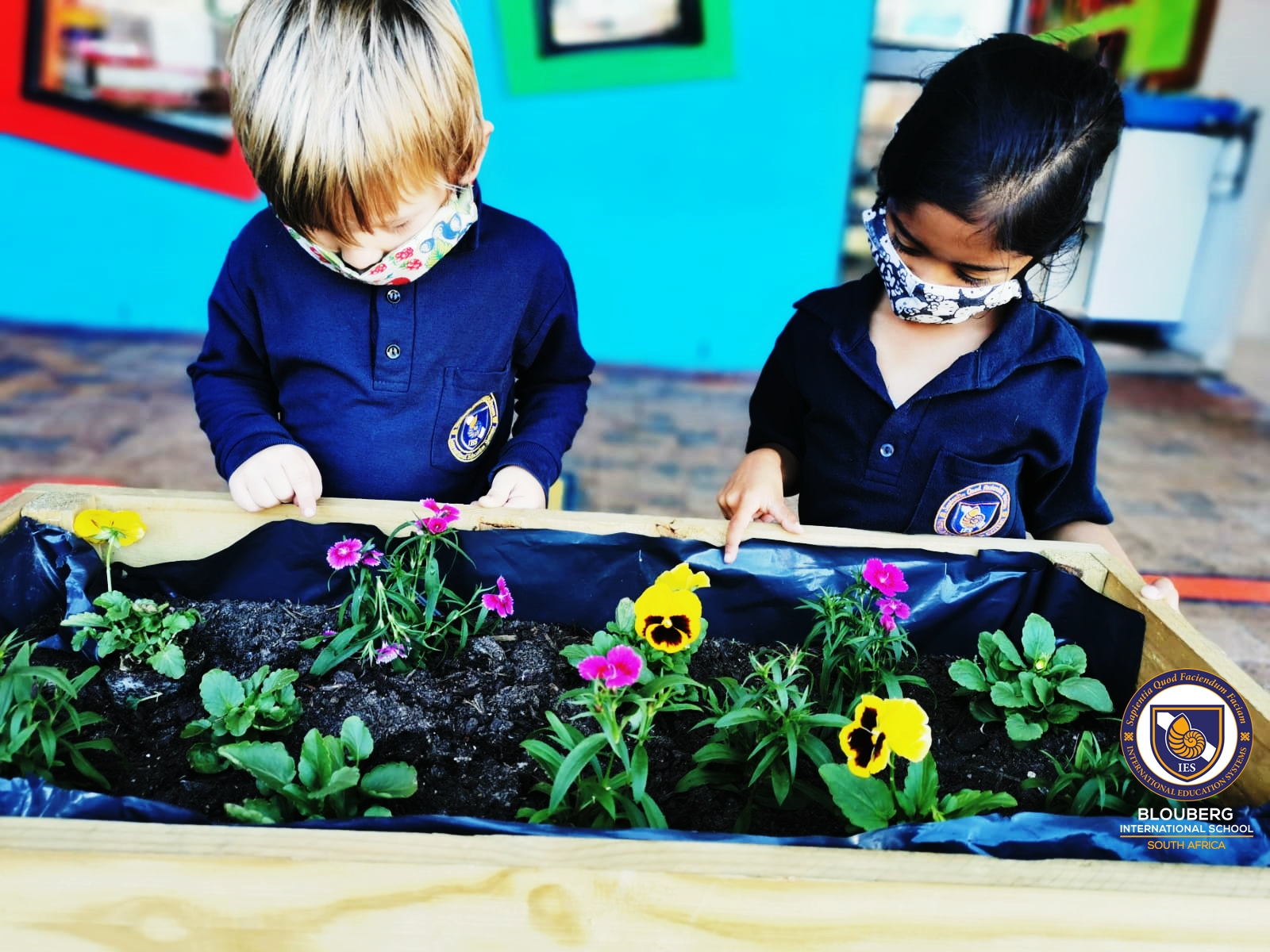
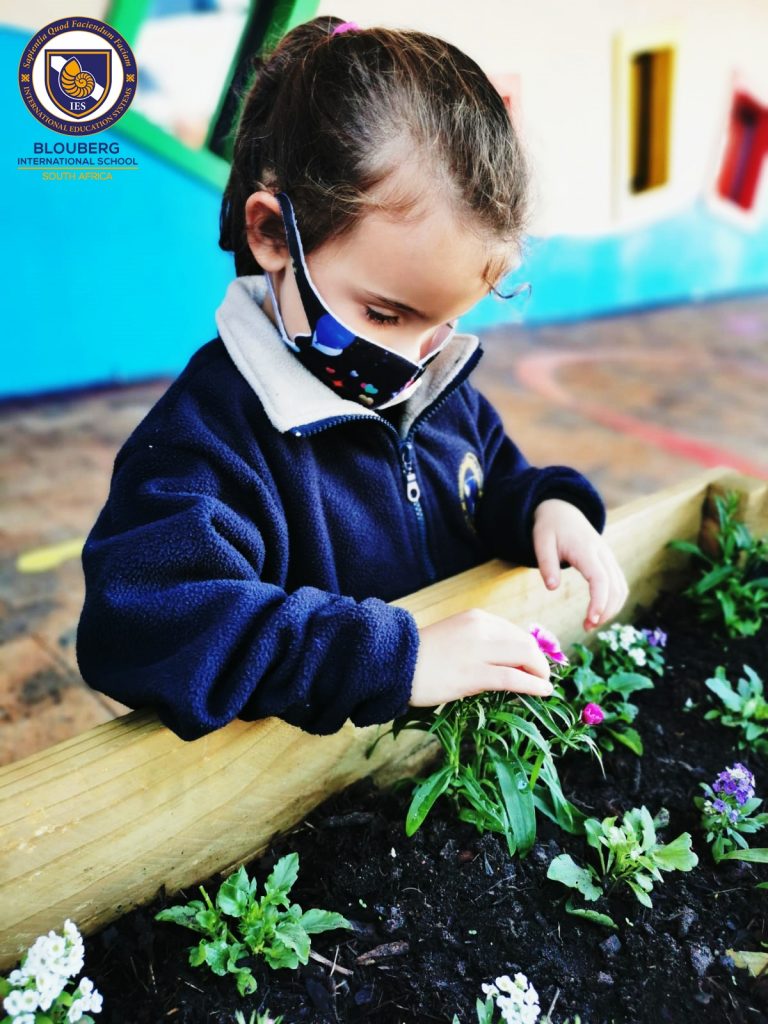
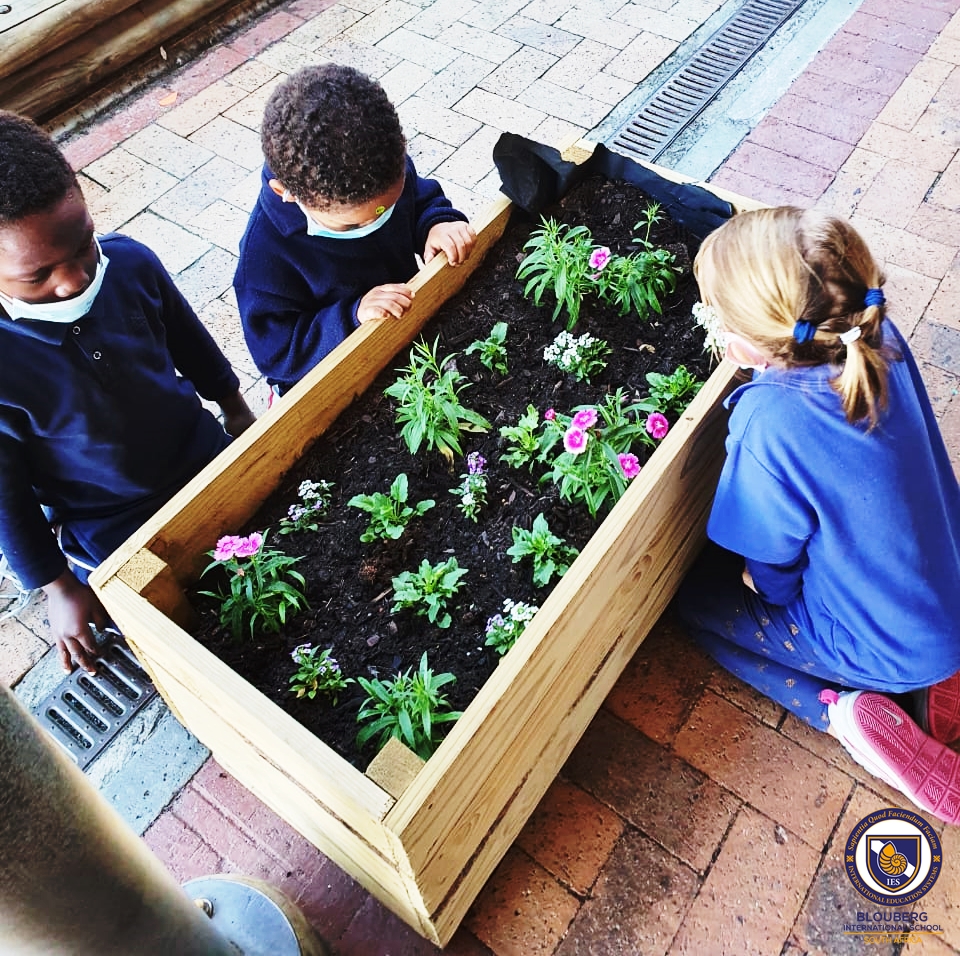
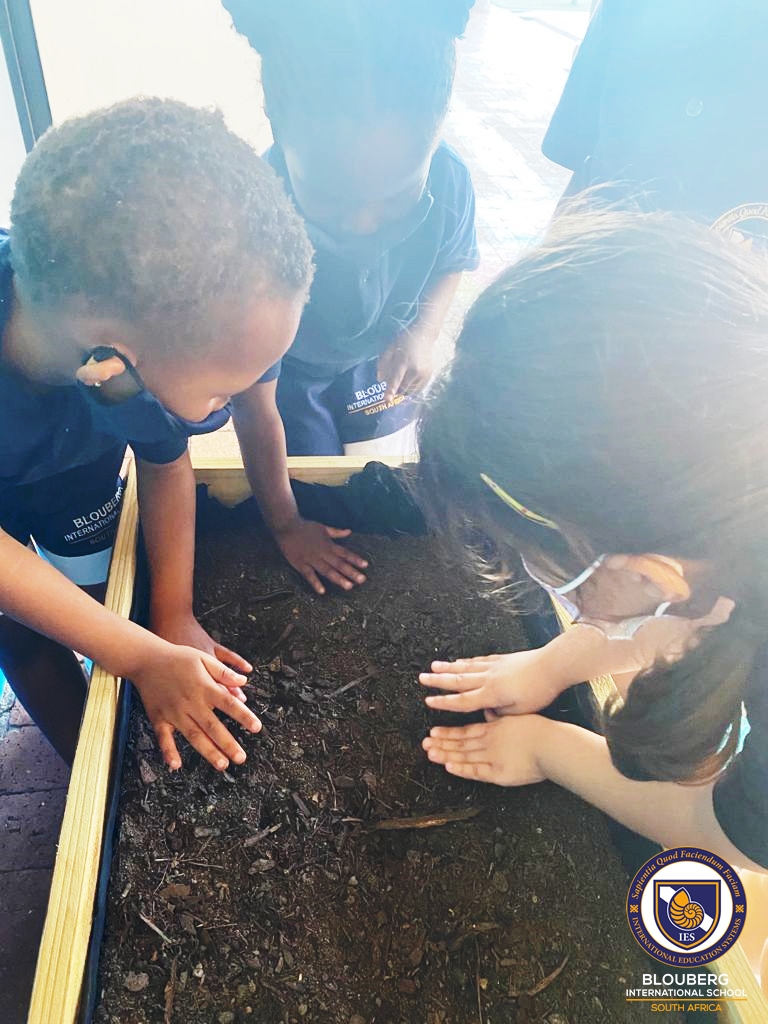
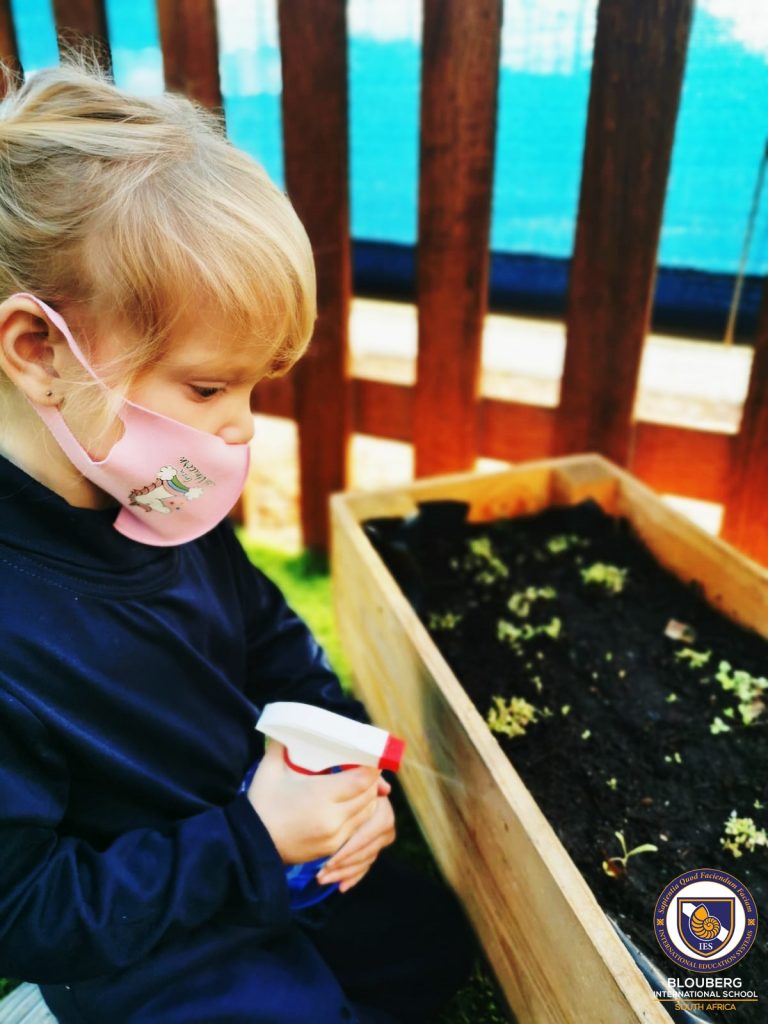
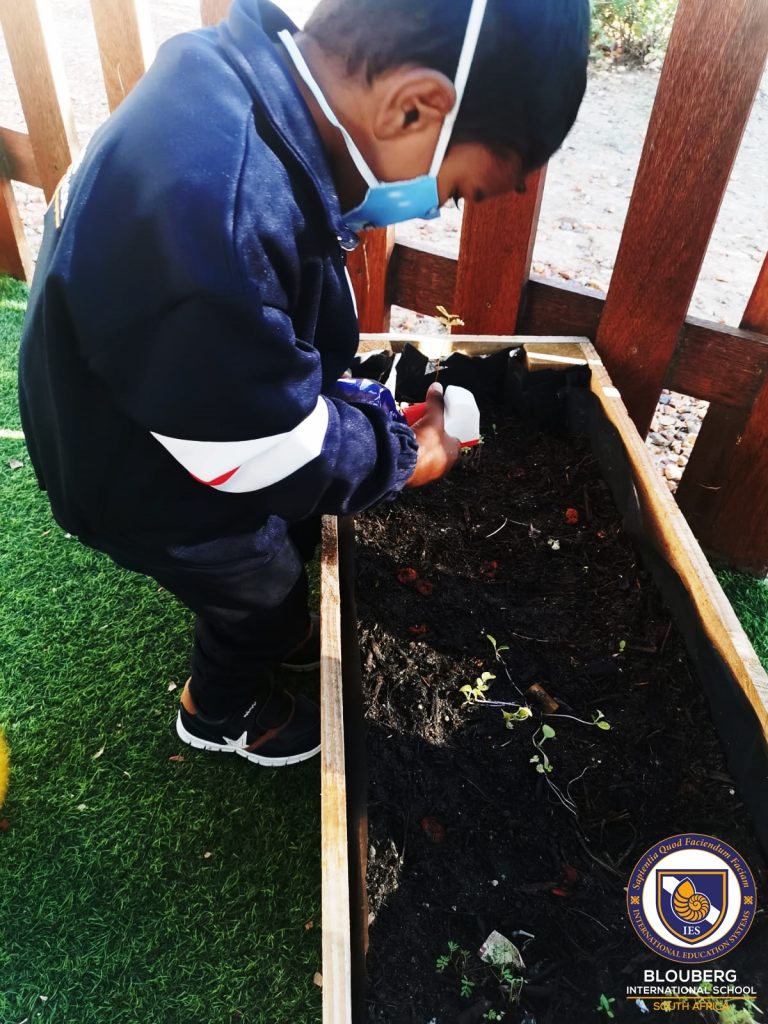
In the Foundation Stage we have decided to grow our own little class gardens in planters outside our classrooms. Gardening offers so many fun and interesting opportunities for the students and teaches them invaluable lessons.
They learn about the different types of flowers, vegetables and herbs and what they need to help them grow. It also offers an opportunity for the children to learn about different shapes and colours, etc.
Gardening engages all sorts of senses. They can feel the texture of soil, seeds, flowers, etc. They get to smell all the beautiful flower scents and see all the colourful petals. It also helps develop hand-eye coordination as well as physical strength.
If children grow their own vegetables, they gain a keen interest in eating them. Growing vegetables not only teaches them the hard work that it takes to grow them but also a sense of achievement! Growing any sort of flowers or vegetables requires daily attention and care. The students take turns to water their little gardens. They quickly learn if they are not watered regularly and taken care of they won’t flourish.
We have seen here at school, gardening is a good way to teach responsibility. The students are learning to be patient while waiting for their flowers and vegetables to grow. They need to remain engaged in the process and keep looking after their flowers and vegetables even when there are no clear results, but the anticipation makes the moment their flowers or vegetables sprout even more exciting!
Cindy Nunan
Nursery & Pre-Reception Teacher


From The English Department Term 2 2021
Greetings from the English Department!
It’s only the second week of term and already my desk is hidden under a snowfall of loose paper. And we all know what ‘Term 2’ means… the whispers of which flit their way along the corridors in tones of quickened dread… it’s an exam term.
“Honestly, it’s really not that bad!” My biannual refrain seems to bounce off the students like those tiny silver balls used to decorate cakes (not the most creative analogy, I admit, but what else would bounce dramatically pleasingly off a teenager?). Point is, they never do seem to believe me. Rather than inspire dread, I believe an exam term is an exciting challenge! An opportunity to beat your personal best and push the pliable boundaries of our own abilities. However, we’ve still got a few weeks ahead of us and plenty of essays to pen before exams start. So, pop your head down the rabbit hole and take a look at what our students are busy with in English class:
The Year 7’s can only watch as the blisters spread across the palms of poor Stanley Yelnats as he digs those blasted holes at Camp Green Lake. A class project making homemade Sploosh anyone? Although perhaps the season for peaches is over?
Ralph, Jack and Piggy are the constant companions of the Year 8’s this term… and ‘the beast’ of course! We can’t forget about him…or it?
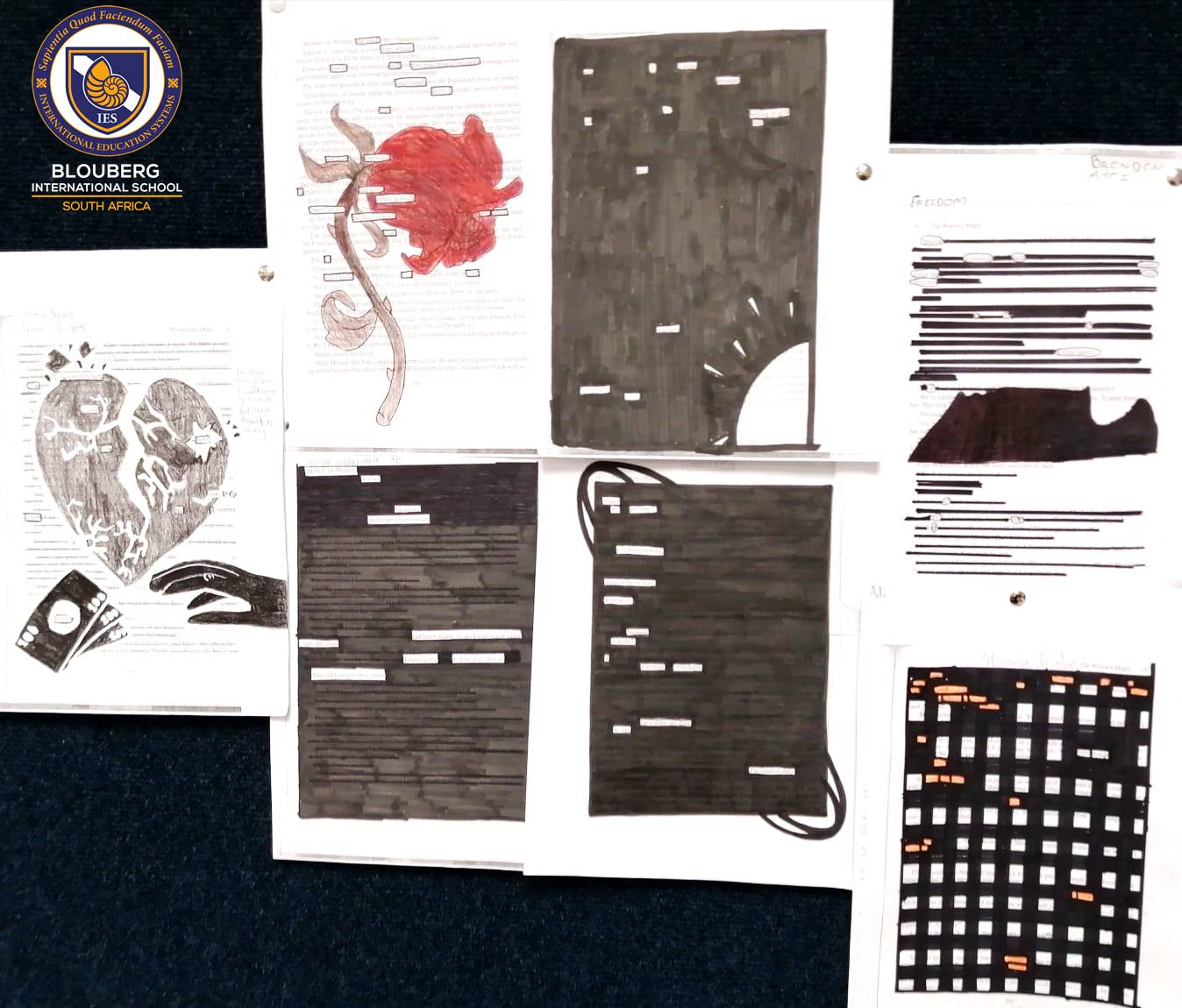
The Year 9’s are wading through their IGCSE Literature short stories and this week covered a particularly satisfying story called ‘The Widow’s Might’ by Charlotte Perkins Gilman. A widow gets the upper hand on her children who, after their father’s death, are quibbling over ‘who gets mom’ and eagerly awaiting the arrival of the lawyer with dad’s will. The students experimented with Blackout Poetry as way to engage with the deeper concerns or themes of the short story. We received some beautiful and insightful submissions; the talent of our students never ceases to warm my heart. Please see the photos accompanying this article.
The Year 11’s are similarly enmired in the wonderfully marshy ground of prescribed short stories (the ‘short’ in short stories being a decidedly subjective term). They have just read a story called ‘Gabriel Ernest’ (Hector Hugh Munro) about a werewolf who, well, does what werewolves do best really.
Our 10’s and 12’s are on a desperate quest for something so rarely experienced in the final year of IGCSE and AS-level – free time. The word ‘revise’ a mantle around their shoulders. Setworks are looking decidedly grubby and overly thumbed, but the sight of their dog-eared books I find oddly reassuring… experience has taught that it’s the pristine-looking copies one needs to be concerned about.
And for now, that’s all from us. If you are looking for the English Department, we are reassuringly close to the library, always within reach of a good book.
Alice Pryor
High School English Department

Some of our students created these amazing poems using the Blackout Poetry technique. [1] Blackout Poetry is a form of “found poetry” where you select specific words from a page of a printed text and then redact all the words you don’t want.
Read More
Karneval, Fasching And Fastnacht
Carnivals are celebrated in many countries around the world such as America (e.g.Mardi Gras of New Orleans) Brazil (e.g. Carnival of Rio de Janeiro) and Italy (e.g. Carnival of Venice) with lots of music, dancing, costumes and colourful processions.
In Germany, Carnival time is one of the most popular traditions celebrated. It is known by many names such as Karneval, Fasching and Fastnacht and varies from region to region all over Germany.
The most popular Carnival is called Karneval and happens in Köln (Cologne) in Northern Germany where the largest procession takes place in the country. It is the most famous street party and usually draws up to a million visitors from all over the world to the city every year.
The Carnival celebrated in Southern Germany is called Fasching or Fastnacht referring to the start of the fasting time in the region.
It begins officially on the 11th of November at 11:11am in Köln (Cologne) and ends on Aschermittwoch (Ash Wednesday) the following year, usually a few weeks before Easter. The Monday before Ash Wednesday is known as Rosenmontag (Rose Monday) where all the famous Umzüge (processions) take place in the streets. The first Rose Monday procession was in Köln in 1823.
These processions include dressing up in costumes with masks and wigs and having decorative floats that go through the towns with lots of music and dancing. Everyone is on the street and the children especially enjoy all the sweets that are handed out during the parade. Krapfen/Berliner (Jam doughnuts) are a typical food enjoyed especially at Carnival time.
Sadly, this year the actual Carnival parade on the streets was cancelled due to the pandemic, but as a replacement in Köln, 32 meters of stage scenery was built for the event, reproducing the buildings the parade would traditionally march by. On Rose Monday, 155 traditional puppets wearing Carnival outfits were used to ride this year’s floats. This performance was filmed and everyone could enjoy the procession from their homes: https://www.dw.com/en/colognes-rose-monday-covid-19-parade/g-56472583
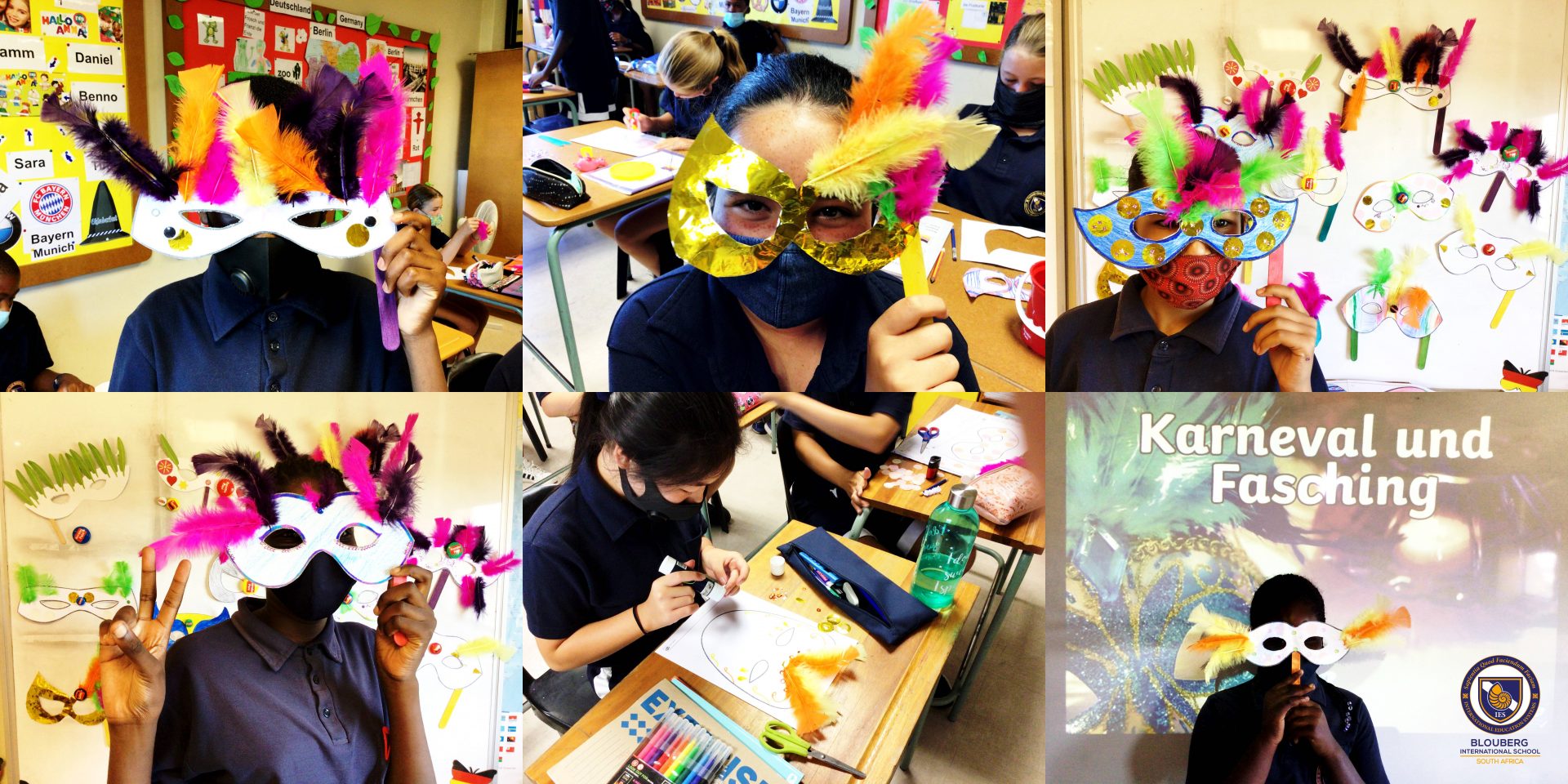
Our students enjoyed learning about the Carnival and each student decorated a mask in class.
- The Year 6 students celebrated Karneval in Köln creating colourful masks with feathers.
- The Year 5 students celebrated Karneval with the animals of the Berlin Zoo and made different types of animal masks.
- The Year 2 & 3 students learnt all about Fasching in München (Munich) with Anna and Benno and all made decorative masks with materials included in the Hallo Anna neu workbook.
They had a lot of fun making the masks. Well done to all the students for their enthusiasm and creativity!
The students also learnt a popular Carnival party song called das Fliegerlied (the Aeroplane song) and were able to easily learn the words to the song and enthusiastically took part in doing the actions. https://www.youtube.com/watch?v=tcFRF5ZaGns&list=RDtcFRF5ZaGns&start_radio=1&t=0
For a brief moment we felt part of the Carnival celebrations that occur in Germany.
Frau Kerstin Pani
German Teacher Primary School


We Know How To Use A Dictionary!
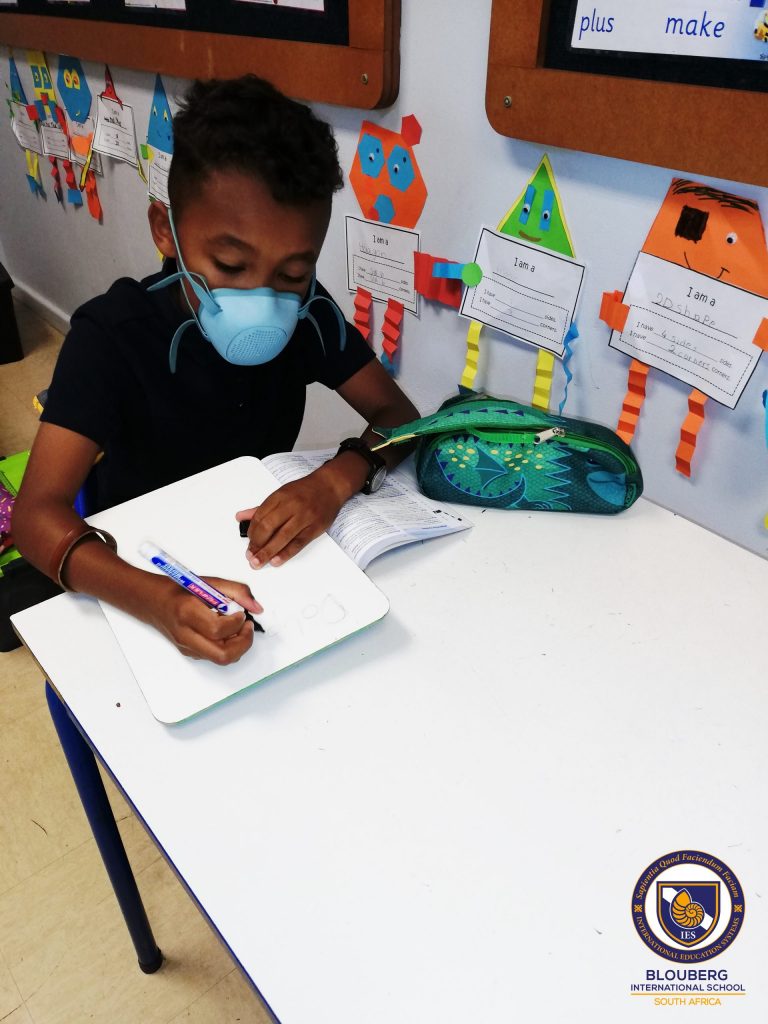
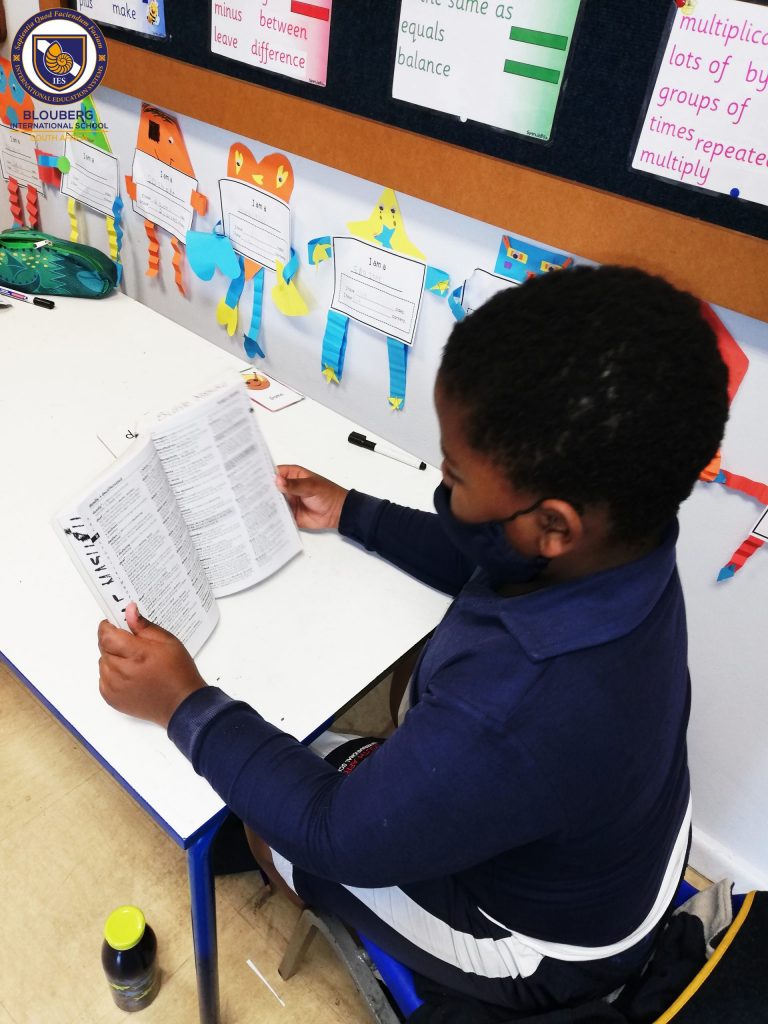
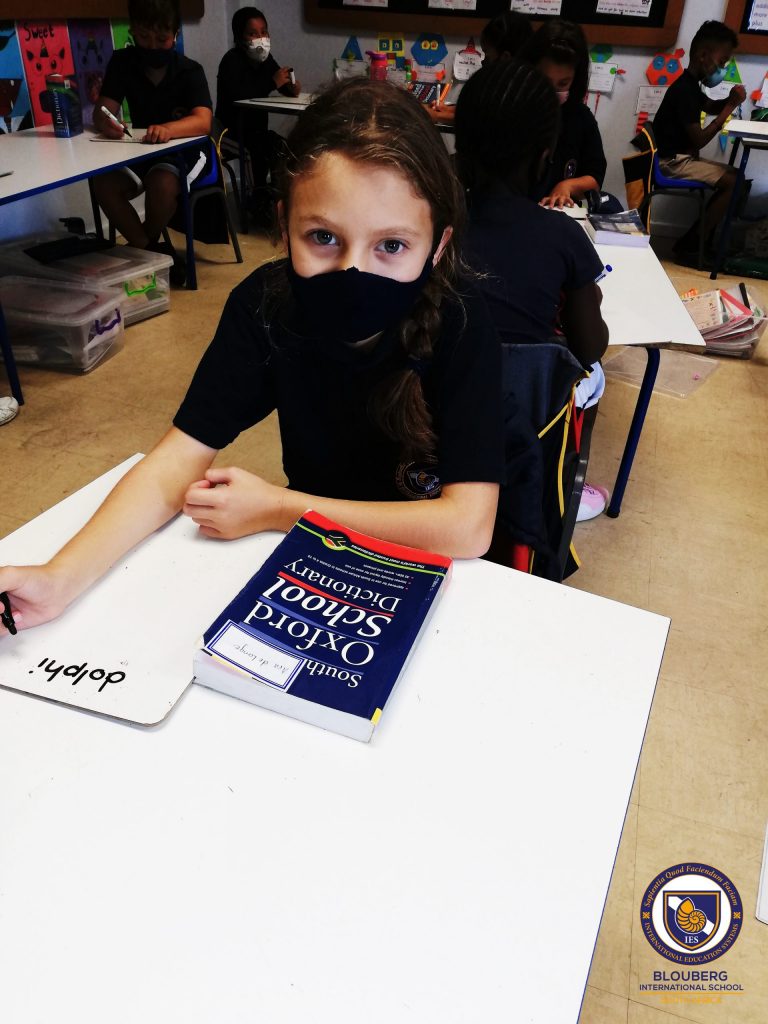
The Year 3 group have been learning how to use a dictionary. They are having so much fun building their vocabulary which is one of the greatest assets that a student can have. It improves their academic performance and lays a strong foundation for future skills to develop. The use of a dictionary has also been linked to better mental health.
Using a dictionary supports students in developing language skills and helps them understand new words at different ages. Using a dictionary helps students master important concepts like spelling, word meaning, alphabetical order and word classes.
Using a dictionary is a skill for life that students develop with practice. We are so proud of the Year 3’s who have developed a love for dictionary work, which makes looking up words fun!
We are pleased with their application considering that they are using dictionaries for the first time. Well done Year 3!
Sasha Rajah
Year 3 Teacher



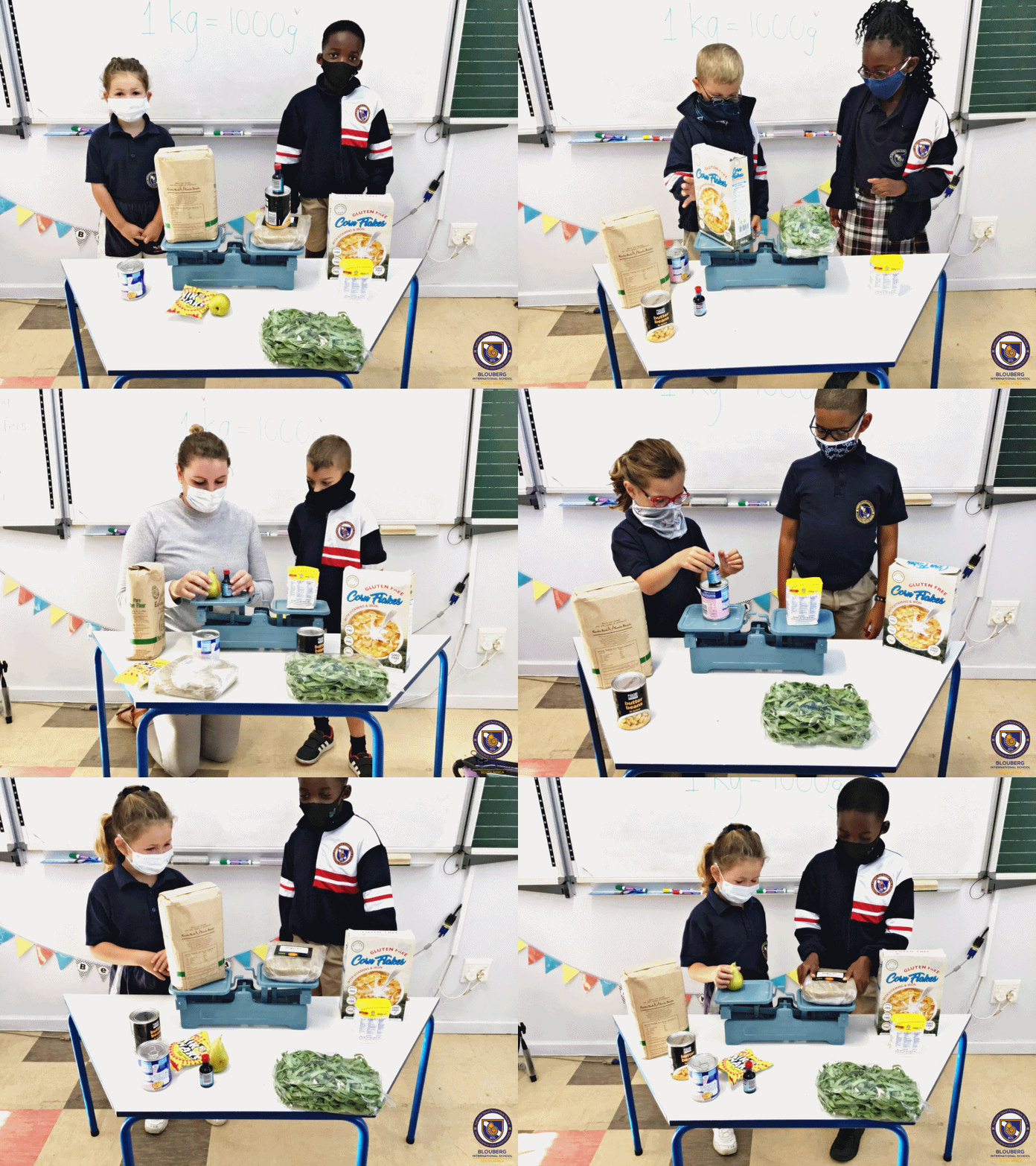
The Importance Of Learning How To Weigh Objects At A Young Age
It is important for young students to understand, recognise and use the units of weight as it appears in their daily lives.
Learning about weight in Mathematics can be an extremely fun activity as measuring weight requires a lot of practical work. Students need to use their hands or place items on a scale to compare the weight of items.
The Year 2 students may find it difficult to judge weight visually at this age and that is why it is very important to focus on necessary measuring tools. Students’ subjective interpretations of weight (heavy/light) are replaced by the graduation indicated on measuring tools. This is where teachers will start bringing in the use of a scale.
Since we introduced weight this week, the Year 2 teachers thought it would be best to begin measuring weight by using a balance scale, as it makes it easier for the students to understand the concept of weight and visualize the meaning of measurement. To our delight, the students found the lesson extremely interesting and they are excited to share their knowledge with their families at the end of the school day.
“Pure Mathematics is, in its own way, the poetry of logical ideas” – Albert Einstein
Erin Hierse
Year 2 Teacher
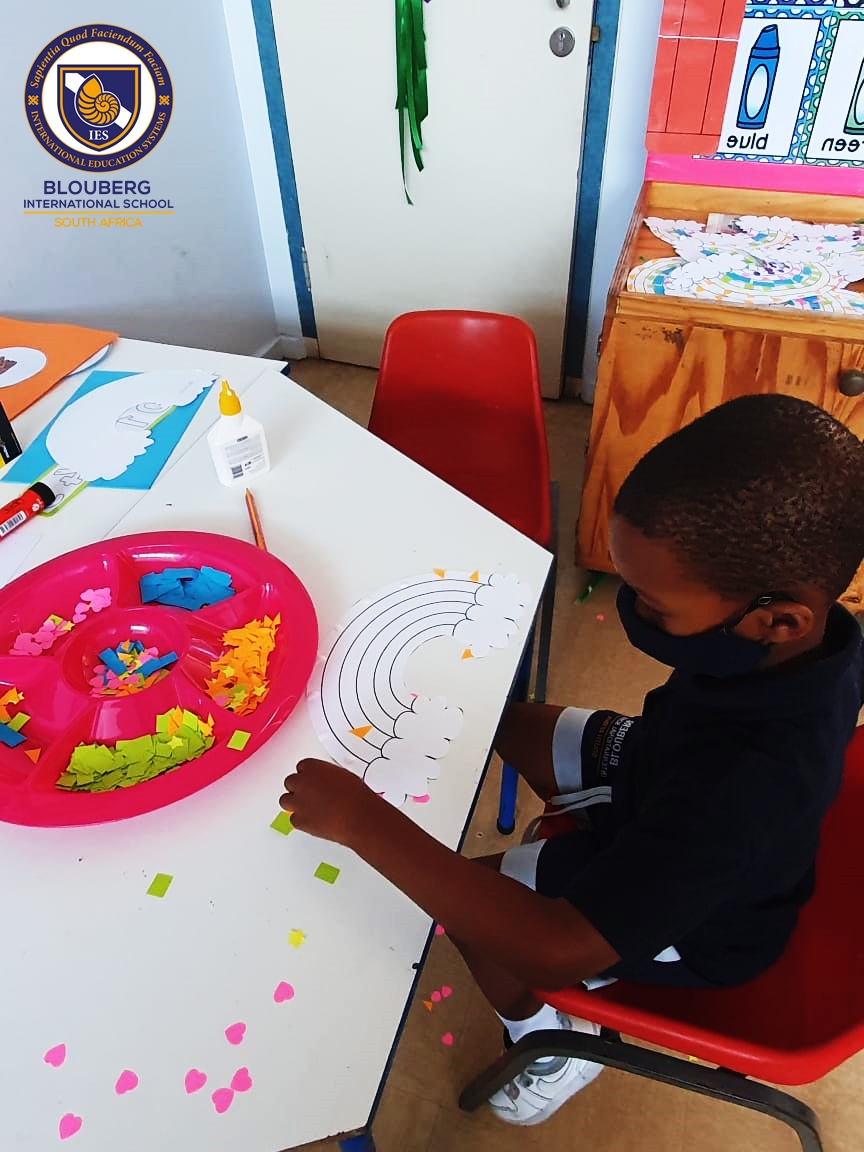
Learning More About Colour
- Mixing colours – We used our hands to mix different colours. (blue + yellow to make green and yellow + red to make orange and blue + red to make purple)
- Colour sorting – Students had to sort colourful beads and blocks into piles of colour.
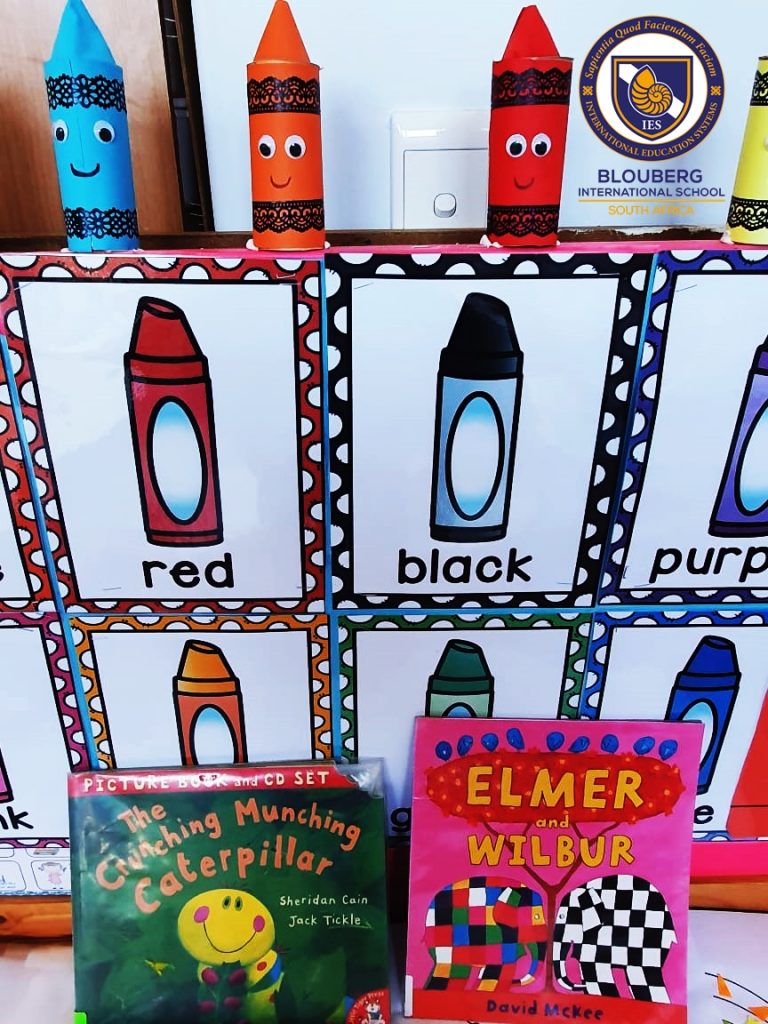
- Books – We read different stories with lots of colour in them.
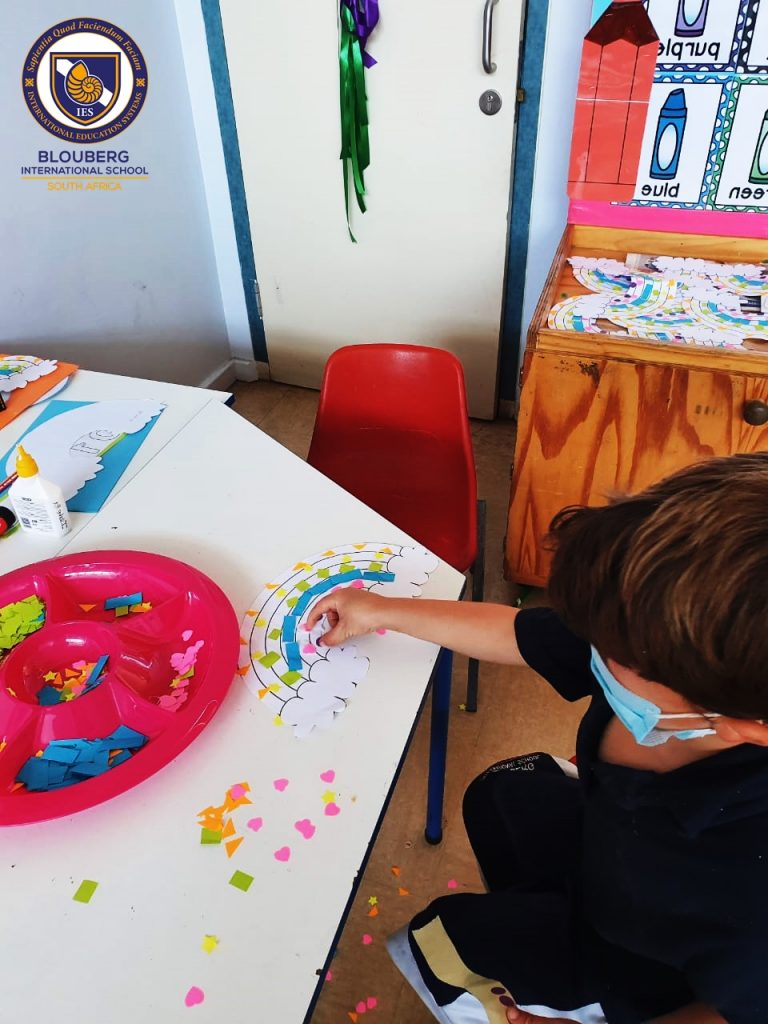
- Rainbow Collage – We made a beautiful rainbow collage by sticking different coloured shapes on the rainbow template.
We enjoyed completing all of the activities in class. Wishing all our families a colourful weekend!
Martie van Dyk
Pre-Reception Teacher
Read More