
Covid Interrupts Our Dutch Friendships
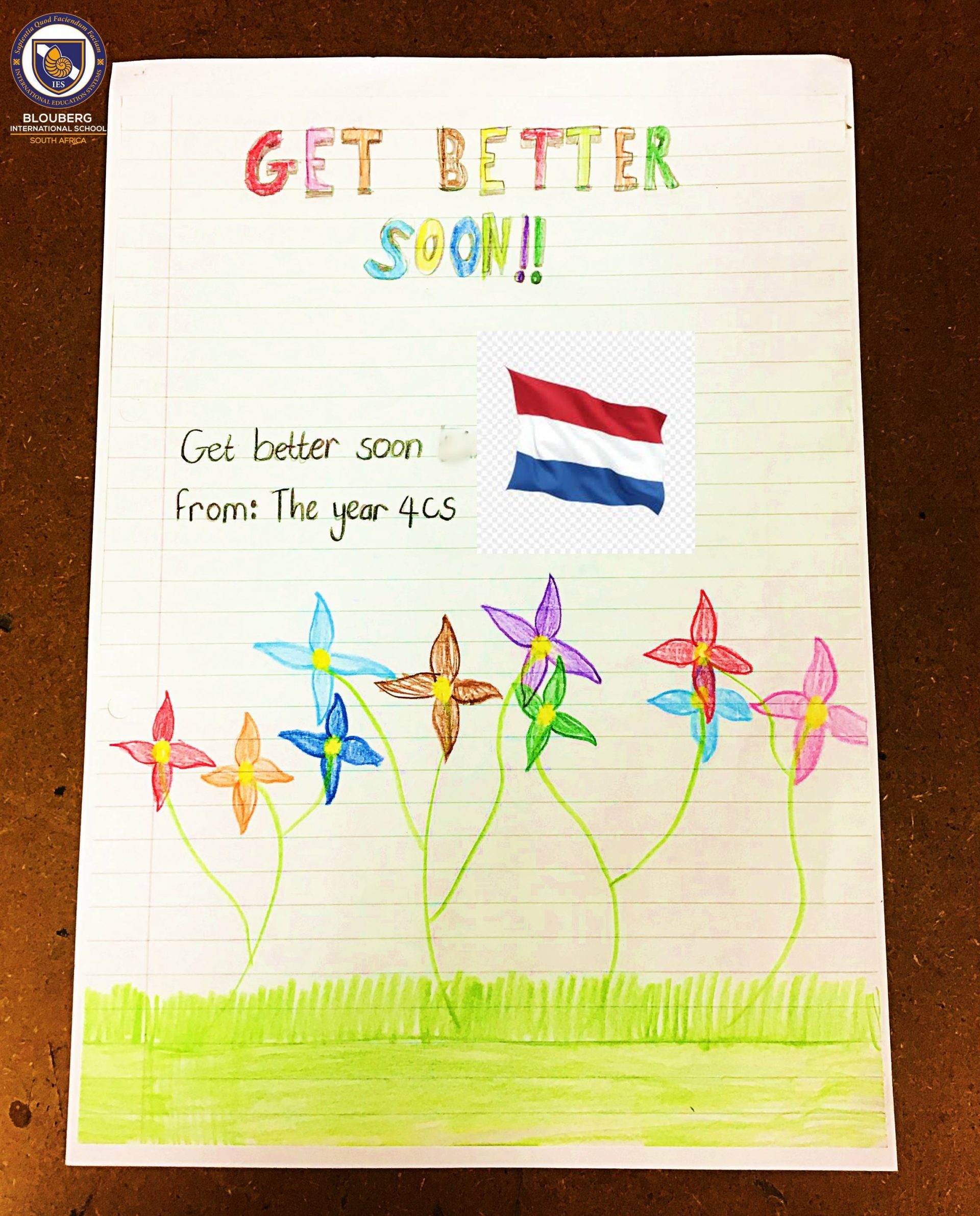
Karsten van Zandvoort sadly left our class in June. He has now been enrolled in a school in Ravenstein, Netherlands. His mother contacted me during the September holidays to ask if we would be interested in meeting his class. We arranged for a class-to-class Google meet, for last Friday. To introduce ourselves and our school, the students of Year 4CS made the special videos you can view below.
On Tuesday, we received a picture of Karsten’s class watching one of our videos. His class was very excited. Then on Wednesday, I received an email – due to the spike in Covid cases in the Netherlands, we have to reschedule our meeting to 30 October. In the meantime we sent our well wishes.
We simply can’t wait to share our classroom experiences with our new friends in the Netherlands!
Year 4 Teacher
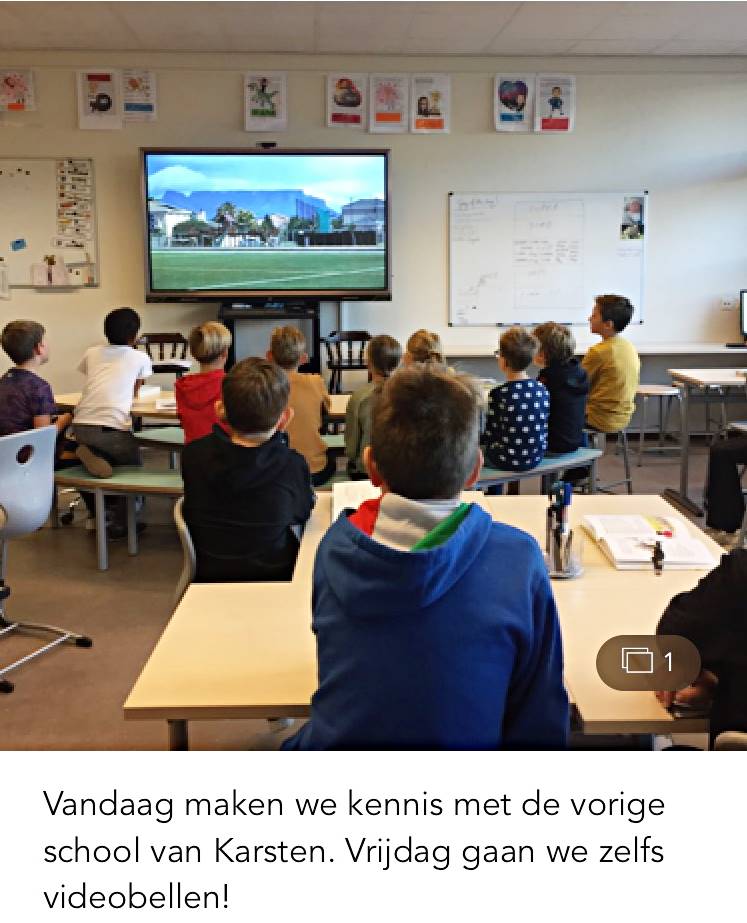
Karsten and his classmates in the Netherlands watching our videos created for them.
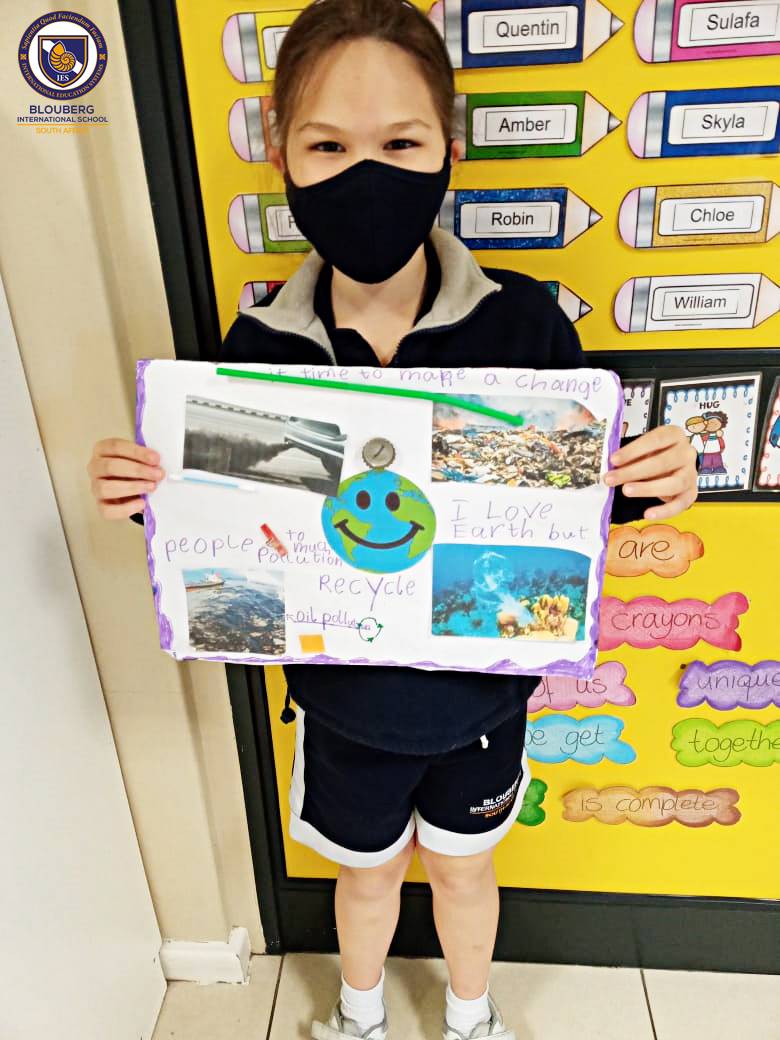
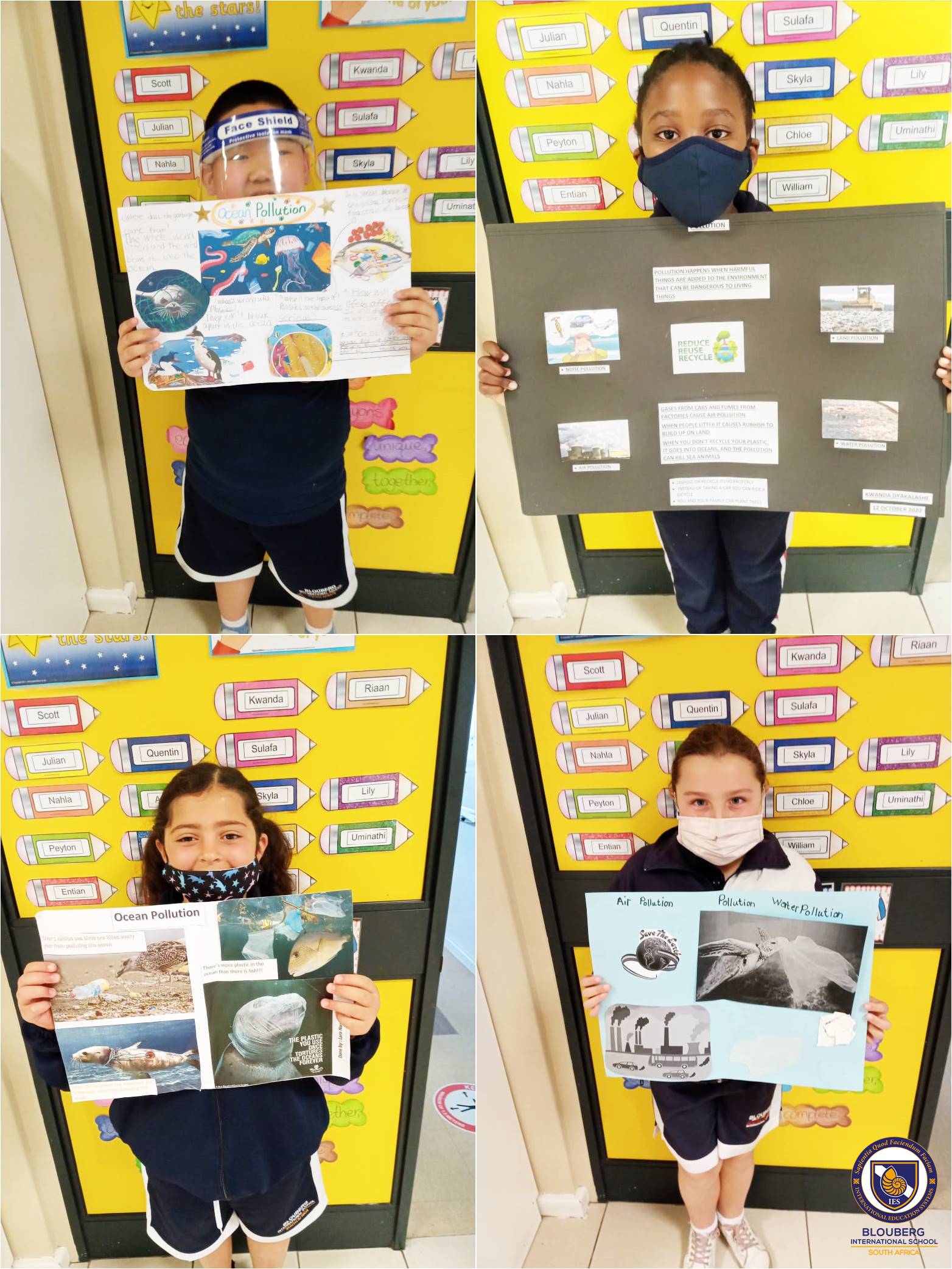
Learning About Pollution In Year 2
“Heal the world, make it a better place…”
(Michael Jackson)
“Pollution should never be the price of prosperity.” Al Gore
Kim Coetzer
Year 2 Teacher

On The Farm 2020
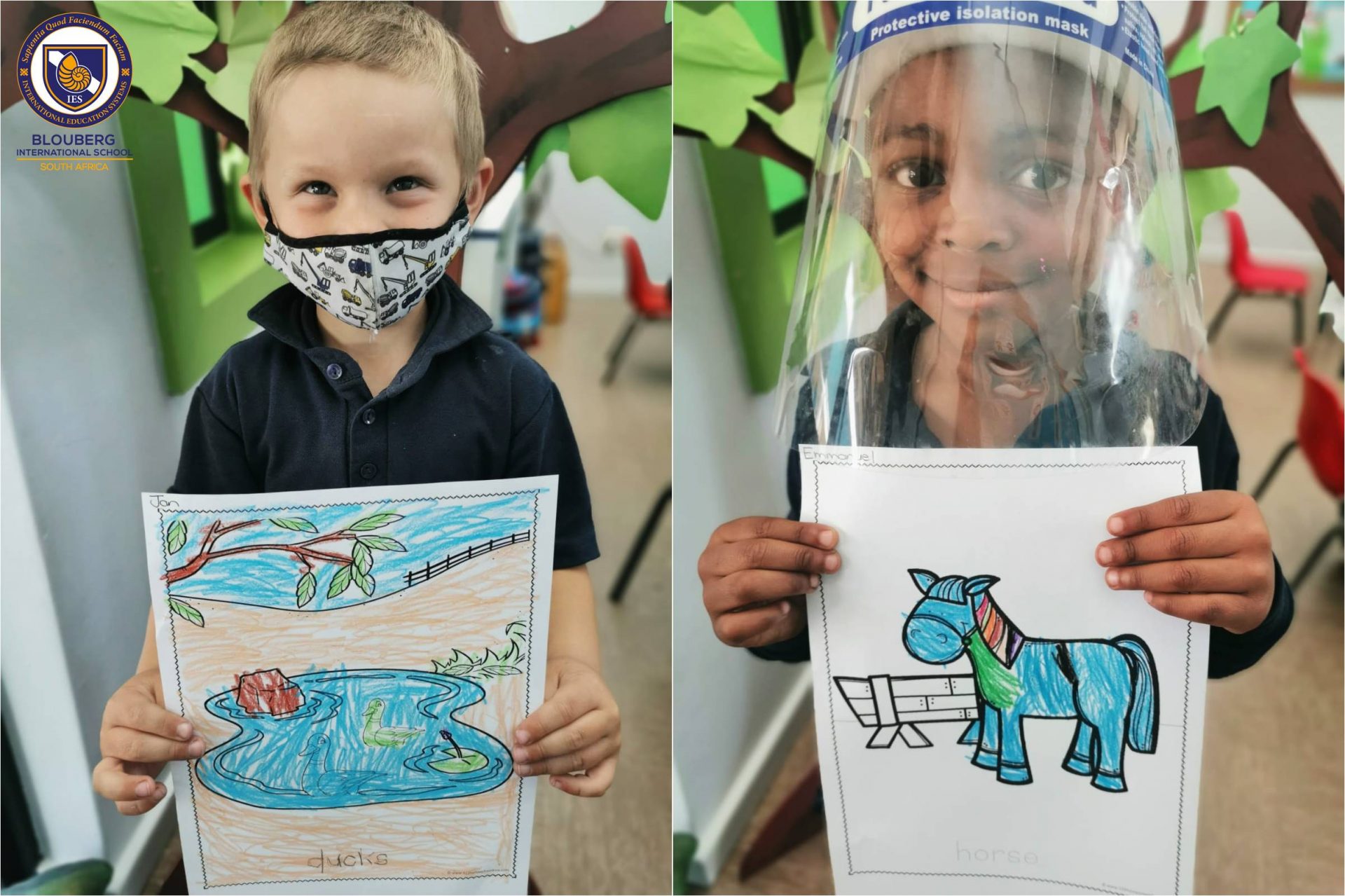
In Reception Year we have been learning all about the farm. This theme is always a favourite as the students have lots of stories about their own personal experiences in visiting different farms, from milking cows to collecting eggs. We asked the students to tell us some of their favourite things about the farm.
This is what they shared:
“I like the horses because whenever I see them I want to ride them. I love it!’ (Daniel Beer)
“My favourite is the cows because they make milk. I like milk” (Muhammad Zaeem Allie)
“My favourite is the pigs because they are funny when they roll around in the mud.” (Olu Mbeki)
“I saw all the different animals but I like the cows because I like milk” (Aubrey Moodley)
“I like the baby goats because they are also kids” (Cayden Floor)
“I like the sheep because they can make t-shirts with their fur’ (Kirby Melvin)
Monique Meyer
Reception Year Teacher


From the Principal’s Desk, 23 October 2020
Dear Parents
“A child is like a butterfly in the wind. Some can fly higher than others, but each one flies the best it can. Why compare one against the other? Each one is different. Each one is special. Each one is beautiful.”
– author unknown
An educator at heart, the best part of my job is working with children and over the years, having worked with students from diverse backgrounds, I continue to be moved by the innocence and humanity of my students. It is a privilege to aid in the development of a child and watch as they discover and develop their potential.
There are various ways in which we as parents and educators can encourage a child’s individuality.
- Make time every day to engage with your child and take note of all the little changes as they grow and develop.
- Foster their interests and encourage their hobbies.
- Introduce them to various activities to broaden their horizons.
- Encourage their innate curiosity.
- Practice patience no matter the situation.
Every child has unique characteristics and abilities which makes them special. It is up to us to celebrate their achievements and encourage them at all times. It is important that children feel understood and supported and that they know that we, as parents and educators, are always available to them.
I wish you all a wonderful weekend of happy play times, exciting discovery, and effective communication.
Best regards
Edna
Read More

From the Principal’s Desk, 16 October 2020
Dear Parents
“SOCIAL NETWORKS”
In 1969, a few professors from three California universities created the first communications network called the ARPANET. This would be the precursor of what we know today as the INTERNET. Since then, the growth in the number of users has risen exponentially, reaching more than 4.5 billion in this year 2020.
Today you can find on the “network” multiple services developed on different protocols such as email, instant messaging, online video games, education and communication platforms, or popular social networks, among others.
The recent pandemic caused by COVID – 19, has in many cases forced teleworking, proving a new normal way of living and communicating with the rest of the world. The use of global platforms for the acquisition of consumer goods over the Internet and the massive development of social networks such as Facebook with 2.45 billion users, YouTube with 2 billion, Instagram with 1.1 billion or TikTok with more than 850 million has also increased, just to name the most popular and widespread.
Today our world’s reality is very different from that of a few years ago, we can ask ourselves a series of questions:
– Do these technological devices or the algorithms that manage these applications cause addiction?
– Does the excessive use of social networks have negative effects on mental health?
– Are the big companies behind social networks using our personal data in a disinterested way?
– Is our consumption and life habits being influenced by controlling the use we make of social networks?
– Are massive amounts of data being manipulated to influence our citizens’ decisions in politics, life choices, hobbies, etc.?
These and other questions have complex answers.
As responsible educators, at Blouberg International we are concerned that our students may be making the wrong use of social networks and digital applications. We are convinced that benefits can be obtained, but there are also risks. We believe that parents and educators must do everything possible so that our students can take advantage of technological advances to have optimal personal, physical and mental development, but more importantly have them know how to discern between the positive and the negative in the world around them.
Recently, the Netflix platform has included in its offer the documentary “The Social Dilemma”. We believe it is a very interesting film and recommend students over the age of 14 to watch it. It will allow them to better understand how these and other networks interact with them as social network users, but of course, this being not a program specifically designed for schools, it must be you, their parents who decide at your own discretion whether or not it is convenient for them to watch it.
In 2019 we hosted Emma Sadlier from the Digital Law Company to address parents and students about the dangers of social media. We hope to have a follow up on the talk she had with us and would like to encourage you to attend when we host the next session with her.
Have a wonderful weekend ahead.
Best regards
Edna
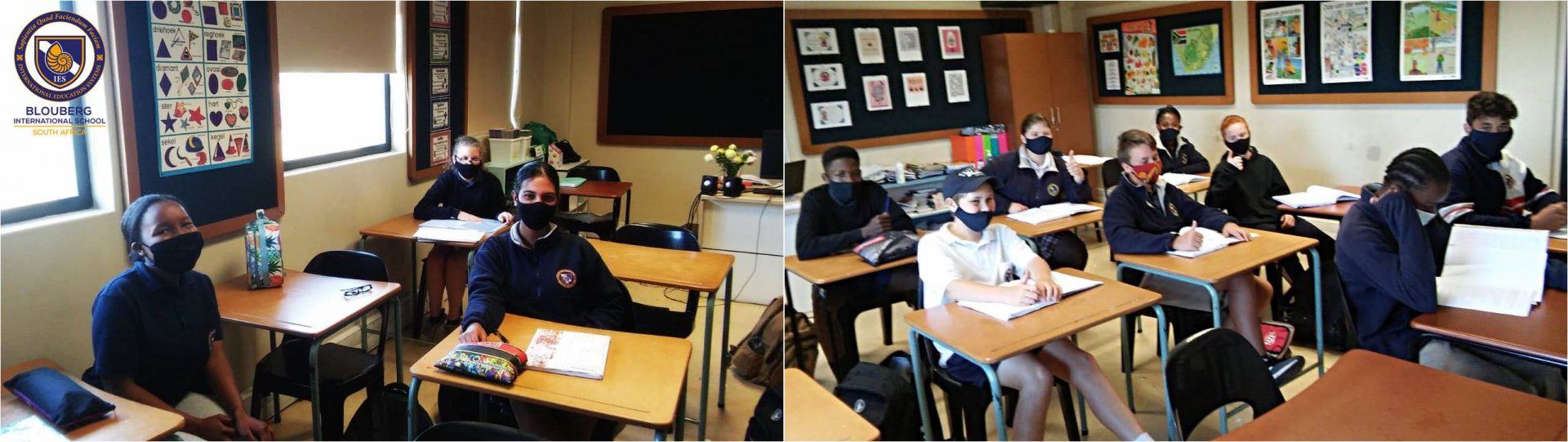
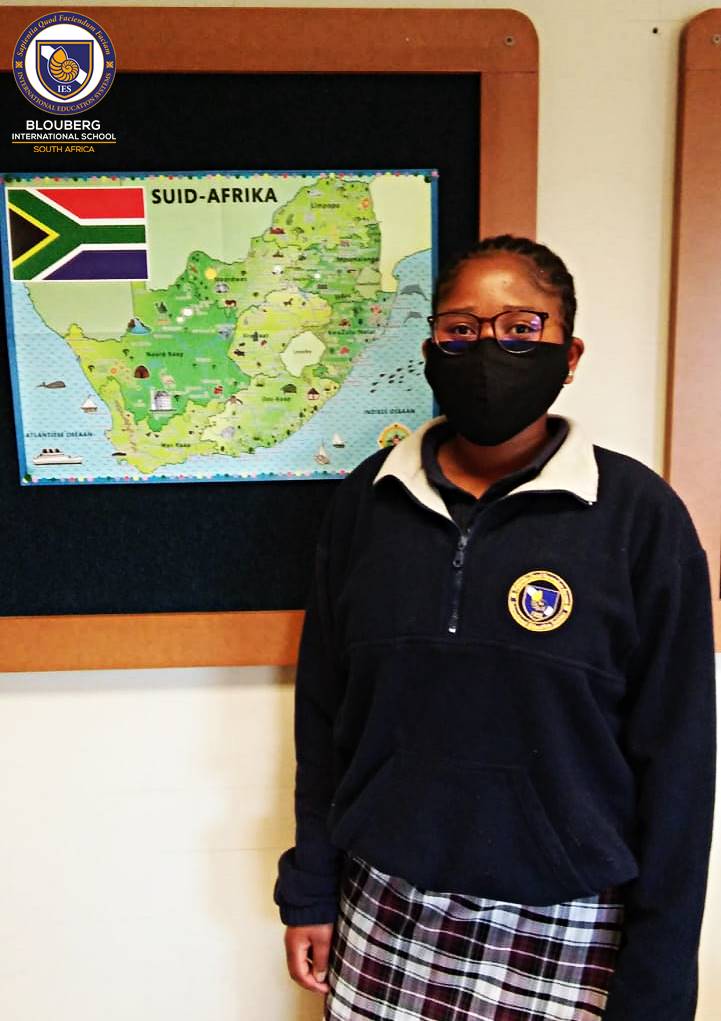
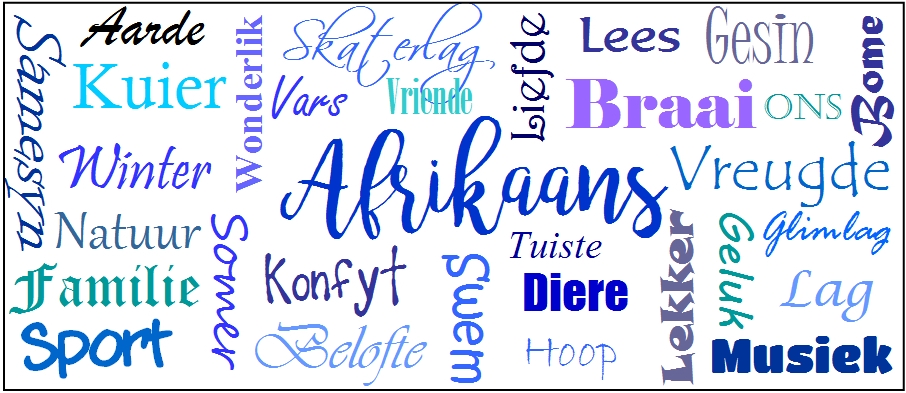
Why Afrikaans
With just around 7 million native speakers, Afrikaans is one of the world’s youngest languages.
Afrikaans originated in South Africa in the 17th century with the arrival of Dutch settlers in the Western Cape region. The language evolved from European Dutch dialects and drew influences from indigenous South African languages, Malay, Portuguese and Indonesian. Although sometimes described as a Dutch-based creole, Afrikaans is recognised as a distinct language in its own right.
Afrikaans is spoken in South Africa and neighbouring Namibia and Botswana. You’ll also find large expat Afrikaans communities in places like Australia, New Zealand and the UK.
So, let’s get into it. Here are 4 reasons you should learn Afrikaans.
It’s easy!
Afrikaans is considered one of the easiest languages to master for English speakers. The Foreign Service Institute (FSI) classifies Afrikaans as a Category 1 language, meaning you’ll need around 23-24 weeks (575-600 hours) to reach proficiency.
It can help you learn Dutch
Afrikaans is a descendant or daughter language of Dutch. Although Afrikaans has borrowed from other languages such as Malay, Portuguese and French, around 90% of Afrikaans vocabulary is derived from Dutch.
If your plan is to become a polyglot, Afrikaans is a good stepping stone to mastering Dutch and Flemish (and maybe even German at a bit of a push).
Experience the vibrant South African culture
If you’re planning a trip to sunny South Africa, knowing a bit of Afrikaans will instantly make you the most popular tourist in the room. Throw in some isiXhosa and we’ll practically hand you the key to the city.
Although pretty much everyone speaks English, knowing the local lingo will enrich your travel experience and may even get you invited to a ‘lekker’ braai (a fun barbeque).
Access a whole new world of exciting literature
Afrikaans has a rich literary tradition. From the poetry of N. P. van Wyk Louw to the fast-paced crime thrillers of Deon Meyer, you won’t be wanting for good reading material.
Students favourite Afrikaans words:
| pikkewyn | penguin | Danie M (Year 9) |
| pannekoek | pancakes | Connor N (Year 7) |
| koejawel | guava | Tumelo M ( Year 11) |
| Leeu | lion | Brenden A (Year 8) |
| tannie | aunt | Oratile T & Damon M ( Year 7) |
| braai | barbeque | Keno T ( Year 9) |
| verlief | in love | Siena A ( Year 7) |
| spookasem | candyfloss | Layla M ( Year 9) |
| pantoffels | slippers | Chloe R ( Year 7) |
Carmen de Villiers
High School Afrikaans Teacher
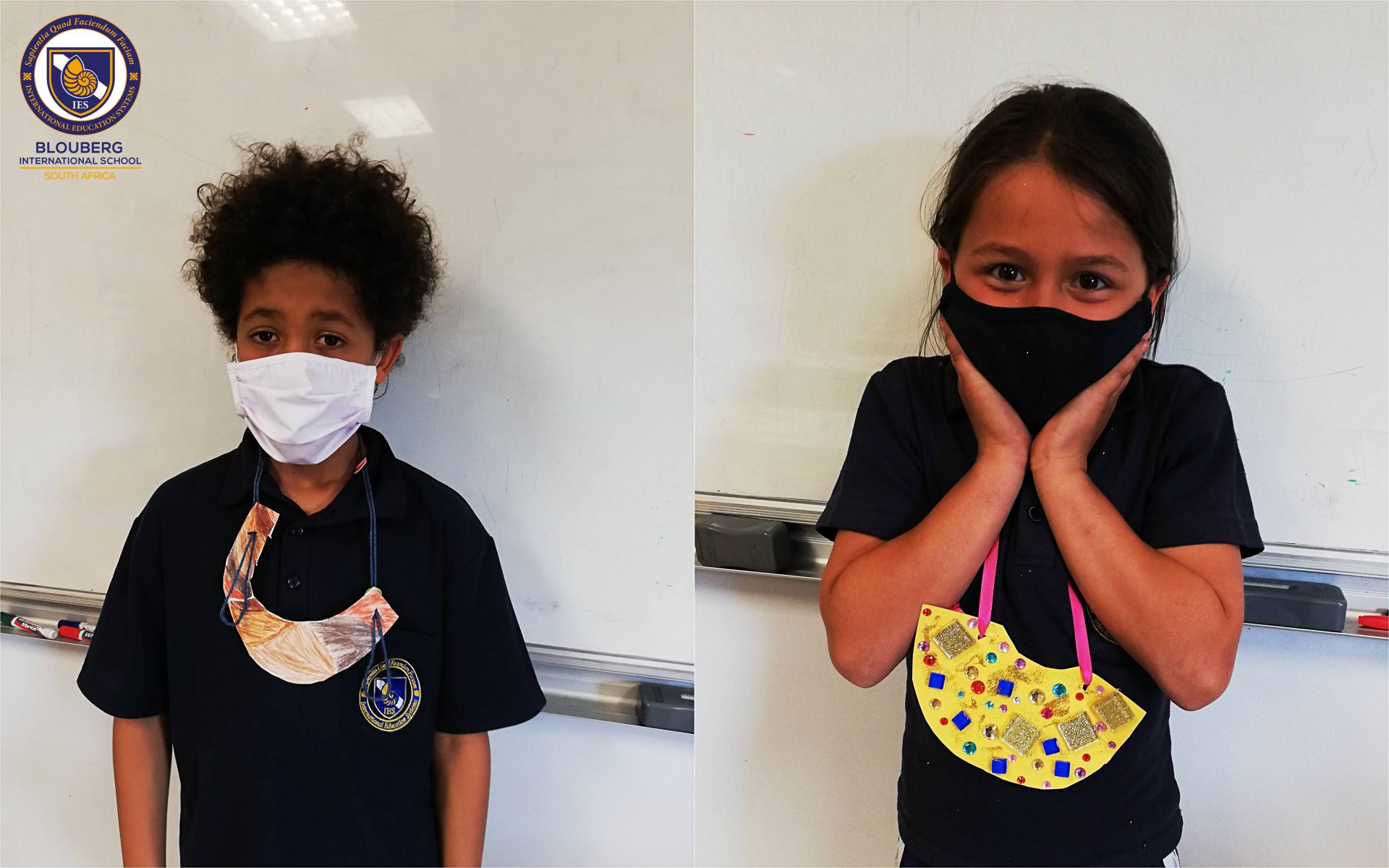
Ancient Egyptian Necklaces
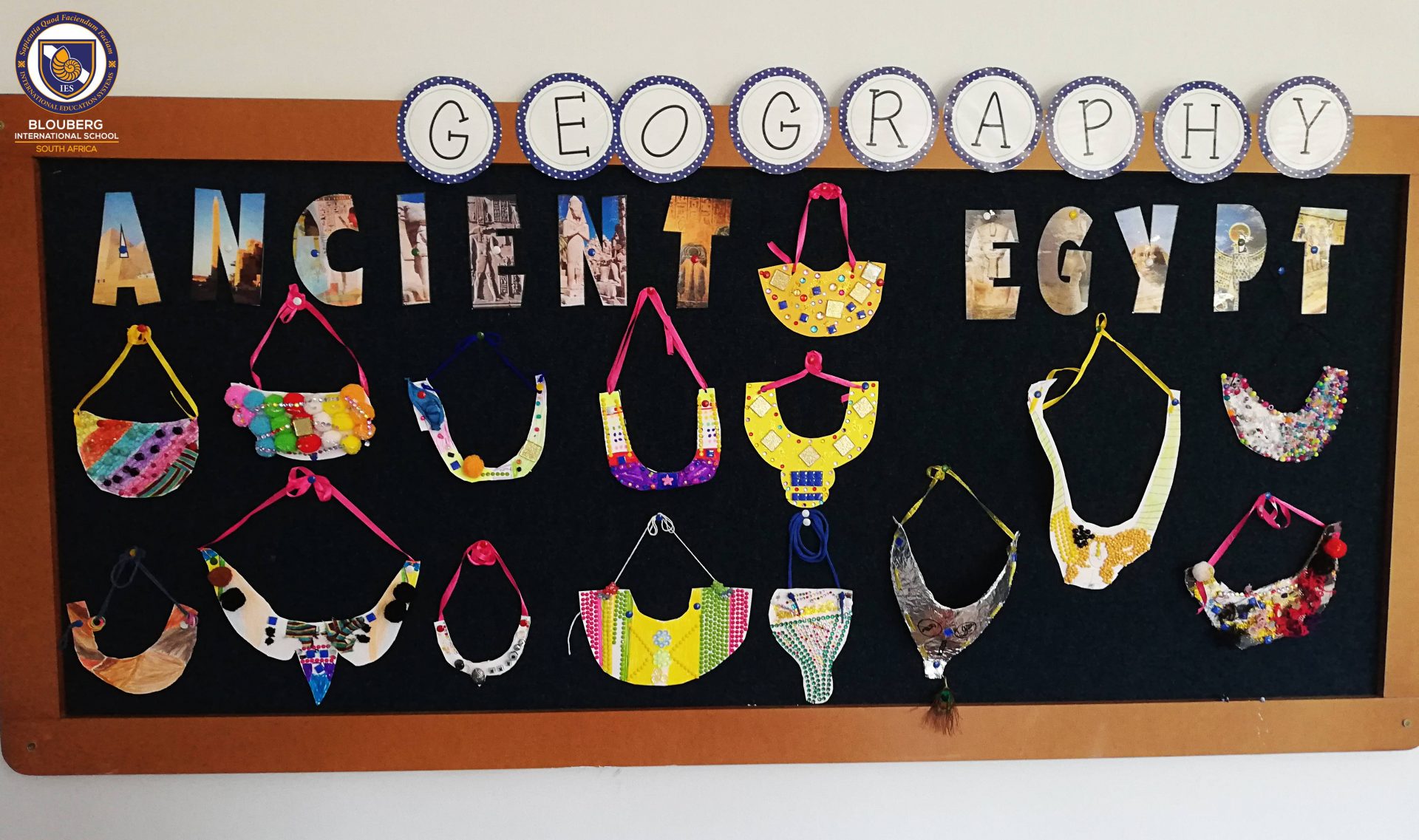
The jewelry of ancient Egyptians held religious and symbolic significance and was treasured for its beauty and power against evil and death. It was buried with men and women because the Egyptians expected to enjoy wearing their finery in the afterlife.
The Year 3 students used their creativity to create the most beautiful Egyptian necklaces. This is how their beautiful necklaces make them feel:
“My necklace makes me feel shiny,” said Mila Arpesella.
“My necklace makes me feel like an Egyptian.” Said Jesus Da Silva.
“When I wear my necklace I feel like I can do anything, just like the Egyptians,” thinks Skye Venzke-Krecklenberg.
“My necklace makes me have joy,” explained Manjulika Moodley.
Sasha Rajah
Year 3 Teacher

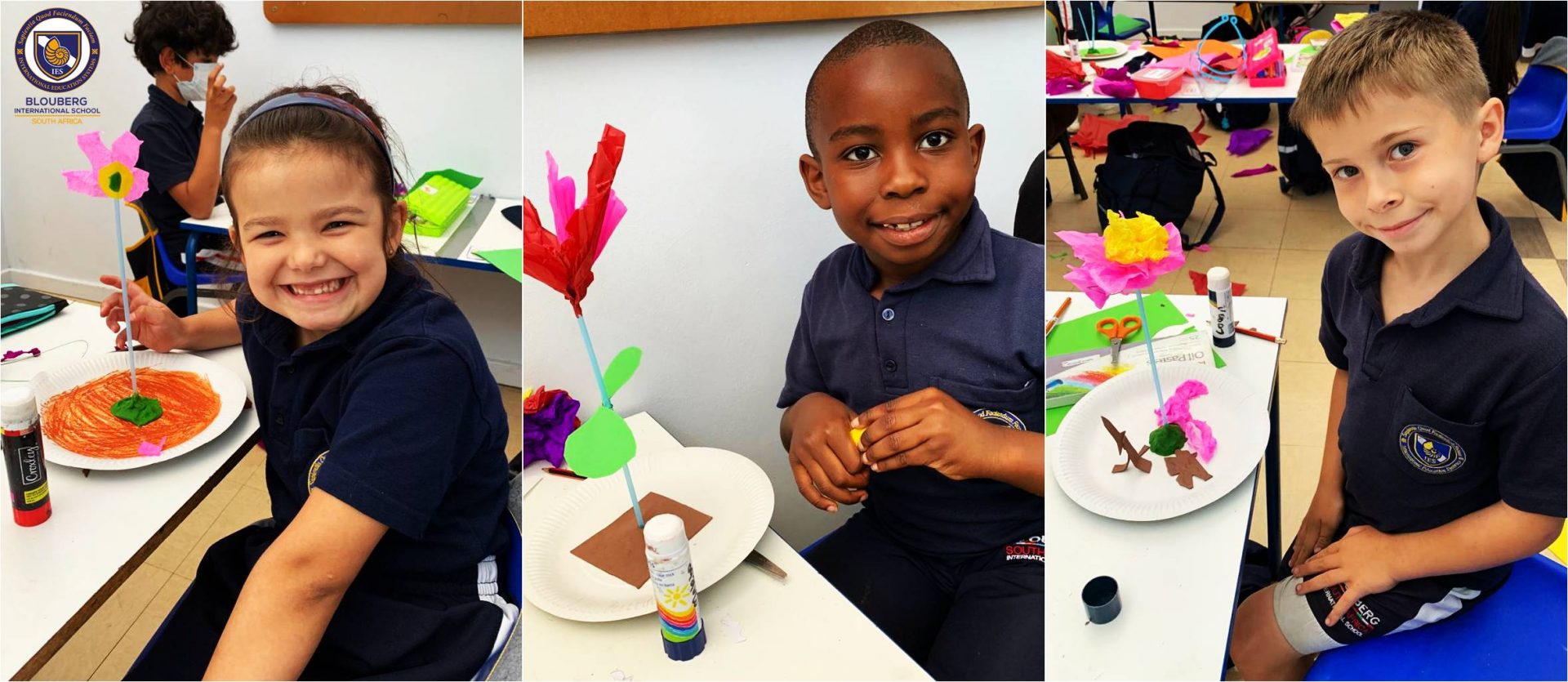
The Seeds Of Science
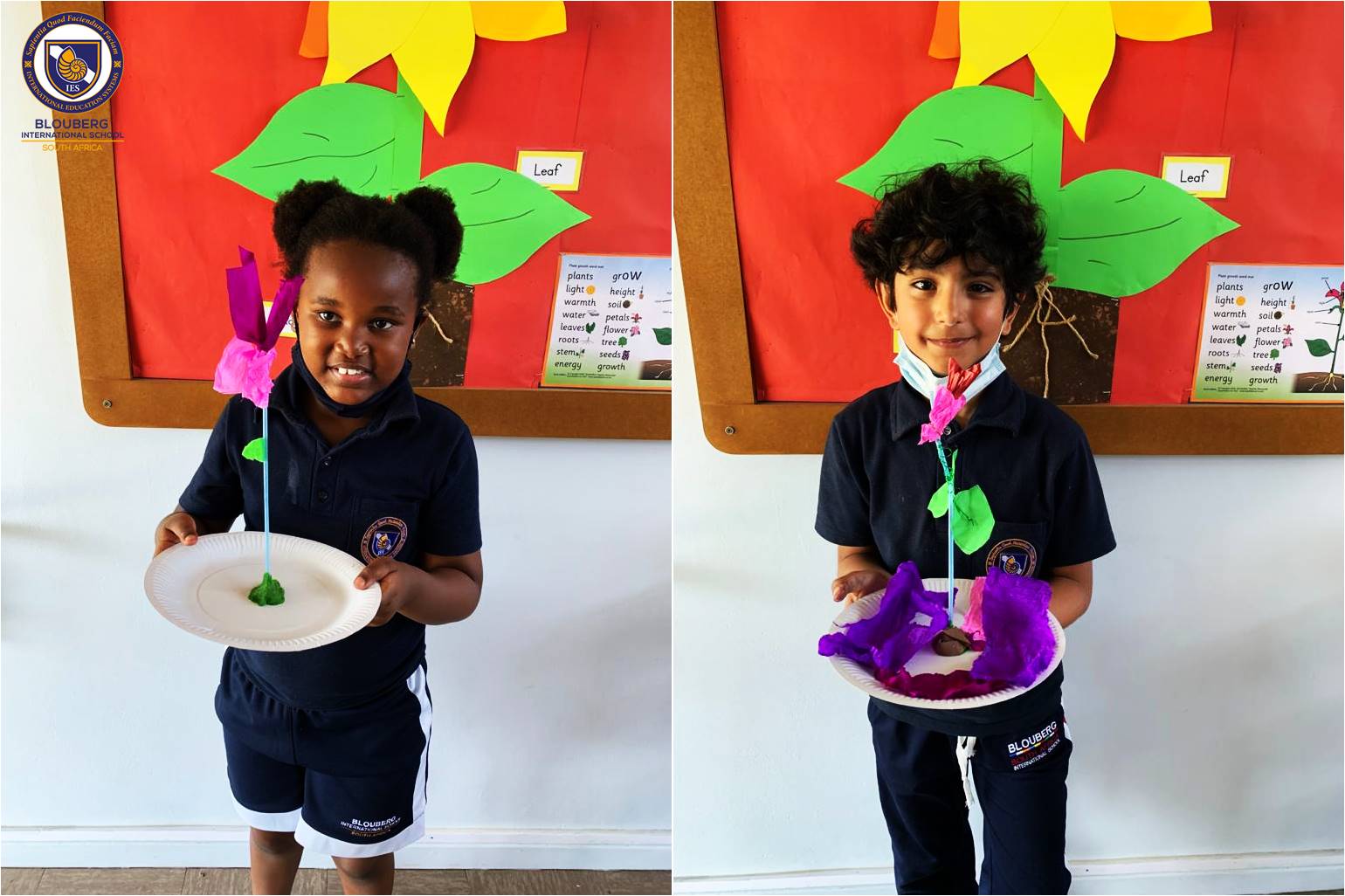
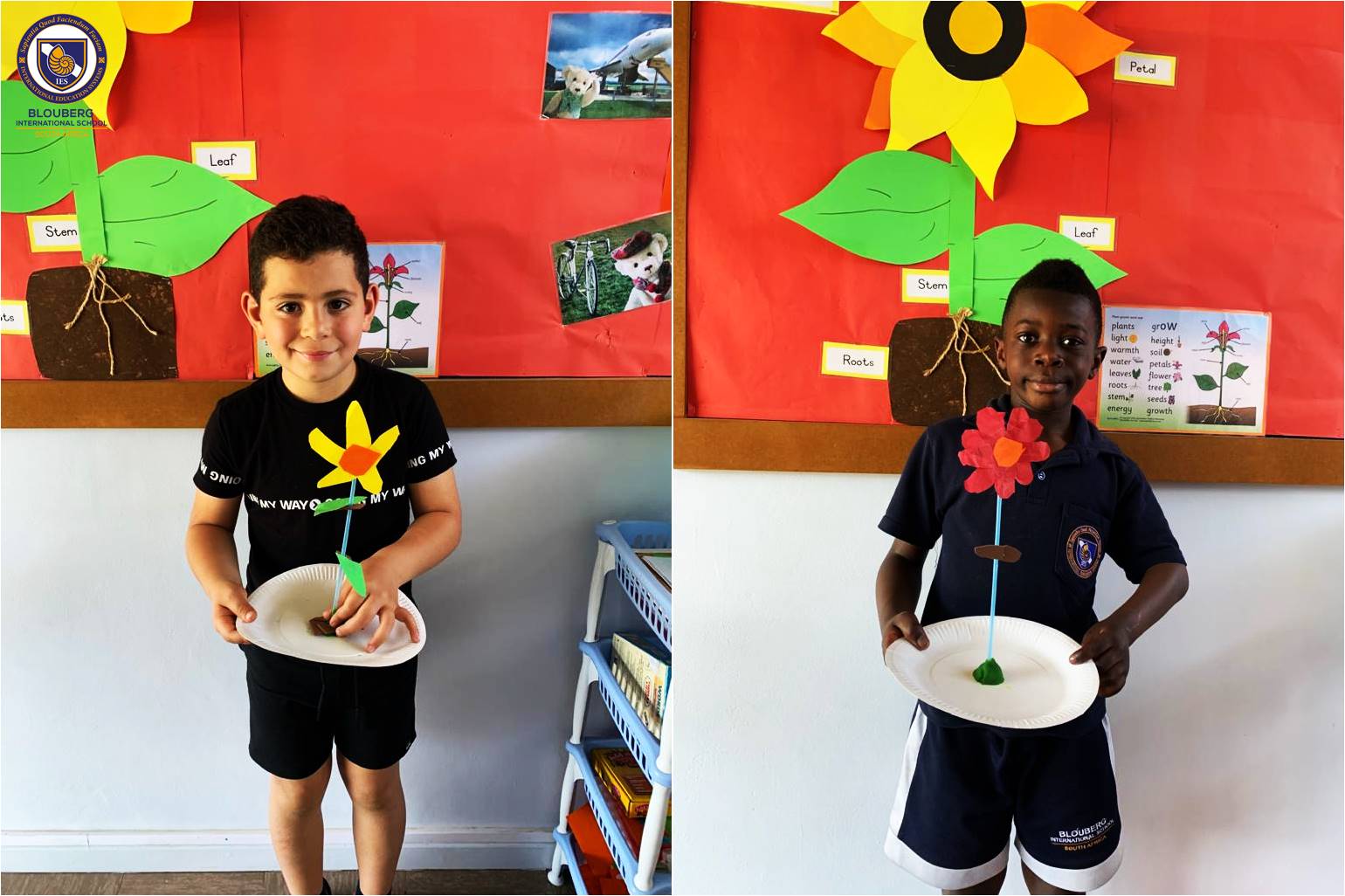
This term in Year 1 we have been observing and exploring plants in our Science lessons. Taking photos, labelling and even planting our very own seeds are all fun activities that we have been partaking in these past few weeks together.
We asked the students to make their very own model of a flower, taking into account the various parts of a plant. They thoroughly enjoyed getting creative and using a variety of different materials to make their own plant.
It is very impressive to see what some of the children came up with and how they made their flower stand up.
Well done to our budding scientists!
Charlotte Cronje
Year 1 Teacher
Pre-Reception Learning All About THE FARM
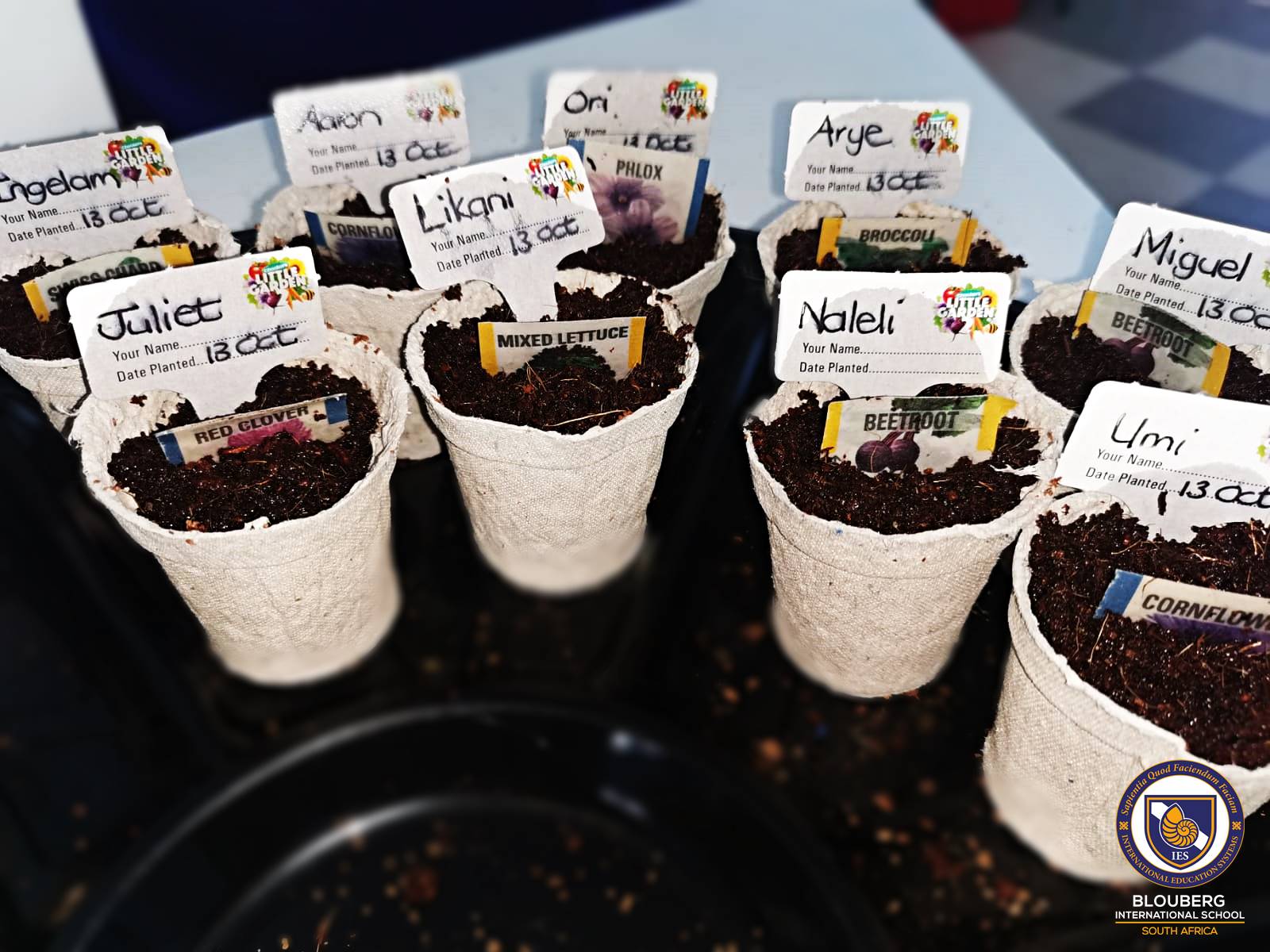
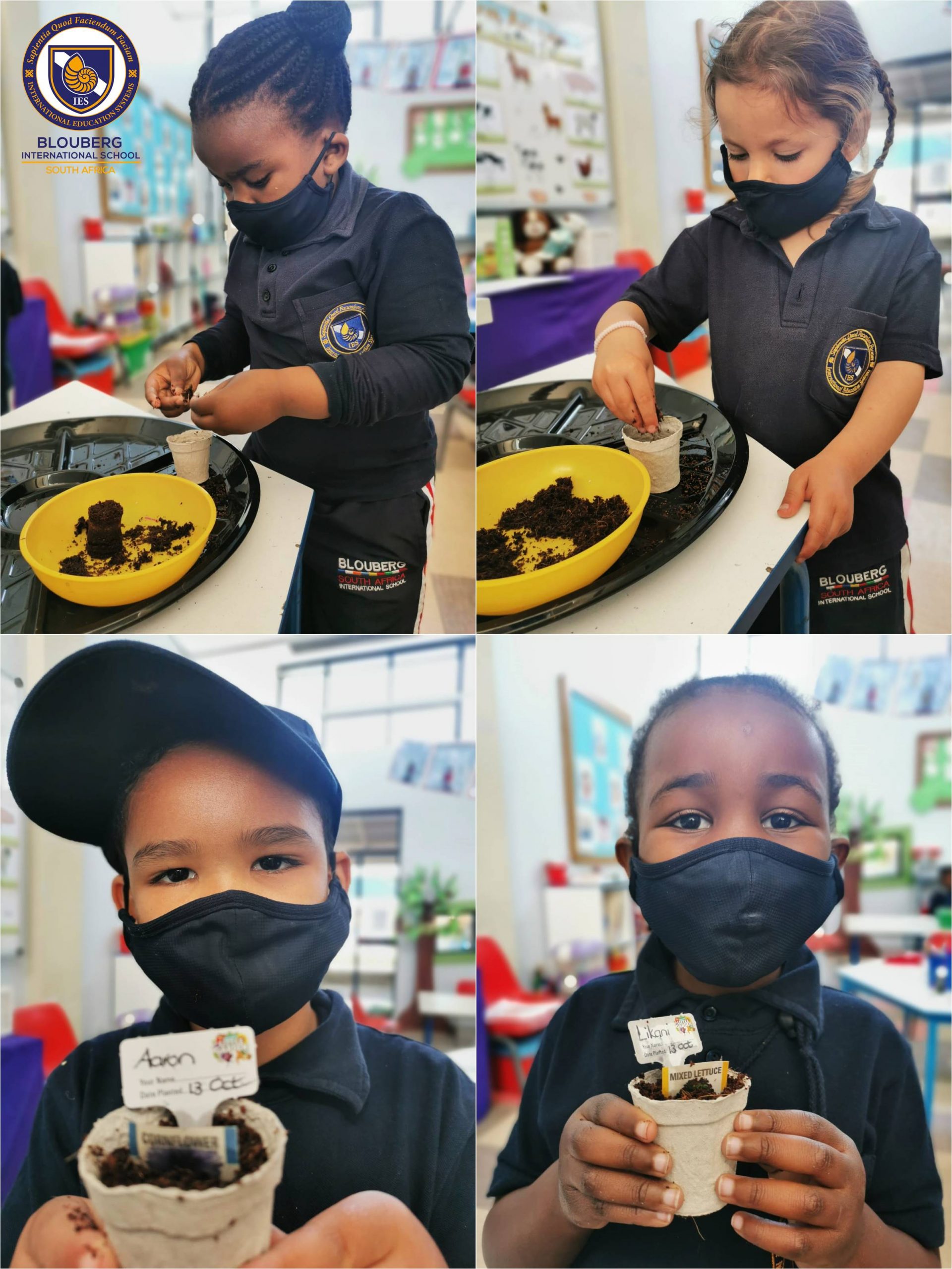
The students enjoyed the various activities planned around this theme especially planting some seeds in their own container and learning how to take care of the seedlings. They are very excited to observe their little seedlings grow.
I asked some of the students what their favorite farm animals are and why. This is what they answered:
Larsen Fulton (4 years old) – “Sheep, because it is extra soft.”
Ori Monyai (5 years old) – “Horse, I like riding them and they go fast.”
Jan Pani (5 Years old) – “Turkey, they can be in the mountains and forests.”
Arye Shaik Mahomed (5 years old) – “Cow, because you get milk from a cow and I drink it.”
Ingelam Mabona (4 years old) – “Piglets, are cute and splash in the mud.”
Juliet Cronje (4 years old) – “Dog, because it is so nice and fluffy.”
Jadey Howes (5 years old) – “Sheep, when I feed them they are so soft when they eat their food.”
Don Mwenda (5 years old) – “Horse, they go super fast!”
Aaron April (5 years old) – “Dog, we have a dog at our house.”
Naleli Tsietsi (4 years old) – “Cow, because it is my favourite.”
Cindy Nunan
Pre-Reception Teacher

From the Principal’s Desk, 9 October 2020
Dear Parents
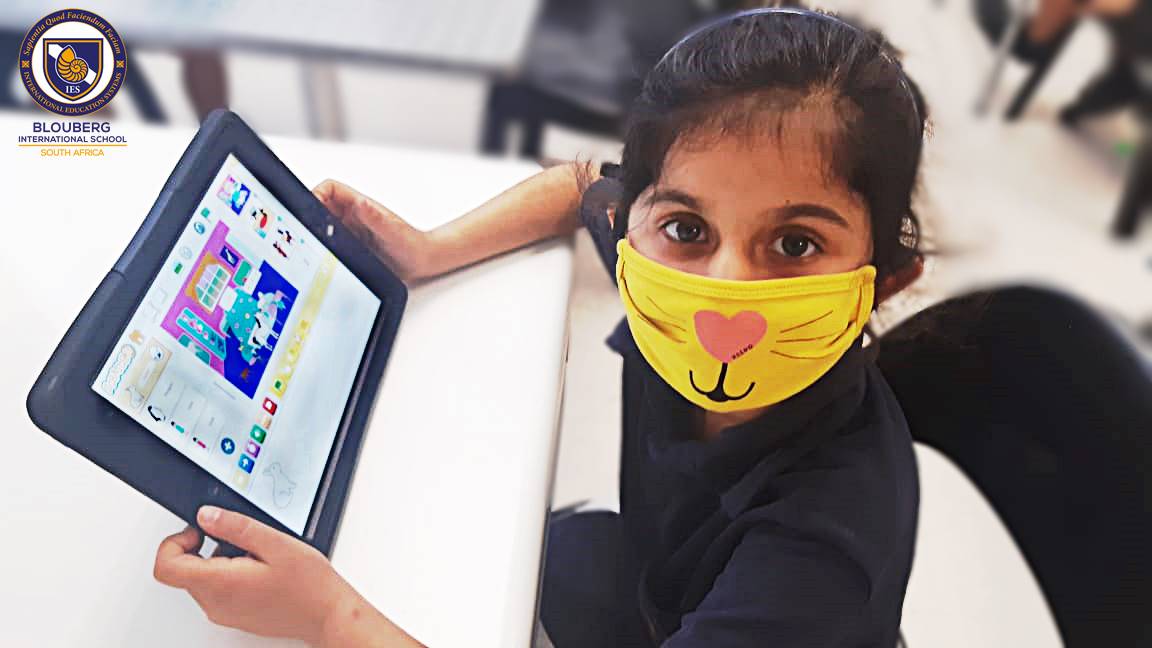
One of the best feelings is the glow of satisfaction that comes with reaching one’s goals. As a school we have been consistent in our hygiene and safety protocols. Whether it be the regular temperature checks and sanitizing throughout the day or continuous reminders about the necessity of social distancing, we have worked hard to keep our staff and students safe.
This week I was busy with my report on these protocols and it is with relief and satisfaction that I can report that, thus far, we have not had one positive case amongst our students. It is such a great relief to know we are all in good health! Our school is almost at full capacity and it is therefore essential that we follow the protocols with rigorous attention.
Student well-being is important to us. When they are emotionally healthy, they have the necessary foundation for academic stability and success. It is thus important that we as educators, as well as parents, are mindful of their wellbeing.
Here are a few ways we can promote student well-being:
- It is important that parents and educators check in with students and allow them to vocalize their feelings.
- Journaling their feelings is a good way of expressing how they feel, especially if they are not naturally talkative or open to sharing their feelings.
- We should equip them to be able to make choices. By allowing them to make choices, we are allowing them to take responsibility of their choices. This creates accountability in return.
- The old saying of “children should be seen and not heard” is a total no go! Children should be allowed to have a voice and express it. As adults we should teach them it is how they say things that is as important as what they are saying. Respect is key.
“Every day may not be good, but there is something good in every day!”- Author unknown
Have a wonderful weekend ahead.
Warm regards
Edna