

Foundation Stage – Welcome Back Term 2
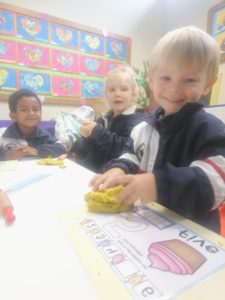
Our students were all excited to be back at school! They were eager to share their holiday news, telling their stories to the class. Some freely admitted to driving mommy “crazy” (hopefully not)… Each student had the opportunity to tell their friends all about their travels and adventures.
“We went to Angola and saw lots of trees” Heitor Dantas
“I went to the museum” Juan Amouhadi
“I played games with my dad’ Matthew Hack
“We made a play tent and we made cakes” Daisy Cronje
“I played outside with my friends” Shemot Tapfuma
We have a fun filled term ahead, this week our theme was Circus and in the coming weeks we will explore shapes and colours. The themes change often to ensure we create a stimulating environment where our students can play their way to knowledge.
Reception Year Teacher
Ms Monique Crawley


The importance of play – Pre-Reception Term 1 2019
“Play is nature’s means of ensuring that young mammals, including young human beings, acquire the skills that they need to acquire to develop successfully into adulthood”
– Dr Peter Gray
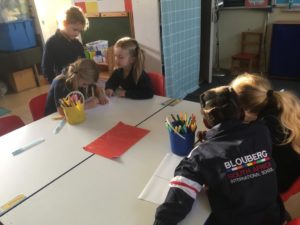
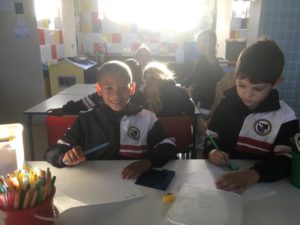
As I observe my Pre-Reception class and reflect over the first term, I can’t believe how quickly the time has gone by and how much they have already developed. “Time flies when you are having fun!” The students have settled into the class routine beautifully and for some of them it is their first time at school.
Each week they have learnt about different themes, identifying numbers and sounds, number and letter formation, pencil control, shapes, colours, done activities to strengthen their fine motor skills, complete patterns, the importance of sharing and taking turns to name only a few of the things.
As I watch and interact with my students, it strikes me that people don’t realize the importance of play and what they actually learn through play. During play children are thinking, problem solving, developing memory, planning, investigating, developing language skills, concentrating and learning many more skills… Play is healthy for children, it reduces stress and anxiety by providing an outlet. Play is the medium through which children explore and experience their world around them. It’s how they learn! To a child, playing and working or learning are the same thing.
I noticed the children in my class engaging in various types of play throughout the day:
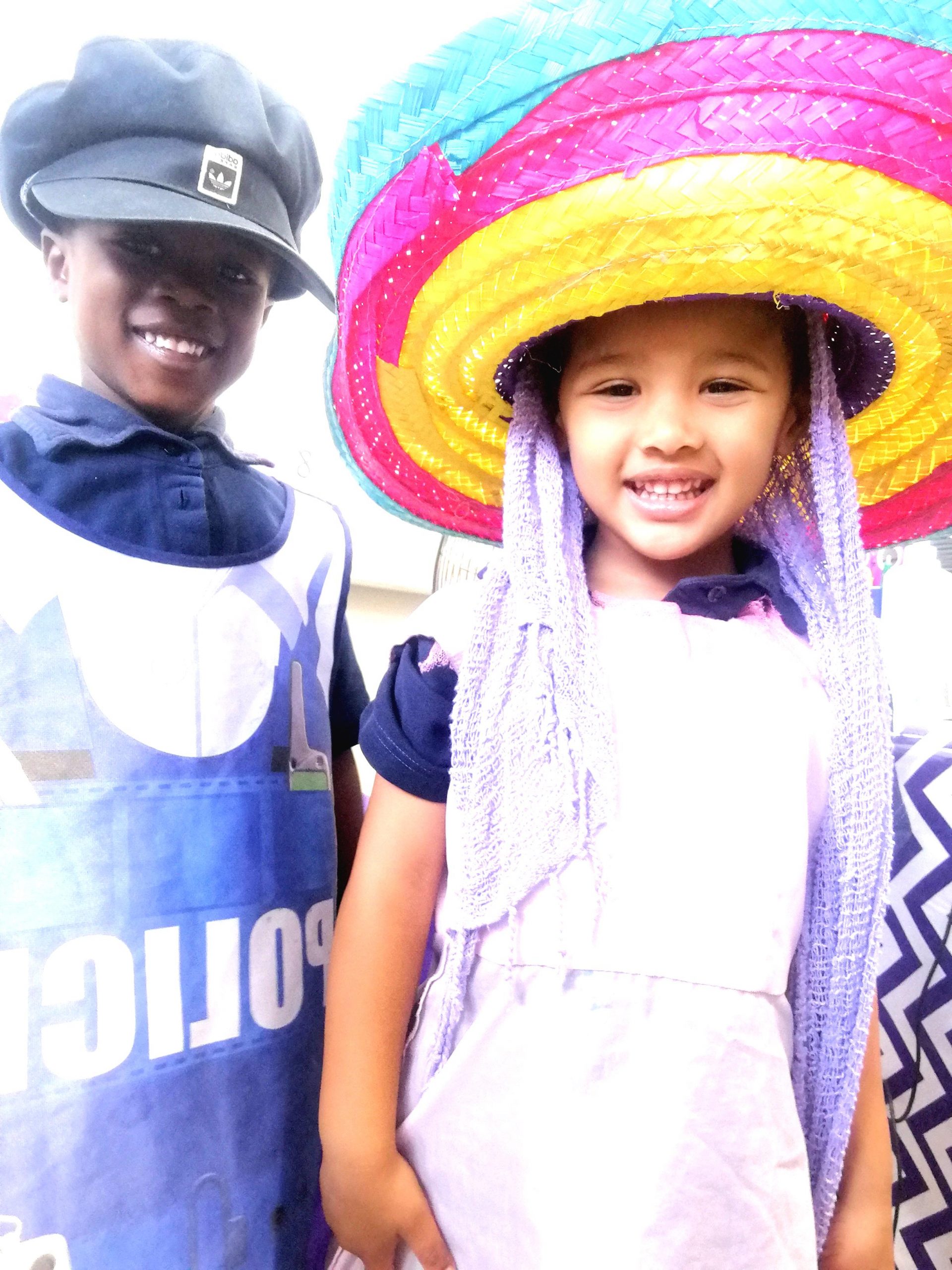
Fantasy or Dramatic Play also known as pretend play or make – believe play which involves “acting out” ideas and role playing activities.
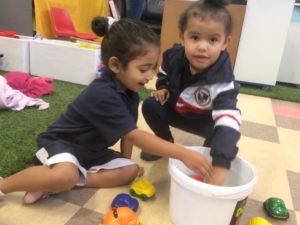
Sensory play involves stimulating the senses, tastes, textures, smells, colours, shapes and movements.
Investigative stage of play is when a child wants to see what happens when materials are manipulated in a certain way.
Competitive Play refers to games with rules that are more structured and may involve more than one player. My students love to play Hide and seek as well as Duck duck goose.
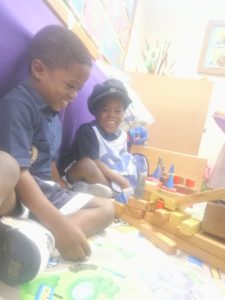
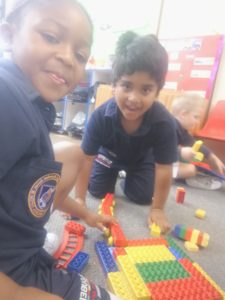
Constructive Play involves creating things and manipulating objects to make something. Some of the students really enjoy playing with the wooden blocks and building the most amazing constructions.
Physical Play refers to play that is purely physical, such as climbing a jungle gym, skipping etc.
Creative Play is about creating art using paint, crayons, cutting and pasting etc to express oneself.
Here are some tips how parents can support their child through play in the holidays:
-Allow enough time for play indoors and outdoors every day.
-Provide a safe environment.
-Play with your child and verbalise what they are doing and ask them questions to promote language development and problem solving.
-Allow your child to explore and get dirty during play.
-Provide stimulating toys and equipment.
-Encourage freedom of choice and do not interfere in the game.
-Provide clothes and accessories for dress-up play.
-Focus on the enjoyment of the game and not only on winning.
-Focus on games that teach mathematical and early reading skills.
-Play is not just good for your child but it’s good for parents too. Similarly to children, play helps parents relieve stress, mend and strengthen relationships and keeps everyone happy.
So the next time your children ask you to play with them, it’s not just good for them it’s good for YOU too!
Cindy Nunan
Pre-Reception Teacher
De Beers English Olympiad 2019
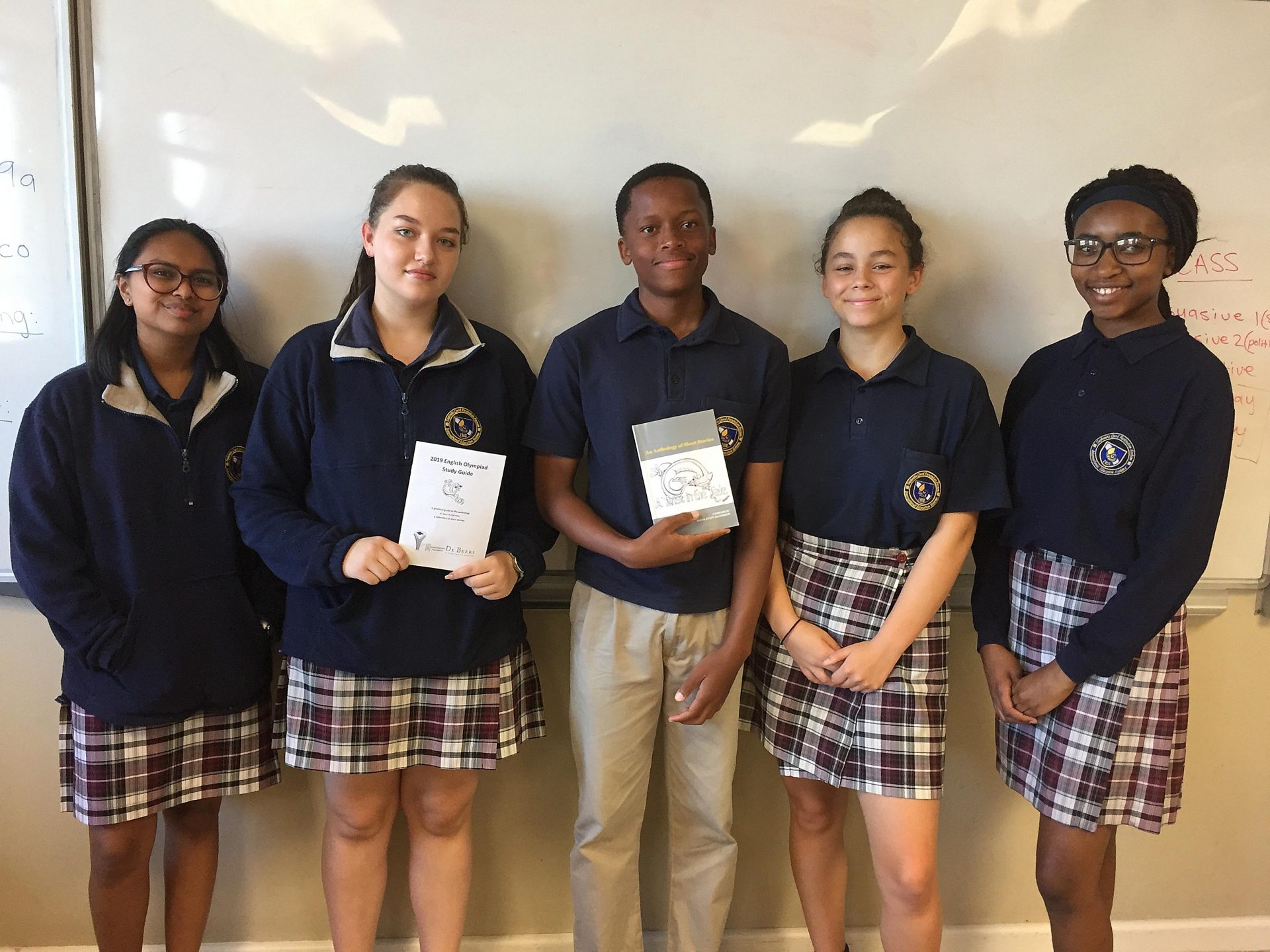
On Tuesday the 5th of March five of our senior students competed in the prestigious De Beers English Olympiad.
The De Beers English Olympiad is an English competition that draws over 8000 entries each year from around South Africa and its neighbouring countries. The competition is organized jointly by the Grahamstown Foundation and the South African Council for English Education (SACEE). The competition began as a small project in 1976 when Dr Malcolm Venter, a member of the Eastern Cape branch committee of SACEE was asked to organise an event locally. The first competition attracted 119 entries and the winner received a prize of R50. Today, by comparison, the top 3 candidates receive substantial cash prizes of R33 000 (1st place); R30 000 (2nd place); R27 000 (3rd place) broadening their opportunities for possible further study or travel.
The competition seeks to enrich learners, encouraging them to explore beyond the scope of the school syllabus. It encourages critical thinking and creative writing, promoting the study of English amongst first and second English Language speakers and actively increase the participation of candidates from previously disadvantaged schools.
The De Beers English Olympiad is distinctive in that, unlike other Olympiads, it requires learners to study a prescribed text, not found within the school syllabus. 2019 saw the students study short stories, collated under the title ‘A Twist in the Tale’. Each year a different genre is studied, and a new anthology and theme compiled by SACEE. The examination is then based on this theme and anthology. On receiving the prescribed material, we set up study groups to analyse the stories and our intimate group sessions allowed us to examine the texts on a level not always possible in the structured classroom environment. The competition also gives students the opportunity to work with other students in different grades; students from years 10-12 may enter the competition and watching students, who wouldn’t normally interact in a classroom setting, quibbling over different interpretations of a text was simply wonderful.
In ‘Wings for Bulbie’ (Patrick Waldo Davids) we read of a tortured but brilliant soul, a maths teacher hounded and ostracized by a community who cannot, and will not, understand him. ‘The Luncheon’ (Somerset Maughan) sees a young writer at the mercy of the most trying lunch companion imaginable. In ‘The Suitcase’ (Es’kia Mphahlele) a young man, down on his luck, takes a chance and claims a suitcase left on the bus he is travelling in- with disastrous consequences. Many of the stories had a distinctive South African flavour but all of them were honest reflections of human nature and proved to us the timelessness of certain themes and stories.
A massive congratulations to the students who competed on Tuesday! The examination was three hours long, plus half an hour of reading time. Entering into this competition is a commitment not taken lightly and I am proud to say that all the students displayed the effort and determination necessary to stand themselves in good stead.
I encourage more students to participate next year as this competition engenders a deeper appreciation of literature by providing insight into human nature and experience. It also offers students the opportunity to bond, not as classmates or students in the same school, but as students of literature, as lovers of stories.
Alice Pryor
High School English Department Head