
Why do the President’s Award?
71% of business leaders and 63% of young people asserted that formal education alone is not enough to equip young people to be world ready. According to business leaders surveyed during the 2020 Global Survey; the following skills in the order of importance are considered in helping young people become ready for the world out there:
– Individual skills, such as confidence, resilience and determination.
– Analytical critical thinking and problem-solving skills.
– Social skills, communication, teamwork and leadership skills.
– Humanitarian skills such as empathy, adaptability, intercultural and civic engagement.
– Technical ability, technical knowledge and practical technical skills.
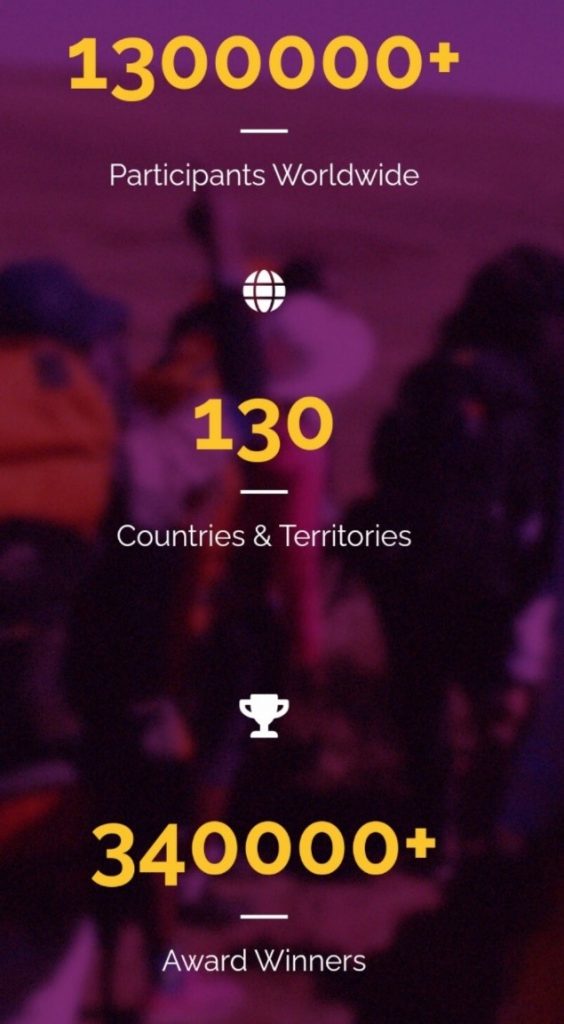
Achieving The President’s Award will give participants the skills, confidence and an edge over others when they apply for college, university or a job. Beyond their academic achievements, universities want to see evidence of so called ‘soft skills’ that they have developed through extra-curricular activities, such as communication, commitment, leadership and teamwork. The President’s Award is a fantastic way to demonstrate these practical skills.
The President’s Award equips young people for life through the development of universal skills enabling them to become responsible, committed, dedicated citizens. It provides a framework for non-formal education and has set guiding principles, with proven outcomes for young people who complete the Award.
It creates experiential learning opportunities to help young people discover talents that do not necessarily show up in the classroom context.
The programme brings together practical experiences and life skills, building confidence, encouraging physical health and recreation, and motivating young people to engage with their communities.
For the thousands of young people who take part in developing themselves through the President’s Award each year, the benefits of achieving The President’s Award at any level are endless. The Award is about helping you along the path to a productive and prosperous future. Many of our participants say that it’s a life-changing experience. Participants will make a difference to other people’s lives and their community, be fitter and healthier, make new friends and memories to last them a lifetime.
Participants undertake regular activities in four main sections:
– Physical Recreation
– Voluntary Service
– Skills
– Adventurous Journey
The Award is comprised of three levels and four sections. Participants complete all four Sections at each level in order to achieve either their Bronze, Silver or Gold Award. At Gold level, participants also complete a Gold Residential Project.
Here follows the requirements of each level:
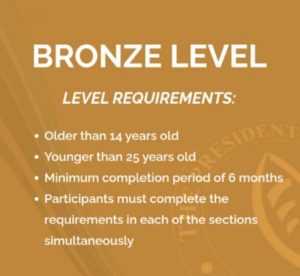
Bronze level requirements
Older than 14 years old.
Younger than 25 years old.
Minimum completion period of 6 months.
Participants must complete the requirements in each of the sections simultaneously.
Silver level requirements
Older than 15 years old.
Younger than 25 years old.
Minimum completion period of 6 months for Bronze Award holders and 12 months for non-Bronze Award holders.
Participants must complete the requirements in each of the sections simultaneously.

Gold level requirements
Older than 16 years old.
Younger than 25 years old.
Minimum completion period of 12 months for Silver Award holders and 18 months for non-Silver Award holders. Participants must complete the requirements in each of the sections simultaneously.

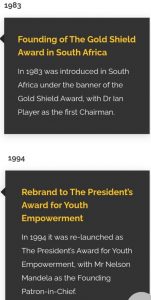
“South Africa’s youth are our future. Developing their potential is a top priority in our country. One practical way is to develop this huge reservoir of talent through their participation in The President’s Award Programme. The young people must take it upon themselves to ensure that they receive the highest education possible so that they can represent us well in the future as future leaders. ”
– The President’s Award Founding Patron-in-Chief, Mr Nelson Mandela.
To register for The President’s Award please contact Mr Riaan Vosloo,
email: riaan.vosloo@iesmail.com
Riaan Vosloo
High School Teacher and President’s Award Coordinator

Read More
Year 3 Chess Champion
“Every Chess Master was once a Beginner” – Irving Chernev
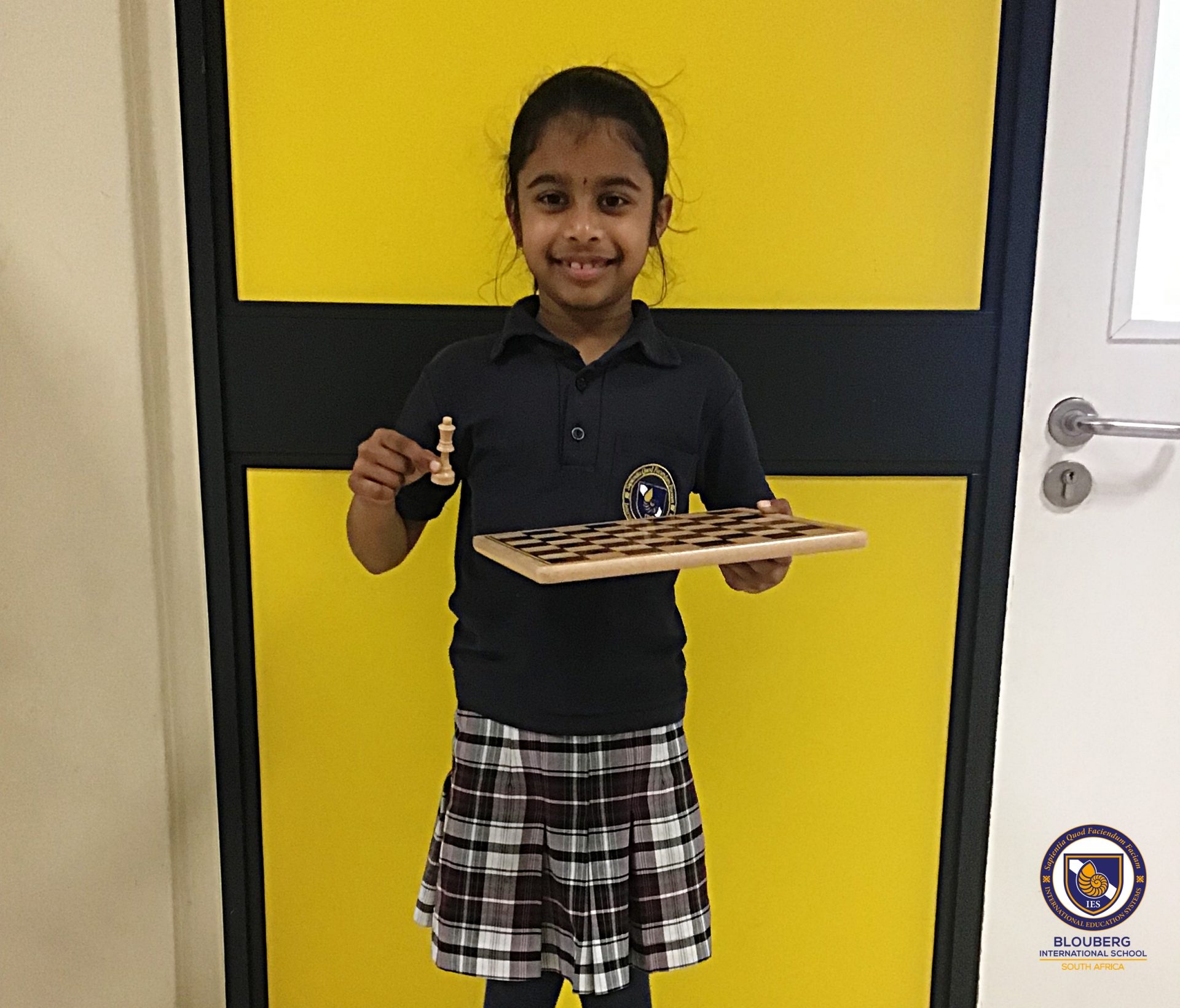
This is not a game of Chaturanga or a Queen’s Gambit, but it is certainly a move in the right direction for Sinddhizhai Divakaran in Year 3.
Sinddhizhai finished first in the Western Province Open Chess Championship and came second in the Under 8 Girls closed championship. Sinddhizhai matched the total points with the player who ranked first, but because of a tie breaker system, she ended up in second position.
Last week, Sinddhizhai took part in an International World Youth Under 10 Rapid online chess tournament, stage 1. Top players from 54 different countries participated in the tournament. Sinddhizhai managed 4 wins and drew 1 game, and also achieved an overall position of 97th out of 154 players.
Sinddhizhai got the chance to play with players from Slovenia, Malaysia, Sri Lanka, New Zealand, Malta, Belgium, Panama, Vietnam, Albania and South Africa. She also managed to directly win against the South African player, who previously won the under 8 National Championship in tie breaker.
An important highlight in this whole story is, that there is no separate section in the international arena for Under 8 girls, where Sinddhi actually belongs. She competed with a more senior group of under 10 players.
As Irving Chernev said, this is only the beginning for Sinddhizhai Divakaran.
We are super proud of you!
Wendy Menton
Year 3 Teacher

Read More

Science – An Animal Nursery
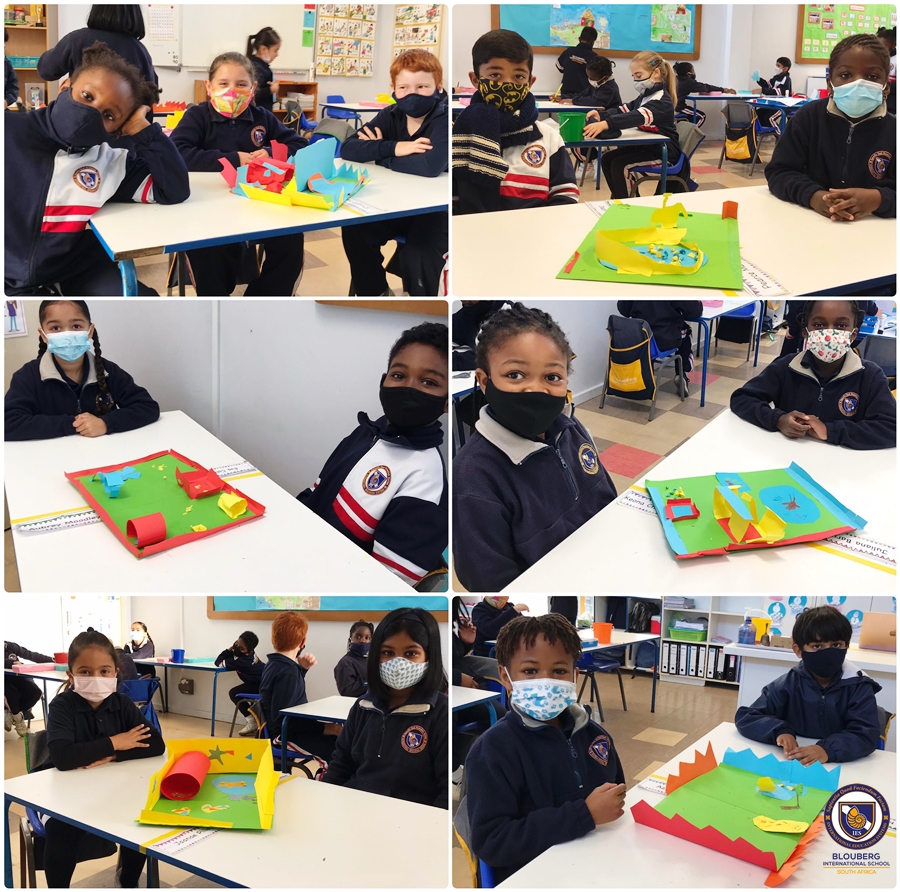
This term, the year 1 students have enjoyed the Science theme, Being Alive. The students have learnt how to identify if something is alive or not. It is alive if it grows, breathes, eats and reproduces.
This week we learnt about baby animals and how to care for them. The students had to choose a baby animal and decide what it would need to grow to adulthood. They then worked in pairs and built the nursery using lots of creativity in their designs.
Well done Year 1!
Ann Cordner
Year 1 teacher
Read More

Hooked On Books in Foundation Stage
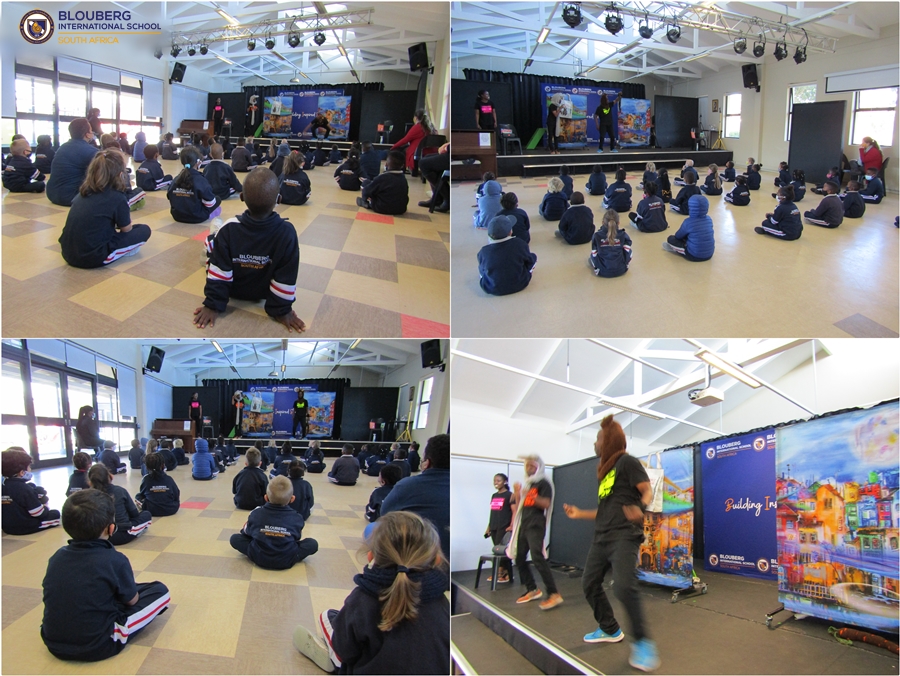
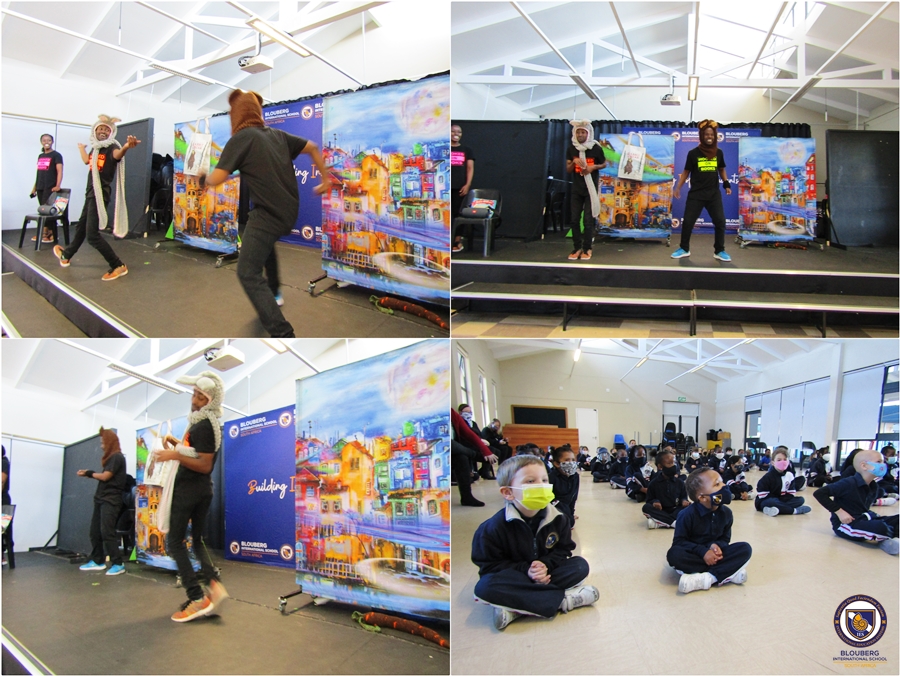
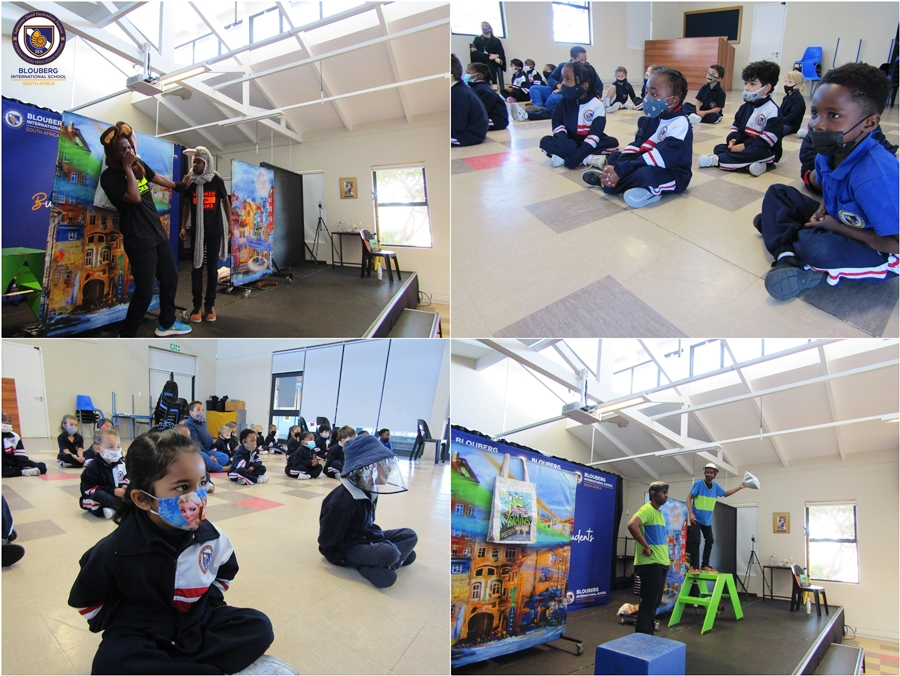
On Friday, 20th of August, we were elated to welcome the team from Hooked on Books to Blouberg International School. The annual event is a highlight in the school and it was with great excitement that the students lined up to go watch the performance in the Junior Hall.
Hooked on Books is a touring Educational Theatre Company that shares their love of books and stories with the students. Each year they choose a selection of stories and dramatise excerpts from the books. The actors are amazing and encourage audience participation, which of course the students love. They end each story on a cliff-hanger to encourage the students to go read the books for themselves.
It was a lovely day and we look forward to Hooked on Books visiting again next year.
Monique Meyer
Reception Year Teacher

Read More
Hooked on Books – Year 2 Reading Fun!
“Books give a soul to the universe, wings to the mind, flight to the imagination and life to everything” – Plato
While reading is obviously important in order for us to understand the words on the page, it is also the foundation of one’s ability to learn, and ultimately our ability to function accordingly in an ever changing society. As children learn they no longer have to rely on their parents to read things to them – one of the most natural ways of building independence and self-confidence. As they read they begin to understand the world around them.
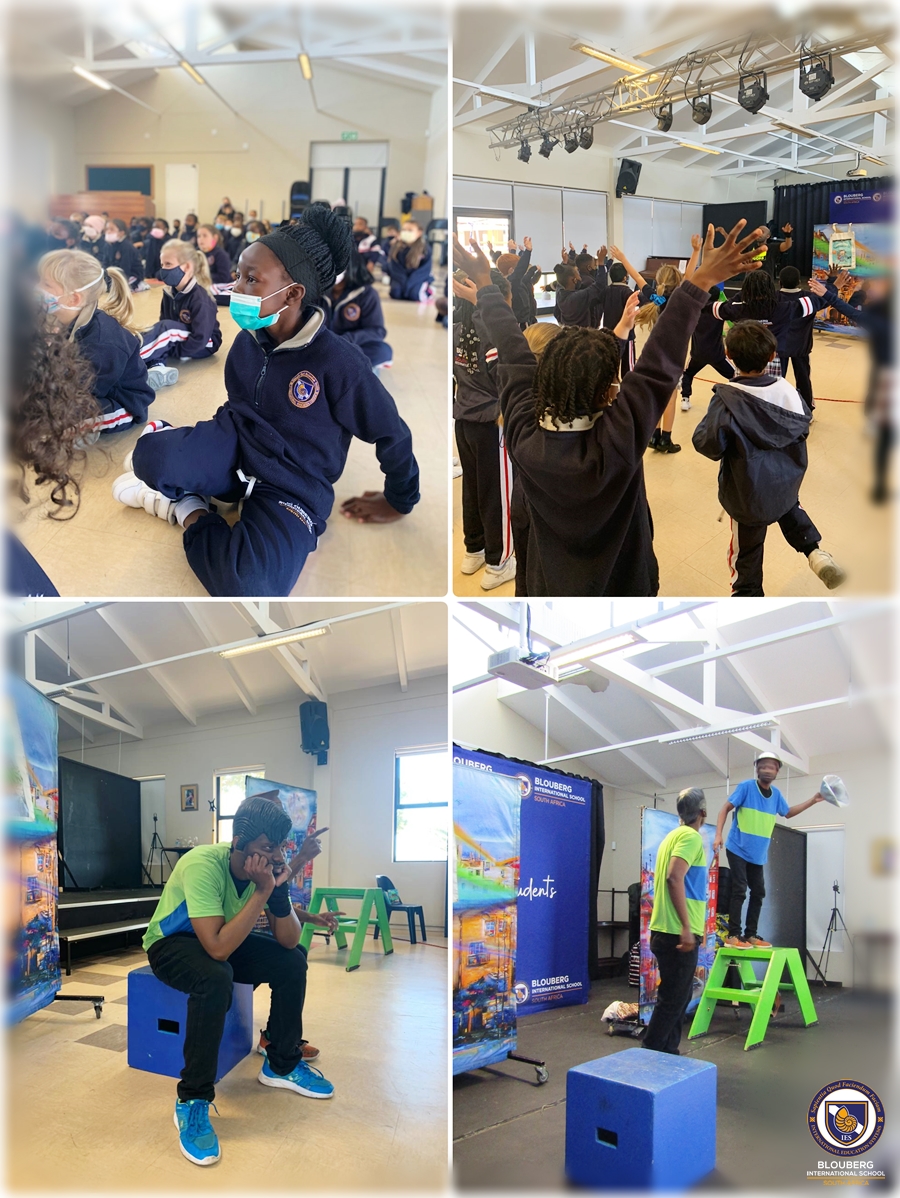
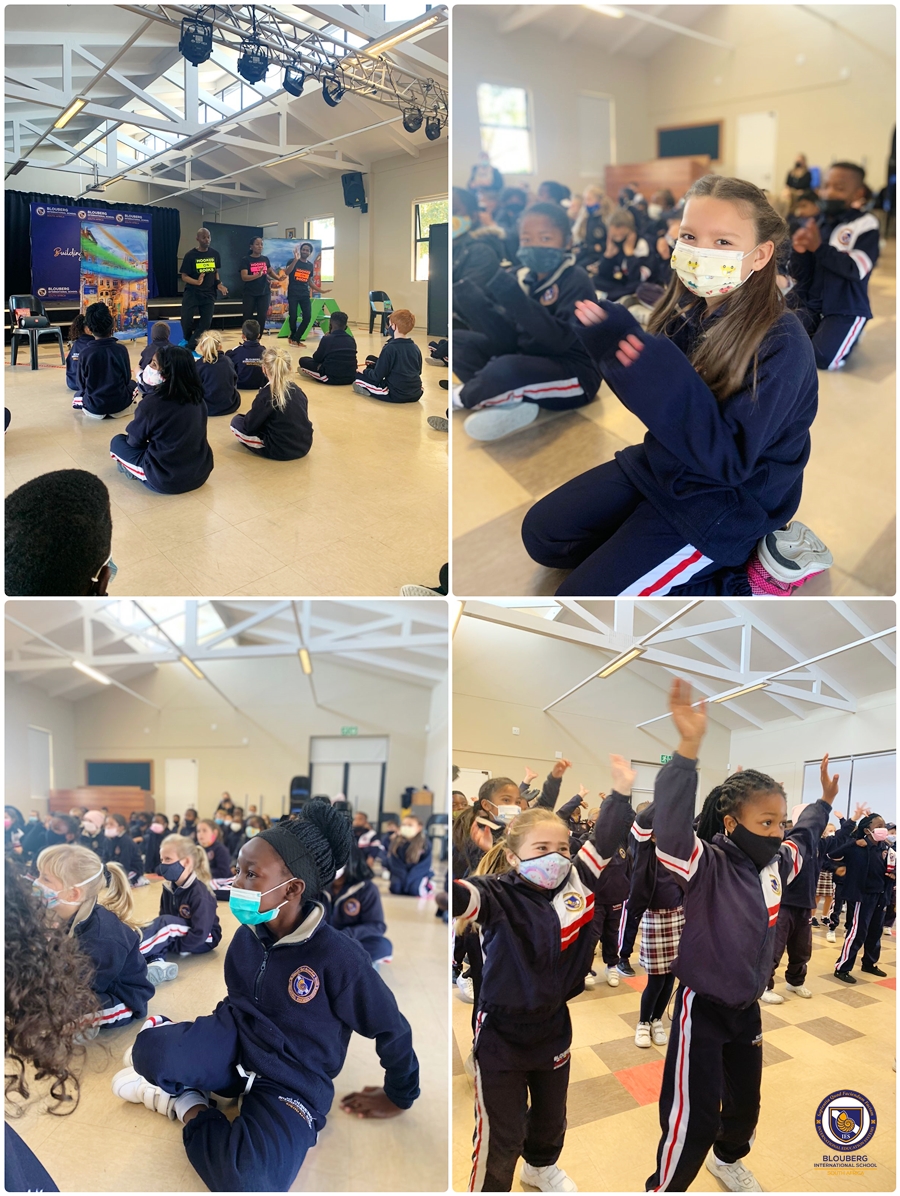
This week, our Year 2’s were lucky enough to experience the fun of Hooked on Books; is a touring Educational Theatre Company that has been igniting a love of reading in children across our country for the past 25 years. The Hooked on Books team dramatise book-trailers from contemporary children’s books, which change on an annual basis. The book-trailers provide a visual, dramatic preview of the book similar to that of a movie trailer. By leaving the story at a nail-biting cliff-hanger they entice the students to make a beeline for the library to find out how the story ends. Their secret is keeping the show simple and fun, encouraging students to use their imaginations to create make-believe worlds with colourful characters.
We had so much fun!
Siobhan Hendry
Year 2 Teacher

Read More

Our First Ever Blouberg International School Arts Eisteddfod!
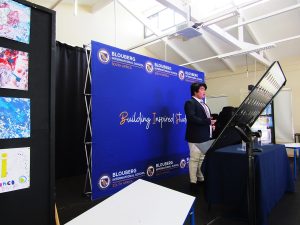
The BIS Arts Eisteddfod was created to offer students a chance to build confidence and skills through performing to an audience and provide feedback from external expert adjudicators. It is also an opportunity to watch and share with fellow musicians. We are excited for this to be the beginning of a new annual tradition at our school!
The Music category took place on Wednesday, 11 August 2021. As the music department, we aim to create multiple platforms for our students to perform in front of audiences and adjudicators, so that they have firm goals to work towards, and have the opportunity to learn something new and different from each experience. It is very important for our musicians to not only learn how to play their instrument, but to also learn how to become a confident performer.
We welcomed Ms Elizabeth Retief, head of music at Elkanah House, as our adjudicator for the music Eisteddfod. For the high school category, we congratulate Mateja Mitic, Faith Chivaka, Iviwe Matakata, Jéan Marie Schoots, Saumya Maharaj and Niklyn Pillay on their outstanding performances and results. A special congratulations to Zoe Onochie for winning the high school Eisteddfod Music category for 2021.
We hope to see and hear many more of our students in future Eisteddfods.
Heidi La Bercensie
Music Teacher – IGCSE Music

A special congratulations to Zoe Onochie for winning the high school Eisteddfod Music category for 2021.



Read More
Dynamic Classroom – Become actively involved in the process of learning!
One of the challenges after online teaching has been to bring the students back to be part of the dynamics of the class. We must adapt activities to help students continue to feel connected with their own learning, but also with their peers.
In my opinion, no online learning experience can replace the classroom dynamics that include student behaviour, emotions and imagination; giving space to the students for their self-expression.
It also includes a teacher’s way of presenting academic materials and students’ interactions. A teacher’s profession demands dynamism, you must also be organized, encourage participation, surprise your students, try new things, give them structure and consistency (beginning of the class routine, role-play lessons, oral projects) and challenge students to think through appropriate questioning strategies. We move from the simplest to more complex ones, helping them to build their confidence. (* Please see some examples below)
Teachers also need to promote relationships between students in the class, as with team work skills. These relationships need to be positive and productive, because they will have a big impact on the result of the group. We can make them positive by choosing useful aims, relevant topics, and appropriate and fun activity types. Effective teaching and learning cannot take place in a poorly managed classroom.
One recommendation is to make things more visual by showing your class ways they can use images to practice high-frequency structures in Spanish. For example, in my class, I worked on how to present the prepositions of place and present continuous form in a fun and practical way.
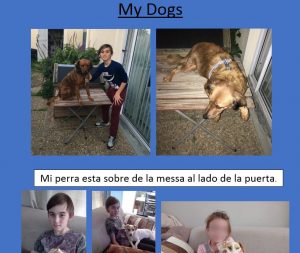
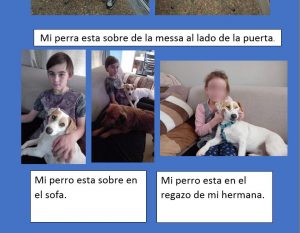
To expand on this idea, I asked the students to take “crazy” photos or capture funny videos of their pets during their holidays.
I asked students to describe in Spanish where the animals are and what they are doing in those images, using the prepositions of place and present continuous expressions that we are learning. These videos and photos have personal meaning to them, they are fun to watch and have an academic purpose.
In class, we display the images, and I start lessons by asking the students questions:
A simple yes/no question for the students to answer:
“Is the cat on top of the bed?” ¿Está el gato encima de la cama?
Then asking two option questions:
“Is the cat on top or under the bed?” ¿Está el gato encima o debajo de la cama?
Finally, more difficult and open questions:
“Where is the cat?” ¿Dónde está el gato?
Visual images have become an essential tool in language learning and such a big part of the new generations. They are so adaptable and help students interact with the Spanish language in multiple ways at the same time. During our Spanish lessons this last year, I have encouraged the classes more than ever to send me pictures or videos practicing everything that we have learned in the class.
Javier Vidal
Spanish Teacher
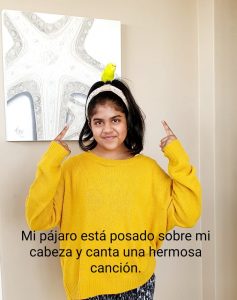
Here are some examples of the images that the students brought to the class or sent to Google classroom for their pets projects:
Read More

The Next World Leaders
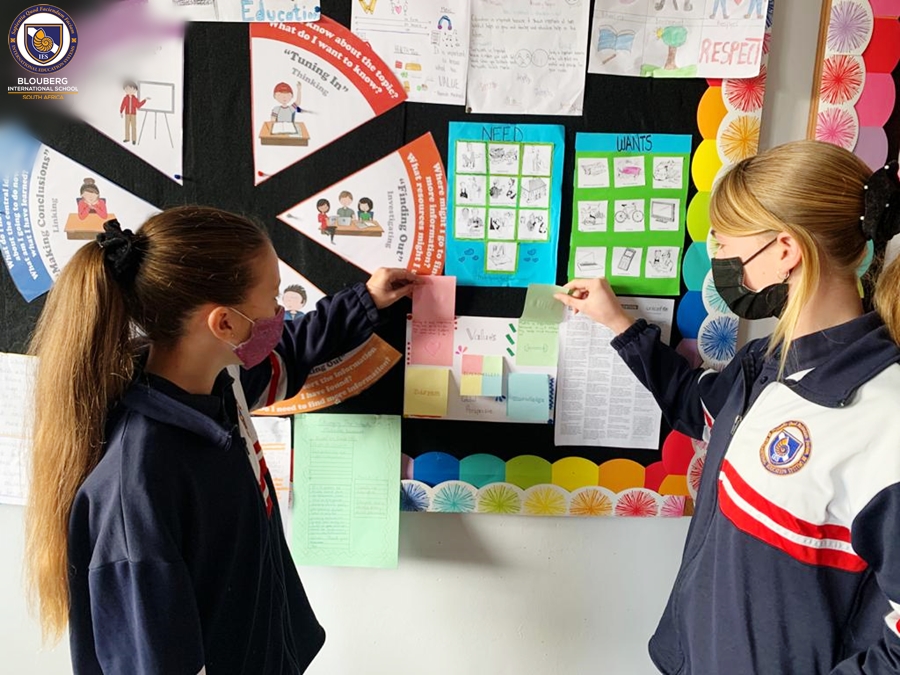
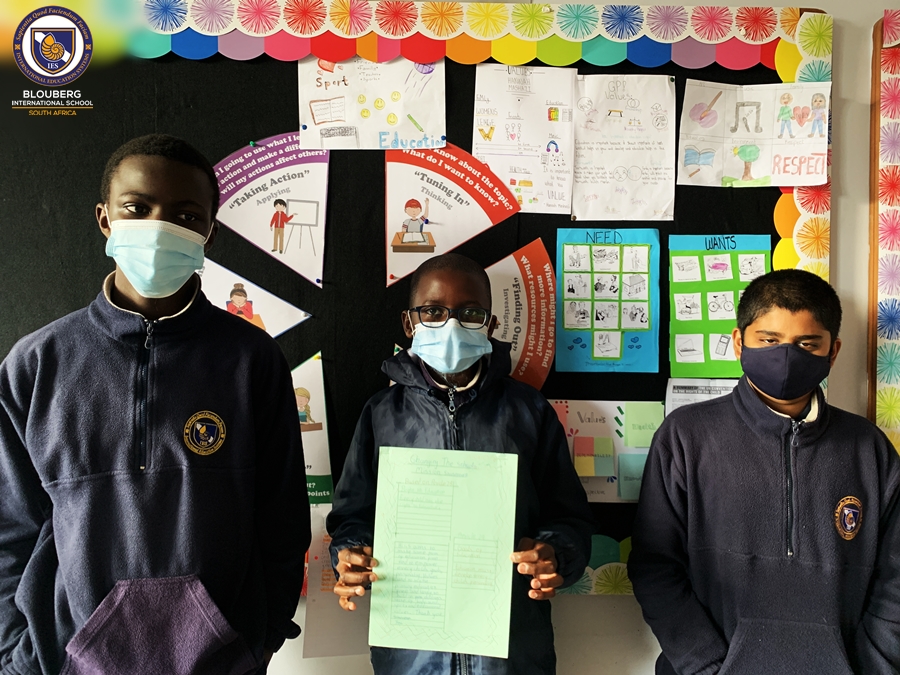
In Global Perspectives this term, the Year 6 students have been learning about values. To start off the discussion, they were asked to brainstorm their own personal values. They needed to design and create a poster illustrating which of these values were important to them and explain why. The students presented their posters in class, and wow, the Year 6 teachers were so impressed with their heart-warming presentations.
We then moved on to discuss the differences between ‘wants’ and ‘needs’ and looked through the UN Convention on the Rights of the Child. Once the students gained a better understanding of children’s rights, they explored how all their educational needs are met, and who is responsible for this.
They then had the opportunity to read our school’s mission and vision statement. In groups, they had a discussion on how the mission statement could be changed or adapted and made suggestions on what they would add to the school’s mission statement.
The Year 6’s will soon move on to researching information on school attendance worldwide and research an organisation that is helping to get every child into school. They will present their findings in class.
It is very impressive to watch the Year 6 students collaborate, develop and unify their ideas. We cannot wait to see what the next presentations hold in store for us.
Keep up the great work Year 6!
Katherine Nel
Year 6 Teacher
Read More

Wild Animals
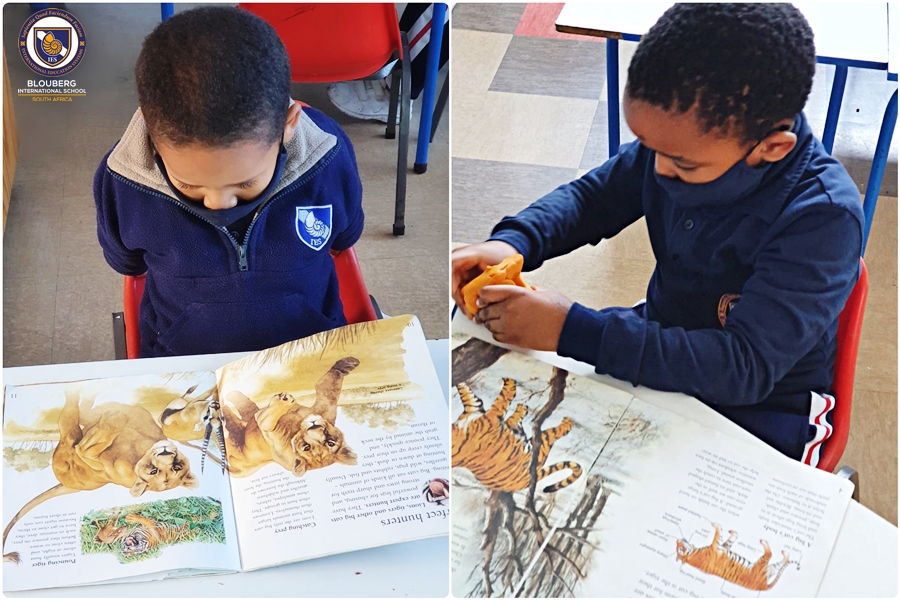
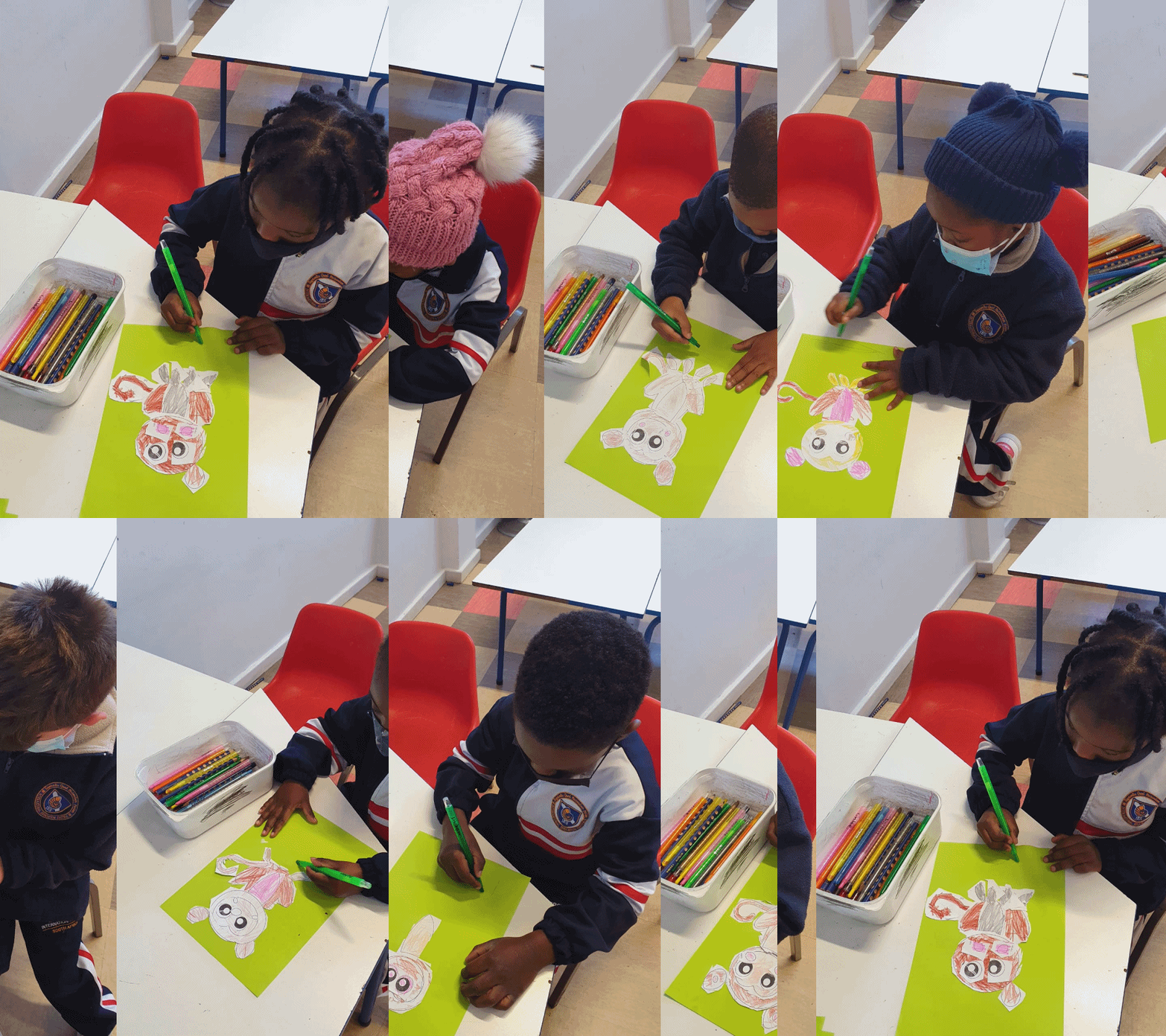
We are learning more about wild animals in Foundation Stage. Picture books with animal characters are firm favourites with the students and they simply love to observe animals on the whiteboard shows. We even made our own wild animals in Art.
According to an article in ONE GREEN PLANET, animals can teach us 10 important things:
- Compassion: Compassion is based on being able to understand the feelings of others/another.
- Patience: There is no rushing an animal to do anything they aren’t ready to do.
- How to live in the now: People waste so much time obsessed with following ‘what will happen next’ that we completely forget to enjoy the now.
- We’re all connected: Ecosystems only thrive when there is balance.
- Humans aren’t as different as we thought: If there’s ever been a time to re-evaluate our relationship with animals, it’s now.
- Respect your elders: Moving forward and advancing towards innovation is a wonderful thing, but we should also learn to respect the wisdom of those who came before us.
- Responsibility: Growing up with a pet has been shown to instill a deeper understanding in children.
- Listen carefully: Animals sit and listen before they react to situations, something we could surely all stand to do.
- Live lightly: Animals learn to live within their means.
- We must stick together: Being able to set aside differences and work together for the mutual benefit of our species.
Martie van Dyk
Pre-Reception Teacher

Interact 2022
My name is Rifqah Price and I have been a member of the Interact Club since I was able to join in year 8, 2018 and I have loved being a part of it. I have been able to watch it grow in size over the years and observe as the club comes up with new ideas on how to better the community, ourselves and help those in need. I have recently been elected as the new 2022 president of the Interact club and I am so excited to be able to continue the work of the previous presidents in reaching out to the local community and helping out wherever we can.
Covid-19 has made social interaction with the community quite difficult, but that just leaves room for more creative ideas to surface. I hope that in the coming year, I alongside the rest of the board members, will be able to become an integral part of the community again, not only reaching out to the main charity organizations, but also the lesser known ones, who don’t have as many resources at their disposal. I plan to make the effort to inform the club and the school about exactly who we are helping, what they stand for and in doing so we not only help those less fortunate, but are also able to unify the club, put a face to a name and effort into a cause. I know that with the help of 2022’s board members, we can grow the interact club even more in size and in perspective.
Rifqah Price
President of the BIS Interact Club 2022
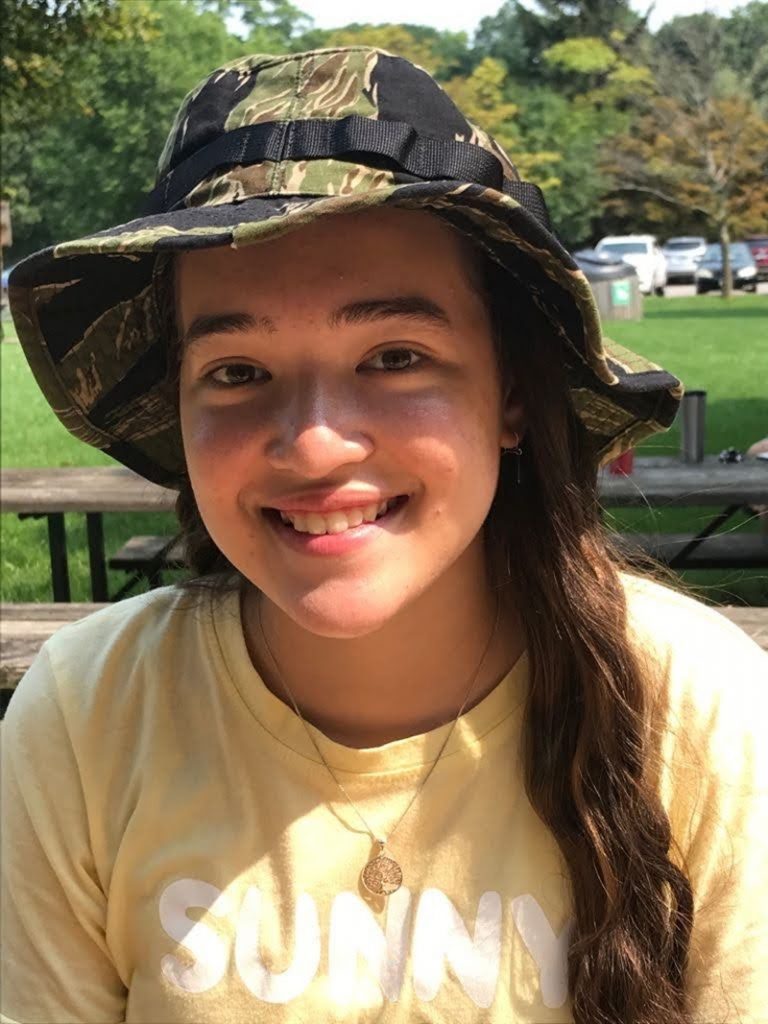
Rifqah is currently overseas with her family and has been doing e-learning with us until she can return to South Africa.

Read More