

Year 1 Outing To The Science Centre
A visit to the Cape Town Science Center is a highlight for many students. On Tuesday, 7 June the Year 1 students enjoyed the morning at the center.
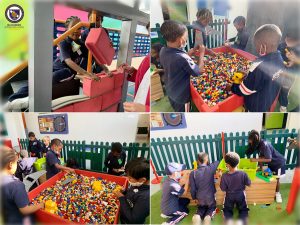
The students were fascinated to see the camera obscura where they saw a 360 view of cape town while sitting inside a dark room. They then enjoyed a lesson about shapes and had to complete a challenging shape sudoku. Working together to build a wall on the construction site was great fun; however when it came time to tidy up the students were not as enthusiastic.
The interactive exhibits allow the students to see how science works in the world around us. Finally, we had the Wizz, Pop, Bang Show, with lots of exciting chemical reactions making fire and sounds and the genie coming out the bottle had everyone enthralled.
The bus ride back to school was quiet and some even fell asleep after a very busy morning.
Here is what some of the students had to say about the Outing:
My favourite part is the … bottle rocket and the lighting box! (Ozioma)
I liked the food table and I liked the bottle rocket. (Leah Koopman)
I saw coloured fire and I saw the camera obscura. (Nathaniel)
I liked building a wall and mommy came with me. (Leah Karstel)
I liked the Lego site and I liked the speaking tubes. (Uche)
Ann Cordner
Year 1 Teacher and Key Stage 1 Coordinator



Read More
Happy Father’s Day
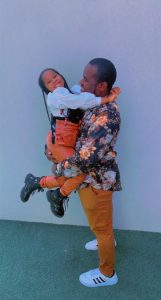
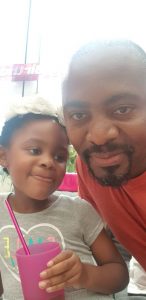
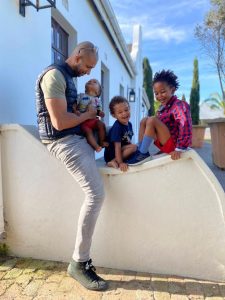
Father. Dad. Superhero. Protector. Best friend.
These are just a few ways that we can describe the most important men in our lives. Even as an adult, my dad is still my hero and I am still learning from him all the time. Father figures come in many different forms throughout the world and all of them represent beacons of light and a guiding path for those that they take care of.
In my Reception class, I asked the students some questions about their dads in preparation for Father’s Day this coming Sunday. Here are their responses:
How old is your dad?
Kopano: My dad is 44 years old.
Mahadhyuth: I don’t know – I didn’t ask him.
Lolwam: 14
Chimdindu: 60
Zande: 32
What does your dad do during the day?
Kopano: He showers and builds a library, church and school out of Lego.
Naif: He drinks Coke.
Chimdindu: My dad buys me stuff every day.
Bavani: He works and he goes to the shops and he takes my dog for a walk.
Isabella: He stays in bed or works with chicken.
What is your dad’s job?
Enhle: He sends messages for work.
Samuel: He works on his laptop.
Does your dad have super powers?
Naif: Yes, Sonic super powers.
Samuel: His muscles.
My favourite thing about my dad:
Enhle: He always let’s me play games.
Anam: Sitting down and watching movies as a family.
Bavani: For bringing me a dog.
Isabella: When he fetches me from school.
Is your dad funny? Why is your dad funny?
Purity: He tells me jokes.
Lolwam: No.
Amelia: Yes, he tickles me and tells jokes.
Anam: Sometimes, he tries to make puppets.
Zande: He plays tricks on me.
Emmanuel: He does magic tricks that are funny.
What is your dad’s favourite thing to do?
Purity: He likes to go camping.
Mahadhyuth: He loves to do work.
Amelia: Play with me.
Emmanuel: Work at the police station.
From the whole of the Foundation Phase we wish all of the Father figures in our lives a Happy Father’s Day and we thank you from the bottom of our hearts for all that you do for us!
Kim Hahn
Reception Year Teacher





Read More
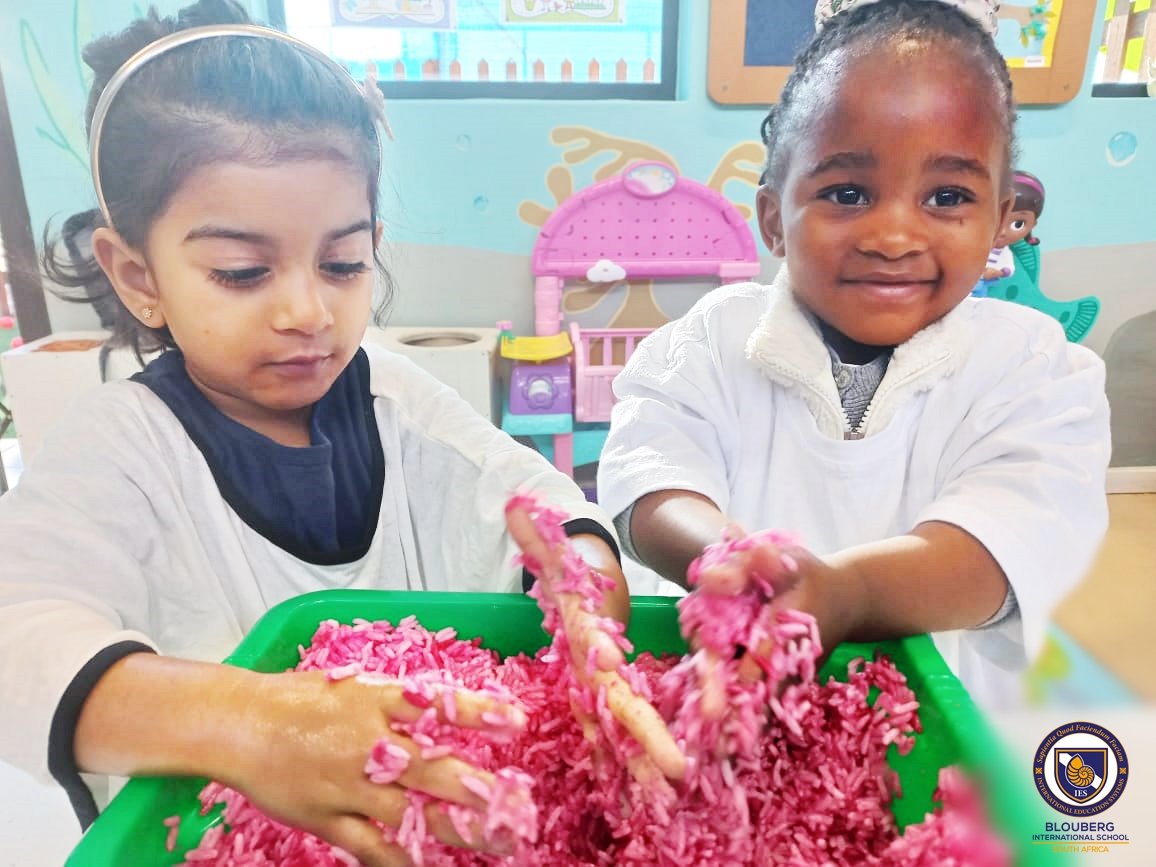
Sensory Day
Even though it was messy, and oh the clean-up was a delight, the toddlers thoroughly enjoyed every minute of exploring the colourful spaghetti, the mushy sago and the sticky rice. They were able to hop out of the ‘clean class’ box and just enjoy making a mess.
Sensory play is an important part of childhood and there are really no limits to what you can use in your sensory activities. However, nature and food can often be your best friend when it comes to sensory play.
To help you keep your youngster busy during the holidays, here are a few great sensory play ideas for home:
- For keeping their hands busy:
- Soapy Jars: Fill a plastic peanut butter jar halfway with water, a pinch of dish soap and food colouring. Seal it tightly, and let your toddler roll it/shake it around outside.
- To explore their sense of smell (ages 4-6):
- Smell it and guess: Blend up six different fruits/vegetables in small quantities and pour them into separate dishes. Allow your little one to taste and guess.
- For co-ordination and organisation:
- Alphabet scoop and transfer: You will need alphabet magnets or water-safe letters, a storage container, a wooden spoon, two dish buckets and water. Pour enough water into your container to allow the letters to float and allow your child to scoop each letter out individually. You can practice various beginner literacy activities with them!
- To assist with emotions, and to keep them calm:
- Place beach sand or regular sand into a big container and hide small toys in the sand. Make sure the toys are all of the same themes. Once they have been able to scoop out each toy, engage with them to create a fantasyland on the sand. It’s like a zen garden for kids.
Jo-Anne Dickason
Nursery Teacher


Read More

Figurative Language: Putting Words To Work
I walked towards the door, my shoes squeaking on the tiles like nervous mice. The door at the end of the corridor gaped open, the wind whispering secrets between the hinges. I reached out and gripped the door handle, the metal a chunk of ice on this wintry morning. I checked that I had my book, and slipped into the English classroom, ready for my descriptive language lesson…
This term in English, the Year 6 students have been learning about figurative language, imagery in writing and the plot elements in a narrative plot structure (rising action, climax and falling action).
Their focus has been to include figurative and sensory language when writing, to help their writing pieces to become more descriptive. They used tools like similes, metaphors and personification (figurative language) to help paint a picture in the reader’s mind. They didn’t just tell stories, they created worlds. By using imagery (sensory details) in their writing, they transported their readers far and wide, taking them on adventures where they could see, hear, taste, smell or touch whatever the characters were experiencing.
For their final writing task, the students needed to apply what they had learnt, writing a story chapter that included the rising action, climax and falling action of their story, as well as using figurative and sensory language to help their readers visualise their setting and action. Of course, stories don’t just write themselves, and sometimes starting a plot can be tricky. To give them a jump-start on choosing their setting, students were given visual prompts of various possible settings and sensory details that matched them. They also made use of a bank of resources for metaphors, similes, personification, synonyms and adjectives, which they could use to describe the feelings and actions of their characters.
The Year 6s really stepped up to the challenge, showing that they could work independently, use their resources effectively, and give meaningful feedback on their peers’ work. They created impressive writing pieces, which I thoroughly enjoyed reading!
-“Wet, heavy drops splattered all over, like paint messily across a canvas, as their fire was quickly dying.”- Nuraan Price
-“He could feel his tears welling up again. They blended with the rain, bucketing down.”- Siyana Manawar
-“He stared forward examining the crude, rusty train tracks that seemed to go on for kilometres before disappearing into the thick ominous fog. He pinched himself on his forearm, hoping that this was all a dream, but nothing.”- Sadie E’ Silva
-“Jannet woke up to a crack as loud as thunder and shot up as fast as an elastic band”. – Aimée Davies
Katherine Nel
Year 6 Teacher and KS2 Coordinator


Read More

Aftercare And Holiday Care
At BIS our main focus for Aftercare is to provide support for students when formal school activities close for the day. Some of the benefits and value that students receive when enrolled in our BIS Aftercare Programme includes:
- Basic homework routines support by aftercare assistant.
- Fun activities such as reading, drawing, arts and crafts, movies.
- Basic needs are met which includes safety, a snack, play time.
- Strengthened relationships with peers and more quality time to spend with parents at home, as homework and other activities are completed at Aftercare.
We also offer a fun, interactive and structured Holiday Care Programme, where extra-mural activities and recreation forms part of the daily routine.
Some of these activities include:
- Participation in sporting activities to strengthen and develop physical and team building skills.
- Learn life skills through participation in a range of informal and structured activities that teach children how to cope with everyday situations.
We have an exciting Holiday Care Programme planned for the June/July school holidays; enroll your child by clicking on the link below.
Avril Lai Wing
Aftercare Manager




Read More
‘X’ Marks The Spot
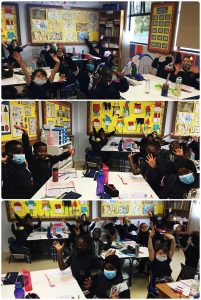
This Term in Geography, the Year 3 students have been learning how to read a map, what map symbols are used for and following directions on a map. They also learnt a great deal about grid references and compass roses. This all coincides with History where we are learning about ‘Explorers’.
When investigating map symbols, the students had to create their own map symbols for the classroom. Once they had completed that, they used those symbols to draw a birds-eye view of their classroom to show their knowledge and understanding of the concept.
We extended the concept by playing directions board games and completed a compass challenge game in groups.
The best part of the whole term was that each student was given a chance to create their own treasure map, and present an oral about their map explaining how to get to the treasure using directional language. Each map had to have an appropriate name, a key showcasing exciting locations, feature a compass rose for directions and footprints to the treasure (x marks the spot).
Students were allowed to stain their maps with tea or coffee and burn the maps to age them so that it looks authentic. I remember doing this exact activity in primary school, so I was very excited to see what each student came up with. I loved the various locations they used, like skull caves, waterfalls, sinking sand and volcanoes, only naming but a few. The Year 3 teachers are super proud of how much effort all our students put into this task. I am sure that you will agree with us when you see their beautiful maps.
We will continue exploring maps and atlases for the rest of this term while discussing the various famous explorers. I cannot wait to do the scavenger hunt and I am certain the Year 3 students will enjoy it too!
Wendy Menton
Year 3 Teacher

Read More

Year 2 Word Search Fun!
Word searches for children are available in a variety of themes and age-appropriate versions, which means that there is a word search out there for every type of child. Each word search features a list of words, some of which a child will be familiar with, and some of which will be new. The more a child encounters new words, the bigger his or her vocabulary will grow.
The following are the benefits of a word search:
- Provide hours of fun
- Improves vocabulary
- Improves spelling skills
- Can enhance productivity
- Provide a way for adults and children to bond
- Offers an appropriate way for children to socialize
- Develops problem-solving and pattern-recognition skills
- Nurtures an attitude of persistence
- Provide effective stress relief and working memory
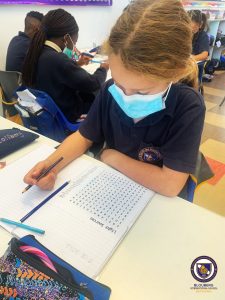
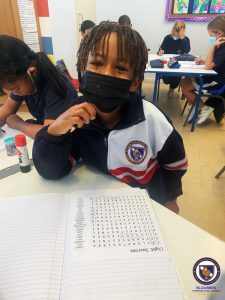
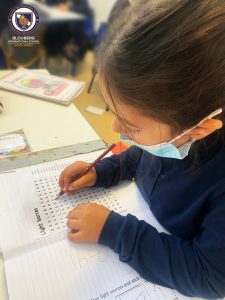
This week our Year 2’s had some fun doing a word search activity in their Science class. For Science this term we have been looking at Light and Dark Sources. We find that this kind of activity is a fun way to learn and also revise what we have learnt as well.
Siobhan Hendry
Year 2 Teacher

Read More

Assessments And Amphibians
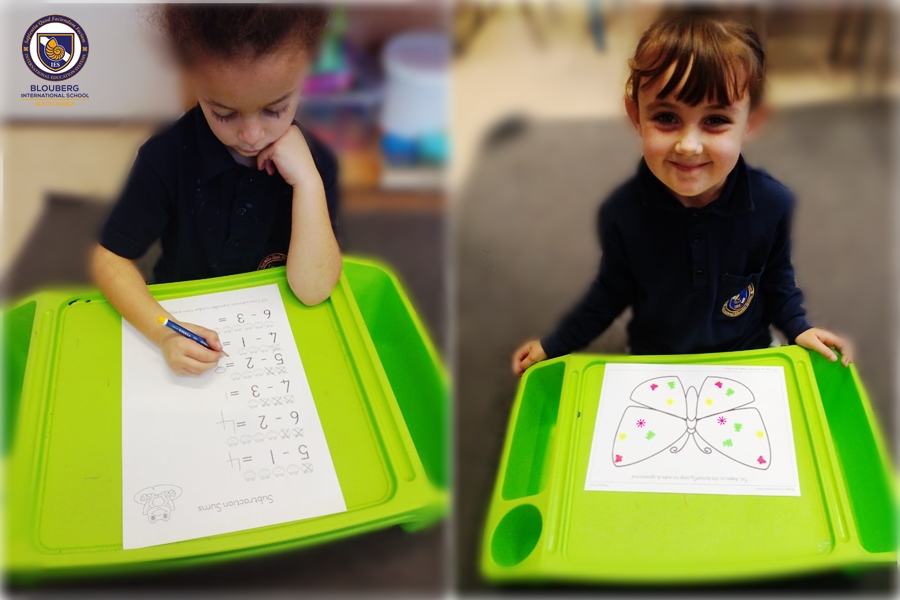
Over the last two weeks, Foundation stage have been doing their end of term assessments. Every day the students are learning new things and continue to approach each challenge with a positive attitude. The assessments have given each student an opportunity to show their teachers how much they have learnt this term and we are so proud of them.
Recently, Foundation stage have been learning all about amphibians. The students asked, what is an amphibian? What is the difference between a reptile and an amphibian? And what is the difference between a frog and a toad? They have learnt so many interesting facts, especially what makes a frog different from a toad.
Did you know that…
- Frogs are smaller and slimmer than toads and have a more pointed nose.
- Toads are much bigger and broader than toads and have a wider nose.
- A frog’s skin is smoother than a toad. Therefore, they need to live near water because they need to keep their skin moist.
- Toads have a hard, dry skin and don’t need to stay near water.
- A toad’s eye shape is also different from a frog’s. Frogs usually have big bulging eyes, as opposed to a toad’s, that is a bit more subtle in appearance.
- Frogs have long legs made for hopping and they can jump up to 20 times the length of their own body.
- Toads have shorter legs and prefer to crawl instead of hop.
The foundation stage students enjoyed learning about these interesting facts. We are confident that the next time they see an amphibian, they’ll be able to tell us whether it’s a frog or a toad.
Lauren Bloem
Reception Teacher


Read More
Bugs, Bugs, Bugs Everywhere…
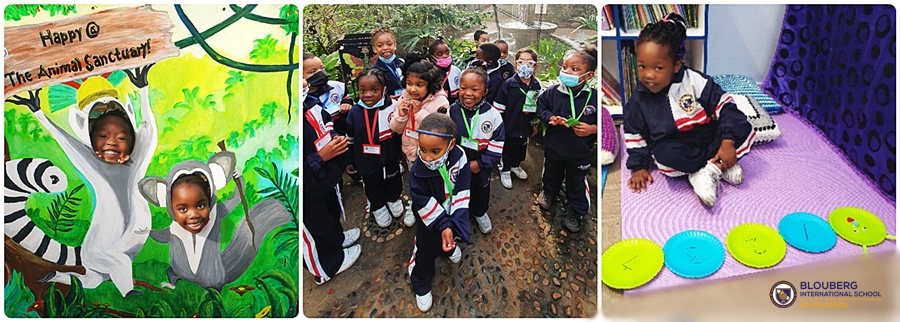
Learning about bugs is so much fun for our Foundation Stage students. Isn’t it funny how young students are just curious about everything and don’t have the grossed out reaction that we have as adults.
During the past two weeks we have been learning about all sorts of bugs and insects through hands-on learning activities.
Some of the activities we have done includes:
- Butterfly life cycle sequencing: The students practised sequencing the cards in the correct life cycle order.
- Bug or not sorting: Is everything that crawls a bug? Is everything with wings a bug? With a container full of toys the students had to investigate what it takes to be called a bug. This sorting game helps them learn to scientifically classify and observe.
- Butterfly Symmetry Smash: We cut the butterfly out of card. The students then squirted paint onto one side of each butterfly. We folded the butterflies in half and smashed the paint.
- Which bugs can fly: The students learned which bugs could fly and which could not.
The students enjoyed looking at books about bugs and learning interesting facts about bugs by watching Blippi Wonders.
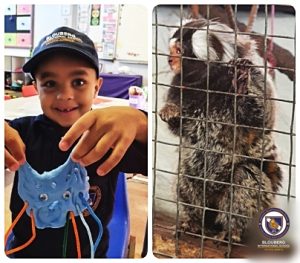
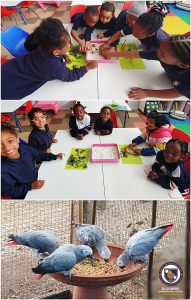
On Friday, 27 May, the Pre-Reception and Reception students went on an educational Outing to the Exotic Animal World. The students saw different types of insects, spiders, reptiles and animals like: birds, iguanas, tortoises and meerkats to name a few. The students enjoyed an interesting and informative lesson about reptiles. It was an amazing experience for the students to end off our theme.
Martie van Dyk
Pre-Reception Teacher

Read More
A “Safety Circle”
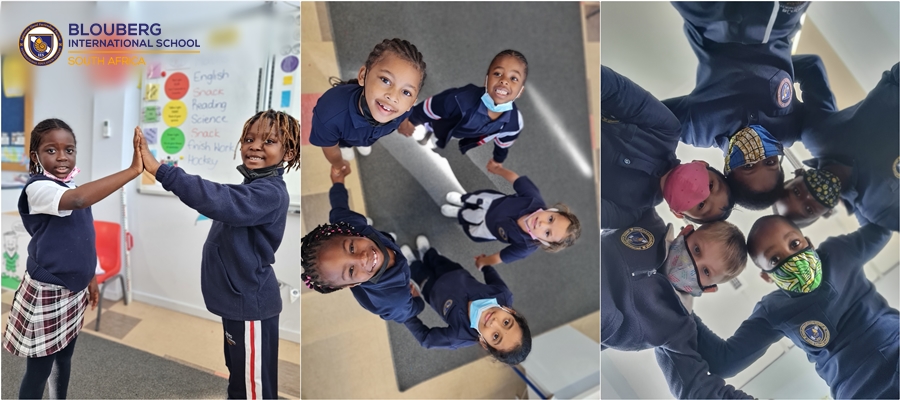
The Year One teachers focused on teaching the students about their safety circle this week. We feel that it is important that our students have a safe group or safe circle that they may approach whether they are in trouble, unhappy, worried or just want to talk. A safe group or safe circle is the few most trusted people in our student’s life.
It is important for students to have a safety circle. Students should be able to name five people on their hand who they can trust and rely on. The Year One students discussed who is in their safety circle, the reason for a safety circle and to know when to use their safety circle.
We encourage parents to communicate with their children to see if anything is disturbing them and to continue to check in on them from time to time without being too controlling. We have noticed that being casual in the way one communicates with children will give them the courage to open up to you more.
“At the end of the day, the goals are simple: safety and security.” – Jodi Rell.
Year 1 Teacher
Erin Hierse

Read More