

Year 2 Word Search Fun!
Word searches for children are available in a variety of themes and age-appropriate versions, which means that there is a word search out there for every type of child. Each word search features a list of words, some of which a child will be familiar with, and some of which will be new. The more a child encounters new words, the bigger his or her vocabulary will grow.
The following are the benefits of a word search:
- Provide hours of fun
- Improves vocabulary
- Improves spelling skills
- Can enhance productivity
- Provide a way for adults and children to bond
- Offers an appropriate way for children to socialize
- Develops problem-solving and pattern-recognition skills
- Nurtures an attitude of persistence
- Provide effective stress relief and working memory
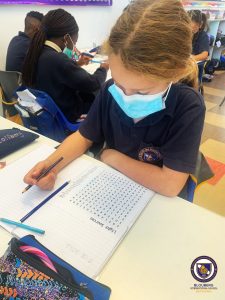
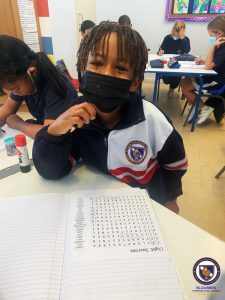
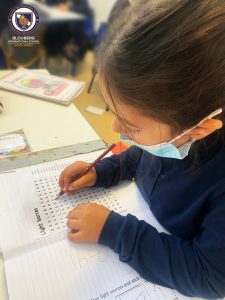
This week our Year 2’s had some fun doing a word search activity in their Science class. For Science this term we have been looking at Light and Dark Sources. We find that this kind of activity is a fun way to learn and also revise what we have learnt as well.
Siobhan Hendry
Year 2 Teacher

Read More
A “Safety Circle”
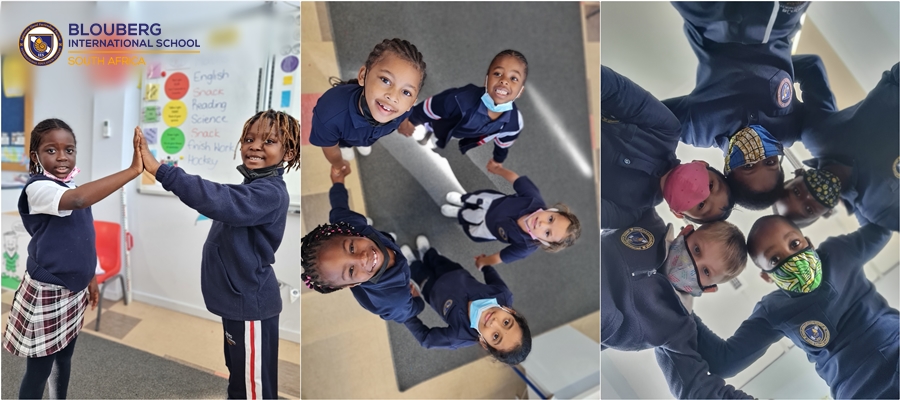
The Year One teachers focused on teaching the students about their safety circle this week. We feel that it is important that our students have a safe group or safe circle that they may approach whether they are in trouble, unhappy, worried or just want to talk. A safe group or safe circle is the few most trusted people in our student’s life.
It is important for students to have a safety circle. Students should be able to name five people on their hand who they can trust and rely on. The Year One students discussed who is in their safety circle, the reason for a safety circle and to know when to use their safety circle.
We encourage parents to communicate with their children to see if anything is disturbing them and to continue to check in on them from time to time without being too controlling. We have noticed that being casual in the way one communicates with children will give them the courage to open up to you more.
“At the end of the day, the goals are simple: safety and security.” – Jodi Rell.
Year 1 Teacher
Erin Hierse

Read More
Creating 3D Shapes

During the term, the Year 4 students have been learning about 3D shapes, forming part of their Mathematics curriculum. Through research, collaboration and investigation the students learned the names of these shapes as well as their properties.
As part of a class project, students were given the task of creating a structure/model using no less than three different 3D shapes. They had to construct each shape, using nets, before assembling their project. Our budding engineers worked tirelessly to come up with amazing designs and we could not be any prouder.
After the construction was complete, students had the opportunity to share their project with their peers in an oral presentation.
We are very proud of our students.
Yvette Fourie
Year 4 Teacher
Read More

Learning Using Models And Research
Learning is more than remembering terms and concepts. It is the start of a lifelong adventure of inquiry. The Year 3’s have been challenged and assisted in their research by using technology, observations, and secondary sources to study the Earth, Moon and Sun. What they have discovered, they have demonstrated using models.
Last Monday, the early risers had the privilege of seeing a Blood Moon. Aside from watching and discussing a YouTube video to learn what causes a Blood Moon lunar eclipse, they took photos and created a couple of beautiful collages of the Cape Town May 2022: Blood Moon.
The iPads have also been used to research lengthy websites and discover the 7 ways the Earth is round. They did this by simply using the subtitles as a reference. We also explored how to use Kiddle – a search engine designed for kids to use to find information quickly. We then moved on to using YouTube as we mined for diamonds of information on a Dr Bionics video about the structure of the Earth.
Of course an interactive way to display our knowledge, is to use models.
This term we have used our hands to demonstrate how the primitive (reactive) brain and the prefrontal cortex helps us focus and solve problems.
We made interactive lungs with cards, balloons and straws to show how air comes in through our nose and mouth and inflates our lungs.
We are especially proud of our plate models, which show the phases of the Moon; the names of each stage as the Moon rotates on its axis and orbits the Earth. Some students were even able to show where the Sun would be during a lunar eclipse.
Information that students find for themselves, discuss, and demonstrate their understanding of becomes a lived experience instead of a book study.
Carey Schoots
Year 3 Teacher


Read More

Having Fun With Shadows
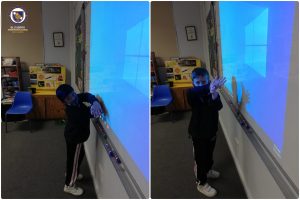
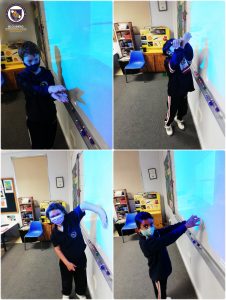
The Year 2 classes have been learning about light and dark during their Science lessons. They have looked at different light sources and can identify those which are man-made and those which occur naturally.
We had some fun during our last Science lesson, using shadows to make funny creatures on the whiteboard, using the light from the projector to create shadows. My class decided that this was the best Science lesson. There was much laughter as their classmates tried to guess what the creature made by their friends were.
Kim Coetzer
Year 2 Teacher
Read More
Marvellous Materials
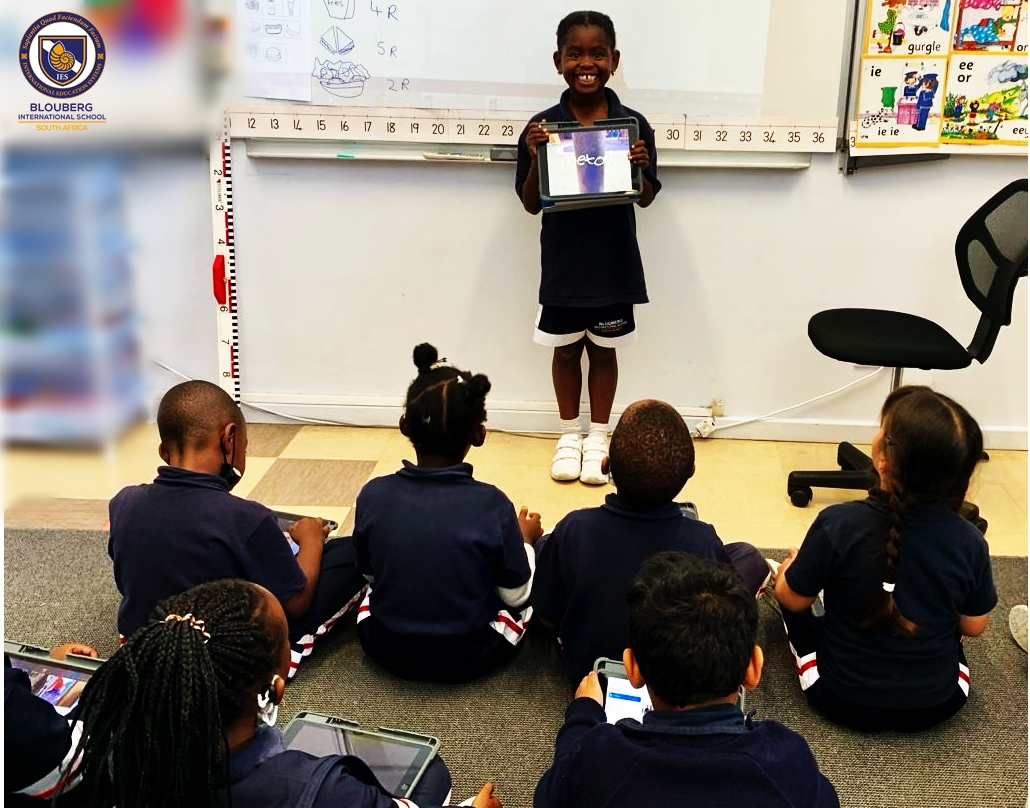
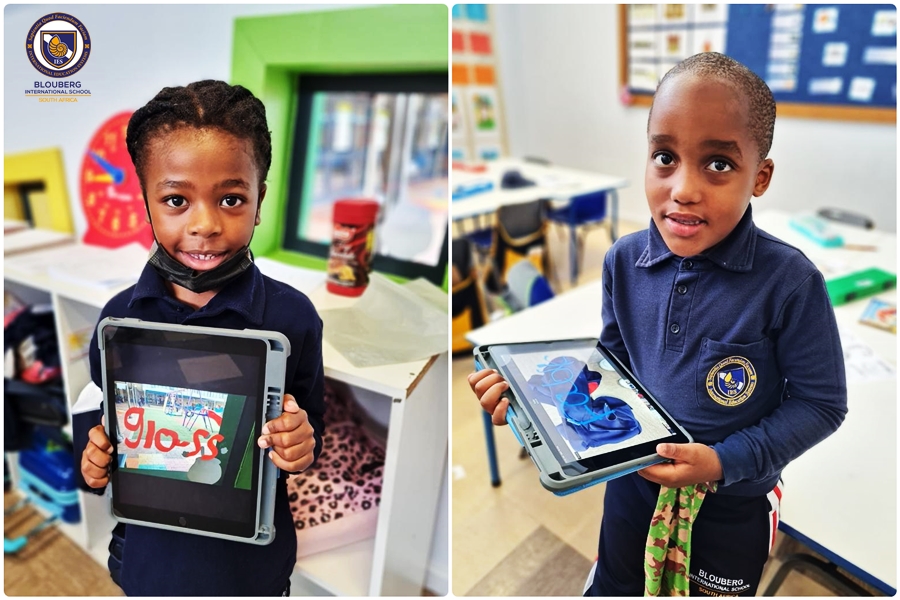
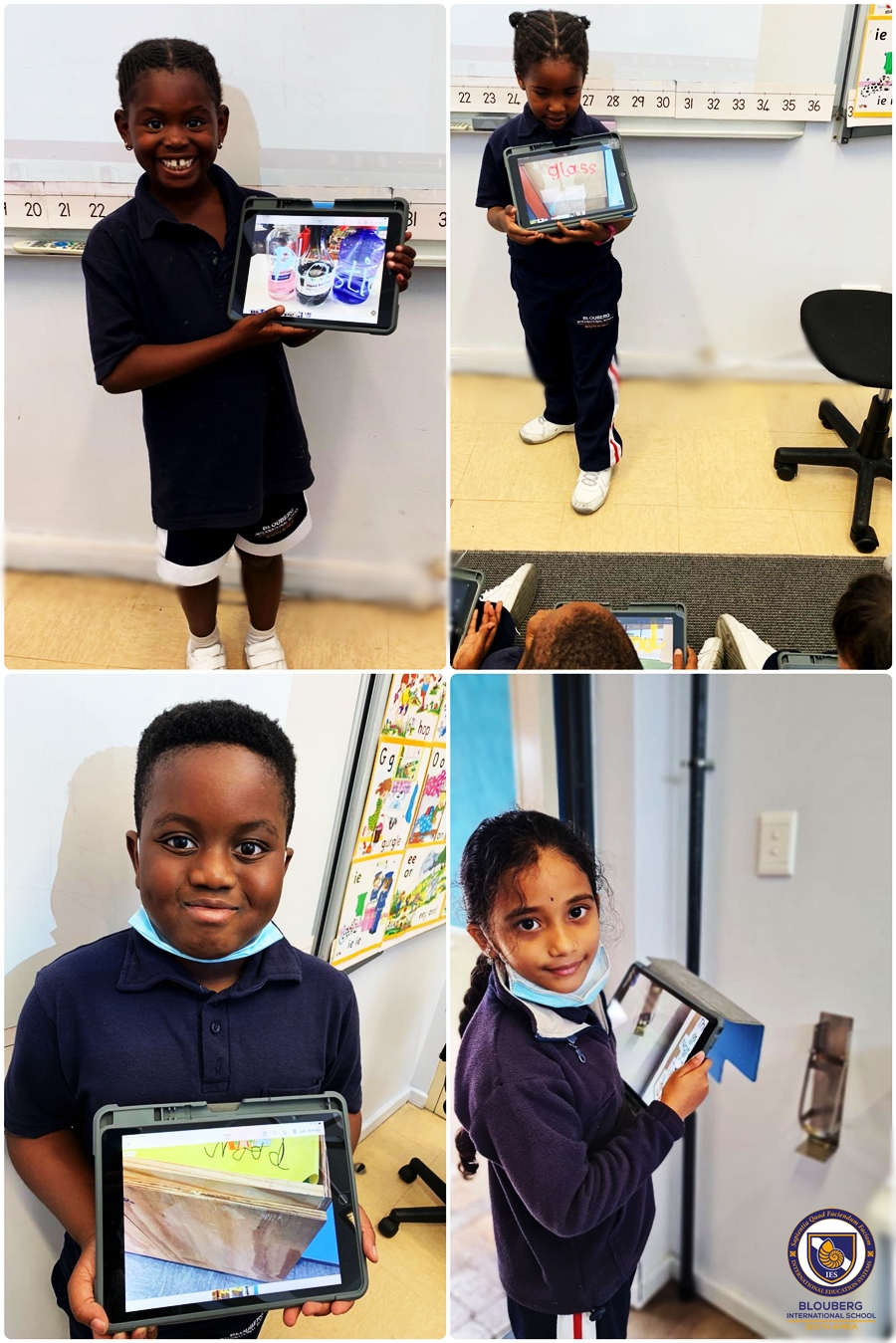
We have been learning about marvellous materials in our Science lessons in Year 1. Exploring, investigating and identifying different materials is all part of the fun and we have been very busy this week.
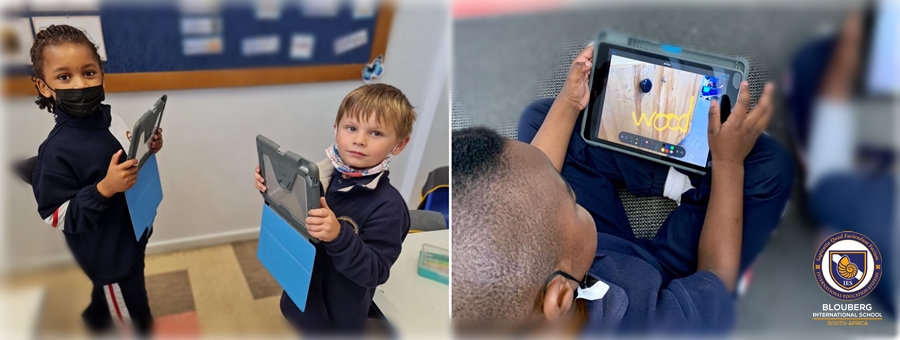
We used the school Ipads to identify and take pictures both inside and outside of the classroom of 4 different types of materials, “glass, plastic, wood and metal.” The students then edited and labelled each picture they took and presented it back to their friends in class.
We were very impressed by the discoveries the Year 1s made and how well they recorded their findings.
The students thoroughly enjoyed these interactive activities!
Charlotte Cronje
Year 1 Teacher

Read More
Multiplication Scavenger Hunt
In Mathematics, the Year 6’s have been learning about multiplying whole numbers by two digit whole numbers. They have learnt about many different methods to work out their answers such as the Grid Method, Expanded Written Method and Formal Written Method. This week they put all this new information to the test and took part in a Multiplication Scavenger Hunt.
The Year 6’s received clues such as:
– I’m a four sided shape but people call me five.
– Here we hold meetings and celebrate stars of the week. To find the next clue go take a peek.
– With clothes of green, and bark not of a dog. Search me for the goods, I sleep like a log.
– A site of work and getting things done, and making calls for your sore tum.
– Back and forth I take you, higher and higher you fly. At time you can push me and I might make you cry.
Can you figure out where these locations are?
When they arrived at their destination, they would find a task card waiting for them with a number sum or a word problem on it. Once they worked out the correct answer they could come back to me and receive their next clue. This turned into a competition, with each group trying to get to as many task cards as they could.
This was a lot of fun and a more hands on way of learning. It allowed the Year 6’s to show off their newly learnt multiplication skills, as well as practice other skills such as: team building, patience, group work and time management skills.
Brittney Hakime
Year 6 and 7 Mathematics Teacher


Read More

Investigating Capacity
The most effective way for students to learn new concepts is by taking part in practical investigations. This makes their learning more meaningful.
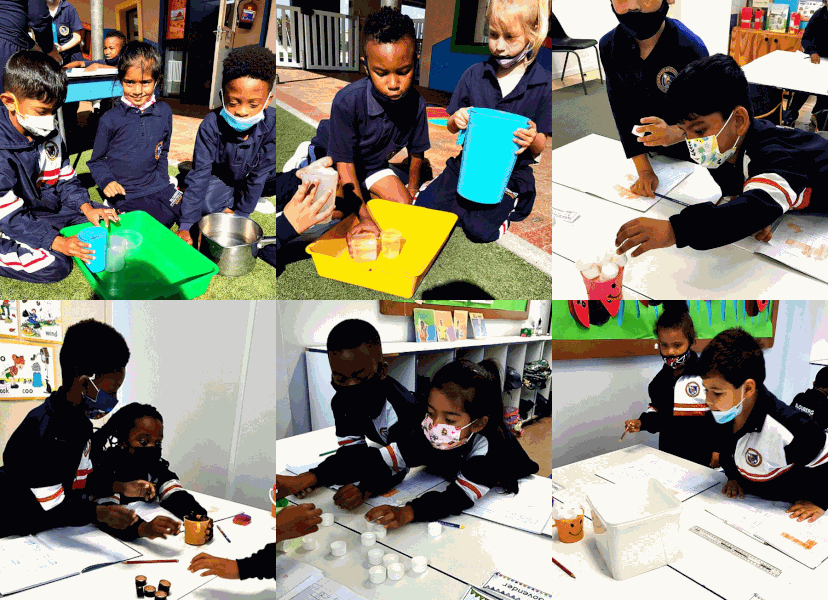
This week, the Year 1 students have learnt that capacity means how much something can hold. Our classes had great fun investigating this concept and conducted various experiments.
Fortunately, the weather was kind to us and the students could go outside and use the water troughs to do practical activities. They had to find out how many cups of water could fill a pot, beaker, vase etc. In groups they had to predict which container could hold the most water and then find a way to prove their answer. This required them to communicate their ideas and reasoning with their peers.
In class we learnt that capacity is not only about how much liquid a container can hold, we filled cups with bottle tops and corks. First making an estimate and then checking, by counting the number of bottle tops and corks the cups contained.
An important part of investigation is being able to accurately record your findings. The Year 1 students did a wonderful job of recording their findings after conducting all the capacity experiments. Well done Year 1!
Ann Cordner
Year 1 teacher
Read More

Sound
“Tell me and I forget. Teach me and I remember. Involve me and I learn”. – Benjamin Franklin.
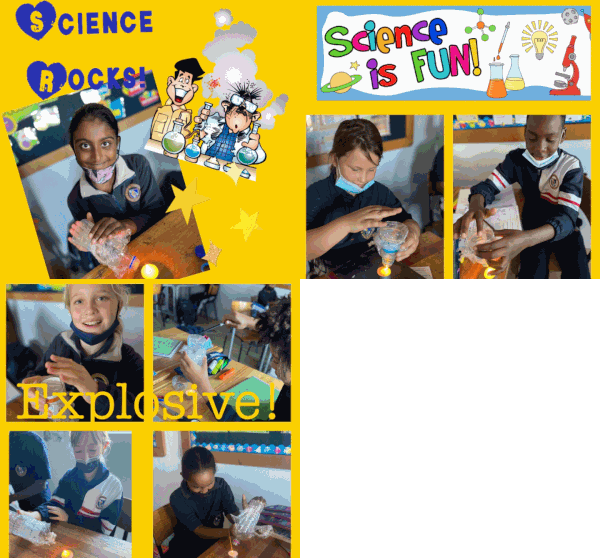
Our budding scientists in Year 5 have been learning all about how sound is created. As stated in the quote above by Benjamin Franklin, the best learning takes place when students are actively involved in the learning process. Hence, it was time for our students to put on their scientist hats and participate in some thrilling scientific experiments in class!
As seen in the pictures below, each student had to stretch a piece of plastic film tightly over the open end of a plastic bottle. They had to then light a small candle, causing endless excitement amongst the students! It was then that the fun started. The aim of the experiment was to test if sound vibrations travel through the air, as we cannot see them with our own eyes. If this theory was indeed correct, the flame would flicker when they tapped the bottom of their bottle!
And…EUREKA!
The experiment was a success and as any accomplished scientist would do…the experiment was done repeatedly and with much amazement by each student! After all the excitement, the lesson was concluded with some serious reflection, thinking, debating and discussion about our findings.
The best way to learn science is by doing science and to never stop questioning!
Jennifer Rose
Year 5 Teacher


Read More

Bright Science Sparks
“The Shadow Proves the Sunshine” – Switchfoot
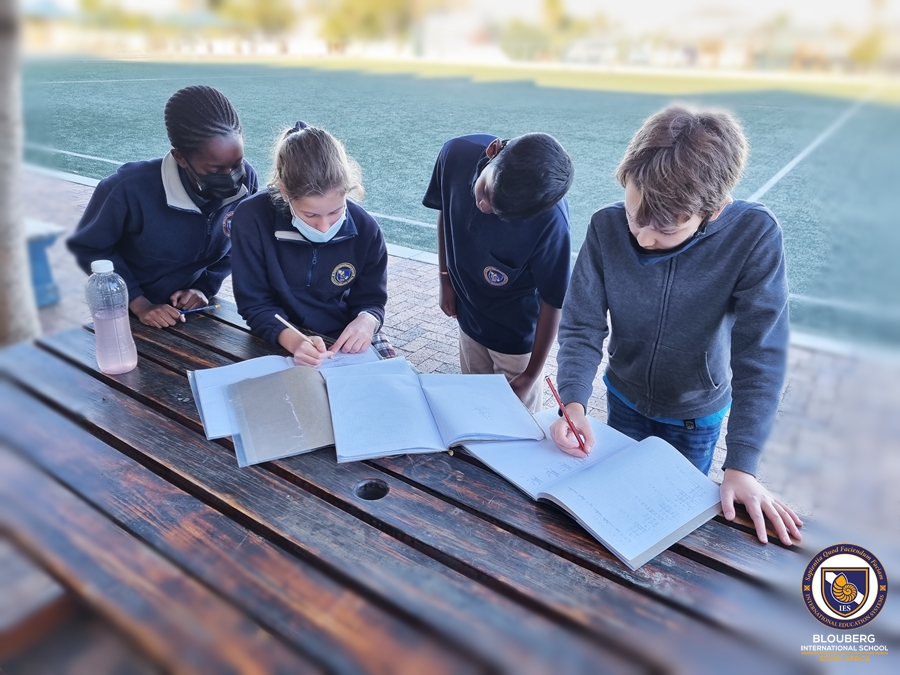
The year 4’s have just completed a week of shadow investigation. On Monday morning we set out with a mission to discover how shadows move and change throughout the day. We started our lesson in groups by answering questions about shadows and light, discussing what we already know and what we still need to learn. It was key for every group to cooperate with one another by being polite and kind to the other members of the group. Sharing and taking turns was also a key factor in working towards a group agreement on their answers.
Our research starting point was making predictions about how the shadow would move or change. A simple upright pencil on cardboard was all we needed to set this test in motion. Our first observation was that light always travels in straight lines. Anything in the way would cause a shadow. Throughout the day, in fact every hour, we witnessed that our shadow moved to the east. Our pencil shadow was long in the morning. As the day progressed the shadow became shorter, being the shortest at noon. After midday the shadow of the pencil slowly grew in length again.
Our testing was not yet complete! Working in groups again, we investigated which objects were transparent, translucent and opaque. We also discovered that we could change the size of our shadow by moving closer or further away from our light source. After collecting and recording our observations over the course of the week, all our findings were crafted into games.
Looking back over this week it is clear that every Year 4 student has taken ownership in this investigation. In return, this will create a sure scaffolding for future light exploration.
Carol Blake
Year 4 Teacher


Read More