
CREATIVE WRITING
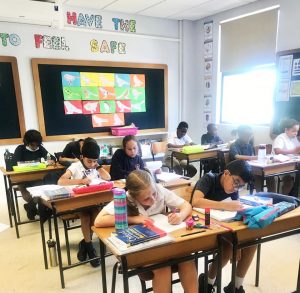
The Year 4’s have been expanding their creative writing skills by working on descriptive introduction paragraphs to a fantasy story.
Mrs. Mahomed’s students have excitedly taken up the challenge and have created some fantastic introduction paragraphs that will leave you wanting to hear the rest of the story.
“The sky was all shades of purple and pink. The wind was pumping. Cassie, a little eight-year-old girl was walking outside in her garden when she came across a seemingly endless tunnel, it was made of what was thought to be trees. The trees were alive, they had a mind of their own and they were muttering. Just then the wind started to blow so hard that it almost blew Cassie away while her long blonde hair and baby blue dressed swayed in the wind too. Just then, Cassie heard a voice calling her from the tunnel.”
Written by Isabella Heidmann (Y4NM)
“It was a Winter’s morning when suddenly a figure dashed passed the window. I barely recognized what it could be but I do remember it was misty blue in colour and had large wings. A strong and glorious body with magical snowflakes that dazzled from it. Wherever it went Winter followed. It almost looked like a dragon. Its body was covered in sharp icicles. It was truly a magnificent sight and I wish I could see the dragon one more time.”
Written by Sachin Gramoney (Y4NM)
“Long long ago in the midst of time there lives a dragon, a quite small dragon. It lives in the bone chilling Winter months where freezing winds howl through the night and snow falls through the day. The dragon sleeps through the warm months and is awaken on the first day of Winter. Today is that day! He comes out into the fridged world and spreads his large wings to fly.”
Written by Eshwar Mudaly-Jansen (Y4NM)
“It was a dim and cloudy night in the city, a huge shadow had appeared out of nowhere. “A dragon!” shouted a civilian in fear. It had blazed through the big tall buildings of the city, crushing and wrecking everything in sight.”
Written by Caleb Ajayi (Y4NM)
“I am going to tell you a tale about the snowflake dragon. You see, deep in the snow forest where cold breezes and heavy snow storms live you will find the snowflake dragon. Don’t go there unless you dare. There’s poisonous snow snakes and wild wolves. It is dangerous everywhere. The wolf’s breath is as cold as dried ice and he breathes hot snow. When you get caught in his breath you will disintegrate.”
Written by Chloe Stewe (Y4NM)

Read More
MARHABAN BIKUM FAA MISR (WELCOME TO EGYPT)
Salim walakum. In term four, in some of our subjects, we are covering the topic of Ancient Egypt. This is by far my favourite term of the whole year. Not only because it is the most exciting term, but also I can talk about Ancient Egypt all day, every day. I am certain that my passion around this topic has certainly infected the students in my class. They are even selecting readers in the library around the subject to find out more.
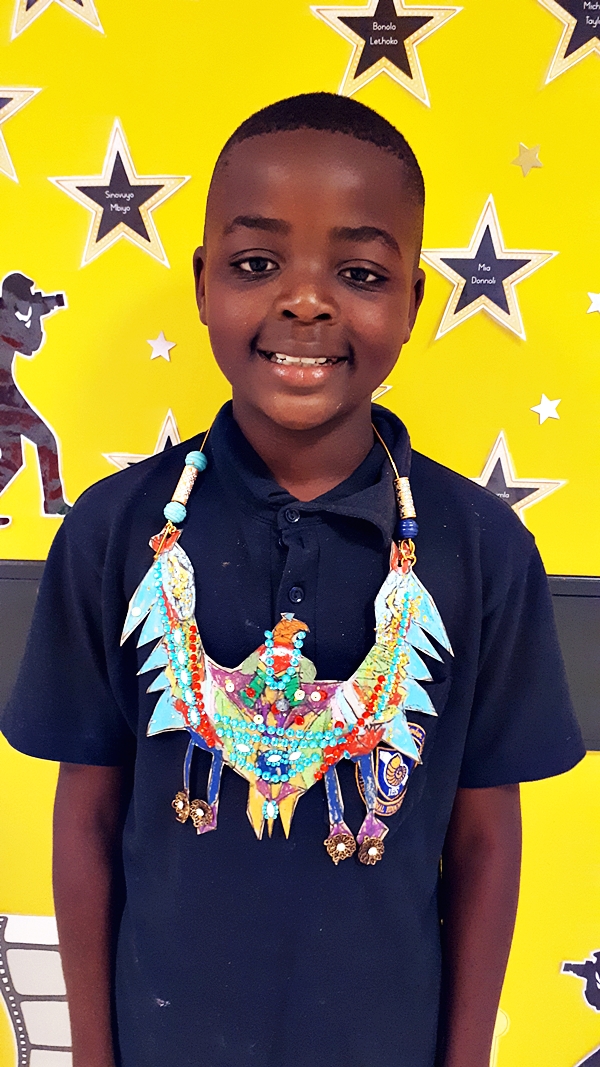
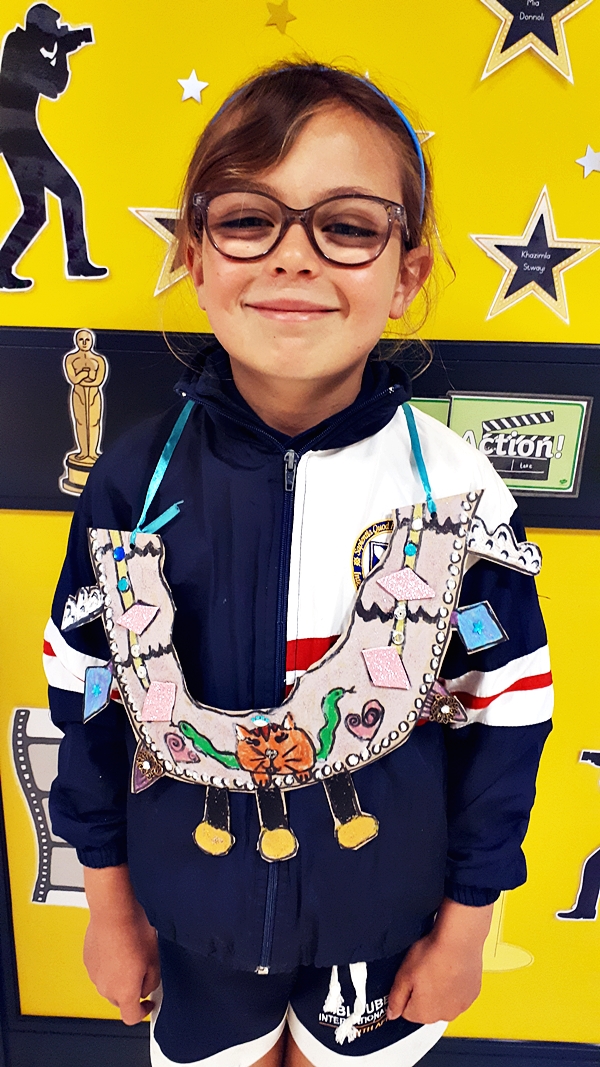
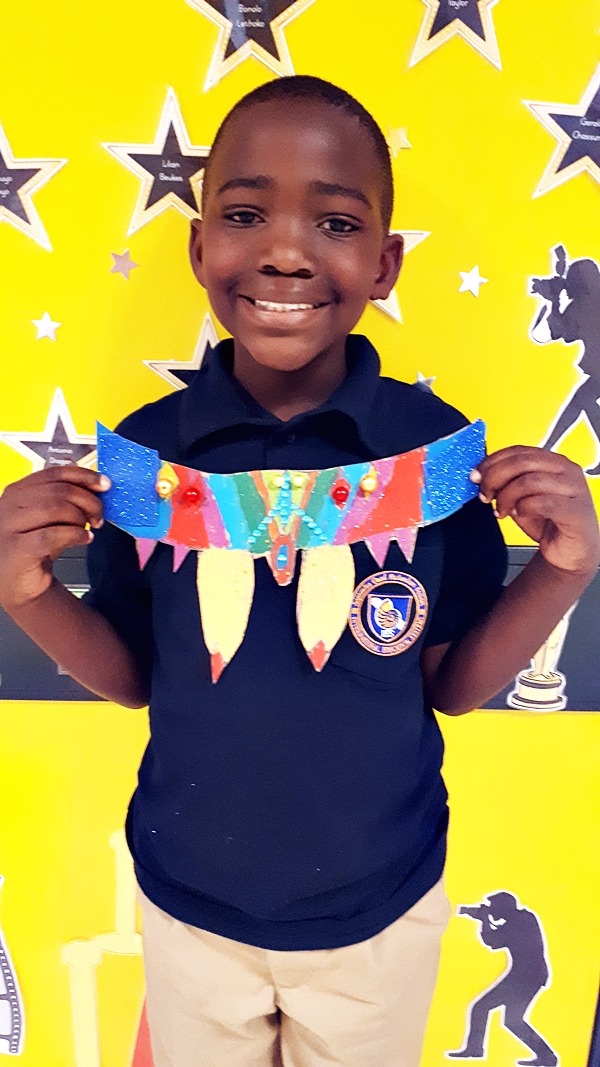
In English, we are reading stories, completing comprehensions and writing sentences about Ancient Egypt. In History and Geography, the students are doing research and completing a poster and presenting an oral using various topics, like Pharaohs, Gods and Goddesses, Mummies, these are only but a few examples. In Art and Design, the students have drawn Ancient Egyptian pots. For the last two weeks, they have been designing Ancient Egyptian necklaces, fit for a Pharaoh.
The Year 3 students spent a lesson drawing and colouring in their necklaces with pastels to brighten up the necklace. They then spent another lesson embellishing their necklaces with old jewellery, beads, sequins and glitter. I have to say, this year’s necklaces have truly outshone previous years. I was so proud of how each child planned their necklace with outmost care and precision, and took the time to ensure that it was their best work. I will leave you to decide which ones are the best!
We are all looking forward to the next Ancient Egyptian project!
Wendy Menton
Year 3 Teacher




Convincing Careers
Year 5s started with a new topic in Global Perspectives for Term 4, called Will a Robot Do My Job?
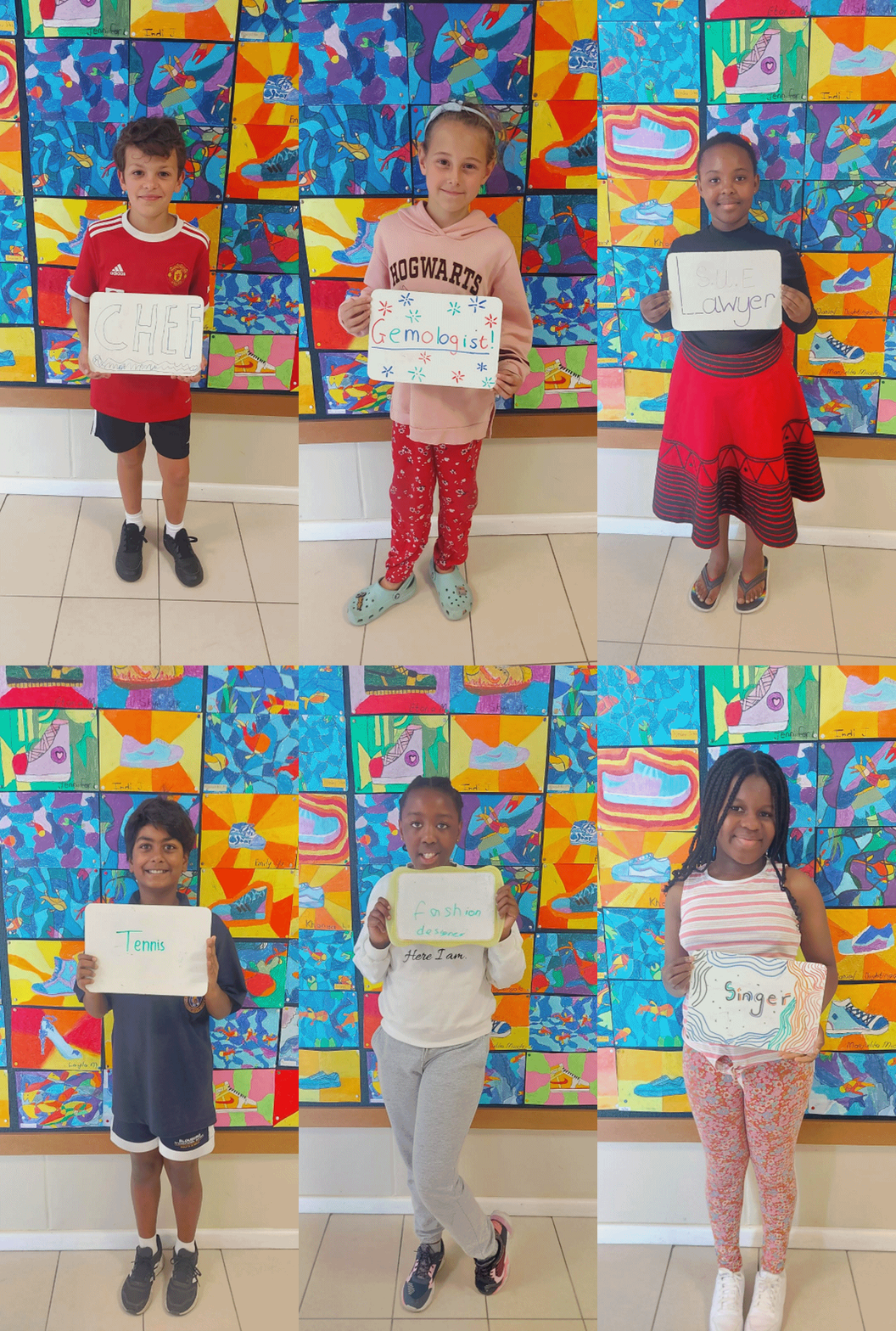
Students had to identify the career that they would most like to pursue as an adult, giving reasons for their choice. They had to use a KWL chart to help them think about the career they have chosen:
- K – They started by completing the “What I know” column with any information that they already have about their chosen career (for example: the skills and knowledge they think are needed to do the job, and any qualities that are required).
- W – Students then completed the “‘What I want to find out’ column with any questions about their chosen job that they want to find the answers to. They shared their questions with other students in groups, and discussed where they might be able to find the answers.
- L – We will research these questions during the next lesson and complete the “What I’ve learned” column.
As we continue with this unit, the students will also have to come up with convincing arguments as to why or why not a robot will be able to take over their job one day.
“The only way to do great work is to LOVE what you do.” – Steve Jobs
Take a look at the exciting careers some of our students would like to pursue one day!
Ria du Plessis
Year 5 Coordinator
Read More
Year 6 – Term 3 At a Glance
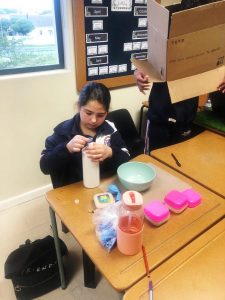
Our year 6 students enjoyed an exciting and adventurous term. Throughout the term, the students broadened their knowledge by learning about fractions, circuits, ecosystems and more. They developed insight into the educational struggles of others around the world through the inspirational story of Malala and got a taste of entrepreneurship by designing and creating products from sustainable materials.
During our insightful skills periods, the students became aware of good online conduct and how to use social media in a positive manner.
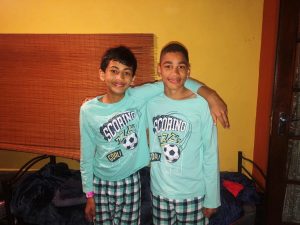
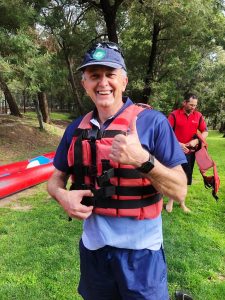
As the year 6 students will become the leaders of tomorrow, they went on camp at Bonamanzi. Not only did they learn to become independent, but also discovered which qualities are vital to be a good and influential leader.
Tired does not even begin to explain how they felt after they returned from camp. They went river rafting, created flags, competed in various group activities and went night walking, where they discovered scorpions, as well as the importance of covering your legs to avoid pesky ticks. Snacking was of utmost importance – who knew that 11-year-old students could eat so much!
The students also came into personal contact with the wild side of camping, with mosquitoes that must’ve originated in the Jurassic era, big and sneaky, causing them to all return home, looking like they might have the plague – they definitely would’ve made quite an impact on dot day! Poor Miss Nel injured her foot while running, having to hop along after the students as they ventured out and about.
Ending the term on a high note, the students hosted their very first student led conference. During this conference, the students chose which work they were most proud of during the term and presented it to their parents themselves. They were able to explain to their parents what they had learnt during the term, as well as how they improved and what they found interesting. Both the students and the parents thoroughly enjoyed this special bonding time together.
As another term ends, the year 6 students will definitely be able to tick off a few things from their bucket lists – yes, pun intended.
Rochelle Oosthuizen
Year 6 Teacher




Read More
Keep Calm And Create A Calm Space
Emotions play such an important role in our lives. It helps us to think and behave in certain ways. They help us to build relationships, avoid or resolve conflicts better. Emotions help us make decisions for the future and helps us cope with what we are dealing with during the day.
We start feeling emotions from when we are little, and as we grow and mature, we learn how to identify them far better and hopefully become more skilled in how to express them appropriately. With practise we get better at understanding what we are feeling and why.
Just for a moment, think about what you did today versus what you did yesterday. Did different emotions on different days, allow you to behave in different ways? Are you more tolerant today than you were yesterday? Have you smiled more today than yesterday? Have you made some rash decisions based on how you were feeling? Have you made the best decisions you could have made so far this year?
Emotions can last for a second or for an hour. They change constantly throughout our day. Emotions are part of a person’s character. Without them we would be robots.
We read emotions from facial expressions, body language, hand gestures, tone of voice and even eyes. Notice the feel of a handshake, a hug or a touch. These are many cues that help us to pick up on someone’s emotional wellbeing.
Many adults today find it difficult to identify what it is they are really feeling, let alone be able to express their emotions appropriately. Am I angry or just irritated? Am I happy or just proud? There are so many emotions that are closely linked and can be misunderstood. There are so many different emotions that sometimes it can be impossible to recognise them all. It can also be very confusing and extremely challenging.
Being able to accept what you are feeling allows you to become more self-aware and self-compassionate. I know this can sound all airy-fairy, but being able to have a good emotional intelligence, to me, is far better that having a good IQ. This will help you in all aspects of life, in the workplace and in relationships that you build along the way.
Using a feelings wheel helps us to open up our feeling’s vocabulary and learn to understand the extent of them a lot better. Once you have used the feelings wheel for some time, you won’t need to go back and look up what the feeling is, you will identify it straightaway.
There are many students today that need assistance with feelings and emotions, and need to learn some healthy strategies to overcome or face them head-on.
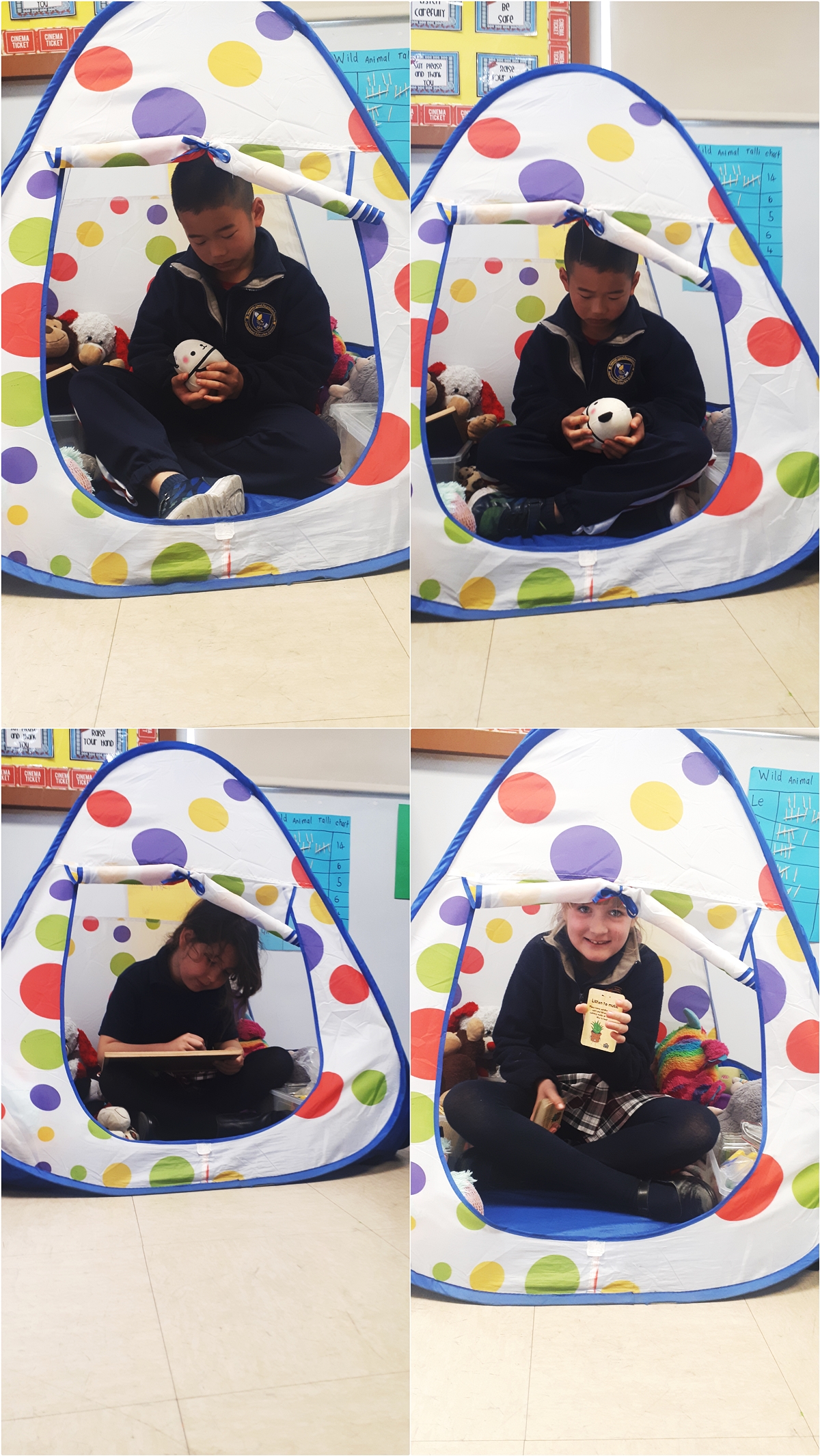
I have a number of feelings wheels and charts around my class to help my students with their emotions. I have a dedicated calm space for my students to retreat to whenever they feel overwhelmed or need a place to ‘check in’ with themselves.
You can create a calm space in your own home for your children, or even for yourself. When children see that you use the space, it allows them to realise that we, as adults, also have emotions and sometimes need to refocus and recentre.
This calm space is different to a time-out space for consequences. It is a place of safety. Children are not to be sent there by a parent, rather it must be a child’s choice to go there. You can suggest it, but it should not be enforced. This space does not have a time limit.
Decide as a family, where this calm space will be. Decorate it together if that’s something that they might like. You can even give the space a name.
Leave them alone in their space to reflect, to let out some anger or other emotions. Try not hover around them or speak to them. Allow them this time to be on their own.
You can include some calming tools in your calm space to help them with self-regulation. Some good ideas are therapy putty or a stress ball to squeeze, a liquid timer or a glitter jar to look at, books to read about emotions, calming cards or positive thinking cards, a teddy bear, or some simple calming toys, such as a Rubik’s cube, that keep their minds busy. Some nice, calming smells can help too. I use lavender in my class, and my students love rubbing it onto their temples. This relaxes them completely. Believe me, I have used it several times!
Embrace your emotions, and talk about them with your family, your friends, your colleagues. The more we accept that we have them and that they are a normal part of our lives, the more skilled we will become, and your EQ will be what people talk about instead of your IQ.
Wendy Menton
Year 3 Teacher

Read More