
Skills Programme
We are pleased to share with you some exciting news about a Year 6 skills lesson that took place this term. Mrs. Oosthuizen taught the students how to sew buttons on clothing, and we are thrilled to say that it was a great success.
The children were provided with needles, buttons, thread, and cloth, and were given step-by-step instructions on how to sew a button. Although some students struggled with getting the thread through the needle at first, they quickly overcame this challenge and progressed to sewing their buttons with ease. Mrs. Oosthuizen, Mrs. Kirkaldy and even Mr. O was on hand to offer extra help to those who needed it, ensuring that everyone was able to complete the task successfully.
We are particularly proud of two students, Alistair and Nivad, who went the extra mile with this lesson. Alistair brought his own pants and button that he wanted to mend, and Nivad was so inspired by the lesson that he sewed a miniature pillow the next day.
Sewing is a valuable life skill that can come in handy in many situations, and we are confident that the Year 6 students will benefit from this lesson for years to come. We are grateful to Mrs Oosthuizen for her dedication and hard work in preparing for this lesson, and we hope that the children enjoyed it as much as we did.
In one of the future lessons, we would like to teach the students how to change a plug. If parents have any extra plugs or cables they can spare, please send them to school so that we can use them for the lesson.
Vihann Oosthuizen
Year 6 Teacher
PHOTOS: Year 6 Sewing Skills Workshop


Read More
Geography in High School
This term has really flown by, and we are already looking forward to test week coming up. This term, each year group covered a wide range of topics. It is wonderful to see how each group embraces every topic and enthusiastically takes part in class discussions.
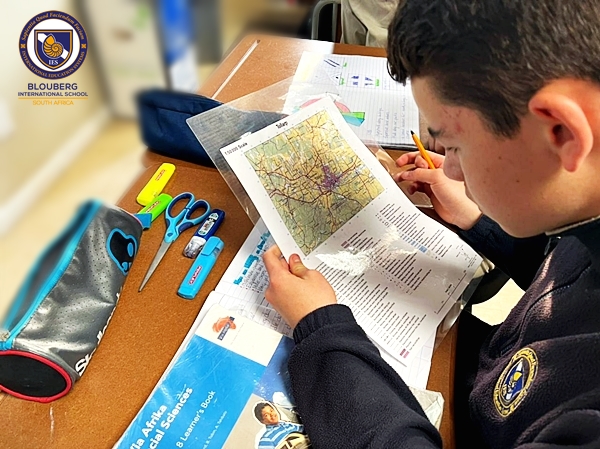
The Year 7 group focused on the population concepts and what affects the growth rates of different countries. Year 8 studied settlements, their patterns and urbanisation. The Year 8 group was introduced to similar maps as those at IGCSE level and had to identify settlement patterns on the map. These topics are linked to the IGCSE Geography syllabus.
The current IGCSE Year 9 group are currently busy with the second theme of their syllabus. This is mainly focused on the natural world we live in. We have covered plate tectonics, earthquakes, volcanoes, rivers and coasts the past term and look forward to more topics of this theme in Term 4. The earthquake and volcanoes topics tend to be more challenging seeing that it is not something that we encounter on a regular basis. While teaching Geography in the Middle East, the same could be said when students had to study rivers. I am sure we will collectively conquer this topic.
The Year 11 AS level group focused on weathering and slope processes this term. I am happy at the progress they have made this term and we look forward to Term 4.
Lastly, I want to wish the current Year 10 IGCSE and Year 12 AS level students all the best for their upcoming Cambridge External exams. All the hard work that you have put in to be ready, comes down to this. I might have only been teaching you for one term, but I am confident that you all will reach your potential and score the grades you deserve.
Geography in the news:
6.8 magnitude earthquake shakes China. Our thoughts and prayers are with the families and friends of those that lost their lives and homes.
Jean-Pierre Le Grange
High School Geography Teacher



Read More
The Aim Of PE
Our weekly programme that is derived from the Cambridge curriculum helps us perform different exercises and play games that are skill based and always motivate teamwork rather than focusing on individual skills only.
We learn about our bodies and how we can use them to the best of our abilities within the sports fields.
The curriculum is based on the sporting codes we provide at BIS, thus, it is important for students to participate and enjoy the different skill sets taught throughout the year as per the curriculum requirements.
As coaches we want our students to participate in different activities and expose them to different types of sports within our lessons, hence we provide the support that is needed to achieve this goal.
We cannot achieve all of this without the help of our lovely parents, so we ask that our lunch boxes are filled with health conscious nutritious food on a daily basis.
Promoting good eating habits is vital to a child’s development physically and mentally, It is said that eating healthier 80% of the time and doing 20% exercise compliment each other.
What Experts Say
“The 80/20 rule approaches healthy eating with a message of moderation-80 percent healthy choices and 20 percent flexibility for less healthy option. Nutrition professionals back this approach, as it is feasible for all, allows for variety of foods, and avoids deprivation.” – Chrissy Carrol,RD,MPH
Let’s try and pack a healthy lunch box.
We are most certainly improving and setting the tone at our PE lessons every week and I (Coach Mpho), am getting the greatest joy seeing the improvement and the strides that our students are making, getting the idea of how to move the body over a game of dodgeball, soccer, handball and more.
Also knowing the amount of power needed to make a short or long pass, throwing skills, learning new games and most of all having fun with your peers and improving your game.
Week 6 – Handball skills, teamwork, accuracy and movement.
Class – 5HK
ATL skills observed – Listening and communication skills, self-awareness and sense of urgency – teamwork
Planning
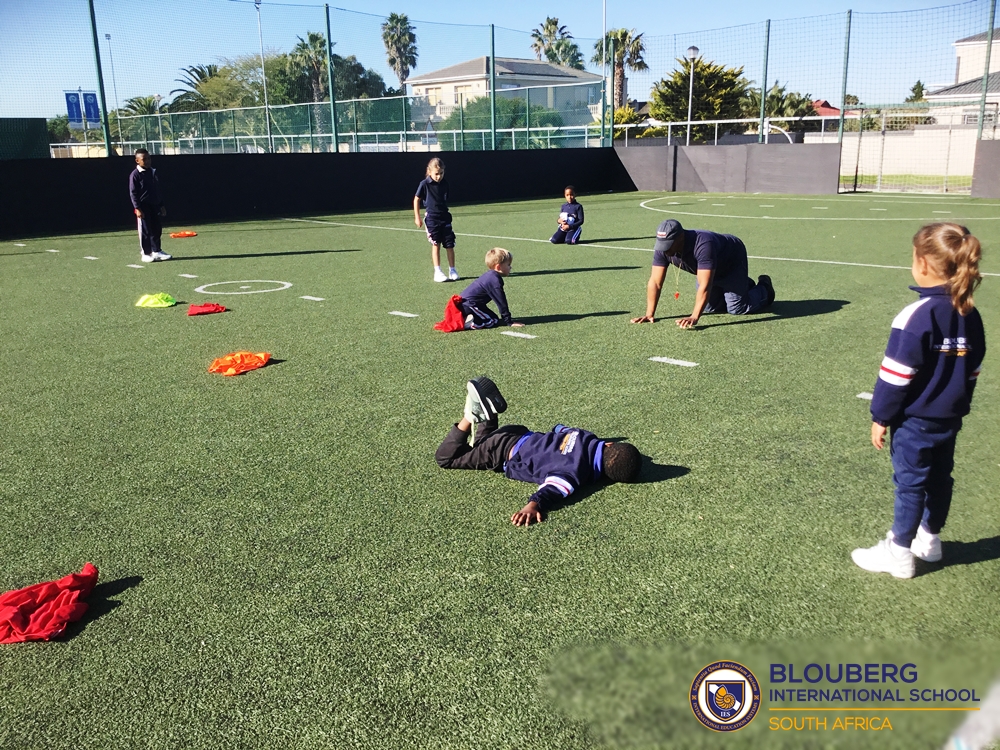
The students warm up by taking a jog around the 5 aside court ,do shuttles that incorporate push ups, sits, lunges, jumping jacks/body weighted squats to get the blood flowing and the heart rate going.
They then go into stretches from neck to toes, whilst illustrating and explaining to them which parts of the muscles they are stretching and the importance thereof.
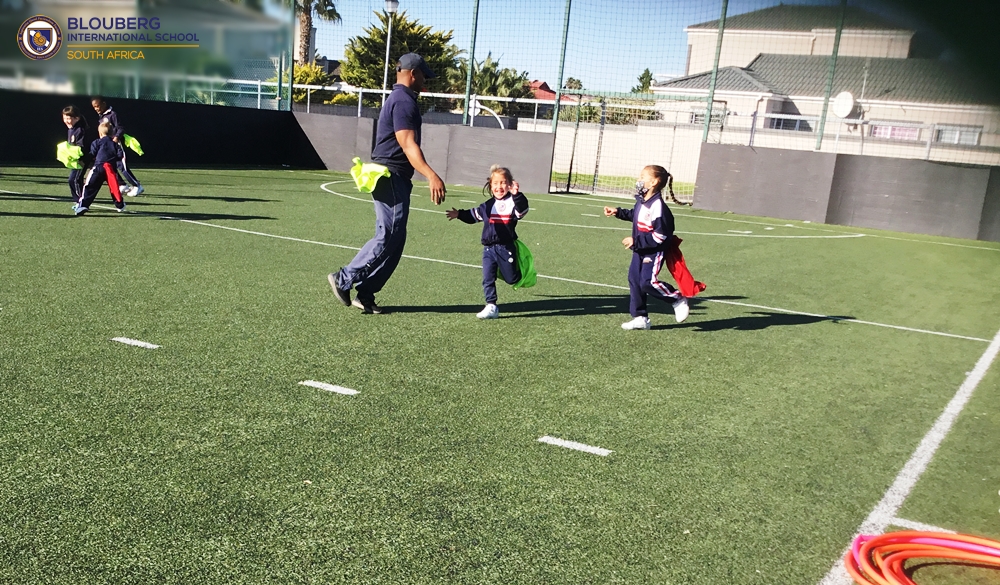
In this case, a class is split into 2 teams that verse each other etc. (red vs orange team)
Instructions are as follows:
- No one is allowed to keep the ball for more than 3 seconds creating a sense of urgency in their play.
- Teams have to pass to everyone in their team to have a legitimate goal awarded, which creates a team effort where everybody participates, teams are not allowed to run with the ball which forces them to work together – teamwork.
- Teams are allowed to pass the ball by either bouncing or no bounce, two-handed passes for more accurate passes.
Objective
The objective of the lesson is to establish and develop good communication skills, passing accuracy and most importantly following the rules of the game and applying all the skills taught throughout the curriculum.
Assessing
Can a student apply themselves through the activity that is focused and based on team building?
Can they pass, throw and catch the ball?
Can they be creative in terms of movement and creating space on the field?
Are they calling for the ball, communicating to their teammates?
Do they understand the rules of the game abide by them?
The students attitude, enthusiasm and the will to do better is as important as his performance.
In Closing
As the winter season slowly drags on to its end, we welcome Spring and the sunshine. I am grateful for the support that has been shown by our BIS family, parents, teachers, ground staff and all who make our school united and warm throughout the soccer and netball season by rooting for our students.
I also wish congratulate all our junior and senior Tennis teams that represented BIS in Sun City last week as well as all our soccer and netball boys and girls who participated with much courage and enthusiasm in all their matches this season.
Well done to you all, we are all very proud to be part of the winning mindset.
Mpho Mahlangu
PE Teacher

Read More
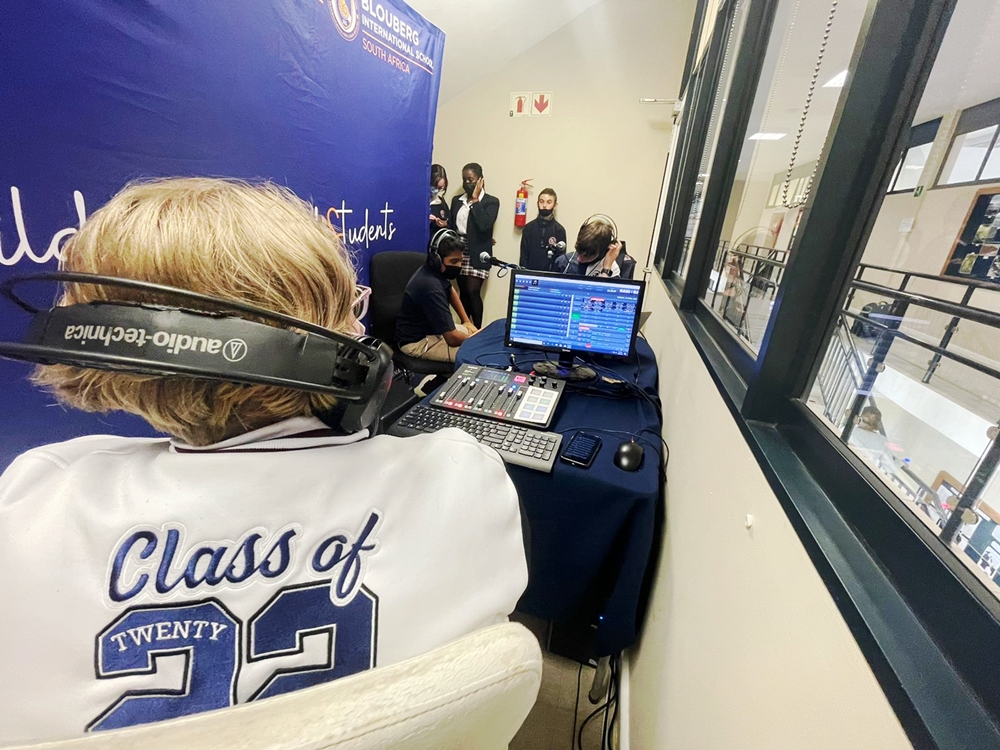
BIS Media Club
The media club is a newly developed society in our school that consists of a team of students, led by Mr. Kroukamp, who create weekly live podcast episodes, aired out on our very own school radio. You can listen to BIS Radio live every Monday afternoon from 3:15 to 4:00. We cover topics ranging from the latest school news to our own internal debates and views on a vast variety of subjects. This club is a small knit community for our ambitious members to not only push themselves out of their comfort zone, but to become comfortable with public speaking and develop important communication skills and improvisation abilities. Furthermore, it gives students the confidence needed to articulate their words with clarity and proficiency and is a great opportunity to further develop creative thinking.
The school podcast is an easily accessible way for both students and parents, who are tuned in, to keep up with the latest on-going school events as well as up-to-date information on social affairs. Our podcast can also be used as a medium for further education, as we discuss different countries and cultures as well as spread awareness and shed light on serious issues. Here at BIS, our teachers have put great effort into the promotion of mental health, and the media club is just as eager to shine a light on said topic. We have held open discussions with our school counsellor on air to further this effort, as well as having our own talks amongst one another on our experiences.
We are the first school to have our very own media club in the whole of IES and we would love for our podcast to go global and inspire other schools all over the world. Our club is a stepping-stone to the evolution of schools, in our ever-advancing technological world, and a demonstration of how we can evolve alongside this growth. We are so grateful to have been given this opportunity to grow within ourselves and inspire those around us, and we encourage students of all ages to take action and become a part of this innovative society.
Gemayel Kroukamp
Media Club Coordinator


Read More
Skills Programme Update
The high school students have thus far completed two skills sessions with each year group, concentrating on a particular skill or skills. These range from practical, hands-on skills to discussions on mental wellbeing.
The Year 12 group have been learning financial skills, such as opening a savings account and keeping a monthly personal budget. Like many of the Year 12 students, Amber Shawe, has found this to be an eye opener since she will be responsible for managing her own expenses as a university student next year. She commented, “The skills programme has taught me to budget for the important things in life such as accommodation, medical aid and insurance. The sessions have also made me realise how important it is to budget and know how to save money. It taught me to think ahead and plan for my future as I would need to put funds aside for my retirement and take out life insurance.”
Our Year 11 students have been learning how to use various workshop tools for particular tasks such as changing a plug.
The Year 10 class topics were diverse and included learning how to complete a CV with tips on ways to make it stand out above the rest. They also learned how to do basic sewing such as repairing a garment seam.
During the last two sessions, the Year 9s have been preparing for the last public speaking session when each student will deliver a prepared speech to the class.
Year 8s are learning self-management skills. Gaby Nel shared her experience as a student, “Our teacher taught us what time management is, how to apply it every day and how we can use our time effectively to study for our exams in advance. We also learnt how to set up a study timetable to be able to fit in normal day activities such as sport and have enough time for studying.”
The Year 7 girls have been discussing how to improve their self-confidence and self-esteem while the boys have been taught basic etiquette.
We are still to complete the last two sessions, which judging by the positive feedback received thus far, should prove to be both educational and fun.
Melinda Twycross
High School Teacher

Read More

Year 12 Cultural Outing
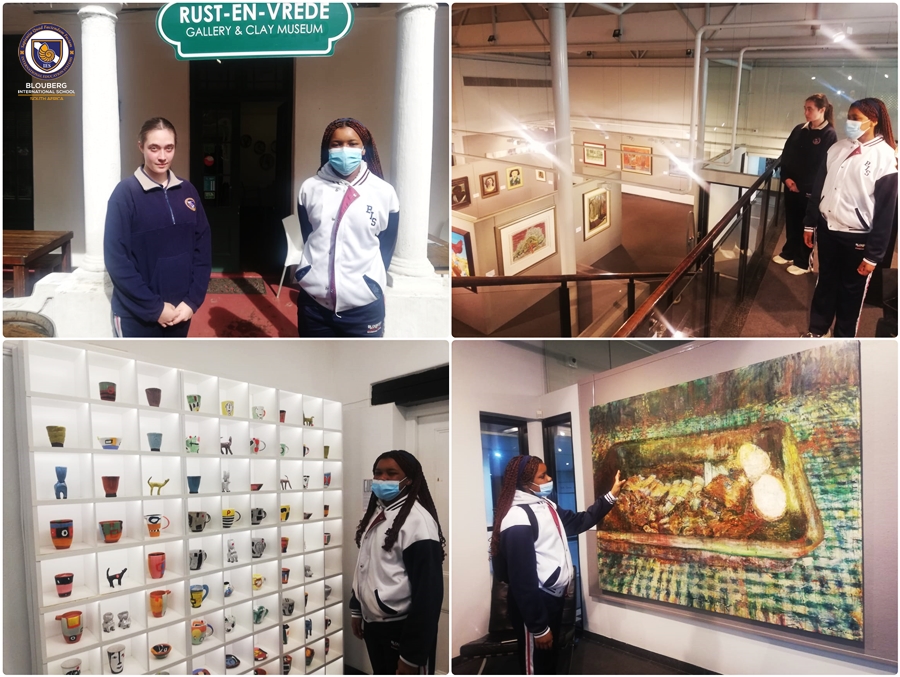
On Friday, 12 August, the Year 12 Art students braced the winter cold and headed out to explore the cultural aspects and art galleries in the Tygerberg area.
We visited the Art.b gallery at the Bellville Library Centre, the Sanlam Art Collection at the headquarters of Sanlam, and a collection of international ceramics and mosaic artworks.
“Uncle Clive” drove us around in a BIS minibus and returned us safe and sound to BIS.
Art.B gallery
https://www.artb.co.za/vuleka-2/
Art.b, the Arts Association of Bellville, is an innovative, community–orientated organisation, sensitive to new ideas and supportive of established and emerging artists from all cultural backgrounds. Art.b, through its vibrant art gallery, creates a platform for and showcases visual art and artists in the Western Cape to raise public awareness of art.
The Arts Association of Bellville is the Western Cape branch of the South African National Association of Visual Art. It is a non-profit membership-based organisation open to all. The gallery is maintained and managed with the support of the City of Cape Town.
https://blog.sanlam.co.za/her-sanlam-art-gallery-bellville/
The Sanlam Art Collection came into being on 9 March 1965 when the Sanlam Board approved the acquisition of 12 paintings by well-known artists for the production of a prestige calendar in the coming year. The collection has grown considerably since and has proved to be a good investment, with the current valuation of the collection exceeding twenty times what it has cost to acquire.
The collection is seen not only in Sanlam offices but also in touring exhibitions across South Africa. Sanlam continues to acquire significant images from established and emerging artists in South Africa and this Centennial exhibition reaffirms its commitment to supporting the visual arts for generations to come.“Her… An exhibition of painting, sculpture, and printing from the Sanlam Art Collection celebrating South African Women Artists.”
Sanlam Art Gallery, Bellville 4 August – 22 October 2022
The present exhibitions in the Sanlam Art Gallery, Bellville, and Sanlam Art Lounge, Bellville celebrates the artistic talents of South African women artists from the early twentieth century to the present. The images by a diversity of women in different media allow for a multiplicity of themes to emerge pertinent to the concerns of women artists over the past century. The exhibition ranges from the capturing of mood and beauty in flowers, the domesticity of daily life and motherhood to the reflection on discrimination and violence against women.
Rust-en-Vrede Gallery, Wellington Rd, Durbanville
The well-established Rust-en-Vrede Art Gallery showcases works of art by established and emerging artists. There are three exhibition spaces at Rust-en-Vrede.
The main gallery consists of two rooms and is referred to as Salon A and Salon B. Salon C is in the entrance room, which is a more informal space used for small solo- or group exhibitions.
Gallery Hours are Monday – Friday 09:00 – 16:00 and Saturday 09:00 – 13:00. The exhibitions change monthly and are freely open to the public. Artists who wish to exhibit at Rust-en-Vrede are requested to submit work and a short proposal to Gallery Management.
The members serving on this committee are nominated at the Annual General Meeting in August. They meet monthly to assess new applicants for exhibitions with the curator.
PIET-MY-VROU MOSAIC STUDIO
27 July ’22
An exhibition of mosaics by the students of Piet-My-Vrou Mosaic Studio. Exhibition opens on Saturday 30 July 2022 at 11 am.
Riaan Vosloo
IGCSE, AS and A Level Art and Design Teacher

Read More
Sensory Day
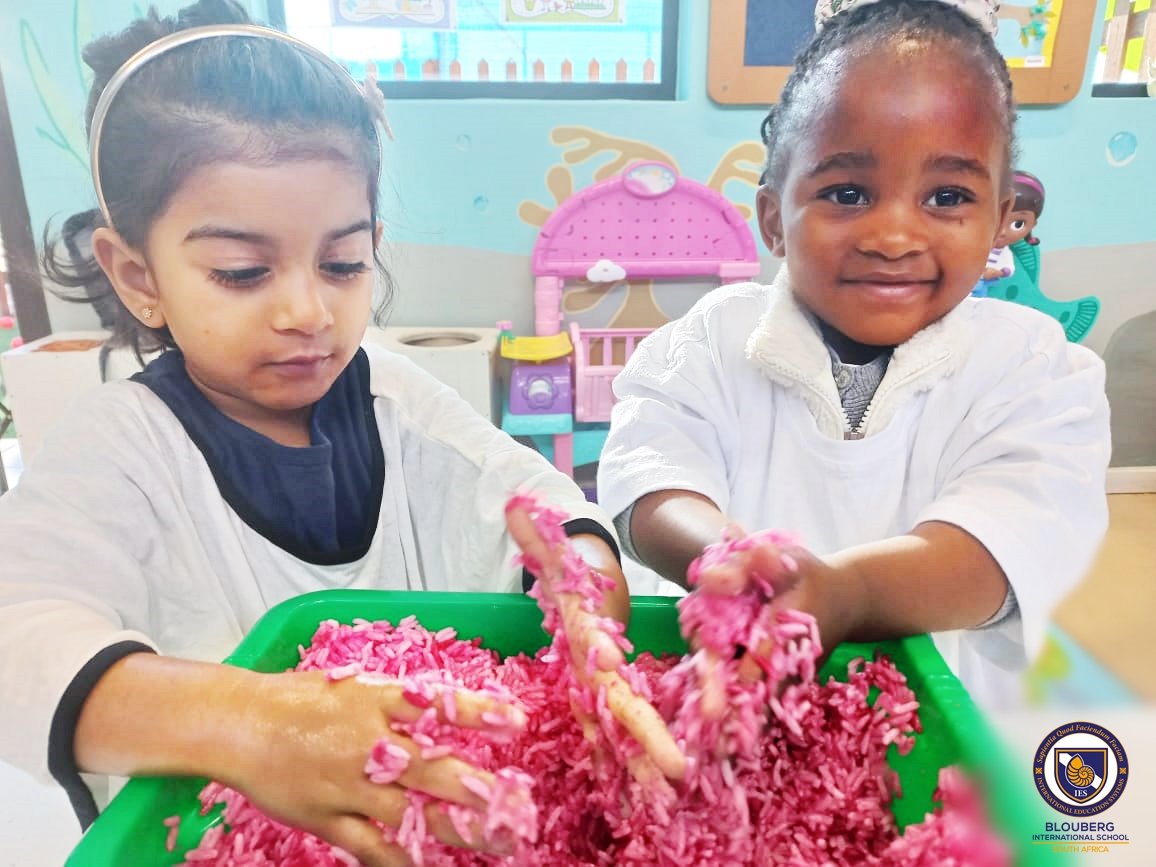
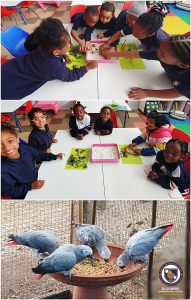
Even though it was messy, and oh the clean-up was a delight, the toddlers thoroughly enjoyed every minute of exploring the colourful spaghetti, the mushy sago and the sticky rice. They were able to hop out of the ‘clean class’ box and just enjoy making a mess.
Sensory play is an important part of childhood and there are really no limits to what you can use in your sensory activities. However, nature and food can often be your best friend when it comes to sensory play.
To help you keep your youngster busy during the holidays, here are a few great sensory play ideas for home:
- For keeping their hands busy:
- Soapy Jars: Fill a plastic peanut butter jar halfway with water, a pinch of dish soap and food colouring. Seal it tightly, and let your toddler roll it/shake it around outside.
- To explore their sense of smell (ages 4-6):
- Smell it and guess: Blend up six different fruits/vegetables in small quantities and pour them into separate dishes. Allow your little one to taste and guess.
- For co-ordination and organisation:
- Alphabet scoop and transfer: You will need alphabet magnets or water-safe letters, a storage container, a wooden spoon, two dish buckets and water. Pour enough water into your container to allow the letters to float and allow your child to scoop each letter out individually. You can practice various beginner literacy activities with them!
- To assist with emotions, and to keep them calm:
- Place beach sand or regular sand into a big container and hide small toys in the sand. Make sure the toys are all of the same themes. Once they have been able to scoop out each toy, engage with them to create a fantasyland on the sand. It’s like a zen garden for kids.
Jo-Anne Dickason
Nursery Teacher


Read More

Assessments And Amphibians
Over the last two weeks, Foundation stage have been doing their end of term assessments. Every day the students are learning new things and continue to approach each challenge with a positive attitude. The assessments have given each student an opportunity to show their teachers how much they have learnt this term and we are so proud of them.
Recently, Foundation stage have been learning all about amphibians. The students asked, what is an amphibian? What is the difference between a reptile and an amphibian? And what is the difference between a frog and a toad? They have learnt so many interesting facts, especially what makes a frog different from a toad.
Did you know that…
- Frogs are smaller and slimmer than toads and have a more pointed nose.
- Toads are much bigger and broader than toads and have a wider nose.
- A frog’s skin is smoother than a toad. Therefore, they need to live near water because they need to keep their skin moist.
- Toads have a hard, dry skin and don’t need to stay near water.
- A toad’s eye shape is also different from a frog’s. Frogs usually have big bulging eyes, as opposed to a toad’s, that is a bit more subtle in appearance.
- Frogs have long legs made for hopping and they can jump up to 20 times the length of their own body.
- Toads have shorter legs and prefer to crawl instead of hop.
The foundation stage students enjoyed learning about these interesting facts. We are confident that the next time they see an amphibian, they’ll be able to tell us whether it’s a frog or a toad.
Lauren Bloem
Reception Teacher


Read More
Bugs, Bugs, Bugs Everywhere…
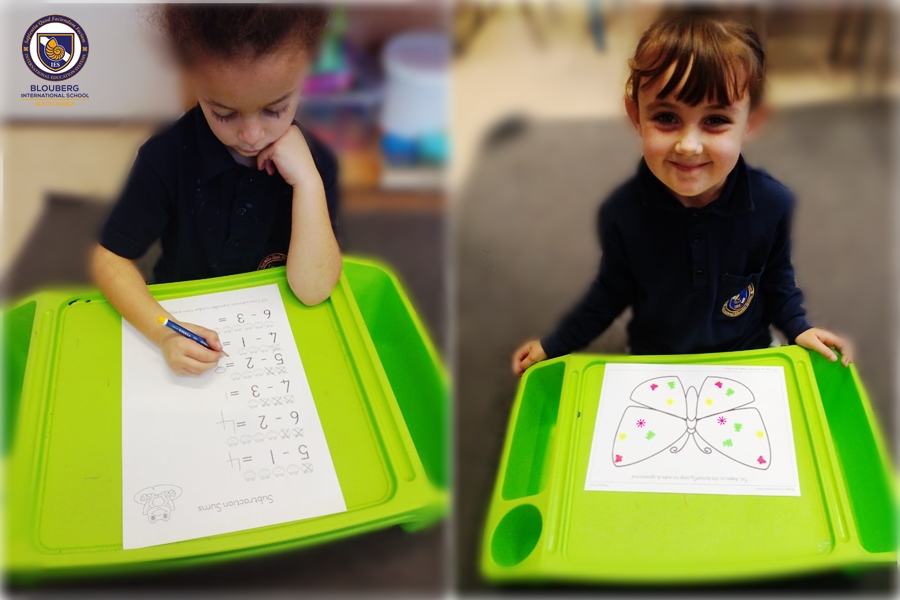
Learning about bugs is so much fun for our Foundation Stage students. Isn’t it funny how young students are just curious about everything and don’t have the grossed out reaction that we have as adults.
During the past two weeks we have been learning about all sorts of bugs and insects through hands-on learning activities.
Some of the activities we have done includes:
- Butterfly life cycle sequencing: The students practised sequencing the cards in the correct life cycle order.
- Bug or not sorting: Is everything that crawls a bug? Is everything with wings a bug? With a container full of toys the students had to investigate what it takes to be called a bug. This sorting game helps them learn to scientifically classify and observe.
- Butterfly Symmetry Smash: We cut the butterfly out of card. The students then squirted paint onto one side of each butterfly. We folded the butterflies in half and smashed the paint.
- Which bugs can fly: The students learned which bugs could fly and which could not.
The students enjoyed looking at books about bugs and learning interesting facts about bugs by watching Blippi Wonders.
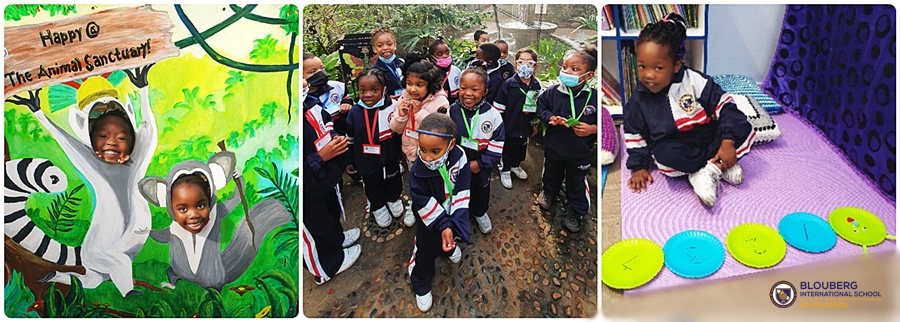
On Friday, 27 May, the Pre-Reception and Reception students went on an educational Outing to the Exotic Animal World. The students saw different types of insects, spiders, reptiles and animals like: birds, iguanas, tortoises and meerkats to name a few. The students enjoyed an interesting and informative lesson about reptiles. It was an amazing experience for the students to end off our theme.
Martie van Dyk
Pre-Reception Teacher

Read More
Becoming A Biologist In South Africa
It is certainly not new information that we live in one of the most diverse countries in the world when it comes to South Africa’s endemic flora and fauna. In fact, according to SANBI, we are ranked in the top 3 countries with the highest percentage of endemic species. South Africa is estimated to be home to almost 100 000 endemic floral and faunal species, as reported by BIOFIN. Our floral diversity is estimated to be just short of two thirds endemic, with our reptiles, amphibia and marine species to be around half.
South Africa is a well-recognized biodiversity hotspot, with the Cape Floristic Region hosting almost 10 000 vascular plants, with a staggering endemism percentage of almost 70%. Endemism and biodiversity in South Africa have clear intrinsic value. Apart from that, it has been an enormous driving force in our tourism. It is also important to recognize its role in employment opportunities, alternative or traditional medicines, and environmental education.
So, what do we need in order to conserve this incredible ecological gift that we have been given? More importantly, who are the people behind conserving it? Unfortunately, conservation is not often second nature to us. We live fast paced lives driven by consumerism. Playing our part in conserving the Cape Floristic Region, our pride and joy, starts with being educated on its value and importance. Whether this is intrinsic value, monetary value or some other value such as preserving genetic variation, the development of herbal remedies and traditional medicines, or simply a feeling of stewardship.
An ecologist from Senegal, Baba Dioum, summed it up quite well: “In the end, we will conserve only what we love, we will love only what we understand, and we will understand only what we are taught.”
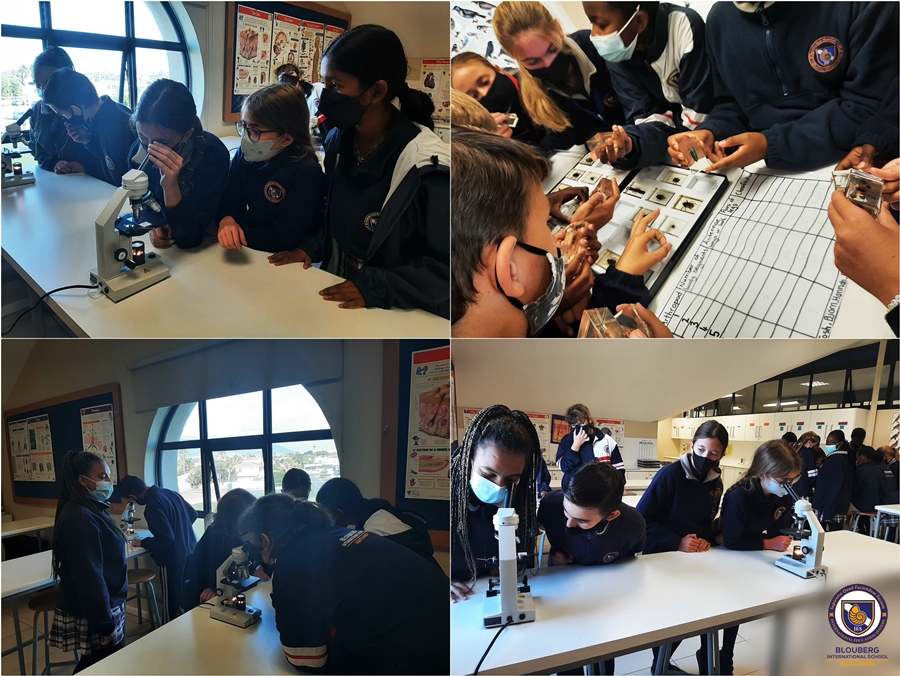
Education is the starting point to truly assigning value to something. In order to feel the drive to take an active part in conserving our country, one needs to realise its value, and what better way to do this than through receiving an education in Biology in one of the most unique countries in the world? Getting students excited about our natural world starts at an early age. At BIS, we incorporate practical implements to our coursework by allowing the students to see, hear, touch and experience. Practical work allows students to place their coursework into context with the real world, while also deepening their understanding of the topic. We as teachers are looking forward to the rest of our journey in guiding the next group of conservationists, farmers, park rangers, botanists, environmental educators and so much more.
Nadia Viljoen
High School Biology teacher

Read More