
Becoming A Biologist In South Africa
It is certainly not new information that we live in one of the most diverse countries in the world when it comes to South Africa’s endemic flora and fauna. In fact, according to SANBI, we are ranked in the top 3 countries with the highest percentage of endemic species. South Africa is estimated to be home to almost 100 000 endemic floral and faunal species, as reported by BIOFIN. Our floral diversity is estimated to be just short of two thirds endemic, with our reptiles, amphibia and marine species to be around half.
South Africa is a well-recognized biodiversity hotspot, with the Cape Floristic Region hosting almost 10 000 vascular plants, with a staggering endemism percentage of almost 70%. Endemism and biodiversity in South Africa have clear intrinsic value. Apart from that, it has been an enormous driving force in our tourism. It is also important to recognize its role in employment opportunities, alternative or traditional medicines, and environmental education.
So, what do we need in order to conserve this incredible ecological gift that we have been given? More importantly, who are the people behind conserving it? Unfortunately, conservation is not often second nature to us. We live fast paced lives driven by consumerism. Playing our part in conserving the Cape Floristic Region, our pride and joy, starts with being educated on its value and importance. Whether this is intrinsic value, monetary value or some other value such as preserving genetic variation, the development of herbal remedies and traditional medicines, or simply a feeling of stewardship.
An ecologist from Senegal, Baba Dioum, summed it up quite well: “In the end, we will conserve only what we love, we will love only what we understand, and we will understand only what we are taught.”
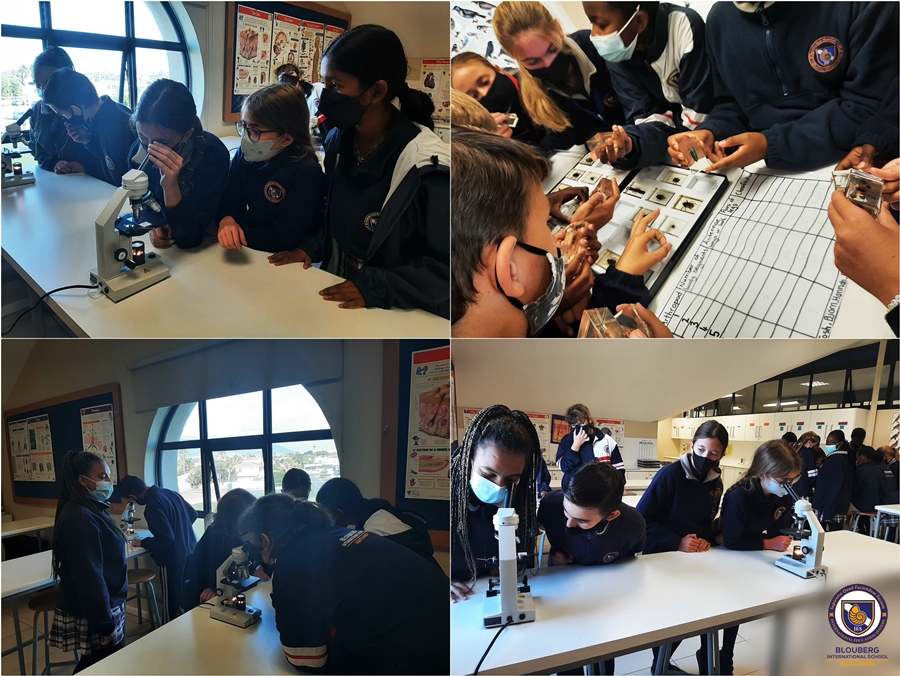
Education is the starting point to truly assigning value to something. In order to feel the drive to take an active part in conserving our country, one needs to realise its value, and what better way to do this than through receiving an education in Biology in one of the most unique countries in the world? Getting students excited about our natural world starts at an early age. At BIS, we incorporate practical implements to our coursework by allowing the students to see, hear, touch and experience. Practical work allows students to place their coursework into context with the real world, while also deepening their understanding of the topic. We as teachers are looking forward to the rest of our journey in guiding the next group of conservationists, farmers, park rangers, botanists, environmental educators and so much more.
Nadia Viljoen
High School Biology teacher

Read More
Preparing For Examinations
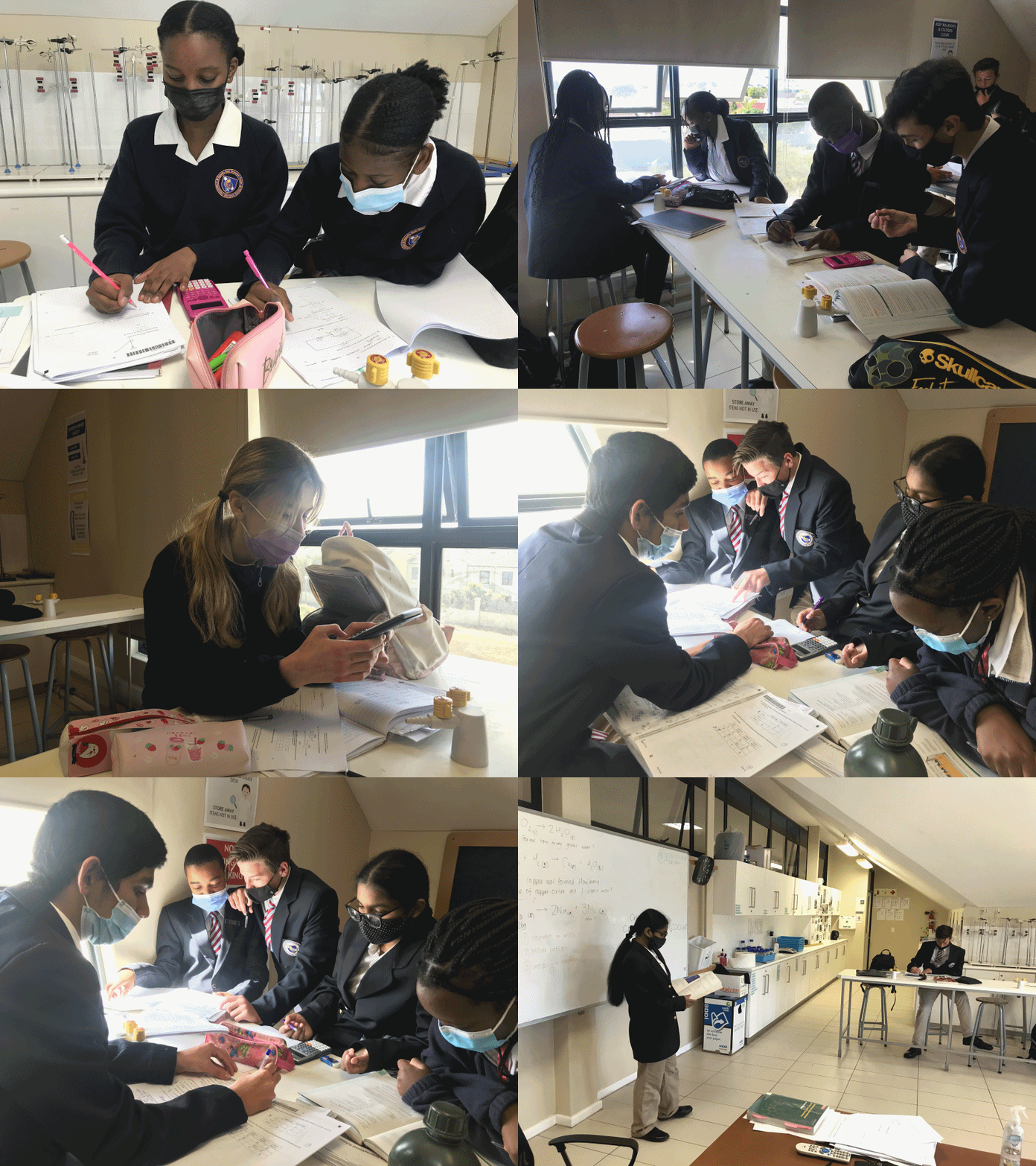
Our June examinations are around the corner and preparing for examinations is just as important as studying for your subjects. Below are some helpful hints on how to prepare for your examinations:
Helpful hints
- Familiarise yourself with your examination timetable.
- Ensure that you know exactly:
- what work will be covered in each subject,
- the format of each examination paper,
- the time allocation,
- the equipment that may be needed for the examination (e.g. calculator for Mathematics).
- Get copies of old examination papers and worksheets (IGCSE and AS/A Level).
- By now all your notes should be up to date and you should have all that you need to study effectively for the examinations.
- Prepare your study area. Some things to consider are:
- have a good source of light
- have lots of paper available
- a clear work surface
- coloured pens if you prefer to use colour
- light or unobtrusive music if you prefer to learn with music
Keeping healthy
- Eat fresh foods such as fruit and nuts. Pile up on the vegetables in the evenings and drink plenty of water and fruit juice to keep the flu at bay. The brain needs to be fed well in order for it to perform at its optimum.
- Try not to nibble on too many chocolates and sweets while studying.
- With that said, the odd sweet or chocolate will provide an energy boost when you feel really tired.
- Getting a good night’s rest is also important. Sleep will rejuvenate you and keep you going.
Just before the examination
- Get a good night’s sleep.
- Have a good breakfast.
- Arrive at the venue with time to spare.
- Make sure you have the right equipment, tissues, watch, etc.
During the examination
- Don’t rush into answering questions.
- Read the instructions at the beginning to ensure that you know how to answer all the questions and how many questions to answer.
- Read through the questions carefully.
- If there is a choice of questions, make your choice carefully. Underline key words in the questions.
- Stick to the time plan given to you by your teacher.
- At the end of the examination, if you have time, read through your paper to check that you have answered all of the questions.
Julian Harrison
Cambridge Examinations Officer




Read More

High School Induction Day 2022
Foreword
Welcome back to Blouberg International School and the start of a new academic year. A special word of welcome to our new families – I trust that you already feel at home.
We recognize that in order to be successful in school, our children need support from both the home and school. We know a strong partnership with you will make a great difference in your child’s education. As partners, we share the responsibility for our children’s success and want you to know that we will do our very best to carry out our responsibilities. We ask that you guide and support your child’s learning by ensuring that
he/she:
- Attends school daily and arrives on time, ready for the day’s learning experience.
- Reads daily to develop a love for reading and to improve literacy skills.
- Shares school experiences with you so that you are aware of his/her school life.
- Informs you if he/she needs additional support in any area or subject.
Looking forward to a successful term and great year,
Mrs Carmen de Villiers
High School Coordinator
High School Induction Day 2022
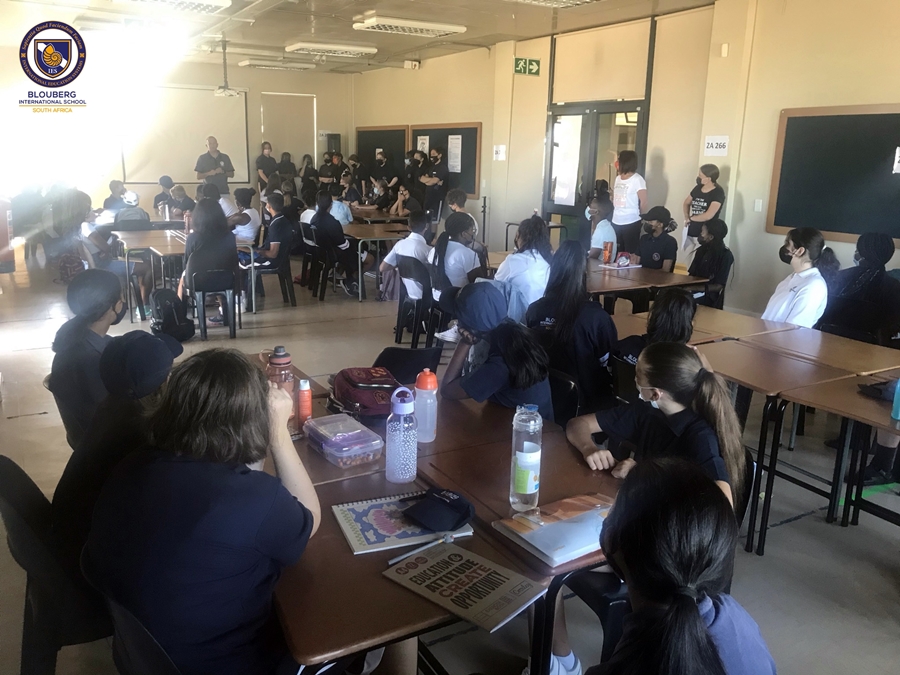
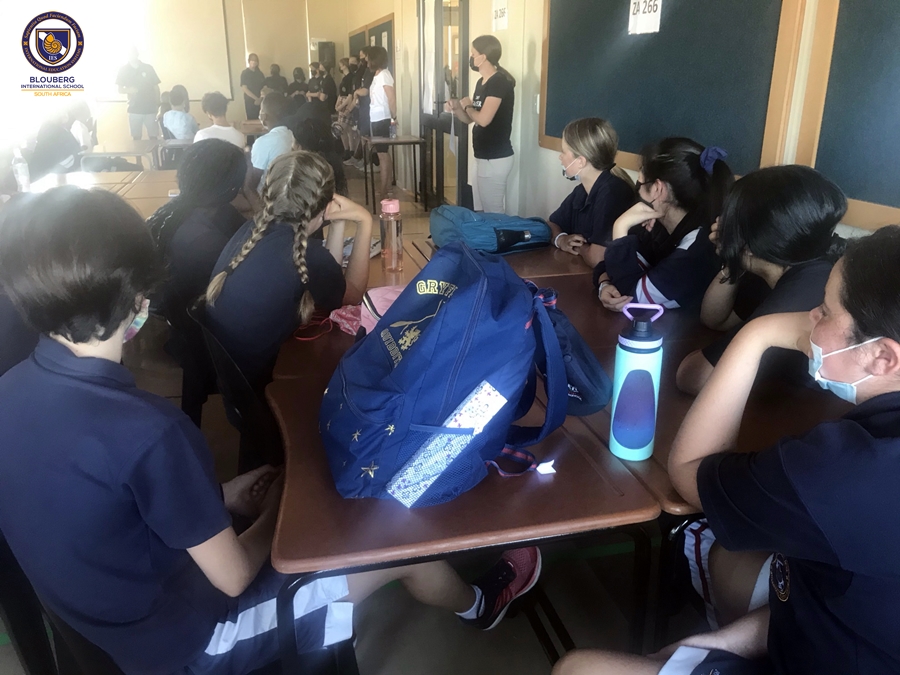
The high school Induction Day for new students took place on Friday, 14 January 2022. It was organised and led by the Student Representative Council and Matric students, who showed commendable diligence by planning this event from Term 4 and in the last week of their holidays.
Students participated in a variety of games and activities designed to help them to get to know each other better. They were also taken on a tour of the school so that they could be familiar with their subject teachers and the building before their first day. Students were allocated a house and the Year 7s met their tutor teachers.
Something new that was introduced this year was Matric Mentors. The Matric students were allocated Year 7 students who they need to keep in contact with during the school year. The purpose of this is to help the Year 7s settle into high school and encourage student involvement and effective communication.
We would like to extend a warm welcome to all our new students. May your time at BIS be enjoyable and fulfilling.
Ms Sheila Marais
SRC Coordinator


Read More

The Year 7 & 8 Art tells a lot more than a thousand words…
Teenagers are unaware of the incredible natural resource they possess: their boundless creativity. Our students are natural storytellers and the depth of their imaginations never ceases to amaze me.
And yet, students approach a blank page with trepidation. When they have to write a story, they aren’t thinking about sharing their ideas and stories. More often than not, they’re stressing about letter formation and proper spelling. However, when they start drawing freely they immediately begin to unleash their ideas. What they may not realize is that they are telling a story as they draw.
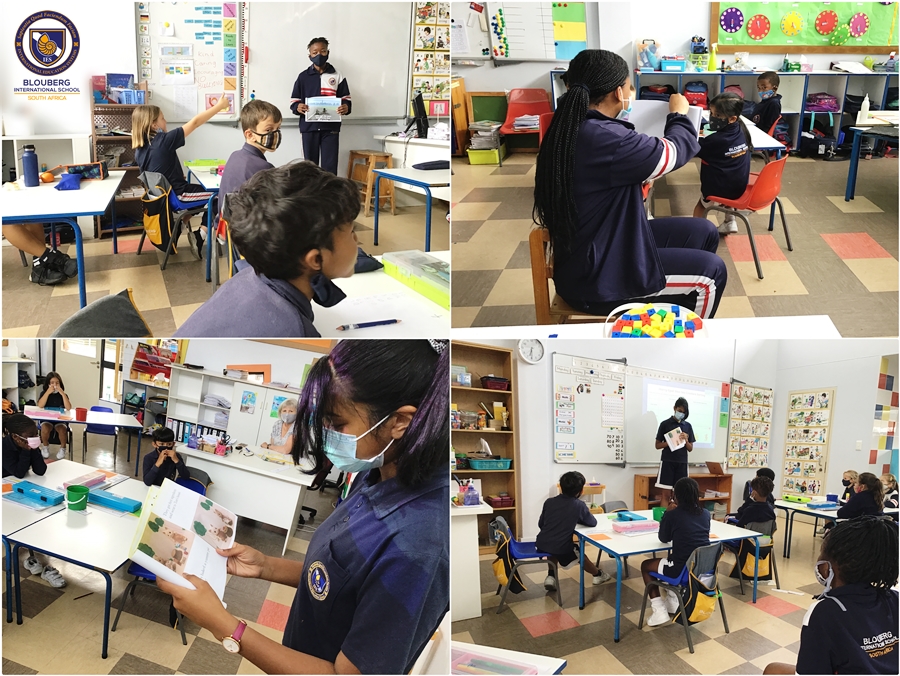
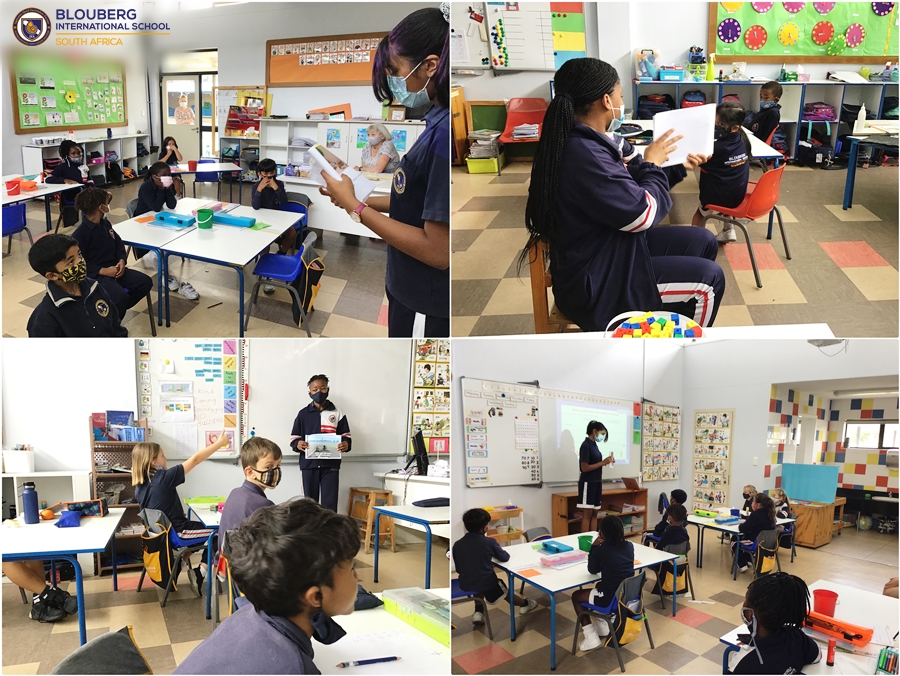
Illustrations contribute to the telling of a story. The Year 7 and 8 Art students used photography (Year 8) and paper cutouts (Year 7), inspired by the cut out artworks of Henri Matisse, to discuss and interpret details of the characters, setting and plot, thereby unleashing endless possibilities and unlimited creativity.
The main objective was to harmonise words and illustrations. They exceeded all our expectations when even the smallest details were created with small pieces of paper. We are incredibly proud of their outstanding work.
Ané Gornall & Riaan Vosloo
Year 7 & 8 Art Teachers

Read More

Interact 2021
As the 2021 academic year approaches an end, I look back at the many events organized by the BIS Interact Club. I admire the ability of our students to adapt to the challenges that all of us had to face somehow. Our Interact Club members’ enthusiasm and willingness to serve the community has continued forth strongly.
The ongoing support of the BIS family has enabled BIS Interact to organise a stationery drive for Du Noon Primary School, collect tons of clothing for Home of Hope, fill two school vans to the brim with food for Peace Home and deliver boxes of canned food to Amathemba School.
The sandwich-making school competition earlier this year was a gigantic success, with over 4000 content and grateful bellies on delivery day!
Our Interact members also proposed initiatives for the wellbeing of our school, such as the Friendship Day board, where our students and staff could post heart-warming and encouraging messages to their peers. Their Mental Health Awareness Drive included a “green ribbon” civvies day, which was aimed at promoting ways to maintain a healthy mind.
Our last Interact drive for the year is the collection of gift boxes for Sam’s Educational Centre. The students are busy putting together the most amazing boxes to be delivered by “Father Christmas” himself. With the assistance of our Interact members, the event will consist of a surprise hand out celebration, which will take place at Sam’s Educational Centre on Tuesday, 30 November.
We kindly request that the gift boxes be handed in no later than Friday, 26 November, wrapped and clearly labelled with the child’s name.
Thank you for your invaluable support.
Elena Berger
BIS Interact Coordinator


Read More
Preparing For Examinations
“ Good preparation is better than hoping for a miracle.” – Sunday Adelaja
The end-of-year examination has dawned upon us and there is nothing worse than going into the exam hall unprepared. This is a lot like a doctor walking into the surgery without the necessary tools or know-how to deal with an emergency situation. What do you think the consequences will be for that, and do you think you can trust that doctor? Every profession requires effective performance that eventually results in success, but the key ingredient for achieving this is good preparation. Think about this the next time you enter the exam room.
So here is a useful guide to help students with their exam preparations, starting with a list of ten practical study hacks from the University of Augustana[1] and Murdoch University[2]:
- Have a positive attitude. This is the first and most important attribute.
- Begin early and find a comfortable study space to cater for your needs.
- Create a music playlist for your study sessions.
- Have specific goals for each study session and set a time frame for your goals. For instance, make a note to cover section one for two hours between 12-2pm today, etc.
- Organise your study materials before you start the session. Make sure that you create short study sessions at multiple intervals so that you do not burn out and avoid procrastination.
- Create your own study materials, for example, flashcards, mindmaps, personal study notes, etc.
- Develop critical thinking abilities where you are able to seriously question concepts. In other words, ask lots of questions!
- Explain the subject or concepts to a study buddy. If you cannot find anyone, then stand in front of a mirror and practise on your own. You are your own best person.
- Take advantage of school resources.
- Eat healthy and engage in physical exercise/meditation to beat anxiety and stress.
Remember that you are more than capable of achieving success if you put your mind and heart into it, no matter what the circumstances. All the best with your preparations moving forward into the exams. Aim to go into the new year with great success.
Michellene Williams
High School English Teacher

[1] Adapted from Augustana University. 2021. 10 Ways to Prepare for Exams. Viewed at https://www.augie.edu/10-ways-prepare-exams
[2] Adapted from Murdoch University. 2021. Exam Study Hacks. Viewed at https://www.murdoch.edu.au/news/articles/exam-revision-hacks
Read More

June Exams 2021
The June exams are fast approaching and many students will be starting to feel the pressure. Perhaps the best way to counter exam stress is to come prepared. To this end, I have ten guidelines students can follow that will go a long way to helping them feel prepared and confident for each exam.
- Print a copy of their exam timetable and put it in a prominent and safe place.
(Exam timetables can be found on Engage). - Compile and stick to a study timetable.
- Give yourself sufficient study time for each subject.
- Identify topics you find most challenging and, if necessary, ask for assistance from the subject teacher. It is best not to leave this to the day before.
- Utilize effective study methods rather than simply reading the textbook. Summaries, mind maps and flash cards are examples of alternative study methods.
- Avoid pulling “all-nighters”.
- Limit your social calendar and put your phone on silent when you are studying.
- Avoid fad diets so as to maximize energy and concentration.
- Pack the necessary equipment for each exam, including a spare pen.
- Arrive punctually for each exam.
Parents should also be involved in their child’s exam preparation. We know from our own experience as students how easy it is to become distracted and bored. Encourage regular study sessions with short breaks, physical activity and healthy eating. Do not be afraid to check up on your child’s exam preparation progress, even if they are in their final years of school.
I wish students all the best for their exams and I hope that they have a safe and enjoyable holiday.
Sheila Marais
High School Teacher

Year 5 Effective Studying Workshop
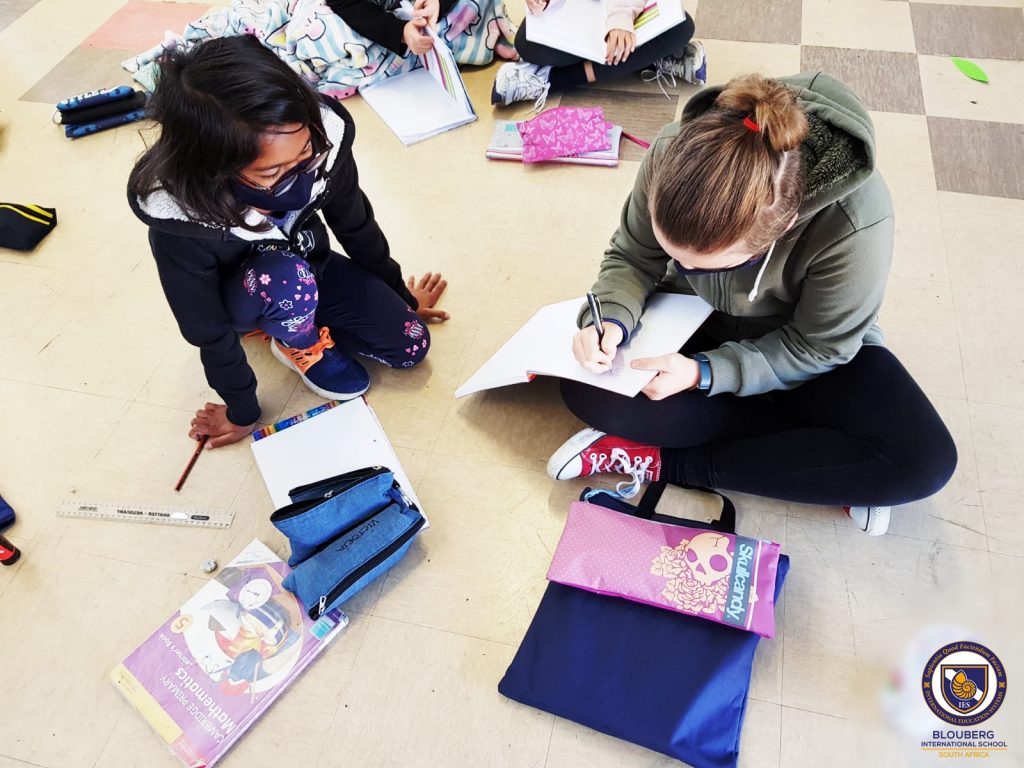
This term is a big one for the Year 5s. It marks the first year of upper primary school – and with it, the dreaded June exams! Exams don’t necessarily have to be stressful though – after all, they are intended to help us by showing us where we are confident in our work, and where we still need some help. Through preparing thoroughly for exams, we can focus more on their benefits, rather than on the stress they can cause – and so our Year 5 Inting this term focused on just that.
First, we practiced setting up a timetable to organise our studying, fitting in all the work we need to study, without having to cram and stress. Organising our time is the first step in combating exam stress – it breaks the work into manageable chunks, and shows us that we actually do have time to fit in everything we need to. After all, how does one eat an elephant? One bite at a time, of course!
We also spoke about preparing ourselves, inside and out, to make sure that we are in the best frame of mind for learning. The first step to doing this is making sure that you are healthy, so your brain can function at its best. This means enough food, water, rest and exercise – after all; healthy body, healthy mind! Speaking of the mind, we practiced the power of positive thinking. We made positive mantra cards to remind us of our goals, and how amazing each of us is. We also learnt a few grounding exercises, for when the stress does get a bit much – or for when our brain seems to be running in circles.
Finally, we looked at some study techniques, thinking about various ways of studying (and trying a few out while we were at it). Whether you enjoy studying by organising your notes into mind maps, or by teaching your teddy bear how to multiply and divide, it’s a good idea to have a few different study methods in your study toolkit.
Above all, we learnt that when it comes to studying for exams, everyone is different. What works for one of us might not work for another – and part of developing into an independent learner is figuring out what works for you. Hopefully all our Year 5s are a few steps further on that exciting journey!
Hannah Kirkaldy
Year 5 Teacher


Be Kind To Yourself!
“If you have good thoughts they will shine out of your face like sunbeams and you will always look lovely.” – Roald Dahl
It’s that time of the year again where tests and exams are starting. Sometimes it’s easy to get caught up in the pressure we feel as parents, teachers or students. We all want our children, students and class to do well, but it can be an extremely stressful time which makes it very easy to self-critique.
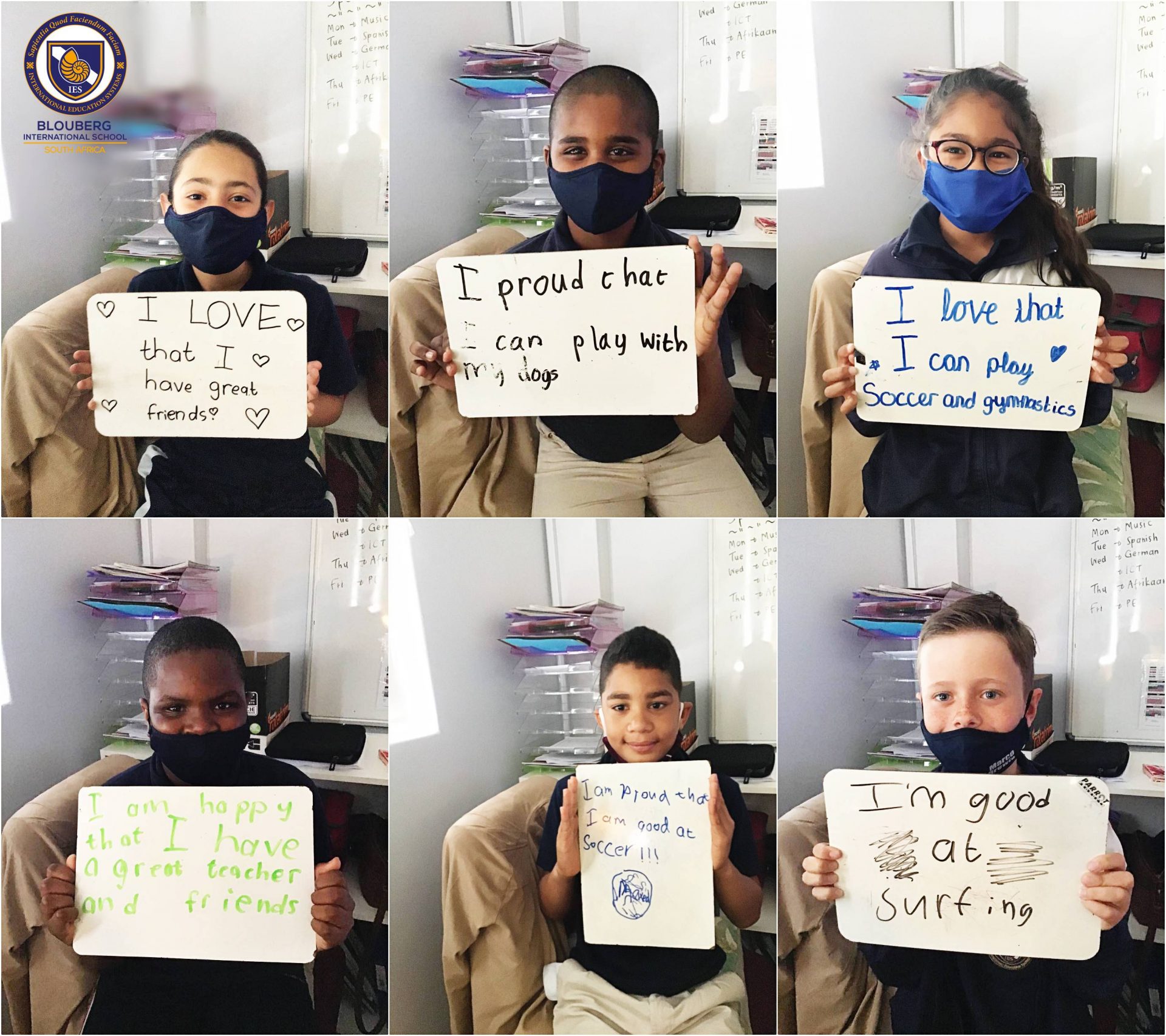
Do you ever catch yourself talking down to yourself? I know I do. We often motivate, encourage and compliment others – we should do the same for ourselves! Being your own best cheerleader is a much better choice than being your own best critic. When negative thoughts about yourself come into your head, quickly refocus to a positive thought about yourself. See your strong points and be proud.
According to the blog ‘Coffee Cups and Crayons’, figuring out how to be kind to yourself is trickier for children than it is for adults. Encourage your child to really think about things that help fill them up inside, not just 5 fun things they like. Talk aloud things you’ve noticed to help them start thinking in the right direction. Say things like, “I notice how happy and peaceful you get while you are colouring.” or “Dancing really brings a smile to your face.”
Older children may struggle with this even more. Life gets pretty busy for them and they may not know at first what they can do to be kind to themselves. Give them a day or two to brainstorm and “try out” some ideas to see what resonates.
5 Simple Ways To Be Kind To Yourself for Children:
- Find something you love. Whether it’s a passion for football, baking, running or reading – engaging in a fun hobby can be one of the kindest things we can do for ourselves.
- Talk about the good things. Ask each person in your family to say one good thing about their day. This helps us to identify and focus on positive experiences from the day.
- Lend a helping hand. Helping others can be a great way to show kindness – and it can make you feel good too! Help your little brother get dressed, clean up your books, help mom wash the dishes or set the dinner table.
- Be kind to your body. Eating healthy foods, like fruits and veggies, and being active by riding bikes, kicking a ball or playing on the playground are all ways to show our bodies kindness. Getting lots of sleep is important too.
- Encourage yourself. Go me! It can be easy to say unkind things about ourselves when we make a mistake or do not do well on a test. Instead, try saying encouraging things like “At least I won’t make that mistake again!” or “I just need to keep practicing and I’ll do better every time.”
Year 4 Teacher


How to Prepare for Exams
Exams can be stressful, especially if you are unprepared. This article contains suggestions that will help you to be more organized and feel more confident.
In much the same way that you wouldn’t try to find a new place without first getting its location, so you shouldn’t attempt to study without first knowing what papers you will write each day. Download and print your exam timetable and put it on display in a prominent spot. This will help you to plan ahead and avoid unpleasant surprises.
Compiling a study timetable will help you to manage your time. Ensure that you give yourself plenty of study time for each subject. Be prepared to adapt your timetable should something unexpected occur.
Varying subjects and study techniques will help you to avoid boredom. Try summaries, flash cards, key words, mind mapping and mnemonics. It is okay to use a variety of techniques, as some are better suited to particular types of content than others. If you have been making study notes throughout the year and have found them to be effective, use them to give yourself a head start.
Using the correct exam technique and being able to finish your exam within the allocated time are also very important. Practicing past papers will help you to master both, and will also help you to better understand what the examiner will be looking for. The CIE website and PapaCambridge are good places to look.
Finally, prepare a space to study that is comfortable and free of distractions. Try to avoid studying on your bed, as you may fall asleep! Set your WhatsApp status to ‘studying’ so that friends will know that you may take a little longer to get back to them because you need to focus.
I wish you all the best for your exams and I hope that you have a safe and enjoyable holiday.
Sheila Marais
High School Teacher