
Next Week Is Book Week!
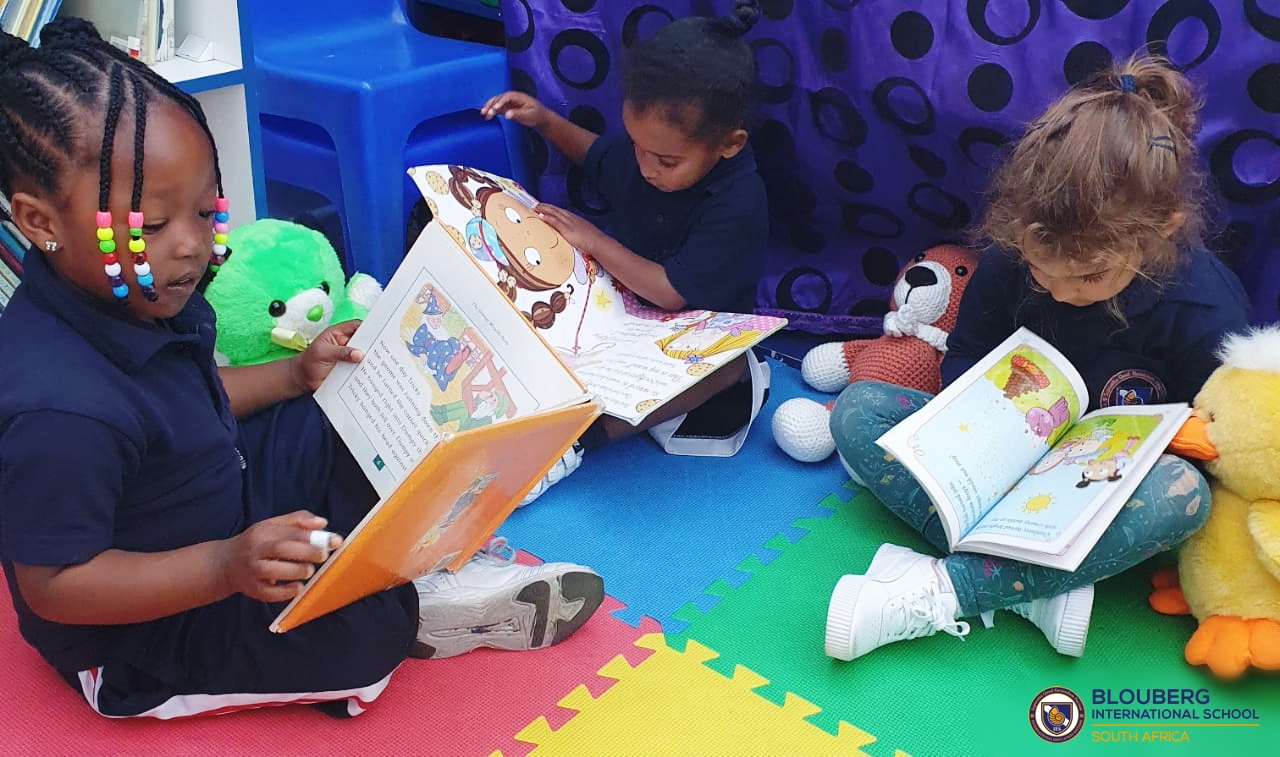
We will celebrate book week next week at BIS. It’s a fantastic opportunity to celebrate books and to see the young students getting excited about reading.
There will be many fun activities during Book Week:
- On Tuesday, 3 May 2022 we will do stop, drop and read. All students need to stop what they are doing and listen to or read a story for 10 minutes when they hear the bell ring.
- We are holding another night of fun stories and book sharing for Foundation Phase and Key Stage 1 students. Bedtime story evening on Wednesday, 4 May 2022 will start at 18:00. We invite all students to come along wearing pyjamas and snuggling their bedtime toy and listen to some great bedtime stories told by the teachers and parents.
- Book Character dress up day will be on Friday, 6 May 2022. Students are encouraged to bring a book to donate and dress up as their favourite book character.
As you can see our Book Week is packed full of exciting activities for the students.
Martie van Dyk
Pre-Reception Teacher


Read More

Learning About Mr Plus In Reception Year
Earlier on in the term we started off by learning about the concept of more, which also helped the students understand the idea of counting forward and numbers getting bigger when one more is added.
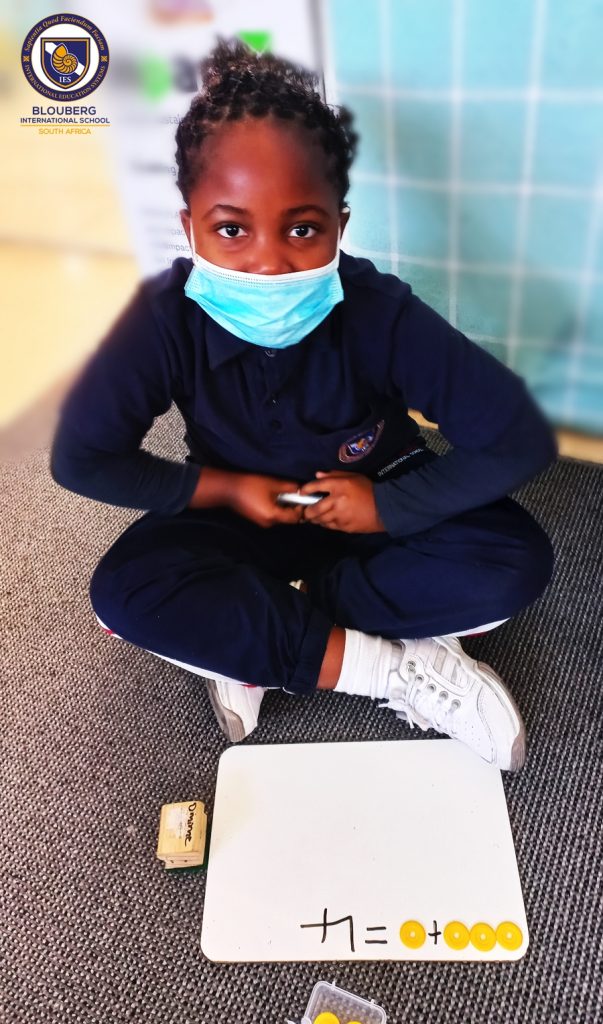
This week, the students were introduced to a very popular and friendly character in Numberland, called Mr Plus. Mr Plus likes to bring the numbers together by making friends with them and making them more. The students learnt a song about Mr Plus. Then the teacher pretended to be Mr Plus, using the students to make sums. The sums were made on the board using magnets and a whiteboard pen.
The students were reminded that the plus sign is in between the numbers to add them and the equals sign comes before the answer. Afterwards the students came to the mat in small groups for a focus group lesson with the teacher. They used their own counters on their whiteboards to make their own sums.
The students were so excited to be making sums with counters and learnt how to check if their answers were correct. Later on they will also be introduced to picture sums and progress to using counters or their own drawings to work out addition sums with numbers.
Mathematics can be so much fun!
Bronwen Nuthall
Reception Year Teacher
Read More
The Importance Of Art In A Child’s Development
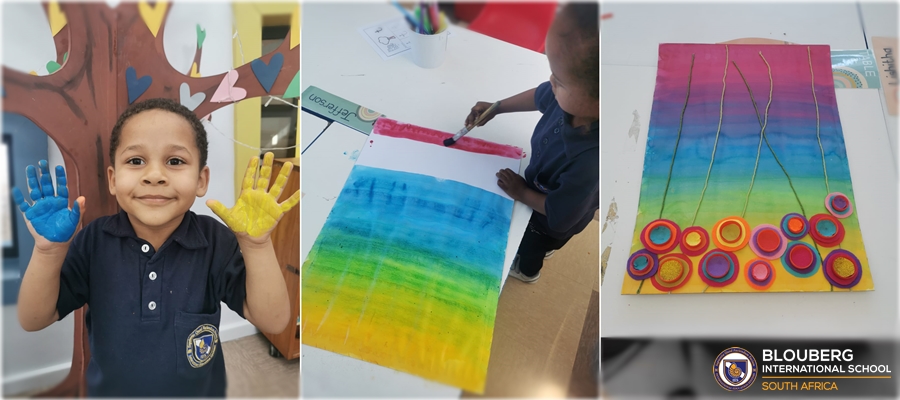
There is an overwhelming excitement and enthusiasm throughout the School as the students are busy creating the most amazing works of Art for the upcoming Art Auction on Tuesday, 26 April from 5:30pm.
It is wonderful to see the concentration on the students faces and the joyful expressions of art explored!
Creating art expands a child’s ability to interact with the world around them and provides a new set of skills for self – expression. Not only does art help to develop the right side of the brain, but it also cultivates important skills that benefit a child’s development.
SKILLS CHILDREN DEVELOP THROUGH ART ACTIVITIES:
- Life skills
- Communication skills
- Problem – solving skills
- Social & Emotional skills
- Fine Motor skills
- Self – expression & creativity
It is important, however, to separate “talent’ from ‘creativity” – a child does not have to create a masterpiece to have a meaningful artistic experience. Art is a process not just a product. It is the process of creating – exploring, discovering and experimenting – that is important and adds the greatest value. Through self – expression and creativity, a child’s skills will develop naturally. Art matters the same way language matters. It is a fundamental component of what makes us uniquely human.
Hope to see you all at our Art Auction!
Cindy Nunan
Pre-Reception Teacher

Read More

Healthy Eating
Going forward into a new term I encourage parents and students to consider adopting healthy eating habits throughout their day. In the Junior campus we have incorporated a robot system which gives the children a visual aid of which foods are a healthier choice.
The red light is used for foods which should be avoided in school lunches. “Red light” foods include items such as sweets, fizzy drinks, pastries, chocolates, etc.
The orange light is used for foods which can be incorporated occasionally in school lunches. “Orange light” foods include white grains (such as white bread or pasta), chips, etc.
The green light is used for foods which are encouraged in school lunches. “Green light” foods include fruit, vegetables, wholegrain foods (such as brown bread and whole-wheat products), water, etc.
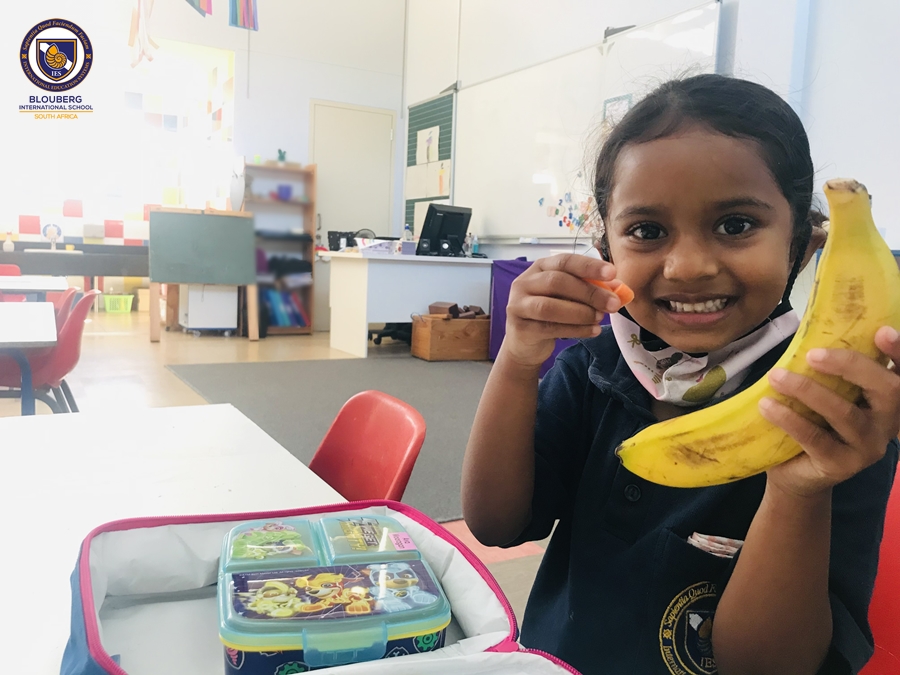
It has been proven that sugar hampers a child’s ability to concentrate and focus. In the Junior classrooms the students are very proud when they have healthy items as snacks and love to show these to their classmates. We would like to encourage this behaviour and really adopt a positive attitude towards healthy eating habits. If we do this from a young age then we can be assured that our children will grow up with this healthy frame of mind regarding food habits.
For some inspiration for healthy school lunches, please see the below article entitled Healthy Food for Kids: Are your kids hooked on junk food? With these simple tips, you can get children to eat right without turning mealtimes into a battle zone.
https://www.helpguide.org/articles/healthy-eating/healthy-food-for-kids.htm
Kim Hahn
Reception Year Teacher

Traffic Light Eating
One of the best ways to help children eat healthy foods is to teach them Traffic Light Eating. Just like when we are driving a car, a traffic light tells us what to do:
Green means “GO”
Yellow means “Slow down”
Red means “STOP”

Green Light Foods
Green light foods are “grow” foods. You want to help children learn to eat as much as they want of these foods, which include all fruits and vegetables. Green light foods are: grown and not manufactured, low in calories, high in nutrients, colourful, and usually can be eaten raw.
Yellow Light Foods
Yellow light foods are “slow down” foods. These foods are okay to eat everyday, in moderation. Yellow light foods include: pasta, rice, bread, tortillas, noodles, eggs, lean meat, chicken, low fat yoghurt, nuts and seeds and whole grains.
Red Light Foods
Red light foods are “stop” and think foods. Red light foods are low in nutrients; high in calories, fat or sugar; or contain artificial sweeteners, hydrogenated oils, or trans-fats. They include: muffins, cakes, donuts, biscuits, cookies, sweets, chocolates, fast foods, pastries, chips, crisps and white bread.
Tips to Apply Traffic Light Eating
Traffic Light Eating makes eating healthy more fun. Learners are paying attention to what we eat, and setting a positive example is the key to turning healthy eating into a regular habit.
We we are excited to start using the Traffic light eating system at BIS.
Water is the healthy option and only drink allowed at school. Juices, cordials, Oros, milkshakes, yoghurt drinks should not be allowed and sent home unopened with an email explaining they are not allowed.
Each teacher from nursery up until Year 2 will display the traffic light eating poster in their classroom. The poster clearly shows which foods are healthy and allowed at school and which foods are not healthy and thus not allowed at school.
Aftercare will also help maintain the traffic light system in the Early/Aftercare. If a child attends a long day in aftercare or early care, then a separate healthy lunch box should be packed.
Red light foods: chocolates, muffins, cakes, sweets, chips, crisps, donuts, cookies, etc. should not be allowed in lunch boxes for class or after care and must be sent home.
Let’s make BIS a healthy eating school improving children’s health which in turn benefits their learning ability and behaviour.
Thank you for your ongoing support.
Charlotte Cronje and Cindy Nunan
Foundation and Key Stage 1 Teachers
Read More
All About Recipes
“Cooking with kids is not just about ingredients, recipes and cooking. It’s about harnessing imagination, empowerment and creativity” – Guy Fiery
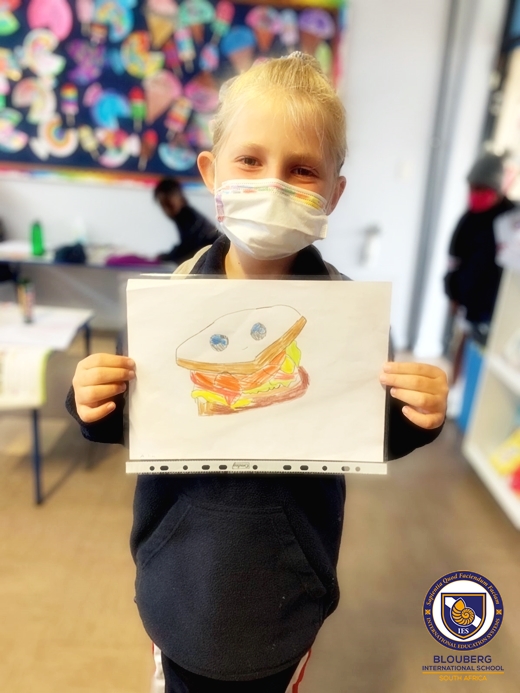
Last week for Show and Tell, our Year 2’s were asked to each bring a favourite recipe with them to school that they could chat to their class about. They were expected to tell their friends about the ingredients you would need as well as the method and instructions needed to create your culinary masterpiece.
Some leaners made beautiful posters, some drew their own pictures of their desired recipes and others even went as far as actually making their dish at home and bringing some to school to show us. Some exciting recipes included chocolate brownies, sandwiches, banana bread, cupcakes and even some chocolate cake.
Following instructions in any area of life can help young children learn and practice some basic math concepts and build language skills. In this specific area, following a recipe and the experience of creating meals with family and friends can help to build self-confidence and lay the foundation for an understanding in where food comes from, how we use it to express ourselves as well as a good practice in healthy eating habits.
We immensely enjoyed exploring each learner’s foodie favourites. So much fun was had!
Siobhan Hendry
Year 2 Teacher


Cambridge International AS and A Level Afrikaans
The Cambridge International AS Level Afrikaans syllabus enables learners to achieve greater fluency, accuracy and confidence in the language as it is spoken and written, and improve their communication skills.
They learn how to improve their use of Afrikaans in a variety of situations, understanding how to read texts and other source materials, and how to extract information, initiate conversations and respond to questions both orally and in writing.
In the Afrikaans class we want everyone to share in the creation and enjoyment of Afrikaans culture, specifically literature, and the development of the language as an intellectual instrument.
One of our AS-topic areas for 2021 is Kos en Drank (Food and Drink)
The Afrikaans language is expressive, rich and unique to South Africa and its food words are as intriguing as the items they describe.
We put compiled a list of our favourite Afrikaanse KOS-words.
Potjie: Direct translation: little pot. A traditional stew slow-cooked in a cast-iron three-legged pot over the coals of a fire.
Slaptjips: Direct translation: floppy chips. Potato fries.
Frikkadelletjies: Little meatballs.
Koeksister: Traditional dough braids that are deep fried and soaked in syrup. Try the classic recipe.
Melktert: A traditional South African recipe for a cinnamon-topped custard tart in a sweet pastry crust.
Naartjie: A sweet and easy-to-peel citrus fruit indigenous to South Africa.
Padkos: Direct translation: road food. Food that you eat while on a journey, usually homemade and containing boiled eggs for comedic effect.
Poffertjies: Fritters or profiteroles. Direct translation: little puffs.
Spookasem: Direct translation: ghost’s breath. Candy floss.
Ystervarkie: Direct translation: little porcupine. Lamingtons (sponge cake dipped in chocolate sauce and rolled in coconut).
When it comes to South African food, Afrikaans has the best descriptive words to make your mouth water! Afrikaans is undeniably and deliciously vivid.
Carmen de Villiers
Afrikaans Department High School
Our Year Two Learners Started Off The Year With A Sweet Taste!
I was very impressed by some of the healthy choices and reasons behind their favourite foods.
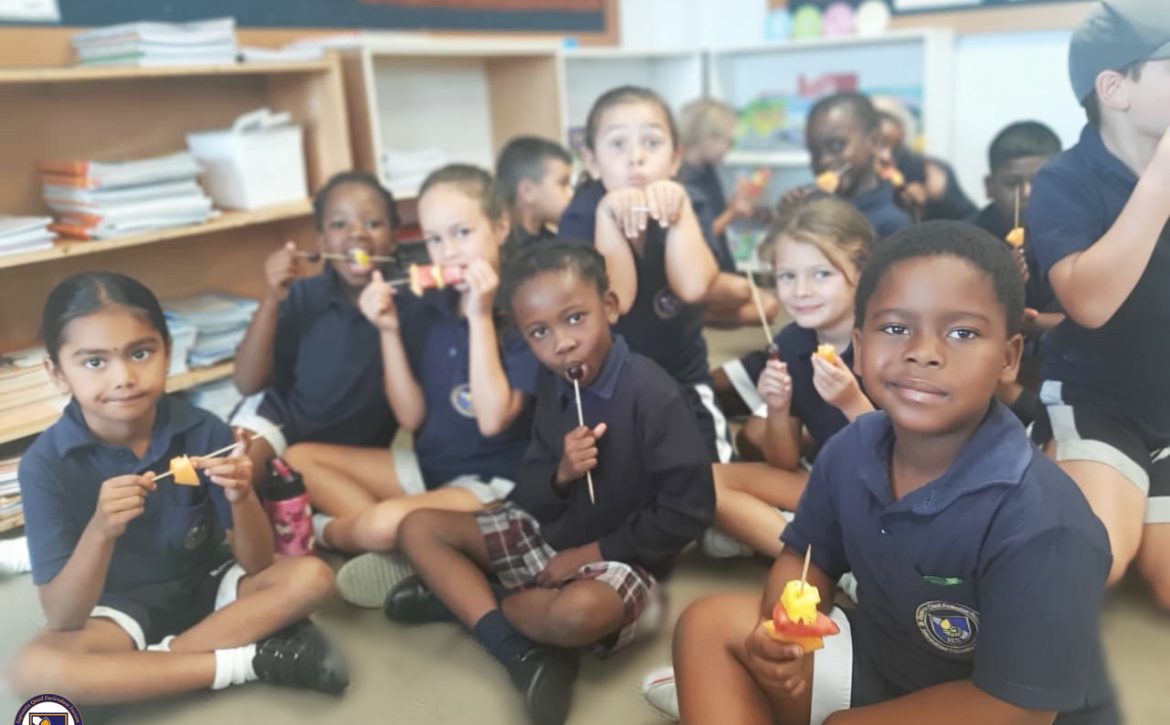
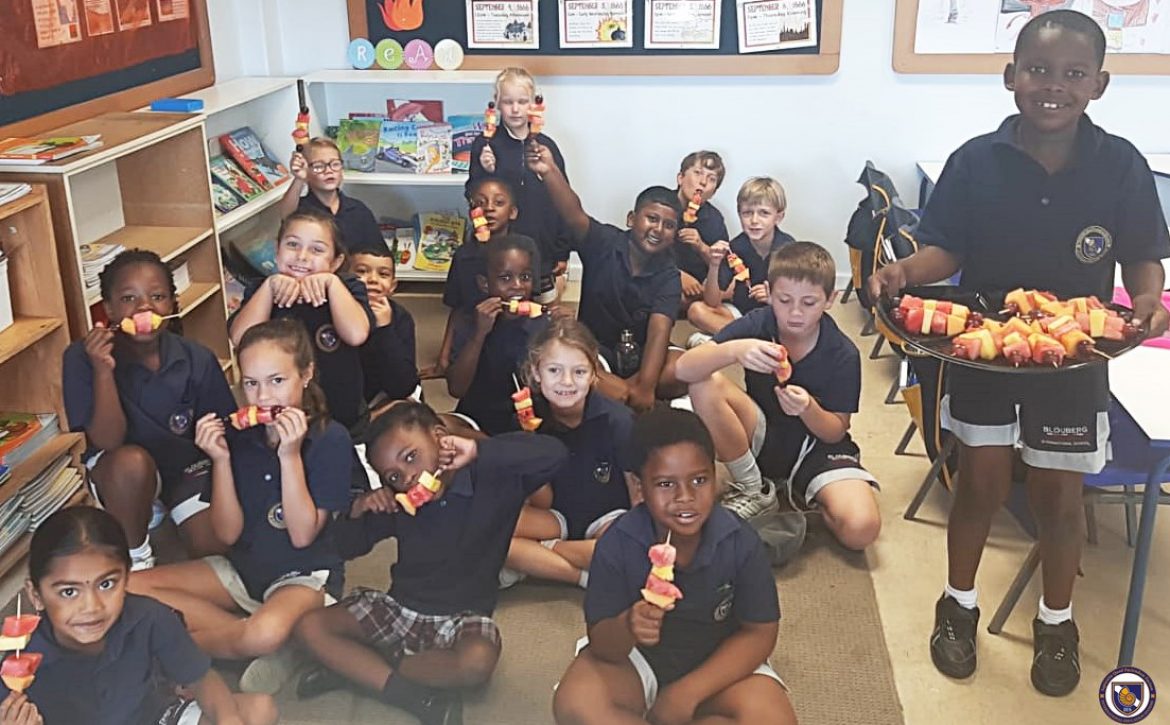
Thabelo Magoro chose fruit for his presentation because “it helps you to grow and run fast” and came to class with lovely fruit kebabs which he handed out.
Sachin Gramoney thoroughly enjoys his grans dish because “it’s tasty and I like the cheese with the roti”.
Zach Gouws chose pizza as it is an Italian dish and his family is Italian and because “I like to put hot sauce on my pizza”
Tyler decided on banana bread because “it is nice to eat, the taste isn’t salty and I like it for breakfast”.
Joshua Gamanya chose steak and burgers because “it has BBQ sauce, burgers have lettuce on it and because I love meat”.
Willow Camara came with two lovely bananas and explained to the class that she loves them because “it has Vitamin B and C, it is very healthy and I can gum it”.
Khalid Al-Anazi came with a very interesting fruit called a mandarin and explained that “it is good for your heart”.
We had many other favourite foods and dishes which the learners went the extra mile to present to the class. Overall, a happy class and a proud teacher.
I look forward to our next “show and Tell” with 2EH.
Erin Hierse
Year 2 Teacher

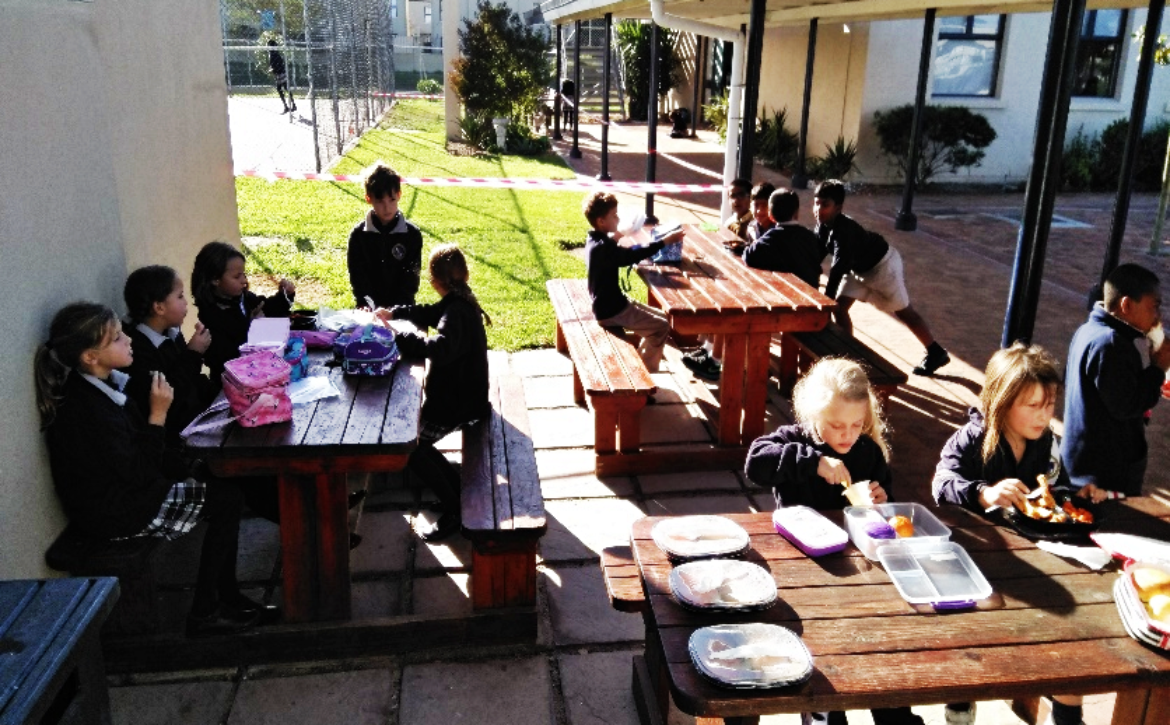
“TABLES” – THE HIDDEN AGENDA
“Tables” evolved in a serendipitous manner…
With the introduction of a Nespresso machine at The Snack Shack, teachers and parents soon began to gravitate towards the one table outside the Snack Shack to enjoy the delicious aroma that was filtering through the air. This became a place to relax and socialise.
Bev and Carole, The Snack Shack operators, introduced “THE LUNCH CLUB” – winter meals on order, at the start of the second term, which have grown exponentially. It soon became evident that a seating area would be required for the students to enjoy their lunches. In no time at all, one table was no longer enough and an outside extension to The Snack Shack was created. This has prevented the students from running off with their food and dropping it while playing. That in itself is not ideal for digesting food.
Every day, Bev and Carole set out the meals of the students who subscribe to the lunch club just prior to the start of break time. Each meal has the student’s name on it and upon arrival they are encouraged to find their own meal. This is particularly important for the Year 1 and 2 students to have another opportunity of recognising their names. It is also an opportunity to encourage socialisation around a table while enjoying a meal, something that happens less today in family homes as many children eat their meals mindlessly while playing on their electronic devices. Table manners and how to treat furniture has become part of the hidden agenda of this area. It allows for subtle friendly intervention in which the students learn that walking over tables, for example, is unacceptable.
Besides being influential in encouraging table manners, it is heart warming to see children sometimes sharing their meals with their friends. Of course the litter bin is strategically placed and well used, although recycling where possible is encouraged. This area provides enormous learning opportunities and is thus an important part of hidden agenda of education.
Thus, the benefits of “Tables” is multi factorial. It is a delight to watch the children interact and engage while enjoying their freshly prepared balanced meals. We use these opportunities to encourage healthy eating and especially the intake of vegetables.
Should parents wish to enquire about “THE LUNCH CLUB”, please contact Bev for further information on mossreilly@gmail.com
Written by Bev Moss-Reilly