

Lovely Letters Of Encouragement
Last Friday, the students had a surprise visit from Postman Sean who delivered letters to each of the Foundation Stage classes. Excitement filled the students’ eyes as Postman Sean entered the classroom, and the students eagerly made their way to the carpet find out more about his special delivery. Postman Sean then told the students about his job as a postman and explained the different stages from posting a letter to receiving it. He then handed out each of the letters to the delighted students.
These letters of encouragement had been sent in during the course of the two week theme. Some children even received letters from grandparents, cousins, siblings and other loved ones in their family. We read out the letters in class and it was so beautiful to see the smiles on the students’ faces as they listened intently to the very special messages from their lovely ones.
This was such a lovely and memorable way to end off our theme.
Bronwen Nuthall
Reception Year Teacher


Read More

It’s All About The Skills…
A Chinese philosopher, Lao Tzu, once wrote – Give a man a fish and you feed him for a day. Teach him how to fish and you feed him for a lifetime.
In our education system, while we are certainly not in the business of teaching children how to fish, this quote does make us stop and think. As teachers and parents(myself included), we become so focussed on our childrens’ academic and sporting progress, that we forgot about those so-called ‘soft skills’. It was with this in mind, that the school began our very own skills development programme every second week.
The various key stages and year groups have different goals most suited to their students’ ages. In Year 2, we decided to focus on problem-solving this term. Ms Hendry, Mrs Pani and I incorporated ‘dealing with conflict, speaking up for yourself and how to make amends’. We felt it was an important topic to tackle, as our students are still developing their emotional and social skills and often do not have the words to express their feelings, resulting in conflict or unhappiness.
The students really enjoy these sessions and participate enthusiastically. We role-play situations, looking for various solutions to the different challenges faced in these exercises.
We are looking forward to next term’s Skills Training.
Mrs Kim Coetzer
Year 2 Teacher

Read More

The Power Of Music
Every Friday afternoon when school is out, a group of students and teachers gather around a common passion… music! For the past few weeks Miss Hazel, Miss La Bercensie and Ms Blake have been teaching and coaching a few students to play together and experience the joy of performing music they love.
Music is a language that speaks to all people. It has the ability to bring people together. Without a doubt, human interaction is at the centre of this art. The ability to connect through playing music together has been strained due to covid, but we are finding new ways to have these opportunities where we can create music.
Music stimulates the brain, which enhances memory whilst reducing levels of pain and stress. In a digital age where life is fast paced and instant gratification is a norm, learning a musical instrument provides a platform for people to achieve through discipline and perseverance.
Playing with a group of other musicians develops teamwork and leadership qualities. These are not only skills required in music, but life skills that equip individuals for their future employment and wider social lives.
Music is an expression. It is a creative outlet so needed in today’s world where pressure is inevitable.
Music brings great joy! Whether we are playing songs in the top rafters of Blouberg International or performing to an audience, the joy of creating music is enough of a motivation to bring people together.
We are very excited about this journey that we have started. Watch this space!
Carol Blake
Year 4 Teacher


Read More

People Who Help Us
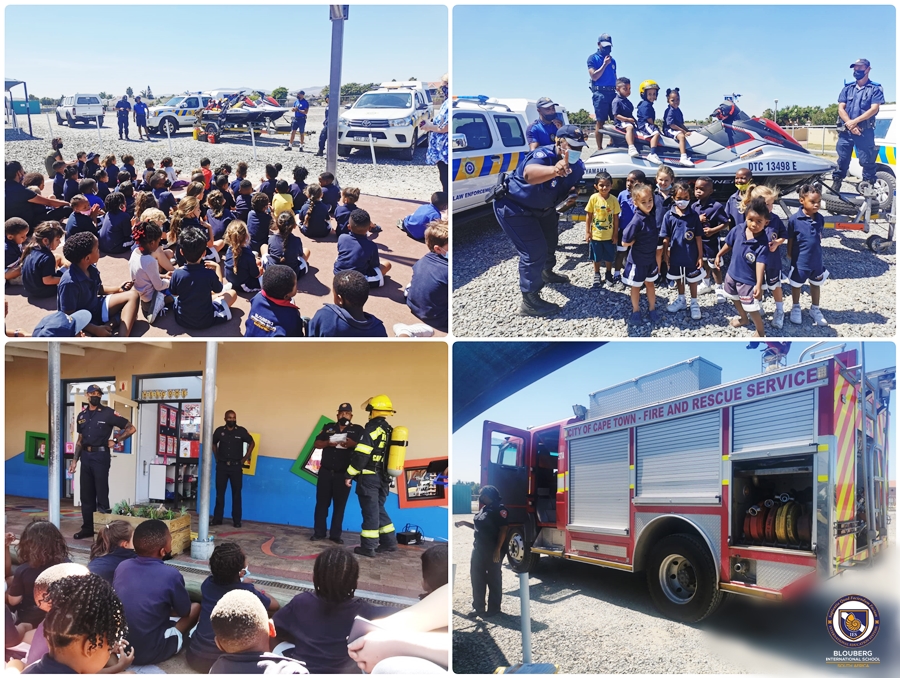
For the past two weeks, the Foundation Stage has been learning about People Who Help Us in our community and how they help us in our daily lives.
The students also learnt how some of these people help us in emergencies, like firefighters, police, doctors and nurses. If there is an emergency, they will need to know how to get in touch with the right person to help in the situation (however old they are).
They also learnt of other people who help us stay safe and healthy, like opticians, dentists and refuse collectors.
Learning about this topic helps the students to make connections between themselves and the outside world. It makes them more aware of the different jobs and roles people take on in their own homes, in school and in their community. By educating the young students about the people who try and prevent these things happening or help us if they do, we are showing them the systems in place within our society to ensure that we live in a safe and supportive community.
The theme also provides key life skills for children, e.g. knowing how to dial the emergency services, who to ask if they get lost, what to do in case of a fire etc.
The Foundation Stage students were visited by law Enforcement Services, Fire and Rescue Services and Neighbourhood watch. They learnt what to do in various emergency situations and to call the toll free numbers 107 & 10111 to get help in any emergency.
This theme encourages children to notice places and people in their community and show them that they are part of a wider community that opens up possibilities for them to consider for future careers.
Cindy Nunan
Pre-Reception Teacher


Read More

Learning From Our Elders
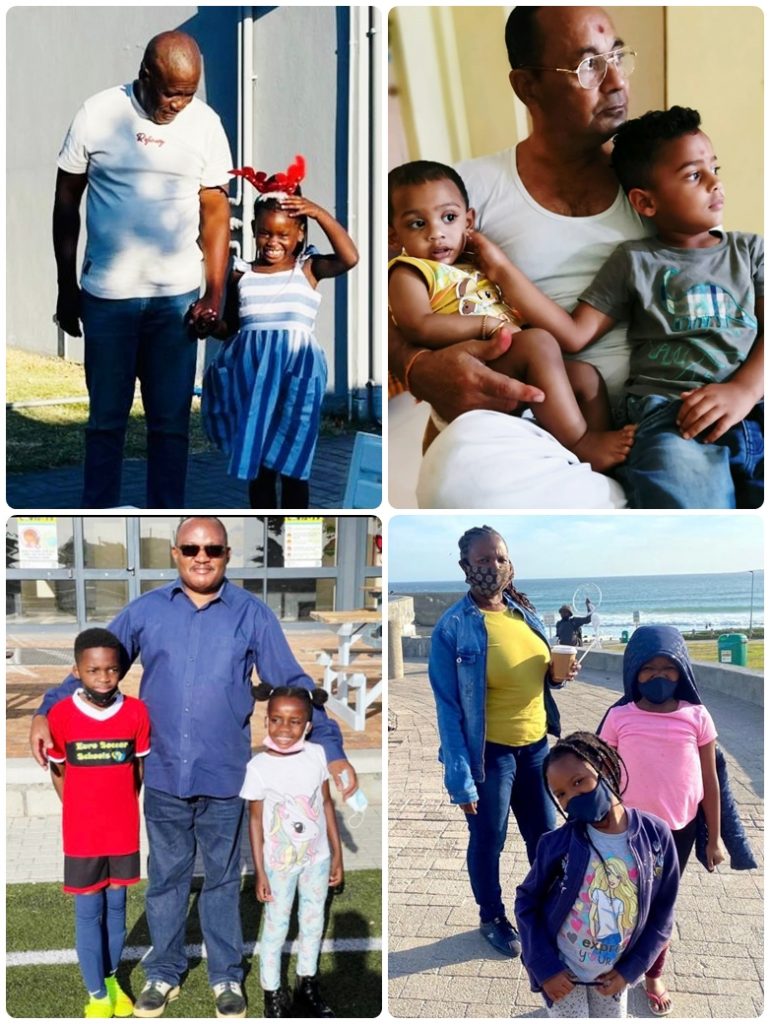
In Year 1 Global Perspectives, we have been learning and talking about what it is like to grow old.
We interviewed my 90-year-old Great Nana in England (Kathleen Mitchell), live in class and the students had the opportunity to ask their own questions.
Young people of this generation can learn a lot from the lives of their elders. The older person has experienced all sorts of dimensions of life and lived through a very different time to how things are now in 2022.
Their lives can be fascinating to hear about and learn from. Some people are very lucky to have grandparents involved in their lives and they can enrich and bring such joy to today’s fast-paced day to day life.
The class will be interviewing and asking questions of the older people in their lives at home and reporting back their findings this week.
Charlotte Cronje
Year 1 Teacher

Read More
Everything has a cycle and every person a story to tell
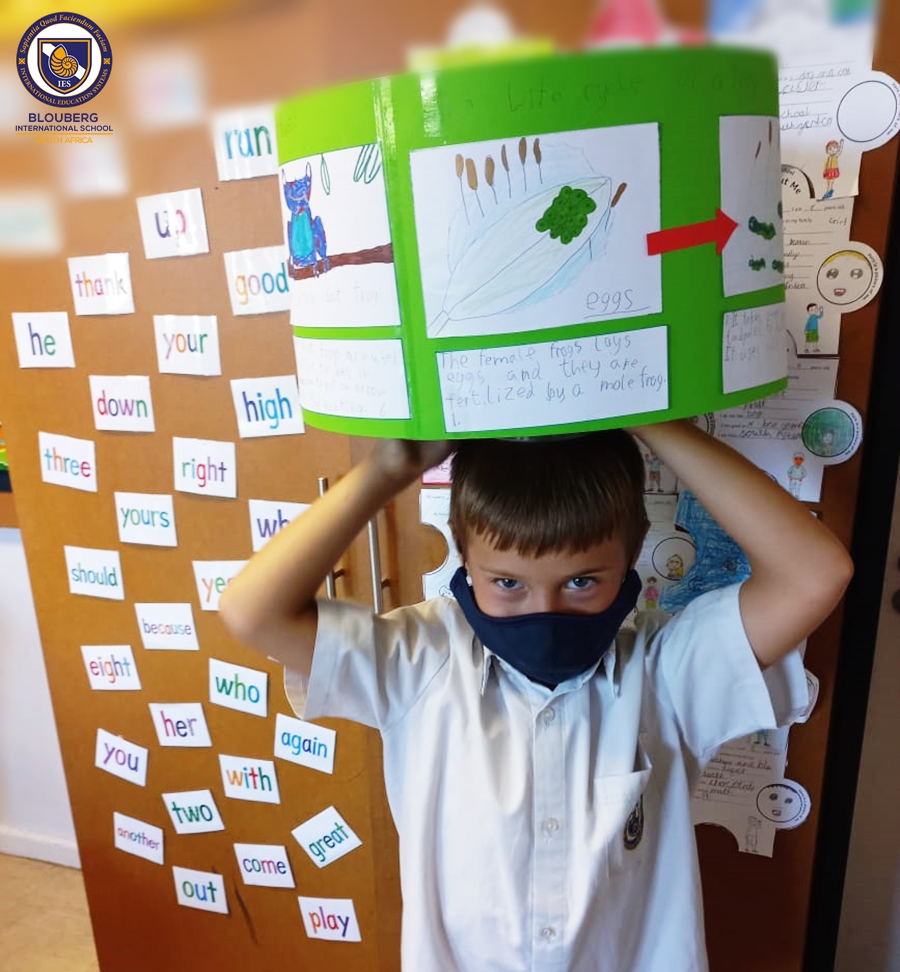
The Year 3’s have been learning about Living things this term. As part of this theme, each student was asked to make a presentation about the life cycle of different types of animals and include an interesting fact.
These they presented with great pride and excitement in an oral.
We learned that:
- Baby koalas eat their mother’s poop to learn to digest eucalyptus leaves.
- The poison from the blue poison dart frog is used to tip the arrows of Amazon hunter’s darts.
- A dog has 28 teeth and 1700 taste buds.
- Jellyfish do not have brains.
- A Monarch butterfly – the female is attracted to the male’s perfume.
- Dolphins have two stomachs.
- A koala bear is as small as a jelly baby when it is born.
Well done to the Year 3 students for making their projects so visually stimulating and extremely interesting.
Carey Schoots
Year 4 Teacher


Read More

Year 5 Solar Systems
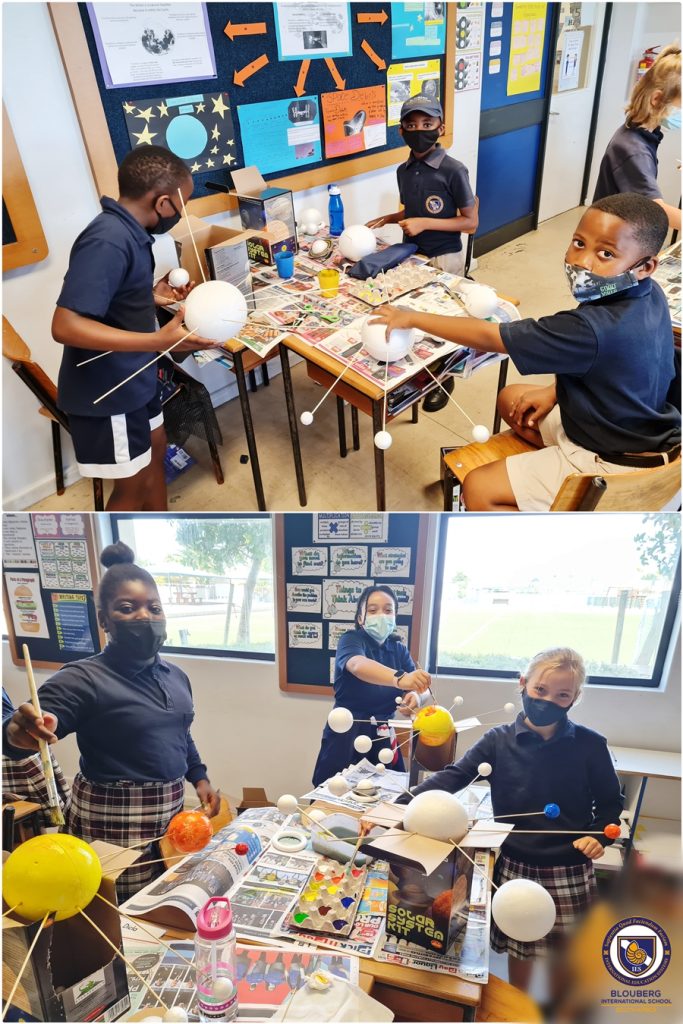
In Science, the Year 5s have been learning about The Earth in Space. One of the core concepts this unit of work is based on is the fact that everything in the solar system orbits the sun.
We decided that a practical demonstration was in order, so we built ourselves some solar systems. This helped us to gain a concrete grasp of how the solar system fits together. We included the eight planets of the solar system – and some of us even got creative and added Earth’s moon to our models!
Now, as we like to say, the whole world is not only in our hands, but also hanging from our classroom ceiling…
Hannah Kirkaldy
Year 5 Teacher


Read More

Read, Read, Read
Learning to read can be the most exciting time for young children. Opening up the world of books is an invitation to many adventures.
I asked some of my students why they want to read:
“So I can read stories to my sister.” – Caleb
“I want to make speeches.” – Ingelam
“Because I want to be smart.” – Emily
“So I can help my little brother.” – Iminathi
There is much that parents can do at home to keep their child excited about reading. One of the best ways, is to read to your child. Bedtime is a wonderful time to read to your child and it has the added benefit of helping them to relax and go to sleep more easily.
In the classroom, nothing takes the place of reading aloud to the students. Most students sit spellbound, listening to the stories. They love to add their own opinions on what is going to happen next or why a character should have been kinder.
Every class has a weekly library lesson and Mrs S, as she is affectionately known, reinforces what the students are learning in the classroom in her Library lessons. The Year 1 students are enjoying the fun phonic recognition games Mrs S has introduced to them. They even get to choose library books to put in the classroom book corner.
If you need a moment to relax, find a child to read aloud to.
Ann Cordner
Year 1 Teacher


Read More

Valentine’s Day And Core Values
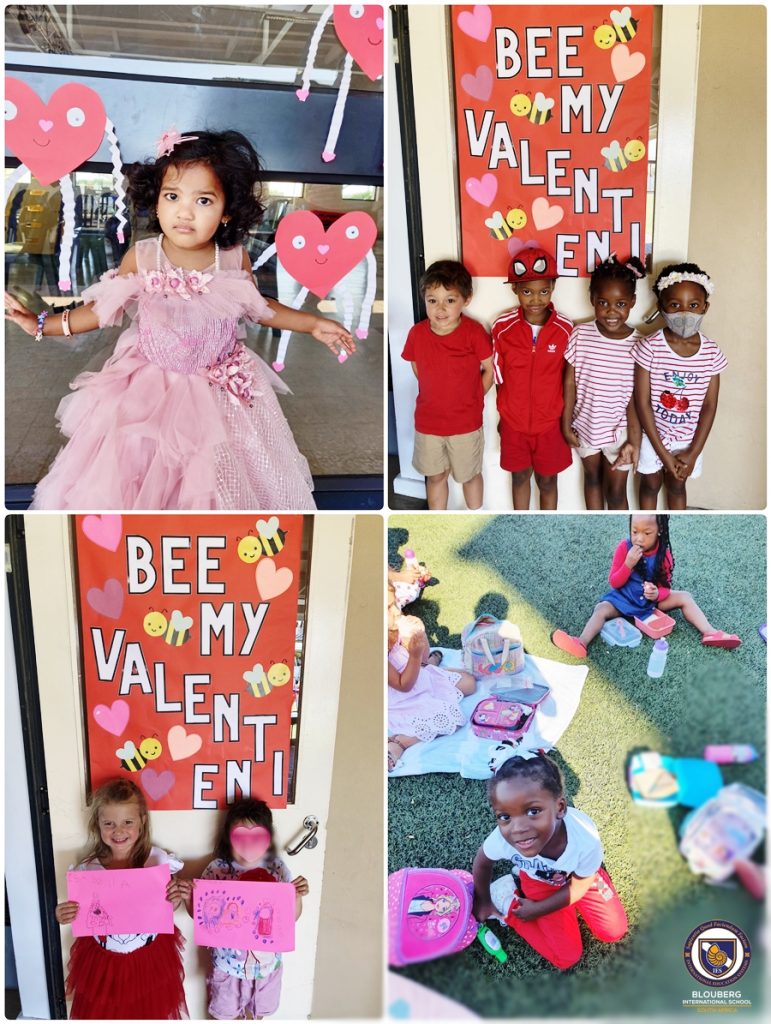
We have become so used to extended periods of lockdown and limited social opportunities during the Covid-19 pandemic. That is why this year’s Valentine’s Day, whilst still following social distancing, was such an exciting event for the Nursery, Pre-Reception and Reception students. They had the opportunity to interact in larger groups during our Teddy Bear’s picnic and it was so nice to see them bonding, laughing and thriving socially. Our Valentine’s Day was filled with love, hugs and beautiful pink, red and white outfits.
From this Valentine ’s Day onwards, we will focus on the core values of being kind, caring and encouraging. Mr Swart introduced these core values to us in our first assembly for the year. These values can be accomplished even at an early age and are implemented and encouraged in every classroom in the ELS.
I asked a few students in Reception Year what it means to be a kind friend and they had some very special responses:
“If someone doesn’t have anyone to play with then you can play with them.”
“Don’t tease or use unkind words with your friends.”
“If your friend is hurt or sad you can help them or give them a hug.”
“If you share your toys you are being a kind friend.”
“Helping your teacher is a kind thing to do.”
I think it is encouraging and exciting to see that our BIS students will grow up to be thoughtful, empathetic and compassionate people in a society that is in such dire need of these qualities.
Please continue to encourage your child to develop and grow in these qualities, irrespective of their age. Being a kind, caring and encouraging person will guarantee healthy friendships and relationships that blossom. They are excellent building blocks for a solid foundation for the remainder of their lives.
Kim Hahn
Reception Year Teacher

Read More

Nursery Tackles Responsible Hygiene
It’s probably not surprising that learning about hygiene and self-care at a young age contributes to healthy social and emotional development. Encouraging independent self-care skills has a significant long-term impact on children, and attempting to complete these self-care tasks, builds on their confidence and promotes a healthy lifestyle.
Good hygiene expands further than just using hand sanitizer in class – it’s about keeping our surroundings clean and maintaining that cleanliness whenever possible. That’s why this week, during our Skills Programme, Nursery took the opportunity to learn about taking responsibility for our personal hygiene – as well as for the hygiene of the classroom.
We embarked on a fun-filled adventure to the garden, where we cleaned all the class toys with warm water and soap. The students worked as a team, learnt about germs and enjoyed cleaning all the crevices of their much-loved toys.
The best way to encourage good hygiene habits in our little tots, is to be a good role model and to set the standard at home. Keeping the conversation going will not only normalize the responsibility, but it will also ensure that the children are keeping their body happy and healthy. Self- care is the most important skill we can learn and starting today, no matter the age, will ensure self-love.
I am so proud of how far the little tots have come and I am so excited to put this new skill to good use in our future lessons.
Jo-Anne Dickason
Nursery Teacher


Read More