
States Of Year 5
We all know that our children matter. What the Year 5s have been learning recently is that they are also MADE of matter.
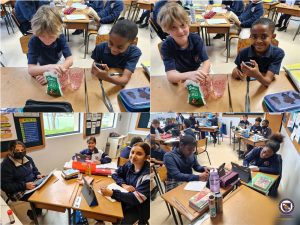
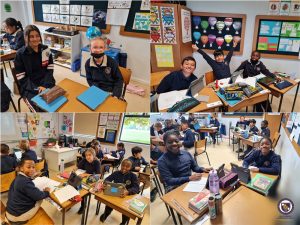
We have been looking at the particle model and states of matter in Science, and the students have explored the topics in a variety of different ways. They have used their textbooks to learn independently and peer-teach each other about processes like boiling and melting, practising the skill of reading information to pick out salient points, as well as their communication skills (and producing some useful posters for the classroom walls in the process).
They observed what happens when a solid is dissolved in water and described the process on the particle level, while reminding themselves that while you may not be able to see the salt in salt water, you would definitely know it’s still there if you tasted it.
They practised their Science enquiry skills by looking at available equipment and figuring out how to test the effect of temperature on the rate of dissolving, writing a practical report to systematically record their findings.
Now they are turning their hand to some research, using the iPads to look up some information about the properties of water.
Throughout the topic, I have been impressed by the students’ willingness to jump into the world of Science and test things out, whether it be research skills, observation skills, or designing a fair test. It would be fair to say that the students have been vibrating with energy – much like their particles!
Hannah Kirkaldy
Year 5 Teacher

Read More

Observing The Weather Using A Wind Vane
Our budding Year 5 meteorologists (a physical scientist who observes, studies and forecasts the weather) have been learning all about the wonders of the weather in Geography this term.
They started by learning about the four main elements of the weather (temperature, wind, rainfall and cloud cover) and how these can be used to describe the weather. They are currently completing a 2-week weather project, where they need to observe and track the weather on a daily basis. These observations require the use of various weather instruments, such as a thermometer for temperature; a rain gauge to measure rainfall and a wind vane to measure wind direction. Using these instruments accurately is a skill they need to master and demonstrate over the course of the project.
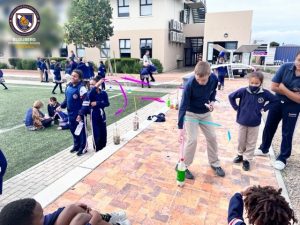
But we can’t accurately measure wind direction without an instrument to help us, so, the Year 5 students started the project by designing and making their very own creative and colourful wind vanes! The idea behind making these weather instruments was that they could then be used by each student at home when making their observations on the direction of the wind.
Great fun was had by all when they put their wind vanes to the test outside on the school field! The direction of the wind (moving air) is the compass direction that the wind blows from. On the day the Year 5’s did their test, the wind was blowing in a northerly direction. They knew this because they had first accurately plotted the 8 compass directions on the ground, using a compass.
We are looking forward to seeing the results of their investigations on weather at the end of this exciting project!
Cindy Drury
Year 5 Teacher


Read More

Aftercare And Holiday Care
At BIS our main focus for Aftercare is to provide support for students when formal school activities close for the day. Some of the benefits and value that students receive when enrolled in our BIS Aftercare Programme includes:
- Basic homework routines support by aftercare assistant.
- Fun activities such as reading, drawing, arts and crafts, movies.
- Basic needs are met which includes safety, a snack, play time.
- Strengthened relationships with peers and more quality time to spend with parents at home, as homework and other activities are completed at Aftercare.
We also offer a fun, interactive and structured Holiday Care Programme, where extra-mural activities and recreation forms part of the daily routine.
Some of these activities include:
- Participation in sporting activities to strengthen and develop physical and team building skills.
- Learn life skills through participation in a range of informal and structured activities that teach children how to cope with everyday situations.
We have an exciting Holiday Care Programme planned for the June/July school holidays; enroll your child by clicking on the link below.
Avril Lai Wing
Aftercare Manager




Read More
‘X’ Marks The Spot
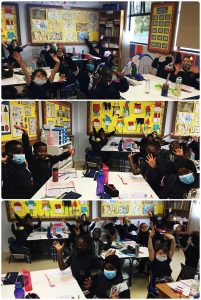
This Term in Geography, the Year 3 students have been learning how to read a map, what map symbols are used for and following directions on a map. They also learnt a great deal about grid references and compass roses. This all coincides with History where we are learning about ‘Explorers’.
When investigating map symbols, the students had to create their own map symbols for the classroom. Once they had completed that, they used those symbols to draw a birds-eye view of their classroom to show their knowledge and understanding of the concept.
We extended the concept by playing directions board games and completed a compass challenge game in groups.
The best part of the whole term was that each student was given a chance to create their own treasure map, and present an oral about their map explaining how to get to the treasure using directional language. Each map had to have an appropriate name, a key showcasing exciting locations, feature a compass rose for directions and footprints to the treasure (x marks the spot).
Students were allowed to stain their maps with tea or coffee and burn the maps to age them so that it looks authentic. I remember doing this exact activity in primary school, so I was very excited to see what each student came up with. I loved the various locations they used, like skull caves, waterfalls, sinking sand and volcanoes, only naming but a few. The Year 3 teachers are super proud of how much effort all our students put into this task. I am sure that you will agree with us when you see their beautiful maps.
We will continue exploring maps and atlases for the rest of this term while discussing the various famous explorers. I cannot wait to do the scavenger hunt and I am certain the Year 3 students will enjoy it too!
Wendy Menton
Year 3 Teacher

Read More
Creating A Virtual World
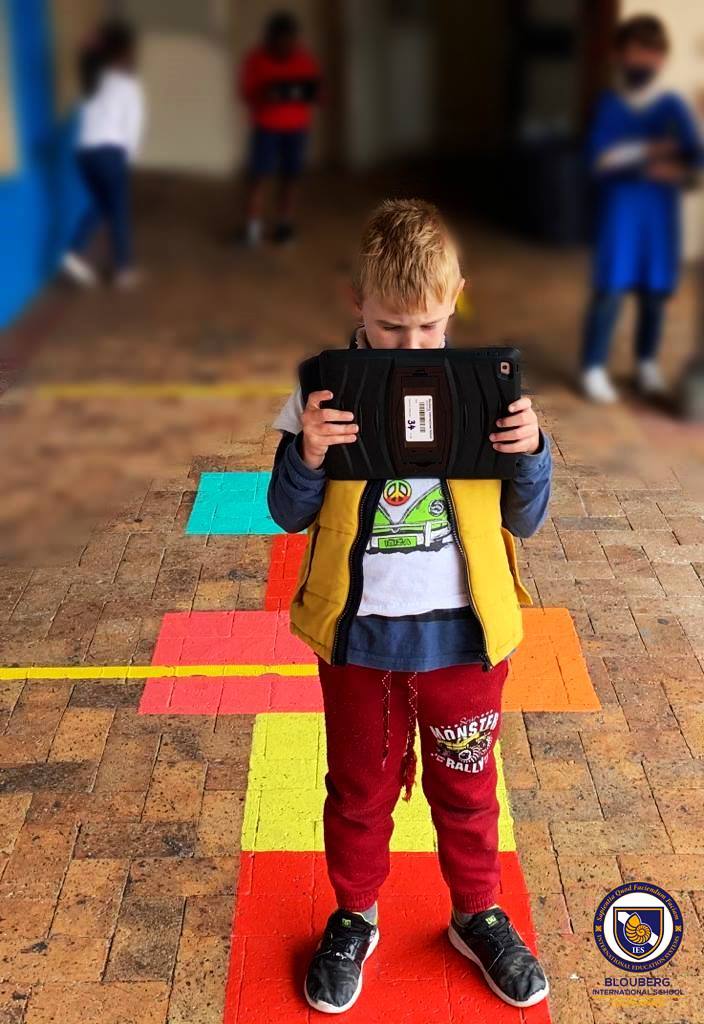
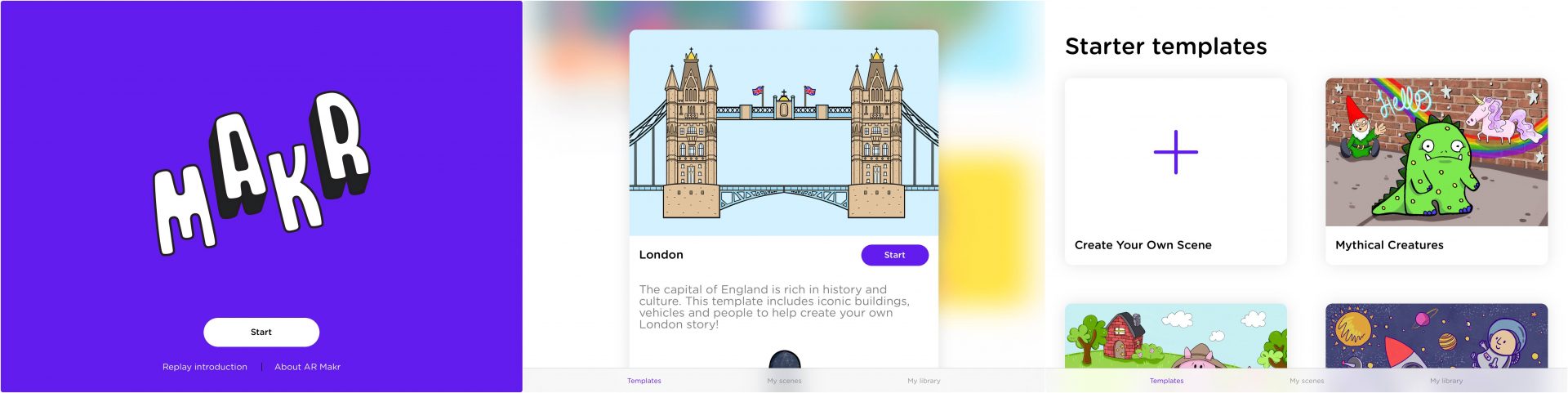
In Year 1 we have been working on the school Ipads. In our Geography lesson we used a program called, ‘ARMAKA.’ This is a fun, educational game where you can create your own world and put what you want into it.
We have been following the travels of Barnaby Bear around the world this term and we were able to create a new virtual place for him to visit using this program. The students had lots of fun creating underwater scenes, or a Japanese scene, a busy day in London and many more, and during the Barnaby dress up day they could walk around and explore the spaces they created.
Many families have tablets and devices at home and this program can be used by the whole family to have fun and get creative together. All you need is some space!
Charlotte Cronje
Year 1 Teacher


Year 3 Mummies
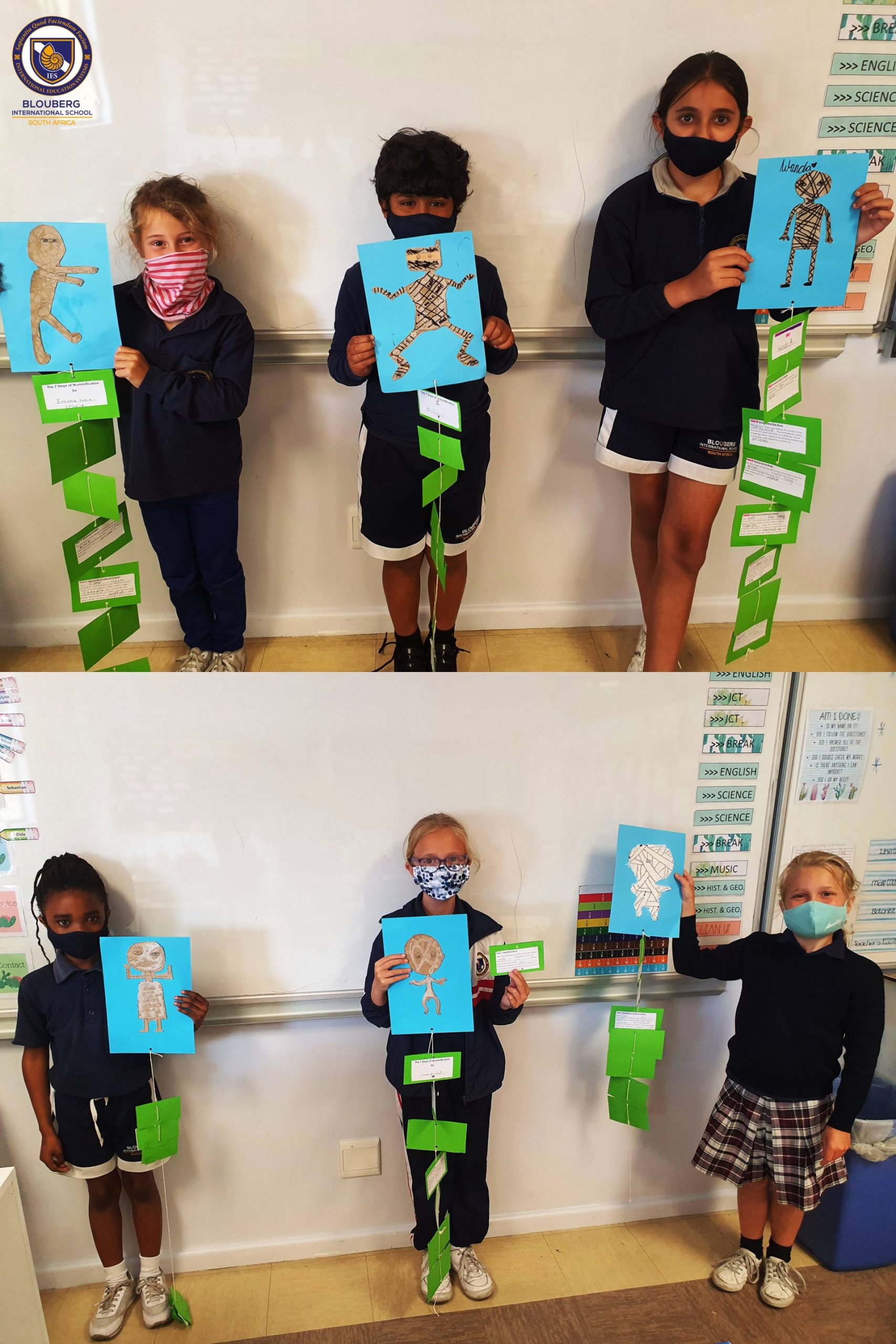
In History and Geography this term, the Year 3’s have been learning about the Ancient Egyptians and their country. This has been a thoroughly exciting topic to learn about and one that the students have embraced with great enthusiasm.
This past week, the Year 3 students had the opportunity to make their own mummy by drawing the outline of one and using their cold glue skilfully in creating its bandages. After this, the students learned about the many steps to the mummification process and included these steps beneath their mummy creation.
Even though this activity got quite messy, much enjoyment was derived from it!
Alexia Holmes
Year 3 Teacher
From The Geography Department
The study of change and processes which operate at various levels, from local to global, is a core part of the IGCSE and AS Geography syllabus. In our current climate we find change being a constant and adaptation to it being necessary for survival.
We live in an increasingly connected, globalised world. A geographer’s eyes analyse these connections and the spaces in which they operate. When the Spanish Flu hit in 1918, steamships and steam locomotives allowed the spread to take place at a fast rate. In 2020 we are able to travel physically over many thousands of kilometres in a matter of hours. Our economies are global and much of what we use on a day to day basis started its journey on another continent before reaching us.
We are also living in an urbanized world with over half the world living in cities. It is densely populated globally connected cities which have been hardest hit by Covid-19. We can track the spatial paths that the virus has travelled in these cities and globally to find patterns to aid us in its combat. Demographically distinct patterns can also be seen in the virus’s victims.
2020 has shown us that we are in this together. The local affects the global and one person’s behaviour can have an impact on neighbours and communities that are further afield. We are reminded that we are not alone and that the challenges faced by individuals are being faced by all. Visit https://coronavirus.jhu.edu/map.html and https://informationisbeautiful.net/visualizations/covid-19-coronavirus-infographic-datapack/ for various data lenses through which to view Covid-19.
Ann Donald
High School Geography Teacher

Exploring Countries
This week our theme was countries around the world. We enjoyed leaning about the following countries:
South Africa– After locating South Africa on the map, the students learned that Johannesburg is the largest city in South Africa and that Cape Town is known as the Mother City as it was the first western settlement established in our country. There are 11 official languages in South Africa, but English, Xhosa and Afrikaans are widely used. We also know that South Africans eat a wide variety of foods similar to most western countries. Some traditional foods are biltong, rusks, potjiekos, braai, samp and beans, melktert and bobotie. The South African flag represents the coming together of our Rainbow Nation in the new democratic South Africa. The students loved decorating the South African flag.
China- The students discovered that China is the fourth largest country and that the capital city of China is Beijing. The national flag consists of a red background and five golden-yellow stars. The Chinese are known for eating a wide variety of foods. The staple foods however, are rice and noodles accompanied by vegetable or stir fried meats. The Lantern Festival is a fun festival where people flock to the streets with a variety of lanterns under the full moon, watching Lion or Dragon dancing and lighting up fireworks. The students made a dragon during art and craft time.
Australia- We did Aboriginal Art while we learned more about Australia. Australia is the only country that is also a continent. It is also one of the driest places on earth. It is a multicultural country and they have cuisine from all over the world including Greek, Middle-Eastern and Asian food as well as good English fish and chips.
Russia- We made a Russian cityscape collage during art and craft time. We learned that Russia is the world’s largest city. Russians enjoy eating caviar or fish eggs, served on little pancakes called ‘blini’ topped with sour cream. Borscht, a hearty soup made from beetroot is also very popular during the cold winter.
We enjoyed learning about these countries and we will discover more about France, England, Spain and America next week.
Martie van Dyk
Reception Teacher


Two Oceans Aquarium Outing 2020 – High School
On Tuesday the 10th of March the year 9 to 12 Biology and Business students, together with the 9 and 10 Geography students, visited the Two Oceans Aquarium.
Among the most interesting things that were discovered was that fish have their own personalities, such as the fish that loves cuddles! About Yoshi the turtle who was released back into the wild 2 years ago after 20 years in captivity and has since traveled a record breaking 37 000km!
We learned how the marketing team at the aquarium aim to not only promote the aquarium to attract customers, but also how they use this platform to communicate about causes that are close to their heart. A few causes they mentioned were sustainable fishing, single use plastic and environmental sustainability.
Another interesting fact is that South Africa ranks as the 3rd most bio-diverse country in the world.
The Two Oceans Aquarium is truly a magical place with so many treasures to enjoy!
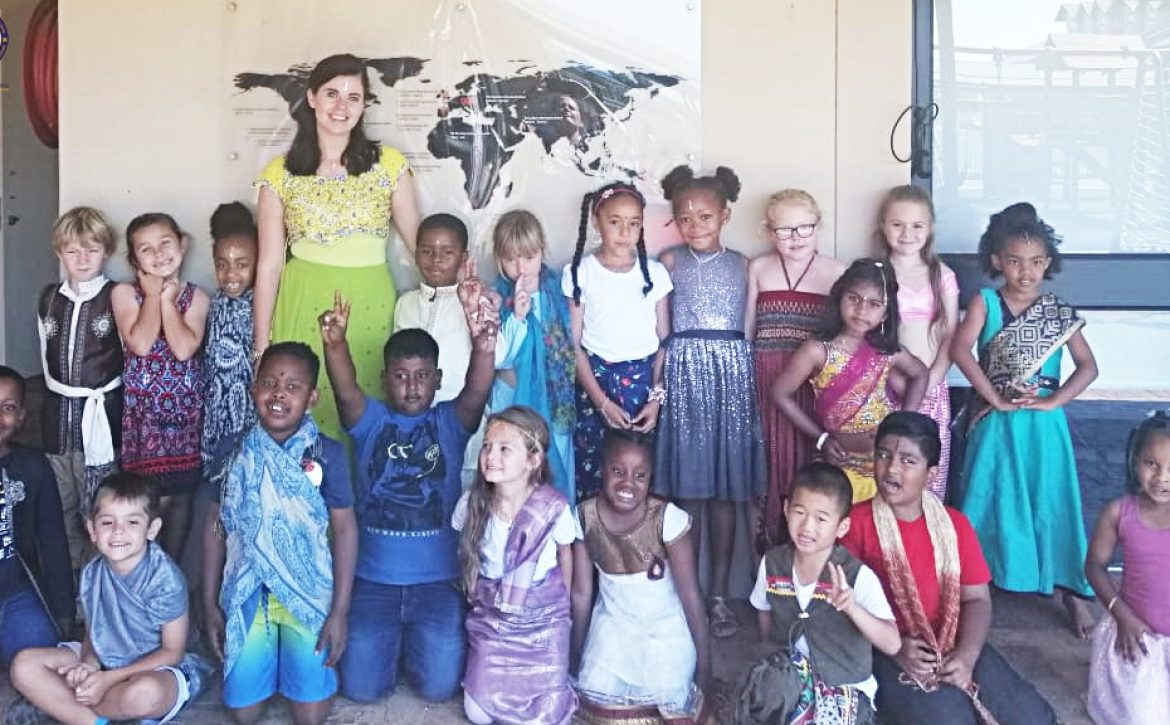

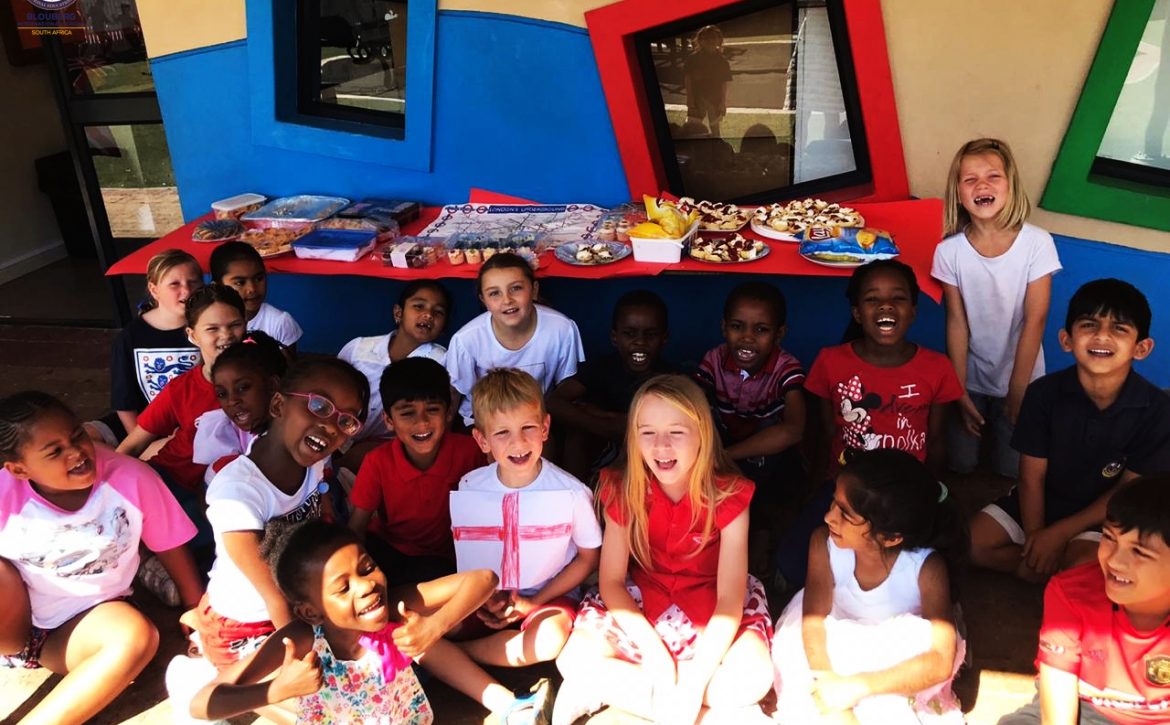
Barnaby Bear Day 2019
This term the Year 1’s have enjoyed our Geography theme “Where in the world is Barnaby Bear?”
Barnaby Bear has visited England, the USA and India.
To close off our theme we had an International Day on Monday, 9 December. The students enjoyed traveling around the world experiencing the countries that Barnaby bear had visited. The students tasted different foods from the USA, India and England. The students were taught a line dance, Bollywood dance and listened to Mrs Cronje speak about her home country (England) followed by a lovely story.
It was a fun filled day and everyone enjoyed their around the world Barnaby bear day.
Tayla White
Year 1 Teacher