
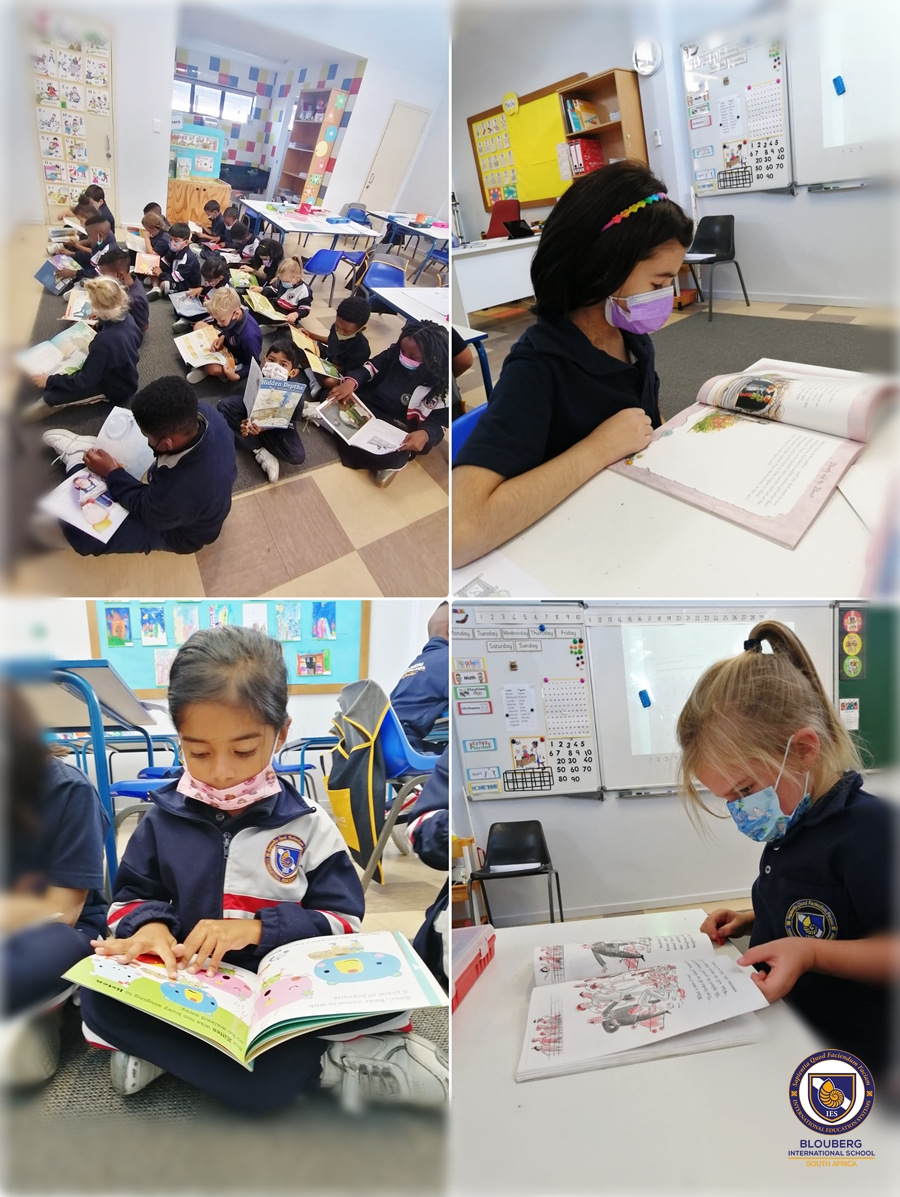
Inspiring Your Child To Read
This week, I want to share a few basic and wonderful tips on how to get your little one to become a life long lover of reading…
We all know it can sometimes feel daunting to explain to our children how important it is to build good reading habits. Reading is a vital component of education. All students need good reading skills to succeed not only at school but in life in general.
I hope that sharing these insights with you can inspire you as much as it did me. See the image below titled: Building a Reader At Home
Ann Cordner
Year 1 Teacher and Key Stage 1 Coordinator

Read More
From the German classroom
Back to school in South Africa is always an exciting time of the year. Students start a new grade with a new teacher, enter a new classroom and meet new classmates.
The Year 1’s also started this year with new languages to learn – German being one of them. In the introduction to German and Germany they learnt the phrase ‘Ich lerne Deutsch’ (I am learning German) and the colours of the German flag. The Year 1’s were very surprised to hear that most German schools start in September after the summer holidays in Europe and that the students do not wear uniforms at school.
They were also introduced to the Schultüte (a school cone), a German tradition that all Klasse 1 (Year 1) students look forward to on the first day of school. Before Klasse 1, they would usually be attending a type of Kindergarten (a playgroup or nursery) at another institution, therefore making the first day of school one of the most important days of their childhood.
So, what exactly is the Schultüte?
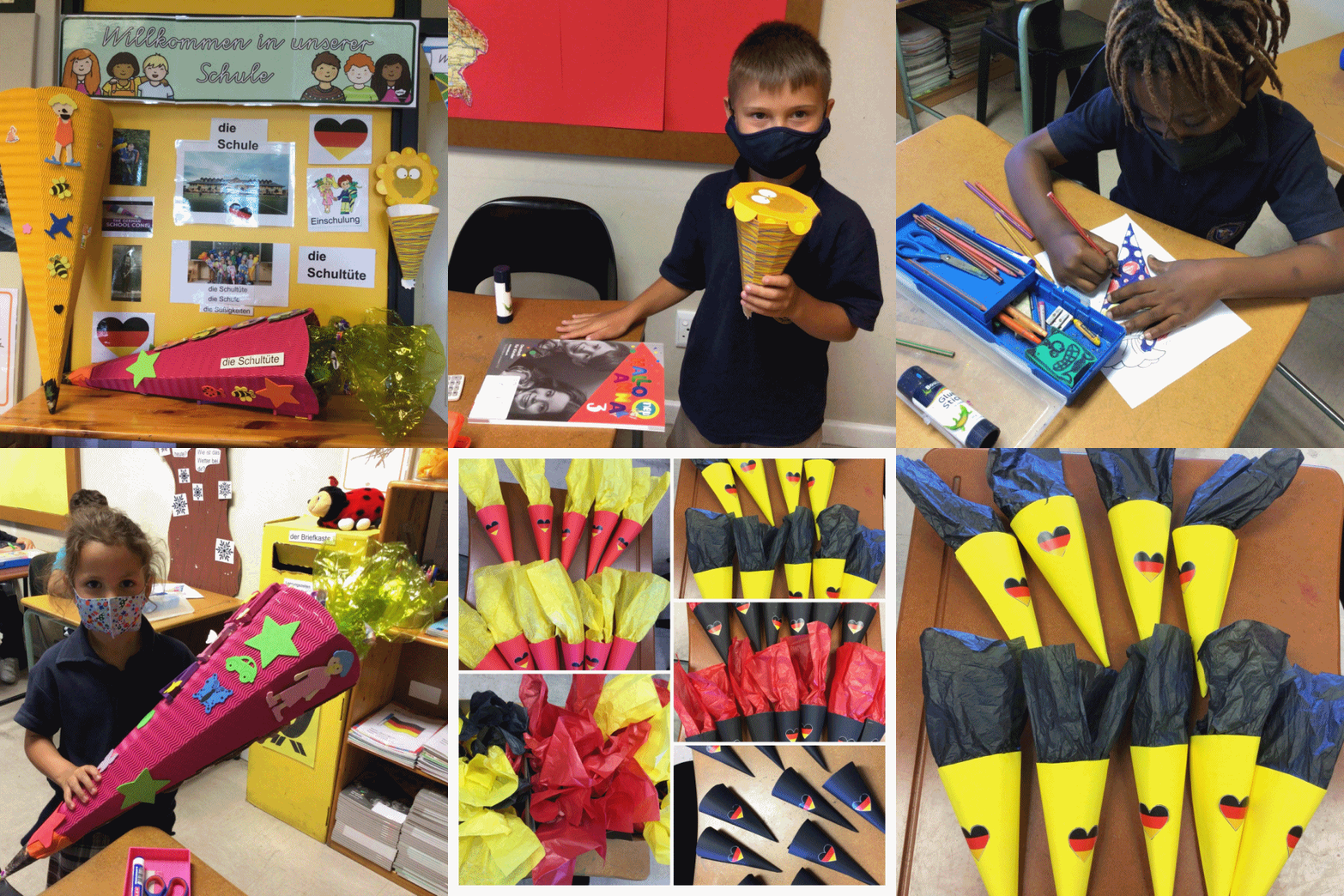
It is “a colourful and elaborately decorated cone which is prepared by a students’ parents and filled with goodies such as small school supplies (like pens, pencil cases, erasers, etc.), toys and sweets.
This German tradition originated in the early 1800s in the cities of Jena, Dresden and Leipzig. Back then, parents brought the Schultüten directly to the schools, where they were hung on a so-called Schultütenbaum (‘school cone tree’) in the classroom. When the tree was ‘ripe’ with school cones, it meant that students were ready to begin first grade. On the first day of school, students were instructed to pick the cone with their name on it.
Naturally, the tradition spread and evolved over time. Today, students often receive their Schultüten before they leave their homes to go to school and the kids proudly carry their Schultüten to their new classrooms. Of course a photo with the Schultüte is a must and a memory for the years to come.
The photos below show our Year 1 students with their beautifully coloured in pictures of a Schultüte in class; the designed and decorated Schultüten by the Year 2 students and the Year 3’s completing a Schultüten craft from their Hallo Anna neu 3 workbook to take home.
The Year 1 students enjoyed holding the Schultüte in my classroom and wished so much for their own Schultüte and to be in Germany for this tradition. With this in mind the German Club embarked on a project to do exactly that, to make a school cone for each Year 1 student.
The German club was launched this year and as the first task in the first meeting the students prepared for making the Schultüte. This proceeded to be a huge task crafting 60 cones with an individualised card welcoming the students to BIS and Year 1.
Thank you to the German Club and friends who spent many breaks crafting, colouring in, pasting, decorating and then eventually filling them with some German treats for the Year 1’s.
All Year 1 students will be receiving their own Schultüte to take home and enjoy. We hope that they will remember this tradition and the Schultüte they received here at BIS for years to come. Please remember to take a photo!
Looking forward to being part of the students’ journey with the German language and traditions in 2022.
Frau Kerstin Pani
Primary School German Teacher


Read More

Year 2 Problem Solving Workshop
The Year 2’s have been learning about conflict resolution in our Skill’s Programme every second week this term. We split our weekly topics up into; problem solving, conflict resolution, dealing with mistakes and lastly, saying sorry.
We know that students need to learn how to listen to others. Children become more aware of their needs as they get older. They learn how to communicate their thoughts and feelings in a respectful way. They feel inspired to think creatively to search for solutions. No child is too young to learn how to play and cooperate with others, an important skill for young children to develop and grow. There are numerous other skills children learn when you inform them about how to resolve differences, as well:
- Students learn how to listen to others.
- They become more aware of their needs.
- They learn how to communicate their thoughts and feelings in a respectful way.
- They feel inspired to think creatively to search for solutions.
It is critical for children to understand that when they find a solution independently, they receive praise. That way they understand to continue exhibiting the behaviour. Conflict comes up in everyone’s lives, and the most important lesson to teach with these behaviours, is that conflict is normal.
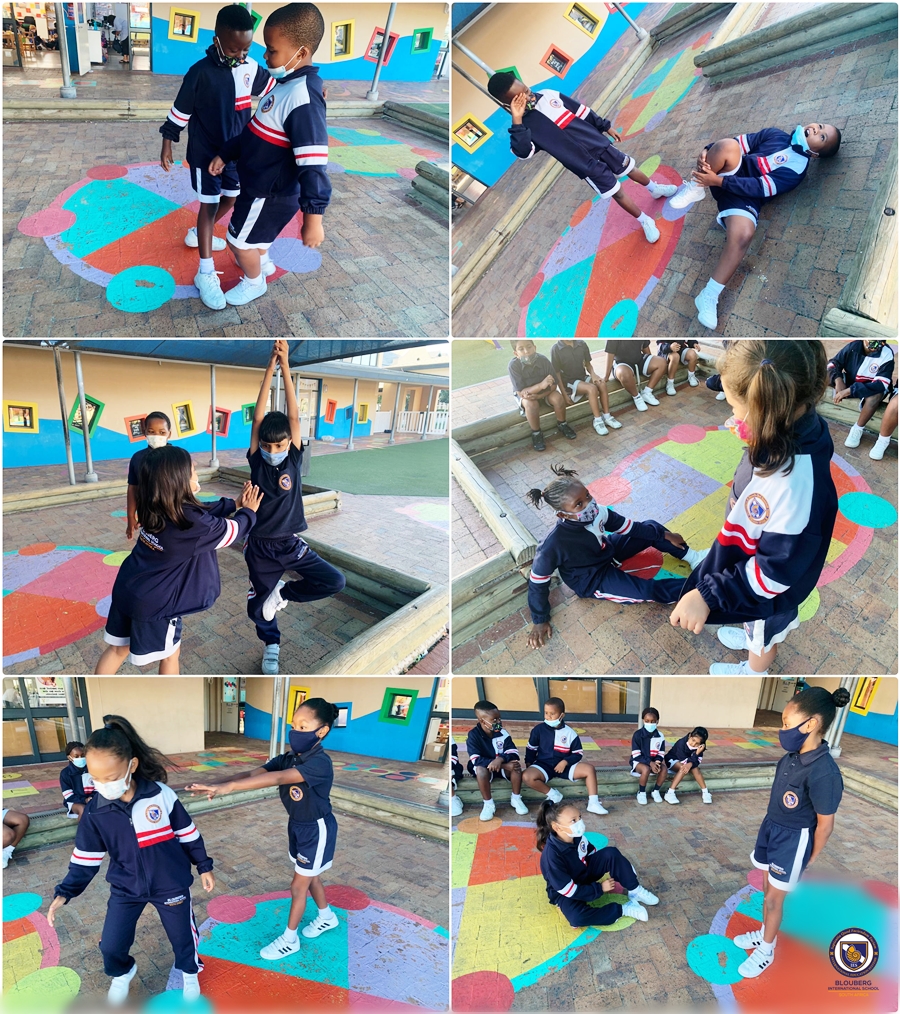
Our last workshop lesson involved some role play where our Year 2’s has the opportunity to act out how they think a potential conflict situation would play out and how they could solve it the right way.
We had fun learning!
Siobhan Hendry
Year 2 Teacher
Read More

Sound & Vibrations
Experi-Buddies came to visit Year 1, to teach us about sound and vibrations, which we are learning about in our Science this term.
The students had a lot of fun experimenting in class, making sounds using balloons, marbles, water in glasses and spoons hanging on string.
Sound is an integral part of a child’s development. In fact, the Parenting Research Centre says, “Sound is critically important to the way children learn about their world.”
The Inting was such a great tool to help our students grasp the concepts even more comprehensively. Perhaps ask your child if they can explain sound and vibrations to you, their first-hand knowledge might just surprise you.
Charlotte Cronje
Year 1 Teacher


Year 2 Loves Brain Breaks!
Students are easily distracted, but regular, short breaks can help them focus, increase their productivity, and reduce their stress.
Students, particularly young ones, often struggle with staying focused for long periods of time. In a 2016 study, psychologist Karrie Godwin and a team of researchers measured how attentive elementary students were during class, and discovered that they spent over a quarter of the time distracted, unable to focus on the teacher or the current task. Shorter lessons, however, kept students’ attention high: Teachers found it more effective to give several 10-minute lessons instead of fewer 30-minute ones.
I have found this to be an extremely worthwhile exercise. Even if it’s just to get them to stand up and stretch, or have a quick run-around the playground, or even a lively dance to some music.
Our class has a few favourites. I can recommend to parents to have a look at a website called ‘Go Noodle’. There are some really good ideas, even to do at home.
Kim Coetzer
Year 2 Teacher
Read More
The World Of Work And Having A Job
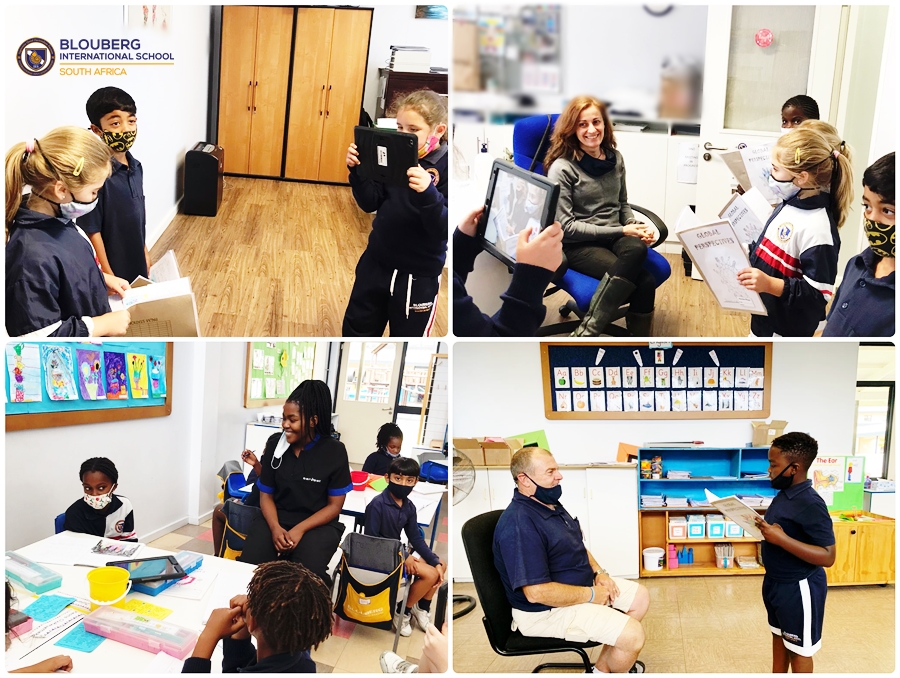
This term, the Year 1 challenge in Global Perspectives is ‘Working and having a job’. The students have had following discussions about work:
- What is work?
- What does it mean if someone has a job?
- What jobs do people do in our town/area?
- What different ways are there to sort jobs?
Last week, the students prepared interview questions for people who work in our school. They had to decide, as a group, the questions they wanted to ask. They then did mock interviews with their classmates pretending to be the people they are going to interview.
This week was the ‘real deal’ and armed with iPads the students interviewed, Mr Swart, Uncle Clive, Mrs Diana and Ms Zimbi.
Here are some of the questions they came up with:
- Do you like your job?
- What do you do?
- Do you work alone?
- What don’t you like about your job?
- What is your favourite part of your job?
- Do you have any issues?
We will end the term with a dress-up day, ‘What I want to be when I grow up!’
Ann Cordner
Year 1 Teacher and Key Stage 1 Coordinator

Farm Day In Year 2
“While we try to teach our children all about life, the farm teaches us what life’s all about – and how each seed tells its own story”
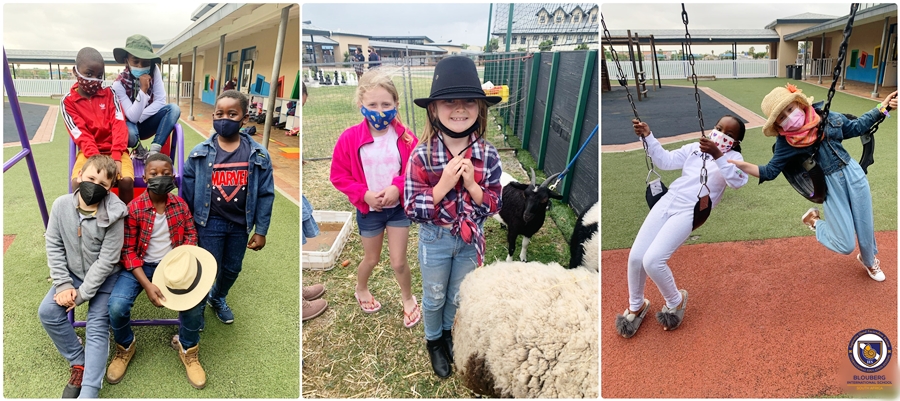
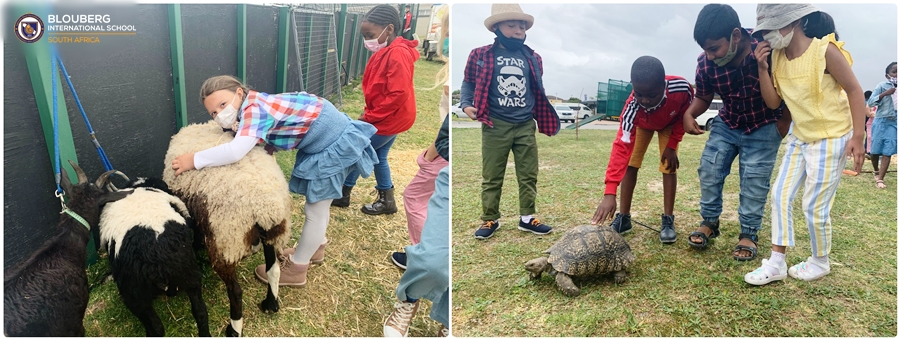
Last week Friday, our Year 2’s celebrated all things agricultural at Farm Day! Each student was encouraged to dress as a farmer and come to school with the farmer spirit, ready to chat about our wonderful Earth, and how it provides many natural and essential goods.
Dressed in our flannel shirts and cowboy hats, we had a fun day learning about animals that live on a farm and what they eat to get big and strong. We also learnt about what kinds of crops are grown on a farm, how they are grown and what they also need to grow big and strong.
One of our favourite parts of Farm Day was when we got the opportunity to interact with some of the farm animals who visited our school for the day. We saw some sheep, a tortoise, some bunnies, some chickens, and a few other very special and very cute animals. So grateful to have this experience!
Siobhan Hendry
Year 2 Teacher
Read More

Learning about Electric Circuits
“There is a driving force more powerful than steam, electricity and nuclear power: the will.” – Albert Einstein
The Year 2 students had an extremely fun and interesting Inting last week with Experi-Buddies. They have been learning about electricity for the past few weeks and this Inting helped build on their knowledge of how electricity works.
Learning about electricity at this age is vital for young students as it teachers them how electricity works, the importance of electricity as well as the hazards that come with it.
We learnt about the different types of electricity, namely: static electricity, mains electricity and current electricity. The students enjoyed this and seemed fascinated by electrical circuits. New terms were introduced to the students, such as: conductors and insulators, open circuits, closed circuits, series circuits and parallel circuits.
Experi-Buddies expanded the student’s knowledge by showing them what a circuit looks like and how it works. The students were fortunate enough to have the opportunity to connect a circuit themselves which was the highlight of the day.
“Talent is like electricity. We don’t understand electricity. We use it.” – Maya Angelou
Erin Hierse
Year 2 Teacher

Read More
The World Of Work
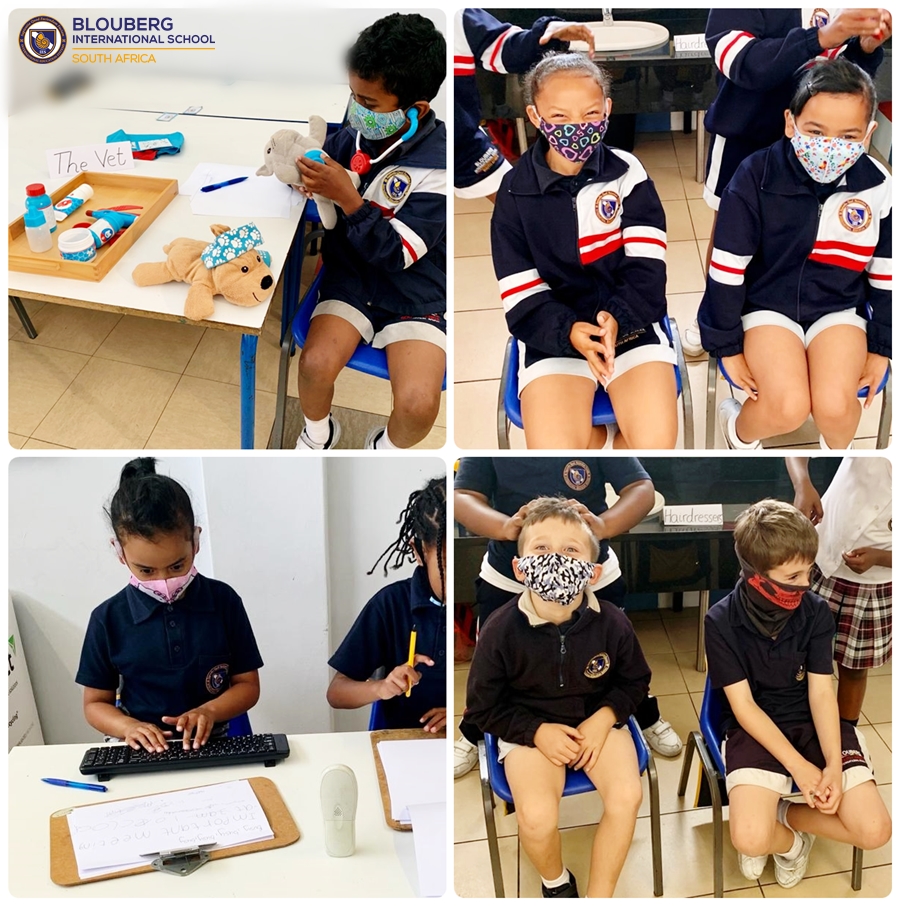
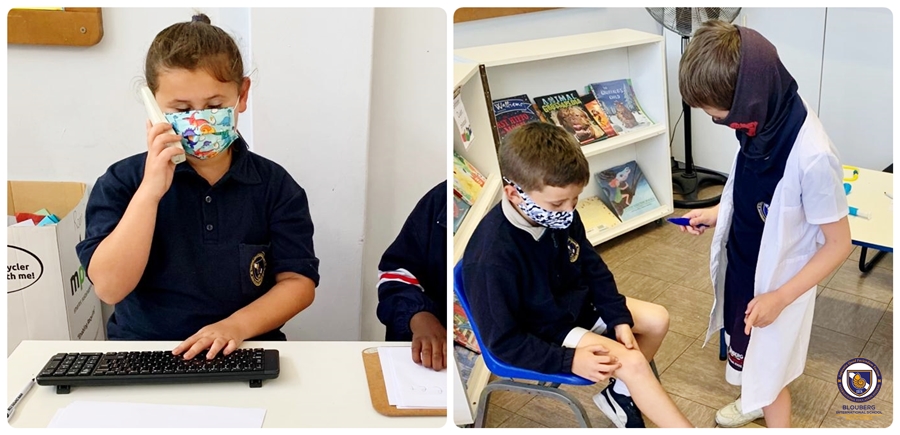
In Year 1, we have been having a lot of fun while learning about ‘The world of work’ in our Global Perspectives.
We have been role-playing a variety of different jobs in class from: ‘The Office’, to the ‘Doctor’s Surgery’, a ‘Shop’ and the ‘Hairdresser’s’. It has been wonderful to watch the students explore, collaborate and use their imagination.
Role-playing for children can really spark creativity, helping develop their language and communication skills while allowing them to make sense of real-life situations.
My students all did very well in their role-playing, they were creative and participated with so much enthusiasm and confidence. Well done Year 1!
Charlotte Cronje
Year 1 Teacher
Read More
Art And Design – Performance Art
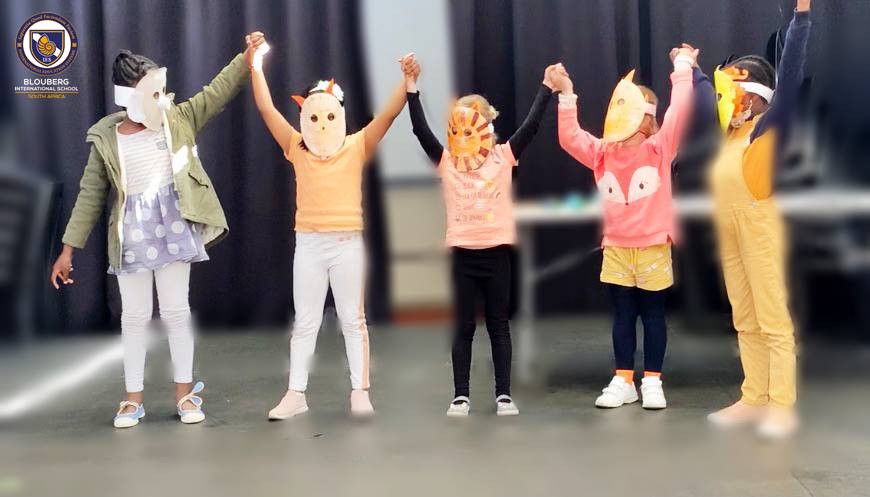
During term 2 and 3, the Year 1 students have been looking at patterns. In our lessons the students have been asked the question What is a pattern? They have looked at patterns around the world, and even created patterns of their own doing block patterns with potatoes and apples.
We studied patterns in nature and looked at patterns inspired by nature. The students then made animal masks for their Performance Art. In groups, the students created a dance to the song, Circle of Life from the Lion King. Then they performed their dance for their peers.
We had so much fun learning about patterns and really loved each and every performance.
Well done Year 1!
Ann Cordner
Year 1 Teacher and KS 1 Coordinator
Read More