

Sound
“Tell me and I forget. Teach me and I remember. Involve me and I learn”. – Benjamin Franklin.
Our budding scientists in Year 5 have been learning all about how sound is created. As stated in the quote above by Benjamin Franklin, the best learning takes place when students are actively involved in the learning process. Hence, it was time for our students to put on their scientist hats and participate in some thrilling scientific experiments in class!
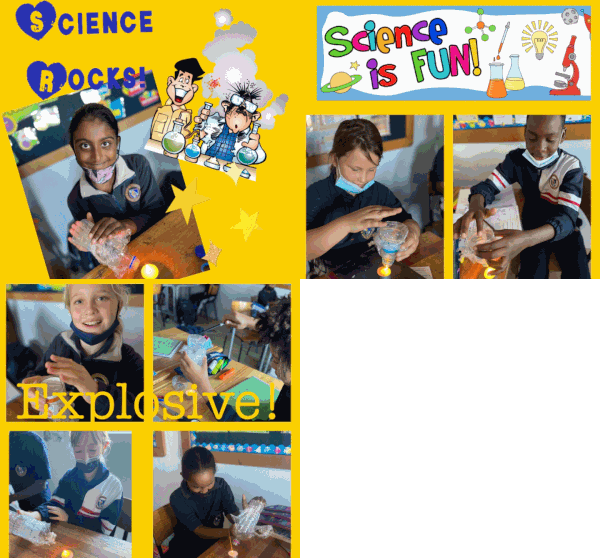
As seen in the pictures below, each student had to stretch a piece of plastic film tightly over the open end of a plastic bottle. They had to then light a small candle, causing endless excitement amongst the students! It was then that the fun started. The aim of the experiment was to test if sound vibrations travel through the air, as we cannot see them with our own eyes. If this theory was indeed correct, the flame would flicker when they tapped the bottom of their bottle!
And…EUREKA!
The experiment was a success and as any accomplished scientist would do…the experiment was done repeatedly and with much amazement by each student! After all the excitement, the lesson was concluded with some serious reflection, thinking, debating and discussion about our findings.
The best way to learn science is by doing science and to never stop questioning!
Jennifer Rose
Year 5 Teacher


Read More

Bright Science Sparks
“The Shadow Proves the Sunshine” – Switchfoot
The year 4’s have just completed a week of shadow investigation. On Monday morning we set out with a mission to discover how shadows move and change throughout the day. We started our lesson in groups by answering questions about shadows and light, discussing what we already know and what we still need to learn. It was key for every group to cooperate with one another by being polite and kind to the other members of the group. Sharing and taking turns was also a key factor in working towards a group agreement on their answers.
Our research starting point was making predictions about how the shadow would move or change. A simple upright pencil on cardboard was all we needed to set this test in motion. Our first observation was that light always travels in straight lines. Anything in the way would cause a shadow. Throughout the day, in fact every hour, we witnessed that our shadow moved to the east. Our pencil shadow was long in the morning. As the day progressed the shadow became shorter, being the shortest at noon. After midday the shadow of the pencil slowly grew in length again.
Our testing was not yet complete! Working in groups again, we investigated which objects were transparent, translucent and opaque. We also discovered that we could change the size of our shadow by moving closer or further away from our light source. After collecting and recording our observations over the course of the week, all our findings were crafted into games.
Looking back over this week it is clear that every Year 4 student has taken ownership in this investigation. In return, this will create a sure scaffolding for future light exploration.
Carol Blake
Year 4 Teacher


Read More
The Human Body!
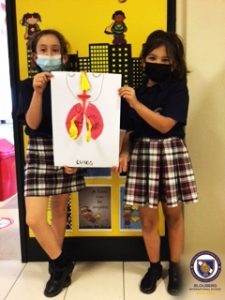
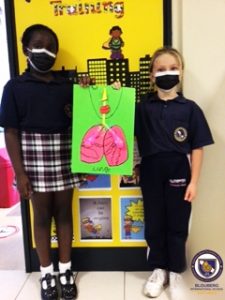
Our Year 3’s kick started Term 2 with an introduction from Pinky, the skeleton, to our next Science unit – The Human Body! After much giggles and squeals, students were told that by the end of the unit they would need to be able to ‘dress’ Pinky with his organs all in the right places.
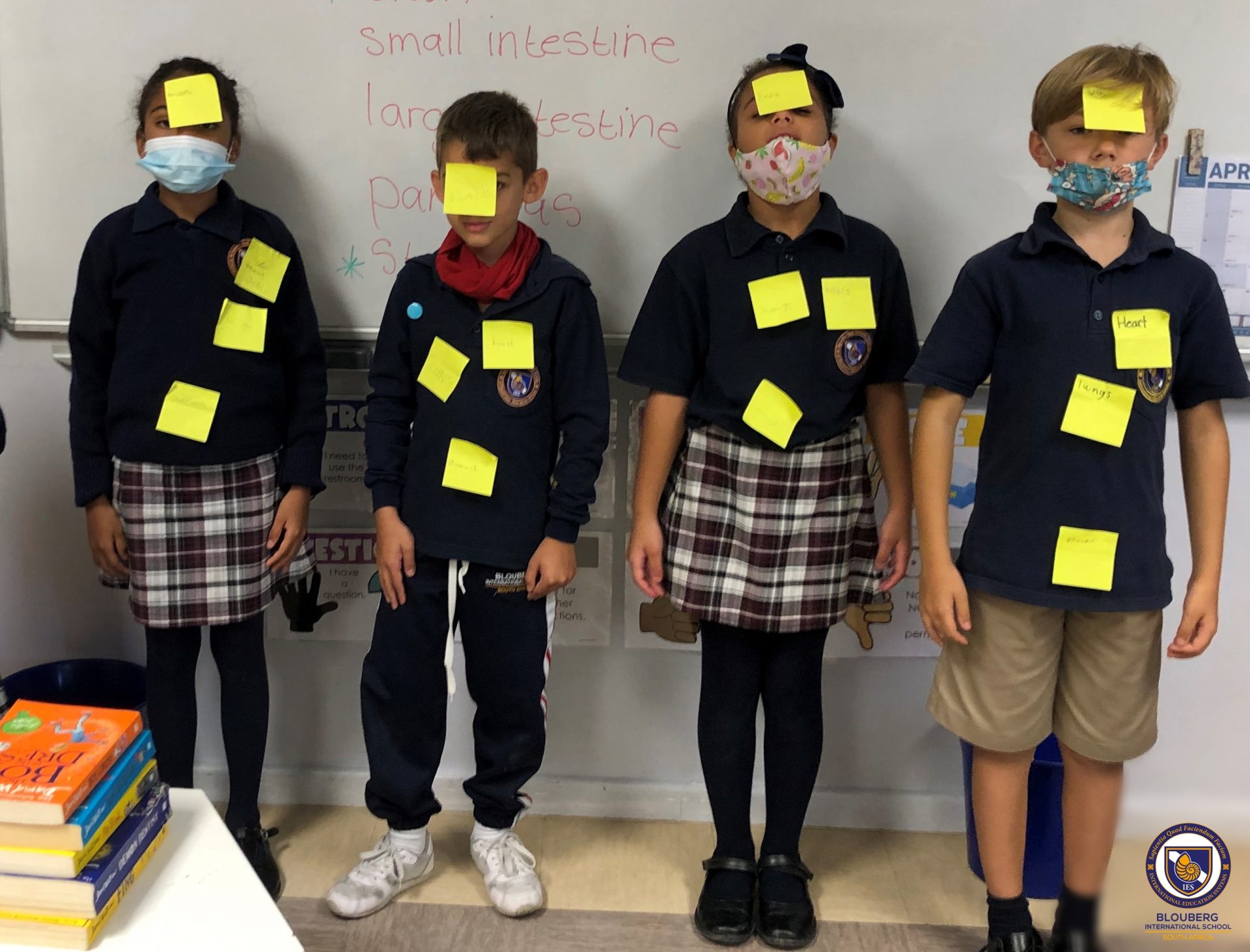
But first…. do the students know where each organ in our body is? Well….no…. not quite…. not at first. In groups, students had to choose one classmate and using yellow stickies, placed them on to the student in the right spot. Needless to say, we had some very strange locations for our small and large intestines!
Throughout the unit, the class enjoyed very student-centred lessons, which included making their own stethoscope out of plastic bottles, tape and toilet paper holders. They then used their stethoscopes to listen to one another’s heart beats.
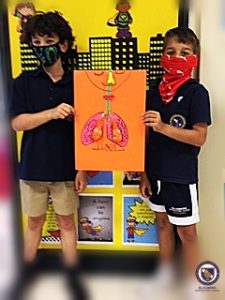
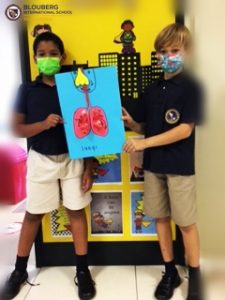
Another lesson involved students making a working lung model using cardboard, straws and balloons. In pairs, students designed and cut out their lungs. Next, they attached the straws and balloons. Then, they drew in their faces and for the grand finale…they blew out into their straws to simulate their working lungs.
The students had a fabulous time designing their models and thoroughly enjoyed the hands-on activities. Well done, Year 3! I think we are ready to ‘dress’ Pinky!
Mandy Goch
Year 3 Teacher


Read More

Investigative Thinking In Key Stage 2
“Children must be taught how to think, not what to think.” – Margaret Mead
Being both a student and teacher of the Cambridge Secondary Education system, I have had the privilege of watching it develop into the beautifully elaborate system we see before us today. If anything, the one thing I appreciate the most about growing up following one of the world’s leading education programmes, is the expansive opportunity I had for inquiry based, independent learning.
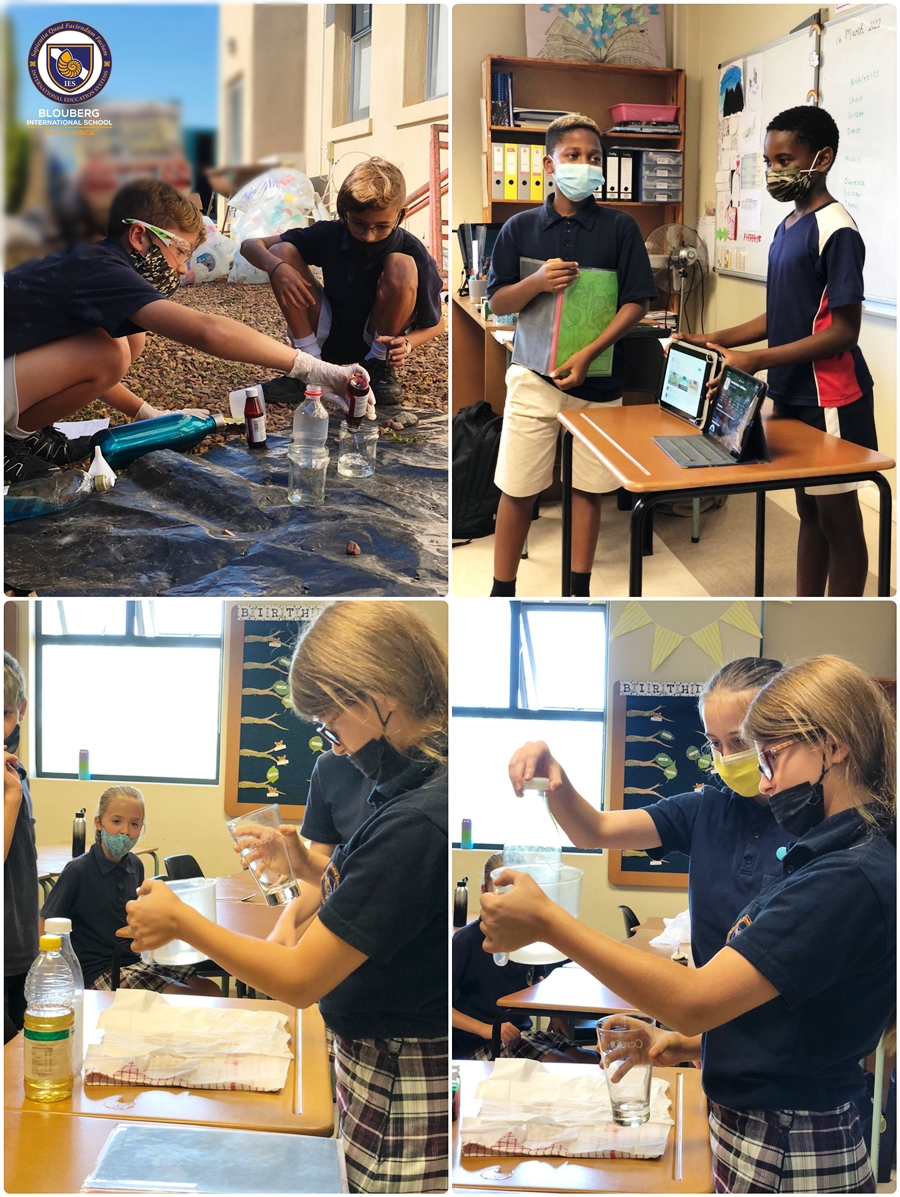
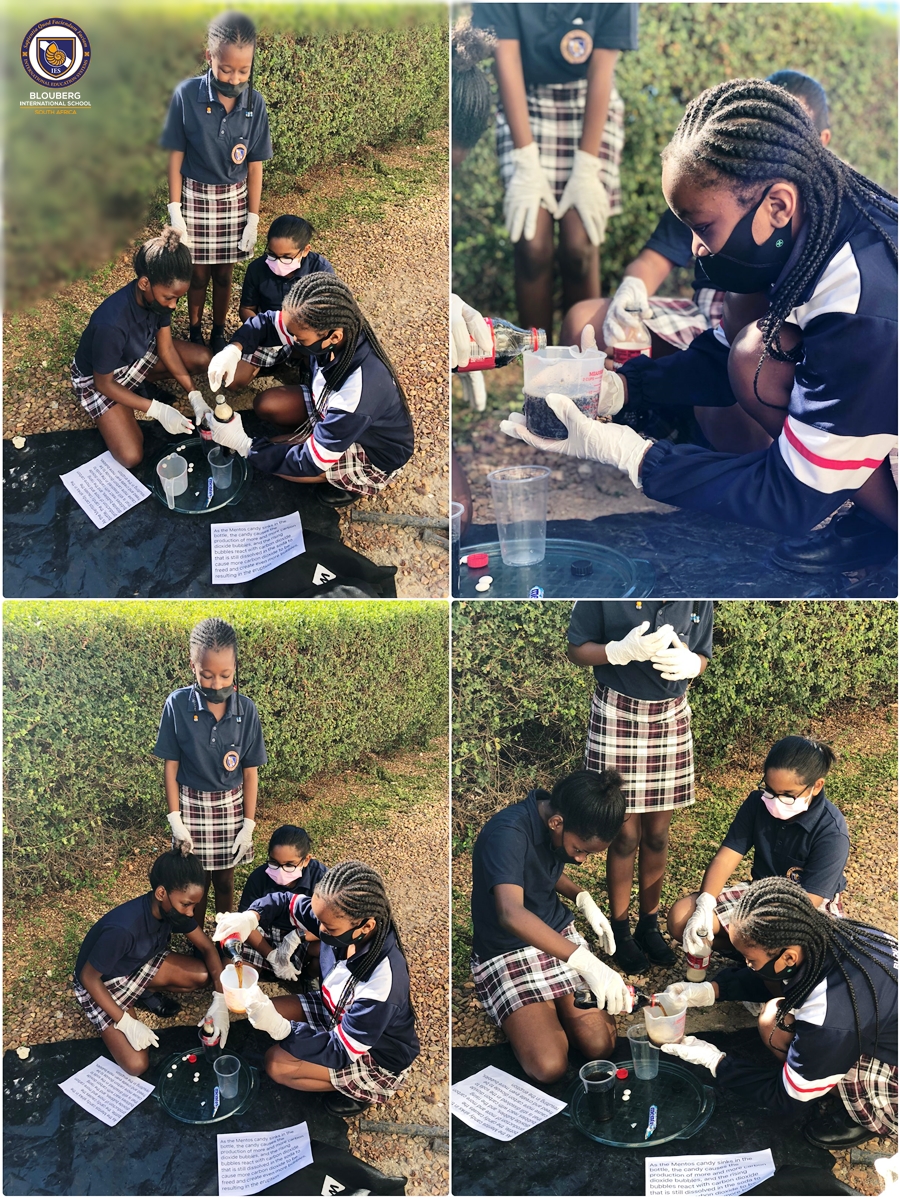
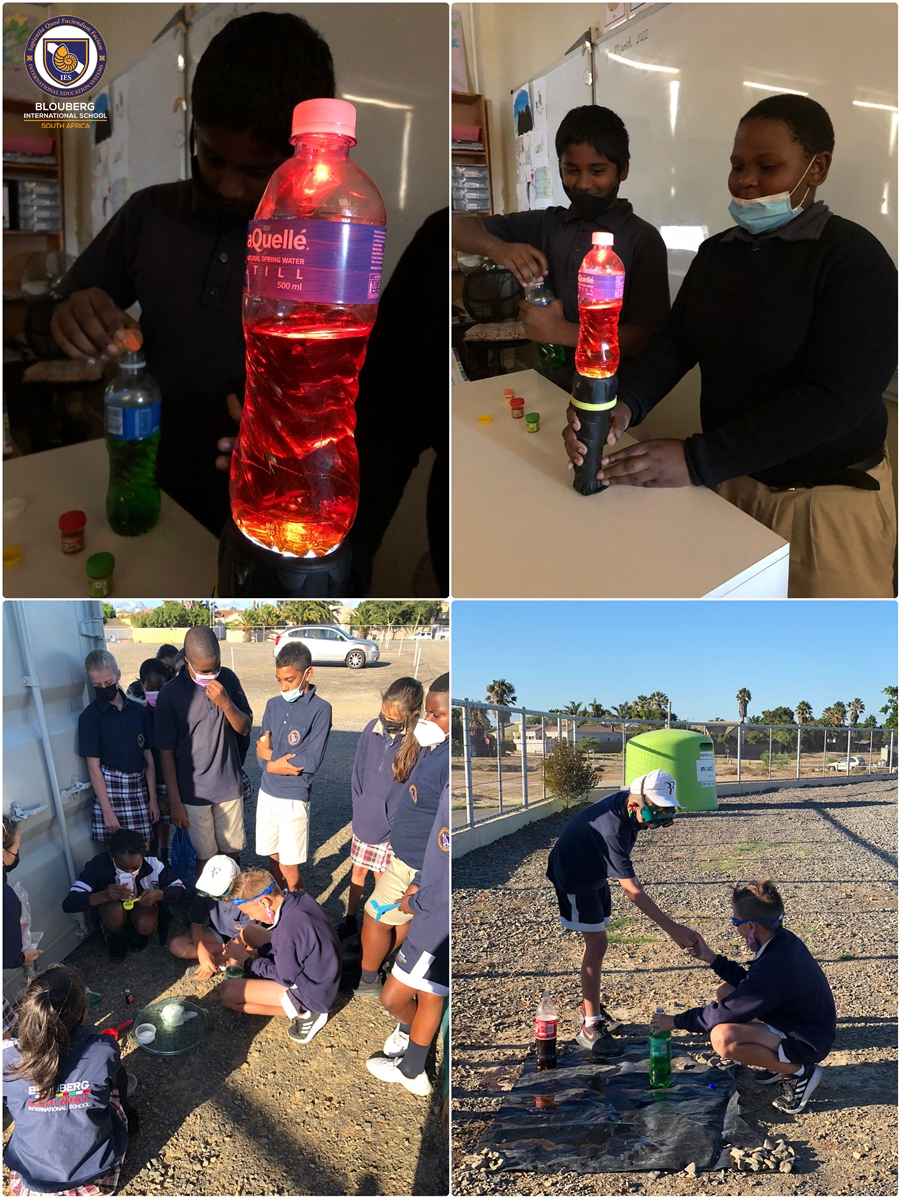
One of my favourite tools in the Cambridge Primary Science syllabus, today, would undoubtedly have to be the scientific inquiry thread, incorporated into our teaching and learning objectives. Not only do we work towards content specific outcomes under each topic, but Cambridge guides us through skill based, investigative thought processes as well.
Each term, our students are given the chance to explore the workings of our world themselves by following these probing steps:
- Asking a question
- Making a prediction
- Planning a fair test
- Carrying out the investigation
- Recording the results
- Drawing a conclusion
This process promotes a beautifully curious approach to learning, where our students are granted the responsibility of their own learning journey.
Lastly, I have to acknowledge the multitude of fun this approach leads to, both in and out of our science classrooms! When having fun and building relationships run parallel to your learning, you know incredible things are bound to happen.
Robyn Pieters
Year 6 and 7 Teacher

Read More

A Recipe For A Good Friendship
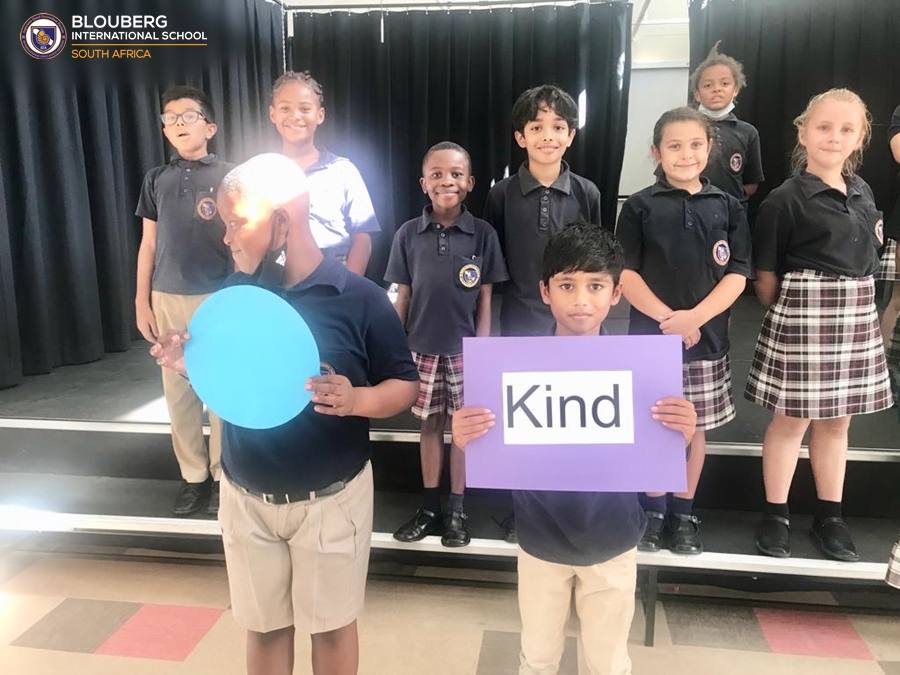
Recently we have been discussing what it means to be a good friend or the ‘recipe’ for a good friendship. As a class, we shared many comforting stories about when others showed care for us. In further discussion, we highlighted the importance of our ‘Blue Badge’ system at school, which focuses on three simple foundations.
As a BIS student we aim to be KIND, CARING & ENCOURAGING.
Year 4NM came up with their own Recipe for a good friend, modelling the 3 simple foundations of kind, caring and encouraging.
How can you be kind…
- Say nice things to others.
- Smile, because it is the best and easiest exercise for the body.
- Be happy for others because when it is our turn we would want others to be happy for us.
- Offer to help whenever we can because giving is always more rewarding.
- Use good manners like saying:
- Good morning!
- Please.
- Thank you.
How can you be caring…
- Let your friends know that you are always there to listen.
- Ask, “How are you?” and remind them that you are a good friend even when they are not feeling good.
- Be patient and respectful to others.
What does it mean to be encouraging?
- It means we must support each other to do good or to be the best we can.
“Everyone needs encouragement like a plant needs water”
- Not everyone is having a good day all day, remember to show some support. It might brighten up their day.
- Be the reason someone feels good today!
Nadia Mahomed
Year 4 Teacher

Read More

Year 5 Haikus
In English, the Year 5s have spent some time looking at poetry. We explored Haikus in particular, looking at their famous line and syllable structure, as well as delving a bit deeper into their usual subject matter. We also experimented with the balance between descriptive and figurative language often found in these Japanese poems.
Our favourite part of the lesson, of course, was writing our own!
Robins
Robins in a tree
Sitting high above the lake
Kings and queens they are.
- By Okuhle Williams
Saturn
Saturn spinning dream
Milky vision blurs your way
Falling into space
- By Christina Donald
Encanto
Magical People
Rhythm of its own design
Perfect Family
- By Dicla Tona
Buzz
Busy buzzing bee
Collecting honey for me
Oh so delightful
- By Emily Röhlandt
Rabbits
Rabbits, white or black
They’re adorable and cute
Hopping there and back.
- By Nivad Manouchehri
Hannah Kirkaldy
Year 5 Teacher
Read More

Leadership
Now that the Year 6’s are the heads of the Primary School, they have had to learn about leadership and what it is to be a leader. They took part in different activities during the Skills Programme we held. The end goal was for the students to apply to become Year 6 Prefects. They went through the process of discussing what a leader was, what a leader looks and sounds like and why they would want to be leaders for BIS.
Here are a few things the Year 6’s decided make a good leader:
“A leader is someone that has responsibility and is helpful and is respectful towards others. They always try their best and they think about others first.” – Emily Fouché
“A leader is someone who can help you with things you are struggling with and will guide you to do the right thing” – Maalik Daniels
“A leader is a person who is helpful, respectful, kind and caring. They help people when they need help.” – Nicolas East
The process the Year 6’s had to follow to apply to be prefects was as follows:
- Fill in an application form.
- Get 3 references from teachers of their choosing.
- Present in front of the other Year 6’s as to why they would make a good prefect.
- Vote for who they thought would make good prefects.
We know that the elected leaders will do a wonderful job this year!
“As we look ahead into the next century, leaders will be those who empower others.” – Bill Gates
Brittney Hakime
Year 6 Teacher


Read More
Animal Unit
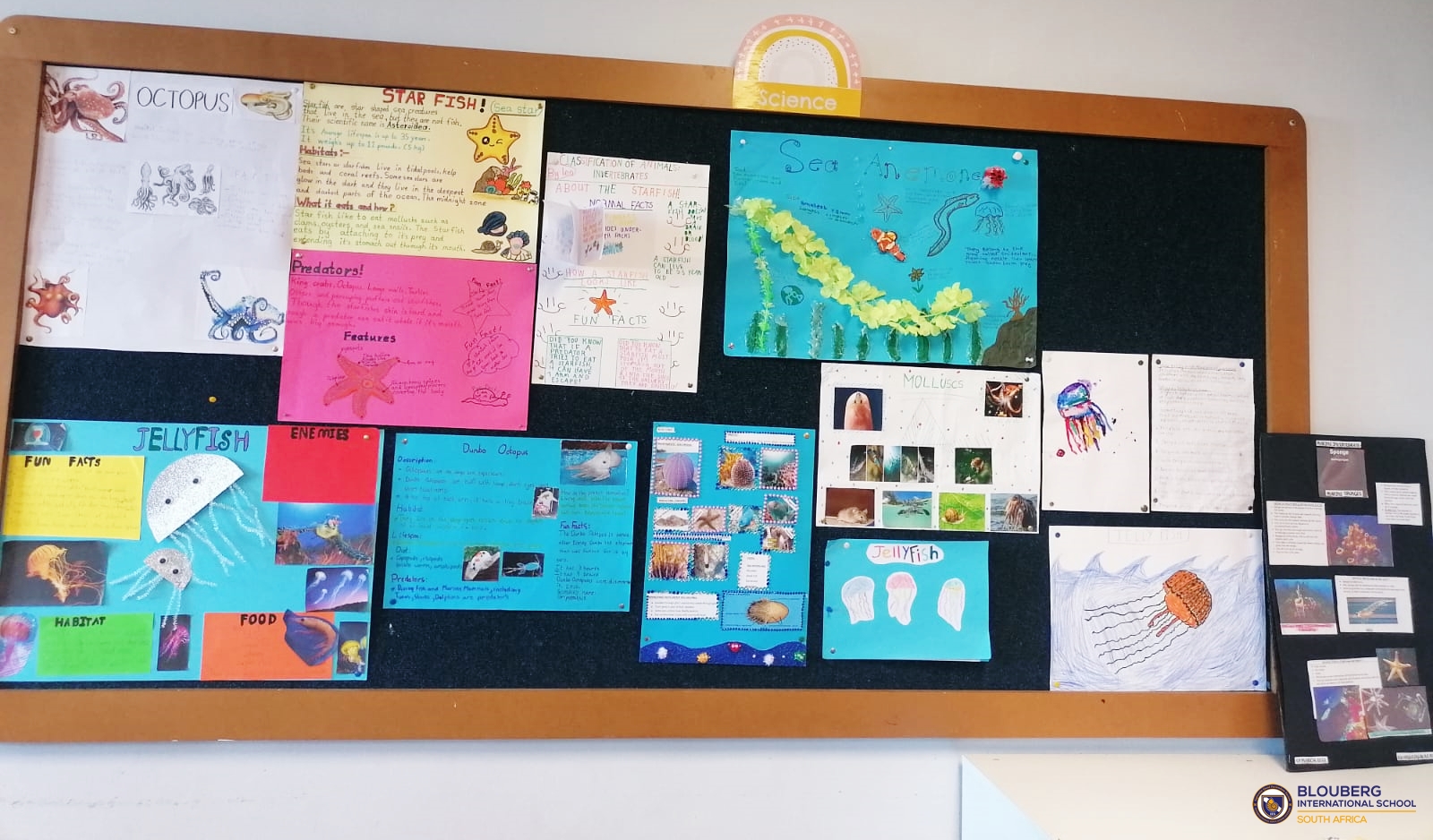
As part of the Animal Unit in Science, the Year 4 students learned about vertebrates and invertebrates during the last few weeks. Vertebrates are animals with a skeleton and bone structure and invertebrates are animals without it.
The students were tasked to research invertebrates living in the ocean. They had to do an oral presentation about the appearance of their chosen animal as well as it’s habitat, feeding habits and some interesting facts.
Here are some fascinating facts we learnt about these creatures this week:
- The Dumbo octopus has 3 hearts and 9 brains.
- A Starfish pushes its stomach out of its mouth to be able to eat.
- Octopuses are blue blooded.
- Jellyfish are immortal and are made from 98 percent water.
Well done Year 4!
Yvette Fourie
Year 4 Teacher


Read More

The Power Of Music
Every Friday afternoon when school is out, a group of students and teachers gather around a common passion… music! For the past few weeks Miss Hazel, Miss La Bercensie and Ms Blake have been teaching and coaching a few students to play together and experience the joy of performing music they love.
Music is a language that speaks to all people. It has the ability to bring people together. Without a doubt, human interaction is at the centre of this art. The ability to connect through playing music together has been strained due to covid, but we are finding new ways to have these opportunities where we can create music.
Music stimulates the brain, which enhances memory whilst reducing levels of pain and stress. In a digital age where life is fast paced and instant gratification is a norm, learning a musical instrument provides a platform for people to achieve through discipline and perseverance.
Playing with a group of other musicians develops teamwork and leadership qualities. These are not only skills required in music, but life skills that equip individuals for their future employment and wider social lives.
Music is an expression. It is a creative outlet so needed in today’s world where pressure is inevitable.
Music brings great joy! Whether we are playing songs in the top rafters of Blouberg International or performing to an audience, the joy of creating music is enough of a motivation to bring people together.
We are very excited about this journey that we have started. Watch this space!
Carol Blake
Year 4 Teacher


Read More
Everything has a cycle and every person a story to tell
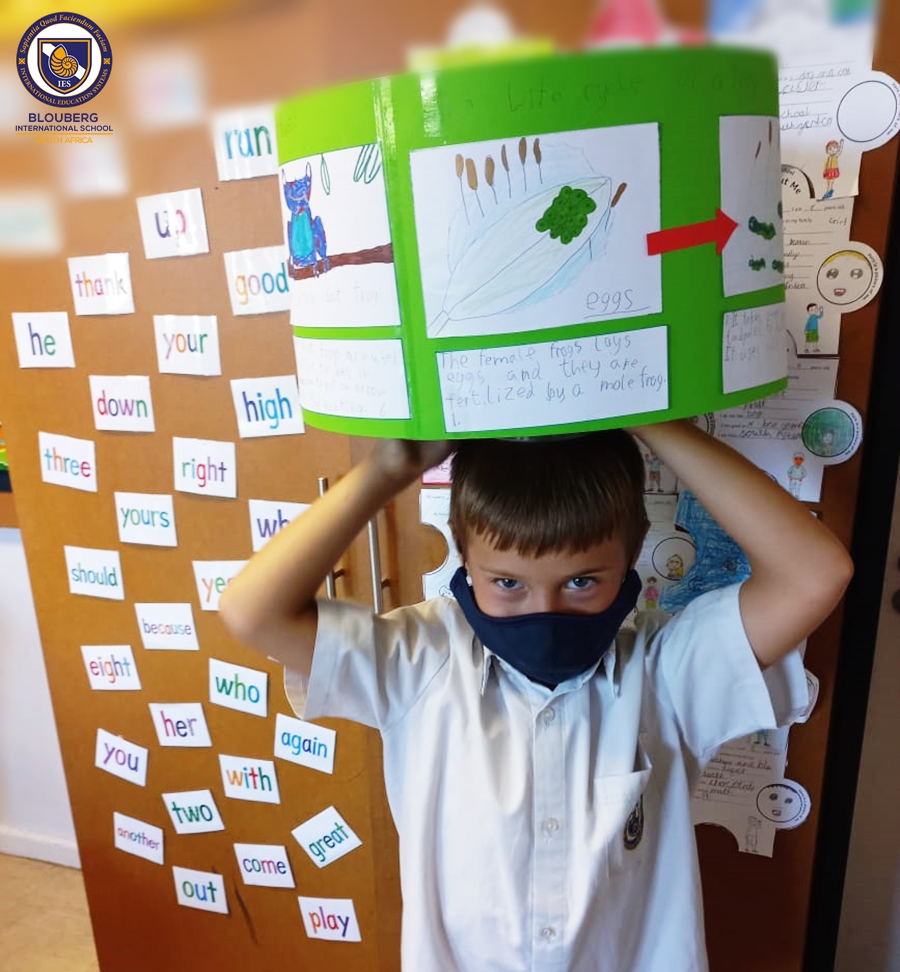
The Year 3’s have been learning about Living things this term. As part of this theme, each student was asked to make a presentation about the life cycle of different types of animals and include an interesting fact.
These they presented with great pride and excitement in an oral.
We learned that:
- Baby koalas eat their mother’s poop to learn to digest eucalyptus leaves.
- The poison from the blue poison dart frog is used to tip the arrows of Amazon hunter’s darts.
- A dog has 28 teeth and 1700 taste buds.
- Jellyfish do not have brains.
- A Monarch butterfly – the female is attracted to the male’s perfume.
- Dolphins have two stomachs.
- A koala bear is as small as a jelly baby when it is born.
Well done to the Year 3 students for making their projects so visually stimulating and extremely interesting.
Carey Schoots
Year 4 Teacher


Read More