
From Boxes to Rockets in Reception
The Foundation Stage students have been learning about Space. As one of our art projects we decided to make rockets. The students were delighted to use their creative skills to make their own rockets using recycled items such as boxes, bottle tops and egg cartons. Each student was allowed to use 2 boxes and any of the other materials on the table to construct their rocket. We decided not to paint our rockets so that we could easily see how what components were used in their construction.
Construction play is an open-ended activity that is proven to make a difference in the way children think and complete tasks. These are some of the skills children develop through this kind of play
- problem solving skills
- spatial awareness
- fine motor skills
- hand-eye co-ordination
- sensory awareness
- challenge and perseverance
- measurement
- self-confidence
- decision making
- creativity
- social skills
There really is so much more to construction play than meets the eye. Box construction is also a fun and educational way to keep your child engaged at home. What will your next project be?
Bronwen Nuthall
Reception Year Teacher


Read More
GIRAFFE HOUSE
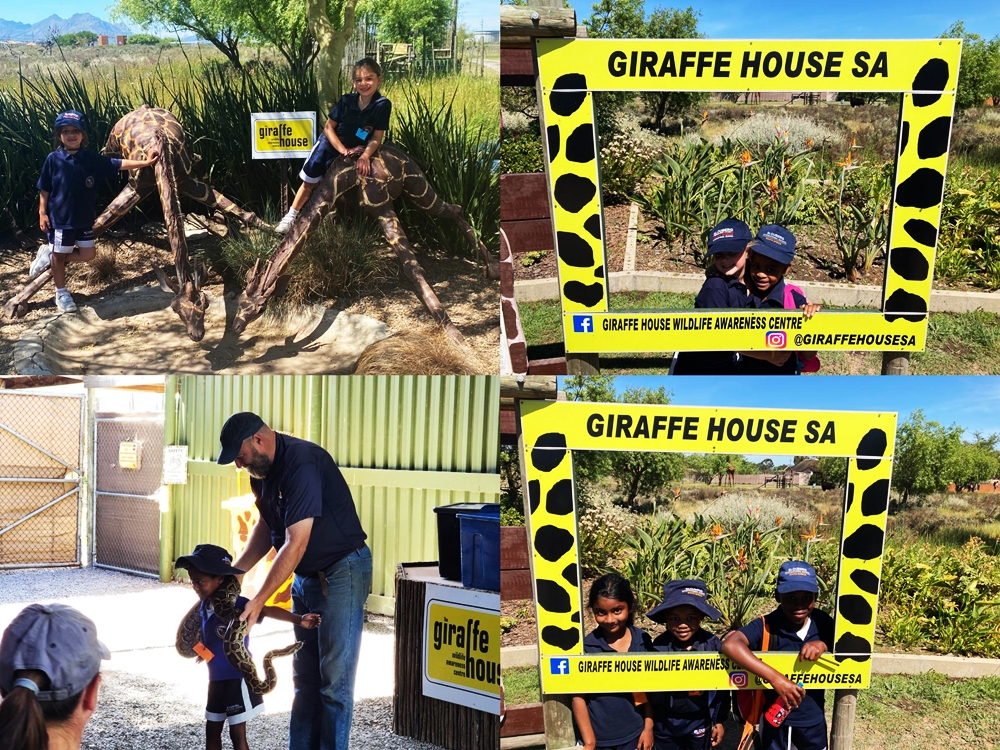
Every term we have many exciting things happening, but none as exciting as an outing day. When outing day finally arrived, the little ones in Pre-Reception and Reception came to school very excited for the trip to Giraffe House.
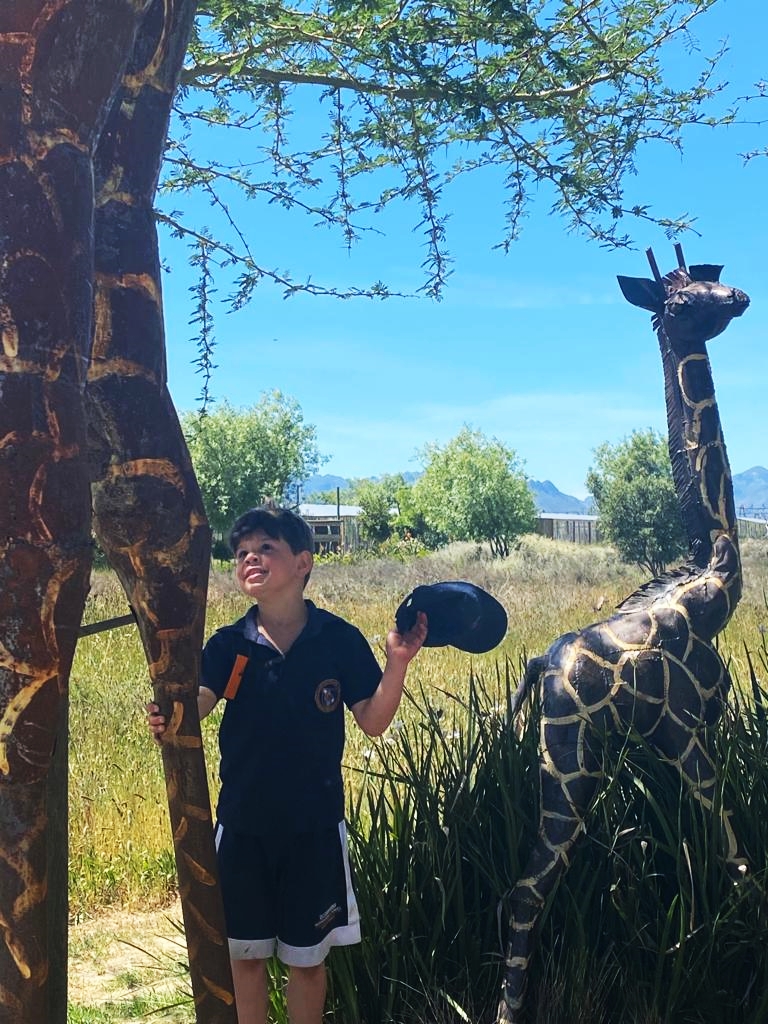
The students and the teachers had a lovely time as always. We saw many amazing animals from little baby lemurs to big, beautiful giraffes. The students also attended a lesson presented by the Giraffe House staff, teaching them about the animals housed there. The students were very brave as some of them were asked to hold snakes and bearded dragons; luckily no one had to touch the big spiders!
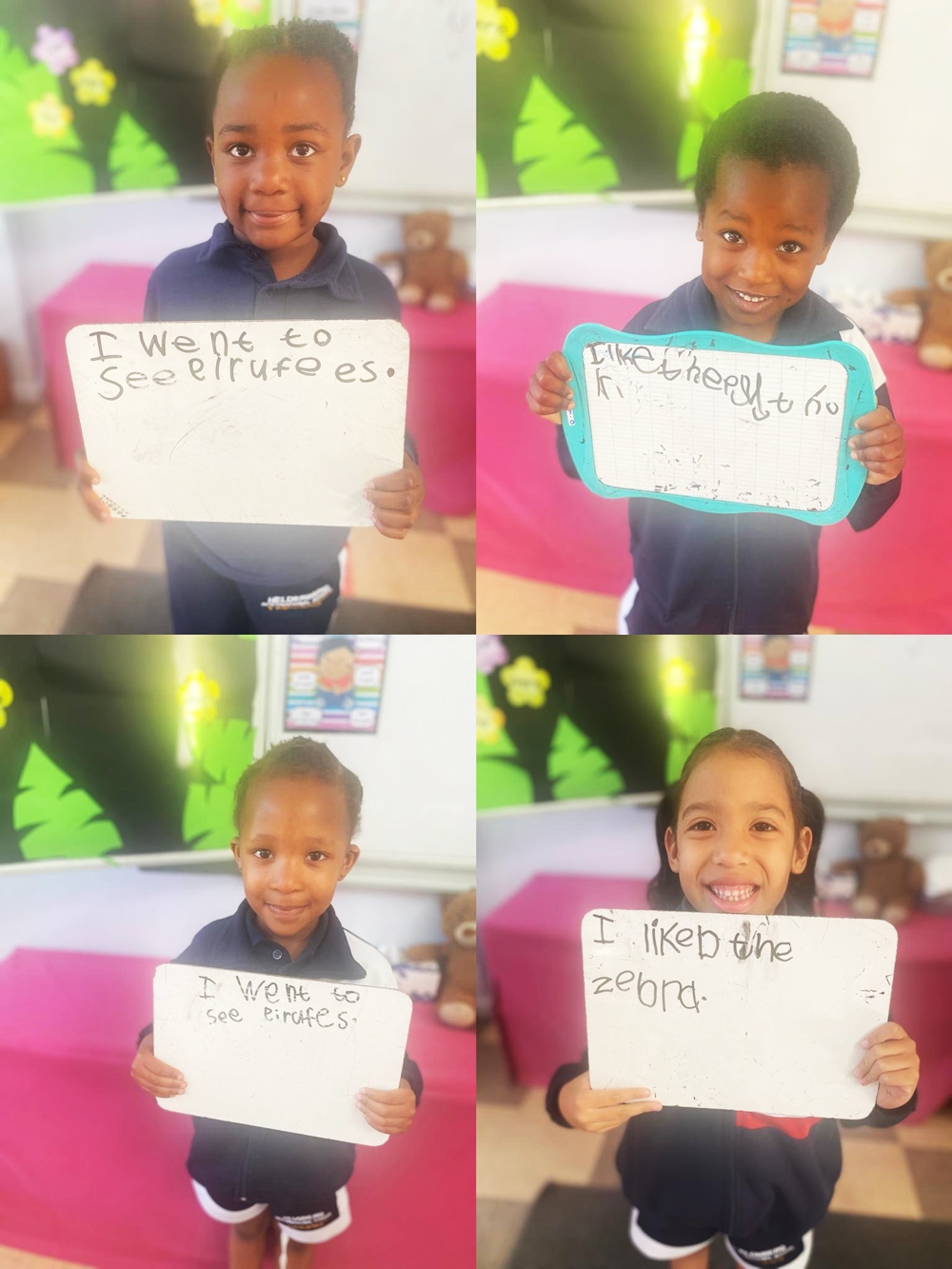
On our return to school, the students shared some of their most memorable parts of the day. It seems the giraffes won as their favourite, that and off course going on the bus, which is always very exciting.
Monique Meyer
Foundation Stage Coordinator

Read More
Holiday News in Reception Year
The students have come back from the term 3 break and were brimming with excitement to share all the interesting things they had done in the holiday. These are the most memorable things they did:
Sofia Haskins (6 yrs old): “I went to a sleepover with my friend.”
Omime Ogumah (6 yrs old): “I went to the braai and pool.”
Nikraad Manoucheri (5 yrs old): “I went to the dentist.”
Rume Oriesa (6 yrs old): “I went to the zoo.”
Chaitrika Kotari (6 yrs old): “I went to the pool.”
Kaedy Frey (5 yrs old): “I went to my granny’s house.”
Grayson Muller (5 yrs old): “I went to the dolphin show.”
Tiwatope Olanrewaju (5 yrs old): “I went to the braai shop.”
Zion Durojaiye (5 yrs old): “I went to the beach.”
Ariah Mukubvu (5 yrs old):” I went to the park.”
Amelia Engelbrecht (5 yrs old): “I went for a walk with my dog.”
Joshua Mpako (6 yrs old): “I went to shop.”
Chiamaka Davidson (6 yrs old): I went to the pool.”
Jonah Atson (5 yrs old): “I went to my cousin’s house.”
Bronwen Nuthall
Reception Year Teacher


Read More
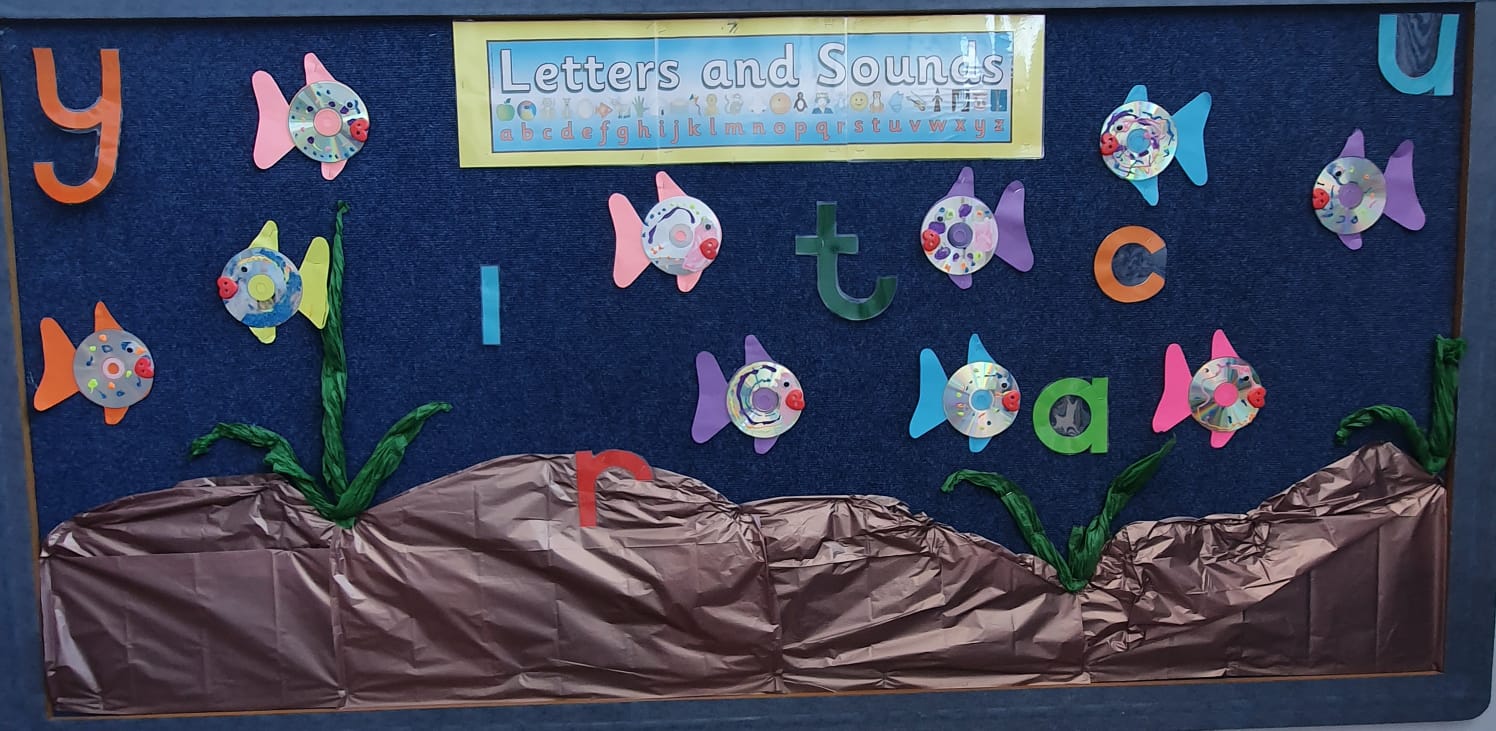
Just keep swimming, just keep swimming…
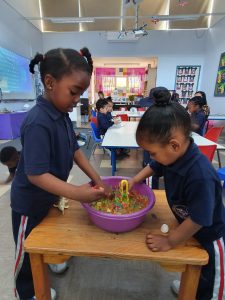
This week we learnt all about different sea animals. How some live in the ocean and others can live both in the sea and on land. The students loved learning more about the sea: who doesn’t love sharks and jellyfish!
We did the following hands on learning activities this week:
Numeracy: The students had to find different numbered shells in the sand to complete the number line.
Literacy: The students wrote their names and sounds in the sand with the shells, this activity strengthens their pencil grip.
Fine motor activity: The students enjoyed building and creating ocean sculptures while developing their problem solving, fine motor and social skills at the playdough area.
Construction area: We have added boats, ocean animals, shells and gems to our construction area. The students were very excited to build something new, which will extend their thinking as they build something different than they usually do.
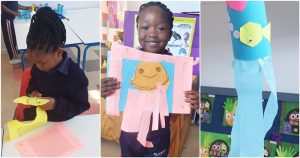
Arts and crafts: The students made lovely crafts this week practising and developing their scissor and fine motor skills.
Music and Movement: The students shake out the sillies by copying the actions of the ocean animals. They had to “wobble like a jellyfish”, “clap like a seal”, “slide like a sea snail” and “leap like a dolphin “ .
Sensory Area: We created an underwater sensory bin filled with water beads and sea creatures for some imaginative exploratory play.
We reminded the students to be safe when they go to the beach and follow the following rules:
- Wear a hat with a wide brim to shade your face and neck.
- Sunglasses can help to protect your eyes.
- Cover up with a t-shirt to protect your shoulders and upper arms.
- Always wear sun cream.
- Drink lots of water.
- Just swim where it is safe.
- Make sure you can swim NEVER swim alone and make sure you are always supervised by an adult at the beach.
We also encouraged the students to get involved in protecting the ocean by:
- Reduce and recycle.
- Joining a beach clean up.
- Asking shops and restaurants if they have plastic-free alternatives.
The students had a blast doing all of the activities.
Martie van Dyk
Pre-Reception Teacher


Read More
A fun way to learn our initial sounds of words in Pre-Reception
A fun way to learn our initial sounds of words in Pre-Reception
It is important for children to learn letter-sound relationships because the English language uses letters in the alphabet to represent sounds.
Phonics teaches this information to help children learn how to read. Children learn the sounds that each letter makes.
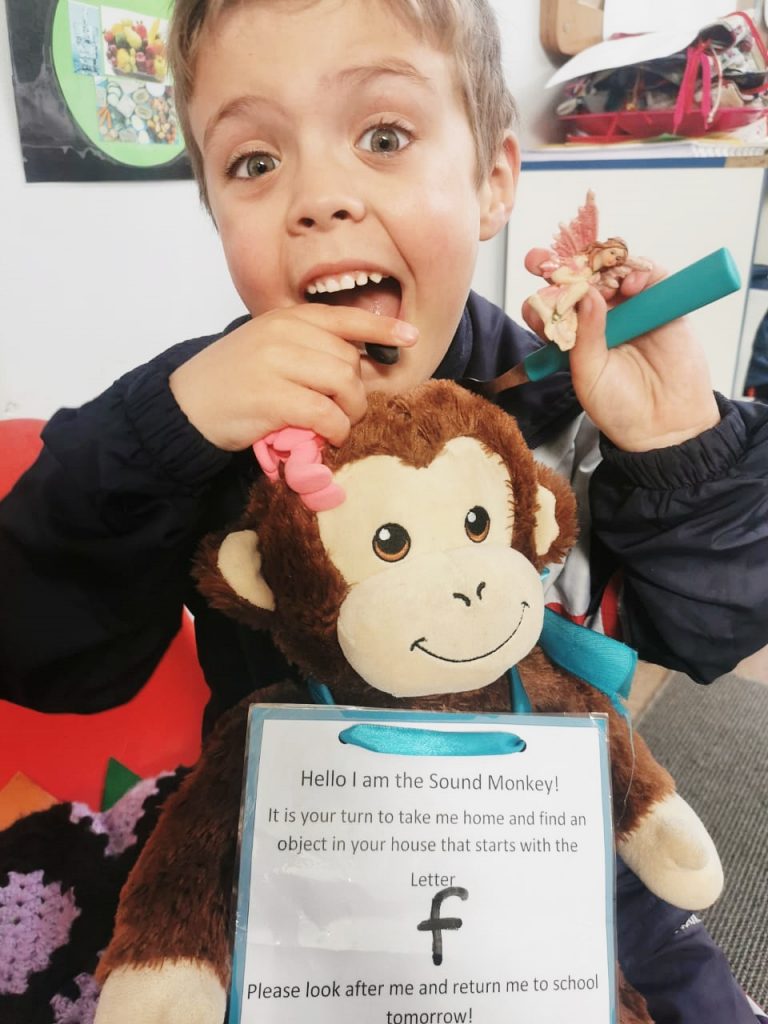
A fun way through which the Pre-Reception students learn the initial sound of words is… I would like to introduce you to a very important member of our class. His name is the Sound Monkey and the students take turns to take him home with them and find something that starts with the letter of the alphabet that we are learning about that week.
The students are always very excited when it is their turn and can’t wait. It is always very interesting to see what the sound monkey has in his bag the next day. It’s usually things that I did not even think of.
It is very interesting to see how quickly the students have been learning the initial sounds of words in this manner. Now let us see whose turn it is today!
Cindy Nunan
Pre-Reception Teacher



Read More

Shaping Positive Eating Habits
Wow! What a busy week it has been. Our main focus in Nursery this week has been on Healthy Eating, and believe me when I tell you that I have had to explain why chocolate is not a fruit more times than I have had to sing “Let it go”, and that’s A LOT.
Explaining to our students why their chips and chocolates should not be eaten in the morning, is similar to arguing with a qualified lawyer about the law, it hardly ever ends well. However, as the week progressed, our little ‘pre-lawyers’ began enjoying learning about healthy eating so much, that we actually had to send some of the unhealthy snacks back home, and that itself is like a snowy day in summer.
This has reinforced my belief that teaching young students about healthy living does not have to be done through a strict, structured routine, but rather through fun, play-based activities. Play-based learning helps support our children’s desire to explore and interact with the world around them. Providing them with opportunities to explore and learn about foods, separate from meal times, not only exposes them to new foods but allows those fussy eaters to explore non-preferred foods in an encouraging way.
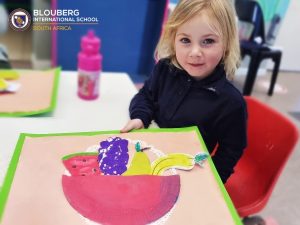
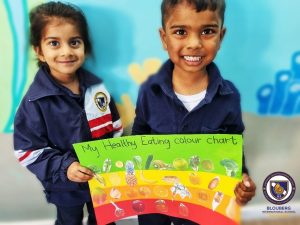
As our school follows the wonderful Traffic Light System, our students are already aware of the foods that are not healthy, but maintaining that diet can be tricky with toddlers. So this week, we introduced healthy eating through colour, exploration and a lot of gentle encouragement. Some of the students helped create a healthy eating colour chart that explored the principle of ‘eating the rainbow’ and even chose some of their favourite fruits and created crafty fruit baskets for our next picnic. We also explored shopping for fruits and vegetables, and students picked out various healthy foods that we can find at the grocery store.
By making healthy eating fun, engaging and hands-on, our students found it less daunting to face the vegetables on their plate and supported our long-term goal of building a foundation for lifelong healthy eating habits.
Jo-Anne Dickason
Nursery Teacher

Read More
The Aim Of PE
Our weekly programme that is derived from the Cambridge curriculum helps us perform different exercises and play games that are skill based and always motivate teamwork rather than focusing on individual skills only.
We learn about our bodies and how we can use them to the best of our abilities within the sports fields.
The curriculum is based on the sporting codes we provide at BIS, thus, it is important for students to participate and enjoy the different skill sets taught throughout the year as per the curriculum requirements.
As coaches we want our students to participate in different activities and expose them to different types of sports within our lessons, hence we provide the support that is needed to achieve this goal.
We cannot achieve all of this without the help of our lovely parents, so we ask that our lunch boxes are filled with health conscious nutritious food on a daily basis.
Promoting good eating habits is vital to a child’s development physically and mentally, It is said that eating healthier 80% of the time and doing 20% exercise compliment each other.
What Experts Say
“The 80/20 rule approaches healthy eating with a message of moderation-80 percent healthy choices and 20 percent flexibility for less healthy option. Nutrition professionals back this approach, as it is feasible for all, allows for variety of foods, and avoids deprivation.” – Chrissy Carrol,RD,MPH
Let’s try and pack a healthy lunch box.
We are most certainly improving and setting the tone at our PE lessons every week and I (Coach Mpho), am getting the greatest joy seeing the improvement and the strides that our students are making, getting the idea of how to move the body over a game of dodgeball, soccer, handball and more.
Also knowing the amount of power needed to make a short or long pass, throwing skills, learning new games and most of all having fun with your peers and improving your game.
Week 6 – Handball skills, teamwork, accuracy and movement.
Class – 5HK
ATL skills observed – Listening and communication skills, self-awareness and sense of urgency – teamwork
Planning
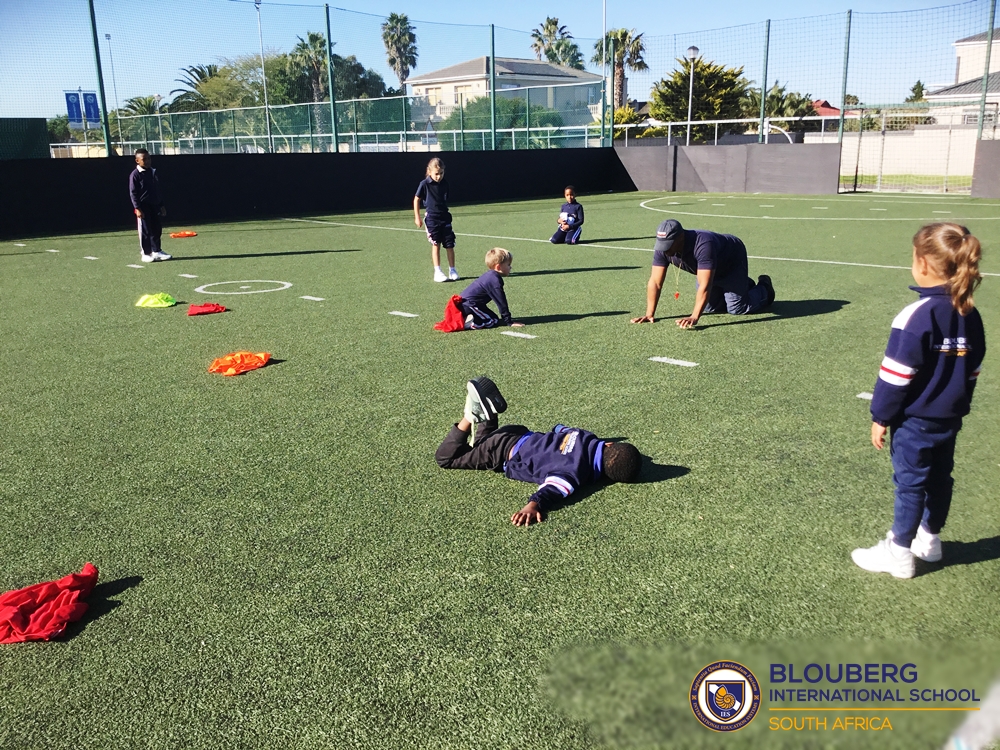
The students warm up by taking a jog around the 5 aside court ,do shuttles that incorporate push ups, sits, lunges, jumping jacks/body weighted squats to get the blood flowing and the heart rate going.
They then go into stretches from neck to toes, whilst illustrating and explaining to them which parts of the muscles they are stretching and the importance thereof.
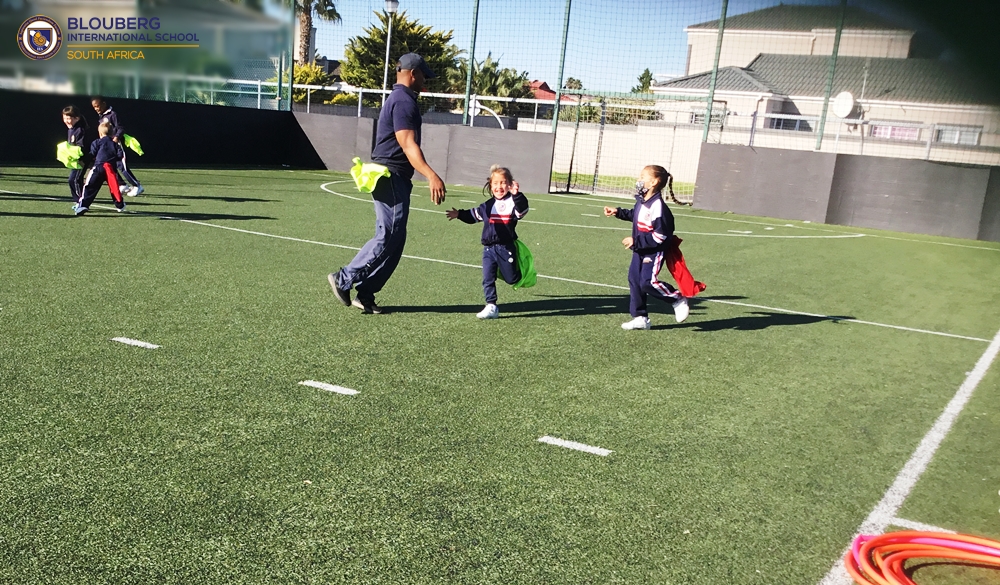
In this case, a class is split into 2 teams that verse each other etc. (red vs orange team)
Instructions are as follows:
- No one is allowed to keep the ball for more than 3 seconds creating a sense of urgency in their play.
- Teams have to pass to everyone in their team to have a legitimate goal awarded, which creates a team effort where everybody participates, teams are not allowed to run with the ball which forces them to work together – teamwork.
- Teams are allowed to pass the ball by either bouncing or no bounce, two-handed passes for more accurate passes.
Objective
The objective of the lesson is to establish and develop good communication skills, passing accuracy and most importantly following the rules of the game and applying all the skills taught throughout the curriculum.
Assessing
Can a student apply themselves through the activity that is focused and based on team building?
Can they pass, throw and catch the ball?
Can they be creative in terms of movement and creating space on the field?
Are they calling for the ball, communicating to their teammates?
Do they understand the rules of the game abide by them?
The students attitude, enthusiasm and the will to do better is as important as his performance.
In Closing
As the winter season slowly drags on to its end, we welcome Spring and the sunshine. I am grateful for the support that has been shown by our BIS family, parents, teachers, ground staff and all who make our school united and warm throughout the soccer and netball season by rooting for our students.
I also wish congratulate all our junior and senior Tennis teams that represented BIS in Sun City last week as well as all our soccer and netball boys and girls who participated with much courage and enthusiasm in all their matches this season.
Well done to you all, we are all very proud to be part of the winning mindset.
Mpho Mahlangu
PE Teacher

Read More
Physical Education
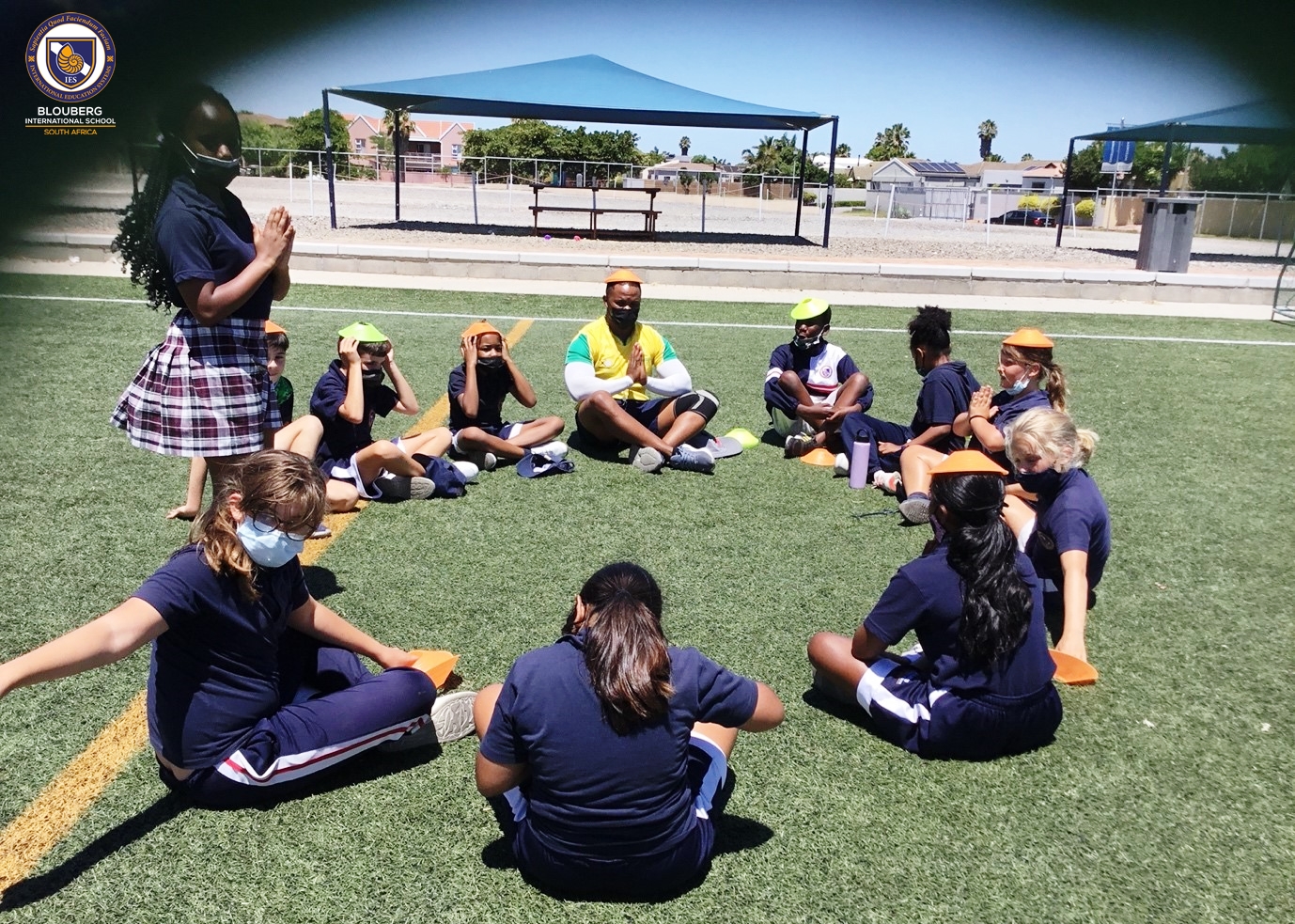
As we try to stay warm throughout the Winter sports season at Blouberg International School, we urge our parents and teachers to encourage each other in supporting and motivating our students to do their best on the sports field throughout the year.
Physical education uses exercise and information to promote healthy growth and physical development. It also encourages students to learn the facets of the curriculum involved and the benefits of participation in physical education and sports-related activities to the health and wellness of students from Pre-reception through High School.
Physical education is a course taught in school that focuses on developing physical fitness and the ability to perform and enjoy day-to-day physical activities with ease. Children also develop the necessary skills to participate in a wide range of activities, such as soccer, basketball, or swimming. Regular physical education classes prepare kids to be physically and mentally active, fit, and healthy into adulthood. An effective physical education program should include engaging lessons, trained P.E. teachers, adequate instructional periods, and student evaluation.
There has been a huge change in the schooling environment as we have seen in the past 2 years caused by the pandemic that is COVID-19 .
It has affected not only our sports in schools but also outside our schools in the way we think and live.
We come from being a nation that is brought together by our sports. Whether it be on a rugby, cricket, netball or soccer field within our beautiful country, we truly are a rainbow nation.
We have missed out on being inside a fully packed stadium with fans from all across the borders of the world, roaring in support of our favourite teams to being confined to our own spaces that are our homes.
Now that we are back outside on the pavilions ,inside the stadiums and in a better place as a country than we were two years ago, we hope to take this opportunity to explore, be adventurous and live a more fulfilling life than we ever have.
Our role as the Sports Department, Coaches and myself as The Physical Education teacher at Blouberg International School, is to bring out the best in our students on the sports field, to teach them about their bodies’ capabilities, and give them the opportunity to participate and challenge each other and themselves to becoming the best versions of themselves through our sporting activities on our PE and sports fields.
Our goal is to be one of the best sporting schools in our district, to produce well informed and educated athletes who are dedicated to their dreams and aspirations on and off the sports field.
We focus on creating an unforgettable sport schooling experience that will be engraved in our students’ memories forever. We would like to thank our parents for their support and may it continue as we build our school to be the best that it can be.
Once again, we urge our parents to give our students an opportunity to be a part of this wonderful adventure and give support to our coaches and staff on our sports fields, and build relationships with them that will be in our BIS family memories forever.
Mpho Mahlangu (Coach M)
Physical Education Teacher & Wellness Coach
Read More
Making friends in Budapest
There is so much discussion about ‘all around the world’, interschool connections and online communication right now. Not only is it a fun way for children to explore the world around them, but they can also observe the learning of the other children they are in contact with.
This allows students the opportunity to become a part of the lives of people who live on the other side of the world. Unlike just showing a map of the world in the classroom or exciting pictures from countries we’re learning about, this vivid personal connection both inspires their learning and, in its own way, makes it more meaningful to them.
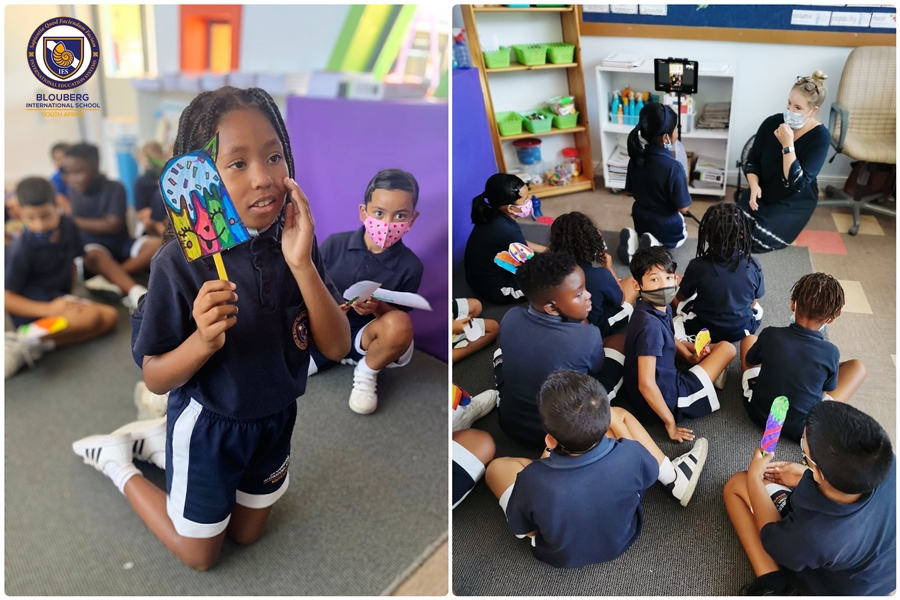
This week, our Year 2 students got to interact with children from our Budapest school. A country that most of them had never even heard of before.
It was so exciting for our students to see the other students, from our sister school, wearing the same uniform that they wear in a completely different environment.
The wonderful contrast of it being winter over there at the moment and summer here made for a very fun art idea. Our Year 2’s had to make and design their very own popsicles while the other children created their own snowmen and penguins. Students had an opportunity to come up one at a time and introduce themselves, while they very proudly showed off their art pieces.
This has been such an incredibly interesting and exciting experience. Mr. Swart also popped in for a visit to say hi and interact with the students.
A wonderful way to learn and a very unique way to explore the world around them. We can’t wait to meet up with our new friends again!
Siobhan Hendry
Year 2 Teacher

Read More
The Greatest Gift of Reading to Your Child
“Reading is fundamental. In fact, it is one of the most important ingredients to becoming all you can be.” Michael Stutman
“The more that you read, the more things you will know. The more you learn, the more places you’ll go.” Dr Seuss from the book “I Can Read with my Eyes Shut!”
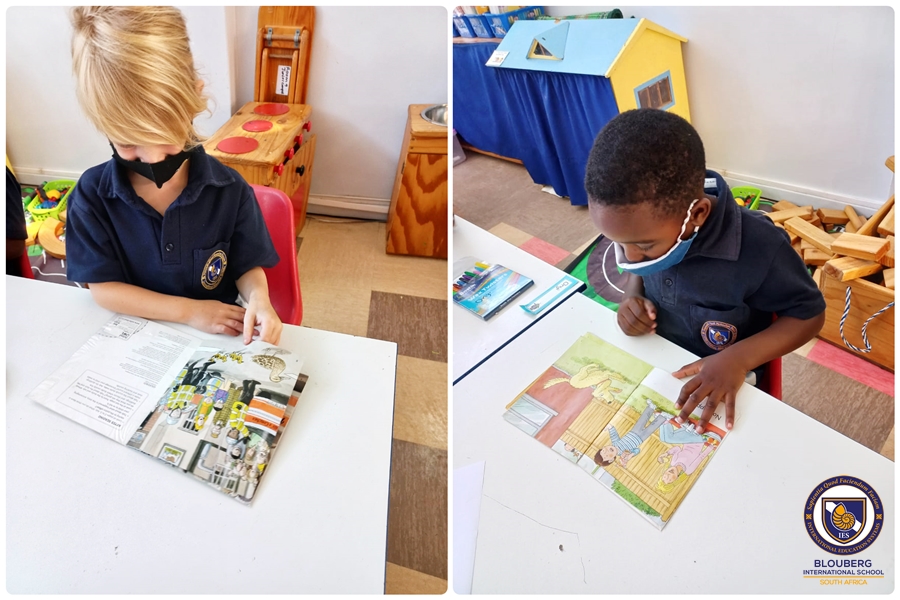
Reading helps develop a child’s brain. Children that are exposed to listening to stories their parents read from an early age tend to do much better at school. From an early age they are being exposed to vocabulary and language development. They start using their minds to imagine and create which are some of the building blocks towards problem solving and critical thinking later.
“Children are made readers on the laps of their parents.” Emilie Buchwald
Did you know that although reading is so important, 800 million people around the world are illiterate? Many families have no books for children to read. Sadly, in this digital age, it is not just impoverished families that do not have books and don’t read to their children. So how can we develop a love of books and reading in our young children from early on?
Here are some ideas:
- Take your child to the library and sign them up for a library card
- Make bedtime stories a non-negotiable daily ritual
- Ask family and friends to give books as gifts for birthdays and special occasions
- Get books for cheaper from 2nd hand shops or garage sales
- Swop well-loved books your child has outgrown for “new” books from a friend
- Point out words and pictures on sign boards when driving and ask your child what it could mean
- Look for letters and words when out driving on car number plates and signs
- Model reading to your child by being a reader yourself
- Allow siblings to read to each other
- Look at the pictures in a book and allow your child to make up their own story
- Ask questions about the story whilst reading
- Draw a picture of what could happen next or even before they story takes place
- Let your child make their own story book by becoming the illustrator. A parent or sibling can write in the text.
What other ideas can you think of to instil a love of reading in your child? Please share these great ideas with your friends and family. Let us become a community of readers who are raising leaders to inspire a legacy of literacy and have fun in the process.
Bronwen Nuthall
Reception Year Teacher
WATCH: Nikraad reading A story in Reception
Read More