

The Importance Of Outside Play
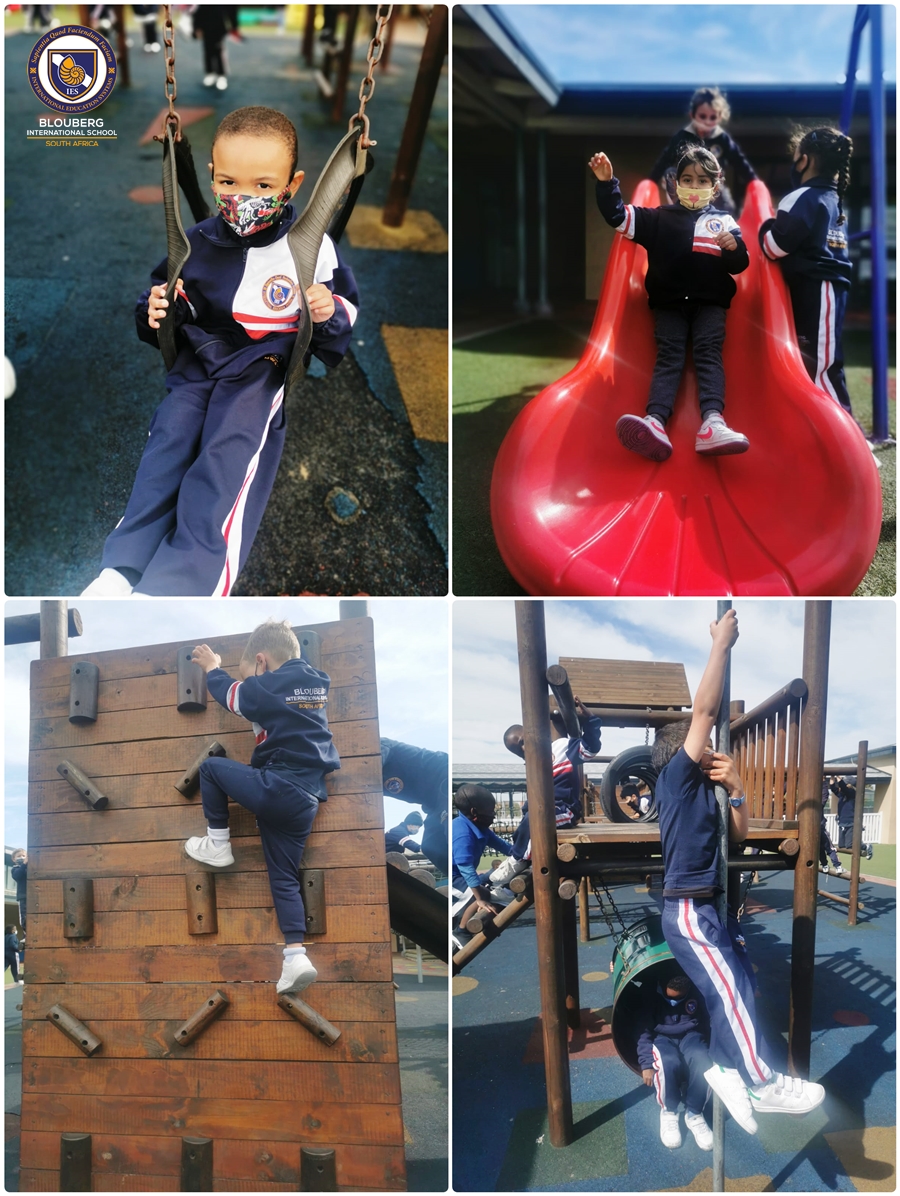
One of the main ways children learn and develop their gross motor skills is through playtime, on the playground, during outside time. As they play, their gross motor skills improve even without them knowing they are actually working on these abilities.
How playground equipment helps develop these skills:
- Climbing a ladder up to a slide or steps helps children learn to start balancing and shifting their weight. Going down a slide, children experiment with different body positions while working on balance and control of their bodies.
- While they are on swings they are in motion which helps them work on balance and coordination. When kids learn to pump up their feet to propel themselves on the swings, they work on sequencing and coordinating their body parts and movements to control the swing.
- The jungle gym strengthens arms, legs, their core and even their fingers. It provides an excellent way to work on balance, coordination and sequencing of which hand or foot moves next.
- The monkey bars strengthen hands and upper body strength as well as developing coordination and sequencing.
While there are many physical benefits to outside play, it provides a huge opportunity for social development in children as well. They also develop stronger reasoning and observation skills, giving them the opportunity to explore the world from a different perspective.
There are endless benefits to playing outside!
Cindy Nunan
Nursery and Pre-Reception Teacher



Hooked On Books in Foundation Stage
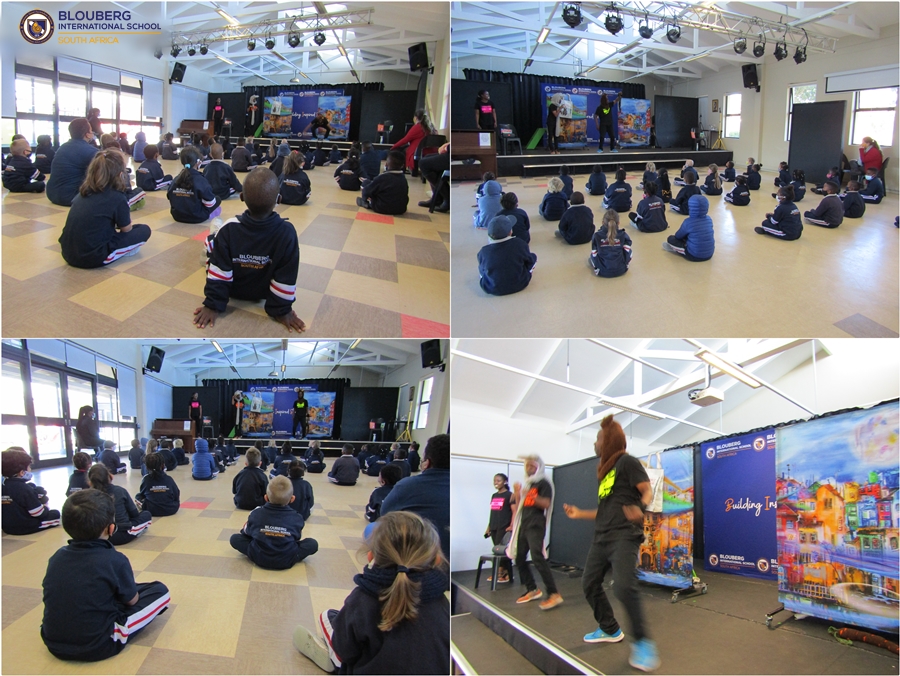
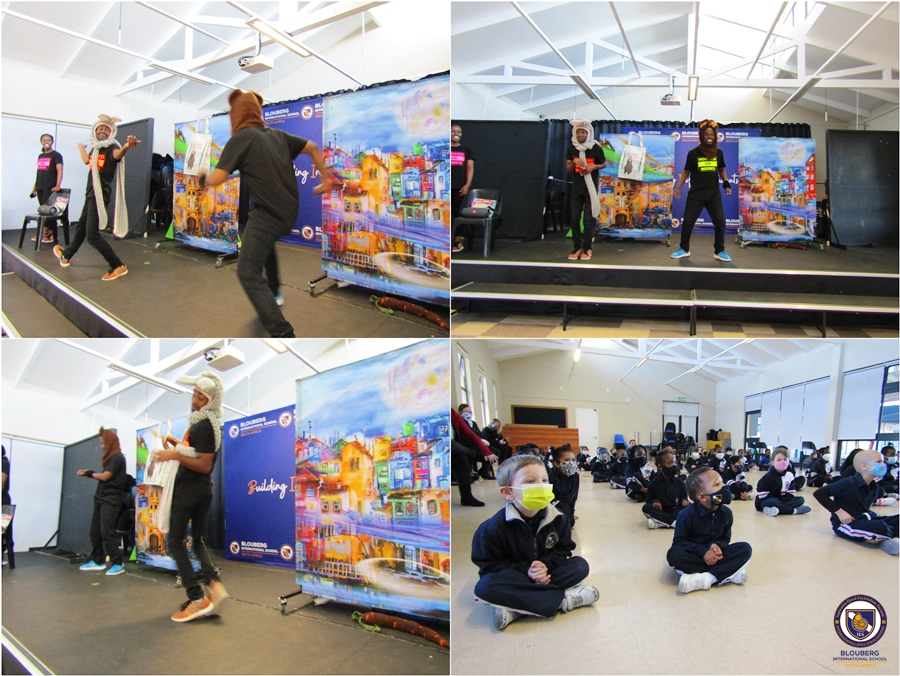
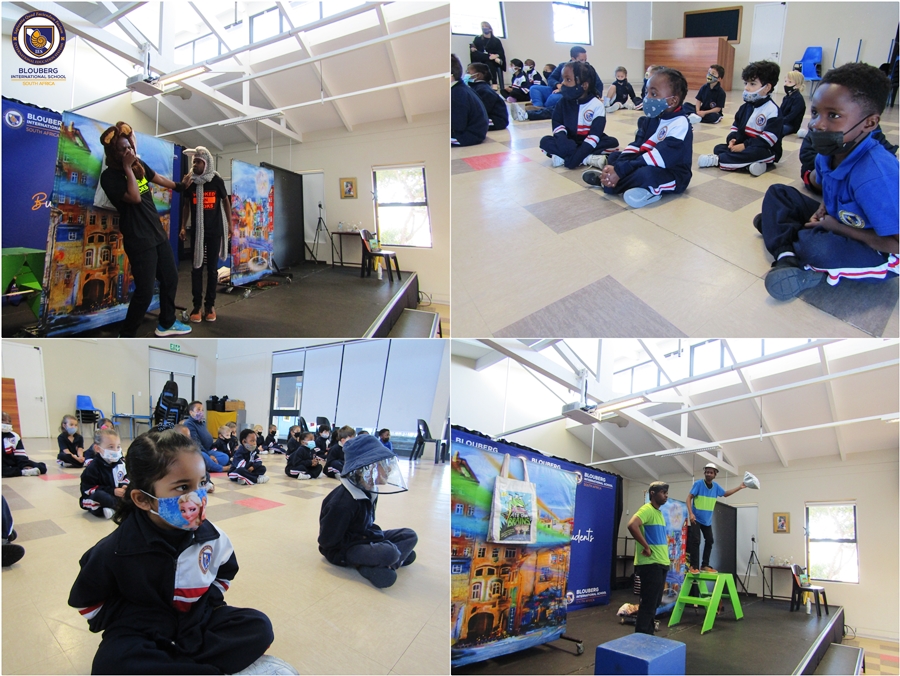
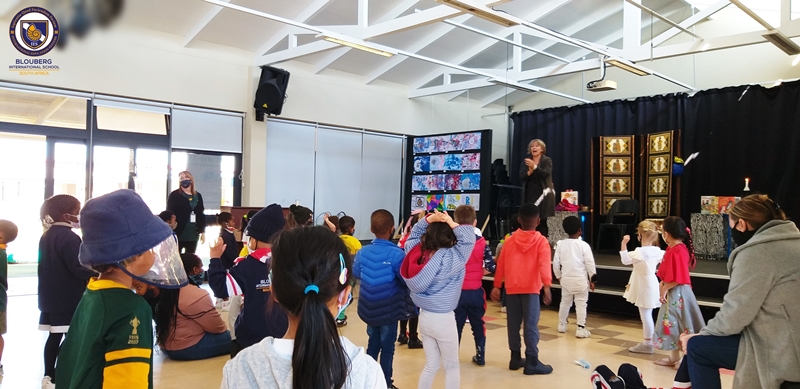
On Friday, 20th of August, we were elated to welcome the team from Hooked on Books to Blouberg International School. The annual event is a highlight in the school and it was with great excitement that the students lined up to go watch the performance in the Junior Hall.
Hooked on Books is a touring Educational Theatre Company that shares their love of books and stories with the students. Each year they choose a selection of stories and dramatise excerpts from the books. The actors are amazing and encourage audience participation, which of course the students love. They end each story on a cliff-hanger to encourage the students to go read the books for themselves.
It was a lovely day and we look forward to Hooked on Books visiting again next year.
Monique Meyer
Reception Year Teacher

Read More

Wild Animals
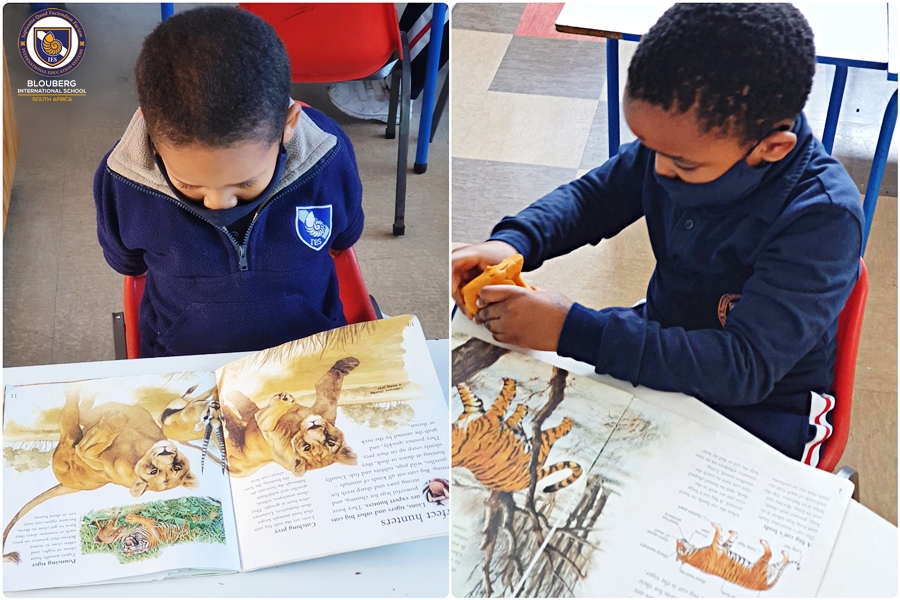
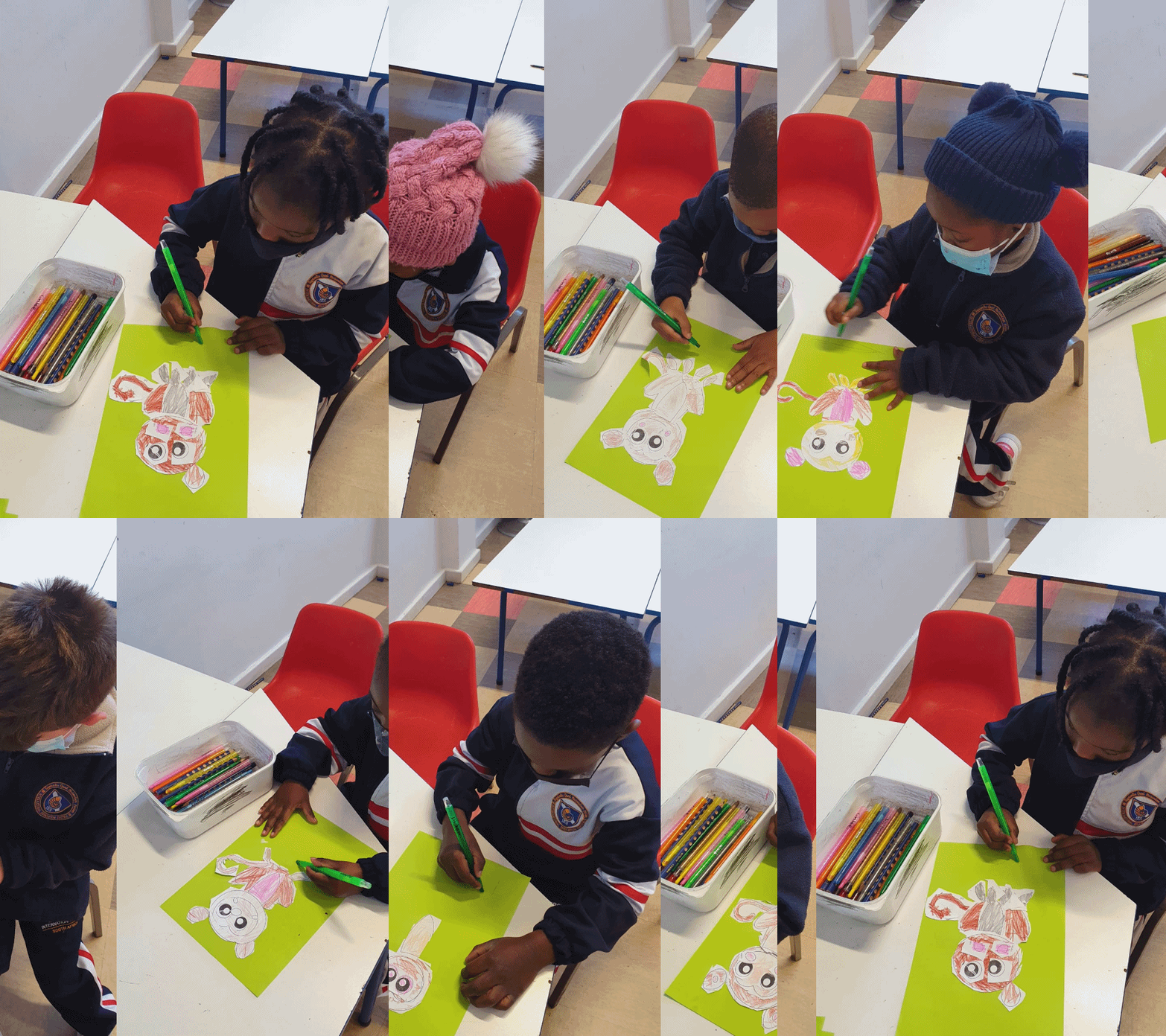
We are learning more about wild animals in Foundation Stage. Picture books with animal characters are firm favourites with the students and they simply love to observe animals on the whiteboard shows. We even made our own wild animals in Art.
According to an article in ONE GREEN PLANET, animals can teach us 10 important things:
- Compassion: Compassion is based on being able to understand the feelings of others/another.
- Patience: There is no rushing an animal to do anything they aren’t ready to do.
- How to live in the now: People waste so much time obsessed with following ‘what will happen next’ that we completely forget to enjoy the now.
- We’re all connected: Ecosystems only thrive when there is balance.
- Humans aren’t as different as we thought: If there’s ever been a time to re-evaluate our relationship with animals, it’s now.
- Respect your elders: Moving forward and advancing towards innovation is a wonderful thing, but we should also learn to respect the wisdom of those who came before us.
- Responsibility: Growing up with a pet has been shown to instill a deeper understanding in children.
- Listen carefully: Animals sit and listen before they react to situations, something we could surely all stand to do.
- Live lightly: Animals learn to live within their means.
- We must stick together: Being able to set aside differences and work together for the mutual benefit of our species.
Martie van Dyk
Pre-Reception Teacher


Countries Around The World
The Foundation Stage students have really enjoyed the Countries Around the World theme. Each morning we used our imagination to board an aeroplane and fasten our seatbelts to set off for a new country. Using a PowerPoint presentation, we “visited” a new country each day. The students have learnt so much about the landmarks, traditions and cultures of South Africa, Australia, Russia, China, France, England, Spain, America and England over the past two weeks.
We even made our own passports for our daily journey – complete with a drawing of the student’s passport photo and some of their personal information.
This past Friday, the Foundation Stage dressed up according to their favourite country. The students delighted in telling their classmates which country they had chosen, which was a real highlight of the theme. The students were also treated to an amazing Inting by Gilly the Storyteller. She skillfully used the student’s imaginations to bring the lovely stories she told to life.
Now that the travel bug has bitten, we are sure to have many world travelers in the years to come.
Bronwen Nuthall
Reception Year Teacher
Read More
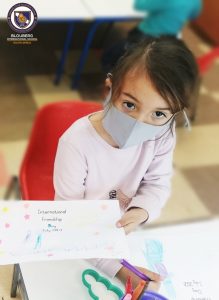
International Day Of Friendship
International Day of Friendship is a day to appreciate and promote friendship. It was celebrated across the world on Friday, 30 July.
International Day of Friendship promotes the idea that building friendships between people, countries and cultures can inspire peace and build bridges between those communities.
Friendship requires empathy, compassion and concern for other people. By valuing these friendships we adopt a more selfless and grateful outlook on life.
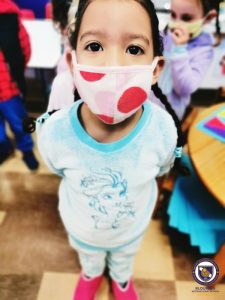
In the Pre-Reception we spoke about what we think makes a good friend, we decided that good friends…
- Help each other
- Play together
- Give friends love
- Share
- Are nice to each other
- Says kind words
- Draws pictures for one another and makes things as gifts to give each other
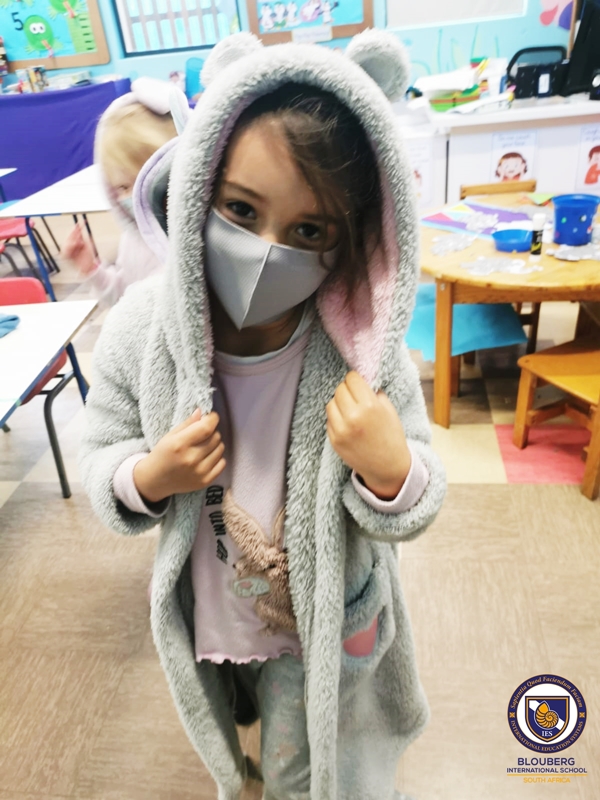
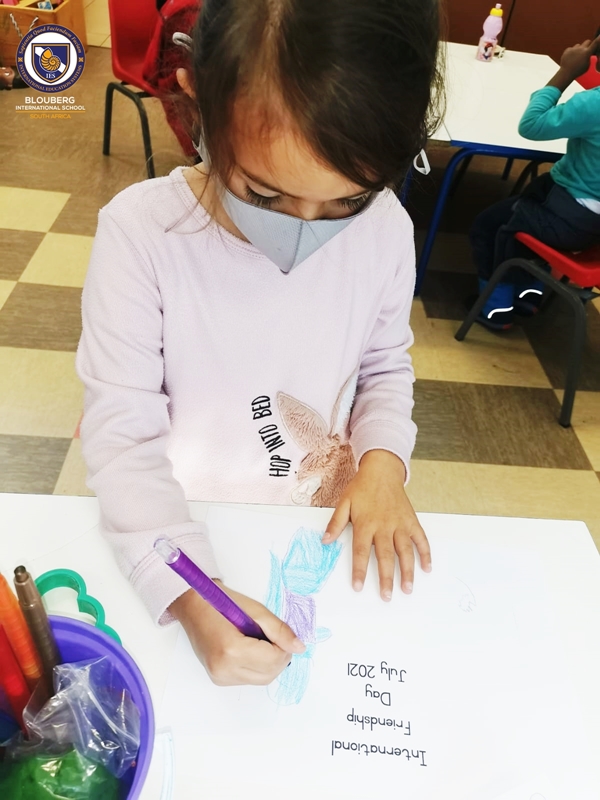
The students then drew and decorated a picture and gave it to an existing or new friend, they had lots of fun doing this! All in all it was a wonderful day, especially because we got to come to school in pyjamas for civvies day too.
This day can help build a more kind, caring and peaceful world!
Cindy Nunan
Nursery and Pre-Reception Teacher

Read More

Sing Along Learning
At Blouberg International School, in Reception Year, our little ones learn in many different ways, but singing songs is one of our favourites! They love learning new songs and actions and are always very happy to share their favourite songs with everyone.
Did you know:
One way or another, children are exposed to and involved with singing from their earliest years. Whether it’s a parent singing them to sleep, or the opening theme song from their favourite TV programme, singing plays an important part in a child’s development.
Learning a piece of information attached to a melody embeds that information more rapidly in a child’s mind. The majority of children learn the alphabet and numbers not by simply saying them but singing them.
Monique Meyer
Reception Year Teacher
This was our rendition of a counting song…
Read MoreOnline Class Quiz Games
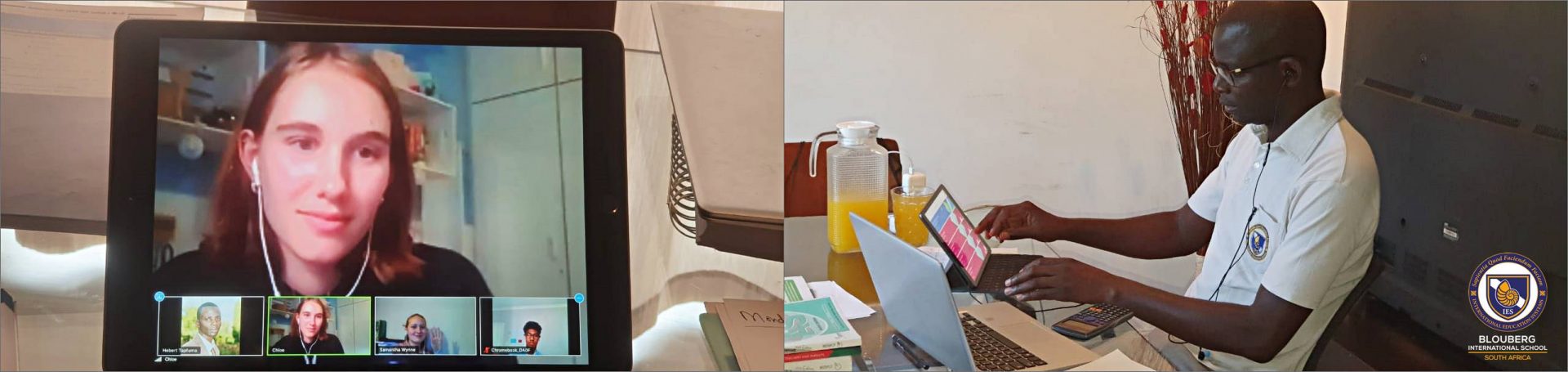
The world has inevitably changed how we teach and how students access, share and facilitate information. Mathematics has been fun for most our students, with the assistance of great websites like Quizizz, Kahoot, and SPARX, which allow students to be interactive while learning. The most popular way of teaching has been the use of pre-recorded videos, either from specialist providers such Khanacademy or produced by teachers themselves. The latter have typically involved teachers delivering lessons backed by PowerPoint presentations on Zoom, the most popular screen and video recording software.
I love hosting classroom quiz games. They can be great for formative assessments and a tool to help students review before a test. You’ve probably used (or at least heard of) the multiplayer gaming website Kahoot. There’s a lot to like about Kahoot: it’s free, works in web browers on tablets, computers, and smartphones, and you can input your questions (or copy a pre-made quiz from their library).
Quizizz is an alternative to Kahoot, and there’s also a lot for educators and students to enjoy. It is very similar to Kahoot, with a few key differences. Just like Kahoot, the teacher (or host) chooses a quiz to begin. A five digit game code is provided. Players (students) use their browsers to join.quizzizz.com and input the game code, along with their names. If students are using smartphones or tablets, I display the join link as a QR code.
Kahoot is designed to show multiple choice questions on a large screen, and students respond by clicking buttons on their devices that correspond to the answers they want to choose.
Quizizz takes a different approach. No projector is necessary because students see questions and answer options on their own screens. The question order is randomized for each student, so it’s not easy for students to cheat. With Quizizz, students don’t have to wait for the whole class to answer a question before they continue to the next one.
So, Quizizz is student-paced while Kahoot’s pace is determined by the teacher or host. This is the major difference and can be a benefit depending on the situation. If you want to pause after each question, then Kahoot is better. The class can stop and discuss after each question, immediately addressing misconceptions. With Quizizz, students zip through questions at their own pace, limiting all discussion to after all questions have been answered.
This pandemic has showed us all how important the bond between teacher, student and parent is. It is because of the parents that we are successful at implementing various strategies outside of classroom, since they are the ones who have more contact time with their kids.
I want to thank all the parents that have supported us throughout this unusual journey.
Brian Sizani
High School Mathematics and Physics Teacher

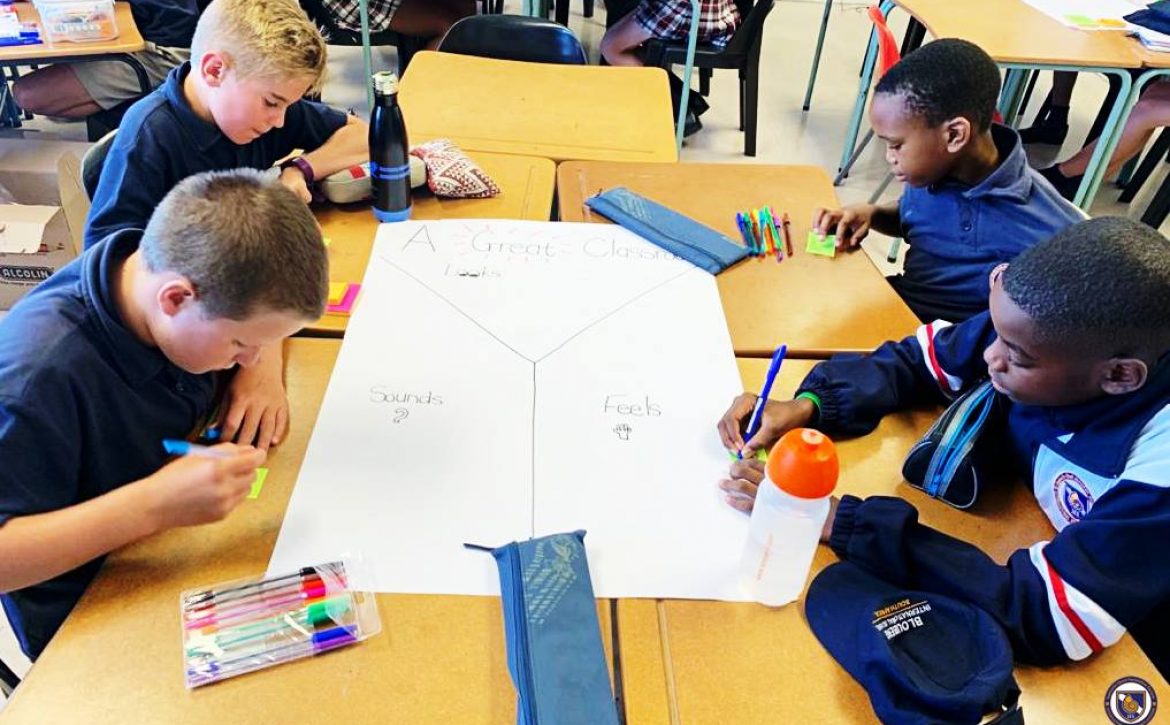


First Day Activity
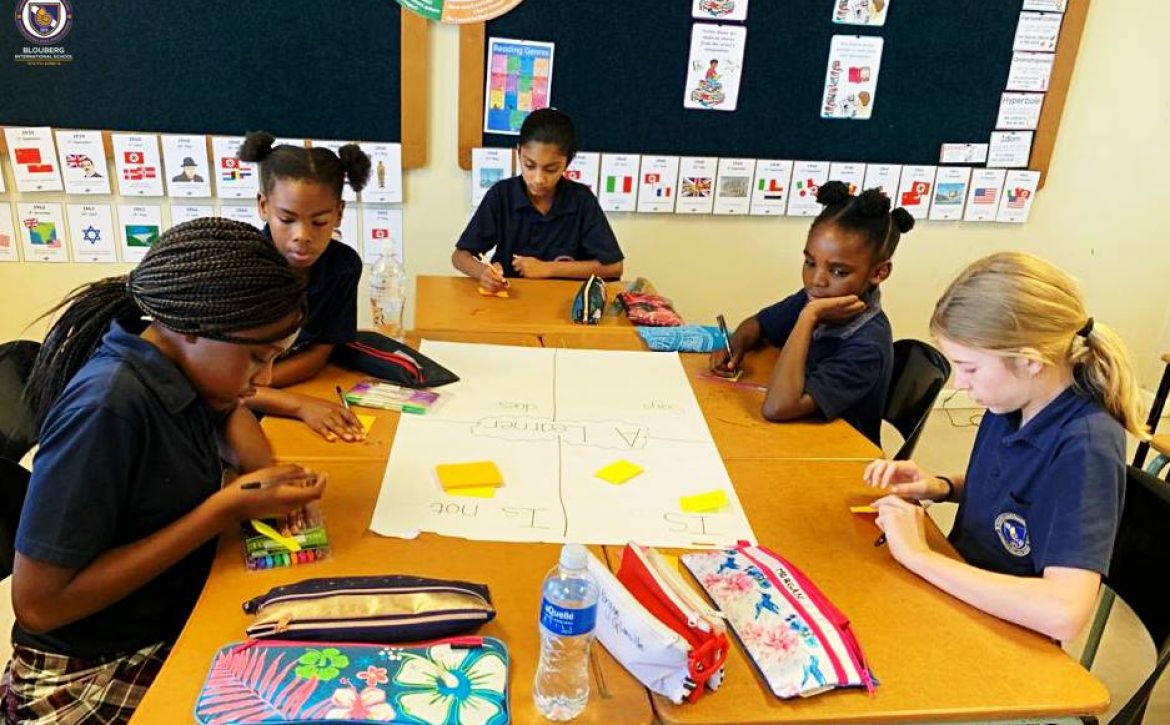
Today was our first day in Year 6.
We did station work and wrote down in our own opinions about what makes a good teacher, what makes us happy, what we thought made a good classroom environment and what a learner is, is not, does and says. We also made a classroom essential agreement, showcasing how we can cooperate with others when working in groups and to show resilience in our school work.
We had a lot of fun settling into our new classroom and we hope 2020 will be an amazing year.
Maia Davies
Year 6 Student

Jumping into Math! Year 2
Maths is fun!
“Tell me and I forget. Teach me and I remember. Involve me and I learn” – Benjamin Franklin
With that in mind, the Year 2 classes tackled this week’s Math concept of measuring from a totally different perspective.
The students were divided into three different groups, each group attempting a measurement task using different apparatus.
- One group had to estimate how many cubes would fill different size containers and then check their answer by actually counting the cubes.
- A second group had to measure and design a cardboard house for a soft toy they had brought to school.
- The third group worked on the mat, using their white boards to build a ramp for a toy car. They then used a measuring tape to measure the distance their cars traveled.
There was much excitement (and quite a bit of noise), as the groups worked in the passage to measure how far they could jump. My class agreed that this was the most “fun” two days of Math “ever”. They were so involved in the activities, that they completely forgot that they were actually learning about centimeters and millimeters. It was wonderful to see how they adapted the instructions given to think up new ideas to test their cars, make their houses and hopping instead of jumping.
So the objective of the lessons was achieved, by using a different approach, which kept the students engaged, and asking and answering questions. This approach has proven to be a successful way to improve lateral and analytical thinking and, despite the organised chaos, will definitely be repeated.
Mrs Kim Coetzer
Year 2 Teacher