From the Principal’s Desk, 24 May 2021
Dear Parents
MORNING DROP OFF
I am very aware of the frustrations around morning drop off times. The gravel area is of concern, but is being attended to and you will see a difference soon. Next week’s newsletter will explain more.
Please may I ask that parents not get out of their cars at the “drop and go” in the main parking lot. This means we should have school bags placed strategically in the car so the young ones can easily access the bags when they get to school. If we limit each car’s stopping time, this will greatly assist the situation.
Thank you for your patience in this regard.
FEATURE PHOTO
Our main newsletter photograph features Mrs Mandy Goch. Five/Six facts that not everyone knows:
1. She is Portuguese.
2. She is a very enthusiastic reader and always has a book in her hand. Her favourite books include The Elephant Whisperer (Lawrence Anthony) and Pillars of the Earth (Ken Follett)
3. She worked for many years in a model agency, managing the careers of models.
4. She can eat an entire large bag of NikNaks all by herself.
5. She is a bit of a perfectionist and as a child would change clothes regularly if she spotted one speck of dirt on her outfit.
6. Her school day starts with a laugh and ends with one.
IES CHIEF ACADEMIC DIRECTOR VISIT
Our IES Chief Academic Director, Mr Darryl Lottering, is currently in South Africa. He has been visiting Blouberg and engaging with students and teachers. He will be at school again on Monday, 24th May.
Darryll would also like to offer our parents an opportunity to speak with him. We are, therefore, having a parent meeting on Monday, 24th May at 5.30pm. This meeting will be limited to 50 people and there are still “spots” available. If you would like to attend this meeting, please email me at andre.swart@iesmail.com.
The meeting will take place in the Junior Hall.
WEEKLY THOUGHT: Your Attitude
“The only disability in life is a bad attitude.” – Scott Hamilton
This certainly makes us think about what we view as a disability, doesn’t it?
Maybe Hamilton is hitting the nail on the head.
Whenever I meet a person with a disability, it always amazes me how the individual usually (if not always) insists that they do not want to be treated as a disabled person. Their vigour for life truly is always inspiring…
Then, on the other hand, we sit with individuals who have everything going for them: youth, health, fitness, opportunities, etc., but who will find every imaginable excuse to disqualify themselves from doing certain things. In stark contrast to those who actually have disabilities, these able-bodied people display bad attitudes towards life, and it is these attitudes that will end up hampering any possibility of growth, development and ultimate success.
To grow, thrive, develop, and enjoy each of life’s precious possibilities, we need to ensure that we have the right attitude – always, and in all circumstances. Individuals who do so are the ones who will live meaningful lives and have a deep sense of purpose, regardless of their circumstances.
Do you have a disability? Before saying “No”, first make sure to check your attitude towards life.
Have a wonderful week, it is time to unpack those winter items…
Andre
Read More

Teamwork Makes The Dream Work!
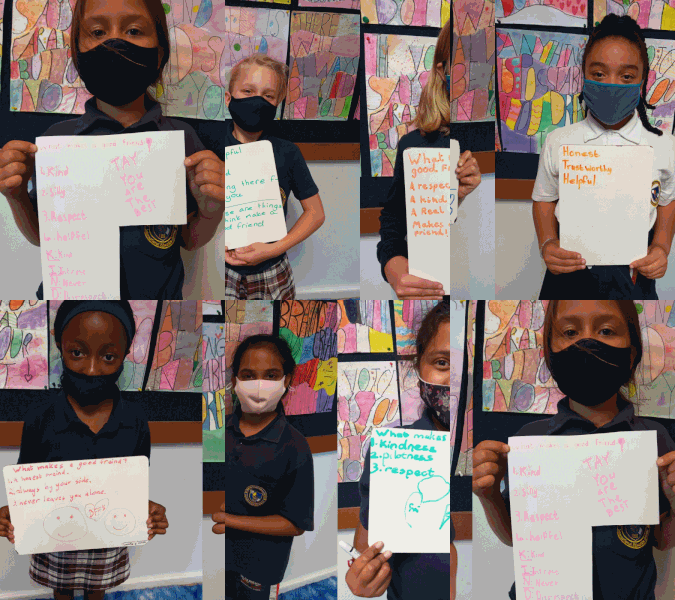
The Year 4s have been learning about Making Peace and Helping People To Belong as part of our Global Perspectives unit.
We’ve explored important questions such as:
- What makes a good friend?
- What causes arguments or conflict between people?
- How can I maintain good relationships and resolve conflict with others?
It doesn’t really matter what age you are, you will always have to collaborate and work together with others, whether it’s in a social, professional or family environment. We’ve focussed mainly on our own behaviour and what we can do to be a good friend and help prevent or resolve conflict.
“We are not a team because we work together. We are a team because we respect, trust and care for each other.” – Vala Afshar
Take a look at the words students shared of qualities that a good friend would have. We also integrated Global Perspectives with our Art where they had to create a collaborative, puzzle artwork. The students did a wonderful job working together and encouraging each other – whilst having fun!
We are so thankful to have such a wonderful team at BIS: the students, parents, teachers, assistants, maintenance staff, sport coaches, administration and principal.
You are all appreciated and valued!
Ria du Plessis
Year Teacher


Teaching Young Learners About Endangered Animals
“We all have a responsibility to protect endangered species, both for their sake and for the sake of our own future generation” – Loretta Lynch
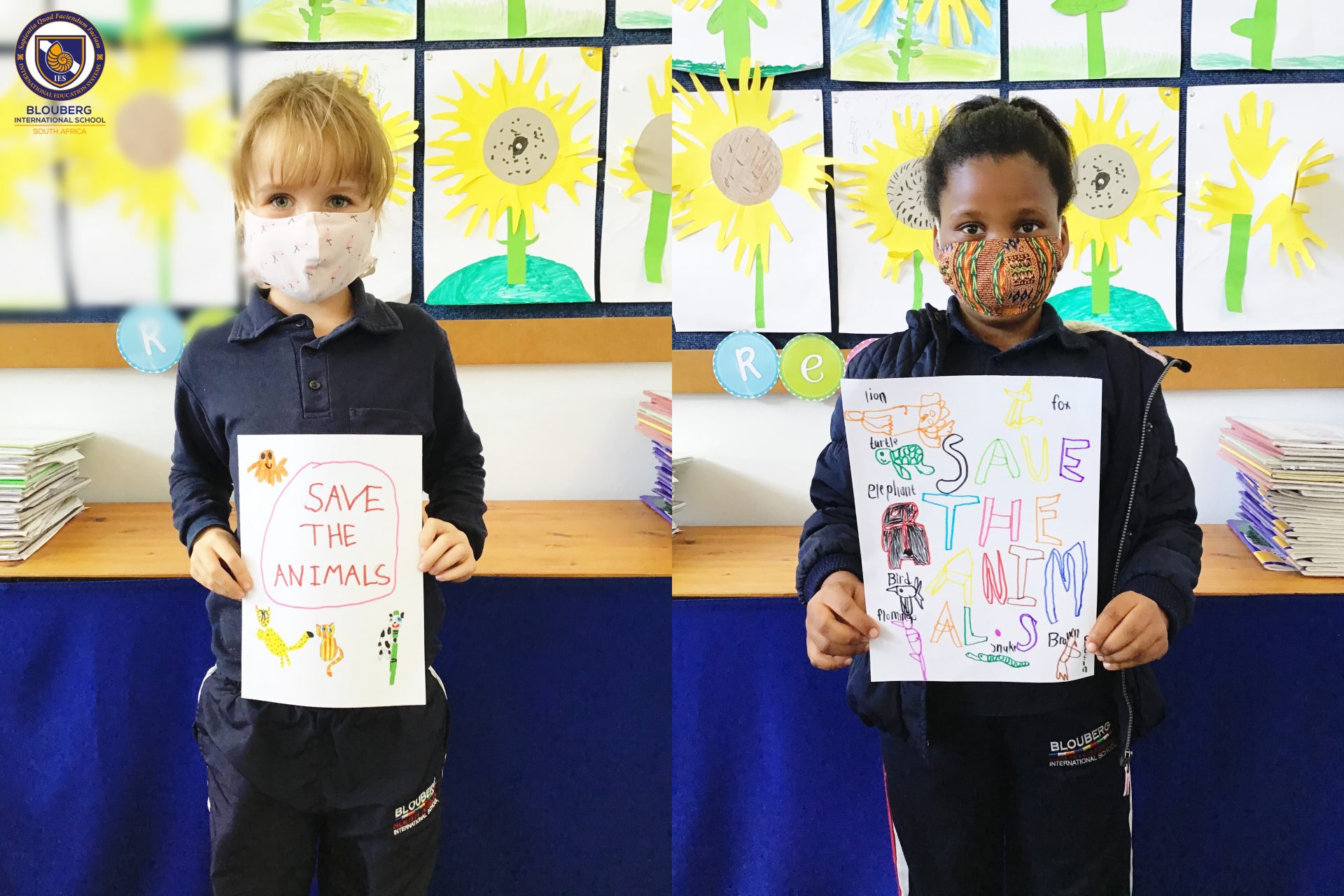
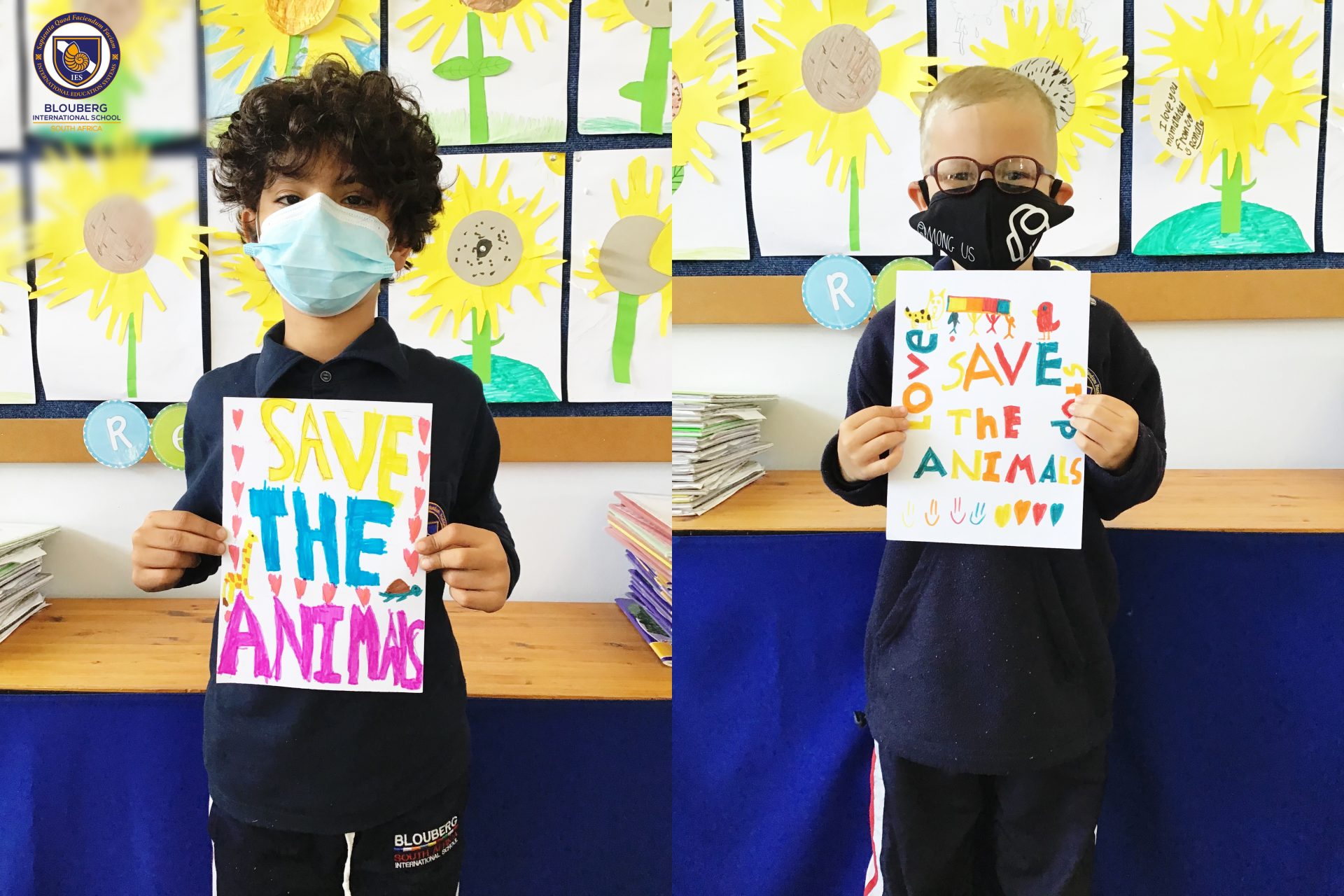
The Year 2 teachers have been expanding the knowledge of learners on endangered and extinct species during Global Perspectives. We hope for our learners to gain an understanding of the importance in protecting the animals around the world.
Teaching young learners about extinction and endangered animals creates natural curiosity and fascination about the world around them. They need to realise from a young age that every year a few species end up extinct and this is largely as the result of human activities. Teaching learners to care about and protect animals and their habitats is one of the best ways in which we can help prevent more species from becoming extinct as the children of today are the leaders of tomorrow.
As parents and teachers, we are familiar with the importance of how poaching, climate change, deforestation and urbanization have led to the decline in species. That is why it is of utmost importance and our responsibility as adults to teach our children lessons about endangered and extinct species.
“Animals should not require our permission to live on earth. Animals were given the right to be here long before we arrived.” – Anthony Douglas Williams
Erin Hierse
Year 2 Teacher
Emergent Literacy In Reception Year
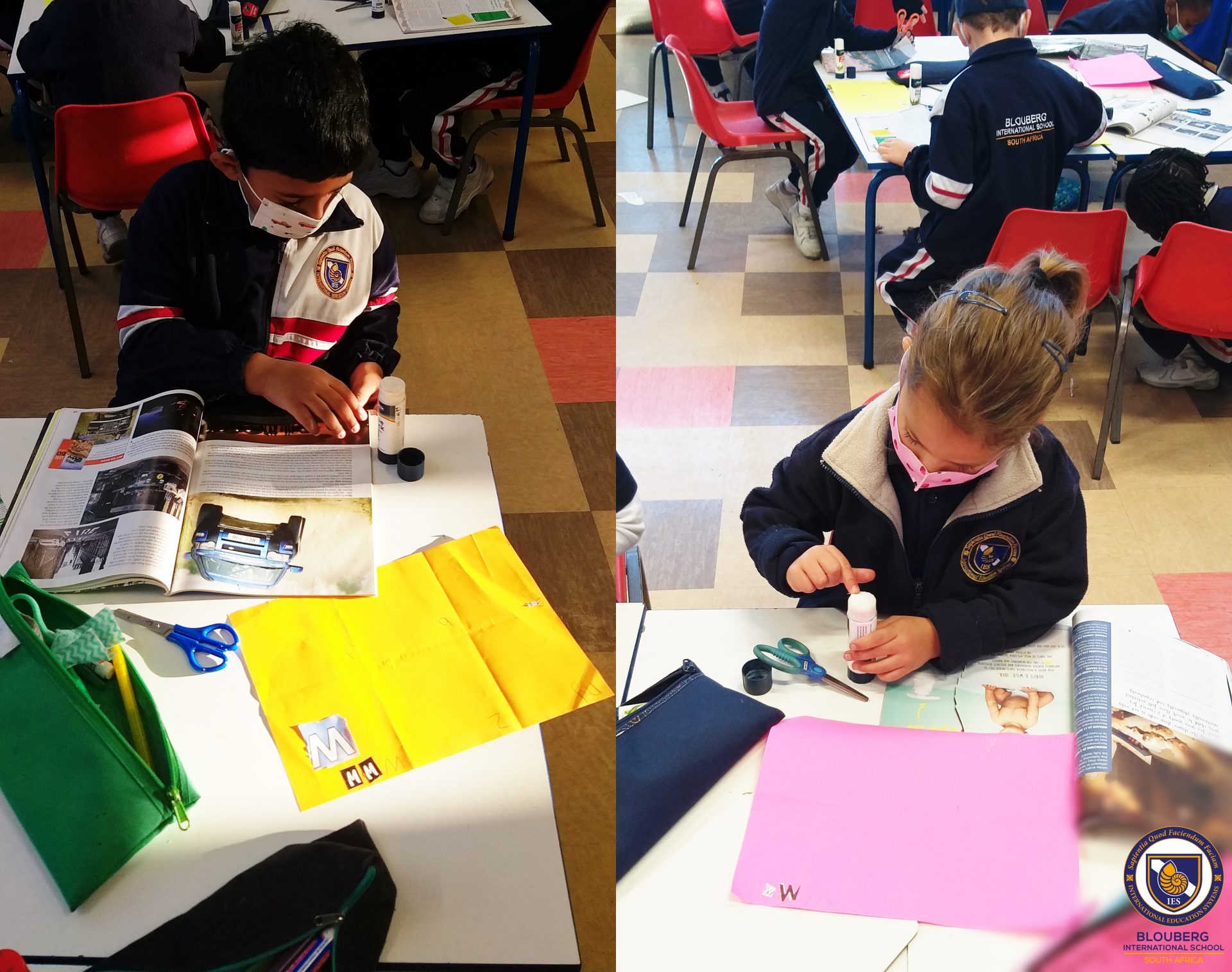
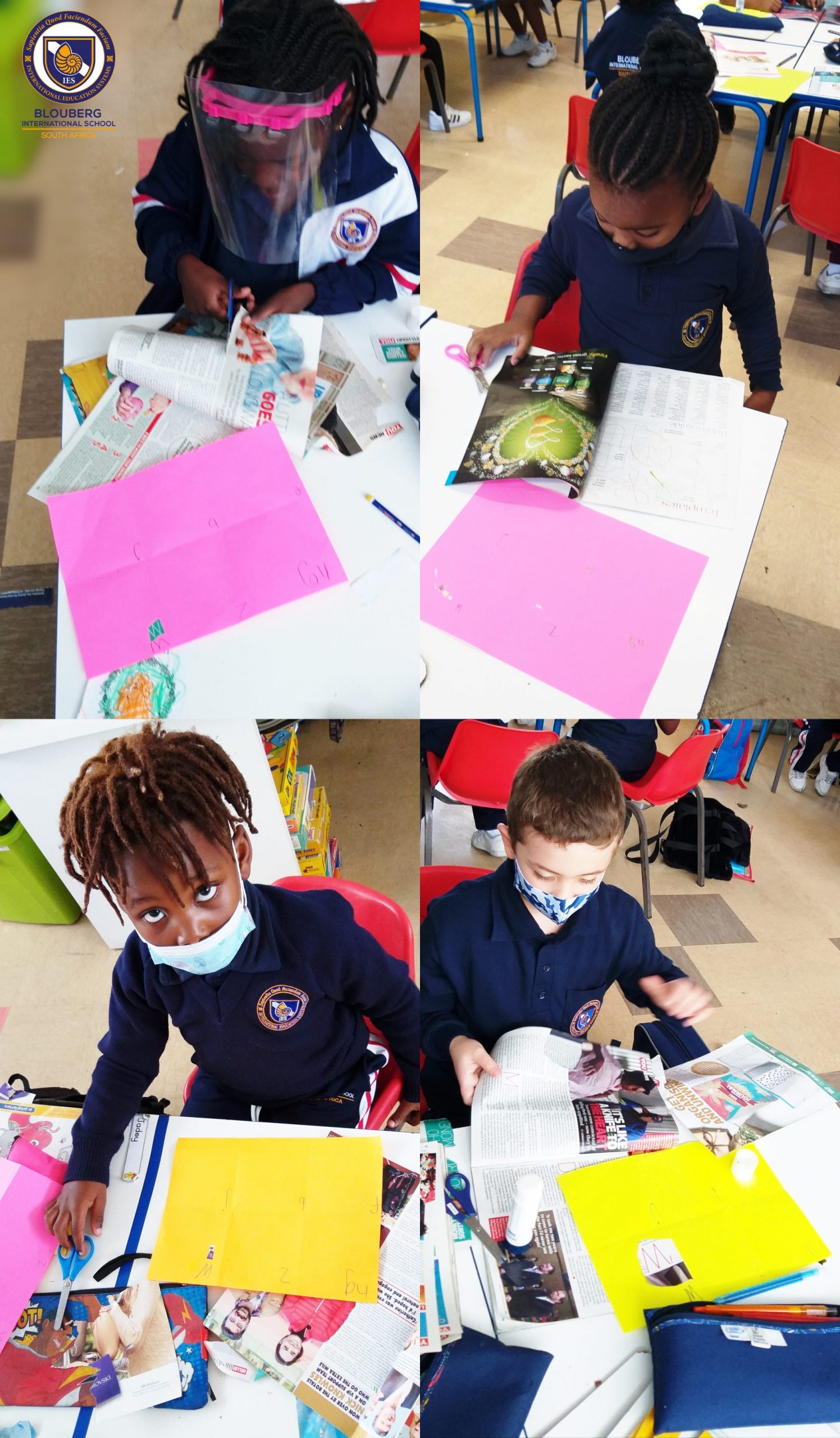
Our Reception students have been enjoying revising the letter sounds they have learnt by paging through magazines to look for the letter sounds. Once found they need to cut them out and paste the sound to match the sound on a colourful page.
This task is part of emergent literacy and combines quite a number of important skills such as fine motor skills, hand eye co-ordination, visual memory and letter recognition skills. As they page through the magazines students are exposed to letters in other fonts and also need to make the link between upper and lowercase letters.
Here are some fun ways to develop letter recognition at home:
- Writing letters on bathroom tiles using bath crayons.
- Writing with a whiteboard marker on a sliding door or mirror.
- Looking for known letters (and perhaps words) on number plates and signs in the community.
- Playing I spy to identify objects at home that begin with a specific letter (remember to use the phonetic sound (example: mmm, not ‘em’).
- Finding letters on a shopping catalogue.
- Writing letters in something fun on a tray, such as custard, chocolate pudding or dry substances such as icing sugar, jelly powder, rice or salt.
- Writing letters using a pointer finger on a steamed up mirror.
- Making letters out of playdough.
- Making letters out of salt dough and cooking it.
- Making letters with sweets on iced cupcakes.
- Finding letters in letter pasta.
- Writing simple words using Jelly Tot letters.
For more great ideas have a look at our Foundation Stage Pinterest Page: https://pin.it/1Of5Yuy
Bronwen Nuthall
Reception Year Teacher

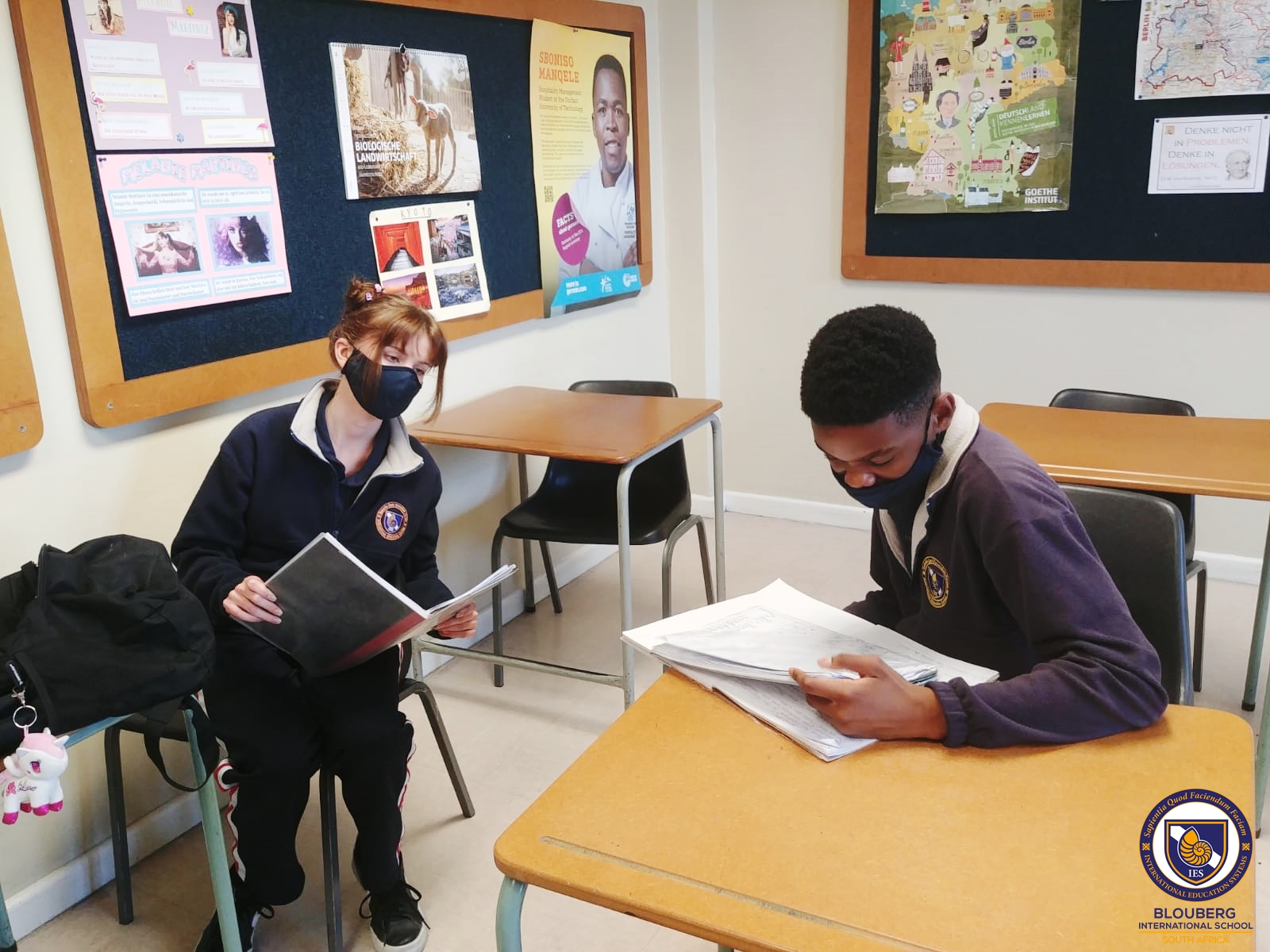
High School German
Did you know that German is the most widely spoken mother tongue in Europe? It is also spoken in many German-speaking communities around the world, including South Africa. An impressive 1000 German companies are world leaders in their business. When it comes to science and research, Germany is also right at the front of the pack. In the last 100 years, more than 70 Nobel Prizes have been awarded to Germans, solely in the field of natural science and medicine. It is also a popular place to study; German degrees are highly valued by employers worldwide.
Not everyone realises the doors that German can open – be it in business, science or education, not to mention gaining access to the rich cultural heritage of original German literature.
The Cambridge syllabus aims to foster not only a knowledge of the language but also to create cultural awareness and sensitivity. This is an invaluable skill to have and makes for well-rounded, empathetic individuals with a broad outlook on life.
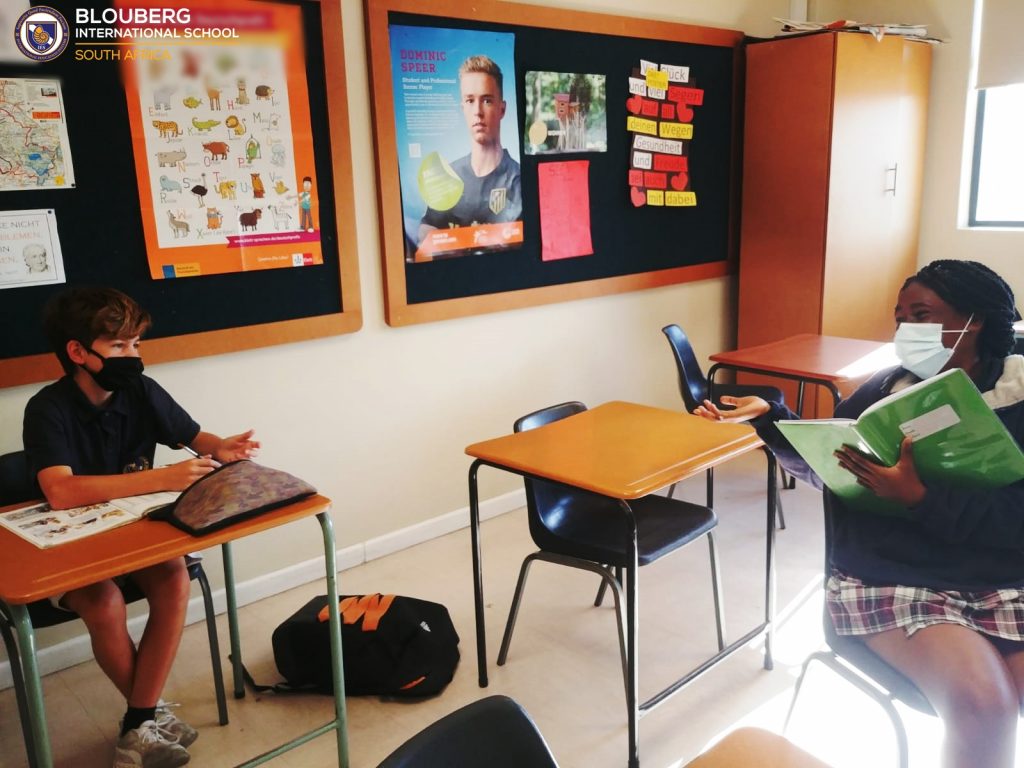
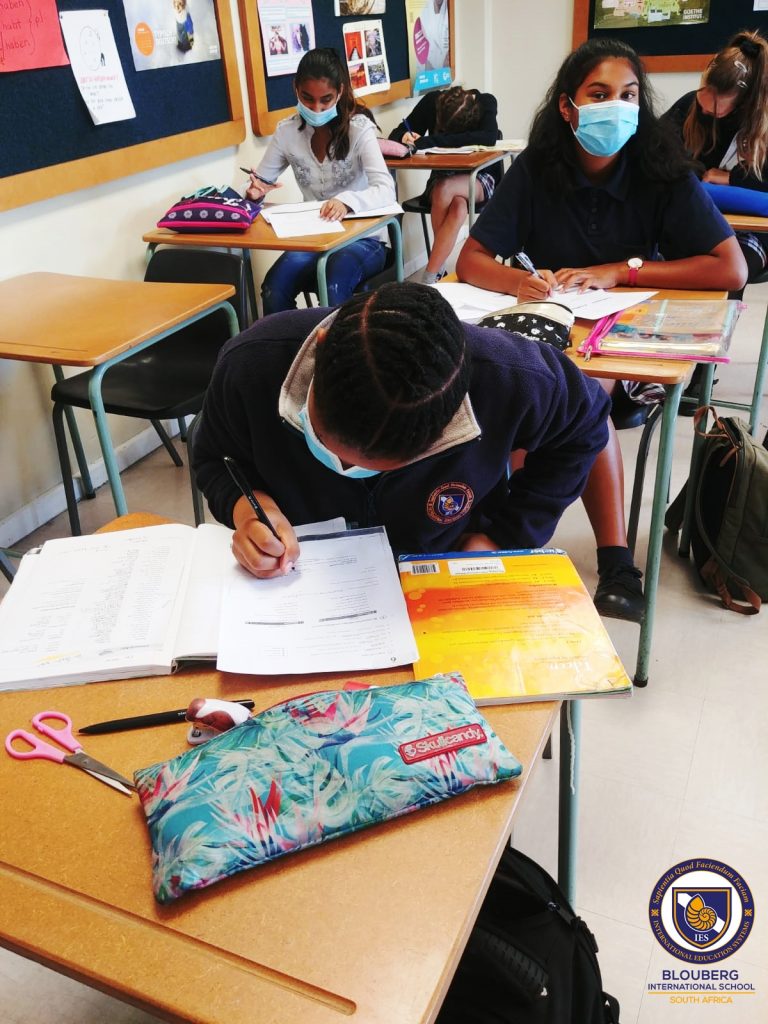
I have included some snapshots of this term’s German classes.
Renate Yotti
High School German Teacher

InterSEK 2021
InterSEK 2021
InterSEK is a competition in which SEK/IES schools from around the world compete against each other in a variety of tasks. The ongoing pandemic meant that the 2021 event had to be held virtually. Blouberg was one of 23 schools to compete in this prestigious event, which ran from 3 to 7 May.Ten High school students were selected to participate in the various events: Daniel Moodie, Shaylee Brandt, Jagadish Mohanty, Shameek Singh, Oswald Pieterse, Catherine Fortuin, Angelic Lossy, Remofilwe Shuping, Samia Naidoo and Adithya Maharaj. There students were briefed before the school holiday and preparation began in earnest upon their return to school. Blouberg participated in 9 events, namely Programming, Virtual Chess, Mathematical Photography, Creating Songs, TikTok Video, Escape Room, Artistic Photography, SEKscience and A Look to the Future.
We are proud of the fact that our students made it to the final round of several events. Daniel, Shaylee and Jagadish won 3rd place in both Programming 1 and 2. Catherine Fortuin was a finalist in the Mathematical Photography and Remofilwe Shuping was a finalist in the Artistic Photography.
Our students shone even in events in which they did not place. I feel that special mention should go to the team that participated in the SEKscience with their fingerprint experiments, as well as the team that participated in A Look to the Future, who designed a robot able to dispense hand sanitizer. The chess players played 9 games of chess one after the other, even managing a few wins. Such concentration is admirable indeed.
Remofilwe Shuping and Angelic Lossy looked amazing dressed in traditional attire for the opening ceremony. Their video even made it onto the highlights of the closing ceremony.
I have no doubt that Blouberg shall continue to go from strength to strength. This round was good. Next round will be even better!
Sheila Marais
High School Teacher
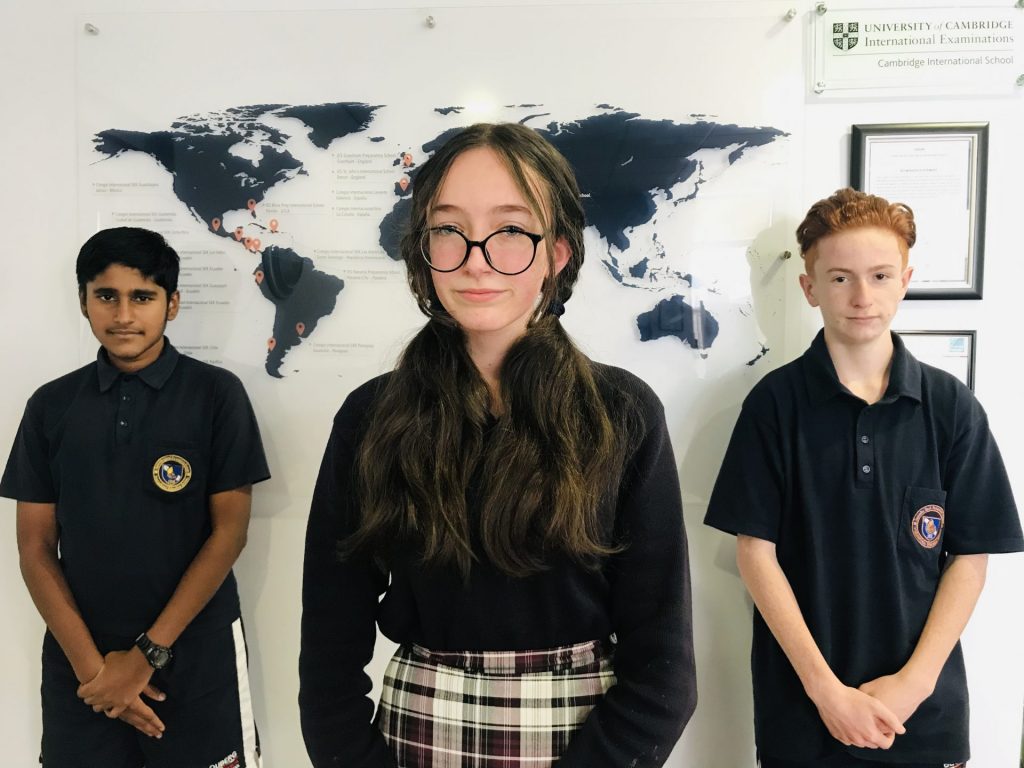
Winners of 3rd place in the Programming Event! Photo left to right Jagadish Mohanty Shaylee Brandt Daniel Moodie

Winners of 3rd place in the Programming Event! Jagadish Mohanty Shaylee Brandt Daniel Moodie

Finalist Artistic Photograph Entry by Remofilwe Shuping Year 9

Finalist Mathematical Photograph Entry by Catherine Fortuin Year 9
Read More

Year 5 Effective Studying Workshop
This term is a big one for the Year 5s. It marks the first year of upper primary school – and with it, the dreaded June exams! Exams don’t necessarily have to be stressful though – after all, they are intended to help us by showing us where we are confident in our work, and where we still need some help. Through preparing thoroughly for exams, we can focus more on their benefits, rather than on the stress they can cause – and so our Year 5 Inting this term focused on just that.
First, we practiced setting up a timetable to organise our studying, fitting in all the work we need to study, without having to cram and stress. Organising our time is the first step in combating exam stress – it breaks the work into manageable chunks, and shows us that we actually do have time to fit in everything we need to. After all, how does one eat an elephant? One bite at a time, of course!
We also spoke about preparing ourselves, inside and out, to make sure that we are in the best frame of mind for learning. The first step to doing this is making sure that you are healthy, so your brain can function at its best. This means enough food, water, rest and exercise – after all; healthy body, healthy mind! Speaking of the mind, we practiced the power of positive thinking. We made positive mantra cards to remind us of our goals, and how amazing each of us is. We also learnt a few grounding exercises, for when the stress does get a bit much – or for when our brain seems to be running in circles.
Finally, we looked at some study techniques, thinking about various ways of studying (and trying a few out while we were at it). Whether you enjoy studying by organising your notes into mind maps, or by teaching your teddy bear how to multiply and divide, it’s a good idea to have a few different study methods in your study toolkit.
Above all, we learnt that when it comes to studying for exams, everyone is different. What works for one of us might not work for another – and part of developing into an independent learner is figuring out what works for you. Hopefully all our Year 5s are a few steps further on that exciting journey!
Hannah Kirkaldy
Year 5 Teacher


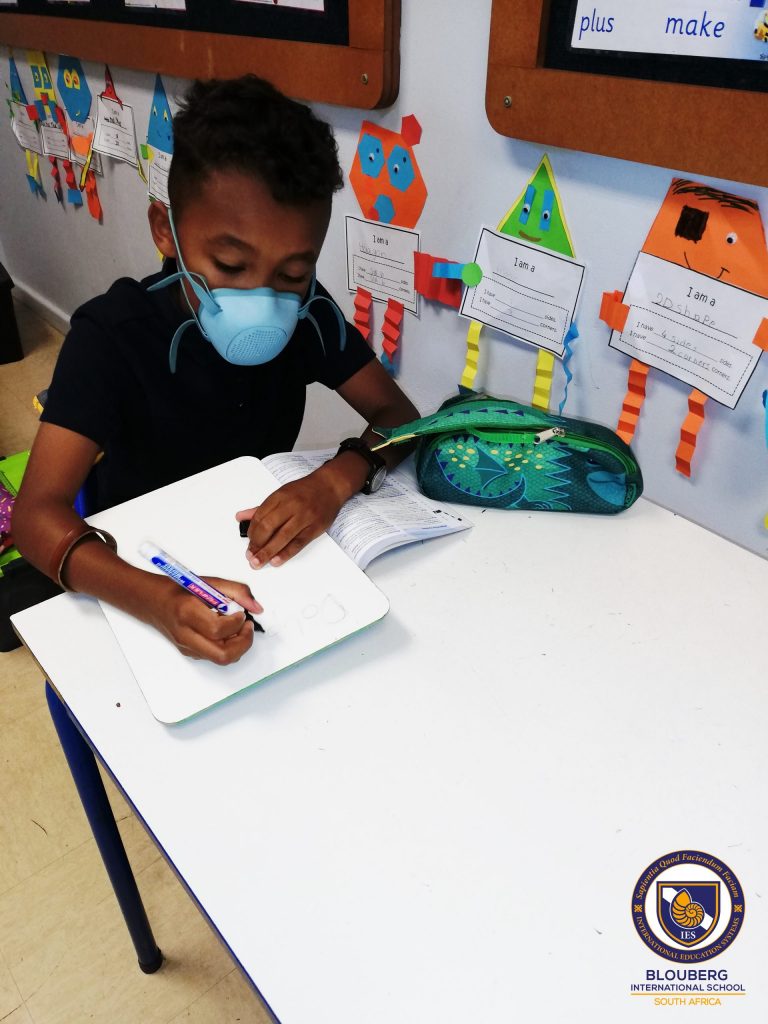
Year 2 ICT Lesson Fun
“The mind, once enlightened, cannot again become dark.” – Thomas Paine
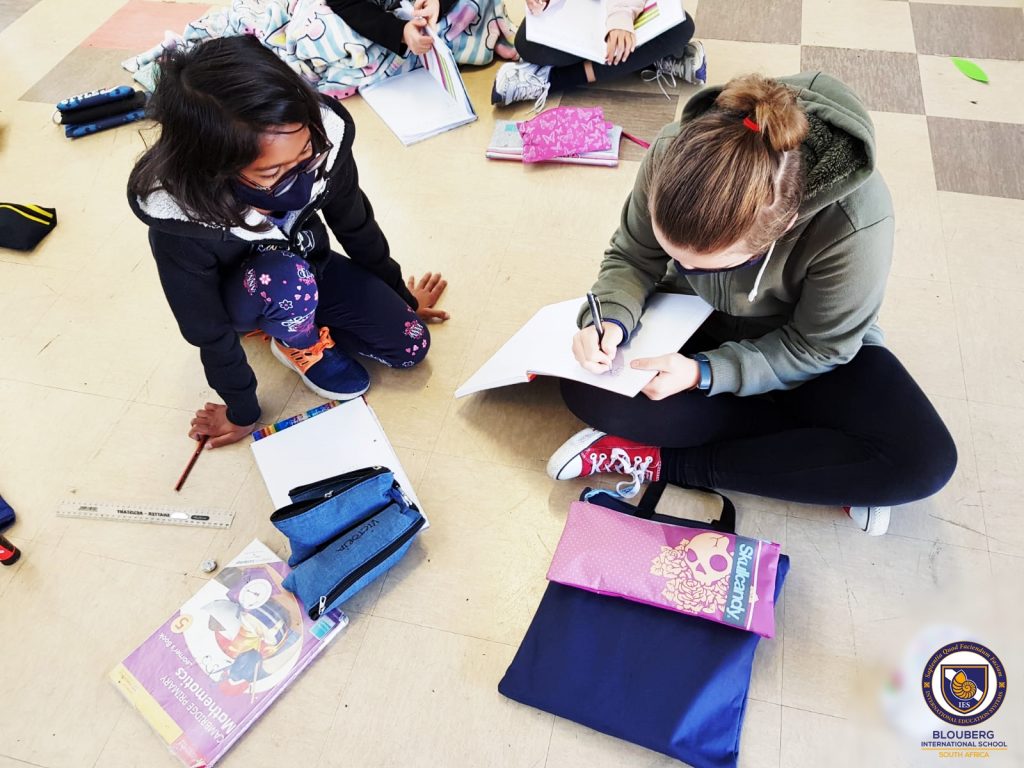
In ICT class, our Year 2 students have been having some fun learning about algorithms. In computer science, programming and mathematics, an algorithm is a sequence of instructions.
They received some instructions to follow on how to create a robot. Some of the instructions included drawing the head, face and body of a robot as well as creating a fun background and even more importantly – giving their robot a name!
The students learnt how they can use algorithms to describe ordinary activities in our everyday life. For example, we can consider a recipe as an algorithm for cooking a particular food. This will help them to understand how coding works when we code games and programs.
At this stage, the students are using the iPads to create some algorithms on Grok Learning by building their robot on the iPad.
Year 2 Teacher

Karneval, Fasching And Fastnacht
Carnivals are celebrated in many countries around the world such as America (e.g.Mardi Gras of New Orleans) Brazil (e.g. Carnival of Rio de Janeiro) and Italy (e.g. Carnival of Venice) with lots of music, dancing, costumes and colourful processions.
In Germany, Carnival time is one of the most popular traditions celebrated. It is known by many names such as Karneval, Fasching and Fastnacht and varies from region to region all over Germany.
The most popular Carnival is called Karneval and happens in Köln (Cologne) in Northern Germany where the largest procession takes place in the country. It is the most famous street party and usually draws up to a million visitors from all over the world to the city every year.
The Carnival celebrated in Southern Germany is called Fasching or Fastnacht referring to the start of the fasting time in the region.
It begins officially on the 11th of November at 11:11am in Köln (Cologne) and ends on Aschermittwoch (Ash Wednesday) the following year, usually a few weeks before Easter. The Monday before Ash Wednesday is known as Rosenmontag (Rose Monday) where all the famous Umzüge (processions) take place in the streets. The first Rose Monday procession was in Köln in 1823.
These processions include dressing up in costumes with masks and wigs and having decorative floats that go through the towns with lots of music and dancing. Everyone is on the street and the children especially enjoy all the sweets that are handed out during the parade. Krapfen/Berliner (Jam doughnuts) are a typical food enjoyed especially at Carnival time.
Sadly, this year the actual Carnival parade on the streets was cancelled due to the pandemic, but as a replacement in Köln, 32 meters of stage scenery was built for the event, reproducing the buildings the parade would traditionally march by. On Rose Monday, 155 traditional puppets wearing Carnival outfits were used to ride this year’s floats. This performance was filmed and everyone could enjoy the procession from their homes: https://www.dw.com/en/colognes-rose-monday-covid-19-parade/g-56472583
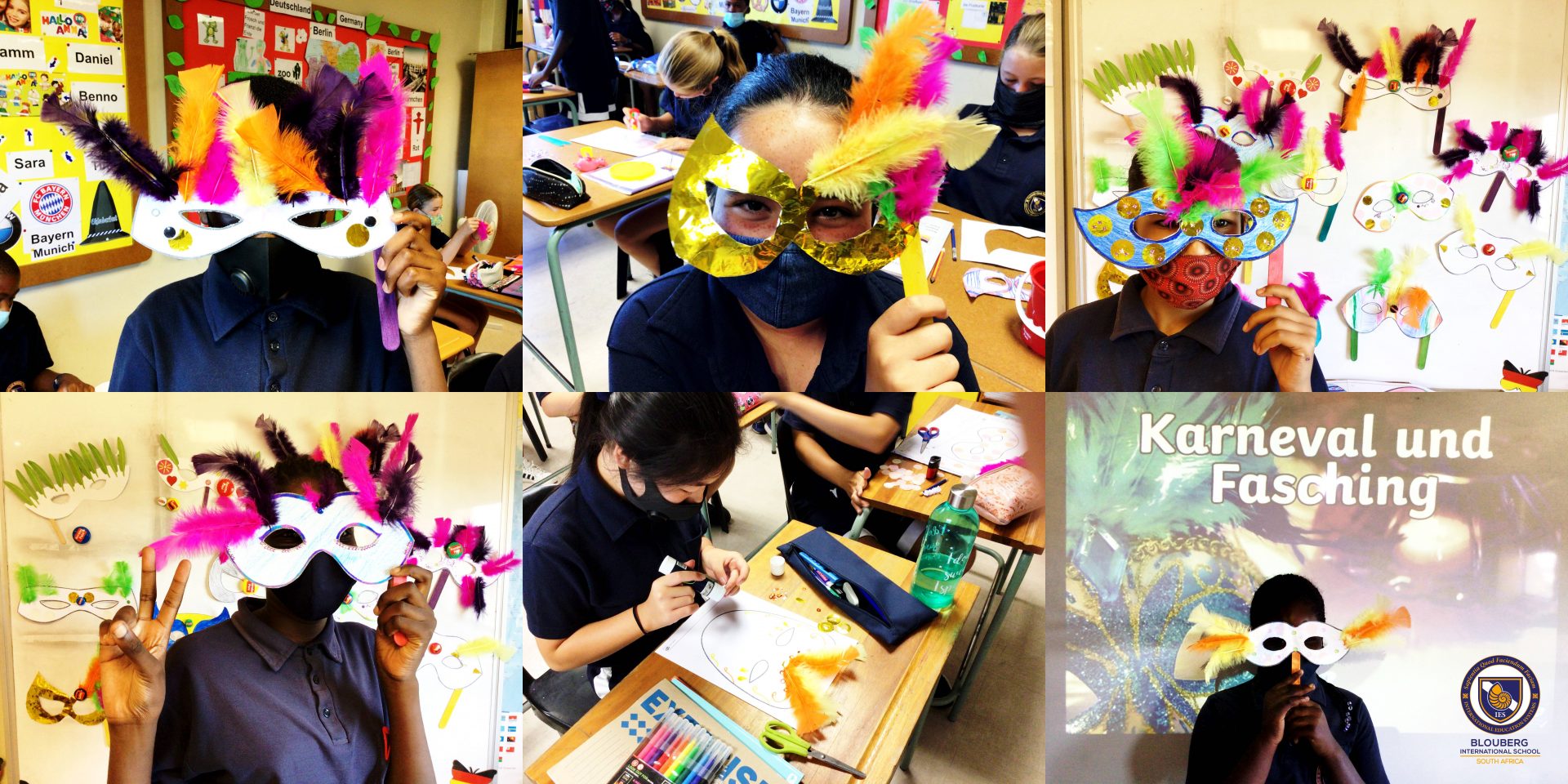
Our students enjoyed learning about the Carnival and each student decorated a mask in class.
- The Year 6 students celebrated Karneval in Köln creating colourful masks with feathers.
- The Year 5 students celebrated Karneval with the animals of the Berlin Zoo and made different types of animal masks.
- The Year 2 & 3 students learnt all about Fasching in München (Munich) with Anna and Benno and all made decorative masks with materials included in the Hallo Anna neu workbook.
They had a lot of fun making the masks. Well done to all the students for their enthusiasm and creativity!
The students also learnt a popular Carnival party song called das Fliegerlied (the Aeroplane song) and were able to easily learn the words to the song and enthusiastically took part in doing the actions. https://www.youtube.com/watch?v=tcFRF5ZaGns&list=RDtcFRF5ZaGns&start_radio=1&t=0
For a brief moment we felt part of the Carnival celebrations that occur in Germany.
Frau Kerstin Pani
German Teacher Primary School


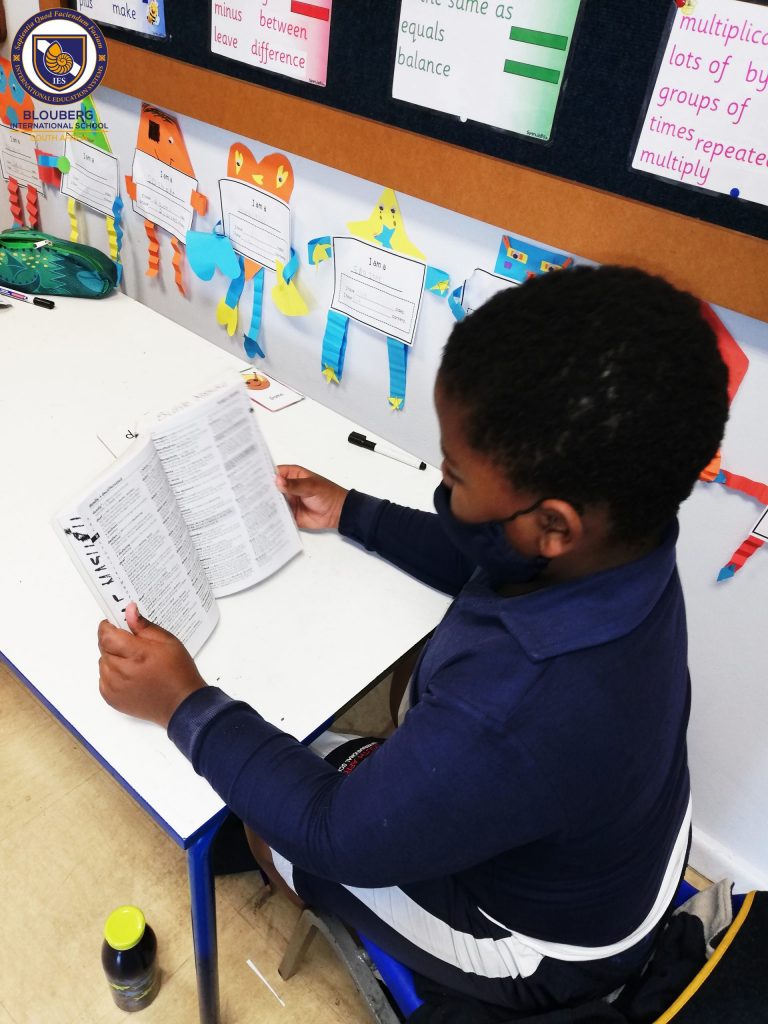
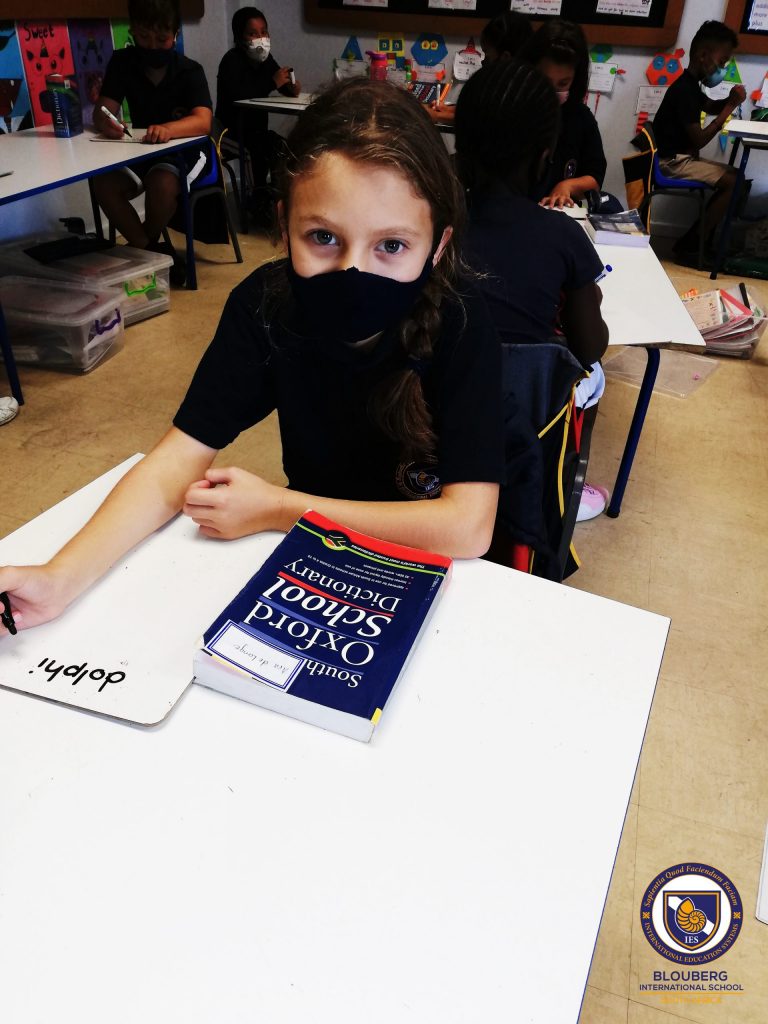
We Know How To Use A Dictionary!
The Year 3 group have been learning how to use a dictionary. They are having so much fun building their vocabulary which is one of the greatest assets that a student can have. It improves their academic performance and lays a strong foundation for future skills to develop. The use of a dictionary has also been linked to better mental health.
Using a dictionary supports students in developing language skills and helps them understand new words at different ages. Using a dictionary helps students master important concepts like spelling, word meaning, alphabetical order and word classes.
Using a dictionary is a skill for life that students develop with practice. We are so proud of the Year 3’s who have developed a love for dictionary work, which makes looking up words fun!
We are pleased with their application considering that they are using dictionaries for the first time. Well done Year 3!
Sasha Rajah
Year 3 Teacher