Living And Non-Living
This term, our Year 3’s have been focusing on Living and Non-Living things in Science. The unit provides opportunities for the students to observe a range of living and non-living things and to consider how they know whether or not something is alive. The activities we covered so far, encourages consideration of the seven life processes (movement, respiration, sensitivity, nutrition, excretion, reproduction, and growth) as providing evidence of something being alive.
The students also conducted a survey and collected data about the hair and eye colour of classmates, and then collated their findings into a tally chart.
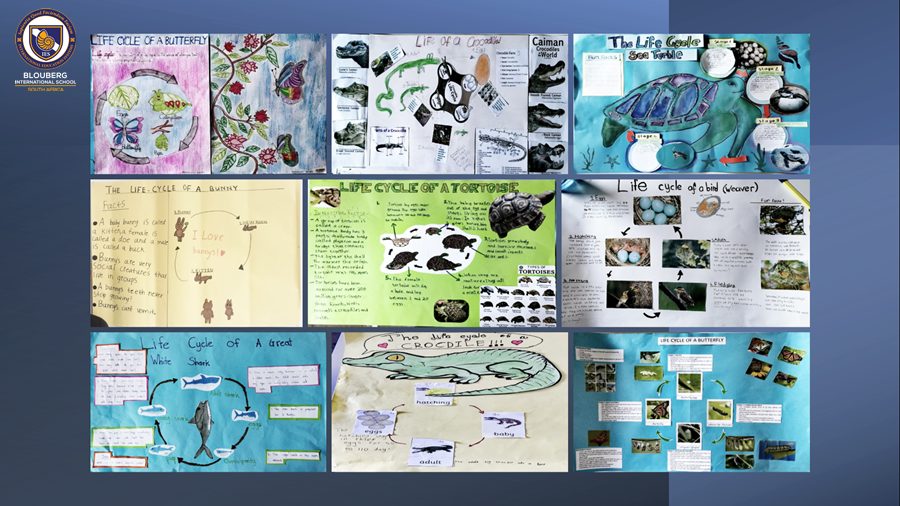
To end the unit, we looked at stages in the human, animal, and plant life cycle. Students were then given an opportunity to create their own life cycle poster and present their work to the class in the form of an oral. The students put in a lot of effort and hard work and both their posters and orals were amazing. There were many fun and interesting facts presented to the class, and I am certain that we all learnt something new about the various animals.
Well done Year 3! I am so proud of you all
Monalisa Maphosa
Year 3 Teacher
Read More

Year Six English Instructional Writing
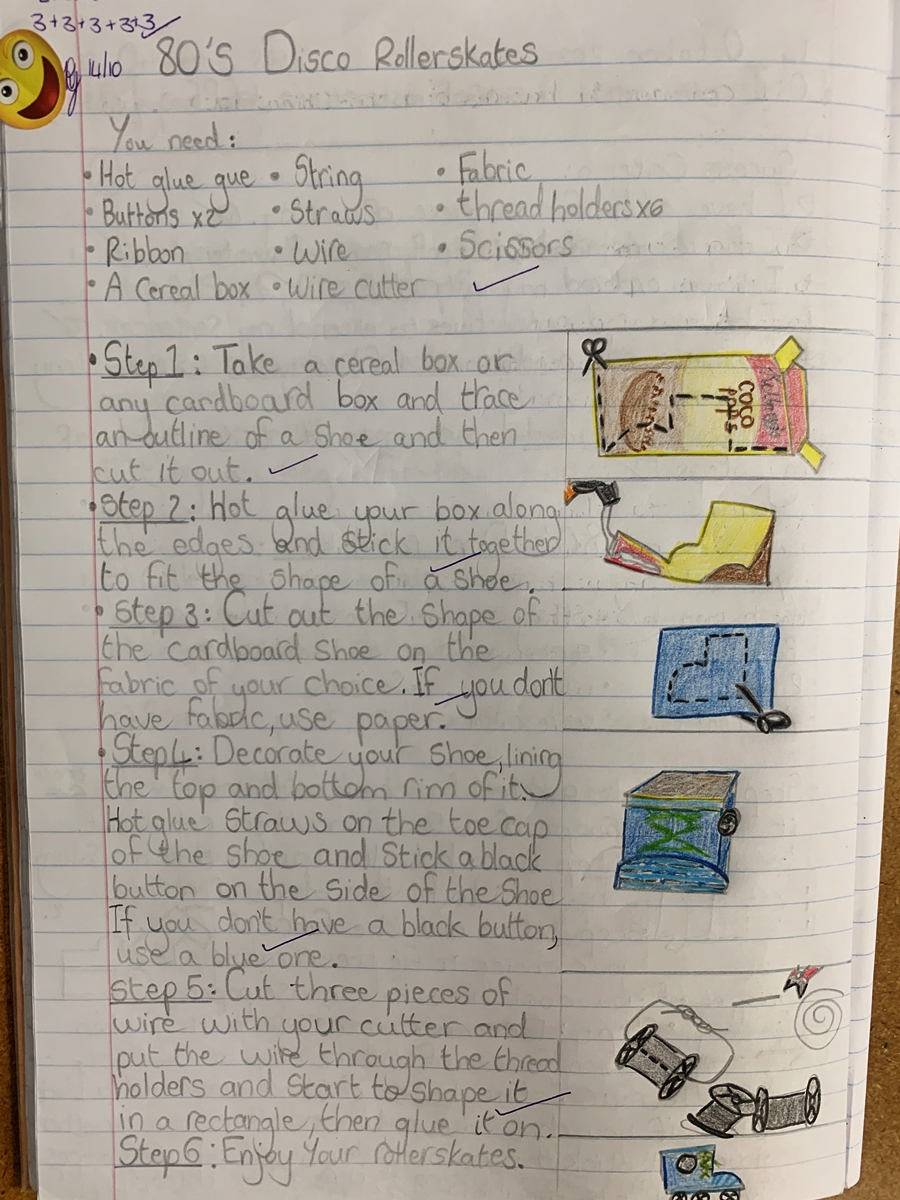
Last week in English, we had to create a shoe from only recycled materials, and we had to write instructions explaining, step by step, how to build them. We had one week to complete this activity and in that time period many shoes were invented, and the students had so much fun. Overall, it was a great learning experience.
What we had to do:
Miss Nel gave us a week notice that we were going to build recycled shoes, which gave us plenty of time to gather our materials. First, we started brainstorming on an A3 piece of paper and listed our materials, which became our poster. Next, we picked a theme for our shoe and then started building them. After that, we wrote our step-by-step instructions explaining how to build our shoes. Last, we presented what we built to our classmates.
Results:
Our project was out of fifteen and most of the students received very good marks and should be proud of themselves.
Written by:
Juliette East
Year 6 Student

Read More

The Egyptian Wesekh
Term 4 is always the most exciting for our Year 3’s. This is because they have seen previous Year 3 “Egyptian’s” strutting the school grounds in all their Egyptian finery and they just can’t wait to start learning about Ancient Egypt. We kicked off the term investigating Egypt’s geographical features, the pyramids, Nile River, Egyptian civilization, Pharaohs, as well as their gods and goddesses.
Our Year 3’s have also already begun planning for Egypt Day and have created a beautiful jewellery accessory known as a Wesekh that they can wear on the day. The jewellery of ancient Egyptians held religious and symbolic significance and was treasured for its beauty and power against evil and death. It was buried with men and women because the Egyptians expected to enjoy wearing their finery in the afterlife.
We started our Wesekhs by looking at various real examples and discussing their features and designs, looking in particular at shape, symmetry and colour. Students then went ahead and designed their necklace by first deciding on a shape and then layout. The next step was to decorate the Wesekh by using anything that sparkled including old costume jewellery, glitter, beads and precious stones that the students collected. The results were stunning!
Be sure to keep an eye out for these amazing accessories on the 12th of November when Year 3 steps out in style on Egypt Day!
Mandy Goch
Year 3 Teacher

Read More
Exploring Seed Dispersal
This term, the Year 5’s have been learning about the different ways seeds are dispersed. We looked at seed dispersal by animals, humans, wind and water. Seeds must be dispersed so they have enough space, water and light to grow into a new plant.
Fun Facts about Seeds:
- The largest seed in the world is the double coconut. It can measure up to 50cm (1.6ft) around the middle! Some coconuts have floated 2,000km over the sea before they find dry land!
- Seeds provide the world’s daily food. Your breakfast cereal and toast, your pasta or pizza lunch and your rice dish for tea all started life as seeds from different grasses.
- Some orchid seed-pods hold 3 million seeds.
- Kapok is soft, fluffy stuff that comes from a seed-case. Years ago it was used to fill life jackets, because it is light, strong and waterproof. Nowadays, modern plastics have replaced it.
- Some seeds found in frozen soil in Canada were grown and produced flowers – the seeds were thought to be more than 10,000 years old!
- There are some very dangerous seeds, such as those that come from deadly nightshade; two berries could kill you. Even more dangerous are the seeds from the Castor-oil plant.
- Most oak trees don’t grow acorns until they are at least 50 years old. If you have planted an acorn, how old will you be before you can plant its acorns?
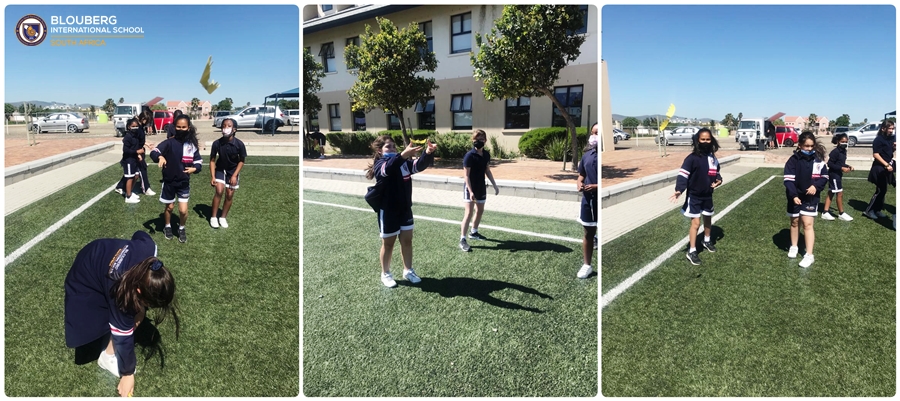
My class (Year 5NM) recently decided to create our very own papery wing shaped seeds to test out how the wind would carry it. We designed different shapes of wings that we attached to a bean seed. We made sure to use paper, making the wings light and feathery, easy to be moved by the wind.
The results of this experiment were great! Students went outside and put their wing shaped seeds to the test. They were exhilarated to get hands on experience with seed dispersal.
Seeds are so interesting and we will certainly never think of them as just seeds ever again.
Nadia Mahomed
Year 5 Teacher

Read More
Masters of Measurement
For the past two weeks, the Year 4s have been learning more about Measurement. This included Length (mm, cm, m and km), Mass (g and kg), Capacity (ml and L) and Volume.
We’ve covered the following content:
- Choosing and using metric units
- Their abbreviations
- Estimating
- Measuring
- Recording
- Reading scales and intervals
“It is not what you do for your children, but what you have taught them to do for themselves that will make them successful human beings.” – Ann Landers
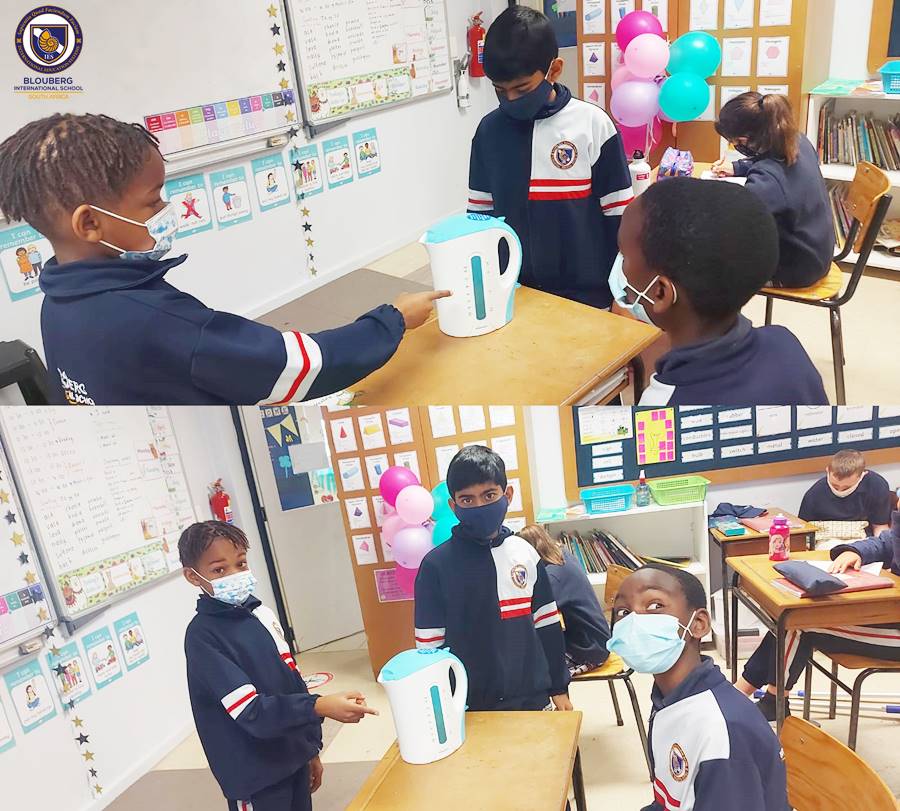
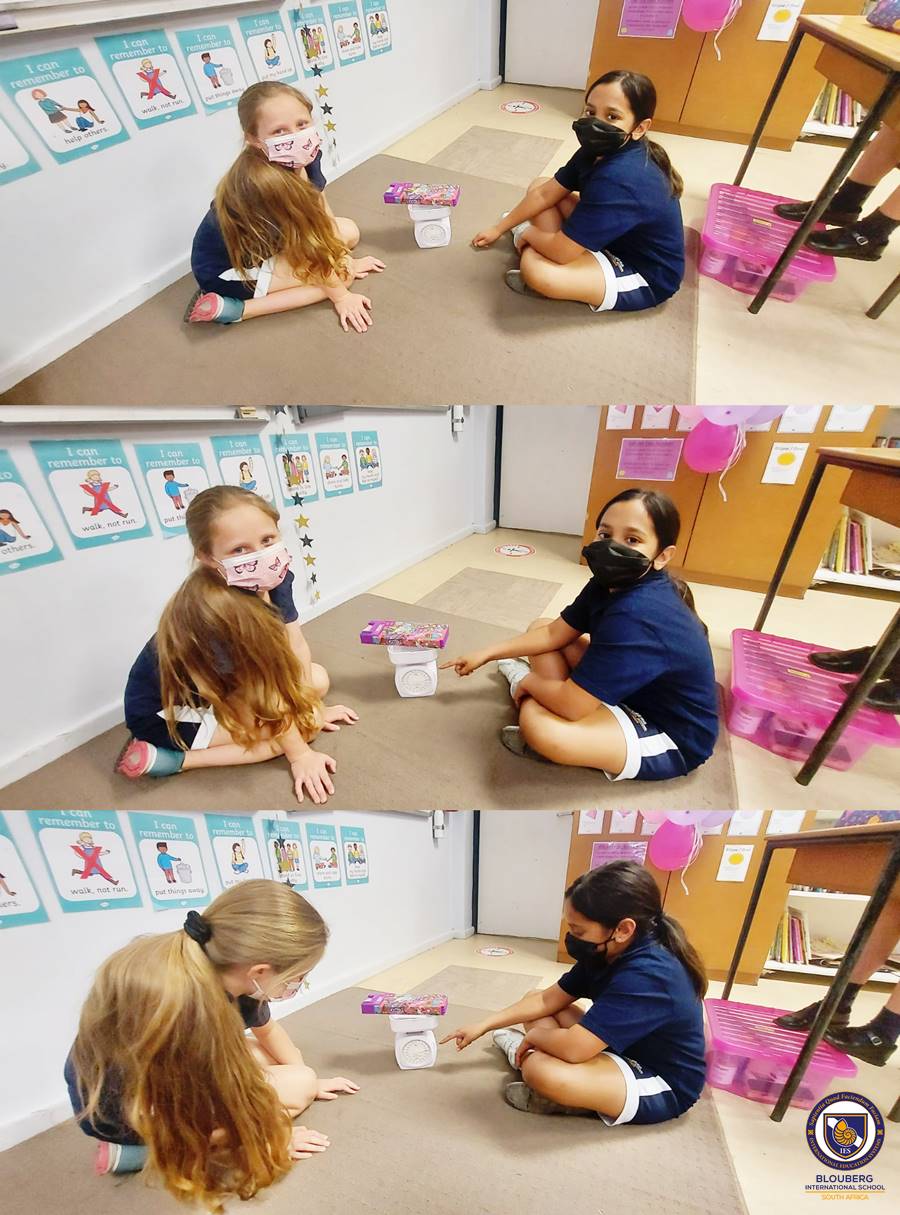
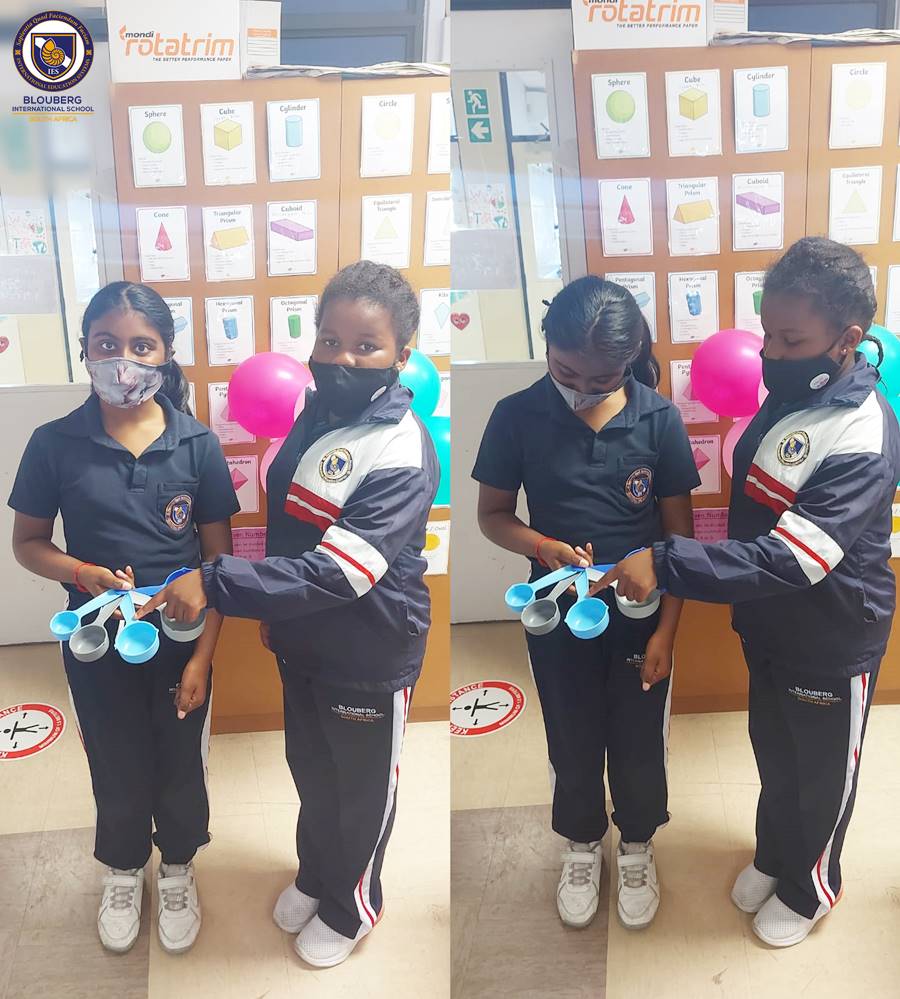
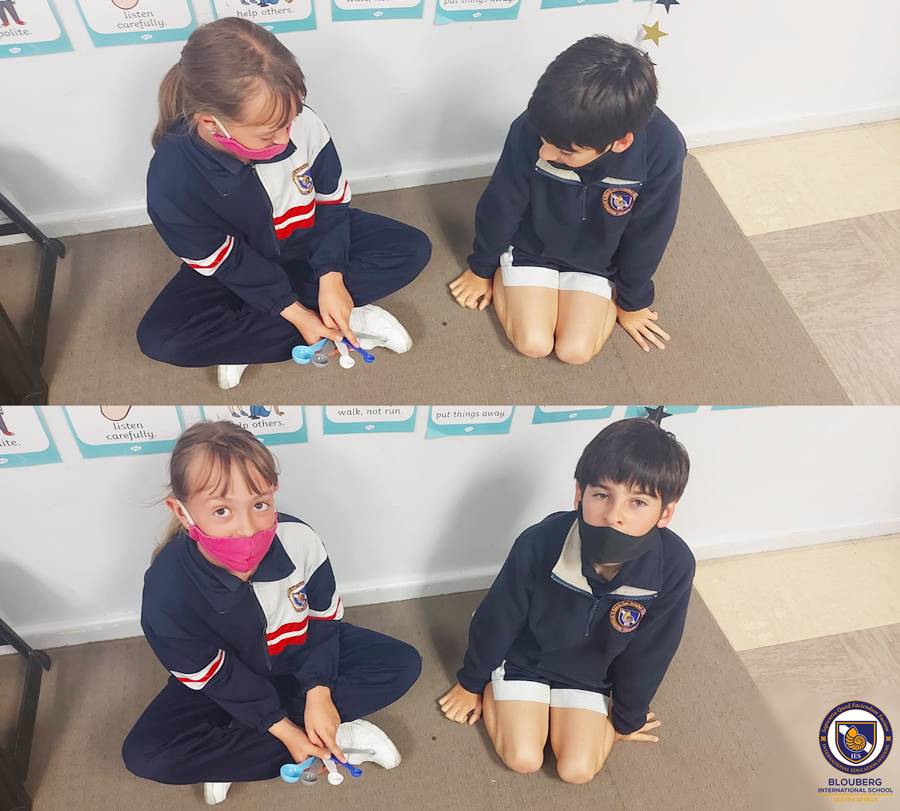
Students got the opportunity this week to apply their knowledge and skills that they’ve learned with some practical, hands-on activities. They had to make use of various measuring equipment such as an/a:
- Analogue kitchen scale
- Digital kitchen scale
- Digital bathroom scale
- Measuring tape
- Industrial measuring tape
- Kettle
- Measuring cups and spoons
Take a look at some of the wonderful, fun photos taken of them in action and practically applying what they have learned.
Ria du Plessis
Year 4 Teacher and Coordinator


Read More

The Importance of Mathematical Thinking
“To solve math problems, you need to know the basic mathematics before you can start.” – Catherine Asaro
One thing that I have reiterated to all my students over the years is to consider Mathematics as a way of thinking. Kaye Stacey (2012, University of Melbourne) submitted that mathematical thinking is important in three ways.
- Mathematical thinking is an important goal of schooling.
- Mathematical thinking is important as a way of learning mathematics.
- Mathematical thinking is important for teaching mathematics.
As students are introduced to high school Mathematics, it would be wonderful if many students could have just a small taste of the spirit of discovery of Mathematics as described in the quote below from the Mathematician Andrew Wiles.
“One enters the first room of the mansion and it’s dark. One stumbles around bumping into furniture, but gradually you learn where each piece of furniture is. Finally, after six months or so, you find the light switch, you turn it on, and suddenly it’s all illuminated. You can see exactly where you were. Then you move into the next room and spend another six months in the dark. So each of these breakthroughs, while sometimes they’re momentary, sometimes over a period of a day or two, they are the culmination of, and couldn’t exist without, the many months of stumbling around in the dark that precede them.” (Andrew Wiles 1997)
Because Mathematical thinking is a process, l will discuss examples of what l do every time and again with my students in and out of the classroom.
- Logical Puzzles
A logical puzzle is a problem that can be solved through deductive reasoning.
In class we have used this website many times and my students find Mathematics easy if engaged in an interactive and fun way. They start to enjoy how mystifying, puzzling and challenging it is.
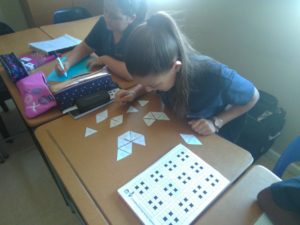
- 4 x 4 Magic Square Puzzles

Magic Square Puzzle
In conclusion, math skills are about much more than all the minutiae we teach in school because they are a strong indicator of broader cognitive abilities. And because cognitive aptitude is one of the most predictive factors of job success, testing my candidates’ math abilities is a great way to assess their ability to succeed in any given Maths test and after school activities.
Hebert Tapfuma
High School Mathematics


Read More
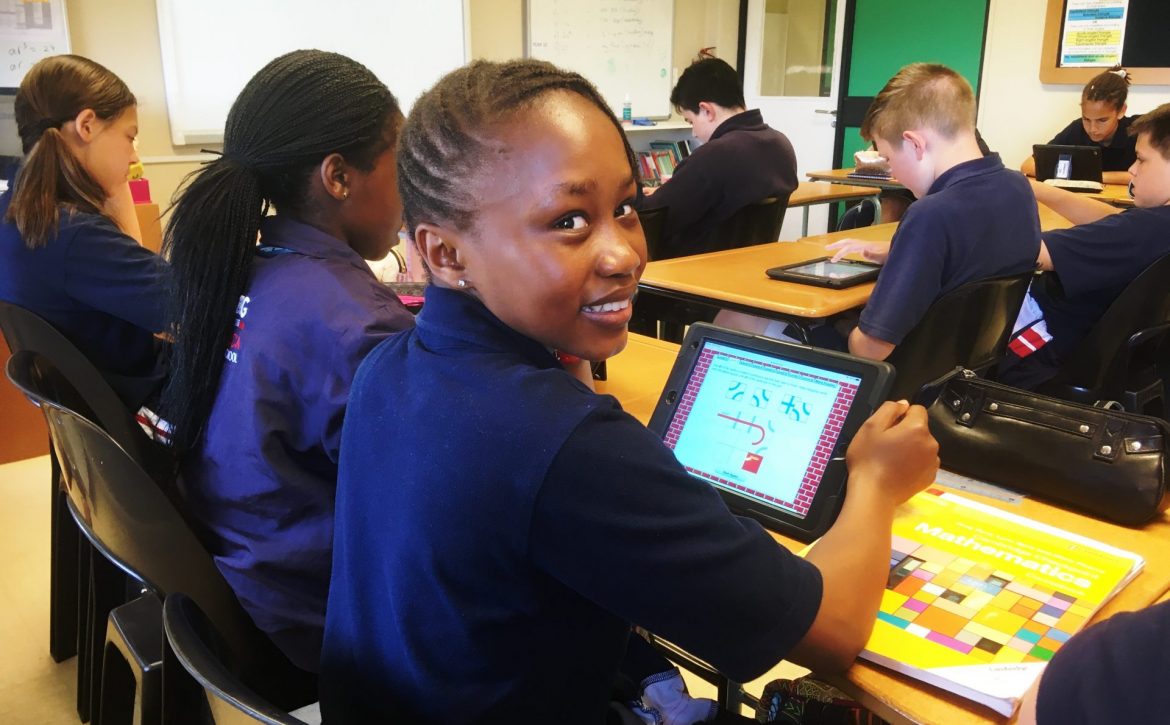
Holistic Approach To Mathematics As A Discipline & Subject
- types of problems it addresses
- methods it uses to address these problems
- the results it has achieved
Mathematics relies on both logic and creativity, and it is pursued both for a variety of practical purposes and for its intrinsic interest. Primary and Secondary Mathematics however should focus on a holistic definition encompassing all facets of the subject as a discipline. I would like to explore, again another category generally believed to address Mathematics in its totality:
Mathematics as the prime human endeavor
We teach Reception and all Primary measurement of time for example, years, months, weeks, days, hours. We also teach distance measurement that developed throughout the world. For some people, the essence of mathematics lies in its beauty and its intellectual challenge. Because mathematics plays such a central role in modern culture, students need to perceive mathematics as part of the human endeavor, comprehend the nature of mathematical thinking, and become familiar with key mathematical ideas and skills.
Students and us as teachers tend to define mathematics in terms of what they learn in mathematics class. The instructional and assessment focus tends to be on basic skills and on solving relatively simple problems using these basic skills, this is only part of mathematics.
Beauty in Mathematics
It is important to study enough mathematics so that students understand and appreciate the breadth, depth, complexity, and beauty of the discipline. Mathematicians often talk about the beauty of a particular proof or mathematical result. G. H. Hardy was one of the world’s leading mathematicians in the first half of the 20th century. In his book “A Mathematician’s Apology” he elaborates at length on differences between pure and applied mathematics.
Mathematics is an aid to representing and attempting to resolve problem situations in all disciplines. It is an interdisciplinary tool and language.
Mr Hebert Tapfuma
High School Mathematics

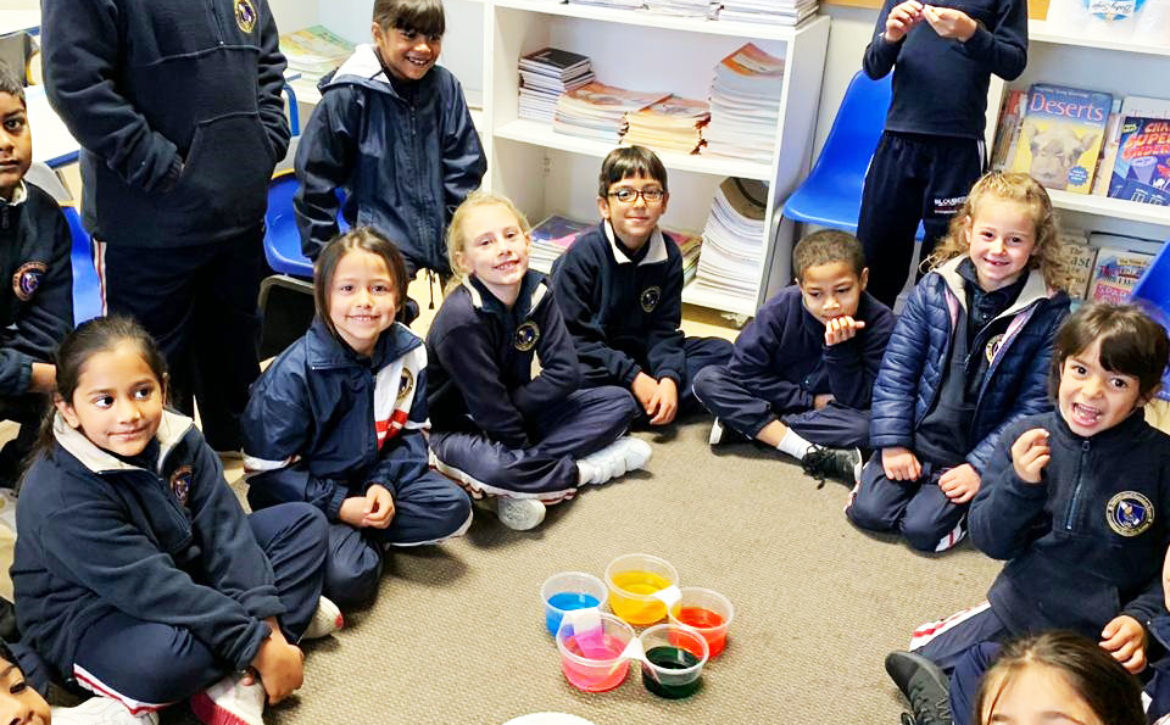

Our Year 2’s Maths & Science Week
This week our Year 2’s got to have some fun with all sorts of different Maths and Science activities. Our Science activities involved all sorts of fun experiments such as “Rainbow Walking Water” with water, food colouring and paper towel, “Rainbow Candy” with smarties and water, “Rain Cloud” with shaving cream, water and food colouring and “Elephant Toothpaste” with soap, yeast and food colouring. So much fun was had experimenting with different colour mixing, creating clouds and watching rain fall through. Getting to watch the colour slowly soak off of the smarties was a particular favourite!
“Science helps children develop vital life-skills such as problem-solving, communication and research. Science is one of the most important subjects a child can learn because of its relevance to our lives and its capacity to apply these vital life-skills to everyday activities”
– Minimegeology
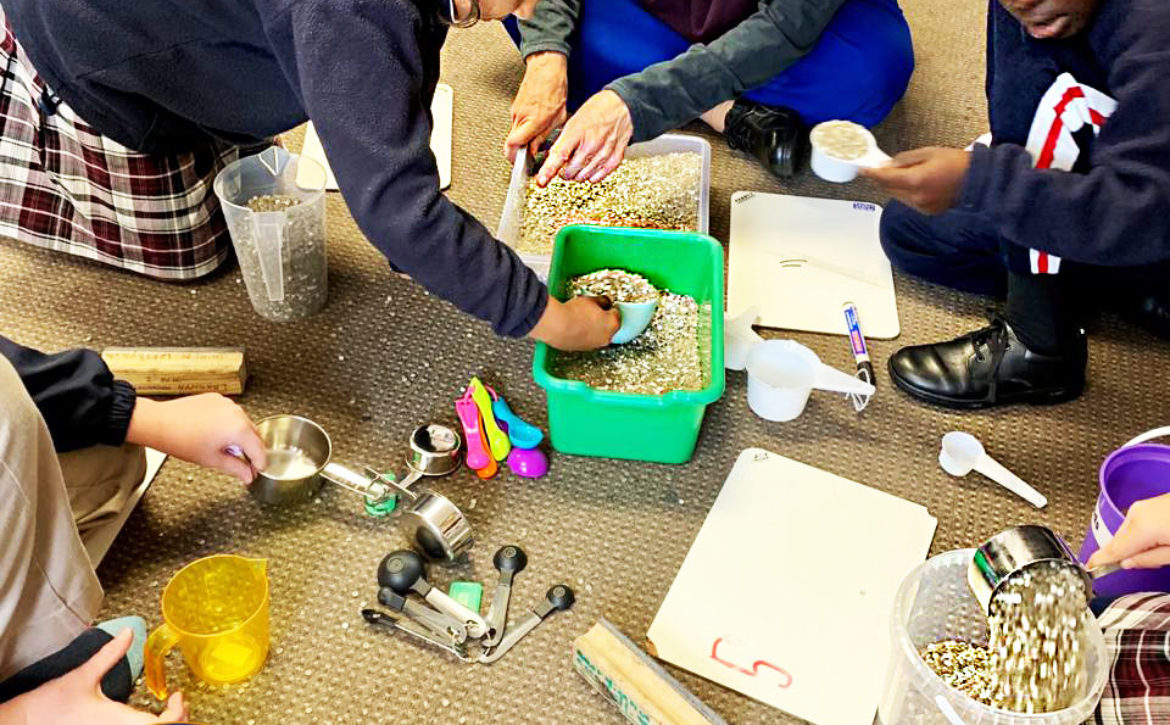
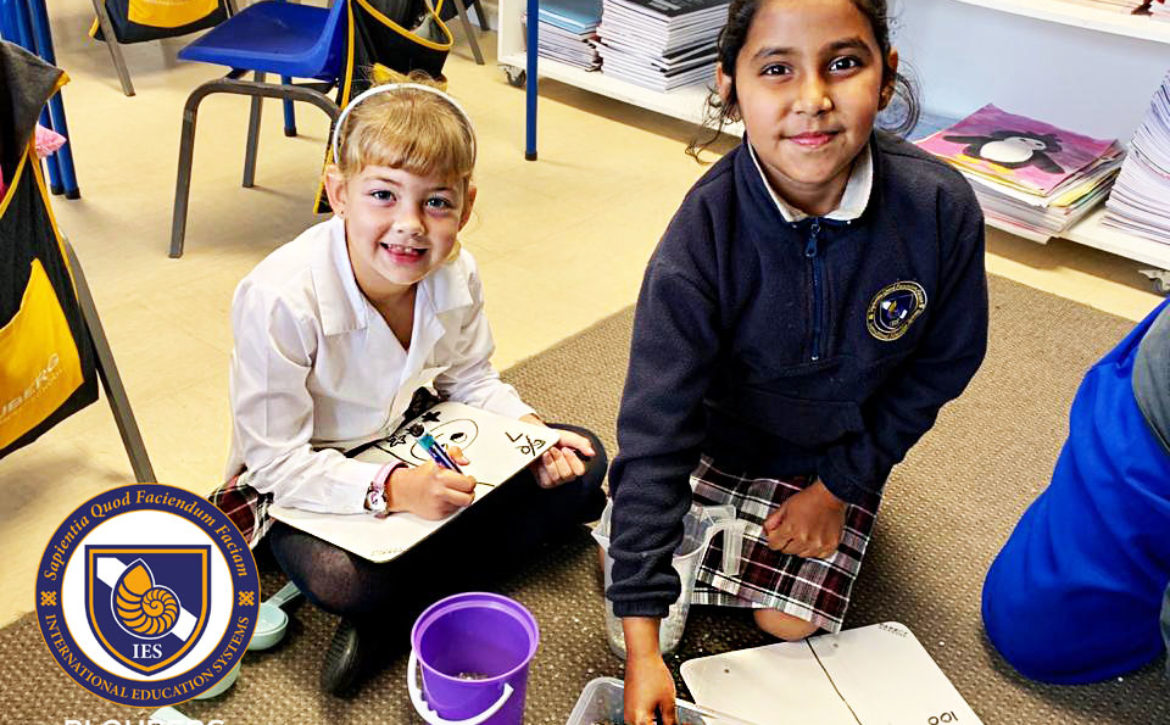
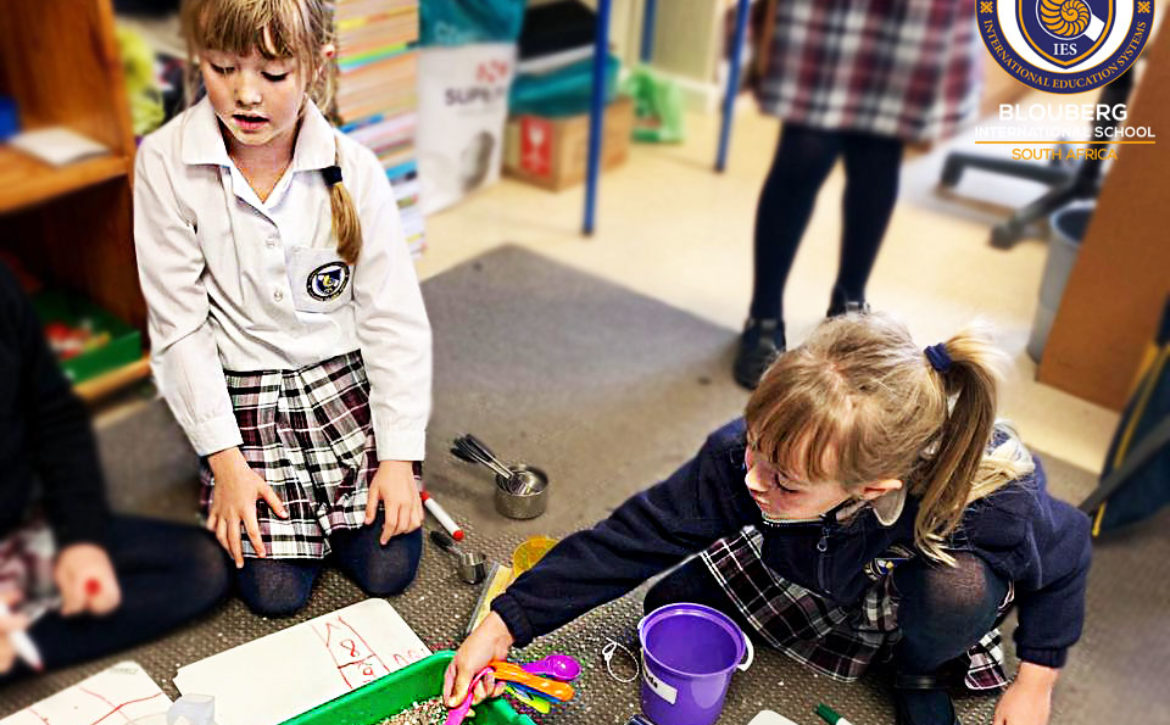
For Maths this week, we had fun testing out different forms of measurement and experimenting with shape in art. One of our Year 2’s favourite activities was getting to play with “Dragons Tears”, using jugs and other measuring utensils to test and compare the volume and capacity of various containers. We learned about what these terms mean and what various amounts of milliliters’s look like. It has been great opportunity to keep the fun in our school work!
Siobhan Hendry
Year 2 Teacher

Jumping into Math! Year 2
Maths is fun!
“Tell me and I forget. Teach me and I remember. Involve me and I learn” – Benjamin Franklin
With that in mind, the Year 2 classes tackled this week’s Math concept of measuring from a totally different perspective.
The students were divided into three different groups, each group attempting a measurement task using different apparatus.
- One group had to estimate how many cubes would fill different size containers and then check their answer by actually counting the cubes.
- A second group had to measure and design a cardboard house for a soft toy they had brought to school.
- The third group worked on the mat, using their white boards to build a ramp for a toy car. They then used a measuring tape to measure the distance their cars traveled.
There was much excitement (and quite a bit of noise), as the groups worked in the passage to measure how far they could jump. My class agreed that this was the most “fun” two days of Math “ever”. They were so involved in the activities, that they completely forgot that they were actually learning about centimeters and millimeters. It was wonderful to see how they adapted the instructions given to think up new ideas to test their cars, make their houses and hopping instead of jumping.
So the objective of the lessons was achieved, by using a different approach, which kept the students engaged, and asking and answering questions. This approach has proven to be a successful way to improve lateral and analytical thinking and, despite the organised chaos, will definitely be repeated.
Mrs Kim Coetzer
Year 2 Teacher

The importance of Mathematics
When teaching mathematics to high school students, I have often heard them complain, saying things like, “Why do we have to learn this?” or “How will this help us after we graduate from high school?” The misconception of the importance of mathematics for high school students resides in their inability to project the skills that they use in class into real life.
The purpose of mathematics to students is for them to experience and use the concepts in everyday life. Math is useful in more career paths than you would think. Any career that involves money, or budgeting uses mathematics. You can reference www.weusemath.org to see a list of careers that use mathematics everyday.
Mathematics helps students develop critical thinking skills, the process of creating a plan to solve a large scale situational problem can be applied to variety of tasks, such as planning an event, or applying for a grant. However, students are caught up in learning standards and then being assessed on them. To many students, the purpose of math is to learn a skill that leads to a grade on a report card.
“I want my students to see that mathematics can help them better understand and describe the world around them.”
There is real-life application of almost every form of mathematics. It does not mean that every student will use every piece of mathematics that they learn, but it does mean we can show them how we can use that bit of mathematics to understand and explain something around us.
I want my students to learn to write slope-intercept form equations, but even more, I want them to see that you can use that equation to make projections in business when you know your profit per customer and a monthly loss. Then students can say, “I probably shouldn’t open this business if I need 200 customers a day to break even…”
I want them to know how to make complex ratios, but I would much prefer that they use complex ratios to help them understand how much of a pop song is the chorus. Then they can say, “Oh, that’s why the chorus gets stuck in our heads.”
I want my students to be able to solve two-step equations, but even more I would love them to use those equations to decrypt messages and then try to crack someone else’s message. Then my students can say, “Oh, that is how encryption works!” and “Algebra really is used for something!”
I implore you to show your child the true purpose of math. Help them see that math is here to help them better understand and explain the world around them.
Reference: https://blog.gradeslam.org, https://www.nctm.org/Publications/Mathematics, https://ubiquity.acm.org/article
Prepared by
Hebert Tapfuma (Mr)
(Department of Mathematics)