
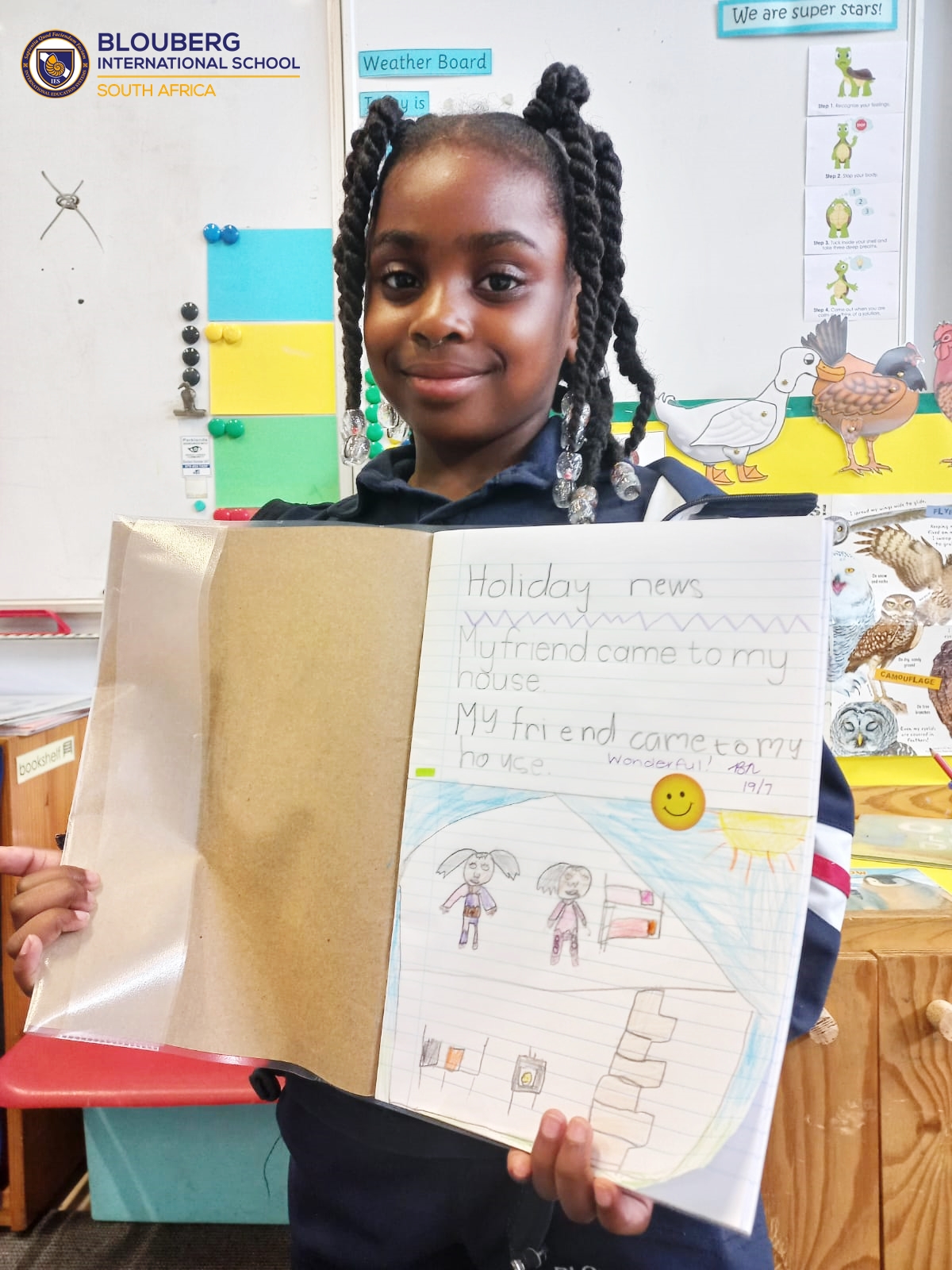
Holiday News
The Reception students came to school this term very excited to see their teachers and classmates again. They were eager to share about all the fun things they had been doing this past holiday.
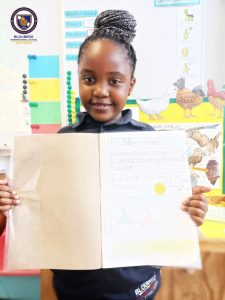
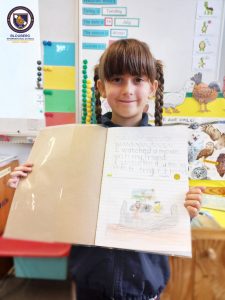
This term we are focusing on becoming more aware of punctuation and writing sentences. The students are learning about using capital letters to start a sentence, having finger spaces between words and using full stops to end a sentence. Each student told the teacher a sentence about their news. The teacher writes the sentence and the student copies the sentence in their books. They then draw a matching picture about their news. The following sentences are about the students’ favourite fun things that happened in the holidays.
Zion Durojaiye (5 years old) “I played with my truck at the beach.”
Sofia Haskins (6 years old) “I watched a movie with my friend.”
Omime Ogumah (6 years old) “I went to my friend’s house.”
Kaedy Frey (5 years old) “I went to the beach.”
Jonah Atson (5 years old) “I played with my cousin.”
Coco Baur Mazadiego (4 years old) “It was raining on the birthday.”
Ariah Mukubvu (5 years old) “I got an ice-cream at the beach.”
Amelia Engelbrecht (5 years old) “I got a dog called Rocky.”
Tiwatope Olanrewaju (5 years old) “I played with my brothers.”
Marcus de Beer (5 years old) “I saw lions and birds in the savannah.”
Chiamaka Davidson (6 years old) “I got an ice-cream.”
Onyinyechi Okoye (5 years old) “I went to a restaurant.”
Grayson Muller (5 years old) “I played outside.”
Rume Oriesa (6 years old) “My friend came to my house.”
Bronwen Nuthall
Reception Year teacher

Read More
Fairy Tales
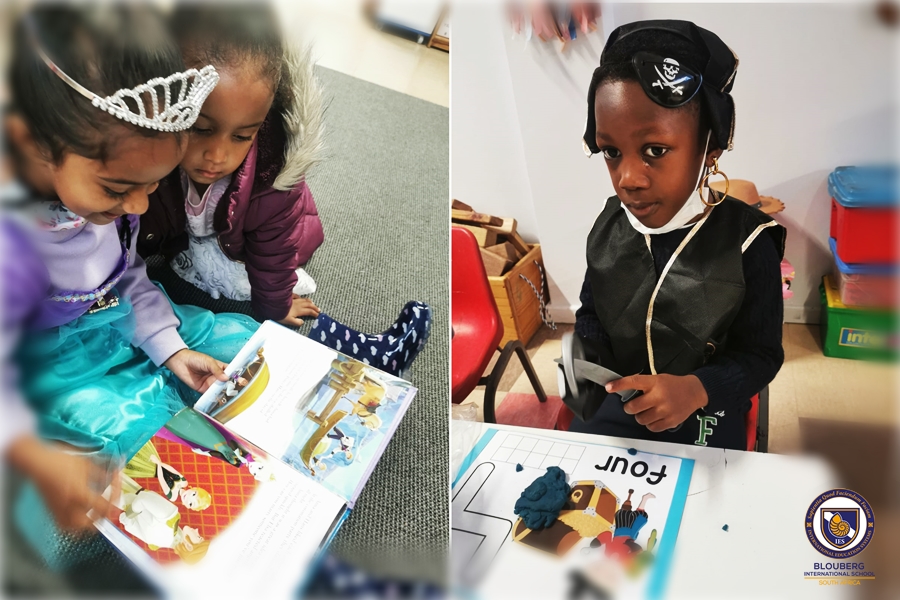
Our Foundation Stage students have been learning about Fairy Tales. The classrooms were abuzz with excitement as we embraced the theme by building Fairy Tale puzzles, made crowns fit for a prince and princess, paged through our many Fairy Tale books in the book corners, made beautiful crafts relating to the theme and of course read various Fairy Tales at story time.
Fairy Tales offer something a little different to a child’s development. They enrich imagination, cultivate a deeper understanding of life’s great truths as well as elevate an understanding of things that can be difficult and complex to convey.
Reasons Fairy Tales are good for children:
- They see good conquer evil
- Consequences for actions
- They see great obstacles overcome by ordinary characters
- They enrich imagination
- They benefit every age
- They build emotional resiliency
- Teach critical thinking skills
- Fairy Tales teach lessons
- Vocabulary
- Emotional Processing
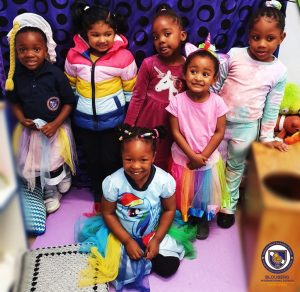
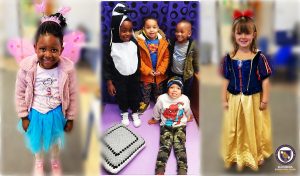
We ended off the theme with a dress up day, which was the most fun of all. The students got to tell the class about their favourite Fairy Tale and some got to dress up as and talk about their favourite characters (See photos). As Hans Christian Andersen once said: “Life itself is the most wonderful Fairy Tale.”
Cindy Nunan
Pre-Reception Teacher


Read More
Happy Father’s Day
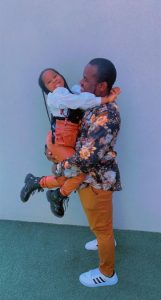
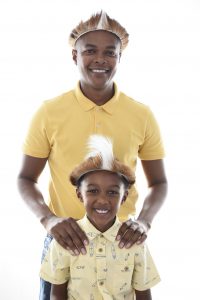
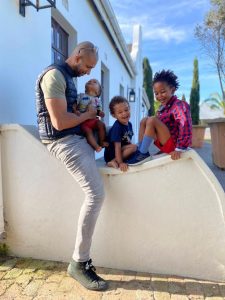
Father. Dad. Superhero. Protector. Best friend.
These are just a few ways that we can describe the most important men in our lives. Even as an adult, my dad is still my hero and I am still learning from him all the time. Father figures come in many different forms throughout the world and all of them represent beacons of light and a guiding path for those that they take care of.
In my Reception class, I asked the students some questions about their dads in preparation for Father’s Day this coming Sunday. Here are their responses:
How old is your dad?
Kopano: My dad is 44 years old.
Mahadhyuth: I don’t know – I didn’t ask him.
Lolwam: 14
Chimdindu: 60
Zande: 32
What does your dad do during the day?
Kopano: He showers and builds a library, church and school out of Lego.
Naif: He drinks Coke.
Chimdindu: My dad buys me stuff every day.
Bavani: He works and he goes to the shops and he takes my dog for a walk.
Isabella: He stays in bed or works with chicken.
What is your dad’s job?
Enhle: He sends messages for work.
Samuel: He works on his laptop.
Does your dad have super powers?
Naif: Yes, Sonic super powers.
Samuel: His muscles.
My favourite thing about my dad:
Enhle: He always let’s me play games.
Anam: Sitting down and watching movies as a family.
Bavani: For bringing me a dog.
Isabella: When he fetches me from school.
Is your dad funny? Why is your dad funny?
Purity: He tells me jokes.
Lolwam: No.
Amelia: Yes, he tickles me and tells jokes.
Anam: Sometimes, he tries to make puppets.
Zande: He plays tricks on me.
Emmanuel: He does magic tricks that are funny.
What is your dad’s favourite thing to do?
Purity: He likes to go camping.
Mahadhyuth: He loves to do work.
Amelia: Play with me.
Emmanuel: Work at the police station.
From the whole of the Foundation Phase we wish all of the Father figures in our lives a Happy Father’s Day and we thank you from the bottom of our hearts for all that you do for us!
Kim Hahn
Reception Year Teacher




Read More
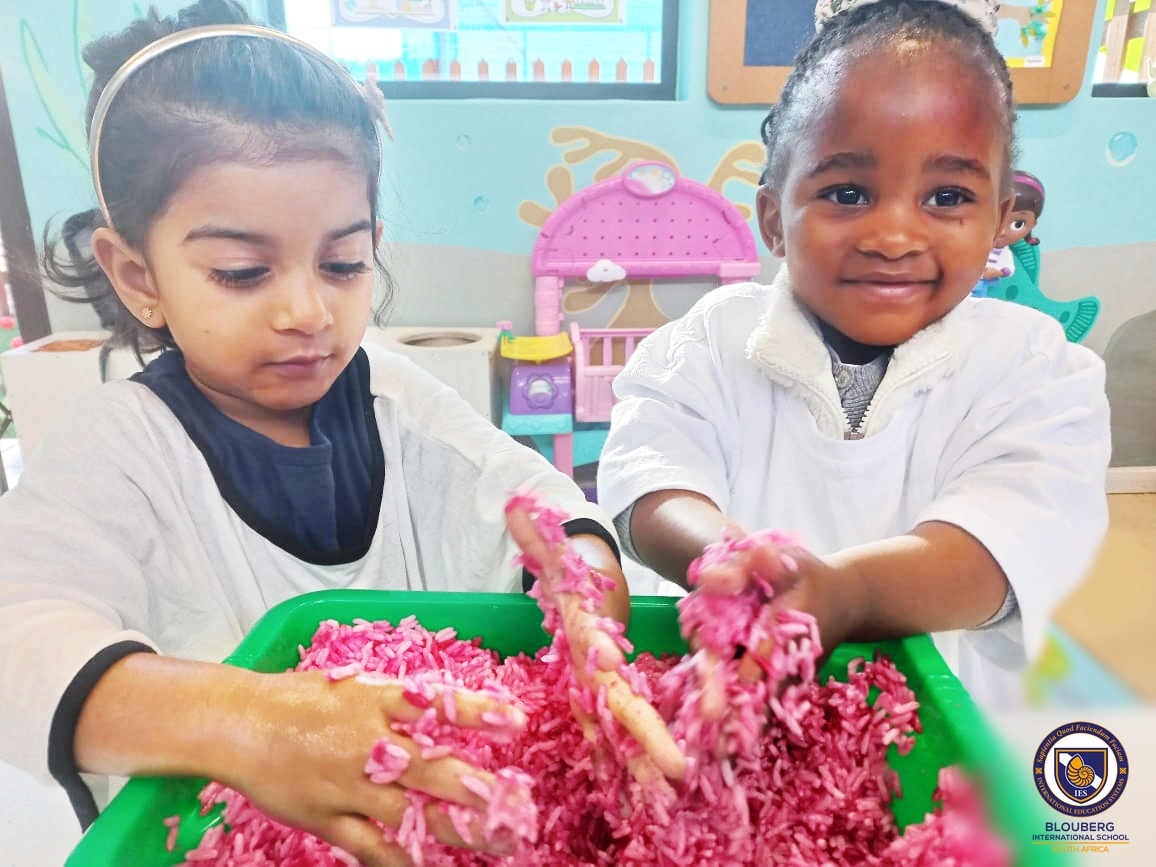
Sensory Day
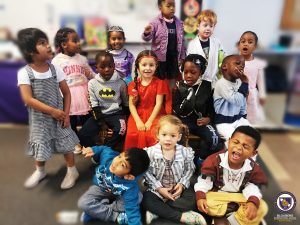
Even though it was messy, and oh the clean-up was a delight, the toddlers thoroughly enjoyed every minute of exploring the colourful spaghetti, the mushy sago and the sticky rice. They were able to hop out of the ‘clean class’ box and just enjoy making a mess.
Sensory play is an important part of childhood and there are really no limits to what you can use in your sensory activities. However, nature and food can often be your best friend when it comes to sensory play.
To help you keep your youngster busy during the holidays, here are a few great sensory play ideas for home:
- For keeping their hands busy:
- Soapy Jars: Fill a plastic peanut butter jar halfway with water, a pinch of dish soap and food colouring. Seal it tightly, and let your toddler roll it/shake it around outside.
- To explore their sense of smell (ages 4-6):
- Smell it and guess: Blend up six different fruits/vegetables in small quantities and pour them into separate dishes. Allow your little one to taste and guess.
- For co-ordination and organisation:
- Alphabet scoop and transfer: You will need alphabet magnets or water-safe letters, a storage container, a wooden spoon, two dish buckets and water. Pour enough water into your container to allow the letters to float and allow your child to scoop each letter out individually. You can practice various beginner literacy activities with them!
- To assist with emotions, and to keep them calm:
- Place beach sand or regular sand into a big container and hide small toys in the sand. Make sure the toys are all of the same themes. Once they have been able to scoop out each toy, engage with them to create a fantasyland on the sand. It’s like a zen garden for kids.
Jo-Anne Dickason
Nursery Teacher


Read More

Aftercare And Holiday Care
At BIS our main focus for Aftercare is to provide support for students when formal school activities close for the day. Some of the benefits and value that students receive when enrolled in our BIS Aftercare Programme includes:
- Basic homework routines support by aftercare assistant.
- Fun activities such as reading, drawing, arts and crafts, movies.
- Basic needs are met which includes safety, a snack, play time.
- Strengthened relationships with peers and more quality time to spend with parents at home, as homework and other activities are completed at Aftercare.
We also offer a fun, interactive and structured Holiday Care Programme, where extra-mural activities and recreation forms part of the daily routine.
Some of these activities include:
- Participation in sporting activities to strengthen and develop physical and team building skills.
- Learn life skills through participation in a range of informal and structured activities that teach children how to cope with everyday situations.
We have an exciting Holiday Care Programme planned for the June/July school holidays; enroll your child by clicking on the link below.
Avril Lai Wing
Aftercare Manager




Read More

Assessments And Amphibians
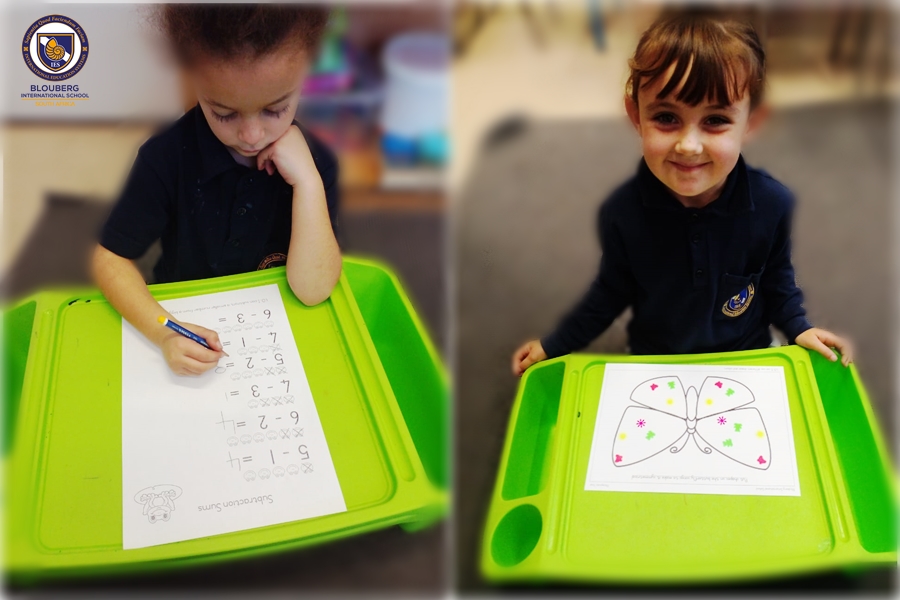
Over the last two weeks, Foundation stage have been doing their end of term assessments. Every day the students are learning new things and continue to approach each challenge with a positive attitude. The assessments have given each student an opportunity to show their teachers how much they have learnt this term and we are so proud of them.
Recently, Foundation stage have been learning all about amphibians. The students asked, what is an amphibian? What is the difference between a reptile and an amphibian? And what is the difference between a frog and a toad? They have learnt so many interesting facts, especially what makes a frog different from a toad.
Did you know that…
- Frogs are smaller and slimmer than toads and have a more pointed nose.
- Toads are much bigger and broader than toads and have a wider nose.
- A frog’s skin is smoother than a toad. Therefore, they need to live near water because they need to keep their skin moist.
- Toads have a hard, dry skin and don’t need to stay near water.
- A toad’s eye shape is also different from a frog’s. Frogs usually have big bulging eyes, as opposed to a toad’s, that is a bit more subtle in appearance.
- Frogs have long legs made for hopping and they can jump up to 20 times the length of their own body.
- Toads have shorter legs and prefer to crawl instead of hop.
The foundation stage students enjoyed learning about these interesting facts. We are confident that the next time they see an amphibian, they’ll be able to tell us whether it’s a frog or a toad.
Lauren Bloem
Reception Teacher


Read More
Bugs, Bugs, Bugs Everywhere…
Learning about bugs is so much fun for our Foundation Stage students. Isn’t it funny how young students are just curious about everything and don’t have the grossed out reaction that we have as adults.
During the past two weeks we have been learning about all sorts of bugs and insects through hands-on learning activities.
Some of the activities we have done includes:
- Butterfly life cycle sequencing: The students practised sequencing the cards in the correct life cycle order.
- Bug or not sorting: Is everything that crawls a bug? Is everything with wings a bug? With a container full of toys the students had to investigate what it takes to be called a bug. This sorting game helps them learn to scientifically classify and observe.
- Butterfly Symmetry Smash: We cut the butterfly out of card. The students then squirted paint onto one side of each butterfly. We folded the butterflies in half and smashed the paint.
- Which bugs can fly: The students learned which bugs could fly and which could not.
The students enjoyed looking at books about bugs and learning interesting facts about bugs by watching Blippi Wonders.
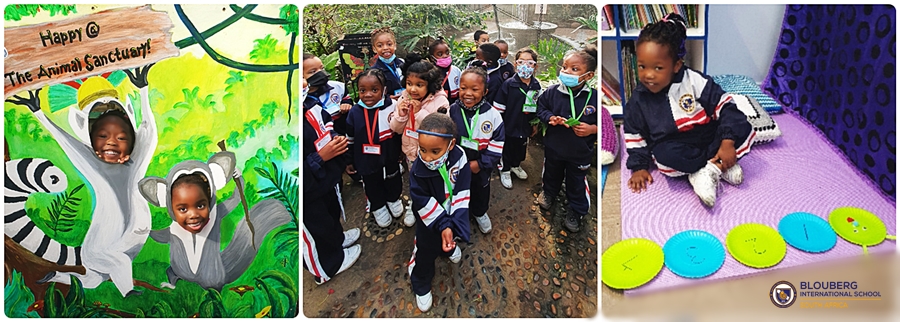
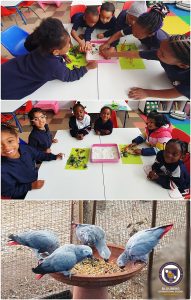
On Friday, 27 May, the Pre-Reception and Reception students went on an educational Outing to the Exotic Animal World. The students saw different types of insects, spiders, reptiles and animals like: birds, iguanas, tortoises and meerkats to name a few. The students enjoyed an interesting and informative lesson about reptiles. It was an amazing experience for the students to end off our theme.
Martie van Dyk
Pre-Reception Teacher

Read More
High Frequency Words
In term 2, our Reception students have been introduced to High Frequency Words. High Frequency Words otherwise known as sight words, Dolch words, refer to a set of words that most commonly are found on any page of text. Readers need to instantly recognize these words in a text and often the words cannot be sounded out. Readers therefore need to memorise these words in order to read more confidently and fluently. Learning High Frequency Words is an important skill that is incorporated into reading homework. It is therefore essential to learn High Frequency Words in fun ways. Listed below are some ideas for flash card games:
Flash Cards Games
- Can you find? Lay cards on a table. Ask the student to find a given word. If they find it, they keep it. Keep going until all the cards are picked up.
- Who has more? Show the cards to the student. If they read the word within 5 seconds, they keep the cards – if not the parent keeps the cards, the goal is that the student has more cards at the end.
- Concentration – Using double copies of words take turns turning over 2 cards at a time, trying to make a match. The player must read the words correctly to get the match.
- Go fish – Use double copies of cards, pass out all by 5-6 of the words. Put these in a stack face down on the table. Look for matches in your set of cards. (each player must be able to read the word or the set goes in the stack on the table. Take turns asking each other for cards to make matches. The person with the most matches at the end is the winner.
- Slap Jack – Draw a star on a blank flashcard. Place this star card and the other flashcards face down on the table. Take turns turning over a card and reading a word. When the star card is turned over, the first player to slap it wins.
Bronwen Nuthall
Reception Year Teacher

Read More

Pre-Reception Learning All About Reptiles
For the past week, Pre-Reception have been learning about Reptiles. They loved painting and making different Reptiles. The students also played games like snakes and ladders, learnt various Reptile rhymes and songs.
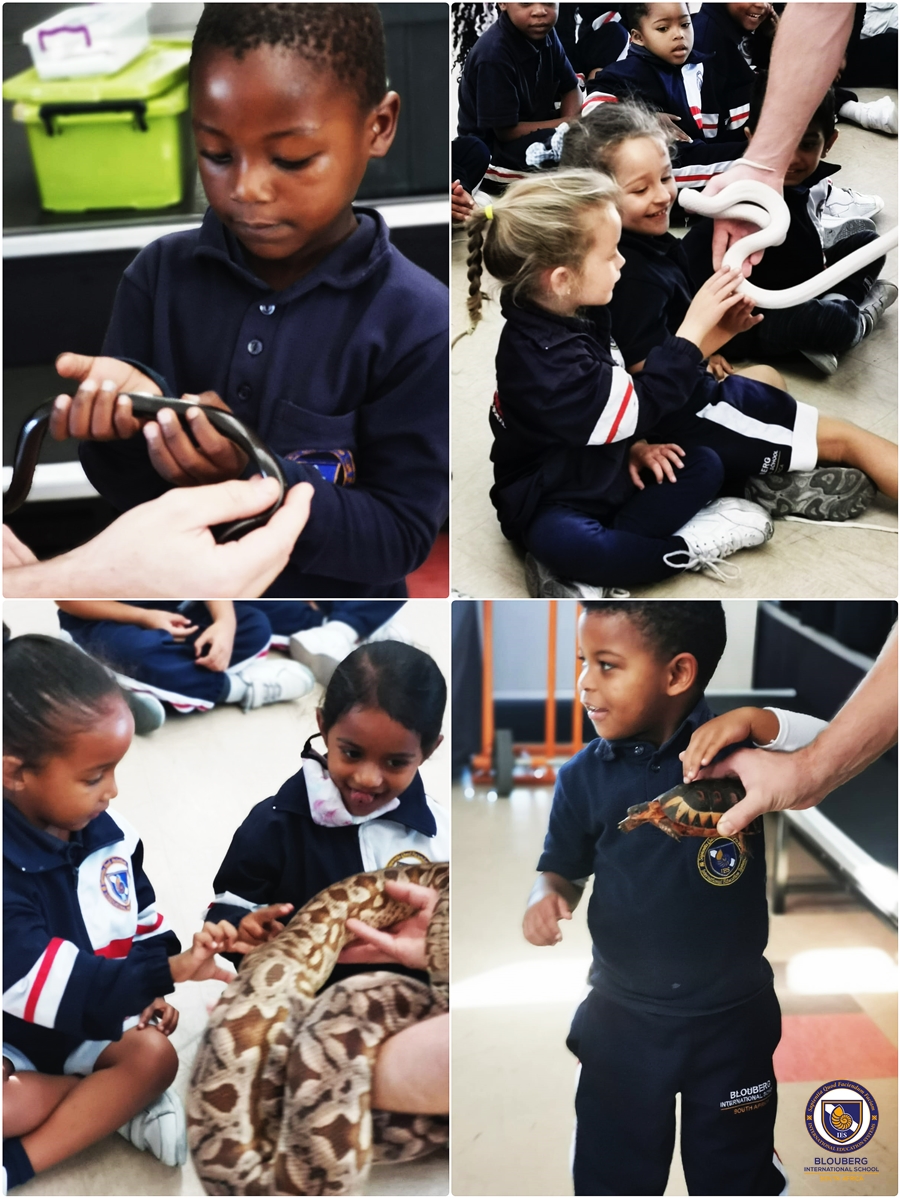
The highlight of the week was definitely when the Reptile Man came to visit, bringing his great collection of snakes, lizards, geckos and tortoises.
Some Reptile facts the students have learnt:
- All reptiles lay shelled eggs.
- A reptile breathes air.
- They have bony shells or are covered in scales.
- Majority of reptiles are cold-blooded.
- The most diverse reptiles are snakes and lizards.
- Most eat insects and small animals.
Our students were very brave and eager to touch and learn about the various reptiles. They couldn’t stop talking about all the wonderful things they saw during the special presentation by the Reptile Man.
Cindy Nunan
Pre-Reception Teacher


Read More

Book Week 2022: Foundation Phase And How To Ensure Success When Reading With Your Child
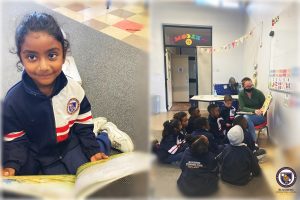
From the 3rd to 6th of May, we celebrated Book Week throughout the school. We do this to help foster a love and excitement for books and reading. There was a wide variety of fun and interesting events that took place.
On Tuesday, Hooked on Books came to school to entertain the students. They performed short excerpts from age appropriate books and the students even got to act out a poem with the actors’ guidance.
On Wednesday evening, the students joined their teachers in their pyjamas for hot chocolate and bedtime stories. It was an evening full of laughter, cuddles and creating fond memories with friends.
Throughout the week, The Book People gave students the opportunity to peruse a large variety of books and some purchased a book to add to their home library.
On Friday we had a character dress up day. It was wonderful seeing the creativity and pride that the children took in dressing up. During the week, Reception and Pre-Reception classes also swapped teachers at story time so that they could listen to the stories represented in the other classrooms.
Below are some tips you can use at home to make reading fun and to ensure success when reading with your child:
When you are creating fun reading activities for your children, you need to be excited about the activity too. You want to create something that is worth your child’s time to sit, listen, and learn. Here are some tips to help you succeed:
- Have a happy voice: Children are smart. If your voice is monotone and you are trying to cram in a book before bedtime, they will know it. Make your voice sound excited when you read the words. Remember to smile and have fun!
- Take your time: Plan ahead to make sure you have enough time to read before nap and bedtime. You don’t want to do fun reading activities when you or your kids are tired. They will be less likely to be engaged.
- Read over or skim the book before you get it: I found many books were not appropriate for children. They had things in there I was not ready to discuss at their young age. Protect their innocence and choose books that represent the same values you stand for at home.
- Don’t quit: Your children may not be excited at first. Keep working at it. Try different things to see what works. Don’t give up. Reading needs to be a lifelong skill that gets encouraged from when your children are young.
- Empower your children: Get your children to pick out books, give them a choice between two fun reading activities, let them pick out which book to read at bedtime, or let them choose a book to give another child as a birthday present. All these things give them ownership. If they come up with the idea or make the decision themselves, they are more likely to be engaged.
Kim Hahn
Reception Year Teacher
Read More