
Library Etiquette
Do you still remember the majesty of the Public Libraries that we had to frequent in our youth? The days before internet was a quick fix search. Dewey decimal systems and the smells of old and new books. The librarian peeking at you over her reading glasses as you quietly and carefully walked past her massive counter. The feeling of excitement when you held your first library card. The library was an ocean of possibilities, peacefully beckoning you to crack the spine of a hardcover adventure. Hours were spent finding corners to read in, and making sure you returned your books on time to avoid that dreaded R2 fine. If you were lucky, you didn’t have to take notes by hand, but could make copies of those precious pages before using them for your school projects.
As mystical as the library was, it was also a character forming experience. We all knew the rules, almost as sure as muscle memory. From the moment we walked through those heavy doors, we understood that this was a place of resolute respect and consideration, quietly whispering to one another as we discovered other universes hidden in the pages of classic novels.
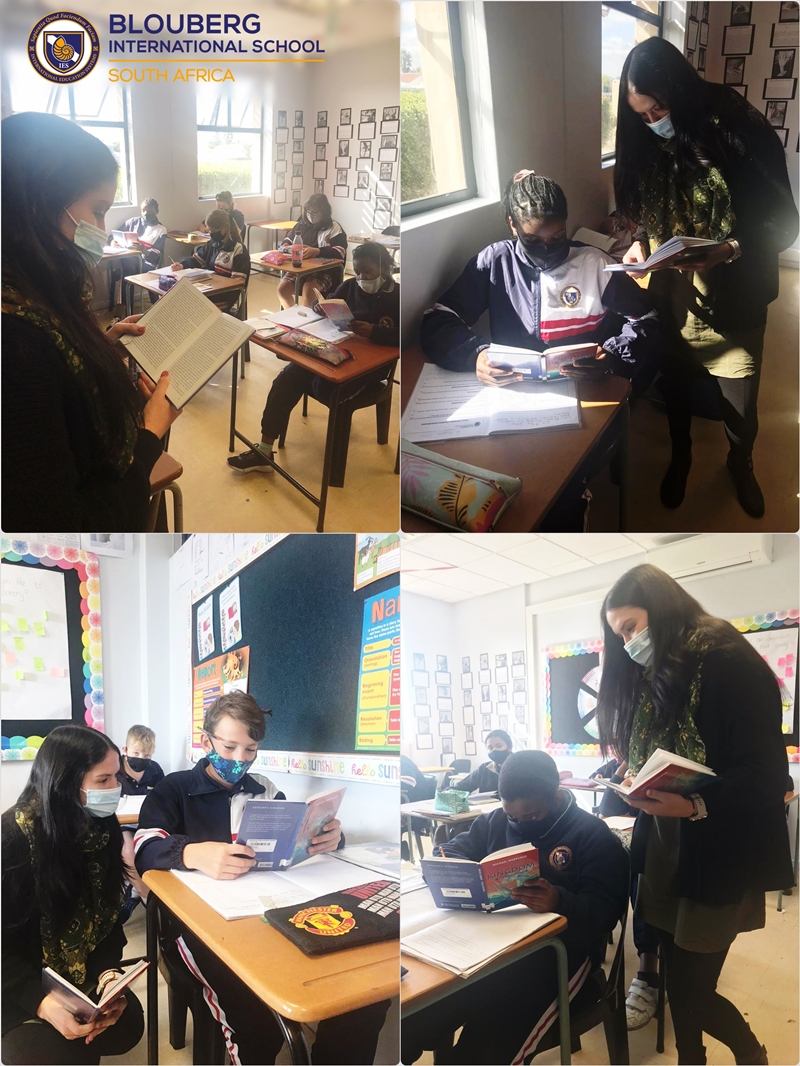
I have asked our students during the course of this week if they have visited the local library and not surprisingly, most of them have not. We all know that with the hustle and bustle of this day and age, we rarely have the time for simple pleasures, like visiting our local library. If you do ever find that you have a free morning with your child, then I would like to recommend Milnerton Library to you. The facilities are very well kept, and the staff are knowledgeable and kind. This would be a wonderful introduction to the vast community of libraries that our city has to offer. Proper library use is a vital skill, especially when it comes to the later years of education. Why not set our children up for success sooner rather than later. University and high school notoriously consists of ample amounts of research, and knowing how to effectively utilize the available facilities would be extremely beneficial to our children.
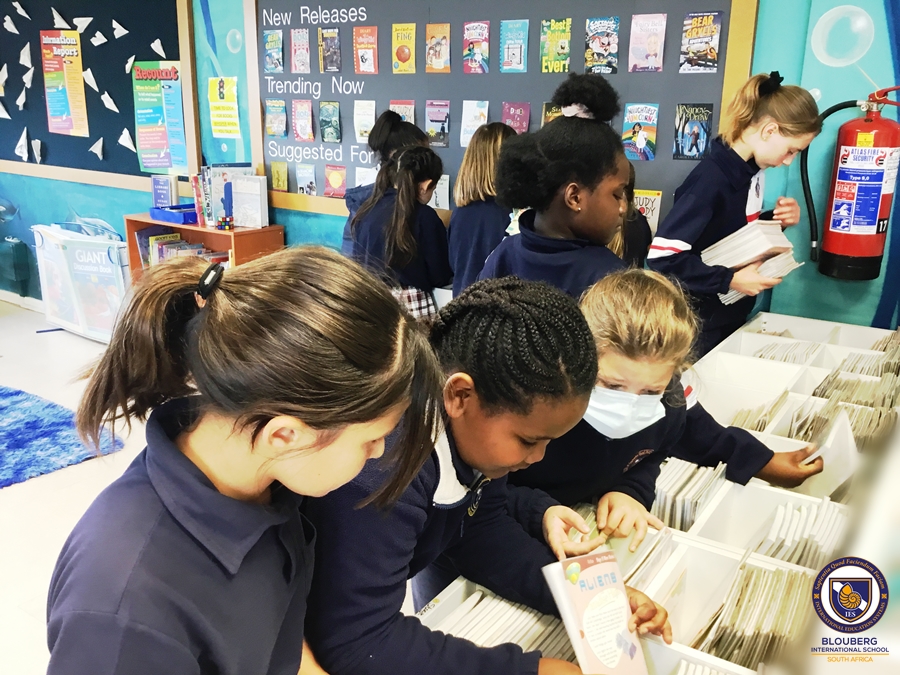
In our very own school library, we have discussed library etiquette this week during our lessons. It almost feels like a lost art and is certainly a worthwhile topic.
We discussed a few of the items below:
- What is the function of a library? We established that the library is one of the few places in society that is completely free. You don’t need to spend money to visit and enjoy the facilities. Being afforded the use of the facilities does come with some responsibility though. The resources are loaned to you in good faith, which makes you accountable for how it is treated and returned. Everyone is welcome in a library as it is a public space, cementing in our minds that education should be fully inclusive and knowledge freely available to all. Libraries can be used to study, do research, read, create awareness and so much more. However, the primary function is the loan and return of books.
- Where do we get our books? The students showed a great sense of understanding that the school library mainly grows through your kind donations, this includes the Birthday Book Programme as well as books that you would like to donate when you are no longer using them. We also discussed the purchasing of resources like our readers; and why we should look after the resources in the library. Some classes even delved into publishing, which is a very interesting topic in its own right.
- General Manners: We explored the rules of libraries and especially our school library. Students were reminded that we enter a library quietly; how to look for books and keep the shelves neat; and, where to return the books and how to check out new books for the week. Our conduct in a library is also extremely important: remembering that one must remain kind, caring and encouraging. If we conduct ourselves with consideration to our fellow library users, everyone will enjoy their experience and continue to benefit from the facilities.
- Returns: We discussed books not being returned and why we should always return our books. We should all have access to the knowledge in the library and if we fail to return our loaned books, the next student will not have access to the material. At this stage there are so many books outstanding at our library, that I would like to ask parents to please check if there are any school library books still at home. Your assistance with this will be greatly appreciated.
It has been such a privilege and a pleasure the last few weeks, getting to know the students even better, sharing stories, reading and brainstorming. I simply can’t wait to see what the future holds for our school library.
Trindade Camara
School Librarian

Read More
Coding!
It is safe to say that coding is one of the most constructive hobbies for your child to adopt, especially since it can help them develop persistence, communication, creativity, and higher-order thinking.
Yes, learning to code also sets your child up for potentially lucrative career opportunities, but it also offers children so much more than that. A modern parent cannot go wrong by encouraging their child to program.
At BIS, we have coding and robotics lessons every day during the week – Monday to Friday. The students enjoy their coding lessons and it is rewarding to see them grasp the concepts and solve problems by themselves. Here are reasons why coding is so important for children:
1. Coding Boosts Problem-Solving Skills
Coding is, without a doubt, one of the most straightforward ways for children to boost their problem-solving skills.
In a programming context, coders are constantly challenged and asked to problem-solve. The practice all but requires them to break issues down into more manageable sub-problems, then progress through an iterative process of identifying, prioritising, and implementing solutions. Thus, children start honing their problem-solving skills as soon as they take on their first coding challenge.
Research indicates that even if your child doesn’t want to go into coding as an adult, establishing a practice of coding early in life will nevertheless help them build highly-transferable cognitive skills. Is it any wonder why children should code?
2. Coding Improves Computational Thinking
Computational thinking is a branch of knowledge that involves expressing problems in a way that a computer would. Students who learn this model of thinking are encouraged to break down complex problems into smaller issues, thereby revealing underlying process patterns.
As researchers for an earlier study wrote on the matter, “We believe that children as young as ten can directly benefit from opportunities to engage in computational thinking […] Children can begin by solving puzzles on paper, continue on game boards, and ultimately complete their solutions on computers. Through this process, students can be guided through increasingly complex algorithmic thinking activities that are built from their tacit knowledge and excitement about game play.”
2. Coding Encourages Persistence
Computer science is one of the few professional disciplines where it’s entirely acceptable to be near-constantly failing. Not only is failure immediately recognisable — i.e. a program “breaks,” and doesn’t work as intended — but success literally cannot be achieved until all errors are handled. Even the most straightforward programs require a coder to understand a set of problems and solve them; otherwise, the code won’t run as intended.
However, with all this frustration and failure comes a real, lifelong character benefit: persistence.
When children begin programming, they come to learn that failure is transient, and doesn’t have to be frustrating or a progress-stopper. Even small successes can provide the encouragement kids need to push through issues in their programming. Over time, this perseverance can bolster a child’s grit — and serve as one of the most important indicators of their future educational and career success.
Coding can help your child develop a growth mindset: a philosophy wherein one’s ability to learn can be improved upon, adjusted as needed, and stand firm against demoralizing failures. What better mentality could a child adopt early in life?
3. Coding Improves Computational Thinking
Computational thinking is a branch of knowledge that involves expressing problems in a way that a computer would. Students who learn this model of thinking are encouraged to break down complex problems into smaller issues, thereby revealing underlying process patterns.
As researchers for an earlier study wrote on the matter, “We believe that children as young as ten can directly benefit from opportunities to engage in computational thinking […] Children can begin by solving puzzles on paper, continue on game boards, and ultimately complete their solutions on computers. Through this process, students can be guided through increasingly complex algorithmic thinking activities that are built from their tacit knowledge and excitement about game play.”
4. Coding Teaches Creativity
Creativity, creativity, creativity; it’s something every early educator and parent is wholly concerned with, and yet it’s not a quality prized by most working adults.
Creativity tends to decrease as we age. The adage is true — adults tend to be less creative than children. By the time we reach our sunset years, we have effectively “unlearned” one of the most important skills in life.
“Creative people have rapid and effective responses that help them to achieve their life goals and allow them to enjoy the journey… It is both a skill set and a unique and individual personality structure that’s developed throughout childhood and fine-tuned in adolescence,” Notre Dame researcher Doireann O’Connor once noted.
So, how do we preserve a child’s creative skills as they age?
Experts suggest that kids should learn to code. As a practice, coding positions developers as “creators” or “world-builders” within a programming environment — by definition, the discipline requires creative thinking and an experimental mindset.
With programming, kids are constantly prompted to experiment. Once they understand basic functionalities, they can continually ask themselves, What if I tried this? Would that work?
5. Coding is a Career-Building Skill
The importance of programming cannot be understated in our economy, which is now overwhelmingly driven by technology.
The biggest hurdle is just mastering that first programming language — but once they do, they will be well-positioned to learn different languages, frameworks, and technologies later on in life.
Sonia Terblache
ICT, Coding & Robotics Teacher

Read More
Social Media: What Is The Link To Children’s Mental Health
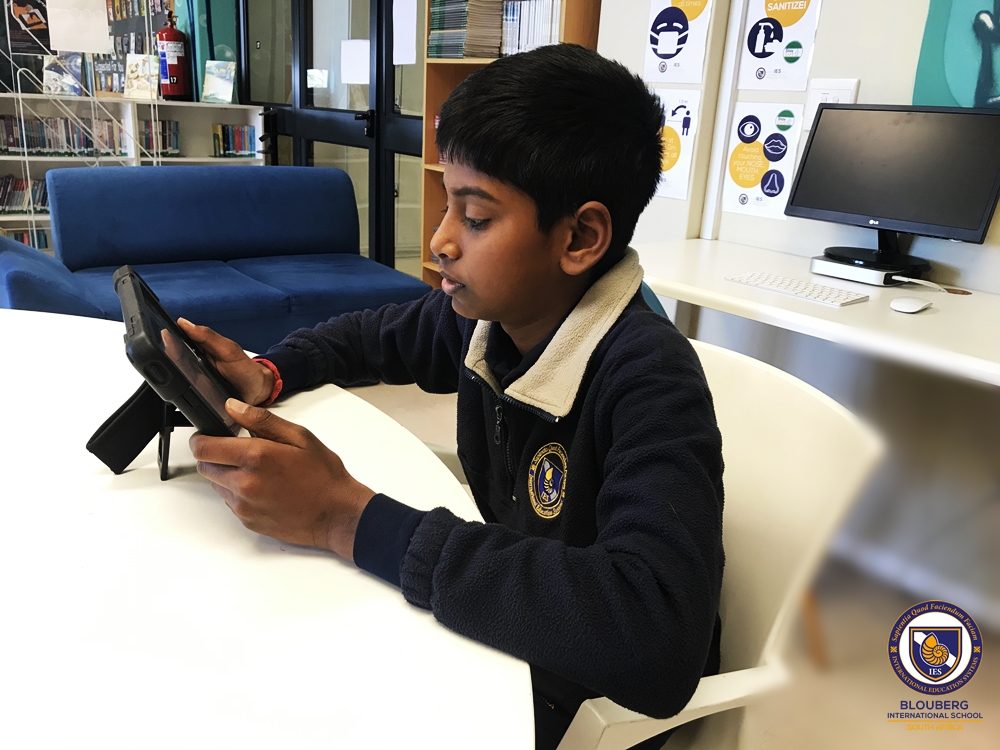
These days most children regularly make use of communication devices whether it be a cellphone, computer, tablet or iPad. The amount of time children are spending online with these devices is increasing at a rapid rate. That brings the question, what is the impact of this increased use of social media on our children’s emotional and mental well-being?
Currently we are experiencing a mental health crisis amongst our youth on a global scale. There have been sharp increases in the rates of depression, anxiety, self‐harm, loneliness and even suicide amongst our children worldwide. This has of course led to much research as to what the connection is between our children’s mental health and their exposure to and use of social media.
Many have said that the rise of social media use in young people coincides with the rise in mental health concerns. One of the most highly discussed and debated topics amongst parents today is screen time. How much is too much and what impact will it have on my child’s development? Researchers are sounding the alarm that screen time and social media use amongst our children and teenagers is something we should very much look at curbing, if we are wanting to make a positive difference in our youth’s mental health and emotional well- being in the future.
Our social media natives – Generation Z – don’t know much about a time before social media and easily accessible technology. According to the World Health Organisation (WHO), children between the ages of 5 to 17 years old should only have a maximum daily screen time of 2 hours. I am sure that on reflection, the majority of us can agree that our children and teenagers are spending far more time than this on social media daily. The time our children spend on their screens and social media is stealing time away from healthy activities that promote physical, social and emotional development like engaging in extra murals at school, hiking, exercise, and joining social groups.
Social media has become young people’s primary way of connecting with one another and for most within this generation, being online is described as a positive experience. So what is the big fuss then? Let’s explore some enlightening but frightening statistics, according to WHO. 1 out of 3 internet users is below the age of 18 years old. 3 out of 4 children spend less than an hour playing and exploring outside – that is less than a prisoner! 4 out of 5 tweens are on social media platforms like TikTok, Instagram and Snapchat by the age of 12 (the legal age required for most of these social media platforms is 13). 7 out of 10 children have accidentally come across pornographic images online. This means that even when our children aren’t actively seeking out dangerous or risky content, they continue to be exposed to and flooded with imagery and content that is not age appropriate. Imagine the psychological impact this is having on our children daily. The immersion into the virtual world can delay children and teens’ emotional and social development. Increased feelings of isolation and loneliness can develop with excessive device and social media use. This is because when talking online begins to dominate our social interactions, we engage less in the real world which exacerbates a feeling a loneliness.
Social media platforms are designed in such a way to hold the users attention for as long as possible. If we as adults are able to fall into this trap of mindless scrolling, our children and teens stand little to no chance with a still- developing prefrontal cortex in the brain. The notion of addiction to devices and social media is the biggest downside. The ‘likes’ and ‘shares’ for example, activate the reward system in the brain. It is instant gratification at our fingertips. The desire for validation and the fear of rejection is very much enforced by social media. “How many likes did I receive on that post?”, “What nasty comments have they left for me this time?”, “How can I look more like her/him?”. These are some common thoughts amongst users of social media. The consistent social comparison to others and their lives can have a detrimental impact on children’s self-esteem, leading to feelings of low self-worth and value.
Cyberbullying is one of the biggest risks when it comes to children’s engagement on social media. Children and teens insecurities are easily exacerbated by the use of social media, according to Unicef. Bullies have 24 hour access to their victims, with a tap of the finger. Those who experience digital violence online are more likely to engage in alcohol and substance use, missing school more regularly and achieving poorer academics. In extreme cases, we know of cyberbullying leading to suicide.
Social media use and technology in general offers amazing benefits for society and our children but we cannot forget the risks and danger it brings us too. Screen time and social media is stealing from us on a daily basis – it can take away our peace, our sleep, our connections and in Gen Z’s case, it can steal away our childhood. Some argue that “the genie is already out of the bottle” in relation to screen time, but there is still time to act.
What can parents do to help?
- Talk to your children about what they do online in a non-judgemental way. Trying to understand the “why” behind the excessive device or social media use is important before trying to curb or limit social media use.
- Limit screen time according to the age of your child. Even coming up with your own family device rule plan has shown to work and brings family together.
- Learn more about the technology your children are using. Have your children teach you and help you understand what they are doing online. This allows us to assess their personal risks being online and help support appropriately when needed. Screen time shouldn’t always be alone time. Co- view and co- engage as it encourages social interactions and bonding.
- Talk to your child regularly about the responsibilities we have as online users. Just as in the real world there are boundaries and rules to abide by, this is also the case online. Warn them about the importance of privacy and the dangers of predators online.
- Teach your children to be critical thinkers online. We can’t believe everything we see online as there will always be misinformation.
- Research parent controls that work for you and your family. Both Apple and Android have safety and parent controls features available. Even further, there are amazing parental control applications such as FYI play it safe, that help monitor and assess your child’s risk online, giving you ample opportunity to intervene and prevent harm to your child.
- Lastly but importantly, be a good digital role model. If your children witness you making hurtful comments on a social networking site or over using your device during family time, they will be less inclined to listen to your judgement around safe and responsible social media and device use. Model good behaviour so that they know what healthy and responsible digital behaviour looks like.
This long weekend, I encourage us all to pop the devices down and to truly connect. Pull out the dusty board games and the treasured family dominoes and enjoy some device free time with your family and children.
Kayla Smith
School Counsellors
Read More

People Who Help Us
For the past two weeks, the Foundation Stage has been learning about People Who Help Us in our community and how they help us in our daily lives.
The students also learnt how some of these people help us in emergencies, like firefighters, police, doctors and nurses. If there is an emergency, they will need to know how to get in touch with the right person to help in the situation (however old they are).
They also learnt of other people who help us stay safe and healthy, like opticians, dentists and refuse collectors.
Learning about this topic helps the students to make connections between themselves and the outside world. It makes them more aware of the different jobs and roles people take on in their own homes, in school and in their community. By educating the young students about the people who try and prevent these things happening or help us if they do, we are showing them the systems in place within our society to ensure that we live in a safe and supportive community.
The theme also provides key life skills for children, e.g. knowing how to dial the emergency services, who to ask if they get lost, what to do in case of a fire etc.
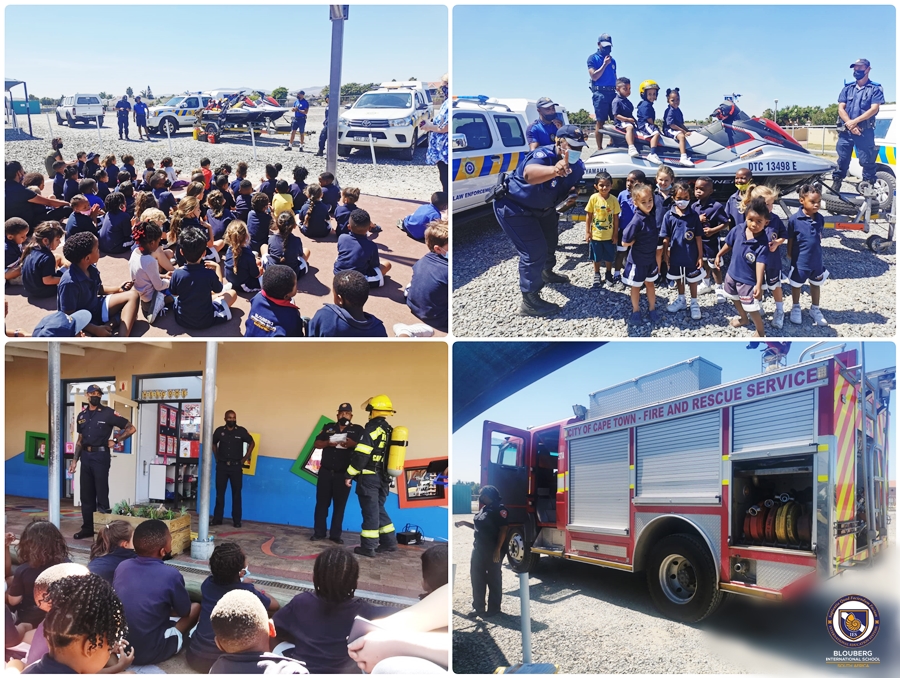
The Foundation Stage students were visited by law Enforcement Services, Fire and Rescue Services and Neighbourhood watch. They learnt what to do in various emergency situations and to call the toll free numbers 107 & 10111 to get help in any emergency.
This theme encourages children to notice places and people in their community and show them that they are part of a wider community that opens up possibilities for them to consider for future careers.
Cindy Nunan
Pre-Reception Teacher


Read More

Valentine’s Day And Core Values
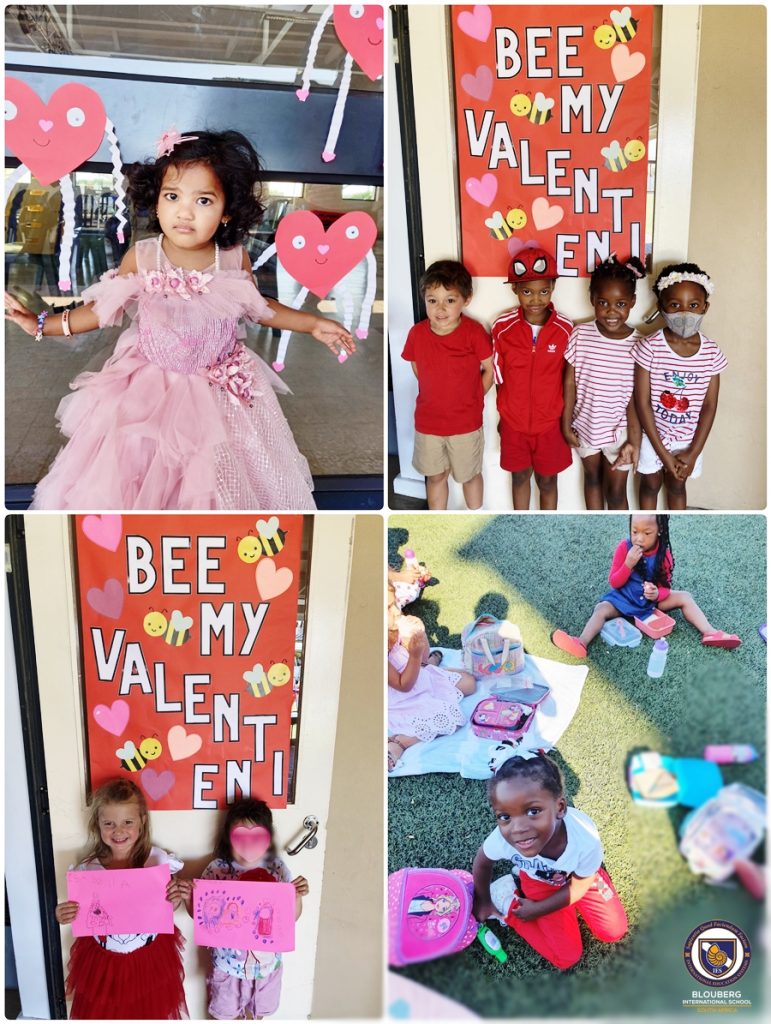
We have become so used to extended periods of lockdown and limited social opportunities during the Covid-19 pandemic. That is why this year’s Valentine’s Day, whilst still following social distancing, was such an exciting event for the Nursery, Pre-Reception and Reception students. They had the opportunity to interact in larger groups during our Teddy Bear’s picnic and it was so nice to see them bonding, laughing and thriving socially. Our Valentine’s Day was filled with love, hugs and beautiful pink, red and white outfits.
From this Valentine ’s Day onwards, we will focus on the core values of being kind, caring and encouraging. Mr Swart introduced these core values to us in our first assembly for the year. These values can be accomplished even at an early age and are implemented and encouraged in every classroom in the ELS.
I asked a few students in Reception Year what it means to be a kind friend and they had some very special responses:
“If someone doesn’t have anyone to play with then you can play with them.”
“Don’t tease or use unkind words with your friends.”
“If your friend is hurt or sad you can help them or give them a hug.”
“If you share your toys you are being a kind friend.”
“Helping your teacher is a kind thing to do.”
I think it is encouraging and exciting to see that our BIS students will grow up to be thoughtful, empathetic and compassionate people in a society that is in such dire need of these qualities.
Please continue to encourage your child to develop and grow in these qualities, irrespective of their age. Being a kind, caring and encouraging person will guarantee healthy friendships and relationships that blossom. They are excellent building blocks for a solid foundation for the remainder of their lives.
Kim Hahn
Reception Year Teacher

Read More

Nursery Tackles Responsible Hygiene
It’s probably not surprising that learning about hygiene and self-care at a young age contributes to healthy social and emotional development. Encouraging independent self-care skills has a significant long-term impact on children, and attempting to complete these self-care tasks, builds on their confidence and promotes a healthy lifestyle.
Good hygiene expands further than just using hand sanitizer in class – it’s about keeping our surroundings clean and maintaining that cleanliness whenever possible. That’s why this week, during our Skills Programme, Nursery took the opportunity to learn about taking responsibility for our personal hygiene – as well as for the hygiene of the classroom.
We embarked on a fun-filled adventure to the garden, where we cleaned all the class toys with warm water and soap. The students worked as a team, learnt about germs and enjoyed cleaning all the crevices of their much-loved toys.
The best way to encourage good hygiene habits in our little tots, is to be a good role model and to set the standard at home. Keeping the conversation going will not only normalize the responsibility, but it will also ensure that the children are keeping their body happy and healthy. Self- care is the most important skill we can learn and starting today, no matter the age, will ensure self-love.
I am so proud of how far the little tots have come and I am so excited to put this new skill to good use in our future lessons.
Jo-Anne Dickason
Nursery Teacher


Read More

From the Principal’s Desk, 20 August 2021
Dear Parents
DROP AND GO
We would like to remind parents that children should always exit/enter vehicles on the left hand side. We would like to ensure that our students remain safe at all times.
COVID AND ONLINE LEARNING
Due to the Covid situation in the Western Cape, our hybrid teaching will continue for the remainder of this term.
Please ensure that if your child learns from home they are committed and attend every lesson. Sadly, we do have students who take advantage of the situation.
Every BIS student has an iesmail.com email address. Students are reminded that this address is for school related matters only. All private chats should be done using a private email address.
FEATURE PHOTO
Mr Brian Sizani is our Mathematics and Physics teacher at the High School. He has been at BIS since October 2017.
Did you know…..
- He only reads novels by Martina Cole. He has quite a collection of them.
- He aspires to be an Astrophysicist.
- He was part of the UWC choir for 4 years, singing tenor. He is also a choir member at church, singing tenor solos and at times he gets to conduct the choir.
- He loves traveling and exploring/learning about various cultures, especially indigenous cultures.
- As much as he admires the natural beauty of this planet, he has not been able to overcome his fear of the ocean yet. One day!
Thank you, Brian, for your commitment to the students and the school.
WEEKLY THOUGHT: Discipline in Life
“Only the disciplined ones in life are free. If you are undisciplined, you are a slave to your moods and your passions.” – Eliud Kipchoge
Freedom to do what we want to, when we want to, is usually the type of freedom that the majority of people wish for. But what does this “freedom” mean and how does it manifest practically in everyday life?
For us to better understand what Kipchoge – the world record holder in the marathon – is trying to bring across, let’s take a simple example that most of us can relate to:
Each of us believes that we are free to eat whatever we like. We also believe that we have the choice to exercise as much or as little as we want to. “Yes, we are truly free,” some will remark. But wait, there is a catch…
We all know that if a person eats without any restraint and does no exercise whatsoever, chances are very good that he/she will gain weight. If this continues over an extended period of time, they will gain a lot of weight. This lifestyle has long-term implications, including susceptibility to certain diseases and a variety of other health risks. People in this category are also often not able to participate in many activities, both indoor and outdoor. Though sad and unfortunate, these are facts.
Life gives us many examples like these, proving that exercising our “freedoms” does not always lead to true freedom.
Let’s look at Kipchoge’s words again. He is in fact saying that if we are not slaves to our moods and passions, but live lives of discipline, we will find true freedom.
This may not be the most encouraging message; but when it’s applied, it can be life-changing indeed.
Question: What “freedoms” in your life could lead to circumstances that you would rather avoid?
Have an amazing weekend, let’s remember to be grateful for all the privileges we enjoy daily.
Andre
Read More
From the Principal’s Desk, 12 August 2021
Dear Parents
WHAT OUR SCHOOL STANDS FOR…
We would like our school to be known as a “Bully Free Zone”. Let’s consider this a little.
More details to follow!
COVID AND ONLINE LEARNING
I have had a few queries as to what extent the school is affected by Covid cases. As with most other work places we are most certainly affected. However, we try and manage it per class/group and discreetly as possible. We have over the past 3 weeks closed certain classes or phases and isolated staff where necessary. During these times we follow all health & safety protocols and often ask for professional advice.
We continue with Hybrid teaching until the end of August. We will re-assess this towards the end of the month before we communicate the way forward in September. Thank you to everyone for working together and supporting one other.
Online learning should be taken seriously, and all classes should be attended.
FEATURE PHOTO
Our main newsletter photograph features our newly appointed Key Stage 2 Coordinator, Ms Katherine Nel. Katherine started her journey at BIS in 2016. She then moved to Dubai in 2018 where she taught at an international school. In 2020, Katherine came back to our BIS family.
- Katherine is originally from Gqeberha (Port Elizabeth) and moved to Cape Town in 2016.
- She has three dogs and shares a birthday with her Poodle, Bentley.
- She has lived and worked at schools in both London and Dubai.
- Katherine enjoys studying (maybe a bit too much) and has a Bachelor of Arts degree in Media, Communication and Culture (majoring in English Literature and Public Relations), a Postgraduate Degree in Education, an Honours Bachelor of Education- with specialisation in Inclusive Education, an Honours Bachelor of Education- with specialisation in Psycho-Educational Support and she is currently studying a Bachelor of Arts Honours in Psychology. She also hopes to one day complete her Master of Education in Educational Psychology. Wow!
- When she was in pre-school, she wanted to be a waitress in Paris.
Thank you, Katherine, for your contribution in making our school a great place to be.
WEEKLY THOUGHT: Little Things
“Sometimes when I consider what tremendous consequences come from little things, I am tempted to think there are no little things.” – Bruce Barton
We live in a culture where everything is measured by size and numbers. A normal meal doesn’t catch the eye until it’s “SUPER-SIZED”; when we expect 30 people at a gathering and only 5 people pitch, the event is considered a failure; when raising funds for a certain cause and end up with less than expected, we become discouraged.
We live in a world in which size matters more than ever before. Although most families can live in a home of around 150 square meters, we look at the guy living in a 1,000-square house and somehow think that’s better.
All these ways of thinking have brought us to a place where we no longer take notice of the little things. This is very detrimental, as we will most likely miss some wonderful opportunities in life because of it.
Take business for instance: How do the majority of businesses start? With 100,000 clients on day one? Of course not – they start with one! Valuing that client and giving them the best possible service will then hopefully draw the 2nd, 3rd, 5th & 10th clients in. And so, it starts.
Looking for that business or opportunity that will give you “instant” wealth or success will lead you down a road of emptiness and discouragement – not because there aren’t opportunities, but because you aren’t sensitive to the ventures and opportunities in life that start off small.
Once we reset our bias toward big things and tune in to the many small opportunities all around us, we, like Barton, will start to consider the consequences of little things and realize that they weren’t all that little after all.
“Let’s get all the little things right”. The big things will take care of themselves.
Have a brilliant weekend – give someone a reason to smile.
Andre
Read More

From the Principal’s Desk, 5 August 2021
Dear Parents
WHEN YOUR CHILD IS NOT WELL
Please be reminded that if your child is not well, rather keep them at home. Given the current pandemic we would prefer you err on the side of caution.
We are aware that this may be an inconvenience for you but this is to ensure that we all stay healthy and safe.
ONLINE LEARNING
We continue with Hybrid teaching next week. Thank you to everyone for working together and supporting each other.
Please do not keep your children at home if they do not have access to the learning platforms. If there are concerns or problems, please contact me so that we can assist.
HAPPY WOMEN’S DAY
Monday, 9 August, is Women’s Day. While this day may be celebrated for various reasons, I believe it is a day where we should honour and celebrate the ladies/girls in our lives. This is a perfect opportunity to spoil our wives, girlfriends, daughters and mothers.
While we are celebrating Women’s Day, let us honour our latest Olympic gold medallist, Tatjana Schoenmaker. What an incredible swim in the 200m breaststroke final – Gold medal and a world record.
Happy Women’s Day to all the ladies/girls in our community.
FEATURE PHOTO
Our main newsletter photograph features Mrs Beverley du Plessis. Beverley is one of our Music teachers and started at BIS in 2018.
Did you know….
- She is pregnant with her second daughter.
- She does Triathlons and has done various races like Ironman 70.3 and Double Century cycle race.
- She enjoys outdoor activities like hiking and running.
- She loves to explore new places and travel. Having been to various countries, the most recent was Bali, just before Covid.
- She has a lot of animals and only adopts animals to give them a second chance at life.
Thank you for all your amazing work, Beverley.
WEEKLY THOUGHT: What am I alone with?
“Being alone with fear can rapidly turn into panic. Being alone with frustration can rapidly turn into anger. Being alone with disappointment can rapidly turn into discouragement and, even worse, despair.” – Mark Goulston
In a time where “lockdown”, “social distancing”, and “curfew” have become all-too-frequent words in our vocabularies, it may be a good time to ask the question: “What am I alone with?”
Goulston suggests that being alone with fear, frustration and disappointment can lead to panic, anger, and despair. It also seems as if mainstream media and news outlets want to push us toward these negative and very detrimental human emotions. Do you agree?
Although there are a multitude of wonderful stories of hope, courage, and survival against all odds playing out in our communities every day, these don’t seem to appear on our social feeds. We need to guard against becoming prisoners of what we do see and hear on a daily basis.
Yes, there certainly is hurt and pain – even death – closer to us than ever before in our lifetimes, but by making these things our only reality, we will inevitably go down an ugly road of which our minds were partly the architects.
If each of us are determined to share uplifting stories – the real-life dramas of friends and family showing courage and compassion and coming out on the other side when nobody thought they’d have a chance – I am convinced that they will awaken a sense of hope and purpose in all of us. So, before simply repeating a story we’ve heard or read, we need to ask ourselves: “Am I building or breaking with what I am about to say?”
Whenever speaking with others, reading articles or watching news clips, let us continue to ask ourselves: “What am I alone with?”
Have a fantastic weekend and encourage those around you. It’s all or nothing in SA’s final test against the British and Irish Lions on Saturday!
Andre
Read More
From the Principal’s Desk, 29 July 2021
Dear Parents
As some of you may know, International Friendship Day is on Friday, 30 July. The idea behind the day, which was proclaimed by the UN in 2011, is that friendship between people, cultures, and countries has the power to inspire peace and build bridges between communities. I believe that there is no better time than right now, to celebrate those close to us and show gratitude and support for our peers, friends, family and staff.
This day is a great opportunity for parents, students and educators to share in the spirit of human solidarity.
“The glory of friendship is not the outstretched hand, not the kindly smile, nor the joy of companionship; it is the spiritual inspiration that comes to one when you discover that someone else believes in you and is willing to trust you with a friendship.” – Ralph Waldo Emerson
PYJAMA DAY
Friday, 30 July is “Pyjama Day” at Blouberg International School. Students are encouraged to pay R10 and come to school in their PJ’s. They have also been selling candy floss @ R10.
This is a matric farewell fundraiser.
Events like these create energy and positivity on campus and is good for our wellness and mental health. Let’s enjoy the day within all necessary protocols.
“We can change the world and make it a better place. It is in your hands to make a difference” – Nelson Mandela
ONLINE LEARNING
We move into the next 2-week period at BIS
Monday, 2 August – Friday, 13 August
Hybrid Teaching
We are mindful of the fact that statistics show that there is still an increase in Covid cases in the Western Cape and we will therefore continue with hybrid teaching during the first two weeks of August. We will not have any extra-curricular activities during this period, but we sincerely hope that from 16 August we can re-introduce extra-curricular activities. Additional academic lessons may be scheduled by various teachers during this time.
I request that parents inform the respective class/tutor teachers of their choice for the next two weeks (2nd – 13th August). Once a choice has been made, we expect students to stick to that choice for the duration of that period. It becomes very disruptive and disorganised if students do not stick to their choice. Please could you let teachers know by the end of this week so they are prepared for Monday.
I am aware of a number of students who believe online learning is optional. Online learning is no excuse for students not to attend classes. It is normal school. Please assist all students in maintaining their full commitment.
“Stronger together”
FEATURE PHOTO
Our main newsletter photograph features Mrs Charlotte (Charlie) Cronje. Charlie is one of our Year 1 teachers and started at BIS in 2018.
She believes a cup of tea makes everything better!
- Charlie was born in Kent, England, and she obtained her BSc Degree in Psychology. After working with psychopathic men with personality disorders she went onto pursue a Masters in Social work.
- She loves trampolining and was captain of the Trampolining Club at Liverpool University.
- She enjoys travelling, but camping is a family favourite.
- Her favourite film is ’The Sound of Music’ closely followed by ’Mary Poppins’.
- She plays the trumpet and enjoys playing in the Cape Town Concert Brass Band. (CTCBB).
- She likes to hike. She completed the 3-peak challenge in England which involved walking the highest mountains in England, Scotland and Wales in 24 hours and she would like to try the 3-peak challenge in Cape Town.
Wow, certainly an interesting life! Thank you for being a ray of sunshine at our school.
“Appreciation is a wonderful thing. It makes what is excellent in others belong to us as well.” – Voltaire
CONGRATULATIONS
Congratulations to our IT teacher, Mr Gemayel Kroukamp, on the birth of his son, Sebastian Jacobus. We trust that he will be an incredible blessing in your life.
WEEKLY THOUGHT: Pain and Suffering
“The climb might be tough and challenging, but the view is worth it. There is a purpose for that pain; you just can’t always see it right away.” – Victoria Arlen
This is what Wikipedia has to say about Victoria Arlen, the lady who made the above statement:
“At the age of eleven, Arlen developed two rare conditions known as transverse myelitis and acute disseminated encephalomyelitis. This was an extremely rare scenario, and Victoria quickly lost her ability to speak, eat, walk, and move at all. She slipped into a vegetative state from which recovery was highly unlikely. Arlen spent nearly four years “locked” inside her own body, completely aware of what was going on, but unable to move or communicate. Doctors saw little hope of survival and believed recovery to be improbable.
In 2010, after almost four years, Arlen started re-learning how to speak, eat, and move. In June 2012, after a world record-breaking performance at the U.S. Paralympic swimming trials, Arlen qualified for the London 2012 Summer Paralympic Games. In London, she won four medals as a proud member of Team USA – one gold and three silvers.”
Our challenges may not be as severe as those faced by Victoria Arlen, but they can often feel like insurmountable mountains.
When looking back on our own lives and seeing the countless times when pain and suffering birthed new and exciting things, we can take courage in the following:
- There is always hope;
- We will leave stronger than we started;
- We are not alone – there are others going through tough times too.
May we encourage others who are facing difficult circumstances, the same way in which we confront and handle our own pain and suffering. Who knows, maybe someone else will encourage us too. That’s what community, family, hope and life are all about!
Have a great weekend, stay warm, enjoy the Olympics and the 2nd test match between the Springboks and the British and Irish Lions. Go Bokke!
Andre
Read More