

Having Fun With Shadows
The Year 2 classes have been learning about light and dark during their Science lessons. They have looked at different light sources and can identify those which are man-made and those which occur naturally.
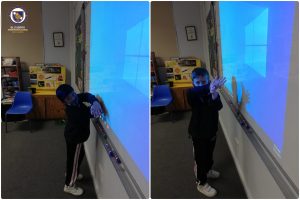
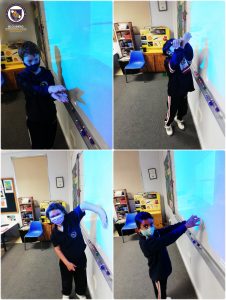
We had some fun during our last Science lesson, using shadows to make funny creatures on the whiteboard, using the light from the projector to create shadows. My class decided that this was the best Science lesson. There was much laughter as their classmates tried to guess what the creature made by their friends were.
Kim Coetzer
Year 2 Teacher
Read More
Marvellous Materials
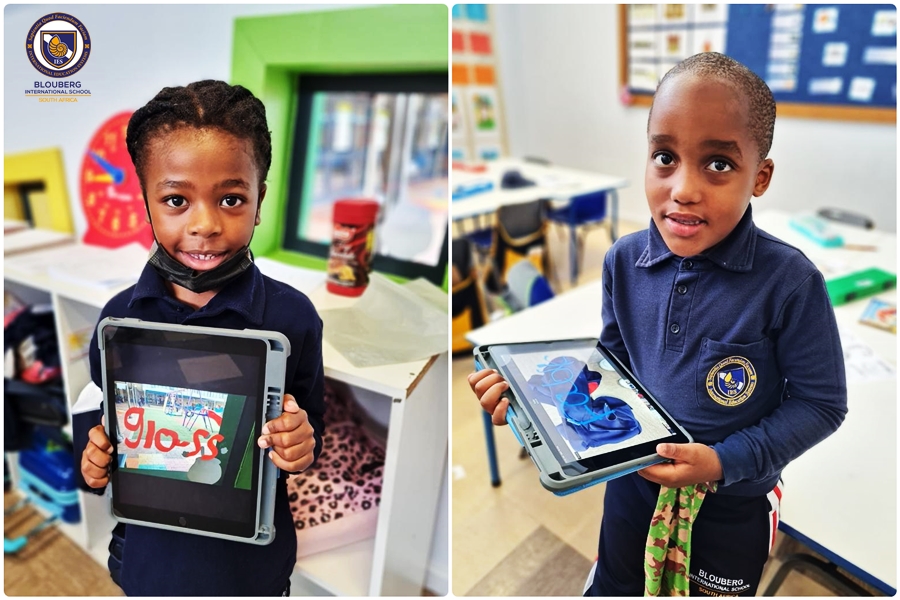
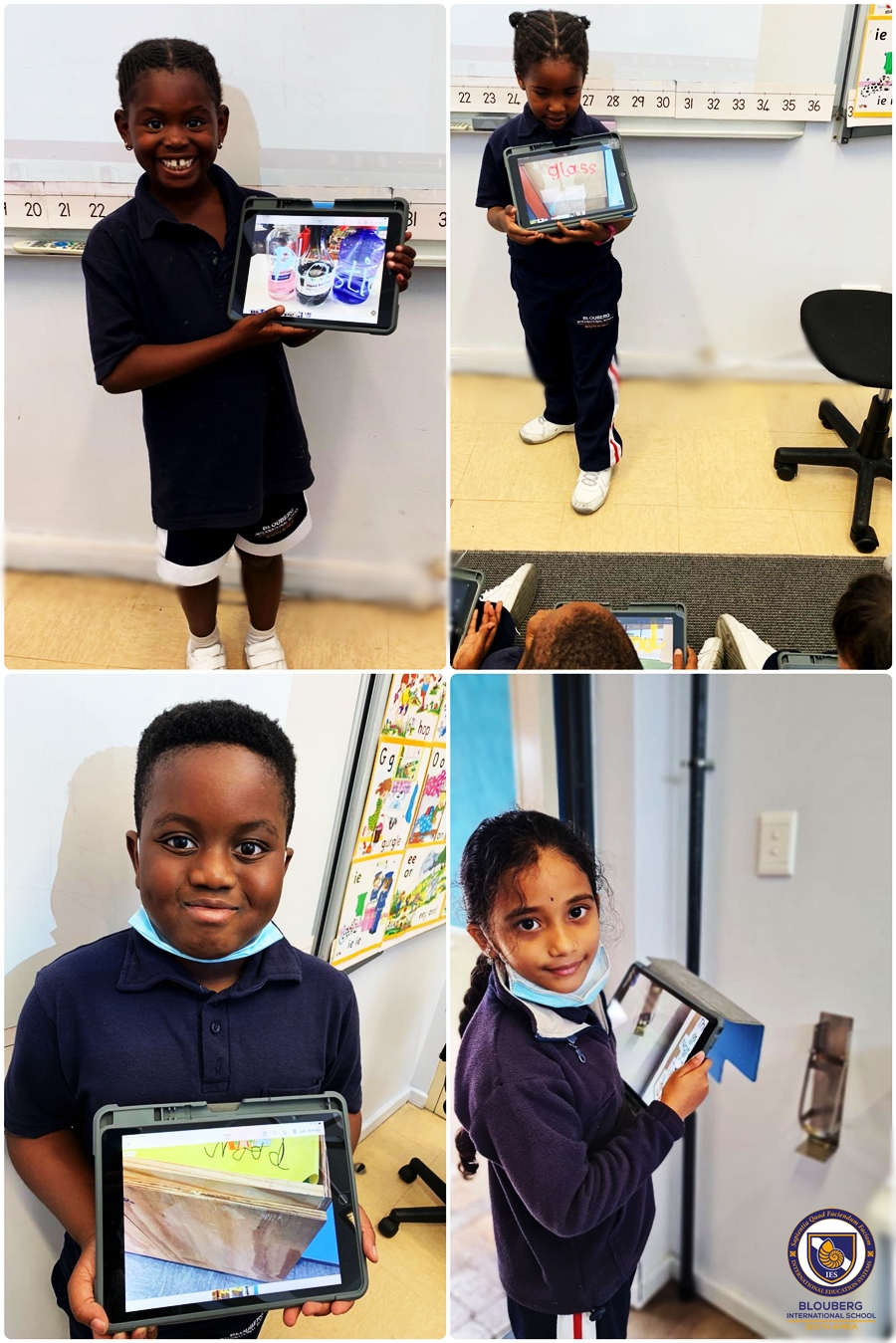
We have been learning about marvellous materials in our Science lessons in Year 1. Exploring, investigating and identifying different materials is all part of the fun and we have been very busy this week.
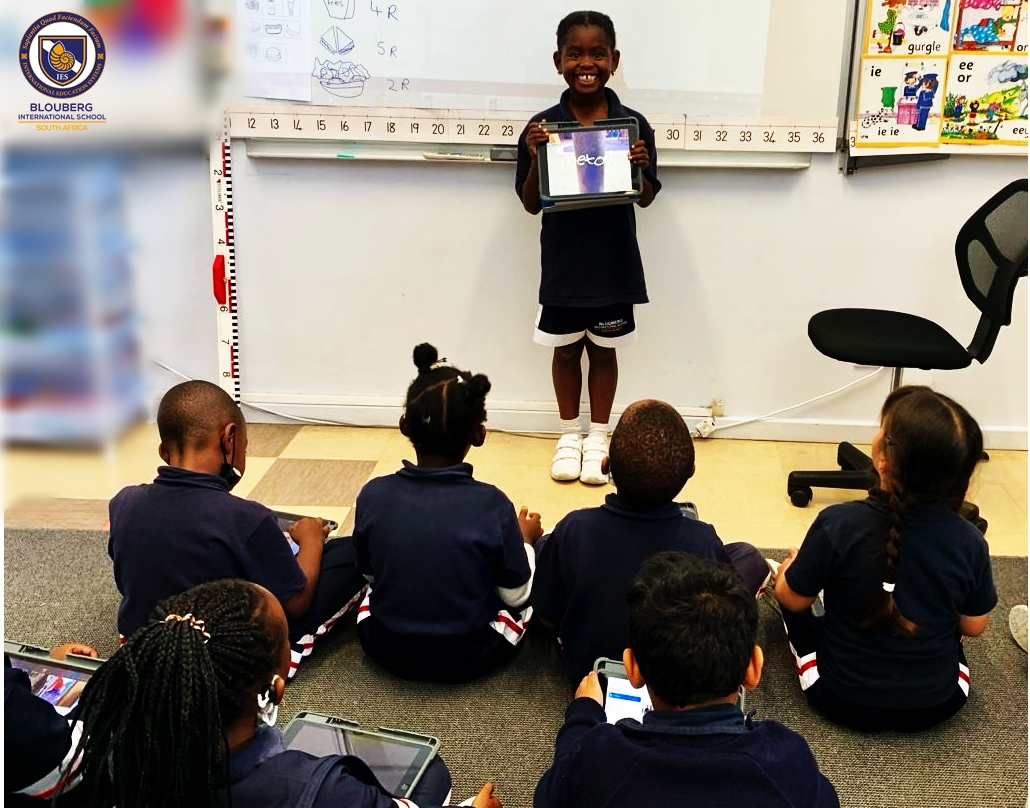
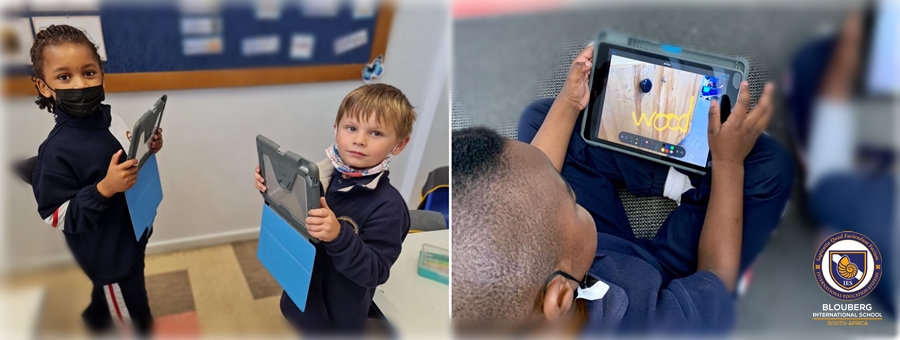
We used the school Ipads to identify and take pictures both inside and outside of the classroom of 4 different types of materials, “glass, plastic, wood and metal.” The students then edited and labelled each picture they took and presented it back to their friends in class.
We were very impressed by the discoveries the Year 1s made and how well they recorded their findings.
The students thoroughly enjoyed these interactive activities!
Charlotte Cronje
Year 1 Teacher

Read More
Year 9 Travel & Tourism and Art students’ Outing to Hotel Sky and the ZEITZ MOCAA
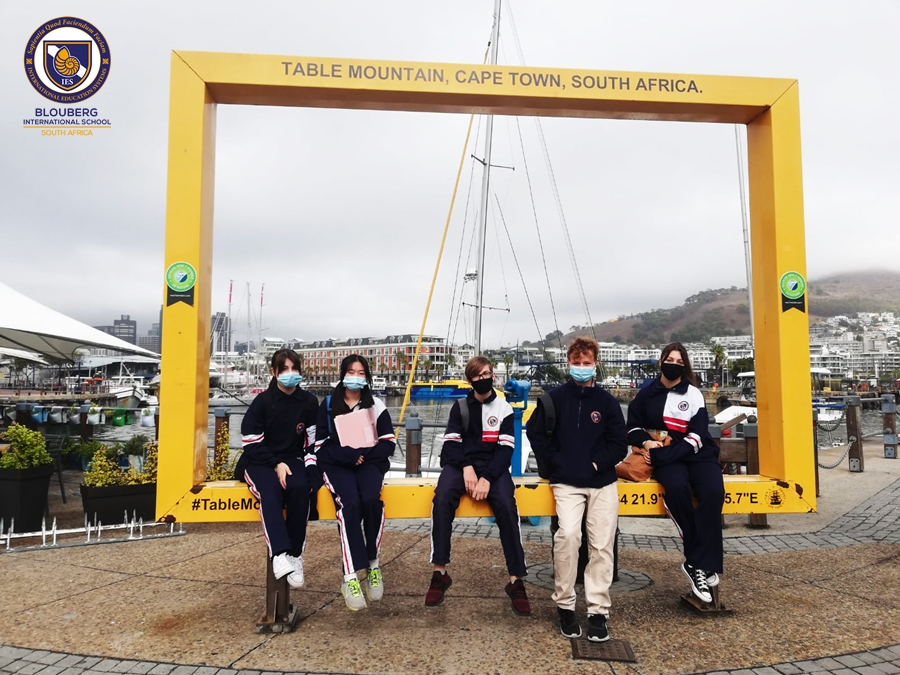
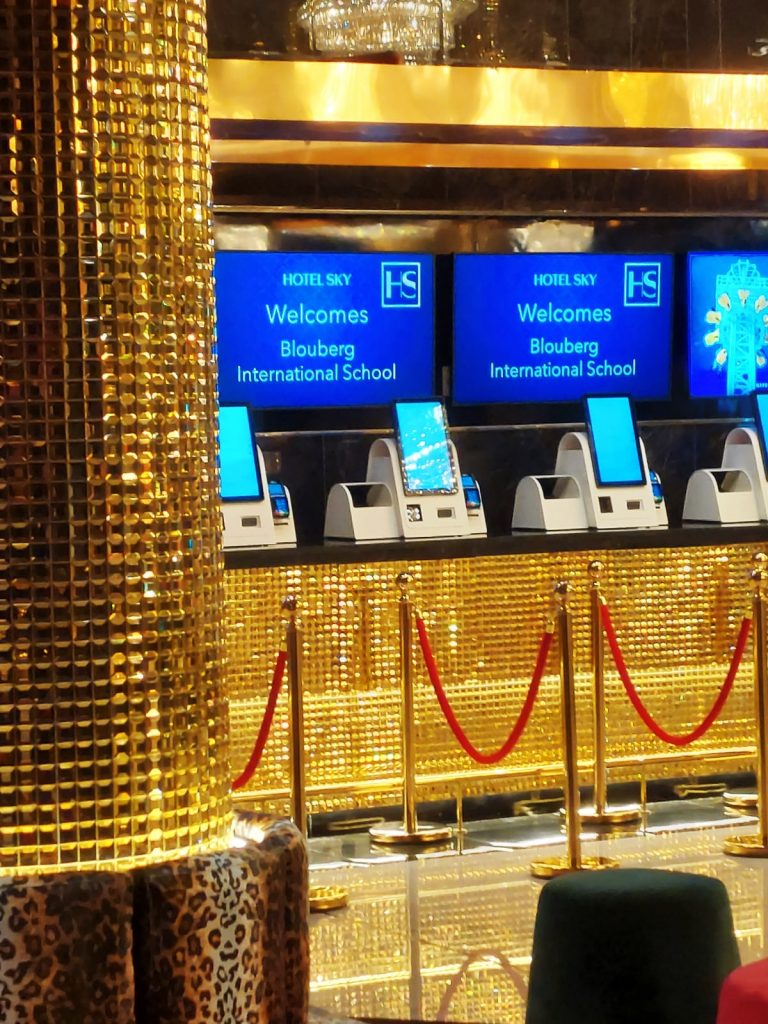
The Year 9 Travel & Tourism students had the opportunity on Friday, 13 May, to attend a guided tour of the 27 storey Hotel Sky in Loop Street, Cape Town. This included all the front of house responsibilities, the rooms, restaurants and even a behind the scenes look at the kitchen.
A highlight of the Hotel Sky visit was when the students, teachers and Mr. Swart, went on the Sky-Hi Ride, on the 28th floor of the hotel. Towering 35 metres above the Cape Town City Bowl, it gave us a bird’s eye view of one of the most beautiful cities in the world. One of only three in existence, and the first of its kind in Africa, this exhilarating, gravity-defying and breath-taking drop reaches a free fall speed of up to 100km per hour.
From there the Year 9 Art students went on a guided tour of the current exhibitions at the Zeitz MOCAA – Museum of Contemporary Art Africa – located in the Silo District at the V&A Waterfront. It is the largest museum of contemporary African art in the world.
The guided tour included visiting the largest comprehensive retrospective of the revolutionary work of Tracey Rose (b. 1974, South Africa). A radical voice in the international and South African art world, Rose’s cutting and uncompromising vision of work spans from 1996 to 2019.
The students then visited the exhibition of works by Johannes Phokela. “Only Sun in The Sky Knows How I Feel (A Lucid Dream)” is a major exhibition of new works by this South African artist. This project marks almost a decade since Phokela’s last institutional show and includes a select survey of his oeuvre from the last three decades. The exhibition forms part of an ongoing series of in-depth, research-based solo exhibitions by the museum that brings into focus and contextualises the practices of important African artists.
The Travel & Tourism and Art students joined each other for another highlight of the day: lunch at the famous V&A Waterfront’s Food Court.
Concluding our outing, we travelled safely back to BIS in the safe hands of our drivers, Mr. Clive Singlewood-Smith and Mr. Mpho Mahlangu.
Riaan Vosloo
IGCSE, AS and A Level Art and Design Teacher
WATCH!
Read More

Year 7 Camp At Disakloof
During the first week of May, the Year 7 group embarked on an exciting camp at Disakloof campgrounds in Betty’s Bay.
We met at school early on Wednesday morning and the students enthusiastically clambered onto the bus in anticipation of their first high school camp. The long trip came to an end, and we were warmly welcomed by the incredible Venture Forth crew at Disakloof.
The camp kicked off with ice breakers and games among the students. Thereafter the students were sent to select their dorms, where they were greeted by a rather terrifying and hairy guest – a passer-by baboon decided to greet the ladies of Blouberg International School right inside their dorm!
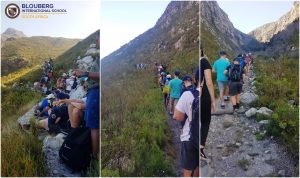
After all the excitement and shrieks, we set off on a picturesque hike within the Harold Porter botanical garden. We truly got to immerse ourselves in the natural beauty of the Western Cape by finding King- and Pincushion Proteas growing on the side of the mountains. We even found a small chameleon hiding between the fynbos.
We ended the day off by playing group games in the dark, in the midst of loadshedding.
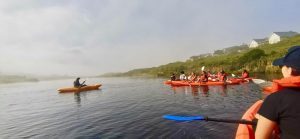
Thursday comprised of another exciting day filled with adventures. The students were divided into three groups that rotated between three fantastic activities. We got to pay a visit to the penguin sanctuary in Betty’s Bay, where we learned all about penguins, the old whaling station, and we even got to see rehabilitated penguins being released back into the wild. We then had the opportunity to grab hold of some paddles and row on a lovely dam between the reeds and mist from the morning. After a hearty lunch, we trekked to the most impressive sand dunes, where we had the opportunity to practice sandboarding. Beginner students decided to sit down on the board, while the braver souls tried standing up and a few even slid down the hill head-first! Laughs and screams of delight could be heard for kilometers.
We ended off our final evening with a lovely potjie made by the members of each group, as students found a brand-new appreciation for where their dinner comes from.
Friday morning arrived and we could not believe our trip had come to an end. We spent the morning having breakfast, tidying our dorms, and saying goodbye to the wonderful camp counselors. We departed Betty’s Bay just as the rain started to roll in, and we arrived back at BIS, ready to get back to another exciting school week ahead.
Mia Tossel
High School Teacher


Read More

Investigating Capacity
The most effective way for students to learn new concepts is by taking part in practical investigations. This makes their learning more meaningful.
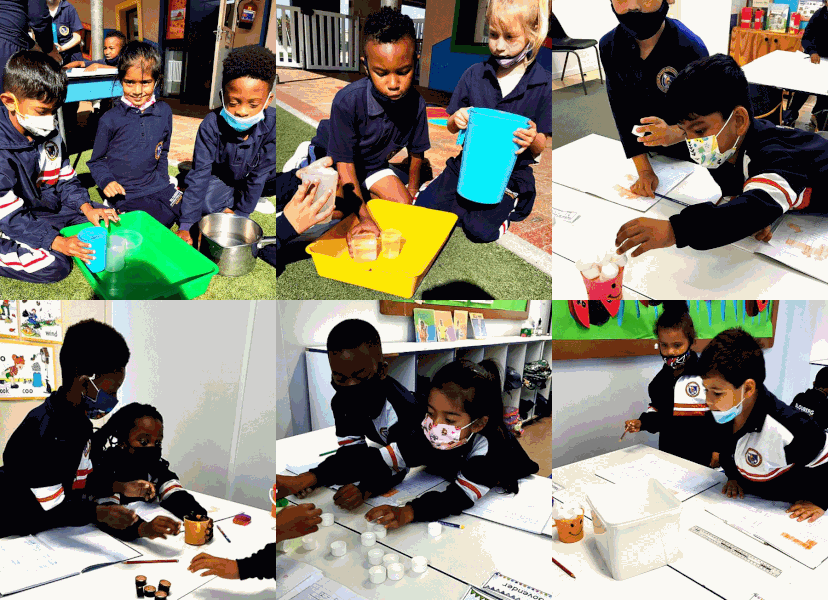
This week, the Year 1 students have learnt that capacity means how much something can hold. Our classes had great fun investigating this concept and conducted various experiments.
Fortunately, the weather was kind to us and the students could go outside and use the water troughs to do practical activities. They had to find out how many cups of water could fill a pot, beaker, vase etc. In groups they had to predict which container could hold the most water and then find a way to prove their answer. This required them to communicate their ideas and reasoning with their peers.
In class we learnt that capacity is not only about how much liquid a container can hold, we filled cups with bottle tops and corks. First making an estimate and then checking, by counting the number of bottle tops and corks the cups contained.
An important part of investigation is being able to accurately record your findings. The Year 1 students did a wonderful job of recording their findings after conducting all the capacity experiments. Well done Year 1!
Ann Cordner
Year 1 teacher
Read More

Arts And Crafts Club Key Stage 1
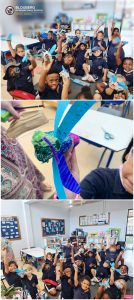
Every second week KS1 meet for our after school Arts & Crafts club run by myself and Ms Hierse. We introduced this club at the beginning of this year and it seems to have taken off wonderfully.
The students look so forward to being able to come and have the opportunity to fully express their artistic and creative talents. One of our biggest aims is to utilize as many recycled materials as possible. It is a passion of ours to witness the beautiful creations that are created from simple previously used items.
We hope to see the Arts & Crafts Club grow more and more throughout the year!
Siobhan Hendry
Year 2 Teacher

Read More
Who’s-Done-It Mystery Game
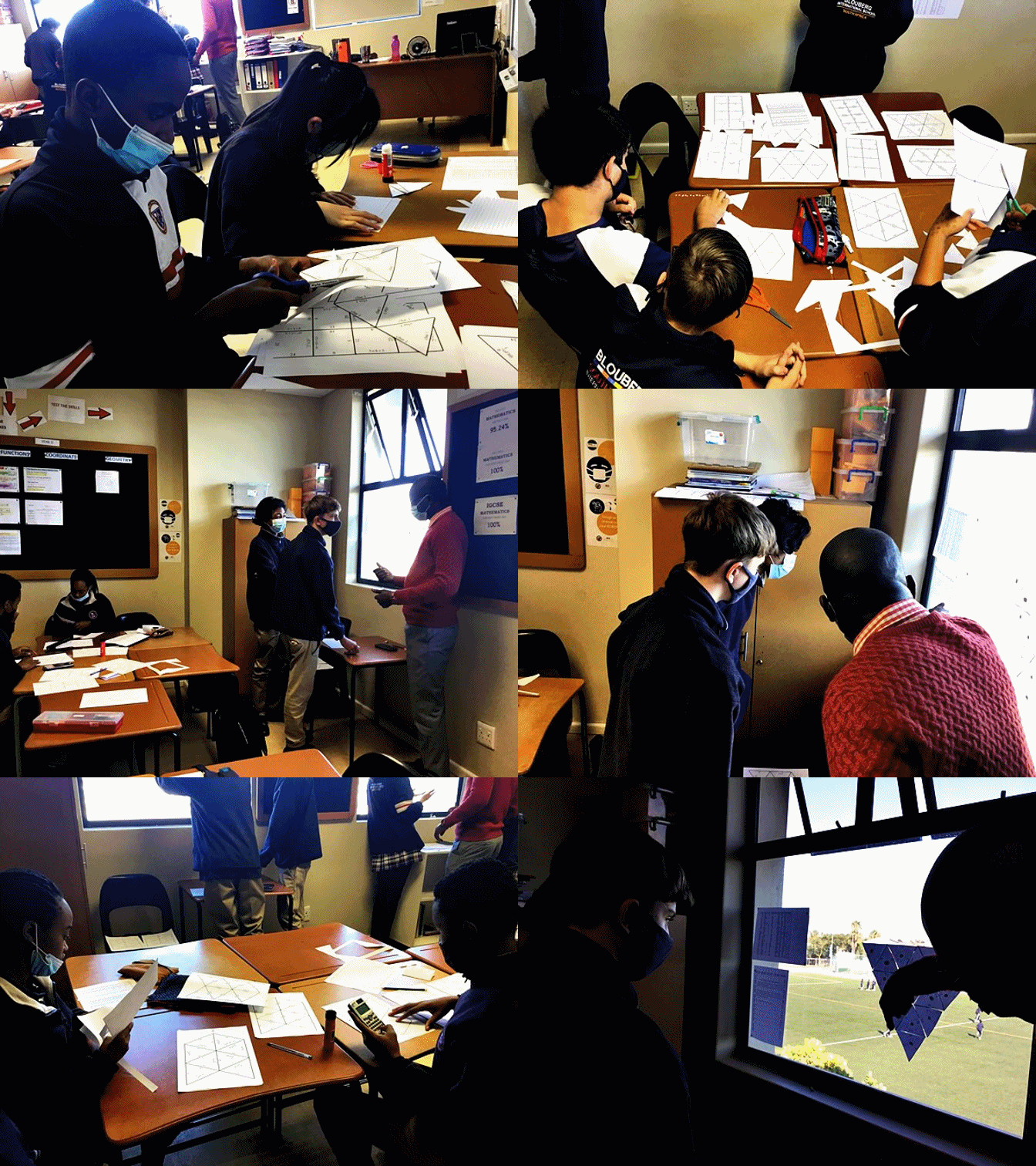
Learning mathematics is not fun for every student. At Blouberg International School, we believe in making mathematics fun and helping students love the learning journey. One way to do this is through interactive mathematics games, such as Who’s-Done-It Mystery – Death at the Jigsaw Shop.
Who’s-Done-It Mystery – Death at the Jigsaw Shop is an engaging mathematics mystery game to motivate Year 9 students to apply their mathematics skills independently to solve the mystery of a crime committed at the Jigsaw shop. The manager is dead, and the week’s takings have disappeared.
There are 32 suspects. There are 5 clues. Each clue gives a fact about the perpetrator and eliminates half of the suspects. The clues are jigsaws. To work out a clue, you must first make the jigsaw. Round the outer edge of the jigsaw are numbers. Each number represents a letter (a=1, b=2, c=3 etc.). The first letter of the clue is underlined and then the clue reads clockwise round the shape.
Students have the opportunity to apply a variety of mathematics skills to solve the mystery: fractions, percentages, directed numbers, and converting measurements.
This week, Year 9 mathematics students paired up, played the game, and managed to eliminate suspects and come up with the real perpetrator’s name.
Here are some of my students’ immediate reactions to this fun exercise:
- Detective Riley Hanning: “This is a serious case; someone’s life is involved here, and we ought to be precise and accurate!”
- Detective Ruby Lee Gallagher: “It’s fun and engaging. How I wish this was my everyday math lesson from Year 1.”
- Detective Oratile Tsotetsi: “This is obviously one of my favourite lessons. A double lesson went quickly without notice!”
Want to take up the challenge yourself?
See below files of evidence collected by the arresting police officer at the shop and try to come up with the perpetrator’s name. You can post your evidence and proofs to my email (given below).
Let’s enjoy mathematics as a family.
Mr Hebert Tapfuma
High School Mathematics Teacher
HOD Science & Mathematics
clue1clue2clue3clue4clue5storysuspects final list
Read More

BIS Interact Club – Peace Home Homework Programme
One of BIS Interact’s main focuses is improving the quality and accessibility of education in our communities.
Next week our school will be celebrating Book Week. In commemoration of this, the BIS Interact Club will continue their weekly visits to ‘Peace Home’, a shelter for children with past challenges, who now have a safe environment thanks to their loving adoptive mother Aziza. Their task is to spend time with those children and assist them with their homework where possible.
This is an account of one of our member’s past visit to Peace Home:
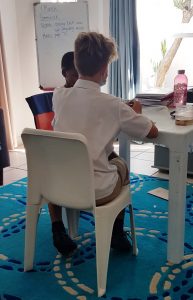
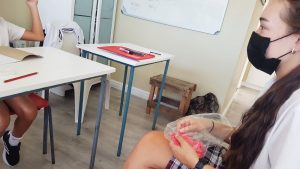
A group of Interactors volunteered to go to “Peace Home” after school. We all hopped on the school bus feeling both excited and nervous. I myself was pretty nervous, as I had never been a tutor.
When we arrived, we were warmly greeted by Ms Nolan and the kids. They were very eager for us to help them with their homework. I was assigned a young boy with his maths. When we began he was struggling with adding and subtracting his fractions. I gave him some tips on how to easily do them. He quickly grasped the concept and no longer had any issues with his fractions. It felt very rewarding for both of us.
It was an amazing experience helping these kids. On our way back to school, we all shared the same good feeling. We all agreed we would volunteer again.
Oscar Berger (Year 11) – Interact Member
Read More
Leading By Example – Teacher Support System
“Teaching kids to count is fine, but teaching them what counts is best.” – Bob Talbert
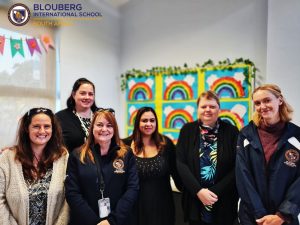
As teachers, we all strive towards one goal; for all our students to succeed. The KS1 and Foundation Phase teachers believe whole heartedly in a teacher support system where all teachers are encouraged, motivated and cared for each day by one another in order to be at our best for our students.
We, as teachers, feel that this support system is very important as its allows us to communicate our feelings, rely on each other, share our specific skills and strategies and build confidence in one another to stay ahead of the game in a rapidly-changing world.
We would like this support system to mirror how the students should want to care for each other as many students do not feel comfortable expressing their feelings to adults. A care buddy is the one friend you can speak to about anything that is going on in your life, whether it be positive or negative.
With the continuous support from all the teachers, the teachers have decided to follow a different system where their care buddy stays anonymous for the year. This care buddy is there to leave you notes of encouragement, recognition, to motivate you for a busy time ahead or a little treat to brighten up their day.
We would like to encourage students to follow this system and show kindness and support to their friends without reason because if they can make at least one friend smile in a day, it will create a ripple effect.
“Everyone who remembers his own education, remembers teachers, not techniques. The teacher is the heart of the educational system.” – Sidney Hook
Erin Hierse
Year 1 Teacher

Read More
To Write Or Not To Write…
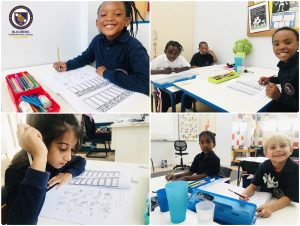
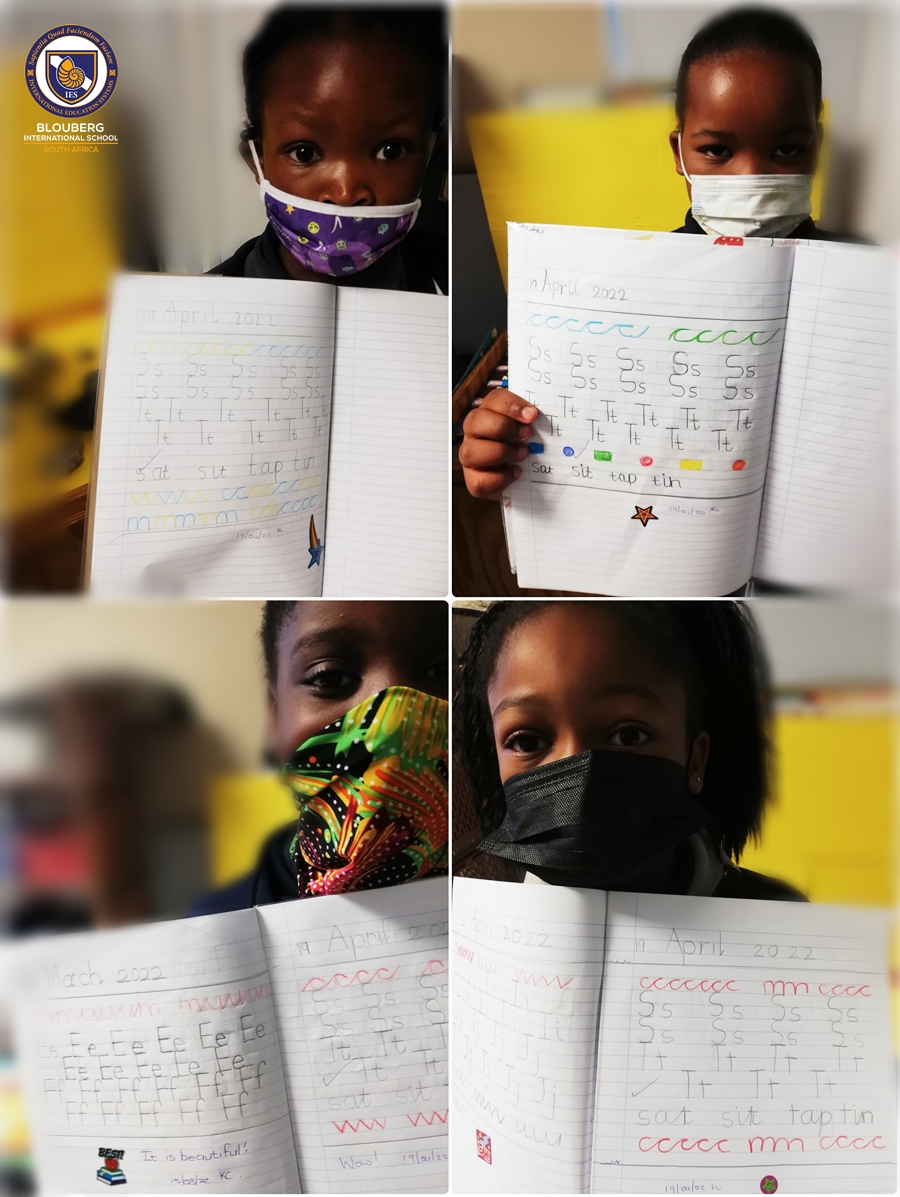
With today’s technology, where even the youngest of young are accustomed to typing on laptops, tablets or iPads, the question is often raised: Just why do children need to learn handwriting skills at school. They probably won’t need these skills in whatever field they find themselves in. However, proven studies have shown that it is extremely beneficial for young children to learn how to grip a pencil or colouring crayon, or learn the correct formation of a letter.
“There is this assumption that we live in the computer age, and we don’t need handwriting anymore. That’s wrong,” says Virginia Berninger, PhD, a professor of educational psychology at the University of Washington.
A few facts to consider:
- Children who learn to write correctly, read more fluently.
- Handwriting requires concentration.
- It trains the brain circuits responsible for motor coordination, vision, and memory to work together.
- Visual-motor skills, such as hand-eye coordination, are associated with academic achievement. Scientists have found that developing fine motor skills in early childhood can predict not only writing success, but also better performance in reading and mathematics in elementary school.
Left-handed children more likely to write untidily? Myth or fact? Unfortunately for the 10% of the world’s population who are left-handed, their handwriting does tend to be untidier than those writing with their right hand. However, if a child is taught to tilt their paper or book a different way, neat handwriting is very achievable!
Kim Coetzer
Year 2 Teacher

Read More