
‘X’ Marks The Spot
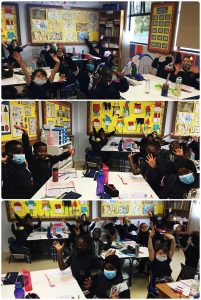
This Term in Geography, the Year 3 students have been learning how to read a map, what map symbols are used for and following directions on a map. They also learnt a great deal about grid references and compass roses. This all coincides with History where we are learning about ‘Explorers’.
When investigating map symbols, the students had to create their own map symbols for the classroom. Once they had completed that, they used those symbols to draw a birds-eye view of their classroom to show their knowledge and understanding of the concept.
We extended the concept by playing directions board games and completed a compass challenge game in groups.
The best part of the whole term was that each student was given a chance to create their own treasure map, and present an oral about their map explaining how to get to the treasure using directional language. Each map had to have an appropriate name, a key showcasing exciting locations, feature a compass rose for directions and footprints to the treasure (x marks the spot).
Students were allowed to stain their maps with tea or coffee and burn the maps to age them so that it looks authentic. I remember doing this exact activity in primary school, so I was very excited to see what each student came up with. I loved the various locations they used, like skull caves, waterfalls, sinking sand and volcanoes, only naming but a few. The Year 3 teachers are super proud of how much effort all our students put into this task. I am sure that you will agree with us when you see their beautiful maps.
We will continue exploring maps and atlases for the rest of this term while discussing the various famous explorers. I cannot wait to do the scavenger hunt and I am certain the Year 3 students will enjoy it too!
Wendy Menton
Year 3 Teacher

Read More

Year 2 Word Search Fun!
Word searches for children are available in a variety of themes and age-appropriate versions, which means that there is a word search out there for every type of child. Each word search features a list of words, some of which a child will be familiar with, and some of which will be new. The more a child encounters new words, the bigger his or her vocabulary will grow.
The following are the benefits of a word search:
- Provide hours of fun
- Improves vocabulary
- Improves spelling skills
- Can enhance productivity
- Provide a way for adults and children to bond
- Offers an appropriate way for children to socialize
- Develops problem-solving and pattern-recognition skills
- Nurtures an attitude of persistence
- Provide effective stress relief and working memory
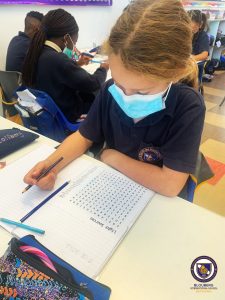
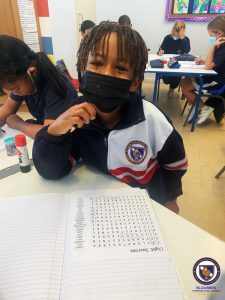
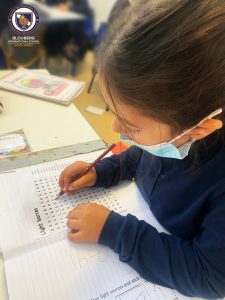
This week our Year 2’s had some fun doing a word search activity in their Science class. For Science this term we have been looking at Light and Dark Sources. We find that this kind of activity is a fun way to learn and also revise what we have learnt as well.
Siobhan Hendry
Year 2 Teacher

Read More

Assessments And Amphibians
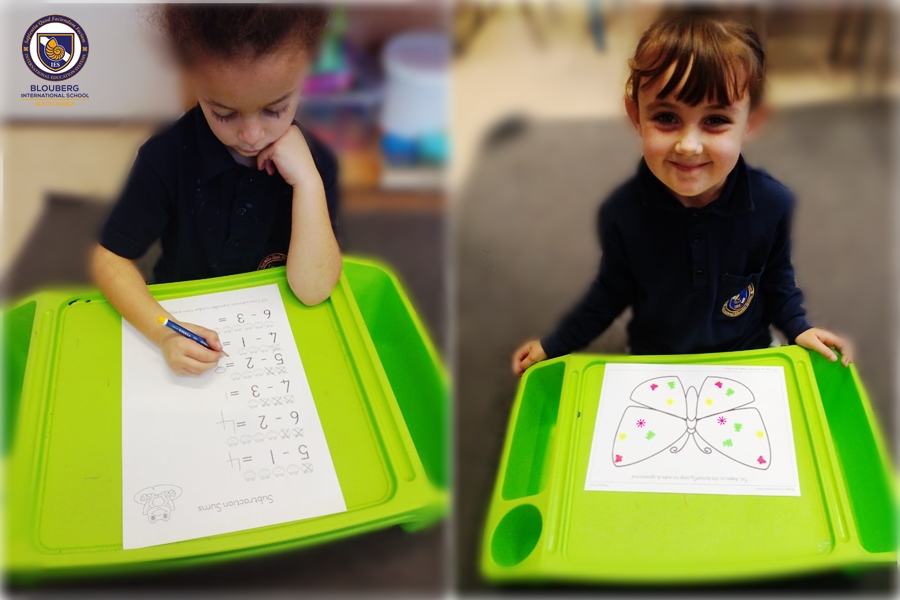
Over the last two weeks, Foundation stage have been doing their end of term assessments. Every day the students are learning new things and continue to approach each challenge with a positive attitude. The assessments have given each student an opportunity to show their teachers how much they have learnt this term and we are so proud of them.
Recently, Foundation stage have been learning all about amphibians. The students asked, what is an amphibian? What is the difference between a reptile and an amphibian? And what is the difference between a frog and a toad? They have learnt so many interesting facts, especially what makes a frog different from a toad.
Did you know that…
- Frogs are smaller and slimmer than toads and have a more pointed nose.
- Toads are much bigger and broader than toads and have a wider nose.
- A frog’s skin is smoother than a toad. Therefore, they need to live near water because they need to keep their skin moist.
- Toads have a hard, dry skin and don’t need to stay near water.
- A toad’s eye shape is also different from a frog’s. Frogs usually have big bulging eyes, as opposed to a toad’s, that is a bit more subtle in appearance.
- Frogs have long legs made for hopping and they can jump up to 20 times the length of their own body.
- Toads have shorter legs and prefer to crawl instead of hop.
The foundation stage students enjoyed learning about these interesting facts. We are confident that the next time they see an amphibian, they’ll be able to tell us whether it’s a frog or a toad.
Lauren Bloem
Reception Teacher


Read More
Bugs, Bugs, Bugs Everywhere…
Learning about bugs is so much fun for our Foundation Stage students. Isn’t it funny how young students are just curious about everything and don’t have the grossed out reaction that we have as adults.
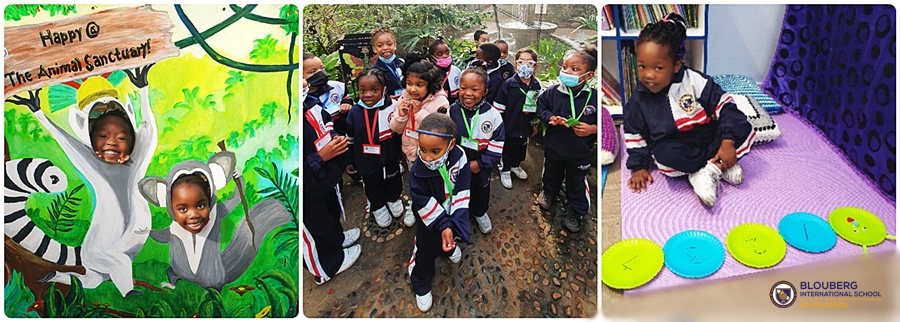
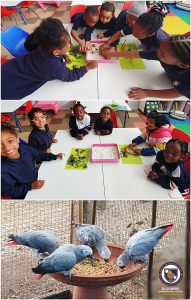
During the past two weeks we have been learning about all sorts of bugs and insects through hands-on learning activities.
Some of the activities we have done includes:
- Butterfly life cycle sequencing: The students practised sequencing the cards in the correct life cycle order.
- Bug or not sorting: Is everything that crawls a bug? Is everything with wings a bug? With a container full of toys the students had to investigate what it takes to be called a bug. This sorting game helps them learn to scientifically classify and observe.
- Butterfly Symmetry Smash: We cut the butterfly out of card. The students then squirted paint onto one side of each butterfly. We folded the butterflies in half and smashed the paint.
- Which bugs can fly: The students learned which bugs could fly and which could not.
The students enjoyed looking at books about bugs and learning interesting facts about bugs by watching Blippi Wonders.
On Friday, 27 May, the Pre-Reception and Reception students went on an educational Outing to the Exotic Animal World. The students saw different types of insects, spiders, reptiles and animals like: birds, iguanas, tortoises and meerkats to name a few. The students enjoyed an interesting and informative lesson about reptiles. It was an amazing experience for the students to end off our theme.
Martie van Dyk
Pre-Reception Teacher

Read More
A “Safety Circle”
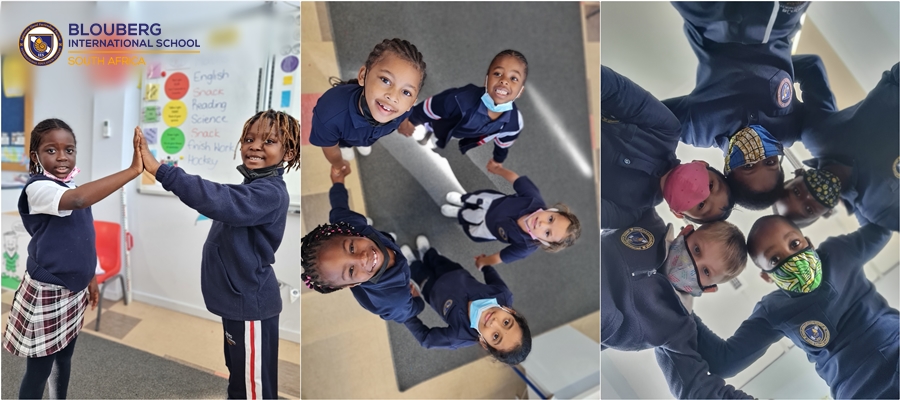
The Year One teachers focused on teaching the students about their safety circle this week. We feel that it is important that our students have a safe group or safe circle that they may approach whether they are in trouble, unhappy, worried or just want to talk. A safe group or safe circle is the few most trusted people in our student’s life.
It is important for students to have a safety circle. Students should be able to name five people on their hand who they can trust and rely on. The Year One students discussed who is in their safety circle, the reason for a safety circle and to know when to use their safety circle.
We encourage parents to communicate with their children to see if anything is disturbing them and to continue to check in on them from time to time without being too controlling. We have noticed that being casual in the way one communicates with children will give them the courage to open up to you more.
“At the end of the day, the goals are simple: safety and security.” – Jodi Rell.
Year 1 Teacher
Erin Hierse

Read More
Creating 3D Shapes

During the term, the Year 4 students have been learning about 3D shapes, forming part of their Mathematics curriculum. Through research, collaboration and investigation the students learned the names of these shapes as well as their properties.
As part of a class project, students were given the task of creating a structure/model using no less than three different 3D shapes. They had to construct each shape, using nets, before assembling their project. Our budding engineers worked tirelessly to come up with amazing designs and we could not be any prouder.
After the construction was complete, students had the opportunity to share their project with their peers in an oral presentation.
We are very proud of our students.
Yvette Fourie
Year 4 Teacher
Read More

Learning Using Models And Research
Learning is more than remembering terms and concepts. It is the start of a lifelong adventure of inquiry. The Year 3’s have been challenged and assisted in their research by using technology, observations, and secondary sources to study the Earth, Moon and Sun. What they have discovered, they have demonstrated using models.
Last Monday, the early risers had the privilege of seeing a Blood Moon. Aside from watching and discussing a YouTube video to learn what causes a Blood Moon lunar eclipse, they took photos and created a couple of beautiful collages of the Cape Town May 2022: Blood Moon.
The iPads have also been used to research lengthy websites and discover the 7 ways the Earth is round. They did this by simply using the subtitles as a reference. We also explored how to use Kiddle – a search engine designed for kids to use to find information quickly. We then moved on to using YouTube as we mined for diamonds of information on a Dr Bionics video about the structure of the Earth.
Of course an interactive way to display our knowledge, is to use models.
This term we have used our hands to demonstrate how the primitive (reactive) brain and the prefrontal cortex helps us focus and solve problems.
We made interactive lungs with cards, balloons and straws to show how air comes in through our nose and mouth and inflates our lungs.
We are especially proud of our plate models, which show the phases of the Moon; the names of each stage as the Moon rotates on its axis and orbits the Earth. Some students were even able to show where the Sun would be during a lunar eclipse.
Information that students find for themselves, discuss, and demonstrate their understanding of becomes a lived experience instead of a book study.
Carey Schoots
Year 3 Teacher


Read More

Having Fun With Shadows
The Year 2 classes have been learning about light and dark during their Science lessons. They have looked at different light sources and can identify those which are man-made and those which occur naturally.
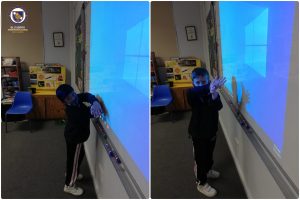
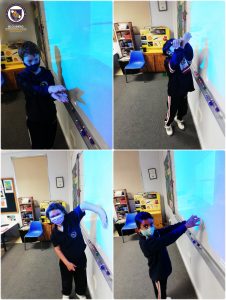
We had some fun during our last Science lesson, using shadows to make funny creatures on the whiteboard, using the light from the projector to create shadows. My class decided that this was the best Science lesson. There was much laughter as their classmates tried to guess what the creature made by their friends were.
Kim Coetzer
Year 2 Teacher
Read More
High Frequency Words
In term 2, our Reception students have been introduced to High Frequency Words. High Frequency Words otherwise known as sight words, Dolch words, refer to a set of words that most commonly are found on any page of text. Readers need to instantly recognize these words in a text and often the words cannot be sounded out. Readers therefore need to memorise these words in order to read more confidently and fluently. Learning High Frequency Words is an important skill that is incorporated into reading homework. It is therefore essential to learn High Frequency Words in fun ways. Listed below are some ideas for flash card games:
Flash Cards Games
- Can you find? Lay cards on a table. Ask the student to find a given word. If they find it, they keep it. Keep going until all the cards are picked up.
- Who has more? Show the cards to the student. If they read the word within 5 seconds, they keep the cards – if not the parent keeps the cards, the goal is that the student has more cards at the end.
- Concentration – Using double copies of words take turns turning over 2 cards at a time, trying to make a match. The player must read the words correctly to get the match.
- Go fish – Use double copies of cards, pass out all by 5-6 of the words. Put these in a stack face down on the table. Look for matches in your set of cards. (each player must be able to read the word or the set goes in the stack on the table. Take turns asking each other for cards to make matches. The person with the most matches at the end is the winner.
- Slap Jack – Draw a star on a blank flashcard. Place this star card and the other flashcards face down on the table. Take turns turning over a card and reading a word. When the star card is turned over, the first player to slap it wins.
Bronwen Nuthall
Reception Year Teacher

Read More

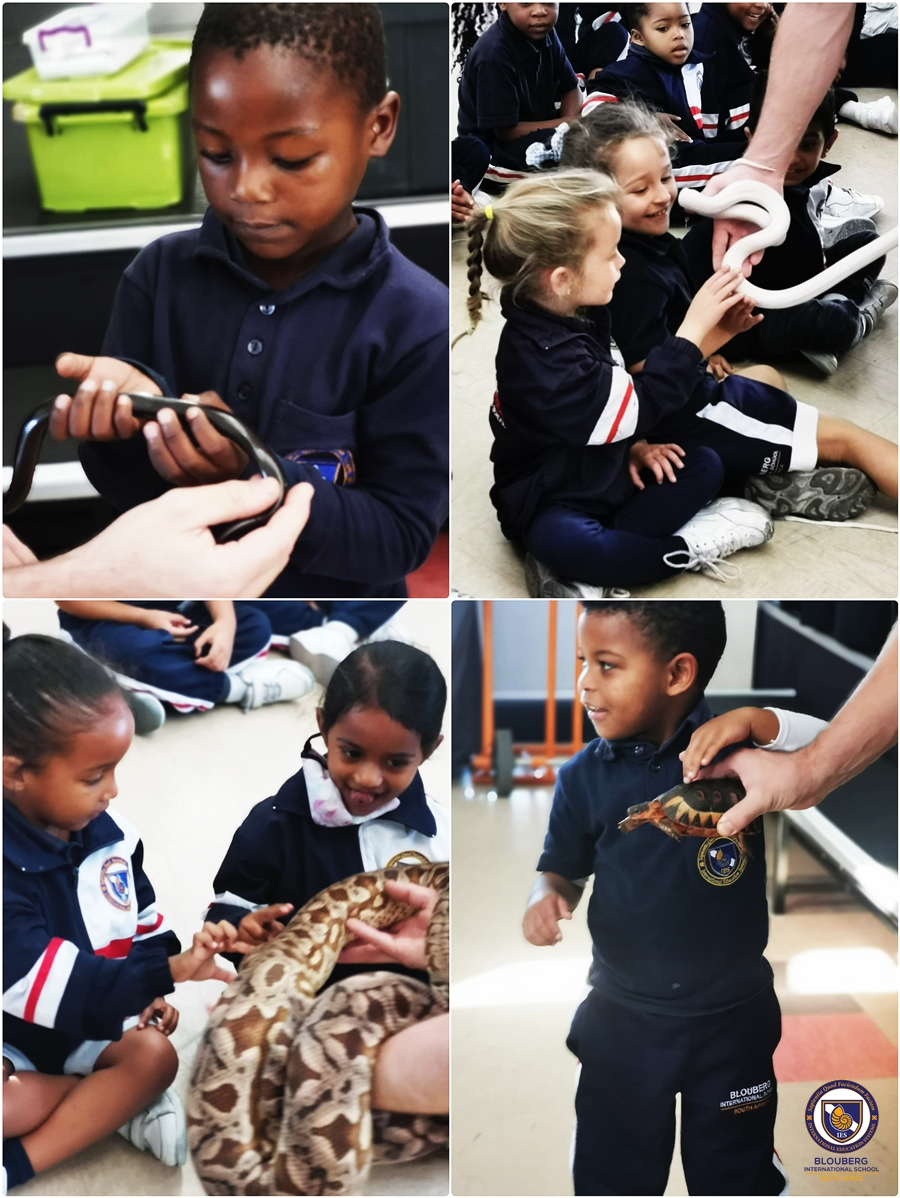
Pre-Reception Learning All About Reptiles
For the past week, Pre-Reception have been learning about Reptiles. They loved painting and making different Reptiles. The students also played games like snakes and ladders, learnt various Reptile rhymes and songs.
The highlight of the week was definitely when the Reptile Man came to visit, bringing his great collection of snakes, lizards, geckos and tortoises.
Some Reptile facts the students have learnt:
- All reptiles lay shelled eggs.
- A reptile breathes air.
- They have bony shells or are covered in scales.
- Majority of reptiles are cold-blooded.
- The most diverse reptiles are snakes and lizards.
- Most eat insects and small animals.
Our students were very brave and eager to touch and learn about the various reptiles. They couldn’t stop talking about all the wonderful things they saw during the special presentation by the Reptile Man.
Cindy Nunan
Pre-Reception Teacher


Read More