

Matric Dance 2021
Student Account:
The 2021 Matric Dance was a night not to be forgotten. It was a lovely end for our Matric Class, and an unforgettable sendoff before the start of our exam season. The Aquarium could not have been a more invigorating and mystical venue for such a night, and the presence of the varying sea creatures left most of us in awe. The food provided by the aquarium was delicious and inclusive for everybody, and left everybody satisfied. Lots of dancing and smiles were the biggest take-away of the night, and it was highly enjoyable for all.
Written by Matric student – Gabrielle Luyt
Student Account:
On Friday the 17th of September, the matrics of 2021 attended the formal Matric Farewell. It was hosted at the aquarium and although a different location it was certainly unique! It was so special seeing everyone arrive with their fancy cars, and beautiful dresses and suits, and we had Mr Swart, the teachers, some Year 11s and the parents awaiting our arrival. It was nerve wracking walking up but all the cheers and familiar faces definitely helped!
We soon said goodbye to the parents and began our night inside. There was a professional photographer there and she did an amazing job taking all the pictures and really making them look beautiful. We took lots of pictures in front of the huge shark tanks, and the fishes and sharks accompanied us in the background of most of our photos! She made us all feel really comfortable and I’m sure we’ve got photos no other matric dance has gotten before!
After photos, we stepped into the hall where we would be having dinner. There were round tables positioned throughout the room and they were decorated beautifully and elegantly. The matrics were treated with a buffet of food options, drinks and delicious desserts. I was definitely full at the end of the night! Our favourite, chosen music played throughout the evening and a large portion of our night was spent dancing together as a year group and having fun as our last night together!
Overall I had a lovely time at the Matric farewell and I’m glad I got to spend the night with my peers. It was definitely a special night, and one I will not forget!
Written by Matric student – Chloë Goldman
Read More

Valedictory and SRC 2022
Although things looked a little different at BIS this term, we are so fortunate that our students were able to attend school for the majority of the term. Thank you to everyone who supported the staff and students through this journey.
We will continue to ensure that the curriculum is comprehensively covered, ensuring that we stay on track for the rest of the academic year.
Our sincere thanks go to the teachers for all their hard work with the planning and delivery of the online lessons, as well as the teaching of the students in the classroom.
On Wednesday, we held a special Valedictory & Prize-Giving Awards Ceremony on the school campus for the Matric Class of 2021, joined online by students and parents. Ceremonies like this one enable us to pause as we recognize, acknowledge, and celebrate our students’ success and development.
We also had the pleasure of announcing the 2022 SRC Leadership Team:
Remy Wang
Michael Mkandawire
Rifqah Price
Kazimla Dyakalashe
Savanna Prinsloo
We are so incredibly proud of all the year 11 students who nominated themselves and gave speeches a few weeks ago. Whether they have received a formal position or not, they will all be incredible leaders for our school in 2022. I have no doubt that they will work hard to make our school an even better place by upholding our school’s values throughout the year.
This holiday is a short one, and I hope that you have time to rest and recuperate.
We look forward to welcoming our students back to school on Wednesday, 29th September.
Carmen de Villiers
High School Coordinator

The upcoming Cambridge IGCSE and AS/A Level examinations and how to prepare for them
The October/November Cambridge IGCSE and AS/A Level examinations are fast approaching, with the first examinations already taking place on 28 September 2021. It is vital that students prepare themselves for these examinations.
Below are some helpful hints and tips for preparing for the examinations:
- Familiarise yourself with your examination timetable.
- Ensure that you know exactly:
– what work will be covered in each subject;
– the format of each examination paper;
– the time allocation;
– the equipment that may be needed for the examination (e.g. calculator for mathematics).
- Get copies of old examination papers and worksheets.
- By now, all your notes should be up to date and you should have all that you need to study effectively for the examinations.
- Prepare your study area. Some things to consider are:
– have a good source of light;
– have lots of paper available;
– a clear work surface;
– coloured pens if you prefer to use colour;
– light or unobtrusive music if you prefer to learn with music.
- Keeping healthy! Eat fresh foods such as fruit and nuts. Pile up on the vegetables in the evenings and drink plenty of water and fruit juice to keep the flu at bay. The brain needs to be fed well to perform at its optimum.
- Try not to nibble on too many chocolates and sweets while studying.
- That said, the odd sweet or chocolate will provide an energy boost when you feel really tired.
- Getting a good night’s rest is also important. Sleep will rejuvenate you and keep you going.
Devising a Revision Timetable:
If you plan your revision carefully, you will enjoy the feeling of being well prepared for the examinations, secure in the knowledge that you have done your best and have covered all the work.
- Create a calendar for this purpose, using bright colours/larger paper etc.
- Start by marking in the dates and times of your examinations.
- Shade in the dates and times when you know you have other commitments, e.g. sports fixtures/family function.
- Work out how much time you would need per section per subject. Remember to spend more time on those subjects you find more difficult.
- Using a pencil, begin to draw up your revision timetable by writing in the subject and the sections that you wish to cover each day.
- You could leave a revision time blank each week, as a “safety net” for work not covered as planned. This may be as a result of those unforeseen circumstances that make life interesting.
- Do not get stressed out if you don’t stick rigidly to the timetable. Sometimes you start by expecting to cover too much at one time. The main idea is to get you to focus on the work that needs to be covered and to work towards a goal.
- Be sure to timetable rest and relaxation.
- Before changing subjects, take a longer break of about 20 – 30 minutes and try to get outside or do something different.
Study Methods:
Each one of you will have your own method of studying and it is important that you feel comfortable with your chosen style. It is equally important that you admit if your method has not worked in the past.
Here are some tips that you may like to try out. These are tried and tested methods.
- Start by reading through a section from beginning to end. This will give you an overview of what is to come. Focus on headings and pictures and diagrams.
- Ask questions as to the content of the section (why, what, when, where, how and who?). This will help to get your mind in touch with the main areas within each section (e.g. What do I need to know about this topic? What exactly is this text about? How does this section link up with what I have just studied?).
- Re-read the passage with the aim of answering your questions. Look up words you do not understand, refer closely to graphs and diagrams, highlight important ideas in colour, etc. Do not try to make notes at this stage.
- Aim to check that you have understood the work. Think about the passage and focus on key points. Re-read the passage, making notes on the relevant material. This may take the form of block notes or diagrammatic notes e.g. mind maps/spider diagrams.
- It is a good idea to redo mathematics exercises and worksheets as well as work through past papers.
- Diagrams can become excellent forms of summary in subjects such as geography and biology. A diagram should be drawn clearly with large labels for easy identification.
- When encouraging a difficulty concept, try to break it up into smaller units and talk your way through the steps of the problem.
- If you have difficulty remembering something, pin up key words on your bedroom wall or cupboard door as a constant reminder. Each time you walk past the word, stop, and ask yourself a question or two about it to trigger a response.
- In language, you need to understand the rule to apply it, e.g. rules for the past and present tense.
- Review. Aim to ensure that you remember what you have learned by reviewing worksheets/past papers/testing yourself with questions that you set or working with a friend and testing each other verbally.
Just before the examination:
- Get a good night’s sleep.
- Have a good breakfast.
- Arrive at the venue with time to spare.
- Make sure you have the right equipment, tissues, watch, etc.
During the examination:
- Don’t rush into answering questions.
- Read the instructions at the beginning to ensure that you know how to answer all the questions and how many questions to answer.
- Read through the questions carefully.
- If there is a choice of questions, make your choice carefully. Underline key words in the questions.
- Stick to the time plan given to you by your teacher.
- At the end of the examination, if you have time, read through your paper to check that you have answered all the questions.
I would like to wish all students the best with their 2021 examinations.
Julian Harrison
Cambridge Examinations Officer
Read More

Year 5 Effective Studying Workshop
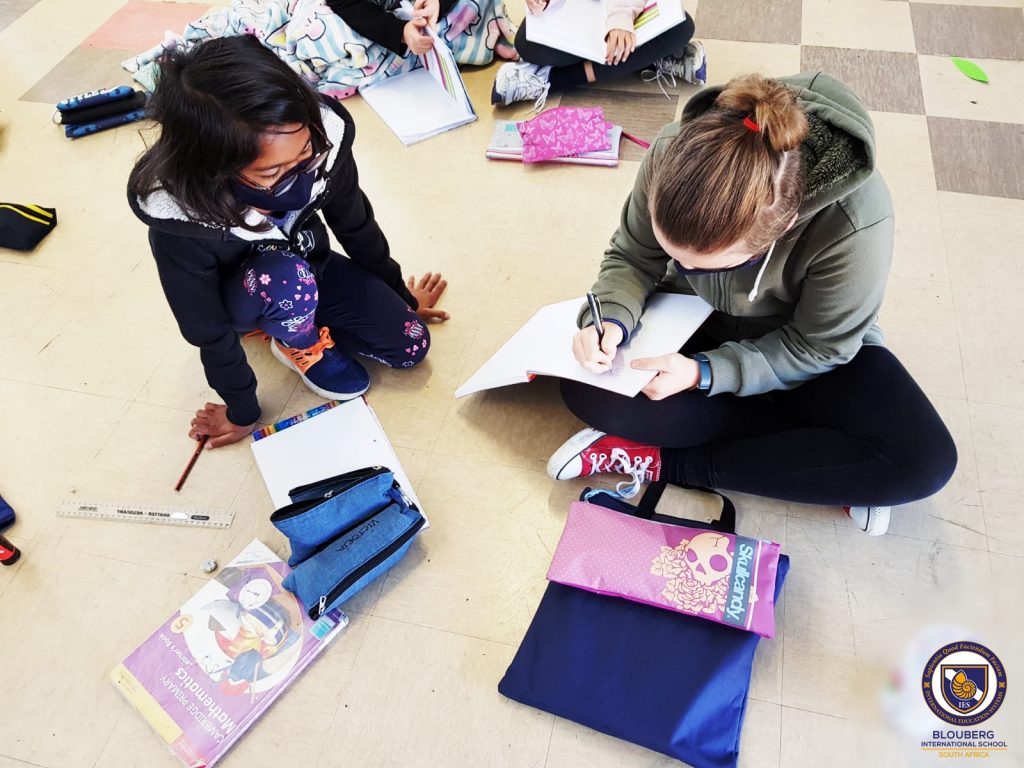
This term is a big one for the Year 5s. It marks the first year of upper primary school – and with it, the dreaded June exams! Exams don’t necessarily have to be stressful though – after all, they are intended to help us by showing us where we are confident in our work, and where we still need some help. Through preparing thoroughly for exams, we can focus more on their benefits, rather than on the stress they can cause – and so our Year 5 Inting this term focused on just that.
First, we practiced setting up a timetable to organise our studying, fitting in all the work we need to study, without having to cram and stress. Organising our time is the first step in combating exam stress – it breaks the work into manageable chunks, and shows us that we actually do have time to fit in everything we need to. After all, how does one eat an elephant? One bite at a time, of course!
We also spoke about preparing ourselves, inside and out, to make sure that we are in the best frame of mind for learning. The first step to doing this is making sure that you are healthy, so your brain can function at its best. This means enough food, water, rest and exercise – after all; healthy body, healthy mind! Speaking of the mind, we practiced the power of positive thinking. We made positive mantra cards to remind us of our goals, and how amazing each of us is. We also learnt a few grounding exercises, for when the stress does get a bit much – or for when our brain seems to be running in circles.
Finally, we looked at some study techniques, thinking about various ways of studying (and trying a few out while we were at it). Whether you enjoy studying by organising your notes into mind maps, or by teaching your teddy bear how to multiply and divide, it’s a good idea to have a few different study methods in your study toolkit.
Above all, we learnt that when it comes to studying for exams, everyone is different. What works for one of us might not work for another – and part of developing into an independent learner is figuring out what works for you. Hopefully all our Year 5s are a few steps further on that exciting journey!
Hannah Kirkaldy
Year 5 Teacher


How to Prepare for Exams
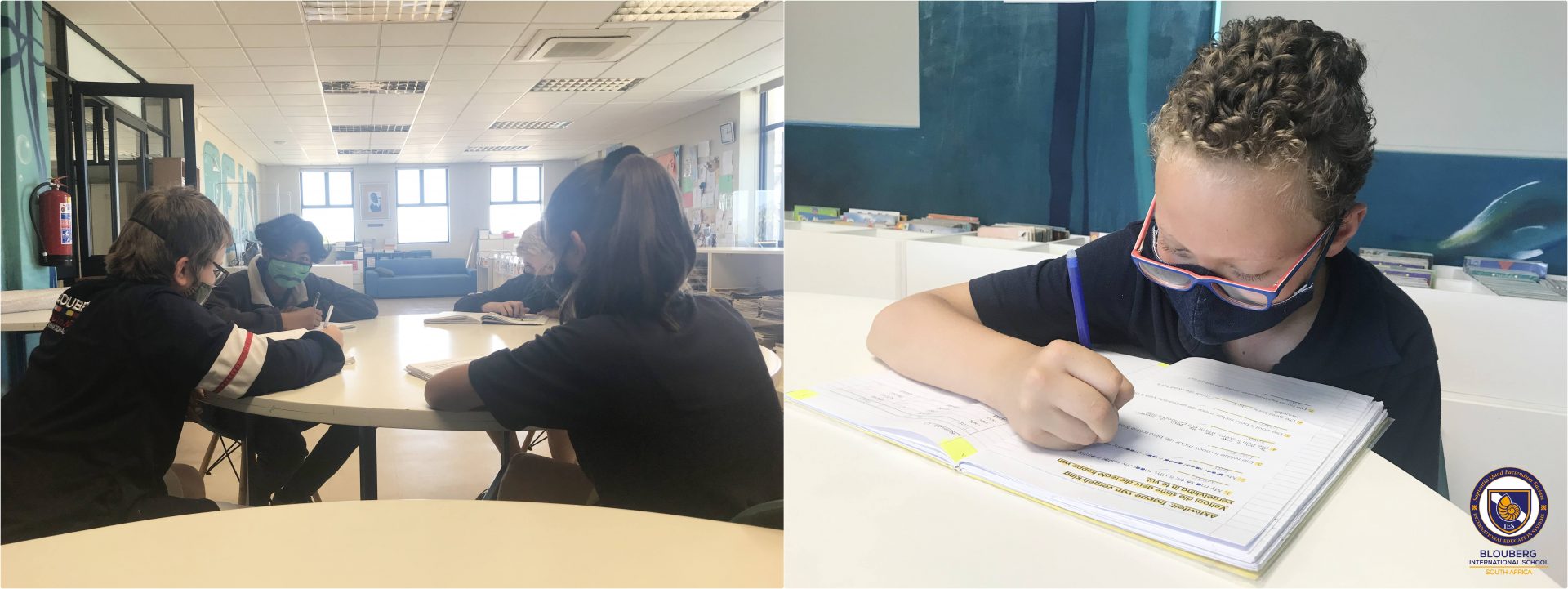
Exams can be stressful. Taking time to prepare for your exams can make them much less stressful and enable you to focus better. This article contains advice on how to prepare for your exams.
One should not attempt to study without first knowing what papers you will write each day. Knowing the date of each exam will enable you to plan your study time and ensure that you have enough time to revise for each exam. Download and print your exam timetable and put it on display in a prominent spot to help you stay on track.
Compiling a study timetable will help you to manage your time. Find out what you need to study for each exam and ensure that you give yourself plenty of study time for each subject. Be prepared to adapt your timetable should something unexpected occur.
Prepare a space to study that is comfortable and free of distractions. Try to avoid studying on your bed, as you may fall asleep! Turn your phone off, put it in another room or, if you don’t wish to do this, set your WhatsApp status to ‘studying’ so that friends will know that you will take a little longer to get back to them because you need to focus.
Varying subjects and study techniques will help you to avoid boredom. Try summaries, flash cards, key words, mind mapping and mnemonics. It is okay to use a variety of techniques, as some are better suited to particular types of content than others. If you have been making study notes throughout the year and have found them to be effective, use them to give yourself a head start.
Using the correct exam technique and being able to finish your exam within the allocated time are also very important. Practicing past papers will help you to master both, and will also help you to better understand what the examiner will be looking for. The CIE website and PapaCambridge are good places to look.
I wish you all the best for your exams and I hope that you have a safe and enjoyable holiday.
Sheila Marais
High School Teacher
Ready, Steady, Study!
Study Tips With The Year 5’s
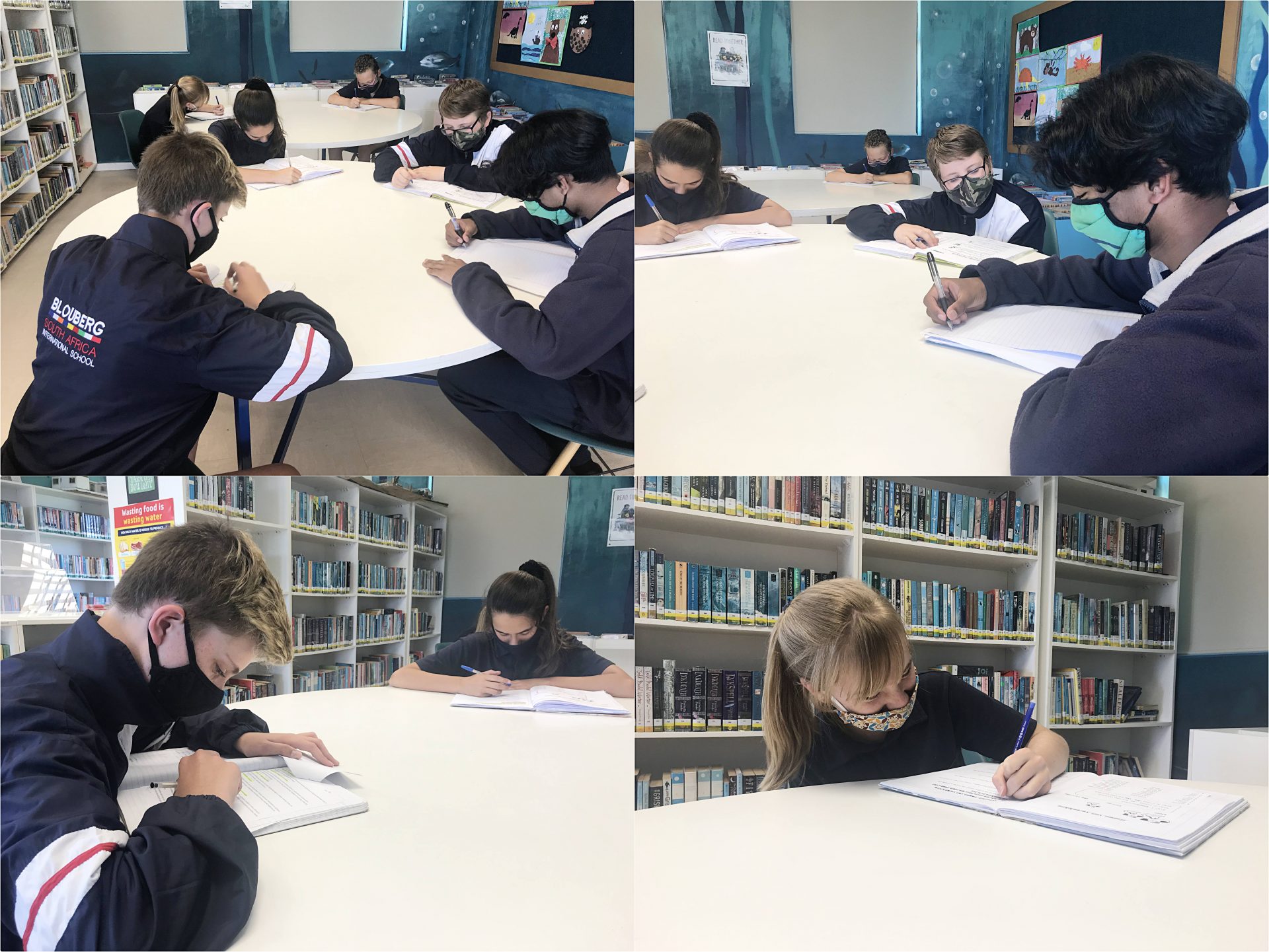
The Year 5’s are getting ready for our exams next week, and with exams comes studying. While this is often a stressful time, there are ways to make it a bit less tough. Studying is a skill, and one that works differently for different people, but there are some general things we can do to help ourselves come to grips with what can feel like an awful lot of work.
Have a special study space.
Have a light, quiet place free of distractions set aside specifically for studying. Keep it well-stocked with highlighters, paper, pencils and colourful pens – tools to help you make and organize study notes. Tidy your own study space every day before you stop working, so that it is ready for a fresh start the next day.
Study the way that works for you.
Think about the way that you learn best. Are you someone who likes to write things down? Why not use mind-maps? They are an excellent study tool, particularly for Cambridge, because they help you to see the connections between different ideas. Do you remember better if you speak your work our loud? Why not teach your teddy bear (or your little brother or sister) the work? Are you an active person, who gets bored sitting and reading? Try acting out the work you are trying to learn!
Don’t cram.
Studying a little bit of a subject every day is much better for remembering things in the long-term than studying for a very long time in just one day. Space your studying out so that you have time to do a little bit each day.
Practice!
Rather than just learning the work and trying to remember it, do practice questions. This helps you learn to apply the work, not just to remember it. Another good way of learning is to actually make a practice test of your own. Thinking about what kind of questions you would ask in a test helps you to think about the work in a different way.
Take breaks.
Focusing for hours on end is really tough, especially if you’ve come home from a full day of school. Taking 15 minute breaks after each hour of studying can really help keep you focused – and it will help you remember more of what you’ve studied. If 15 minutes every hour doesn’t work for you, try a five-minute break after every 20 minutes, or a 20 minute break after an hour and a half of working.
Eat!
Try and eat healthy, balanced meals during exam time. Have a good breakfast on the day of your exam, even if you’re not too hungry. This will help keep your energy levels up for longer, which helps you concentrate better. Try not to have sugary snacks when you’re studying or writing – fruit or biltong is a good snack, and so is peanut butter on crackers.
Lastly, SLEEP!
Getting a good night’s sleep is very important for being able to concentrate the next day. It also helps you to process the work that you have covered. It’s tempting to stay up late studying the night before an exam, but it’s often better to get an early night and wake up fresh and ready for the next day. Try relax for a little before bed, but stay away from screens – they make it harder to fall asleep when you do get to bed.
Good luck to the Year 5’s for their upcoming exams! Do your best, and remember that practice makes progress!
Hannah Kirkaldy
Year 5 Teacher
Websites to look at for more study tips:
https://blog.edmentum.com/7-tips-parents-help-your-child-develop-effective-study-skills
https://kidshealth.org/en/kids/studying.html
https://www.kidspot.com.au/school/secondary/study-skills/study-tips-for-kids/news-story/eed4e99eda15076979de6f77430026d2






BUSTING THE MYTH ON ACCOUNTING
There are many myths about accounting; Accountants are boring, accountants are male, accountants are mathematicians, computers can replace accountants, the list goes on. The reality, however, is quite different. And so when BIS students choose to study accounting from Year 9 they are learning a subject which could shape their future. Studying accounting can open up career opportunities around the world, whether they actually work in the finance sector or become entrepreneurs and work for themselves, the subject knowledge and skills they have acquired will be invaluable.
Students are introduced to the concept of accounting in Year 8, learning about debits and credits during term 2 of business studies. This allows them to make an informed decision about whether to study IGCSE accounting from Year 9. The subject ranges from the basic accounting equation to preparing financial statements and then, at AS Level, using the financial data to make business decisions.
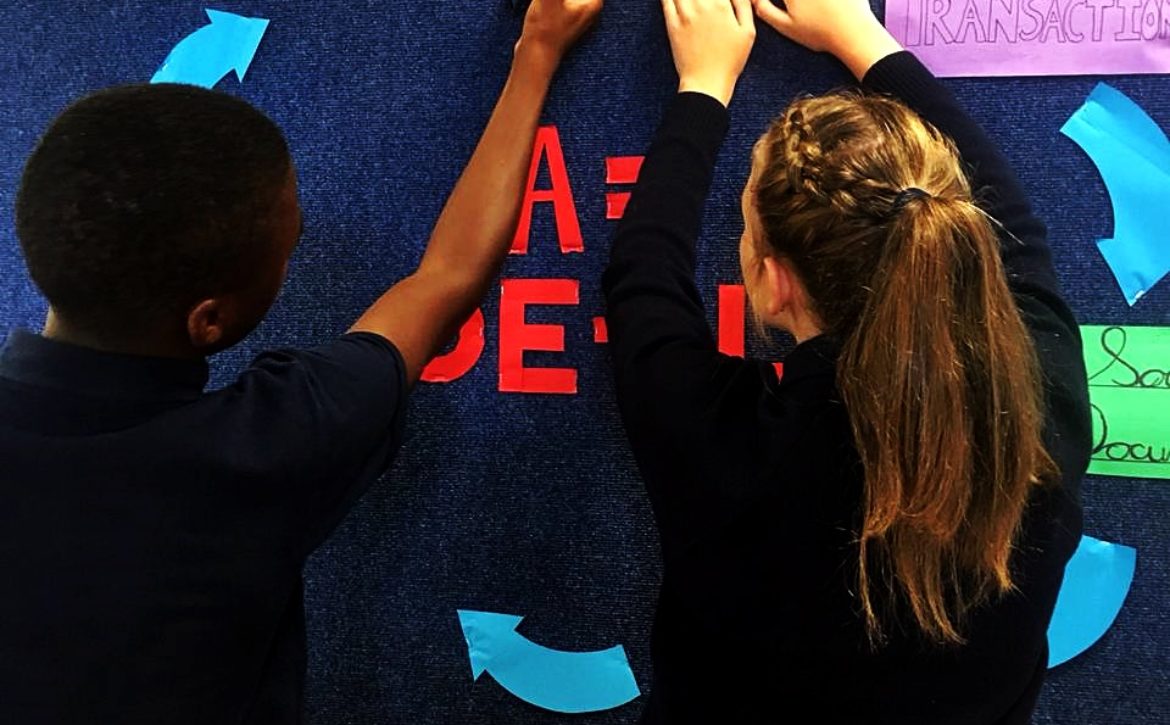
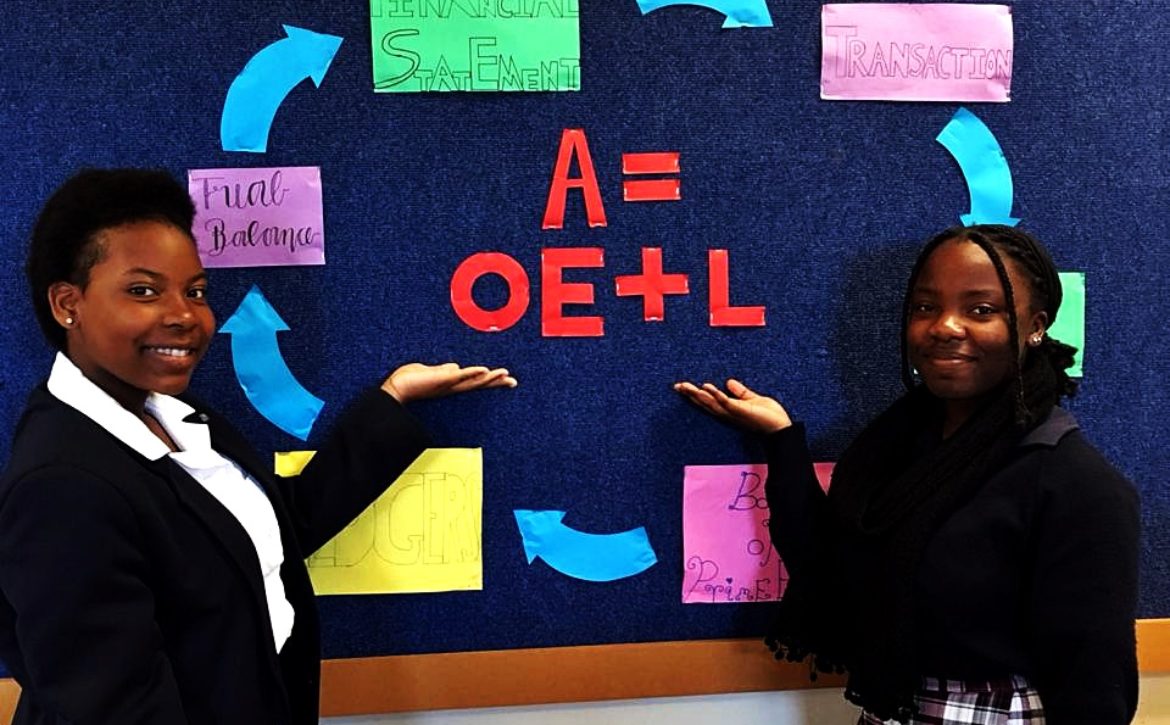
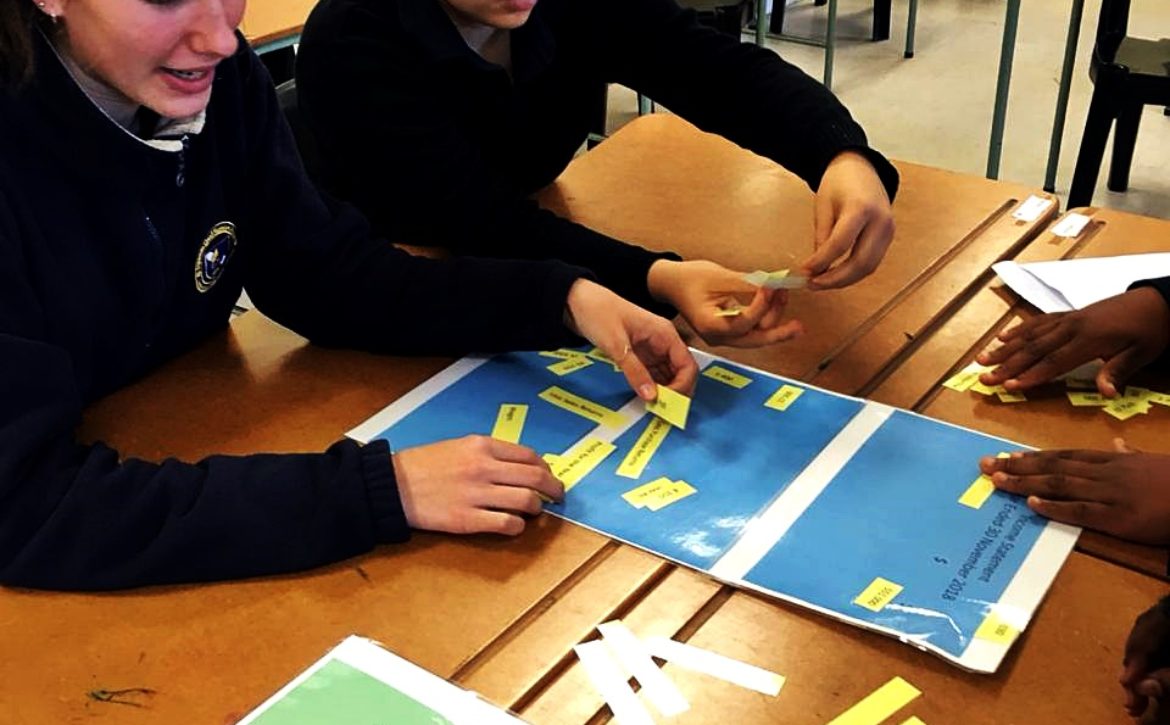
As expected, some lessons are taught in a traditional way, but I do aim to show our students that accounting can be fun too. Students use accounting theory to play games, make puzzles, produce artwork and even write songs. This year we have solved income statement puzzles and then made our own, we have listened to the ‘debit and credit rap song’ and then made our own version and we have decorated the classroom using the key information we have learnt. Learning in these different ways builds:
- Creativity; allowing students to think differently.
- Confidence; students are able to use and develop their own ideas.
- Responsibility; students are able to manage their own learning.
- Innovation; students are equipped for new and different challenges.
BIS students are not just developing accounting knowledge, they are developing important softer skills too; working in a team and problem solving are just two skills which they will need during and after school life. So we are learning, we are developing and we are busting those accounting myths!
Justine Thatcher
High School Accounting Teacher
Webiste links:
https://www.igcseaccounts.com/
https://www.tutor2u.net/