
Leading By Example – Teacher Support System
“Teaching kids to count is fine, but teaching them what counts is best.” – Bob Talbert
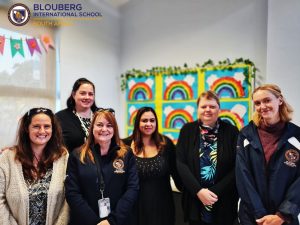
As teachers, we all strive towards one goal; for all our students to succeed. The KS1 and Foundation Phase teachers believe whole heartedly in a teacher support system where all teachers are encouraged, motivated and cared for each day by one another in order to be at our best for our students.
We, as teachers, feel that this support system is very important as its allows us to communicate our feelings, rely on each other, share our specific skills and strategies and build confidence in one another to stay ahead of the game in a rapidly-changing world.
We would like this support system to mirror how the students should want to care for each other as many students do not feel comfortable expressing their feelings to adults. A care buddy is the one friend you can speak to about anything that is going on in your life, whether it be positive or negative.
With the continuous support from all the teachers, the teachers have decided to follow a different system where their care buddy stays anonymous for the year. This care buddy is there to leave you notes of encouragement, recognition, to motivate you for a busy time ahead or a little treat to brighten up their day.
We would like to encourage students to follow this system and show kindness and support to their friends without reason because if they can make at least one friend smile in a day, it will create a ripple effect.
“Everyone who remembers his own education, remembers teachers, not techniques. The teacher is the heart of the educational system.” – Sidney Hook
Erin Hierse
Year 1 Teacher

Read More
The Human Body!
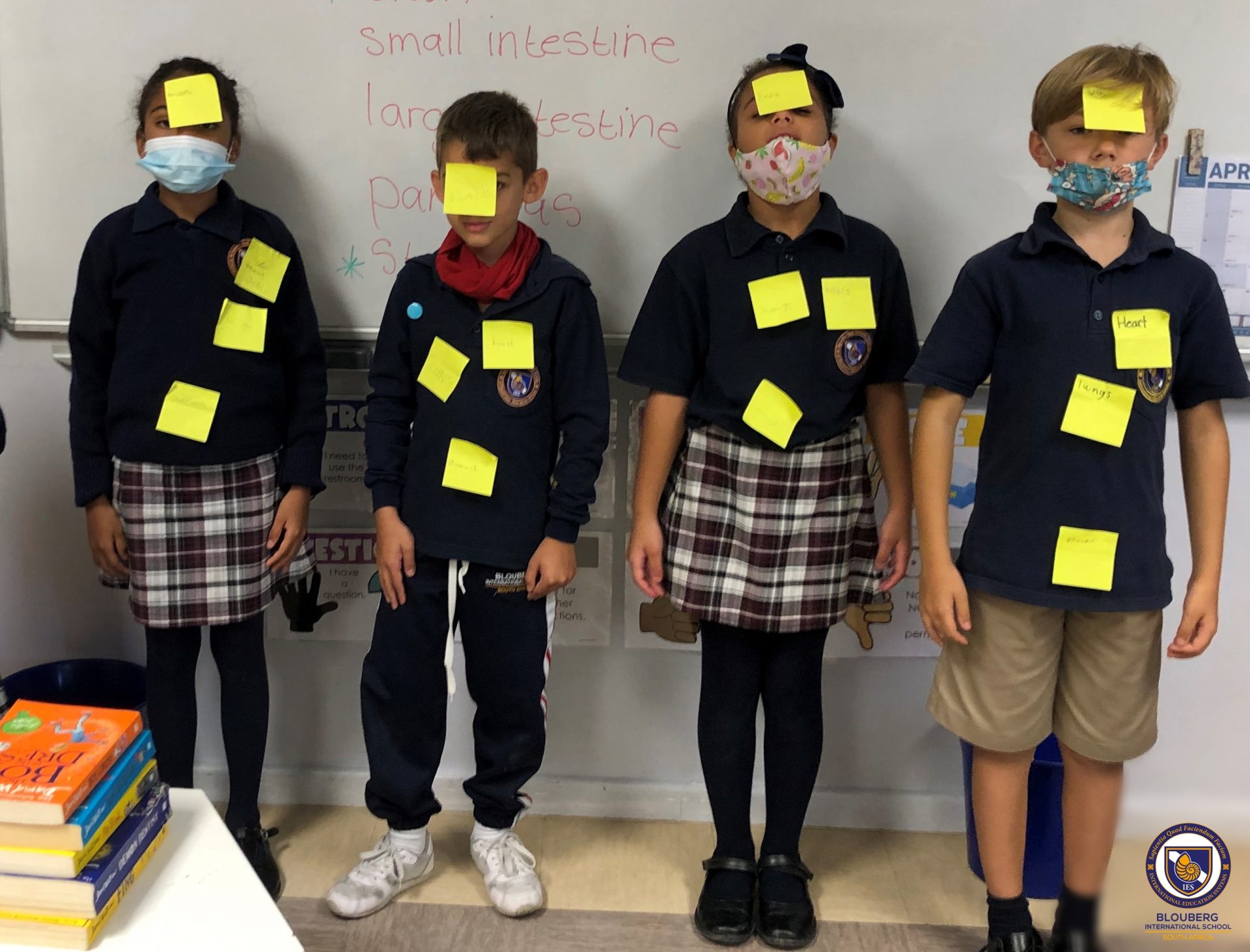
Our Year 3’s kick started Term 2 with an introduction from Pinky, the skeleton, to our next Science unit – The Human Body! After much giggles and squeals, students were told that by the end of the unit they would need to be able to ‘dress’ Pinky with his organs all in the right places.
But first…. do the students know where each organ in our body is? Well….no…. not quite…. not at first. In groups, students had to choose one classmate and using yellow stickies, placed them on to the student in the right spot. Needless to say, we had some very strange locations for our small and large intestines!
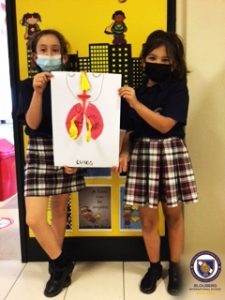
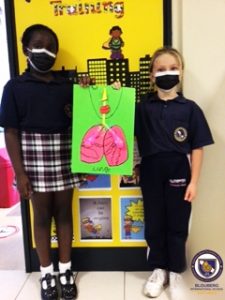
Throughout the unit, the class enjoyed very student-centred lessons, which included making their own stethoscope out of plastic bottles, tape and toilet paper holders. They then used their stethoscopes to listen to one another’s heart beats.
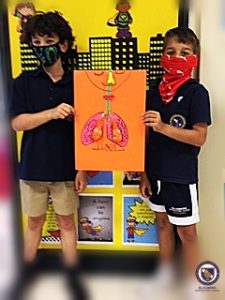
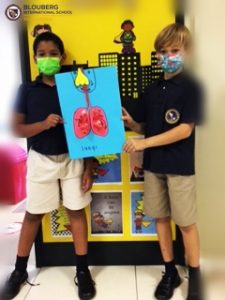
Another lesson involved students making a working lung model using cardboard, straws and balloons. In pairs, students designed and cut out their lungs. Next, they attached the straws and balloons. Then, they drew in their faces and for the grand finale…they blew out into their straws to simulate their working lungs.
The students had a fabulous time designing their models and thoroughly enjoyed the hands-on activities. Well done, Year 3! I think we are ready to ‘dress’ Pinky!
Mandy Goch
Year 3 Teacher


Read More
Next Week Is Book Week!
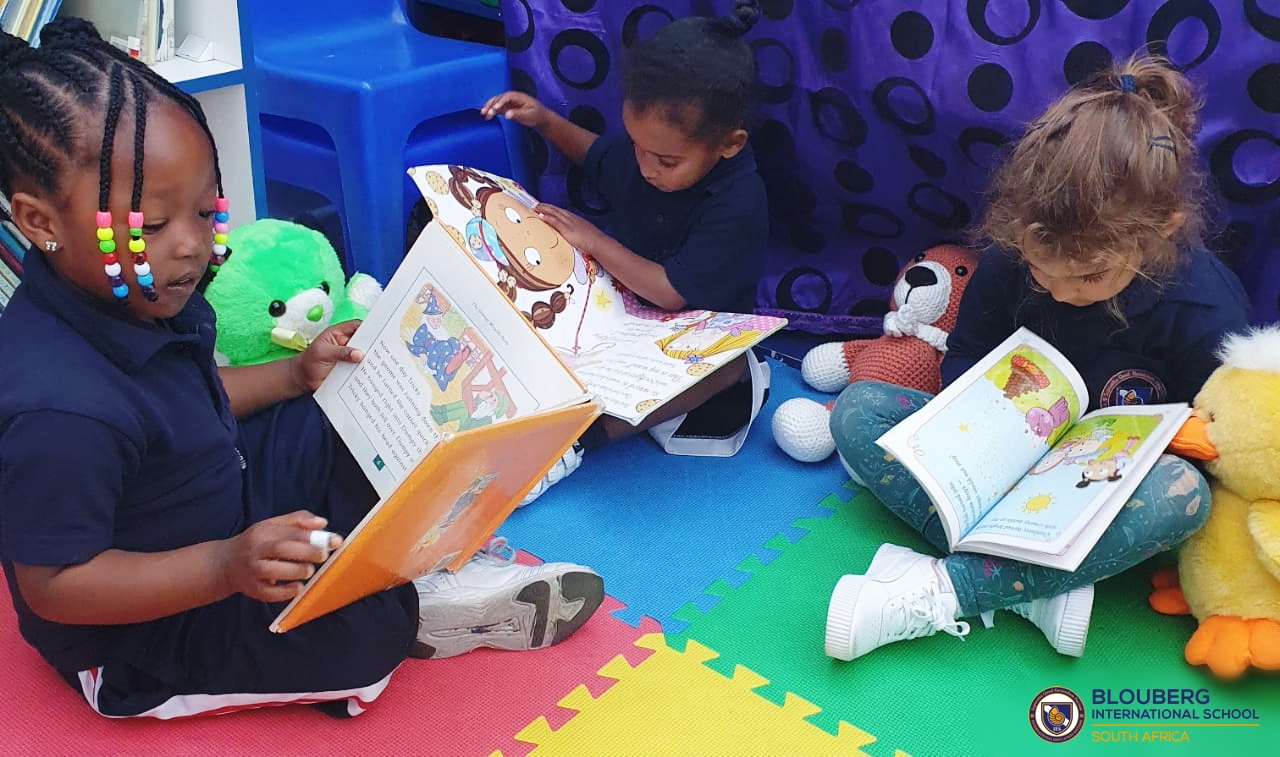
We will celebrate book week next week at BIS. It’s a fantastic opportunity to celebrate books and to see the young students getting excited about reading.
There will be many fun activities during Book Week:
- On Tuesday, 3 May 2022 we will do stop, drop and read. All students need to stop what they are doing and listen to or read a story for 10 minutes when they hear the bell ring.
- We are holding another night of fun stories and book sharing for Foundation Phase and Key Stage 1 students. Bedtime story evening on Wednesday, 4 May 2022 will start at 18:00. We invite all students to come along wearing pyjamas and snuggling their bedtime toy and listen to some great bedtime stories told by the teachers and parents.
- Book Character dress up day will be on Friday, 6 May 2022. Students are encouraged to bring a book to donate and dress up as their favourite book character.
As you can see our Book Week is packed full of exciting activities for the students.
Martie van Dyk
Pre-Reception Teacher


Read More

Learning About Mr Plus In Reception Year
Earlier on in the term we started off by learning about the concept of more, which also helped the students understand the idea of counting forward and numbers getting bigger when one more is added.
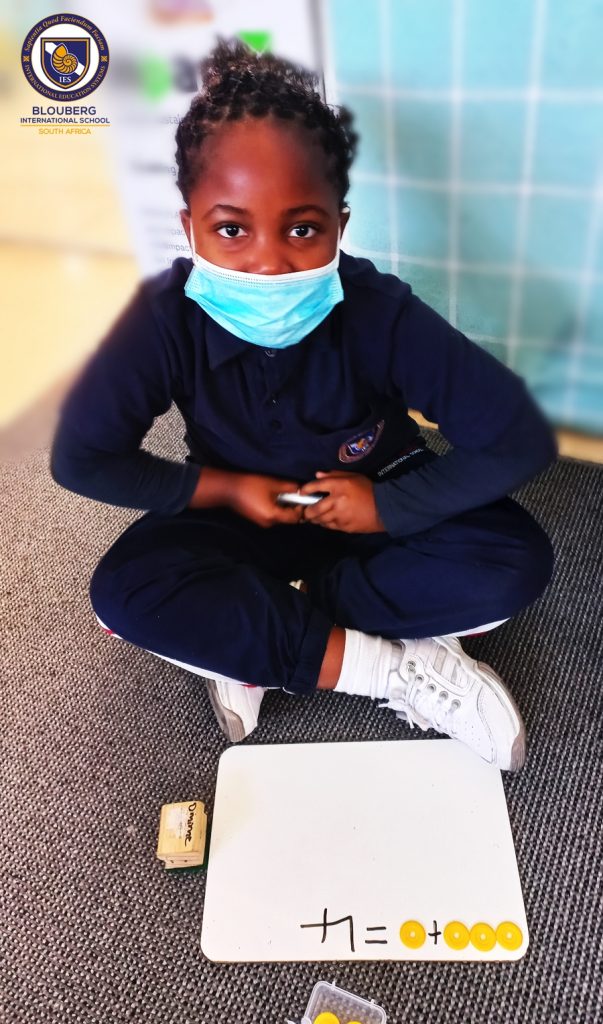
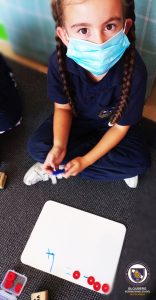
This week, the students were introduced to a very popular and friendly character in Numberland, called Mr Plus. Mr Plus likes to bring the numbers together by making friends with them and making them more. The students learnt a song about Mr Plus. Then the teacher pretended to be Mr Plus, using the students to make sums. The sums were made on the board using magnets and a whiteboard pen.
The students were reminded that the plus sign is in between the numbers to add them and the equals sign comes before the answer. Afterwards the students came to the mat in small groups for a focus group lesson with the teacher. They used their own counters on their whiteboards to make their own sums.
The students were so excited to be making sums with counters and learnt how to check if their answers were correct. Later on they will also be introduced to picture sums and progress to using counters or their own drawings to work out addition sums with numbers.
Mathematics can be so much fun!
Bronwen Nuthall
Reception Year Teacher
Read More
To Write Or Not To Write…
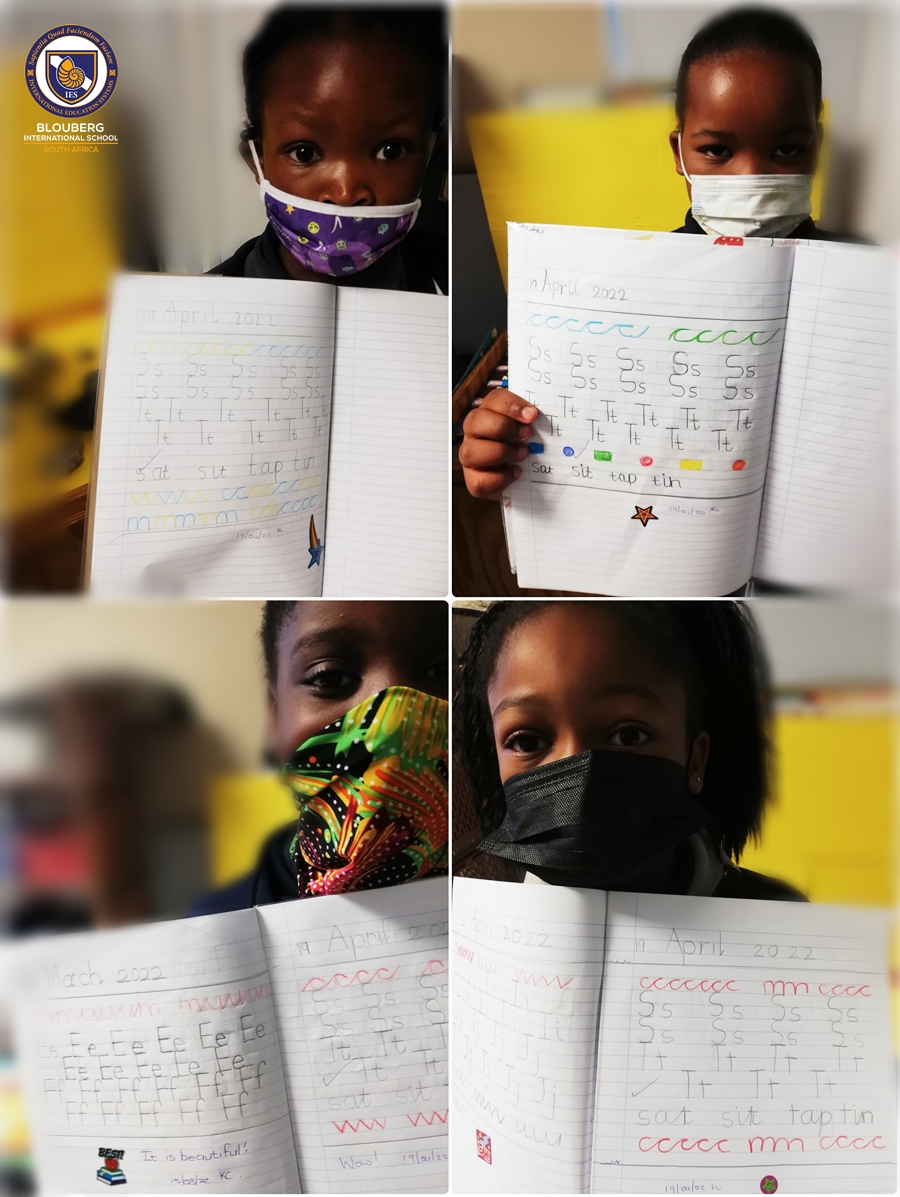
With today’s technology, where even the youngest of young are accustomed to typing on laptops, tablets or iPads, the question is often raised: Just why do children need to learn handwriting skills at school. They probably won’t need these skills in whatever field they find themselves in. However, proven studies have shown that it is extremely beneficial for young children to learn how to grip a pencil or colouring crayon, or learn the correct formation of a letter.
“There is this assumption that we live in the computer age, and we don’t need handwriting anymore. That’s wrong,” says Virginia Berninger, PhD, a professor of educational psychology at the University of Washington.
A few facts to consider:
- Children who learn to write correctly, read more fluently.
- Handwriting requires concentration.
- It trains the brain circuits responsible for motor coordination, vision, and memory to work together.
- Visual-motor skills, such as hand-eye coordination, are associated with academic achievement. Scientists have found that developing fine motor skills in early childhood can predict not only writing success, but also better performance in reading and mathematics in elementary school.
Left-handed children more likely to write untidily? Myth or fact? Unfortunately for the 10% of the world’s population who are left-handed, their handwriting does tend to be untidier than those writing with their right hand. However, if a child is taught to tilt their paper or book a different way, neat handwriting is very achievable!
Kim Coetzer
Year 2 Teacher

Read More

Investigative Thinking In Key Stage 2
“Children must be taught how to think, not what to think.” – Margaret Mead
Being both a student and teacher of the Cambridge Secondary Education system, I have had the privilege of watching it develop into the beautifully elaborate system we see before us today. If anything, the one thing I appreciate the most about growing up following one of the world’s leading education programmes, is the expansive opportunity I had for inquiry based, independent learning.
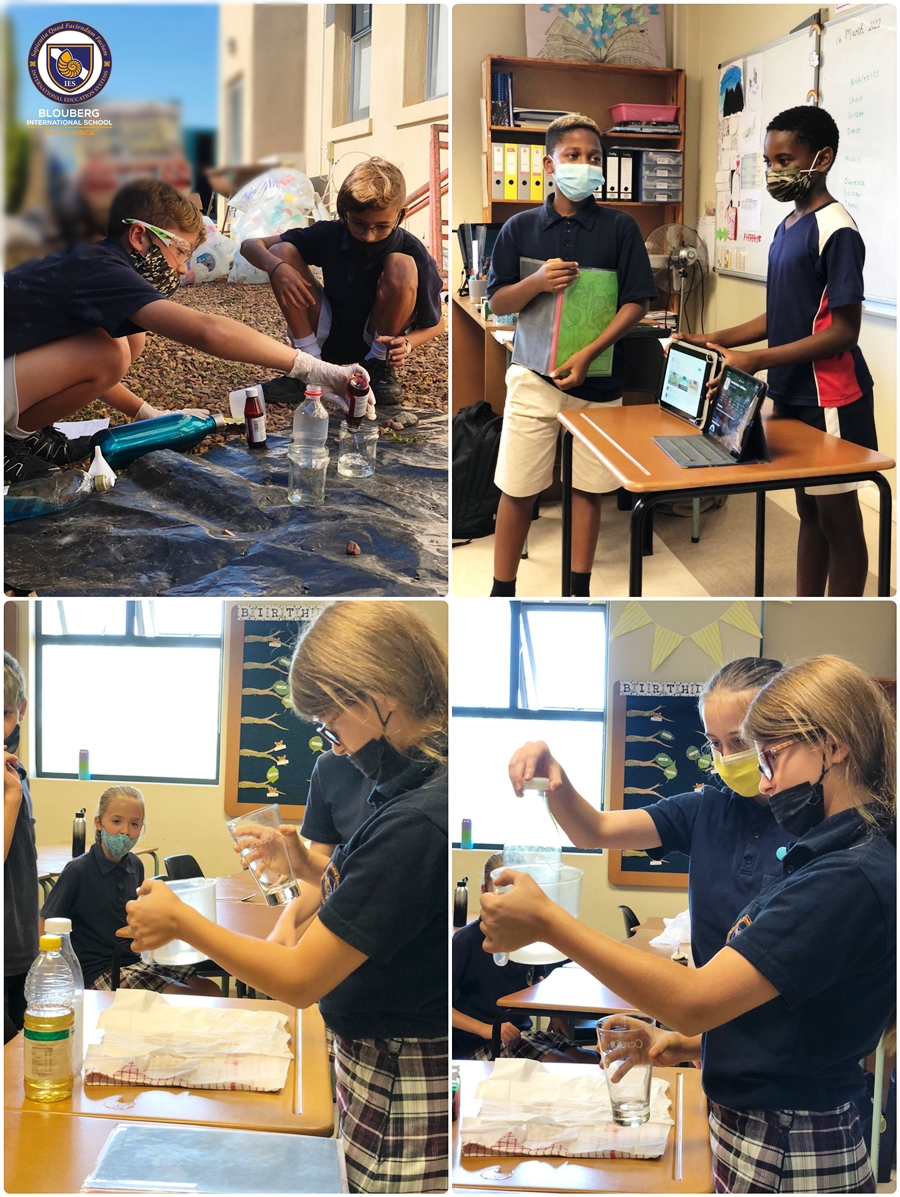
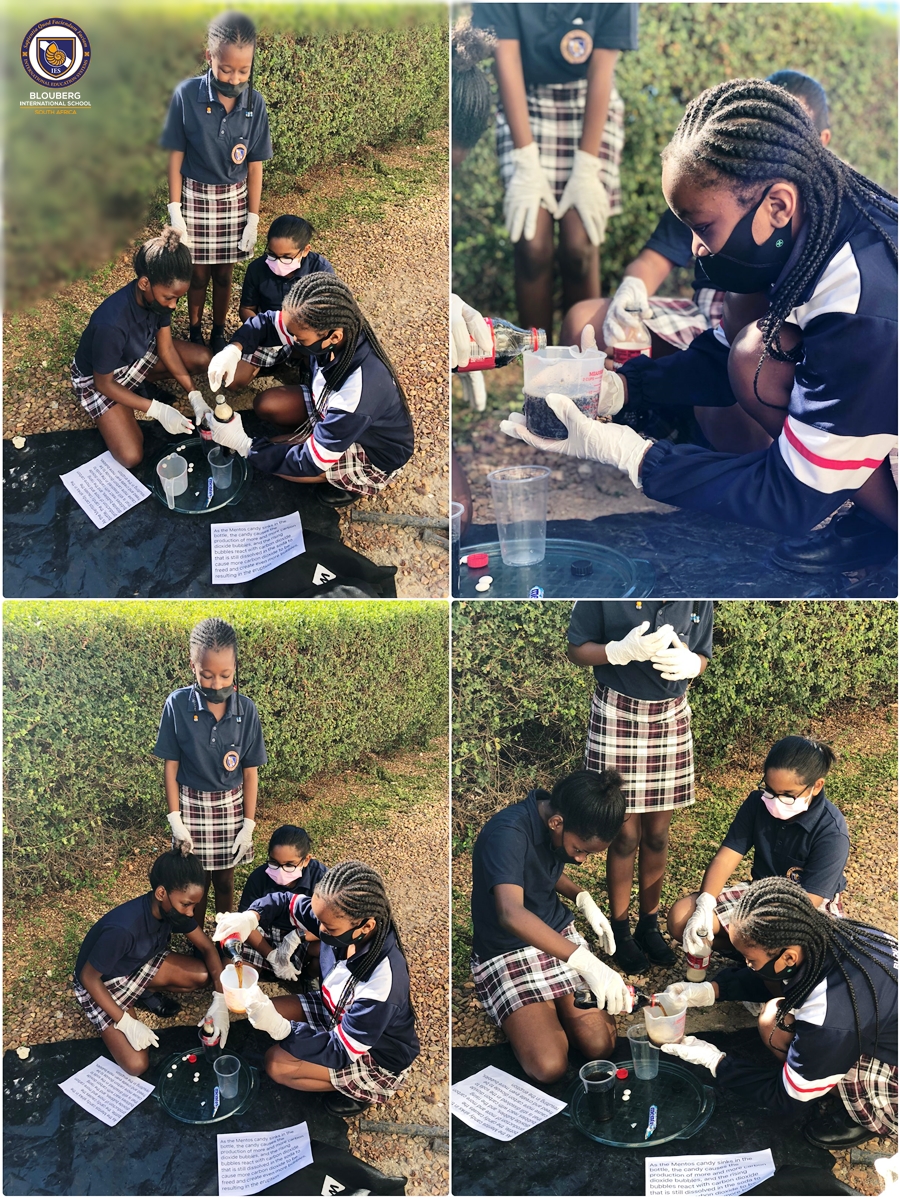
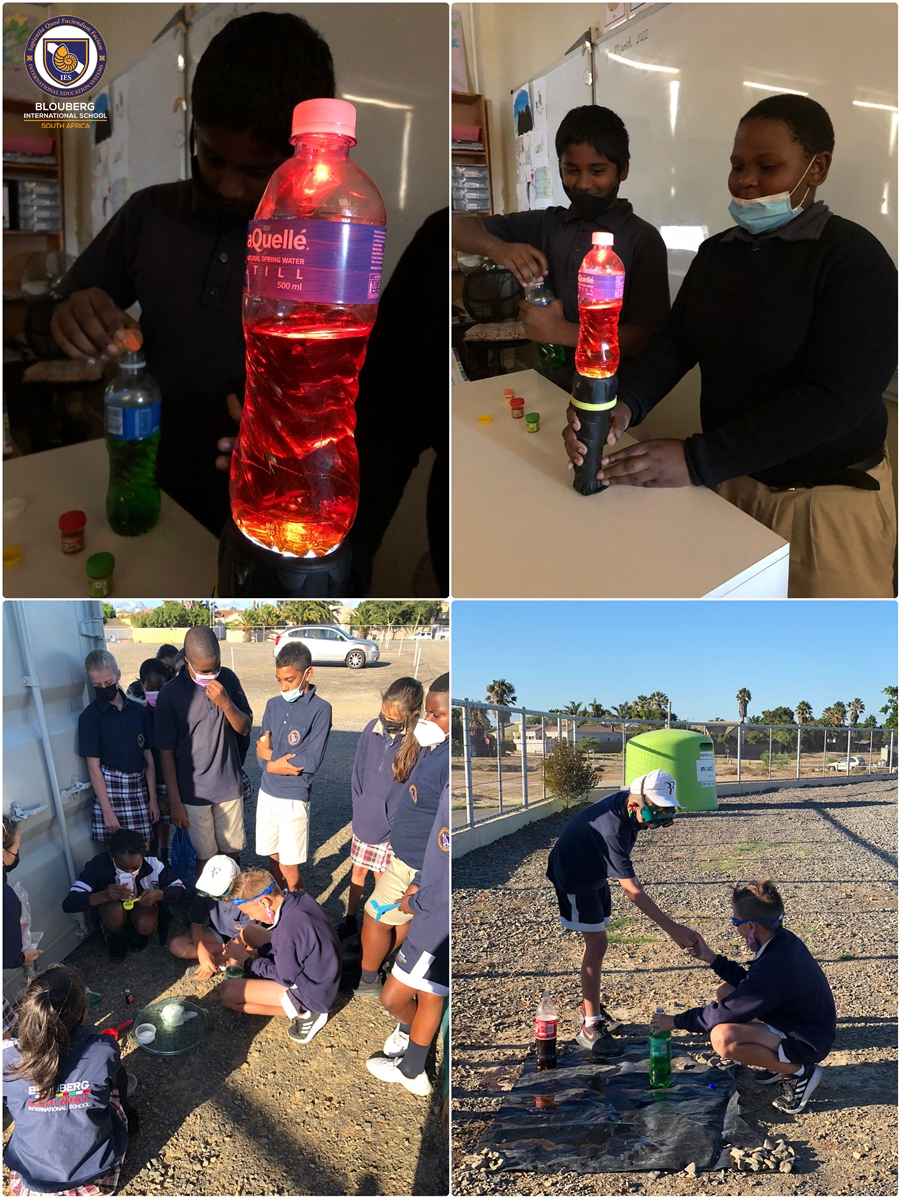
One of my favourite tools in the Cambridge Primary Science syllabus, today, would undoubtedly have to be the scientific inquiry thread, incorporated into our teaching and learning objectives. Not only do we work towards content specific outcomes under each topic, but Cambridge guides us through skill based, investigative thought processes as well.
Each term, our students are given the chance to explore the workings of our world themselves by following these probing steps:
- Asking a question
- Making a prediction
- Planning a fair test
- Carrying out the investigation
- Recording the results
- Drawing a conclusion
This process promotes a beautifully curious approach to learning, where our students are granted the responsibility of their own learning journey.
Lastly, I have to acknowledge the multitude of fun this approach leads to, both in and out of our science classrooms! When having fun and building relationships run parallel to your learning, you know incredible things are bound to happen.
Robyn Pieters
Year 6 and 7 Teacher

Read More

A Recipe For A Good Friendship
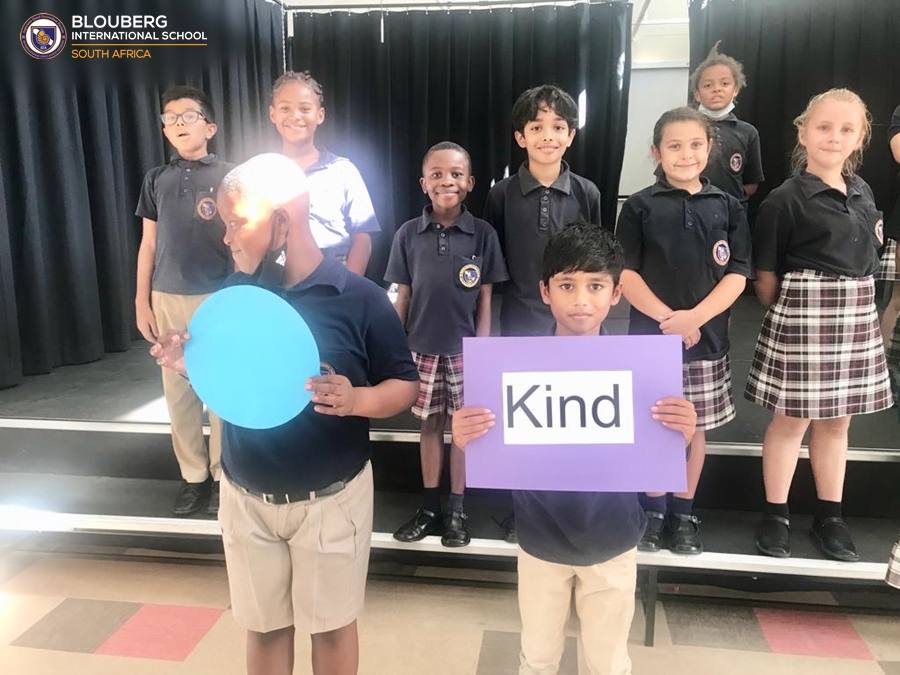
Recently we have been discussing what it means to be a good friend or the ‘recipe’ for a good friendship. As a class, we shared many comforting stories about when others showed care for us. In further discussion, we highlighted the importance of our ‘Blue Badge’ system at school, which focuses on three simple foundations.
As a BIS student we aim to be KIND, CARING & ENCOURAGING.
Year 4NM came up with their own Recipe for a good friend, modelling the 3 simple foundations of kind, caring and encouraging.
How can you be kind…
- Say nice things to others.
- Smile, because it is the best and easiest exercise for the body.
- Be happy for others because when it is our turn we would want others to be happy for us.
- Offer to help whenever we can because giving is always more rewarding.
- Use good manners like saying:
- Good morning!
- Please.
- Thank you.
How can you be caring…
- Let your friends know that you are always there to listen.
- Ask, “How are you?” and remind them that you are a good friend even when they are not feeling good.
- Be patient and respectful to others.
What does it mean to be encouraging?
- It means we must support each other to do good or to be the best we can.
“Everyone needs encouragement like a plant needs water”
- Not everyone is having a good day all day, remember to show some support. It might brighten up their day.
- Be the reason someone feels good today!
Nadia Mahomed
Year 4 Teacher

Read More
Art Day!
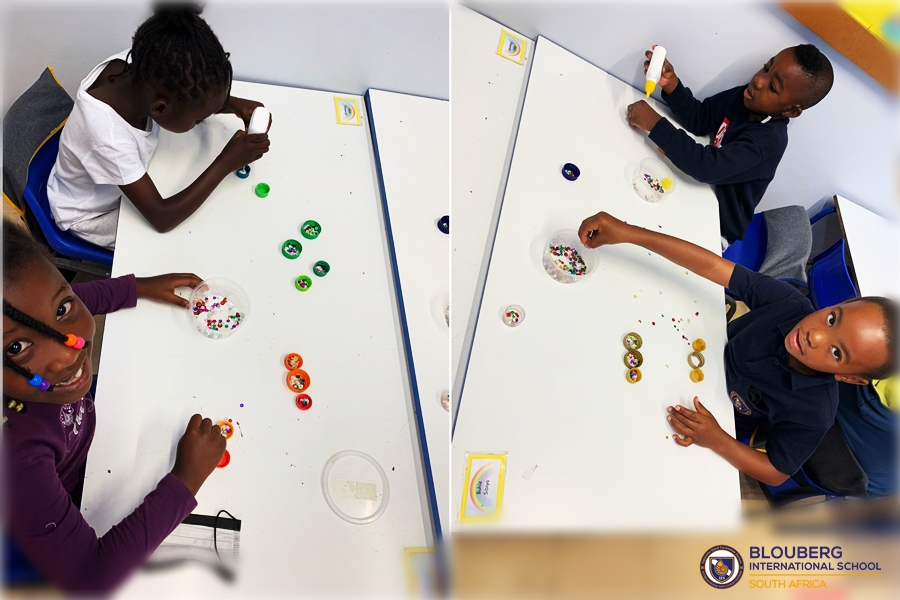
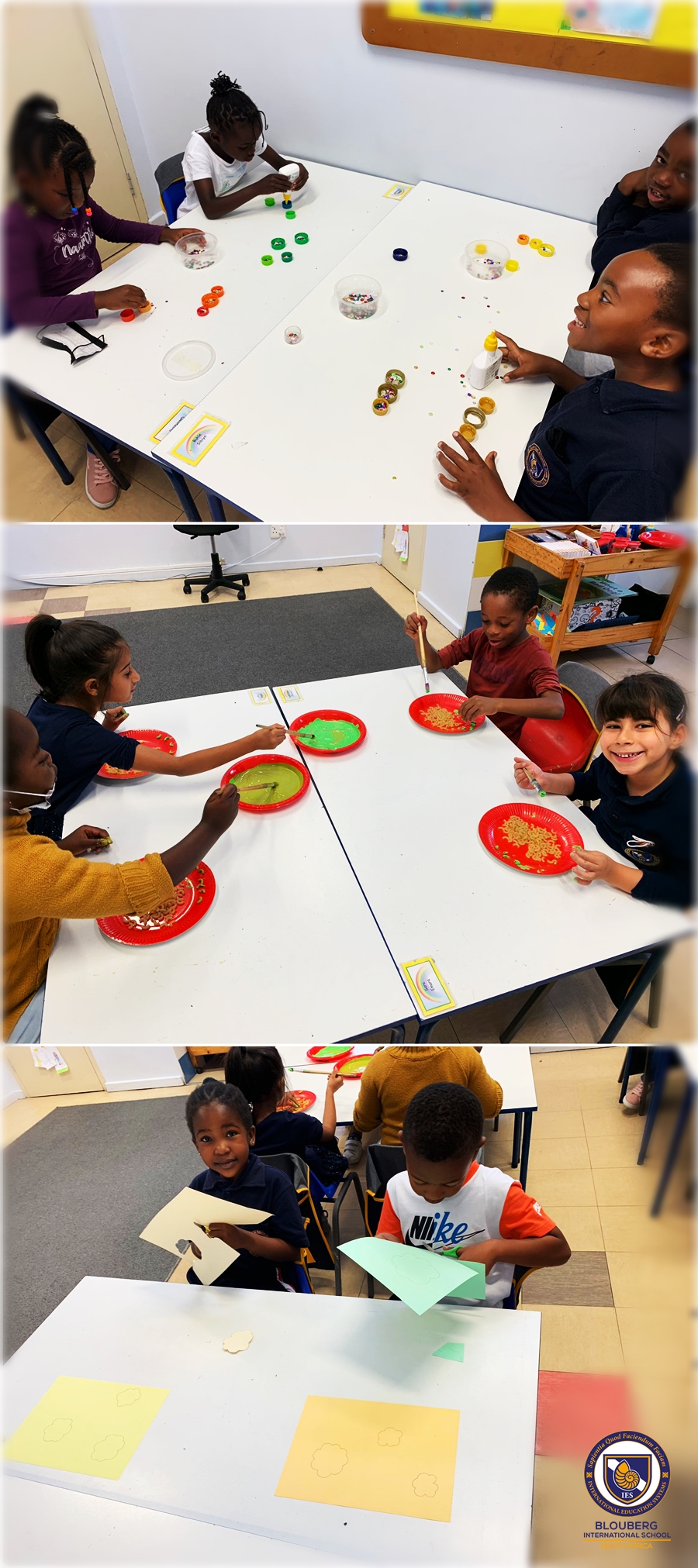
We are very excited in Year 1 to be having a special ‘Art day’ today, for our upcoming school Art auction at the end of this month!
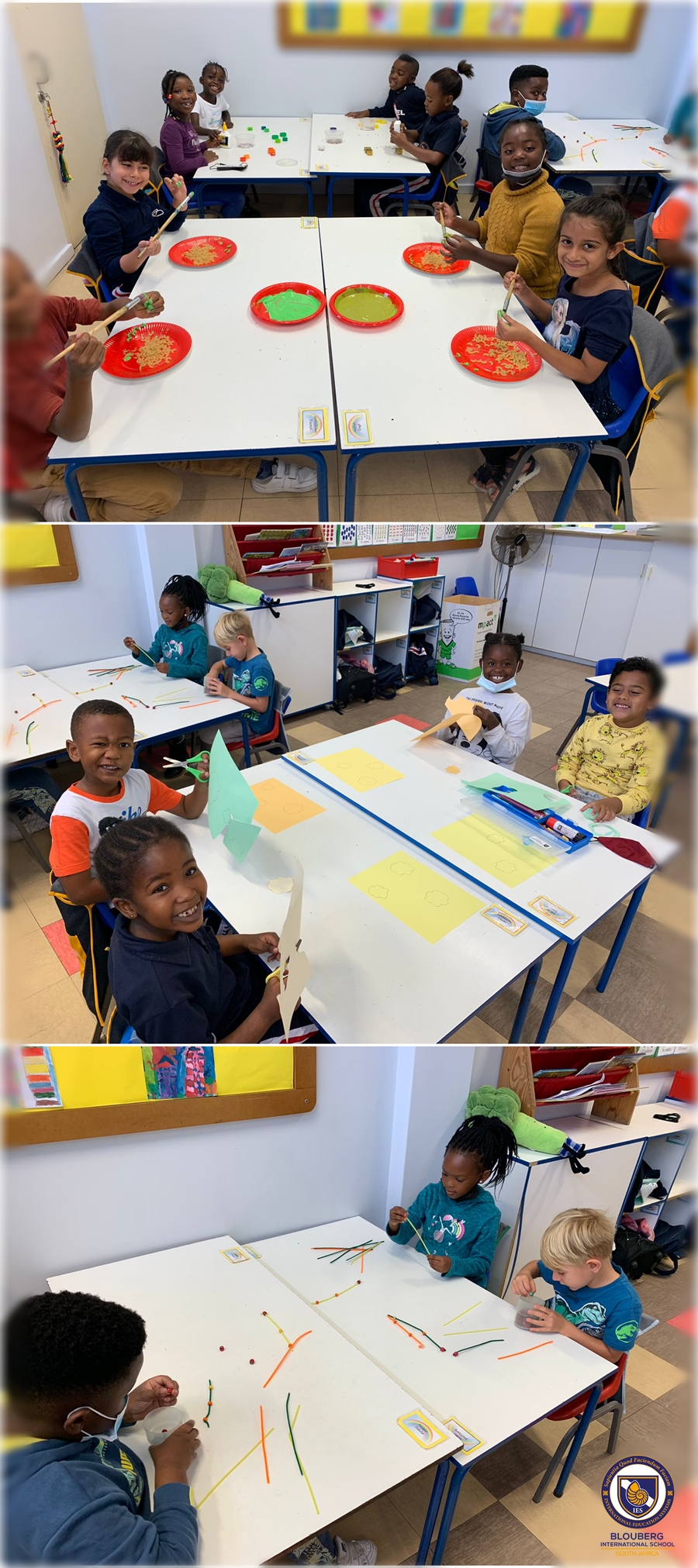
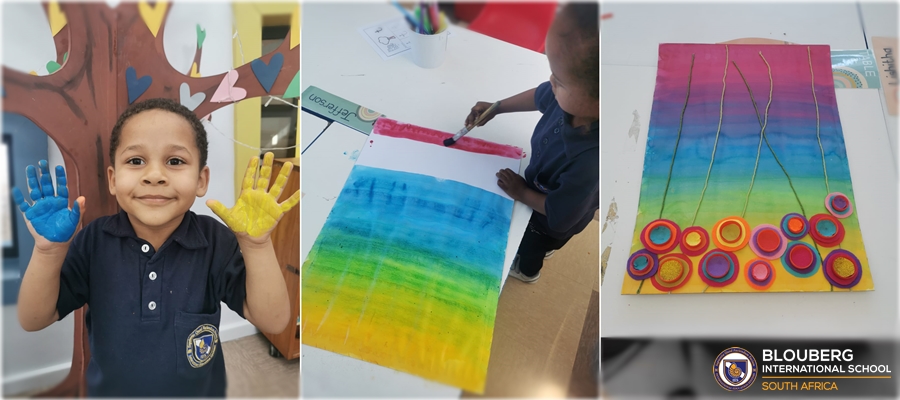
We are working on a collaborative artwork, which means each child in the class is contributing to the picture. We are creating a natural, floral scene against a beautiful sunrise, using mixed media culminating into a layered piece of artwork.
The students are having a lot of fun, painting macaroni, decorating bottle tops, beading pipe cleaners and exploring mixing colours.
I can’t wait to see the finished product displayed at the art auction!
Charlotte Cronje
Year 1 Teacher


Read More
The Importance Of Art In A Child’s Development
There is an overwhelming excitement and enthusiasm throughout the School as the students are busy creating the most amazing works of Art for the upcoming Art Auction on Tuesday, 26 April from 5:30pm.
It is wonderful to see the concentration on the students faces and the joyful expressions of art explored!
Creating art expands a child’s ability to interact with the world around them and provides a new set of skills for self – expression. Not only does art help to develop the right side of the brain, but it also cultivates important skills that benefit a child’s development.
SKILLS CHILDREN DEVELOP THROUGH ART ACTIVITIES:
- Life skills
- Communication skills
- Problem – solving skills
- Social & Emotional skills
- Fine Motor skills
- Self – expression & creativity
It is important, however, to separate “talent’ from ‘creativity” – a child does not have to create a masterpiece to have a meaningful artistic experience. Art is a process not just a product. It is the process of creating – exploring, discovering and experimenting – that is important and adds the greatest value. Through self – expression and creativity, a child’s skills will develop naturally. Art matters the same way language matters. It is a fundamental component of what makes us uniquely human.
Hope to see you all at our Art Auction!
Cindy Nunan
Pre-Reception Teacher

Read More

Healthy Eating
Going forward into a new term I encourage parents and students to consider adopting healthy eating habits throughout their day. In the Junior campus we have incorporated a robot system which gives the children a visual aid of which foods are a healthier choice.
The red light is used for foods which should be avoided in school lunches. “Red light” foods include items such as sweets, fizzy drinks, pastries, chocolates, etc.
The orange light is used for foods which can be incorporated occasionally in school lunches. “Orange light” foods include white grains (such as white bread or pasta), chips, etc.
The green light is used for foods which are encouraged in school lunches. “Green light” foods include fruit, vegetables, wholegrain foods (such as brown bread and whole-wheat products), water, etc.
It has been proven that sugar hampers a child’s ability to concentrate and focus. In the Junior classrooms the students are very proud when they have healthy items as snacks and love to show these to their classmates. We would like to encourage this behaviour and really adopt a positive attitude towards healthy eating habits. If we do this from a young age then we can be assured that our children will grow up with this healthy frame of mind regarding food habits.
For some inspiration for healthy school lunches, please see the below article entitled Healthy Food for Kids: Are your kids hooked on junk food? With these simple tips, you can get children to eat right without turning mealtimes into a battle zone.
https://www.helpguide.org/articles/healthy-eating/healthy-food-for-kids.htm
Kim Hahn
Reception Year Teacher
