

Observing The Weather Using A Wind Vane
Our budding Year 5 meteorologists (a physical scientist who observes, studies and forecasts the weather) have been learning all about the wonders of the weather in Geography this term.
They started by learning about the four main elements of the weather (temperature, wind, rainfall and cloud cover) and how these can be used to describe the weather. They are currently completing a 2-week weather project, where they need to observe and track the weather on a daily basis. These observations require the use of various weather instruments, such as a thermometer for temperature; a rain gauge to measure rainfall and a wind vane to measure wind direction. Using these instruments accurately is a skill they need to master and demonstrate over the course of the project.
But we can’t accurately measure wind direction without an instrument to help us, so, the Year 5 students started the project by designing and making their very own creative and colourful wind vanes! The idea behind making these weather instruments was that they could then be used by each student at home when making their observations on the direction of the wind.
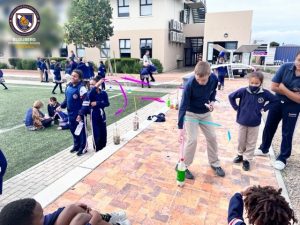
Great fun was had by all when they put their wind vanes to the test outside on the school field! The direction of the wind (moving air) is the compass direction that the wind blows from. On the day the Year 5’s did their test, the wind was blowing in a northerly direction. They knew this because they had first accurately plotted the 8 compass directions on the ground, using a compass.
We are looking forward to seeing the results of their investigations on weather at the end of this exciting project!
Cindy Drury
Year 5 Teacher


Read More
Library Etiquette
Do you still remember the majesty of the Public Libraries that we had to frequent in our youth? The days before internet was a quick fix search. Dewey decimal systems and the smells of old and new books. The librarian peeking at you over her reading glasses as you quietly and carefully walked past her massive counter. The feeling of excitement when you held your first library card. The library was an ocean of possibilities, peacefully beckoning you to crack the spine of a hardcover adventure. Hours were spent finding corners to read in, and making sure you returned your books on time to avoid that dreaded R2 fine. If you were lucky, you didn’t have to take notes by hand, but could make copies of those precious pages before using them for your school projects.
As mystical as the library was, it was also a character forming experience. We all knew the rules, almost as sure as muscle memory. From the moment we walked through those heavy doors, we understood that this was a place of resolute respect and consideration, quietly whispering to one another as we discovered other universes hidden in the pages of classic novels.
I have asked our students during the course of this week if they have visited the local library and not surprisingly, most of them have not. We all know that with the hustle and bustle of this day and age, we rarely have the time for simple pleasures, like visiting our local library. If you do ever find that you have a free morning with your child, then I would like to recommend Milnerton Library to you. The facilities are very well kept, and the staff are knowledgeable and kind. This would be a wonderful introduction to the vast community of libraries that our city has to offer. Proper library use is a vital skill, especially when it comes to the later years of education. Why not set our children up for success sooner rather than later. University and high school notoriously consists of ample amounts of research, and knowing how to effectively utilize the available facilities would be extremely beneficial to our children.
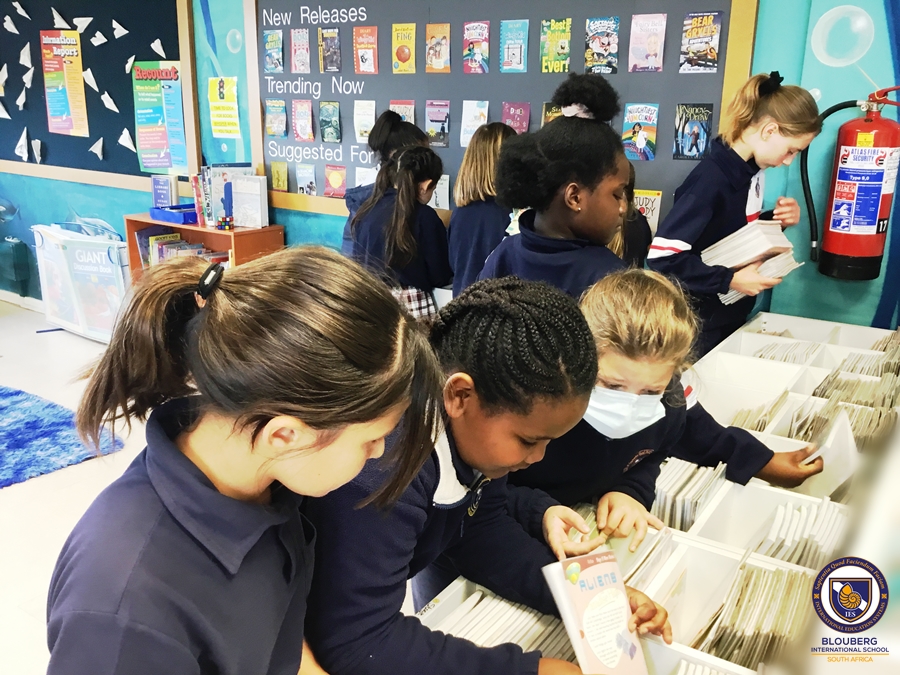
In our very own school library, we have discussed library etiquette this week during our lessons. It almost feels like a lost art and is certainly a worthwhile topic.
We discussed a few of the items below:
- What is the function of a library? We established that the library is one of the few places in society that is completely free. You don’t need to spend money to visit and enjoy the facilities. Being afforded the use of the facilities does come with some responsibility though. The resources are loaned to you in good faith, which makes you accountable for how it is treated and returned. Everyone is welcome in a library as it is a public space, cementing in our minds that education should be fully inclusive and knowledge freely available to all. Libraries can be used to study, do research, read, create awareness and so much more. However, the primary function is the loan and return of books.
- Where do we get our books? The students showed a great sense of understanding that the school library mainly grows through your kind donations, this includes the Birthday Book Programme as well as books that you would like to donate when you are no longer using them. We also discussed the purchasing of resources like our readers; and why we should look after the resources in the library. Some classes even delved into publishing, which is a very interesting topic in its own right.
- General Manners: We explored the rules of libraries and especially our school library. Students were reminded that we enter a library quietly; how to look for books and keep the shelves neat; and, where to return the books and how to check out new books for the week. Our conduct in a library is also extremely important: remembering that one must remain kind, caring and encouraging. If we conduct ourselves with consideration to our fellow library users, everyone will enjoy their experience and continue to benefit from the facilities.
- Returns: We discussed books not being returned and why we should always return our books. We should all have access to the knowledge in the library and if we fail to return our loaned books, the next student will not have access to the material. At this stage there are so many books outstanding at our library, that I would like to ask parents to please check if there are any school library books still at home. Your assistance with this will be greatly appreciated.
It has been such a privilege and a pleasure the last few weeks, getting to know the students even better, sharing stories, reading and brainstorming. I simply can’t wait to see what the future holds for our school library.
Trindade Camara
School Librarian

Read More
Coding!
It is safe to say that coding is one of the most constructive hobbies for your child to adopt, especially since it can help them develop persistence, communication, creativity, and higher-order thinking.
Yes, learning to code also sets your child up for potentially lucrative career opportunities, but it also offers children so much more than that. A modern parent cannot go wrong by encouraging their child to program.
At BIS, we have coding and robotics lessons every day during the week – Monday to Friday. The students enjoy their coding lessons and it is rewarding to see them grasp the concepts and solve problems by themselves. Here are reasons why coding is so important for children:
1. Coding Boosts Problem-Solving Skills
Coding is, without a doubt, one of the most straightforward ways for children to boost their problem-solving skills.
In a programming context, coders are constantly challenged and asked to problem-solve. The practice all but requires them to break issues down into more manageable sub-problems, then progress through an iterative process of identifying, prioritising, and implementing solutions. Thus, children start honing their problem-solving skills as soon as they take on their first coding challenge.
Research indicates that even if your child doesn’t want to go into coding as an adult, establishing a practice of coding early in life will nevertheless help them build highly-transferable cognitive skills. Is it any wonder why children should code?
2. Coding Improves Computational Thinking
Computational thinking is a branch of knowledge that involves expressing problems in a way that a computer would. Students who learn this model of thinking are encouraged to break down complex problems into smaller issues, thereby revealing underlying process patterns.
As researchers for an earlier study wrote on the matter, “We believe that children as young as ten can directly benefit from opportunities to engage in computational thinking […] Children can begin by solving puzzles on paper, continue on game boards, and ultimately complete their solutions on computers. Through this process, students can be guided through increasingly complex algorithmic thinking activities that are built from their tacit knowledge and excitement about game play.”
2. Coding Encourages Persistence
Computer science is one of the few professional disciplines where it’s entirely acceptable to be near-constantly failing. Not only is failure immediately recognisable — i.e. a program “breaks,” and doesn’t work as intended — but success literally cannot be achieved until all errors are handled. Even the most straightforward programs require a coder to understand a set of problems and solve them; otherwise, the code won’t run as intended.
However, with all this frustration and failure comes a real, lifelong character benefit: persistence.
When children begin programming, they come to learn that failure is transient, and doesn’t have to be frustrating or a progress-stopper. Even small successes can provide the encouragement kids need to push through issues in their programming. Over time, this perseverance can bolster a child’s grit — and serve as one of the most important indicators of their future educational and career success.
Coding can help your child develop a growth mindset: a philosophy wherein one’s ability to learn can be improved upon, adjusted as needed, and stand firm against demoralizing failures. What better mentality could a child adopt early in life?
3. Coding Improves Computational Thinking
Computational thinking is a branch of knowledge that involves expressing problems in a way that a computer would. Students who learn this model of thinking are encouraged to break down complex problems into smaller issues, thereby revealing underlying process patterns.
As researchers for an earlier study wrote on the matter, “We believe that children as young as ten can directly benefit from opportunities to engage in computational thinking […] Children can begin by solving puzzles on paper, continue on game boards, and ultimately complete their solutions on computers. Through this process, students can be guided through increasingly complex algorithmic thinking activities that are built from their tacit knowledge and excitement about game play.”
4. Coding Teaches Creativity
Creativity, creativity, creativity; it’s something every early educator and parent is wholly concerned with, and yet it’s not a quality prized by most working adults.
Creativity tends to decrease as we age. The adage is true — adults tend to be less creative than children. By the time we reach our sunset years, we have effectively “unlearned” one of the most important skills in life.
“Creative people have rapid and effective responses that help them to achieve their life goals and allow them to enjoy the journey… It is both a skill set and a unique and individual personality structure that’s developed throughout childhood and fine-tuned in adolescence,” Notre Dame researcher Doireann O’Connor once noted.
So, how do we preserve a child’s creative skills as they age?
Experts suggest that kids should learn to code. As a practice, coding positions developers as “creators” or “world-builders” within a programming environment — by definition, the discipline requires creative thinking and an experimental mindset.
With programming, kids are constantly prompted to experiment. Once they understand basic functionalities, they can continually ask themselves, What if I tried this? Would that work?
5. Coding is a Career-Building Skill
The importance of programming cannot be understated in our economy, which is now overwhelmingly driven by technology.
The biggest hurdle is just mastering that first programming language — but once they do, they will be well-positioned to learn different languages, frameworks, and technologies later on in life.
Sonia Terblache
ICT, Coding & Robotics Teacher

Read More
Stop Motion Animation
Stop-motion has been around, in one-way or another, for pretty much all of the history of cinema. It has been responsible for everything from visual effect showpieces and fantastic creatures to full-length features. Even though it has never been the world’s most popular form of filmmaking, it has always had an audience and avid followers. Many of us are familiar with movies like Wallace and Gromit, The Corpse Bride, Shaun The Sheep, Chicken Run, and even The Lego Movie. These are all examples of Stop Motion Animation. Stop motion is a discipline that combines parts and pieces from many different sectors of filmmaking. During the first term, the Year 6s learnt about stop motion animation. This is a fun, creative and hands-on project. The Year 6s put hard work and dedication in for Term 1 to complete their very own animations and then present it to the class.
Stop motion is an animation technique in which a camera is repeatedly stopped and started, frame-by-frame, in order to give inanimate objects and figures the impression of movement.
This takes time and patience from the person creating a Stop Motion Animation.
Instead of taking individual photographs of drawings, one starts taking photographs of an inanimate object, for example a puppet, and makes slight adjustments to its positioning between each shot. In doing this, you can create the illusion that the object in question is moving. This is the essence of what we call stop-motion animation, an umbrella term that encompasses many subsets, like Claymation, Pixilation, and Puppet Animation. We start off by watching videos on Stop motion animation. This is when the students get very excited doing their very own animation. We throw around some ideas and listen to what others think they will be doing. Research and ideas are key when creating a project like this. We learn about how to film, staging the backgrounds, how to move your objects and take photos, the lighting, the stability of the camera and lots and lots of patience. We then learn about the App, Stop Motion Animations Studio. This is a free app, if you want to become a Stop Motion animation creator full time or want to make animations for a longer period of time, you can purchase the app to unlock different features.
When the students are familiar with the app, we film a mock video. This is to see if they understood all the elements we learnt above. They use anything on their desks to bring to life, from erasers to scissors to pencils and even books.
The storyboard is then introduced where the planning comes in. They ask themselves questions like, what their animation will be called and what objects they will be using (Lego usually is their favorite). The beginning, plot and ending of their animation is also important.
There are different types of stop motion animation:
- Object-Motion — moving or animating objects.
- Claymation — moving clay.
- Pixilation — moving or animating people.
- Cutout-Motion — moving paper/2D material.
- Puppet Animation — moving puppets.
- Silhouette Animation — backlighting cutouts.
Filming then starts. Discussions and research continues to the very end, sometimes the students get better ideas and their animations change.
Benefits of Stop Motion Animation
- Offers children ownership and autonomy in the filmmaking process.
- Teaches children how stop motion animation works.
- Debunks the mechanics of how movie making happens.
- The creative constraint of the medium encourages problem solving.
- Stop-motion animation can help children learn about, visualize, and explain a variety of math concepts. From addition and subtraction to algebra and graphing, having children use stop-motion animation to solve and explain math problems gives children additional math practice and supports differentiated instruction.
Each year, the Year 6 students produce amazing stop motion animations. We can see the hard work and dedication they put into their animation. Have a look at some of the animations done by our BIS students over the years.
It is fun and educational; even you can give it a try.
Sonia Terblanche
ICT, Programming and Robotics Teacher

Lights! Camera! AND … Action!
In William Shakespeare’s play ‘As you like it’, he writes:
“All the world’s a stage, and all the men and women merely players”
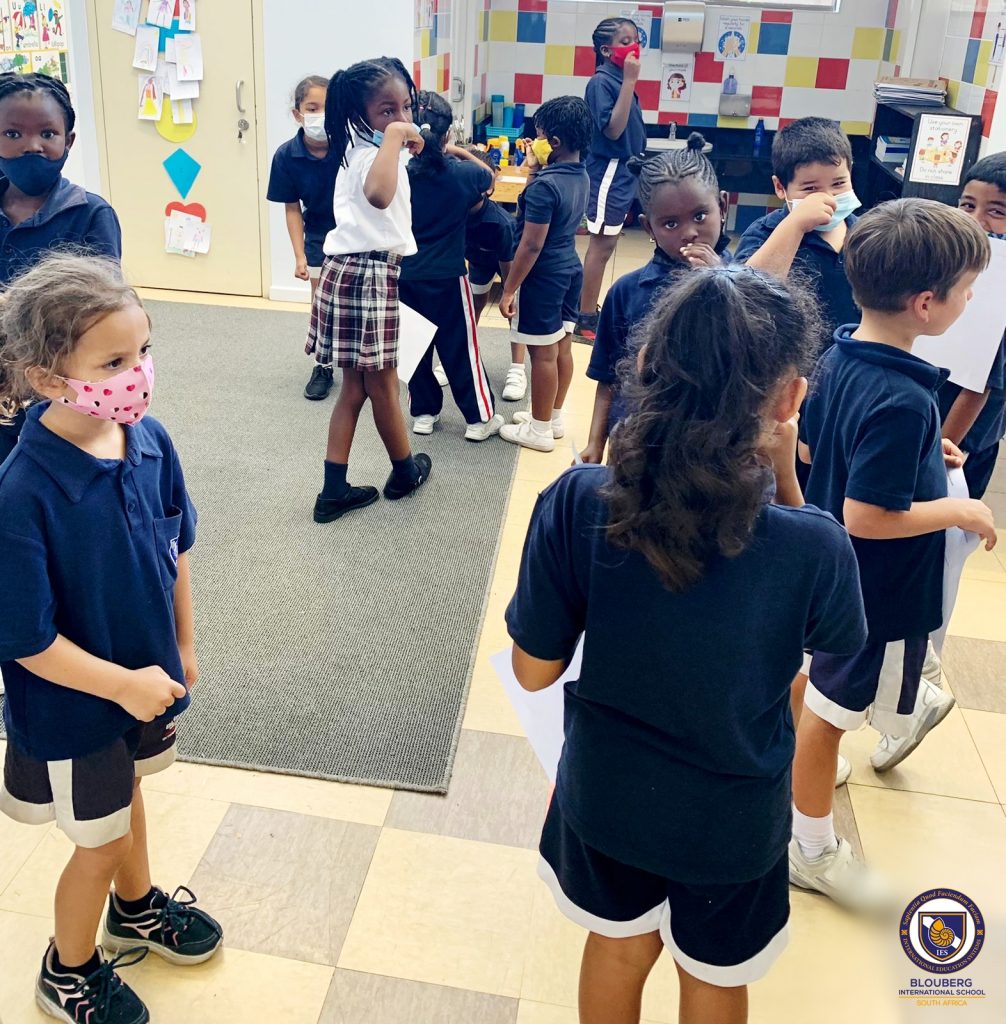
Children have the innate ability to turn a simple game into a dramatic event. With that in mind, the KS1 Drama and Music Club was established to nurture and develop these skills.
There are so many benefits for children joining a drama and music class:
- They develop friendships and self-confidence.
- It helps them with concentration and reading.
- It further develops communication skills.
- It encourages teamwork and co-operation.
- Assists in building emotional intelligence.
- It inspires their natural creativity.
Young children can create a ‘make-believe’ world, without really trying. It is up to us to nurture and develop the skills they need to transfer this into everyday life. They might not all end up acting on Broadway, or appearing in a television show, but they will have had fun along the journey.
Watch this space… Mrs Cronje and I are optimistic about our Drama Club. The possibilities are endless!
Kim Coetzer
KS1 Drama and Music Club Co-coordinator

Read More
Year 1: Sensory Learning In Art
“There is no must in art because art is free.” – Wassily Kandinsky
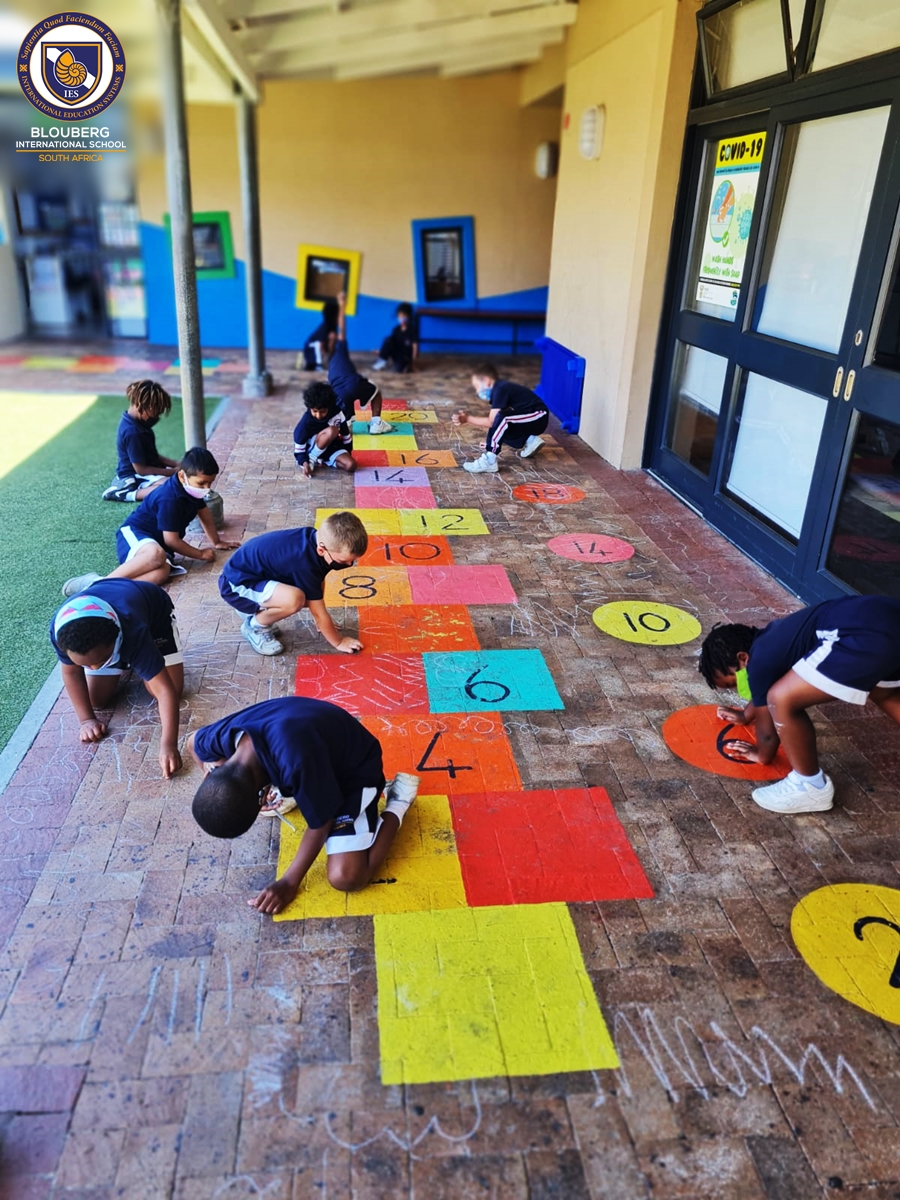
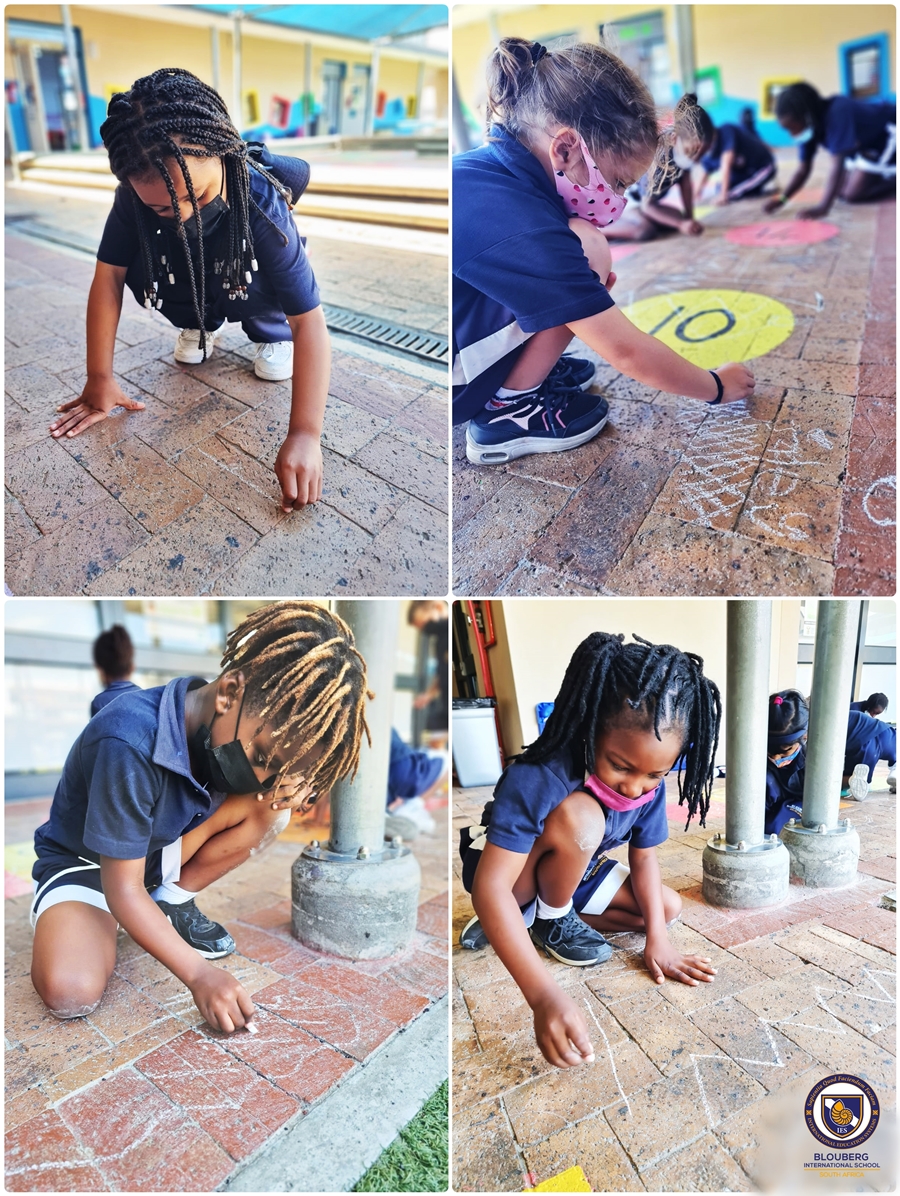
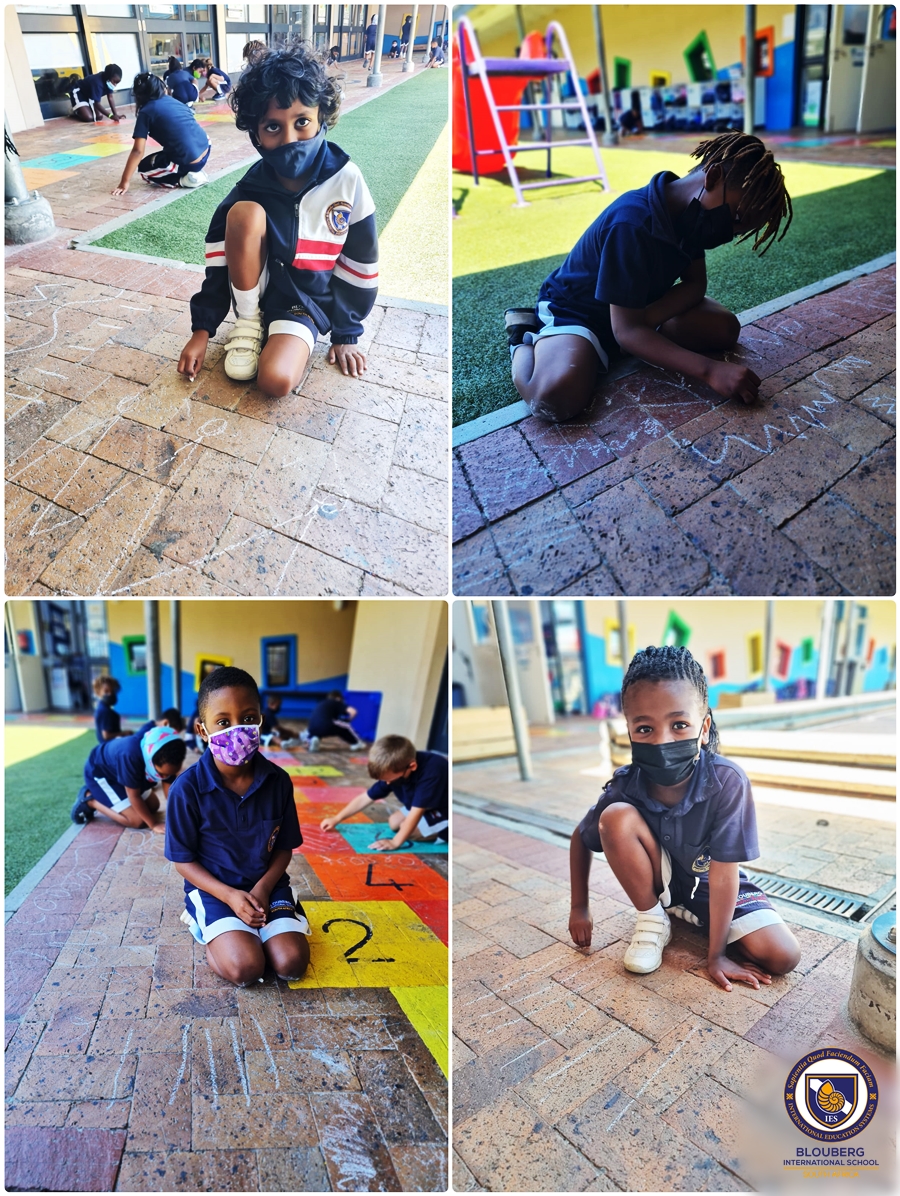
The Year 1 students have thoroughly enjoyed their first art lessons for 2022. We have been focusing on the basics of learning about different lines. The students were asked to go outside with some chalk and freely draw different lines they had just learned about, on the bricks.
As teachers, we find this form of practical learning important as the students are not limited to space and creativity, and they are able to express their knowledge in a free manner. Drawing on the bricks, a versatile surface, with chalk allows for a sensory rich activity. By having these sensory experiences that are full, students tend to learn at a more rapid pace. When a student uses chalk and connects to whichever surface we are using, it helps to develop their tactile registration as well as their fine motor skills.
We look forward to using this creative and fun method of learning more often throughout the year.
“The aim of art is not to represent the outward appearance of things, but their inward significance.” – Aristotle
Year 1 Teacher
Erin Hierse
Read More
Making friends in Budapest
There is so much discussion about ‘all around the world’, interschool connections and online communication right now. Not only is it a fun way for children to explore the world around them, but they can also observe the learning of the other children they are in contact with.
This allows students the opportunity to become a part of the lives of people who live on the other side of the world. Unlike just showing a map of the world in the classroom or exciting pictures from countries we’re learning about, this vivid personal connection both inspires their learning and, in its own way, makes it more meaningful to them.
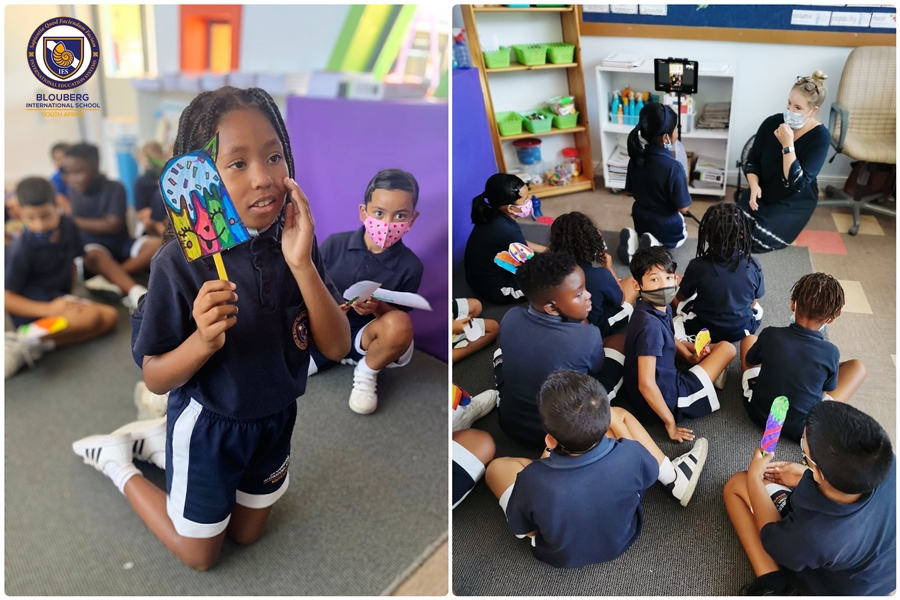
This week, our Year 2 students got to interact with children from our Budapest school. A country that most of them had never even heard of before.
It was so exciting for our students to see the other students, from our sister school, wearing the same uniform that they wear in a completely different environment.
The wonderful contrast of it being winter over there at the moment and summer here made for a very fun art idea. Our Year 2’s had to make and design their very own popsicles while the other children created their own snowmen and penguins. Students had an opportunity to come up one at a time and introduce themselves, while they very proudly showed off their art pieces.
This has been such an incredibly interesting and exciting experience. Mr. Swart also popped in for a visit to say hi and interact with the students.
A wonderful way to learn and a very unique way to explore the world around them. We can’t wait to meet up with our new friends again!
Siobhan Hendry
Year 2 Teacher

Read More
Year 2 Art & Design Fun!
“You can’t use up creativity, the more you use, the more you have” – Maya Angelou
Design, Art and Technology in primary schools develop children’s skills and knowledge in design, structures, mechanisms, electrical control and a range of materials, including food. It also encourages creativity and drives them to think about important issues and develop problem solving skills.
Art and Design as a subject enables children and young people to actively contribute to the creativity, culture, wealth and well-being of themselves, their community and their nation. It teaches us how to take risks and so become more resourceful, innovative, enterprising and capable.
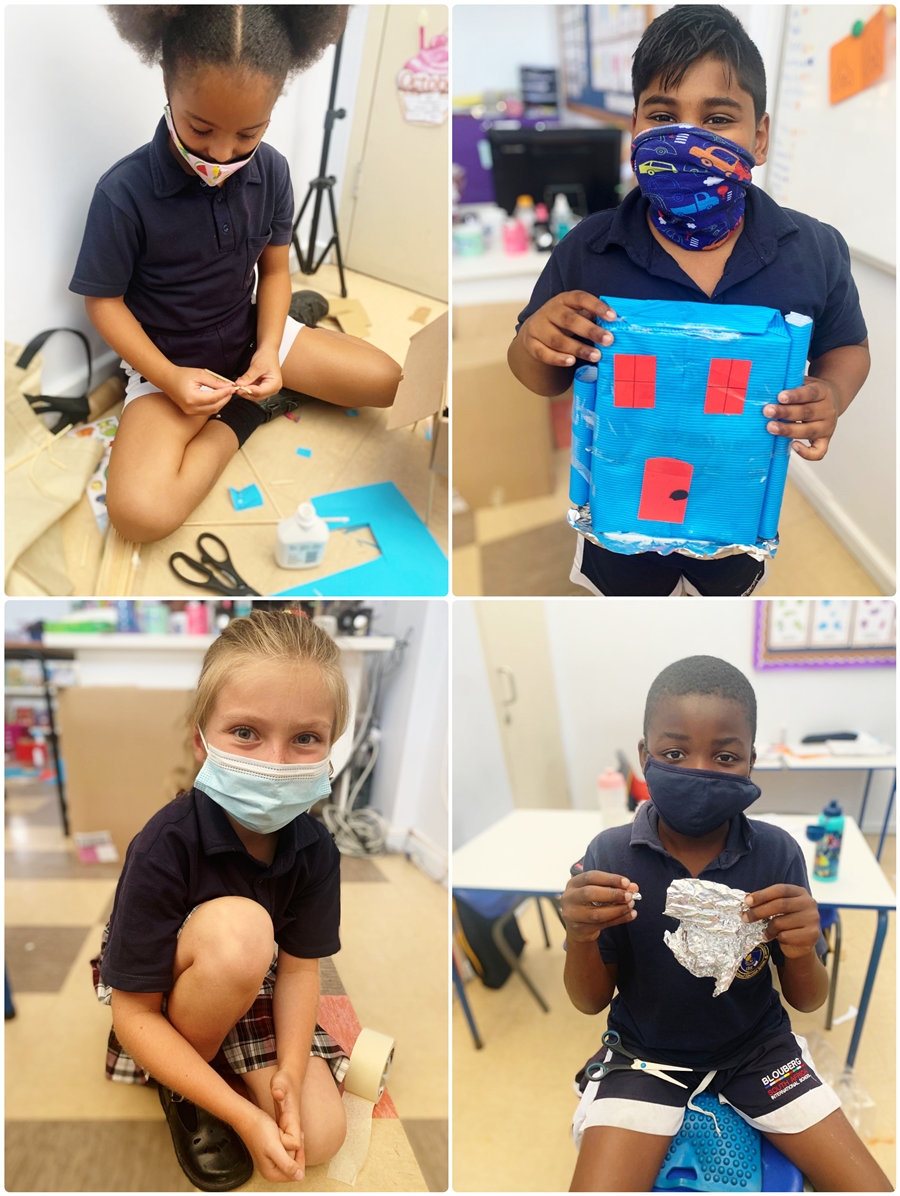
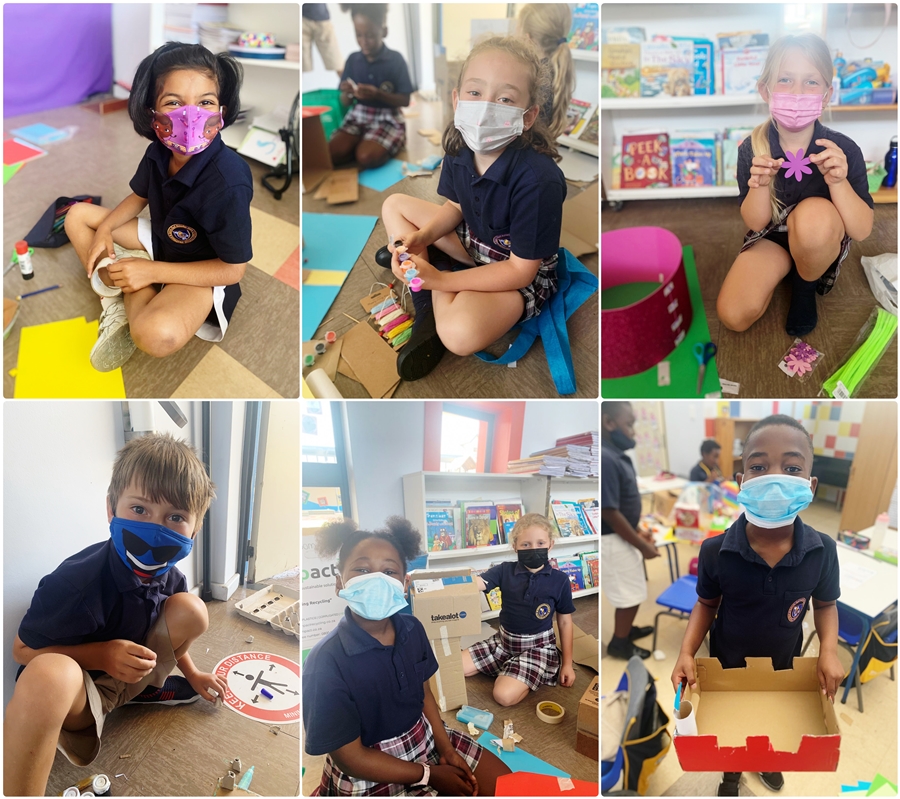
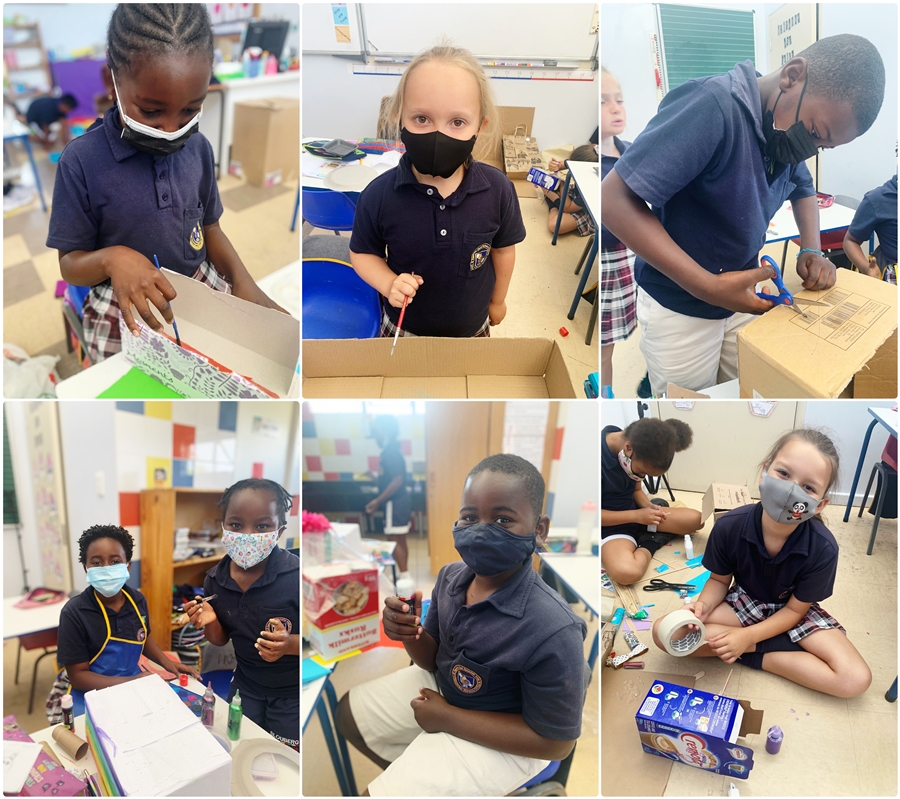
This term, for Art and Design, the Year 2’s have been learning all about what a living space is, and how it may look to different people and places all around the world. Throughout the term we have been looking at and learning about various kinds of homes as well as the kinds of people who may live there.
This week, each student was asked to choose the kind of home that interested them the most. Their task was to create a detailed plan showing how they would bring their chosen home to life. Then they were asked to bring all needed materials to school so they could begin the designing and building stage. We had all kinds of homes including, igloos, castles, boathouses, huts and even a tree house or two. So much fun was had!
Well done Year 2!
Siobhan Hendry
Year 2 Teacher
Read More
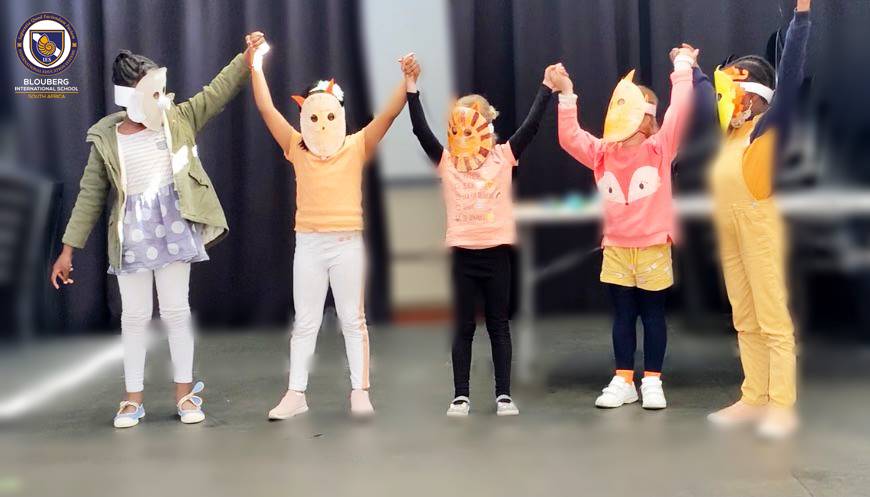
Art And Design – Performance Art
During term 2 and 3, the Year 1 students have been looking at patterns. In our lessons the students have been asked the question What is a pattern? They have looked at patterns around the world, and even created patterns of their own doing block patterns with potatoes and apples.
We studied patterns in nature and looked at patterns inspired by nature. The students then made animal masks for their Performance Art. In groups, the students created a dance to the song, Circle of Life from the Lion King. Then they performed their dance for their peers.
We had so much fun learning about patterns and really loved each and every performance.
Well done Year 1!
Ann Cordner
Year 1 Teacher and KS 1 Coordinator
Read More

Year 2 Sticky Construction Fun
“Through unstructured exploration, we foster the development of imagination and creativity.”
– Beth Rosenthal Davis
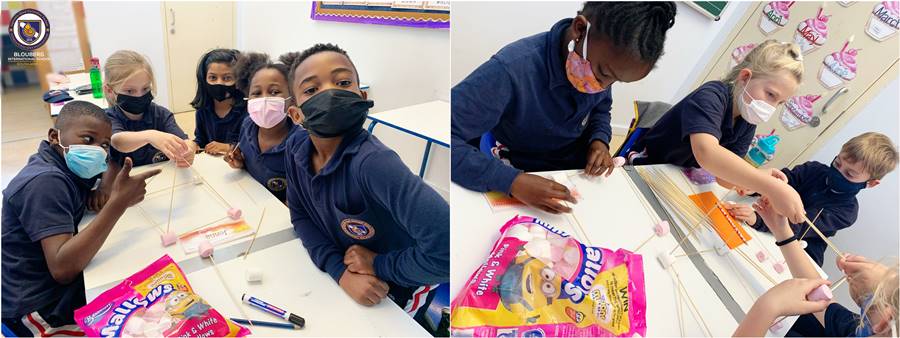
At the end of last term, our Year 2’s were split into small groups and given a bunch of marshmallows and skewer sticks. Their task was to create the tallest tower or most interesting construction, using only the marshmallows and sticks. Each group needed to first take the time to plan among themselves what they would envision building for their creation. They each drew some ideas onto a piece of paper and chatted about how they could bring their models to life, all the while learning to work as a team.
One of the biggest challenges they faced was how to create a strong foundation; one that would uphold and support their creation. The groups experimented with various foundation shapes and angles, very quickly learning which designs would hold a structure up and give support to whatever was to be built above it. Lots of trying and testing was done, but in the end each team had put together an equally unique and very interesting creation.
Sticky hands and lots to play with. So much fun!
Siobhan Hendry
Year 2 Teacher
Read More