Teaching History Online – Experience and Tips
I will be one of the first to admit that online teaching and learning certainly took some adapting to. My students and I rose to the challenge and I’m proud of what they have achieved.
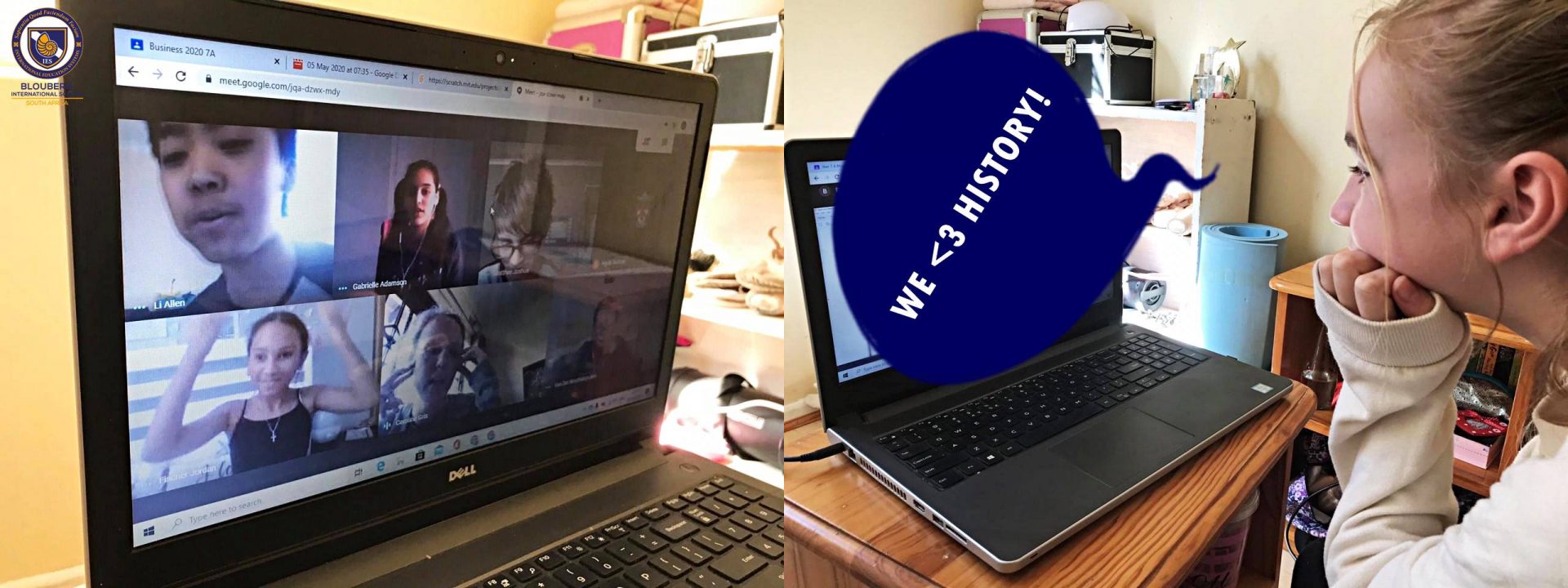
Once more traditional expectations regarding the teaching of History have been removed, one discovers that the subject rather lends itself to the online environment. While history may have been taught to many as a long (and very boring) list of dates, the best way to learn history is to study historical sources. This is where online learning comes into its own as students have more time and room to explore than they would in a conventional classroom setting. Many activities can be easily adapted to the online environment and even the shy students can make their opinions heard.
I’ll admit to being especially proud of my senior students. Their dedication and passion for the subject is extremely encouraging, as is their continued academic excellence. They are true Cambridge students in every regard. The world needs more diligent, creative and passionate individuals like them.
- Pace yourself and use your time effectively
- Remove distractions from your work environment (put the phone away)
- Plan your essays – it actually helps you to write faster
- Speak to the teacher if you are uncertain or experiencing problems – we are here to help
- Collaborate with your peers – online learning does not mean that you have to learn alone
- Shortcuts lead to long delays – complete that classwork task!
The Coronavirus has led me to think that it is likely more fun to read about history than to create it (the parts that make the History books at any rate). Will we study this in years to come?
Sheila Marais
High School History Teacher
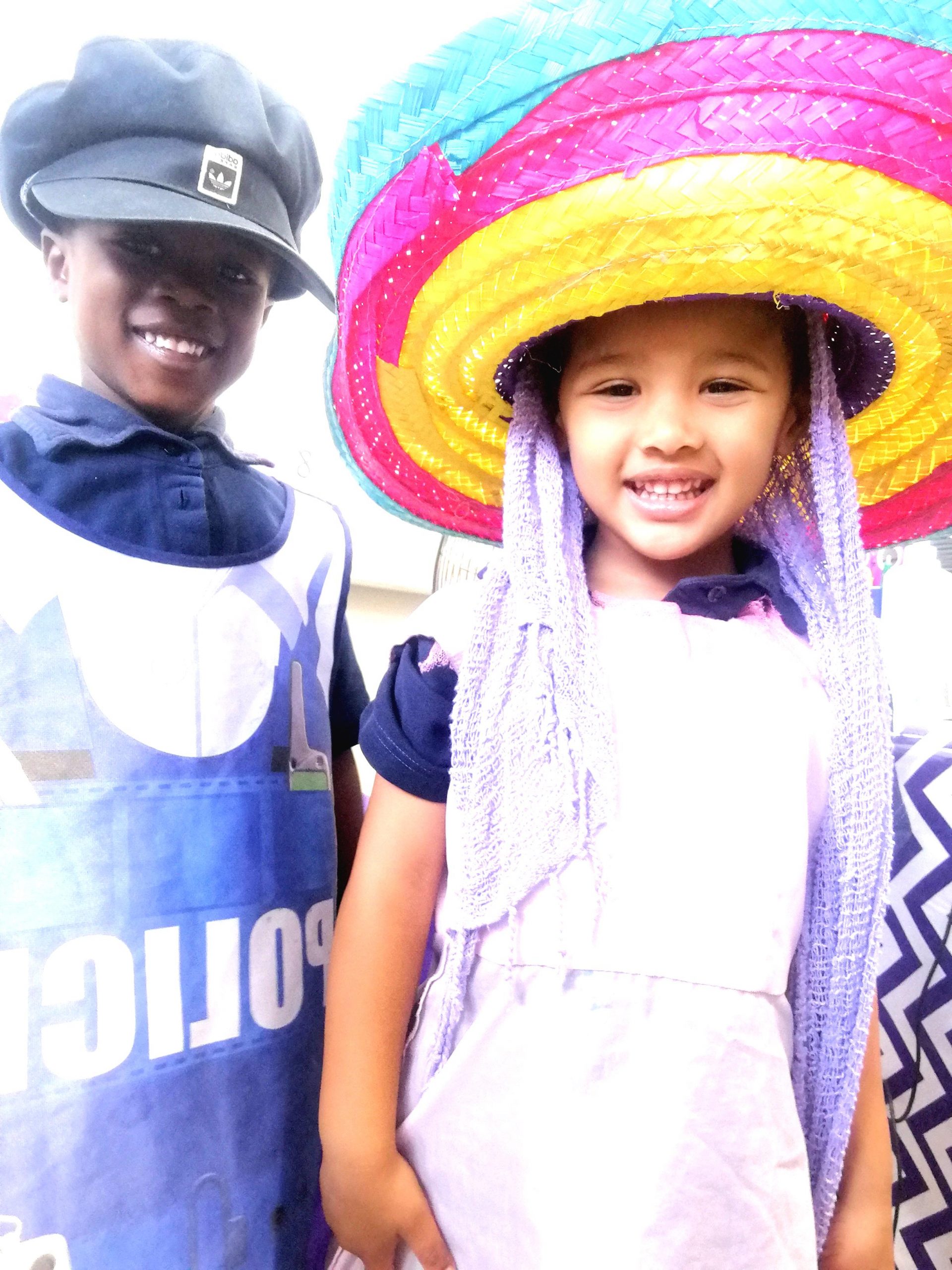
The importance of play – Pre-Reception Term 1 2019
“Play is nature’s means of ensuring that young mammals, including young human beings, acquire the skills that they need to acquire to develop successfully into adulthood”
– Dr Peter Gray
As I observe my Pre-Reception class and reflect over the first term, I can’t believe how quickly the time has gone by and how much they have already developed. “Time flies when you are having fun!” The students have settled into the class routine beautifully and for some of them it is their first time at school.
Each week they have learnt about different themes, identifying numbers and sounds, number and letter formation, pencil control, shapes, colours, done activities to strengthen their fine motor skills, complete patterns, the importance of sharing and taking turns to name only a few of the things.
As I watch and interact with my students, it strikes me that people don’t realize the importance of play and what they actually learn through play. During play children are thinking, problem solving, developing memory, planning, investigating, developing language skills, concentrating and learning many more skills… Play is healthy for children, it reduces stress and anxiety by providing an outlet. Play is the medium through which children explore and experience their world around them. It’s how they learn! To a child, playing and working or learning are the same thing.
I noticed the children in my class engaging in various types of play throughout the day:
Fantasy or Dramatic Play also known as pretend play or make – believe play which involves “acting out” ideas and role playing activities.
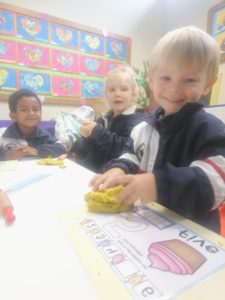
Sensory play involves stimulating the senses, tastes, textures, smells, colours, shapes and movements.
Investigative stage of play is when a child wants to see what happens when materials are manipulated in a certain way.
Competitive Play refers to games with rules that are more structured and may involve more than one player. My students love to play Hide and seek as well as Duck duck goose.
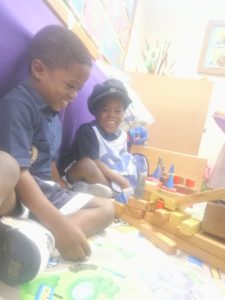
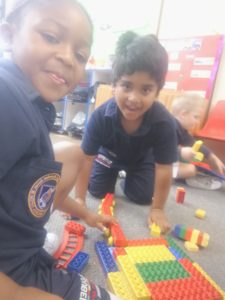
Constructive Play involves creating things and manipulating objects to make something. Some of the students really enjoy playing with the wooden blocks and building the most amazing constructions.
Physical Play refers to play that is purely physical, such as climbing a jungle gym, skipping etc.
Creative Play is about creating art using paint, crayons, cutting and pasting etc to express oneself.
Here are some tips how parents can support their child through play in the holidays:
-Allow enough time for play indoors and outdoors every day.
-Provide a safe environment.
-Play with your child and verbalise what they are doing and ask them questions to promote language development and problem solving.
-Allow your child to explore and get dirty during play.
-Provide stimulating toys and equipment.
-Encourage freedom of choice and do not interfere in the game.
-Provide clothes and accessories for dress-up play.
-Focus on the enjoyment of the game and not only on winning.
-Focus on games that teach mathematical and early reading skills.
-Play is not just good for your child but it’s good for parents too. Similarly to children, play helps parents relieve stress, mend and strengthen relationships and keeps everyone happy.
So the next time your children ask you to play with them, it’s not just good for them it’s good for YOU too!
Cindy Nunan
Pre-Reception Teacher