Integrating English and Design Technology in Year 1
In English lessons the Year 1 students have been reading stories about Bear, Dragon and Hedgehog. They have read and then acted out the stories. One of the stories was called, “What shall we make?” and the characters made a robot.
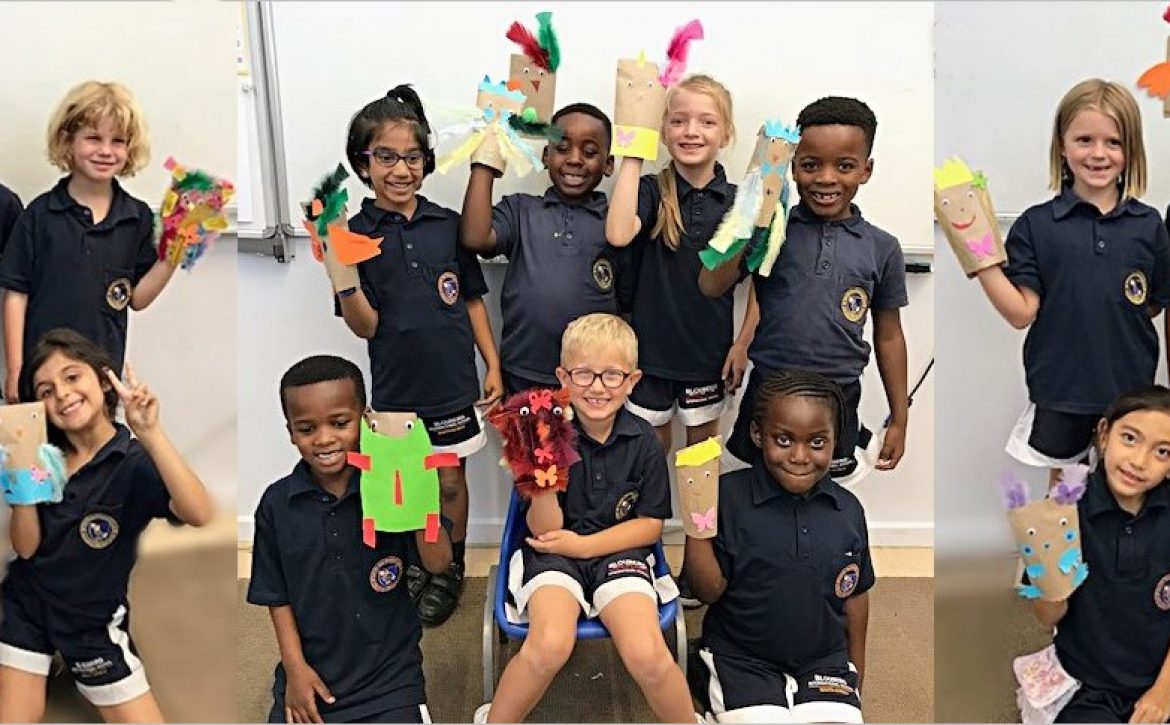
We decided that it would be fun to make puppets in Design and Technology, so the students could make up their own stories and perform a puppet show for their class. The students were given a small paper bag and two eyes, and then they had to use their imaginations to create their own puppets.
When the puppets we all enjoyed the puppet show.
Ann Cordner
Year 1 Teacher


Transport In Year 1 – Rockets
This term in Year 1 our History topic is Transport. The learning outcomes for this topic is for students to be able to identify different modes of transport through the ages and how they have evolved: road, rail, sea and air and to understand how transport has made a difference in our lives today.
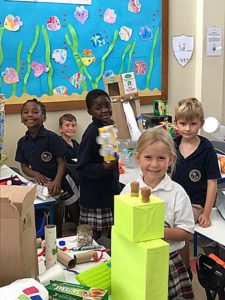
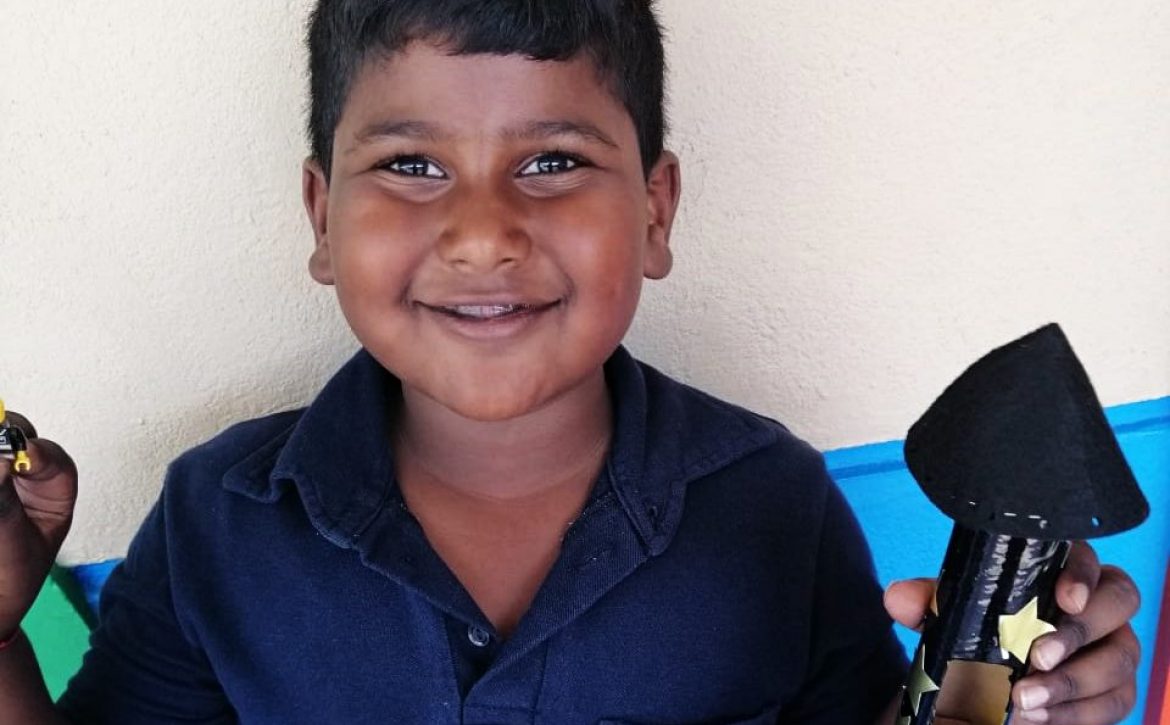
We integrated our Transport theme into our Design and Technology lesson by challenging the students to design and make our own Rocket Ships during class time. Students were asked to bring materials to school and they needed to build their rocket ship by themselves.
The Year 1 teachers were very impressed at the unique and creative Rocket ships the students built.
Tayla White
Year 1 Teacher

Creating Our Own Poetry in Year 1
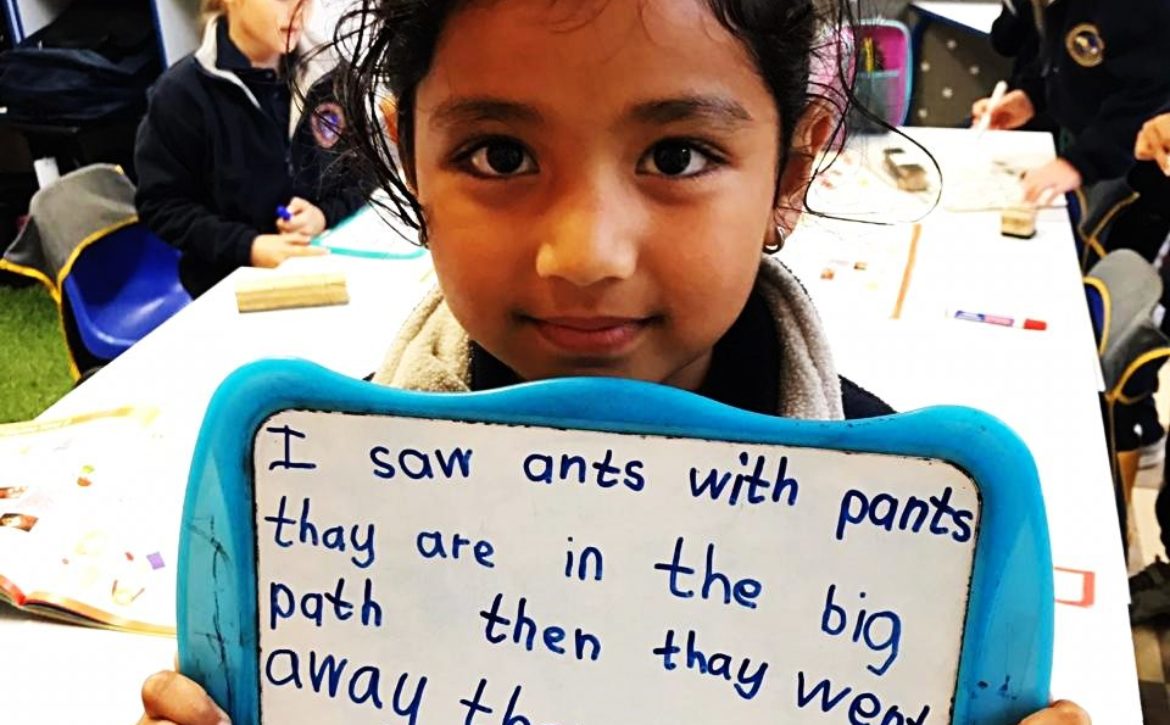
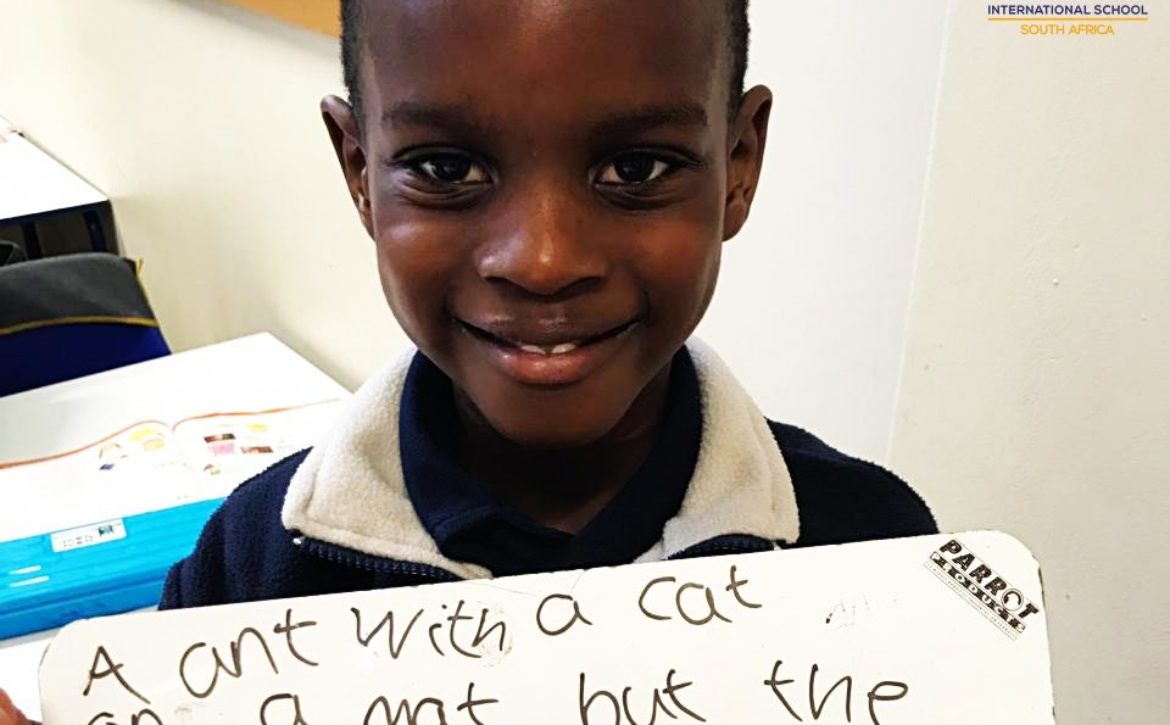
In Year 1 we have been learning about poetry. Poetry is so important because it helps us understand and appreciate the world around us. Using poetry, as teachers, enables us to teach our students how to write, read and understand any text.
Poetry uses powerful imagery, can be inspiring and can elicit powerful emotions, giving students a healthy outlet for their emotions.
Reading original poetry aloud in class can foster trust and empathy in the classroom community, developing speaking and listening skills. In our class the students had copious amounts of fun creating and writing their own rhymes and poems.
Charlotte Cronje
Year 1 Teacher
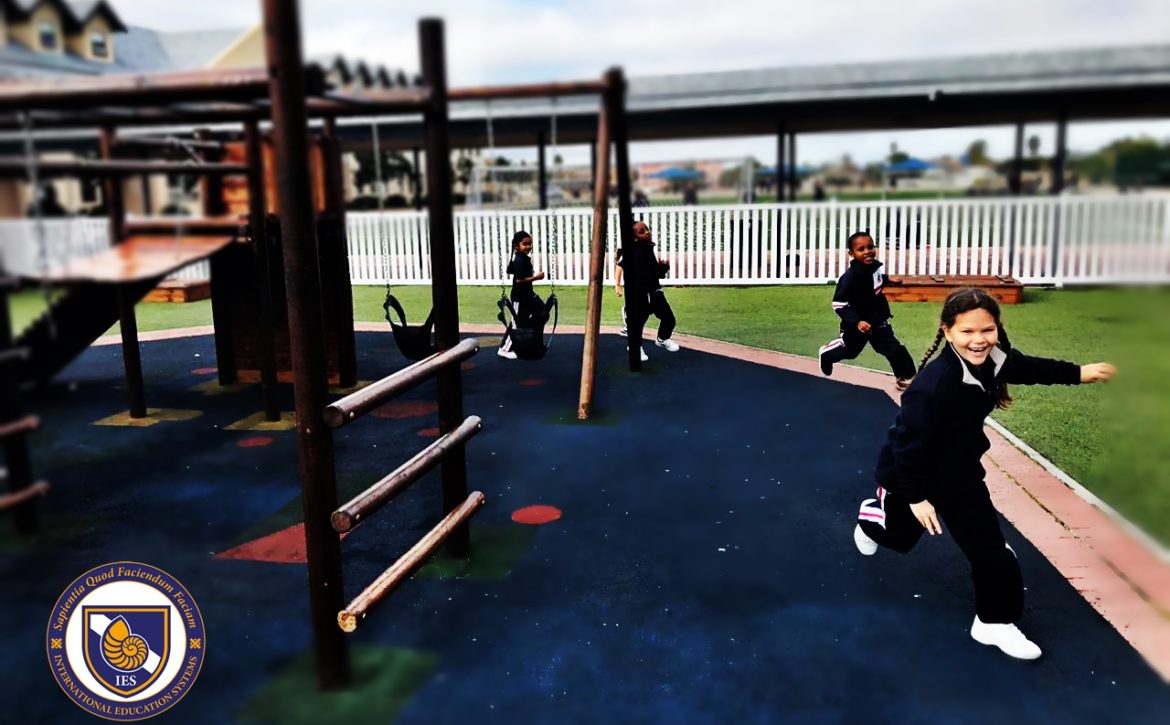
Play Time Is Important!
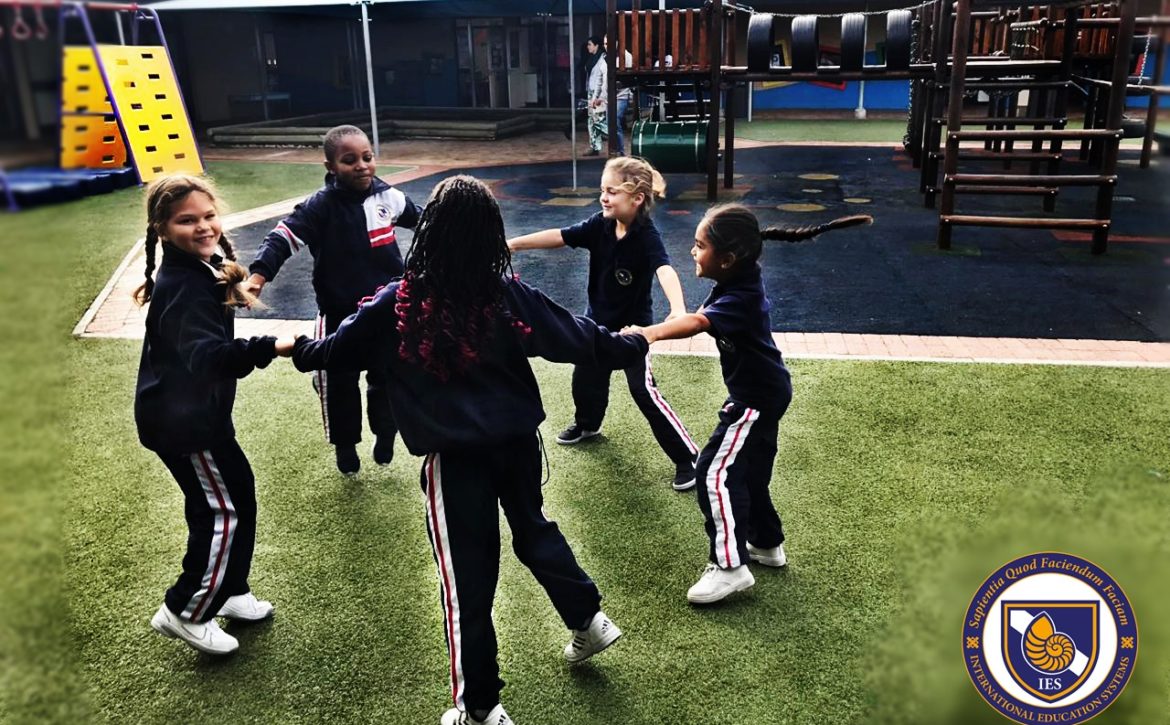
At school we recognise the importance of play time for students in every age group. There are so many benefits for them when they are given the time and space for all sorts of different kinds of play.
- Play allows children to use their creativity while developing their imagination, dexterity, and physical, cognitive, and emotional strength.
- Play is important to healthy brain development.
- It is through play that children at a very early age engage and interact in the world around them.
- Play allows children to create and explore a world they can master, conquering their fears while practicing adult roles, sometimes in conjunction with other children or adult caregivers. As they master their world, play helps children develop new competencies that lead to enhanced confidence and the resiliency they will need to face future challenges.
- Unguided play allows children to learn how to work in groups, to share, to negotiate, to resolve conflicts, and to learn self-advocacy skills. When play is allowed to be child driven, children practice decision-making skills, move at their own pace, discover their own areas of interest, and ultimately engage fully in the passions they wish to pursue.
Some of the greatest discoveries we will ever make is through play!
Charlotte Cronje
Year 1 Teacher


Key Stage 1: Grandparents & Someone Special Day 2019
“Grandparents are there to help the child get into mischief they haven’t thought of yet.”– Gene Perret
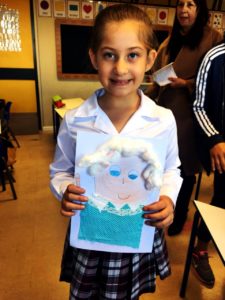
One of the most special bonds in the world is that between a grandparent and their grandchild. It is a relationship based on love, appreciation, fun and pure joy. This is why here, at Blouberg International, we take pride in having a special day in our year set aside for showing our grandparents just how much we love and appreciate their presence in our lives.
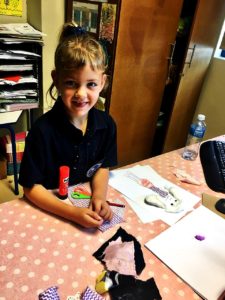
Our Year 1’s and 2’s spent the morning celebrating their Grandparents in song, in craft and in love. The day started off with a gathering in our main hall where our Grandparents and other loved ones got to hear our wonderful junior choir sing and perform, joined with a very special slide-show where a few of our fondest and favourite memories with the children were displayed. After which, all loved ones were escorted to our classrooms where we got to say a special poem for them, ask them some questions about their childhood and school days and then get super crafty together. Our children and their loved ones then enjoyed a special picnic together outside in the sun. Moments that will surely be treasured forever.
What a truly beautiful day it was!
Ms Siobhan Hendry
Year 2 Teacher



Interactive Curriculum Morning Term 2 – Key Stage 1
The Interactive Curriculum morning is a series of presentations covering different topics each time. All primary school parents are urged to attend these sessions as this is a vital platform for teachers to guide parents through the Cambridge curriculum.
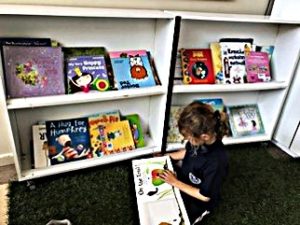
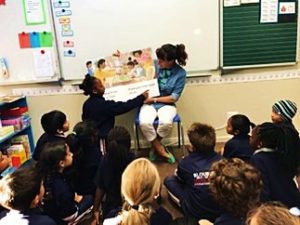
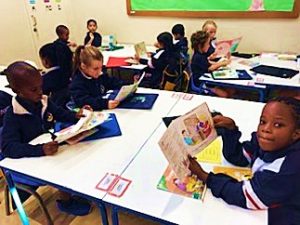
On Saturday, 4 May, Year 1 presented the Cambridge English curriculum to parents. I had the opportunity to present and discuss information about reading. The importance of reading cannot be emphasised enough. Parents and educators need to make every day reading a high priority. Reading enhances a child’s vocabulary, cultivates a vibrant imagination and ultimately helps them understand how to read and write. By reading aloud to children you are helping them comprehend various topics about the world and every day life form multiple point of views. This teaches them to think outside of the box and to reach conclusions by using more complex and creative methods.
Charlotte Cronje
Year 1 Teacher
KS 1: Problem Solving In Numeracy Counts
In Cambridge Primary the skills taught in numeracy, and most importantly problem solving skills, will apply to all learning areas throughout a student’s life. Problem solving is an interactive and fun way for the students to learn numeracy and apply new concepts taught. It produces positive attitudes and love towards numeracy. It teaches thinking, flexibility and creativity.
We encourage our students to teach each other how they got to their answer, their understanding of the concepts and how they apply it to other learning areas at school.
We rather ask the question: “How many ways can we solve it?” It is opportunity for them to learn from each other which promotes holistic development.
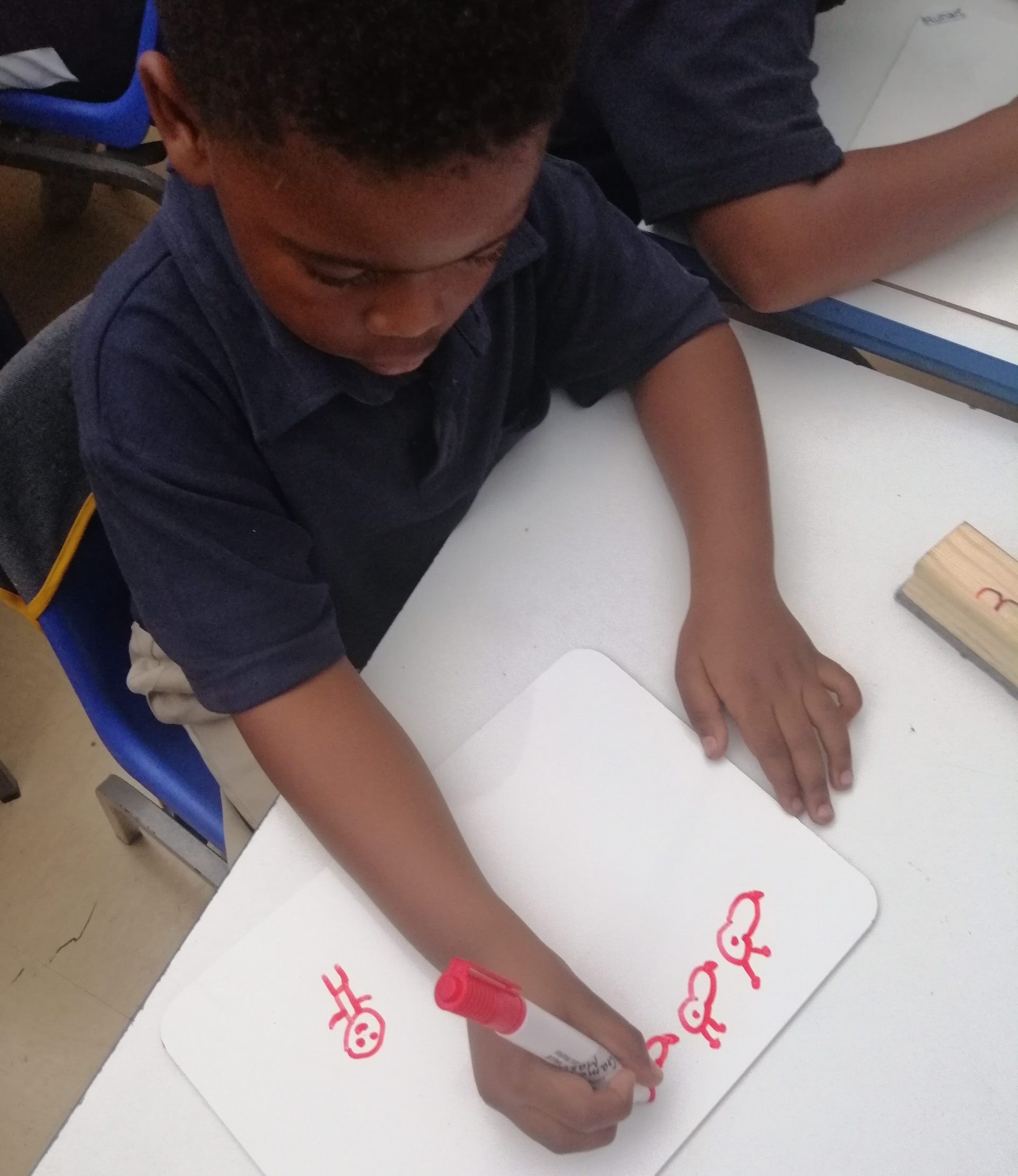
Our students are encouraged to use strategies of their choice and then solve their problem on their white boards so that we can identify the different techniques used.
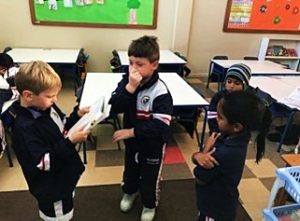
My class loves problem solving, here are some pictures of them solving problems in class:
Ms Tayla White
Year 1 Teacher

Imagining robots – Key Stage 1
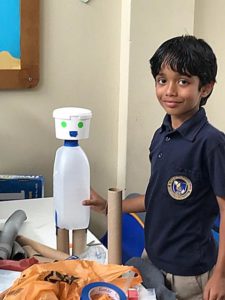
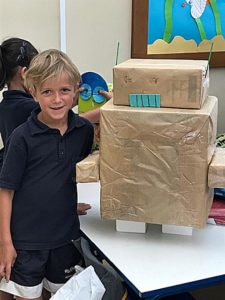
In literacy the Year 1 students have been studying stories by the author John Prater. These stories have been about the characters, Bear Hedgehog and Dragon. The Story “What can we make?” was about Bear and Hedgehog making a robot.
This really appealed to the students therefor in our Design and Technology lesson the students constructed their own robots. They designed these robots at home and then brought recycled material to school to build their very own robot. During the building process many of the students found that their design needed modification as materials could not join as they anticipated.
It is interesting to watch the students collaborate ideas and materials to help solve design flaws.
Ann Cordner
Year 1 Teacher