





Year 7 & 8 English – Assignments
What makes a good assignment?
This term, the Year 7 and 8 students had to complete a creative assignment for which they had a variety of options from which to choose. These ranged from practical tasks supported by explanatory theory, including dioramas and masks, to written assignments like articles and essays. All were aimed at revealing student understanding and interpretation of a literary text.
The Year 7’s focused on the drama Romeo and Juliet, by William Shakespeare, and the Year 8 students centered theirs around the novel Lord of the Flies, by William Goulding.
Having taught English for many years, I have seen students produce assignments that were of the highest standard, with insight and creativity beyond their years. In stark contrast to this, many students put little to no effort into their work, belying their capabilities.
I am pleased to say that the majority of students at Blouberg International School had my soul singing with their astute, inspired and detailed projects. What is more important is that they took on the challenge and were, through their intensive efforts, beaming with pride in themselves.
One might wonder what it takes to produce a project that will bring a teacher to joyful tears.
Beyond carefully following the instructions and ensuring that all of the necessities are included – which will certainly result in a good mark – there are a few ingredients every student could add to their scholastic recipes.
Below is a list of strategies every student should attempt when tackling their next daunting assignment:
- Begin with the task as soon as it is assigned. Even if you work on it a little every other day, this will provide ample opportunity to clarify concerns you may have with your teacher or to correct any mishaps that may arise.
- Pay attention to the instructions. Use it as a check list to ensure that you have included all of the elements essential to the task. Tackle every objective.
- Use the resources your teacher provides, but conduct your own research as well. There are many reliable sources online.
- When compiling your research data, use only key words and phrases from your sources and rewrite information in your own words unless quoting. Always cite your sources. Your teacher wants to test your skills and understanding, not that of a university graduate – or a parent.
- Include your own opinion, but ensure that it is backed by fact. One should not have the opportunity to question your ideas, they should clearly link to accurate information.
- Thoroughly edit your assignment to safeguard against any trivial errors.
- Work as neatly as possible. A task that is well-organised and tidy immediately appears of a higher quality and will be more pleasant to assess. It is arduous for teachers to mark work that is illegible or poorly structured.
- Use your own initiative, be as creative as possible within the task framework and go the extra mile. Teachers revel in the little details you include and enjoy it when you think outside of the box, sometimes astounding us with components beyond that of the grade requirements and insights we might not have considered.
Students who used all or most of these strategies in this term’s assignments deserve an honourable mention:
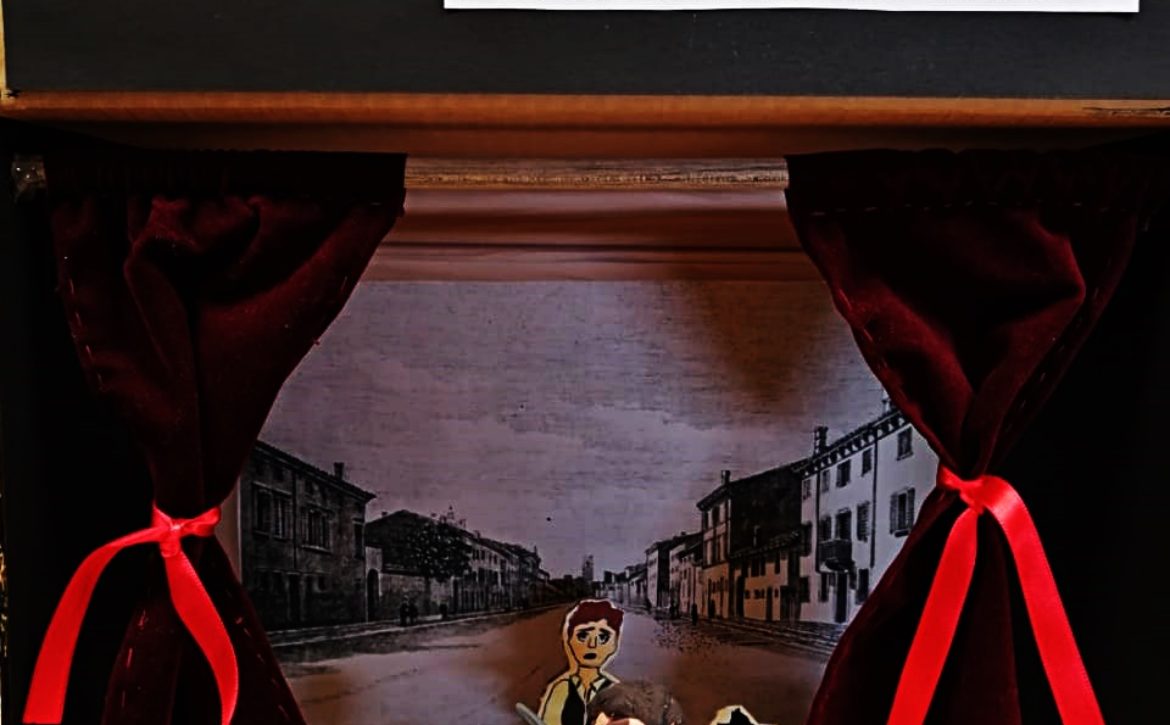
– Catherine Fortuin 7B designed a beautiful diorama for which she created clay figures on a stage setting in the throws of an important fight scene between Romeo and Tybalt. Her talent and attention to detail is admirable.
– Marco de Mattos 7A cleverly included a public announcement and advert with his article about the deaths of Romeo and Juliet.
– Maya Mthwana of 7A designed a well-written, neat article, closely adhering to layout requirements.
– Mihlali Lumkwana of 7A went to great lengths to create her storyboard for Act IV in Romeo and Juliet.
– Ryan Barker in 8A put great effort into his Lord of the Flies Survival Manual. He’s the one with whom you want to end up stranded on a deserted island.
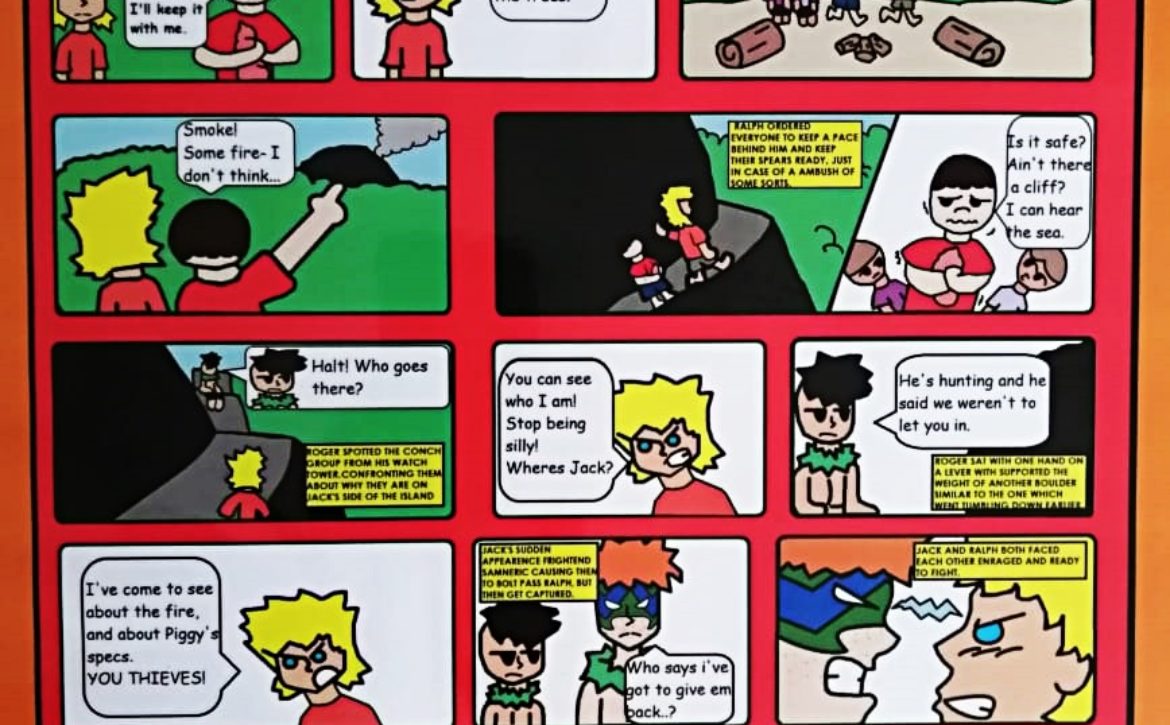
– Vincent Chamunorwa, 8B, designed an inspiring cartoon for Chapter 11 of Lord of the Flies. He has incredible talent!
– Athena Thomas, 8B, has a gift for watercolour painting. Her contributing explanation as to what Piggy’s glasses in Lord of the Flies represents was thorough.
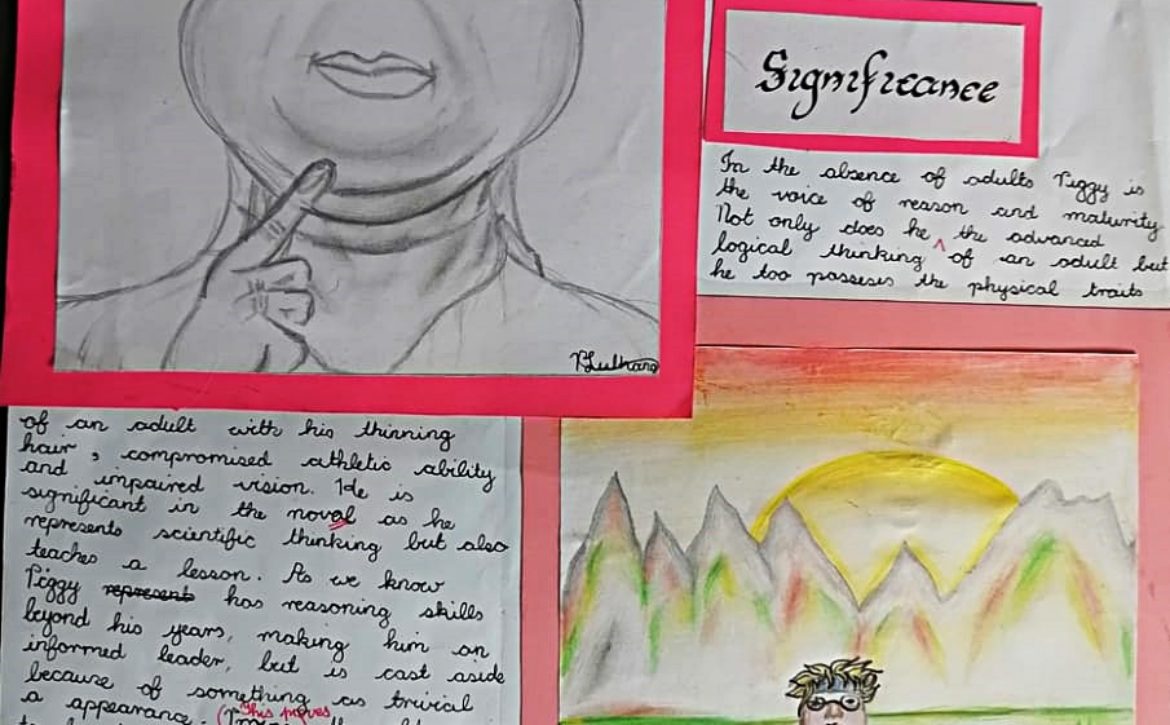
– Philade Luthango’s poster (8A) about the character, Piggy, immediately caught everyone’s attention due to its bold design and beautiful drawings.
– Layla Moodley, 8A, went the extra mile by designing a symbol to represent each chapter in her plot diagram of Lord of the Flies.
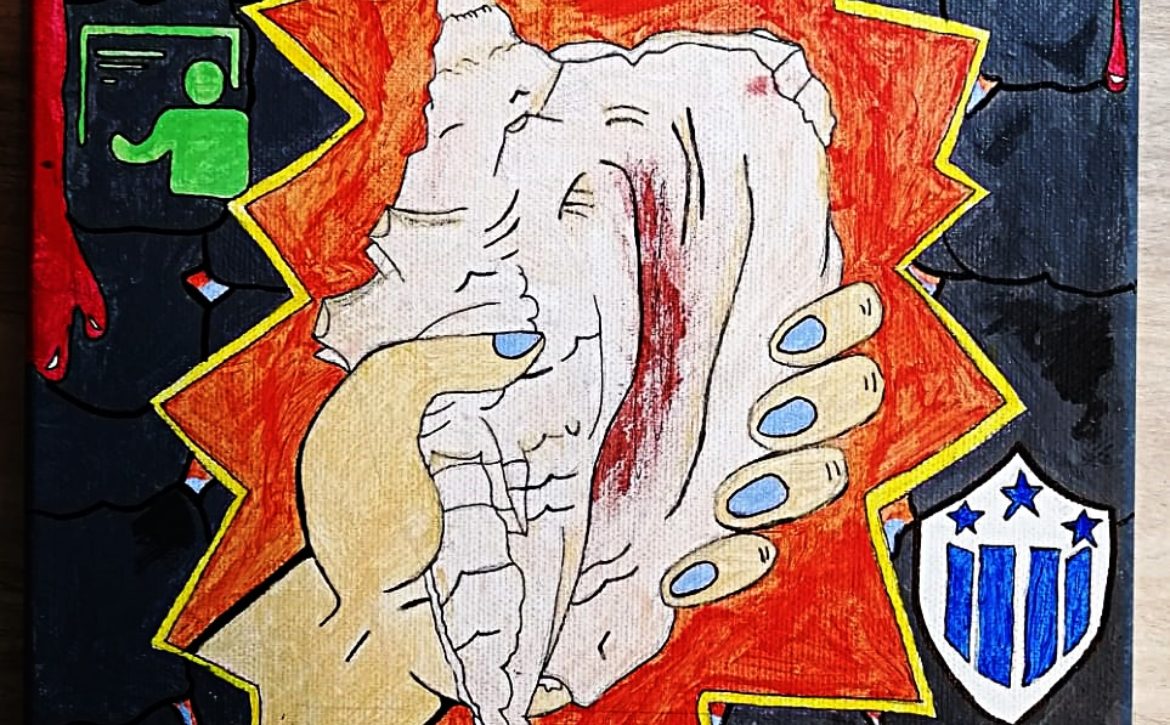
– Taylor Williams, 8A, not only painted an extremely detailed image of the conch from Lord of the Flies, but ingeniously included symbols associated with it and presented her explanation on a creatively designed poster. Her attention to detail is admirable.
– Mia Ross in 8B moulded these fantastic masks to her own face and painted them to represent characters from Lord of the Flies. There is even symbolism in the colours used.
– Oscar Berger, 8B, wrote a fantastic essay in which he explored the theme of Civilization versus Savagery in Lord of the Flies. His oral presentation was accompanied by a PowerPoint presentation filled with bold sub-headings and images to bring his points home. This was a far better option than simply reading out his essay.
There are more students I could individually praise, but alas I will simply state that I am ever so proud of all of the Year 7 and 8 students as I know that they put in their best effort.
Genevieve Kerswill
High School English Teacher