


















From The German Classroom
“What’s red and black and brings good luck?”
If you ask anyone in Germany the above question the answer would be, the Marienkäfer! This is directly translated as the ‘Marie bugs’, also called Ladybug, Lady beetle or Ladybird as we know it. In many cultures they bring good luck and in Germany they are a popular good luck charm also called a Glückskäfer the ‘lucky bugs’. The true Marienkäfer is red and has seven spots. Red symbolizes love, while seven is a lucky number for some.
This is all attributed to the fact that they were traditionally seen as a gift to farmers because one Marienkäfer can eat up to 5,000 aphids and other common garden pests, in a year. A legend has it that the farmers in Europe prayed to Mother Mary when pests were destroying their crops. At this time of crisis, ladybirds came as their rescue, destroying the pests. Since then, the farmers named them “the beetle of our lady” and love them because they eat aphids and other plant-eating pests and save their crops every year.
The German people not only see the Marienkäfer as good luck, but also as a sign from nature that the summer has at last arrived in Germany usually after a very long winter. During summer, when they are most active, these incredible insects can be seen fluttering around or walking on the leaves of plants to the delight of the young and old. A group of Marienkäfer is called a loveliness, which so aptly describes them.
But as soon as it turns cold and autumn arrives in Germany, the Marienkäfer looks for a warm, secluded place to hibernate, such as in barks of trees, in logs, under rocks or even inside houses, usually with other ladybirds in groups of up to 1000. They then only come out the next summer.
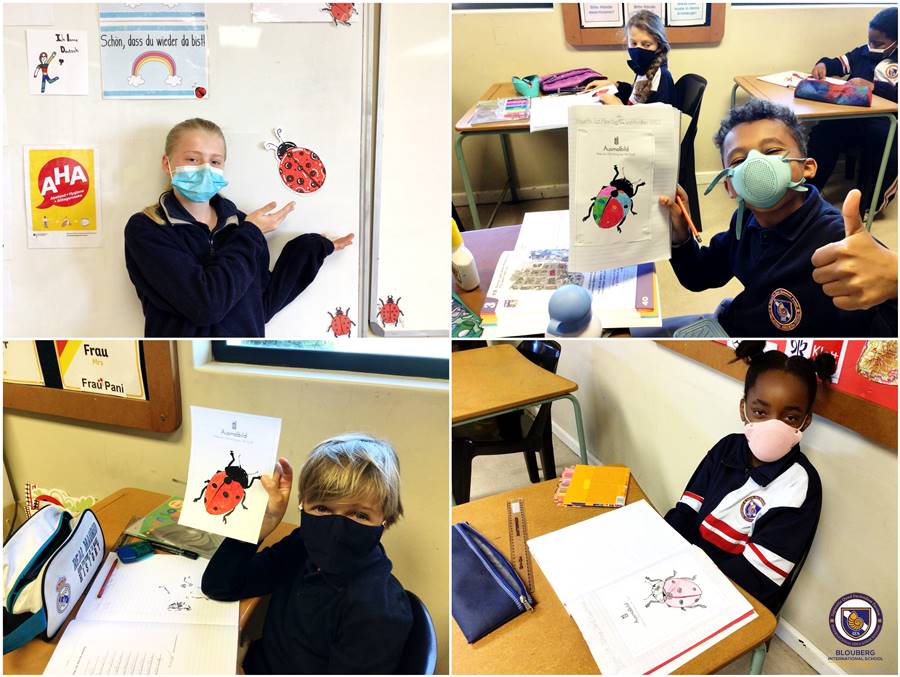
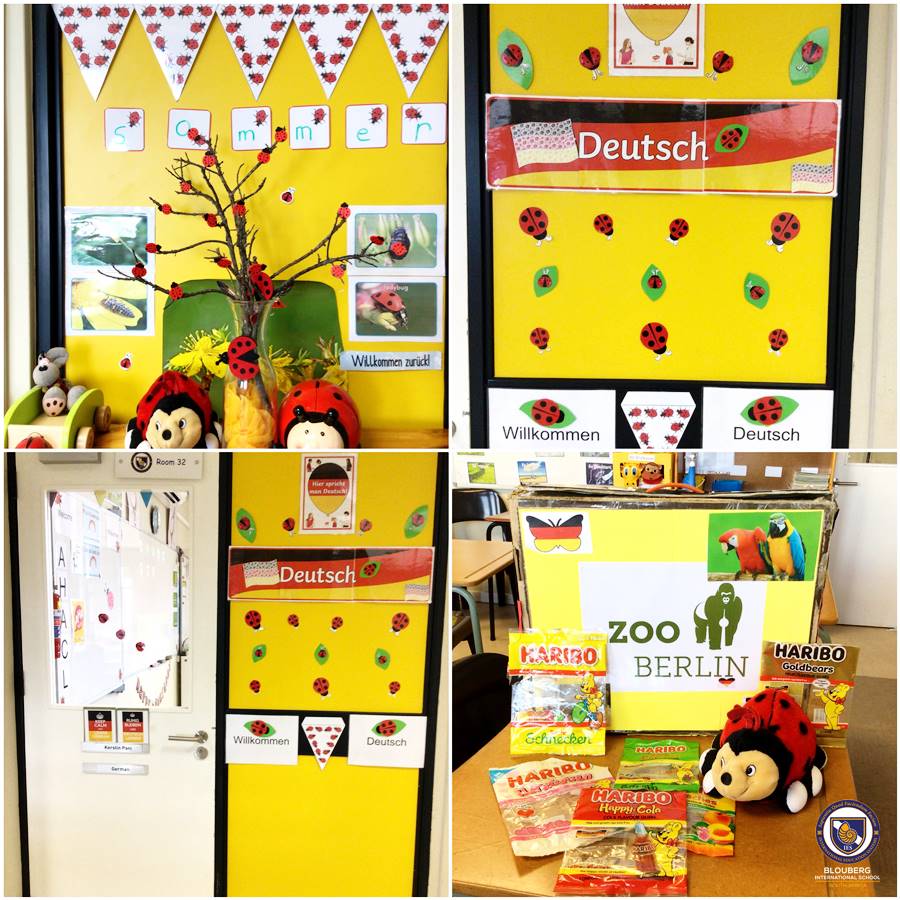
The German classroom received a special visitor from Germany this term, all the way from the Berlin Zoo arriving in the animal transport suitcase that travels between Berlin and our classroom at Blouberg International. The students in Year 1 and 2 were especially intrigued at what had arrived and were very excited to meet Marie the Marienkäfer. The animals from the Berlin Zoo also sent us a few packets of Haribo, the special German gummy bears, but we were surprised when we found all the packets empty and really wondered who had eaten them on the way from Berlin.
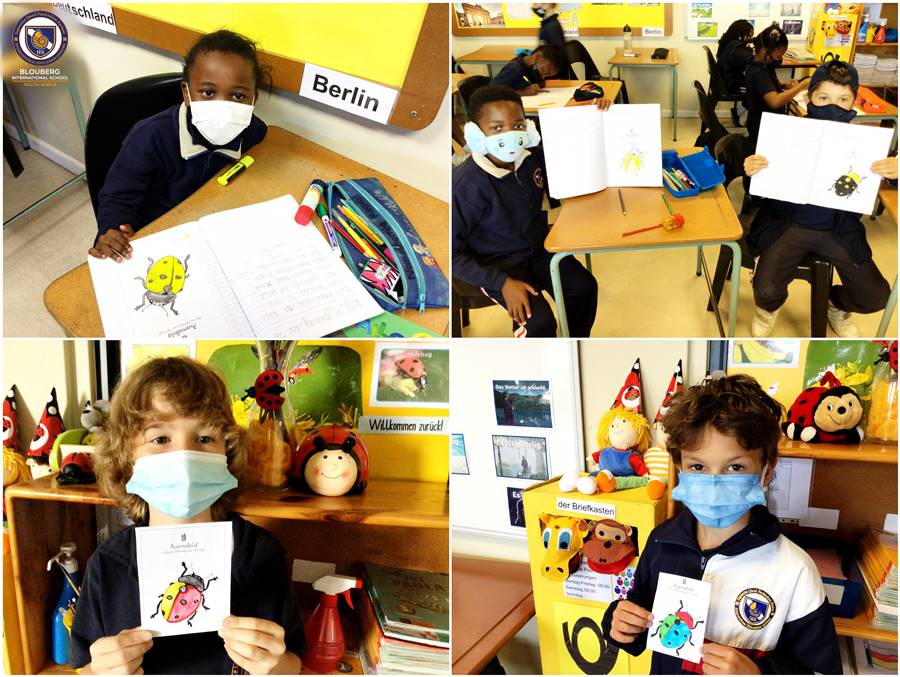
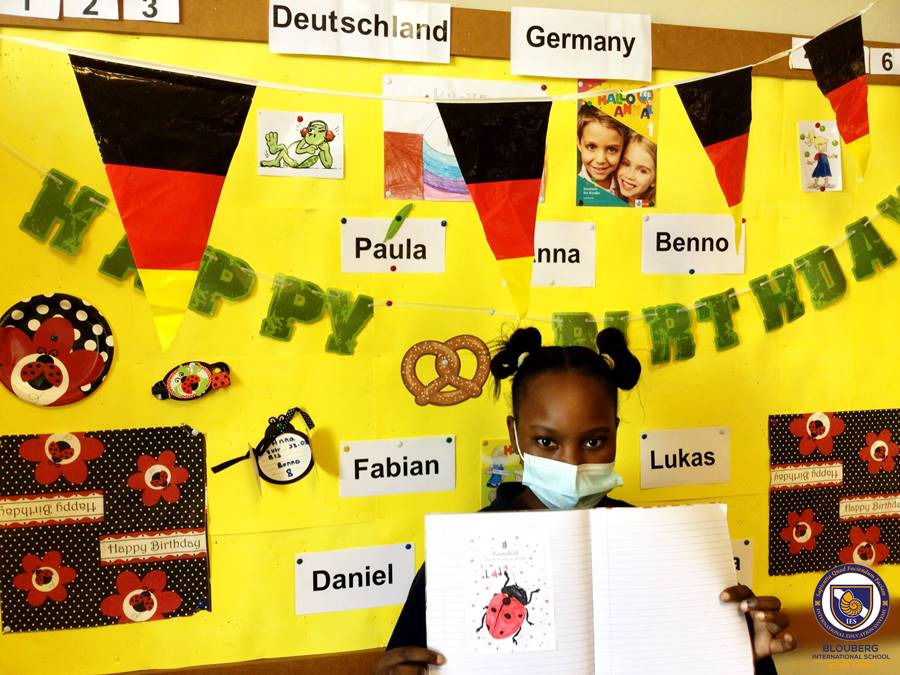
We also discussed the lifecycle of the Marienkäfer and we were fascinated by this little creature. Some students were also inspired to draw pictures of them and we included Marie in our greetings and songs at the beginning of the German lesson.
In Germany, the summer has come to an end and sadly the Marienkäfer are going into hibernation, but they will be back and are eagerly awaited next summer.
A student asked me this week if Marie the Marienkäfer will be returning to Germany and I was happy to let them know that she will be staying in South Africa to enjoy the coming summer months with us in our German classroom.
Have a good spring break.
Frau Kerstin Pani
Primary School German Teacher
Here are some links with more interesting information on the Marienkäfer:
https://www.dw.com/en/gl%C3%BCcksk%C3%A4fer/a-16555043
https://www.animalspot.net/ladybugs
https://www.natgeokids.com/za/discover/animals/insects/ladybird-facts/

From The Spanish Classroom
Some language teachers will say that one of the most important aspects of teaching, especially when the language is not spoken at home or outside of the classroom, is pronunciation. Many times, this can be difficult to apply in the class, because in the process of achieving our final goal of getting our students communicating in Spanish, we don’t want to discourage them. Sometimes we overlook pronunciation errors for the greater good of creating a positive learning environment and giving them the necessary confidence to start speaking the foreign language.
In my opinion, pronunciation can be something to improve on in the later stages of learning a second language or at least not be the focus in their first years. I am more prone to the idea of improving pronunciation in a more natural way, giving them some tips during class when they are learning new vocabulary, rather than during their oral presentations.
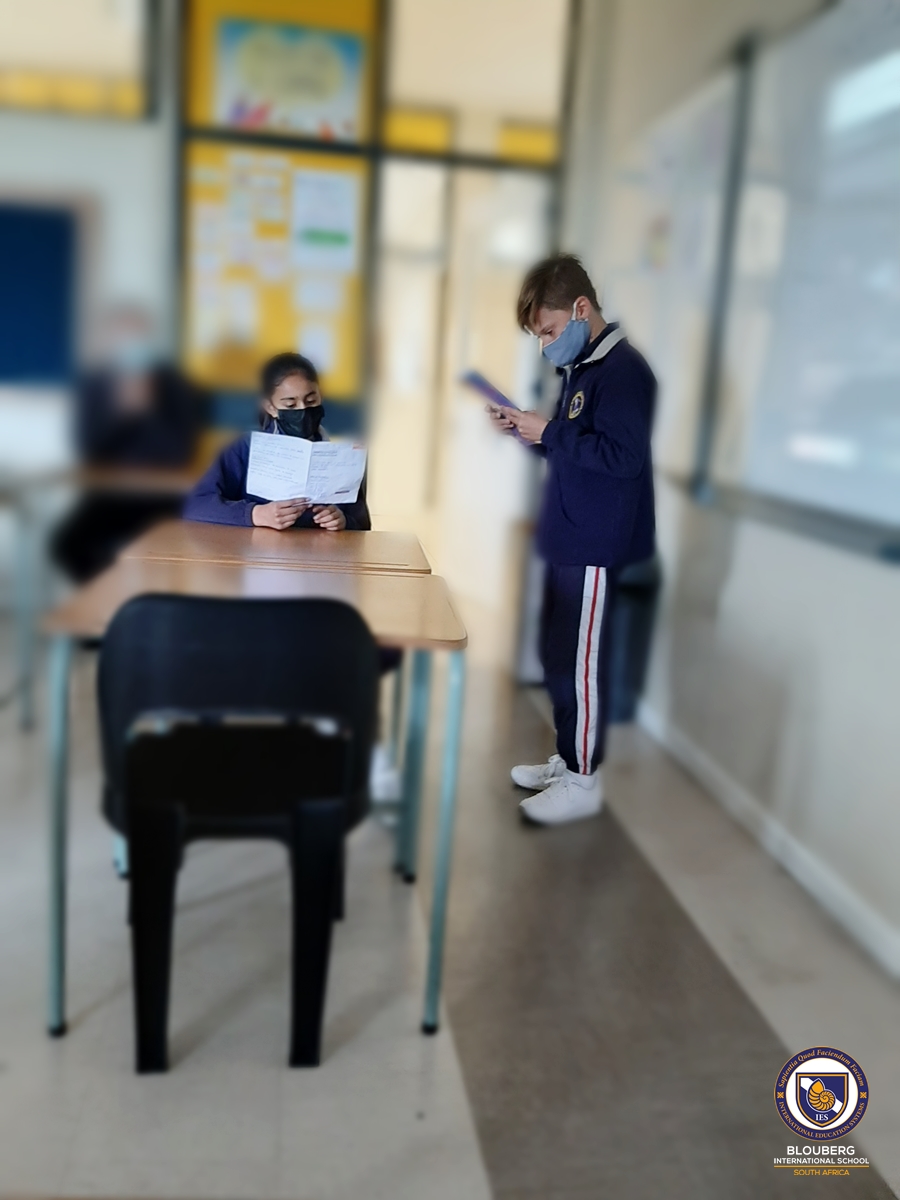
At Blouberg International, one my favourite ways of teaching the correct pronunciation is through songs, stories, and role plays.
Songs are the perfect resource for teaching pronunciation, especially when they have great rhythm, related and comprehensible vocabulary, and have repetitive and memorable lyrics.
Cesar, the creator of Rockalingua, explains it this way: “Focuses on creating songs that combine useful vocabulary with functional language structures, rhythm, and ample opportunities to repeat the words heard, using the pronunciation presented in the song.” I completely agree with him. Songs are a great way to practice meaningful listening while you work on pronunciation, but stories are as well.
By listening, reading, and creating stories – especially for the Year 5 and 6 students – that they can replicate using their own vocabulary during the role-play lessons, the students absorb more vocabulary in a more relaxed, practical and fun environment.
It is very important to listen to the stories more than once:
- The first time you can focus in identifying vocabulary and expressions that you have learned during the class.
- The second time focus on the content, try to understand the whole story.
- The third time you can focus on the pronunciation.
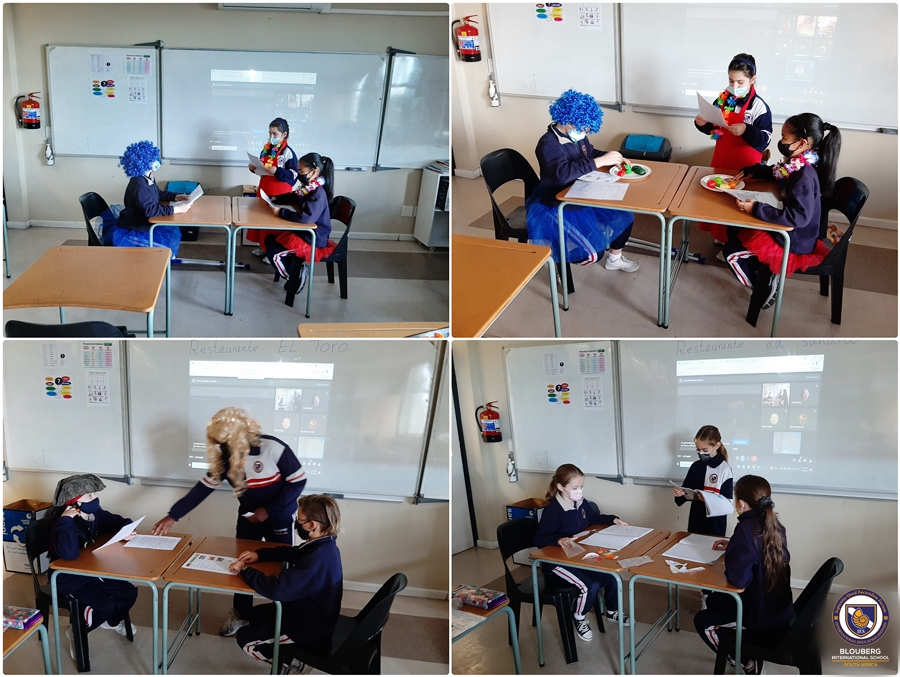
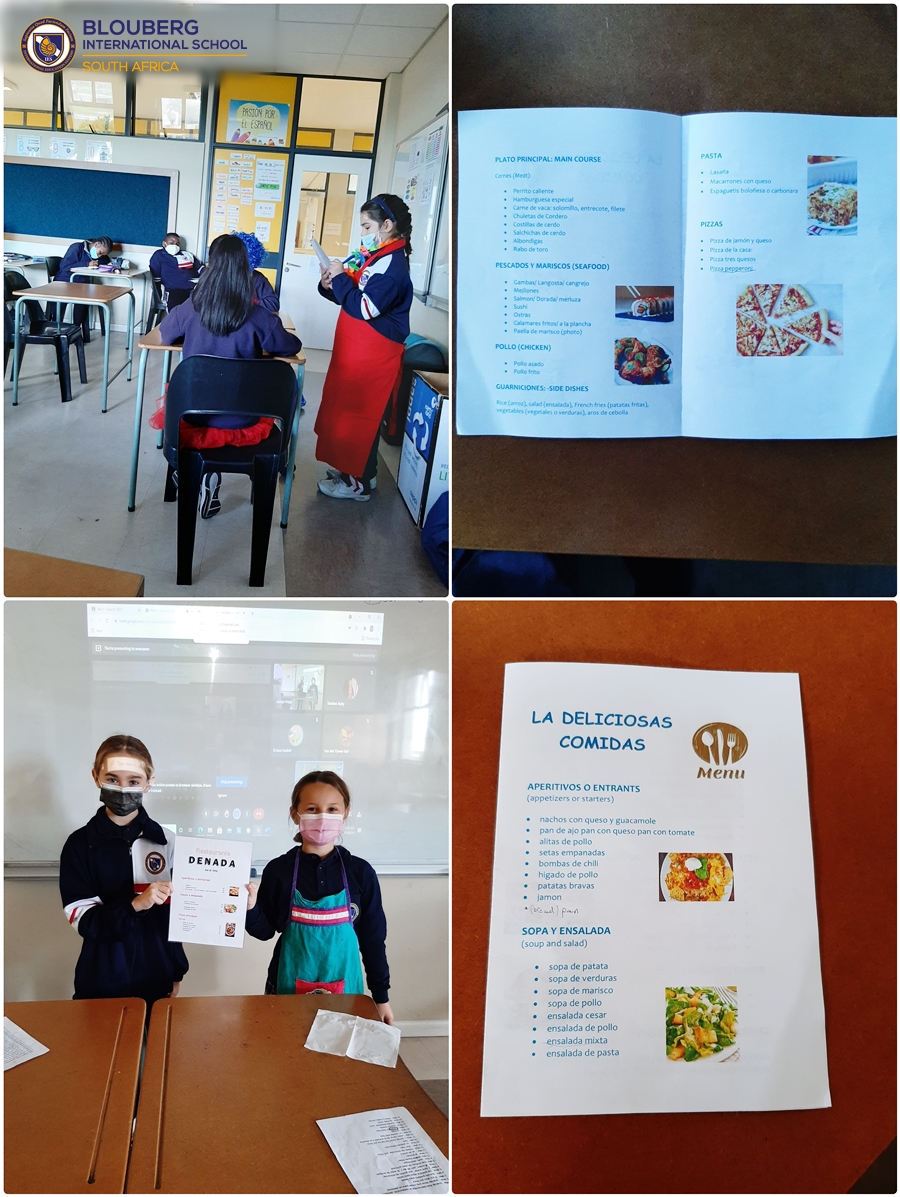
A good example of this is the Term 3 Year 5 project about the restaurant. This can apply to any topic that you wish your students to learn…
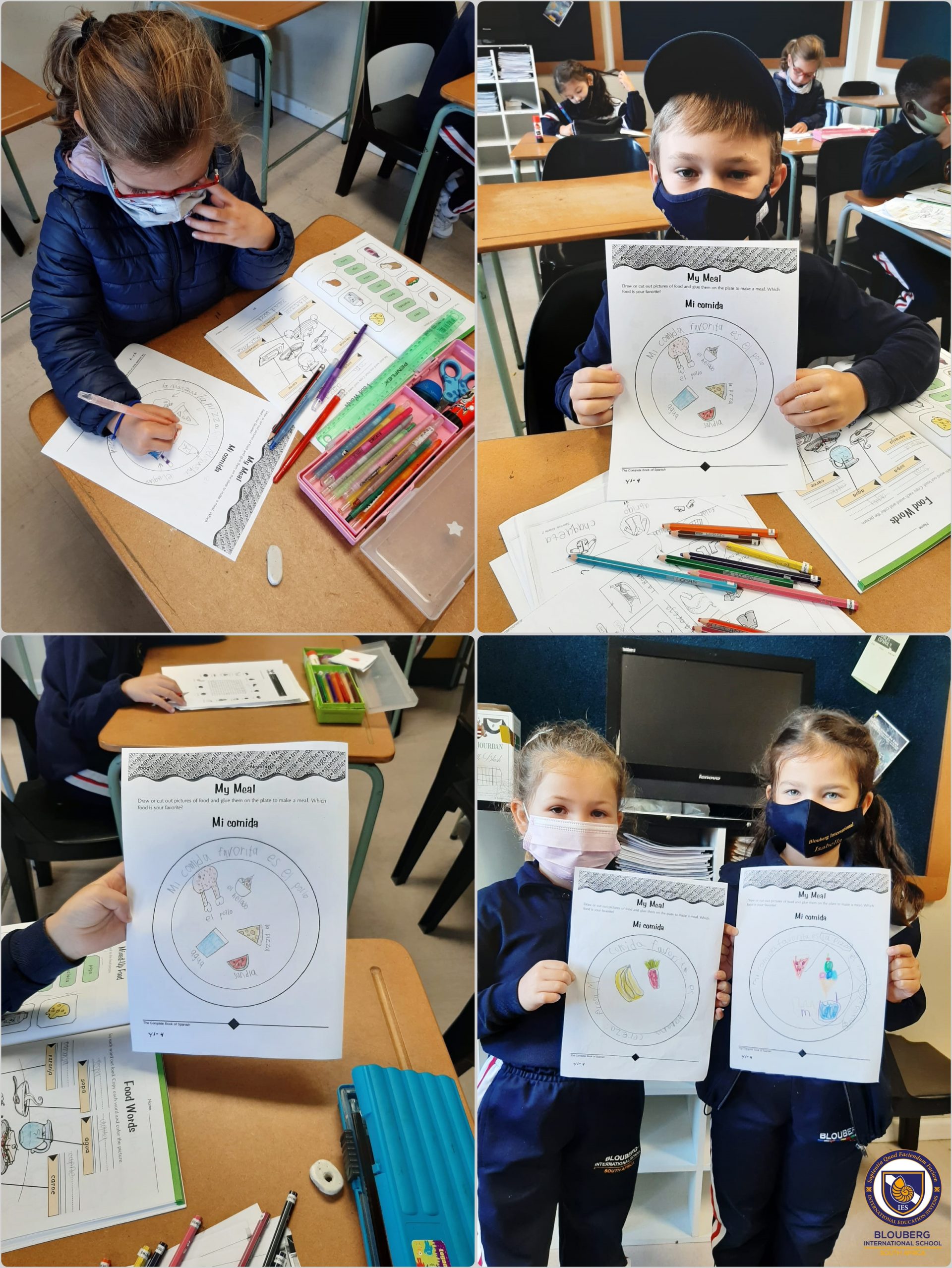
– Students learn the vocabulary and expressions related with the food. They also make use of book practice and Rockalingua.
– They create a menu with the food related vocabulary for their role-play.
– Add some relevant grammar to the mixture. “I would like; I prefer; I want or need”.
– Create a story using those expressions and vocabulary for the students to listen and practice during the class with some questions at the end.
– They need to decide the name of the Restaurant and the menu.
– Ask them to create a similar story and present it to the class.
I look forward to seeing my students develop even better pronunciation as the year progresses.
Javier Vidal
Spanish Teacher
Read More
All About Recipes
“Cooking with kids is not just about ingredients, recipes and cooking. It’s about harnessing imagination, empowerment and creativity” – Guy Fiery
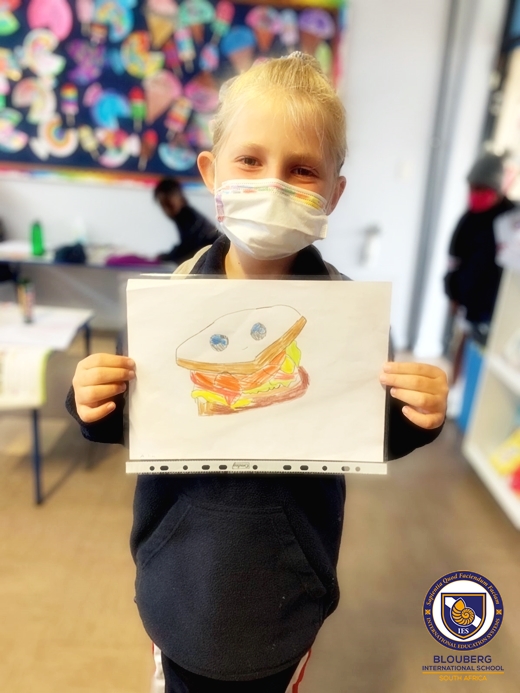
Last week for Show and Tell, our Year 2’s were asked to each bring a favourite recipe with them to school that they could chat to their class about. They were expected to tell their friends about the ingredients you would need as well as the method and instructions needed to create your culinary masterpiece.
Some leaners made beautiful posters, some drew their own pictures of their desired recipes and others even went as far as actually making their dish at home and bringing some to school to show us. Some exciting recipes included chocolate brownies, sandwiches, banana bread, cupcakes and even some chocolate cake.
Following instructions in any area of life can help young children learn and practice some basic math concepts and build language skills. In this specific area, following a recipe and the experience of creating meals with family and friends can help to build self-confidence and lay the foundation for an understanding in where food comes from, how we use it to express ourselves as well as a good practice in healthy eating habits.
We immensely enjoyed exploring each learner’s foodie favourites. So much fun was had!
Siobhan Hendry
Year 2 Teacher


Year 5 Measuring Shadows
Over the past few weeks, the Year 5’s have been looking into shadows; How they are formed, what factors affect their size, and how they change in position and size throughout the day.It is one thing to listen to someone else’s conclusion as to why things work the way they do, but another to investigate it yourself – and our budding scientists have been doing just that! What happens to a shadow when the light source moves further away from the object? Well, ask any of our Year 5’s and they will not only be able to explain it but demonstrate it as well.
Working in pairs, our little investigators hypothesized their predictions and set out to read and record as much data as they could in order to make it a fair test. From these results, they drew conclusions about how the distance between a light source and an object affects the size of it’s shadow – and had buckets of fun while doing so!
Robyn Pieters
Year 5 Teacher


Fun – Useful – Interactive – Comprehensible – Accessible
Many people think that the teachers have a lot of holidays during the year, well that can be true – what they do not know is that perhaps half of that time or sometimes more, we are researching new ways of presenting our subjects and the content in a more attractive format for our students.I believe that we need to allow ourselves time to explore new methods of teaching and, as a second language educator, my goal is to try to minimize the specific grammar that the students need to learn or at least present it to them in a more appealing way.
In addition, the ways that they learn have changed completely with the new technologies and the use of electronic devices. The time that they are able to “hold” their attention on you is scarily short.
For all these reasons, I personally believe that by creating your materials you can connect better with your own students and adjust the content to the topics that you are explaining in class. I also feel more confident and passionate about resources of my own creation.
When I am in the process of designing these new materials, I always have the below points in mind:
Make it as FUN as possible: The materials need to be fun in content and format, so you can connect easily with the students. They need to “forget” that they are learning another language. Engaging them from the beginning. This will also help to increase their participation in the lessons – key factor in their learning.
The materials need to be USEFUL: In my view, this means that the students can apply what they are learning to real life situations, ordering food, going shopping, booking a hotel room, and introducing themselves. So, the question that I will ask myself is: Are the material useful as well as fun? Will I be using these expressions in a Spanish speaking country if I was their age?
Create INTERACTION: When creating a story your students need to be part of it. Just to read the story to them it is not enough, they can finish the story, you ask questions about what is going on, or you can create a similar story with them.
Firstly, introduce all the vocabulary, adjectives, verbs, or expressions to them so it is COMPREHENSIBLE – that needs to be familiar for them to keep the focus and understanding. Creating the story with the topics and grammar that they are learning during the term will help me with this point: story at the school (school objects and subjects, facilities at the school, adjectives related with the teachers), going shopping (clothes, colours.) translate it with them first and then we read it again, answering basic or more complex questions depending on the year group.
Finally, all the materials must be ACCESSIBLE: I continue posting all the materials in Google Classroom, so my students can always access these, and they can send back their stories or questions.
Javier Vidal
Spanish Teacher


Teamwork Makes The Dream Work!
The Year 4s have been learning about Making Peace and Helping People To Belong as part of our Global Perspectives unit.
We’ve explored important questions such as:
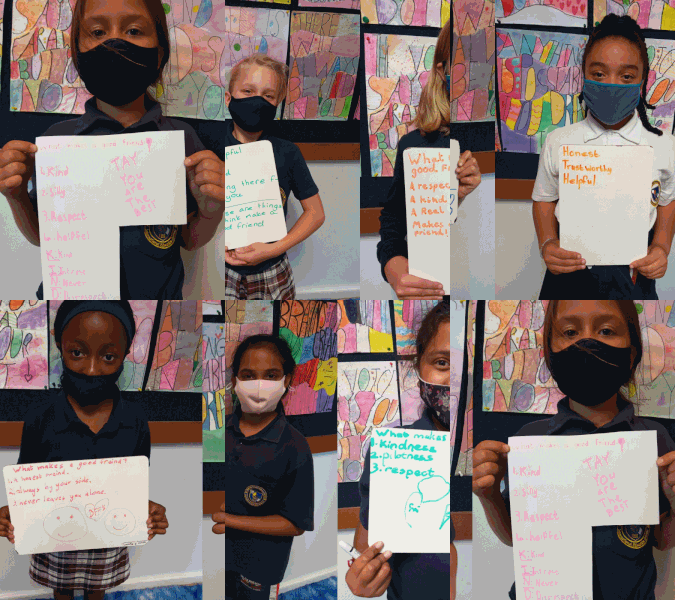
- What makes a good friend?
- What causes arguments or conflict between people?
- How can I maintain good relationships and resolve conflict with others?
It doesn’t really matter what age you are, you will always have to collaborate and work together with others, whether it’s in a social, professional or family environment. We’ve focussed mainly on our own behaviour and what we can do to be a good friend and help prevent or resolve conflict.
“We are not a team because we work together. We are a team because we respect, trust and care for each other.” – Vala Afshar
Take a look at the words students shared of qualities that a good friend would have. We also integrated Global Perspectives with our Art where they had to create a collaborative, puzzle artwork. The students did a wonderful job working together and encouraging each other – whilst having fun!
We are so thankful to have such a wonderful team at BIS: the students, parents, teachers, assistants, maintenance staff, sport coaches, administration and principal.
You are all appreciated and valued!
Ria du Plessis
Year Teacher


Emergent Literacy In Reception Year
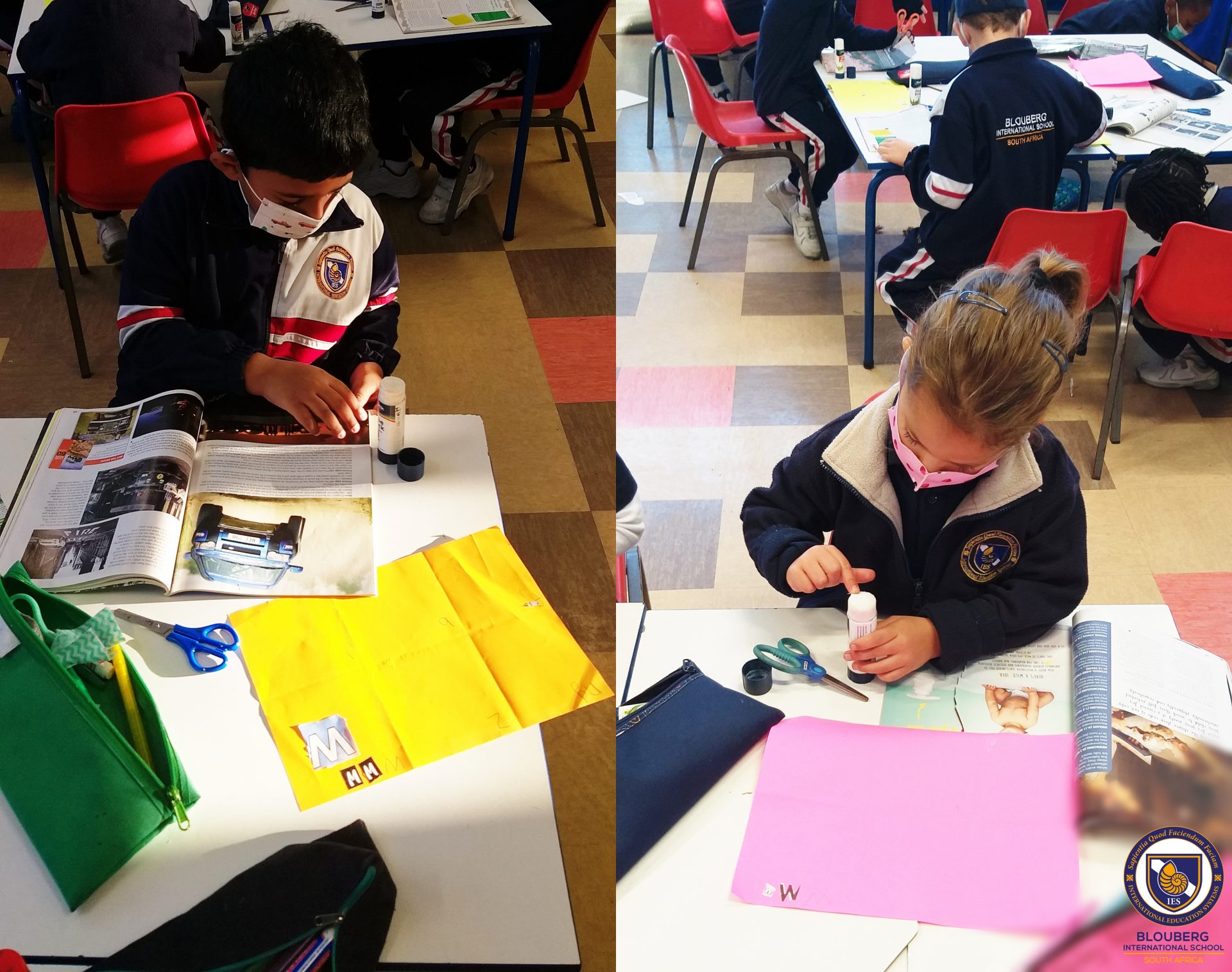
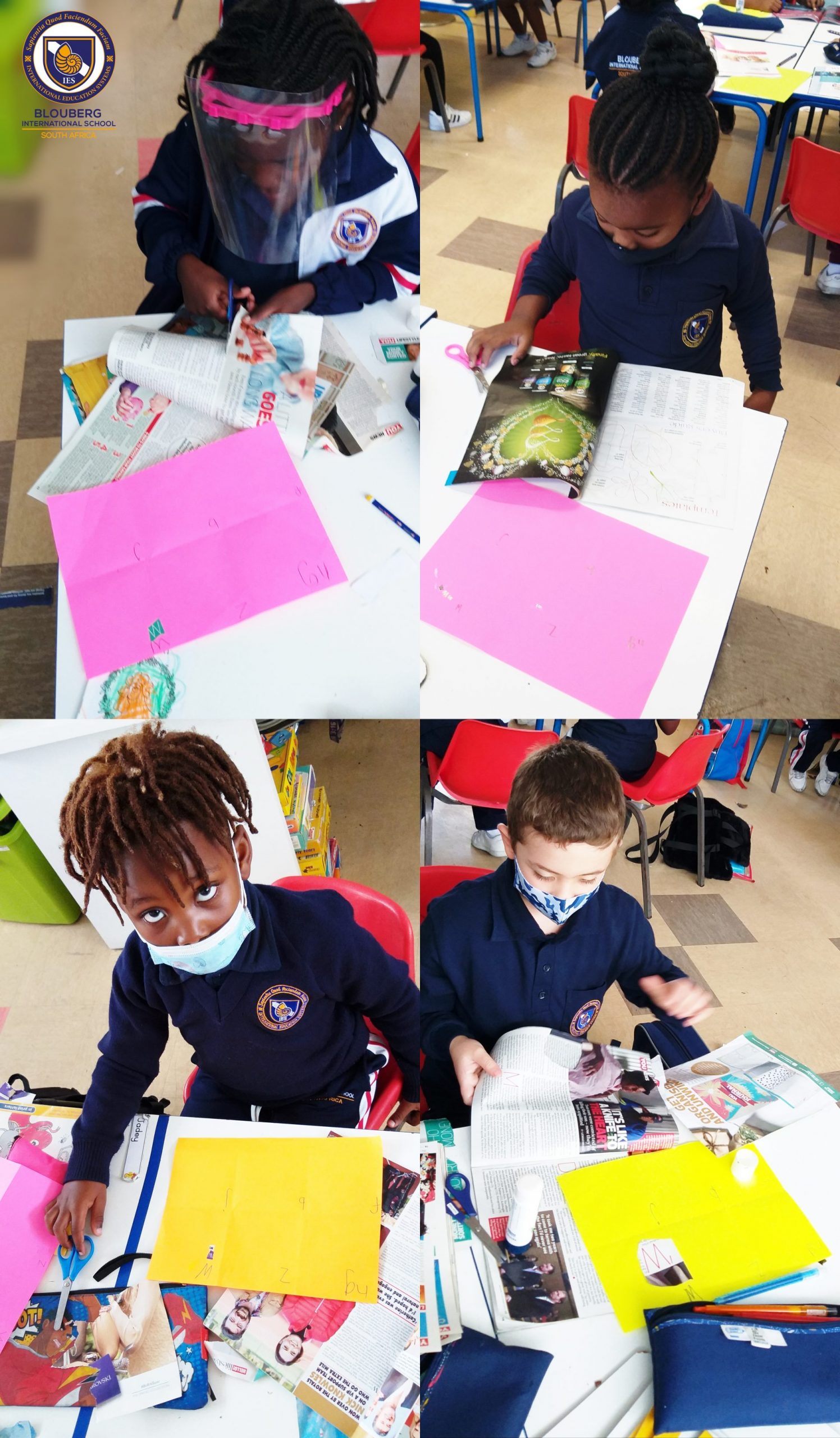
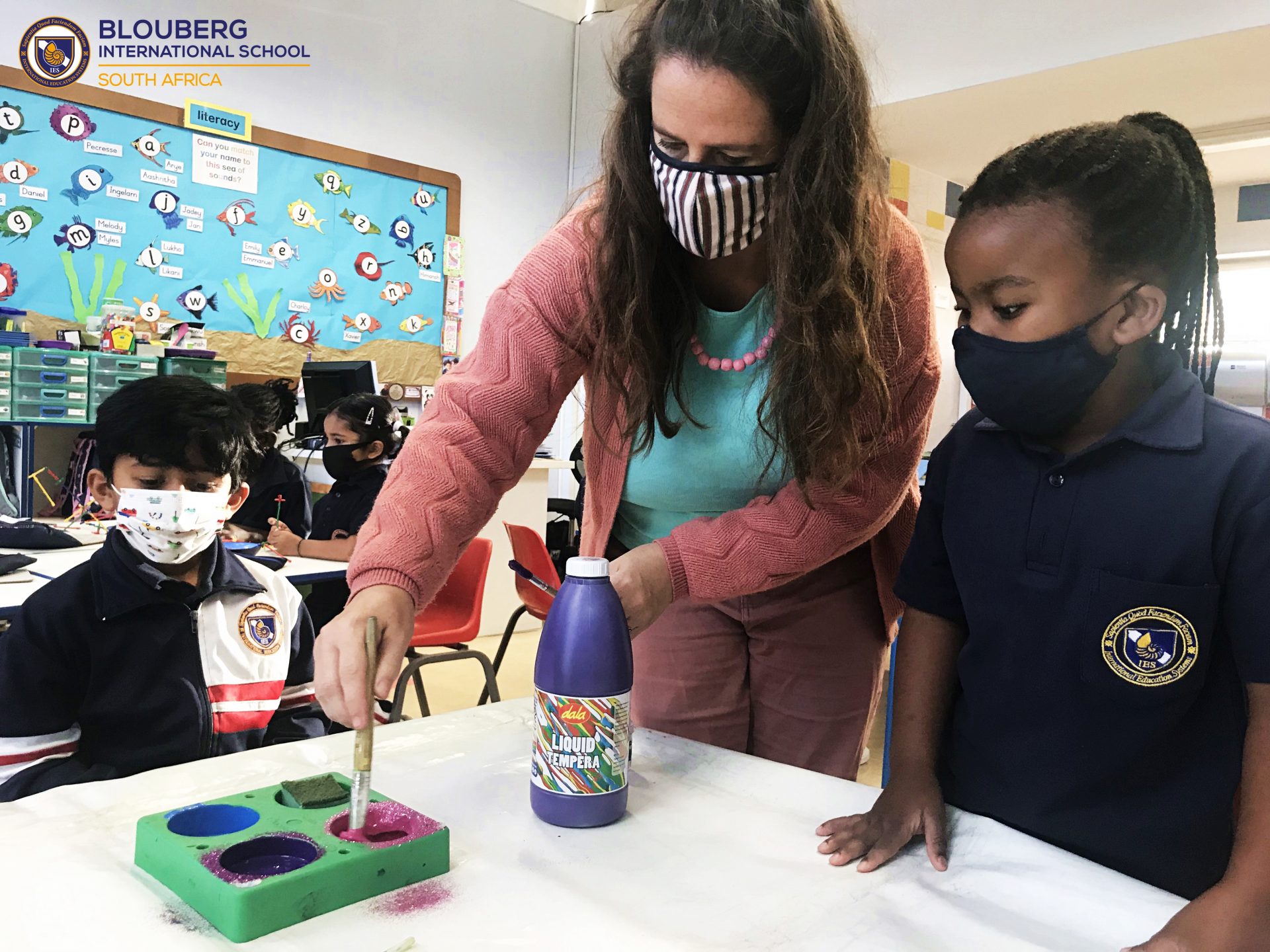
Our Reception students have been enjoying revising the letter sounds they have learnt by paging through magazines to look for the letter sounds. Once found they need to cut them out and paste the sound to match the sound on a colourful page.
This task is part of emergent literacy and combines quite a number of important skills such as fine motor skills, hand eye co-ordination, visual memory and letter recognition skills. As they page through the magazines students are exposed to letters in other fonts and also need to make the link between upper and lowercase letters.
Here are some fun ways to develop letter recognition at home:
- Writing letters on bathroom tiles using bath crayons.
- Writing with a whiteboard marker on a sliding door or mirror.
- Looking for known letters (and perhaps words) on number plates and signs in the community.
- Playing I spy to identify objects at home that begin with a specific letter (remember to use the phonetic sound (example: mmm, not ‘em’).
- Finding letters on a shopping catalogue.
- Writing letters in something fun on a tray, such as custard, chocolate pudding or dry substances such as icing sugar, jelly powder, rice or salt.
- Writing letters using a pointer finger on a steamed up mirror.
- Making letters out of playdough.
- Making letters out of salt dough and cooking it.
- Making letters with sweets on iced cupcakes.
- Finding letters in letter pasta.
- Writing simple words using Jelly Tot letters.
For more great ideas have a look at our Foundation Stage Pinterest Page: https://pin.it/1Of5Yuy
Bronwen Nuthall
Reception Year Teacher

From The Principal’s Desk, 13 May 2021
Dear Parents
DROP AND GO
Please be aware that the main parking area is a “Drop and Go” zone. This means that parents should not be leaving their cars unless they have parked in one of the designated parking bays. At times, cars are backed up into the road and this causes major congestion for the community around us. As with everything else, the smooth running of this system is reliant on everyone co-operating and working together. Please try to limit your “drop” to one minute only and keep the flow of traffic moving.
UNIFORM
We are currently revising our uniform policy. However, we are all aware of what is required.
Please could we ensure that our children wear the correct uniform to school. School uniform means the proper school shoes, pants/skirt and shirt. When we wear our PE kit and tracksuit, we wear takkies. Shirts tucked in, looking proud.
The hair and jewellery regulations have not changed. We all have a responsibility to ensure that our school is presented in a positive manner.
Staff are unable to enforce school pride alone. This needs to be a team effort and I therefore request that parents ensure that, when they drop students at school, they are looking smart.
This is OUR school.
The updated uniform policies will be placed on the website soon.
SCHOOL TIMES
Time management is an extremely important skill we should teach our children. I am aware of many students arriving late for school. This is quite unacceptable.
Please assist us in teaching our students that being on time means you are also respecting other people.
Students should be dropped off no later than 7:45am in the morning. Please assist us in this regard.
IES CHIEF ACADEMIC DIRECTOR VISIT
Our IES Chief Academic Director, Mr Darryl Lottering, is currently in South Africa. He will be visiting Blouberg on Friday, 14th May and also Monday, 24th May. In addition to this, he will be assisting the staff with our “clean-up operation” on Saturday, 15th May.
Darryll would also like to offer our parents an opportunity to speak with him. We are, therefore, having a parent meeting on Monday, 24th May at 5.30pm. This meeting will be limited to 50 people. It will work on a first-come-first-serve basis. If you would like to attend this meeting, please email me at andre.swart@iesmail.com.
The meeting will take place in the Junior Hall.
FEATURE PHOTO
Our main newsletter photograph features Ms Bronwen Nuthall. Bronwen is a born and bred Capetonian who has lived in the Table View area all her life. She has teachers on both her mom and dad’s side of the family. Bronwen obtained a BEd (Foundation Phase) at CPUT in 2003 specialising in ECD and Special Educational Needs. She has been teaching for 17 years and has spent 10 of these years at Blouberg International School. Bronwen has taught 4 different grades namely Grade 1, 2, Reception and Pre-Reception. She now has 12 years of experience teaching Reception Year and believes that there is something special about teaching this age group. It is very rewarding to observe the student’s growth over their Reception Year knowing she had a part to play in preparing them for “big school”. She maintains that a students’ personal growth and independence remains the most important part of the Reception Year. A child’s Emotional Intelligence is a far better springboard for success one day no matter their academic IQ. In her personal life she likes to be creative and make cards and gifts for others by knitting or crocheting. She is very much involved in her church and is passionate about facilitating Divorce Care 4 Kids at View Church Milnerton.
Fun facts about Ms Bronwen Nuthall:
- Ms Nuthall is the only teacher to still be in the same classroom (Room 9 at the Junior Campus) at Blouberg International School, since taking occupation of the classroom in 2012.
- Ms Nuthall is one of a twin and is “Aunty Bonnie” to her twin brother’s twins (also a pigeon pair).
- She speaks 3 languages, namely English, Afrikaans and IsiXhosa.
- Ms Nuthall started writing children’s stories at the age of 8. She has a published poem, ‘Beautiful Time’. The several unpublished children’s stories she has written since childhood have often been given away as gifts.
- She is rather obsessed with all things feline and her long lost cat, Shmeegles is on her screen saver of her school computer. She often apologises to parents in advance for potentially converting their child to a “cat person” and for any future pets that may be named after her Shmeegles.
- Ms Nuthall loves to sing and dance, although she may not be an expert at any of these.
- Joining Run Walk for Life was the best decision she made in 2020 and she recently completed her first 10 km, which was a personal best achievement for distance and time.
Thank you for making a difference in so many students’ lives.
WEEKLY THOUGHT: Choices
“Short cuts make long delays.” – J. R. R. Tolkien
These are true words which we will do well to remember when it comes to the many decisions, we make every day…
As humans, we usually opt to do things the “quick & easy” way. Unfortunately, we often only realise our error in doing so when it is too late.
Instead of just choosing between various options when making decisions, let us consider Tolkien’s advice and realise that the “shortcut” could very well be (and often is) the long and tedious way to take.
I am reminded of someone who once remarked: “If something is worth doing, it is worth doing well!” May this be our attitude towards life and its challenges.
Let us be ready to face each challenge head-on and do what needs to be done to resolve it, even if it takes more time and effort than some other “easier” solutions might promise. By choosing to do things right the first time, you will be saving yourself and others some serious heartache and trouble in the long run.
Have a brilliant weekend of personal growth – make sure to invest in yourself – it is a worthwhile investment!
Andre
Read More
Looking At Natural Elements In Poetry
This term in English, we have been looking at poems that showcase how poets use words to create a timeless flow of water.
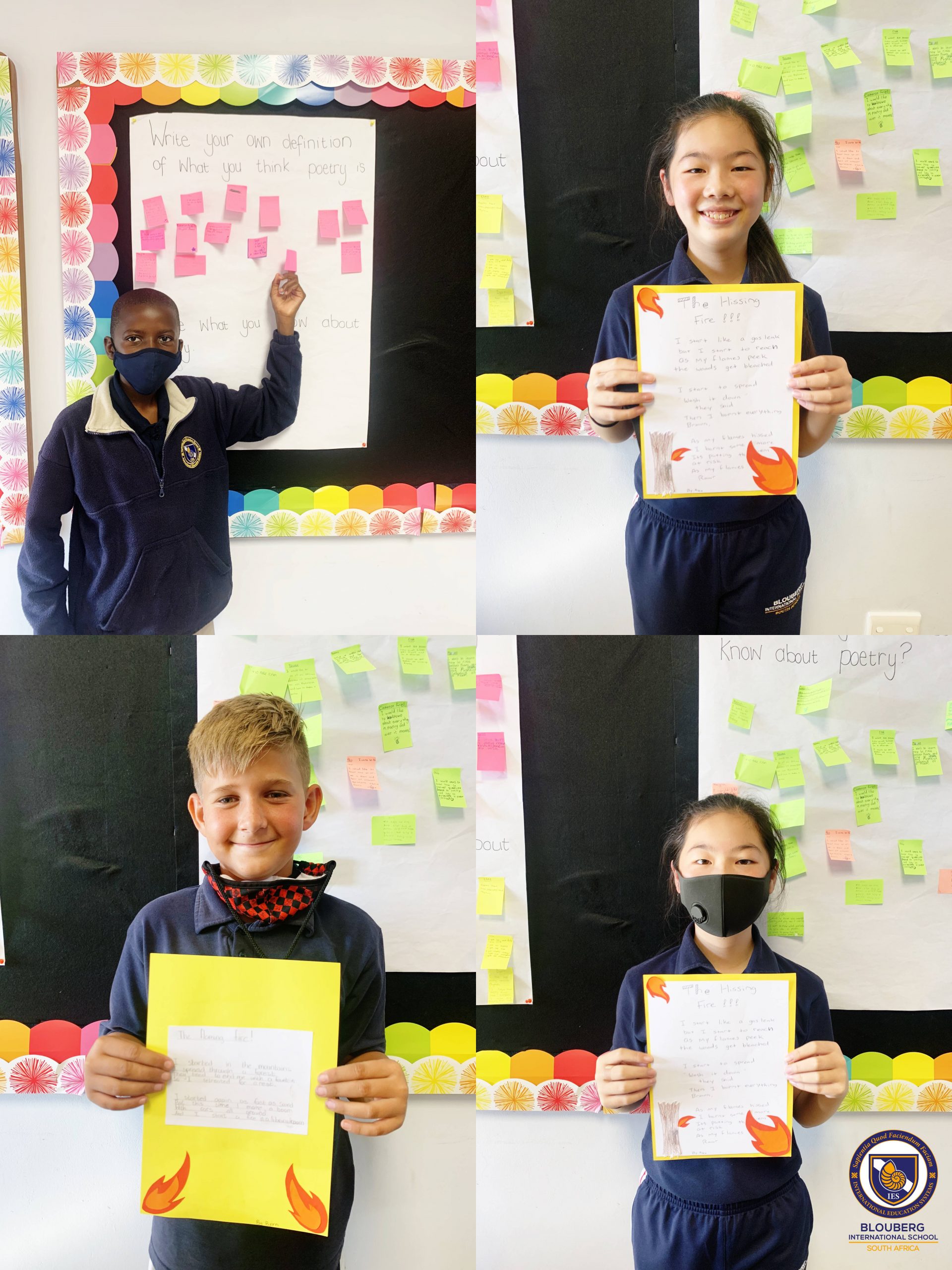
Our poetry lesson started off with students adding the following conceptions to our classroom Poetry Wonder Wall:
- How would you define poetry?
- What concepts do you already know that are used in poetry?
- What would you like to know about poetry?
Thus far, we have looked at poems written by modern poets and historical poets. The poems have all been centered around the theme of water. Students have spent time analysing these poems, identifying poetic devices and comparing them to one another.
With the recent UCT fire, students had the opportunity to apply their understanding of poetry and create poems that focused on the natural element, fire.
Their brief was to create a poem focusing on the element of fire, using what they have learnt in class as well as applying an end rhyme scheme.
It was amazing to see the creativity that was displayed by the Year 6s.
Here are a few examples of their work:
Yes, I am the burning fire, watch my orange flame
They really think that they can beat me, but I will win the game
I am the red rapid riot, the newest talk in town
I can’t believe the fire fighters are here, I think I’m going down
Yes, I am as orange as the sun
But now I can’t have as much fun
The men in red are hosing me down
But now I’ve burnt some of the town
Yes, I was a burning flame
But the water has won once again
I feel really bad, I said with a lisp
That I burnt the mountain to a crisp.
Written by: Juliette East
I see a dark cloud looming over the mountain
Fire trucks coming, spraying water like a fountain
The orange colour is a deep reminder
That there is a fire, and it will be dire.
Plants getting taken as captive
As they’re not proactive
People looking for places to go
As they come close to the inferno
As the fighter’s fight the fire
Everyone has a deep desire
For the fire fighters to stop the fire
So that it won’t end in dire.
Written by: Dumisani Ngono
Enormous, golden flames light up the ebony black sky
Spreads in the forest, turns everything to ash and hurries down
All my trees burnt to death; it was alarming I don’t lie
Shocking shrieks and shouts gave an unpleasant sound
Sizzling and whizzing like a snake
Tons of charcoal smoke rises up high
Burns all the poor animals as well as the fish in the lake
Birds start to fall instead of fly
Thick pipes with long necks try to wash it away
Helicopters swishing and swaying like a tree
The flaming fierce fire will not be put out today
But altogether we can put it off and be free
Books and documents in the great library burnt into ash
This was definitely not a desire
Frightening flames did it in a flash
Oh, what a horrible fire!
Written by: Sanam Srikewal
Katherine Nel
Year 6 Teacher

Read More