From The German Classroom
“What’s red and black and brings good luck?”
If you ask anyone in Germany the above question the answer would be, the Marienkäfer! This is directly translated as the ‘Marie bugs’, also called Ladybug, Lady beetle or Ladybird as we know it. In many cultures they bring good luck and in Germany they are a popular good luck charm also called a Glückskäfer the ‘lucky bugs’. The true Marienkäfer is red and has seven spots. Red symbolizes love, while seven is a lucky number for some.
This is all attributed to the fact that they were traditionally seen as a gift to farmers because one Marienkäfer can eat up to 5,000 aphids and other common garden pests, in a year. A legend has it that the farmers in Europe prayed to Mother Mary when pests were destroying their crops. At this time of crisis, ladybirds came as their rescue, destroying the pests. Since then, the farmers named them “the beetle of our lady” and love them because they eat aphids and other plant-eating pests and save their crops every year.
The German people not only see the Marienkäfer as good luck, but also as a sign from nature that the summer has at last arrived in Germany usually after a very long winter. During summer, when they are most active, these incredible insects can be seen fluttering around or walking on the leaves of plants to the delight of the young and old. A group of Marienkäfer is called a loveliness, which so aptly describes them.
But as soon as it turns cold and autumn arrives in Germany, the Marienkäfer looks for a warm, secluded place to hibernate, such as in barks of trees, in logs, under rocks or even inside houses, usually with other ladybirds in groups of up to 1000. They then only come out the next summer.
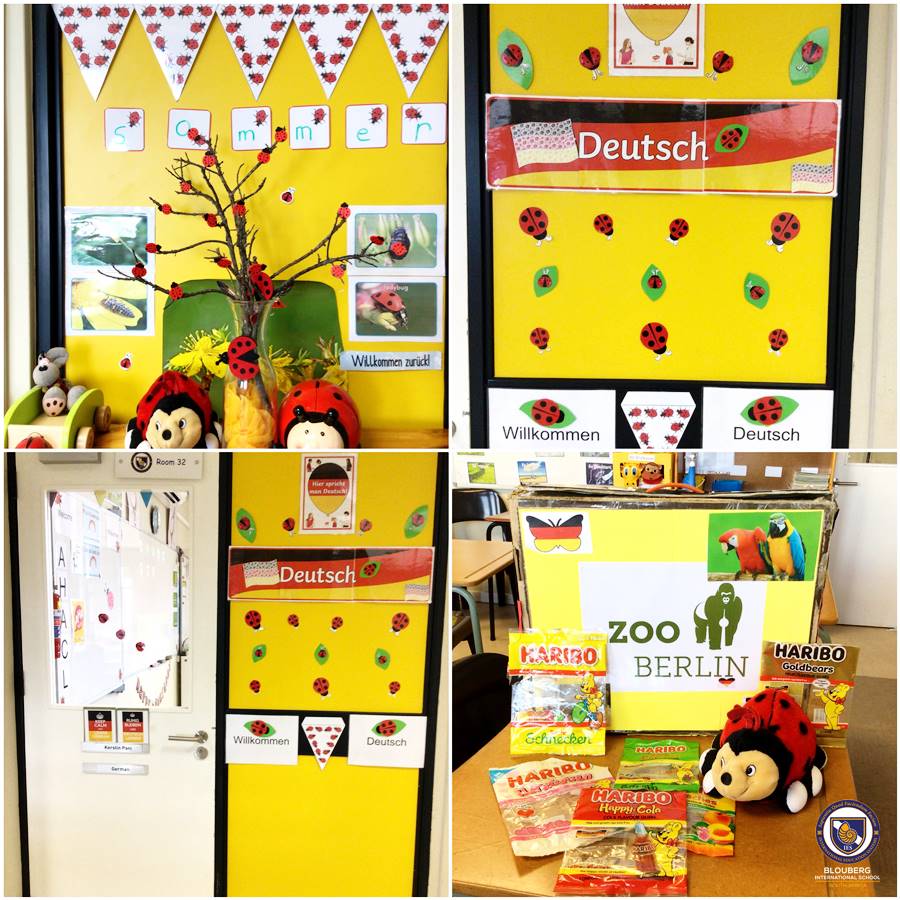
The German classroom received a special visitor from Germany this term, all the way from the Berlin Zoo arriving in the animal transport suitcase that travels between Berlin and our classroom at Blouberg International. The students in Year 1 and 2 were especially intrigued at what had arrived and were very excited to meet Marie the Marienkäfer. The animals from the Berlin Zoo also sent us a few packets of Haribo, the special German gummy bears, but we were surprised when we found all the packets empty and really wondered who had eaten them on the way from Berlin.
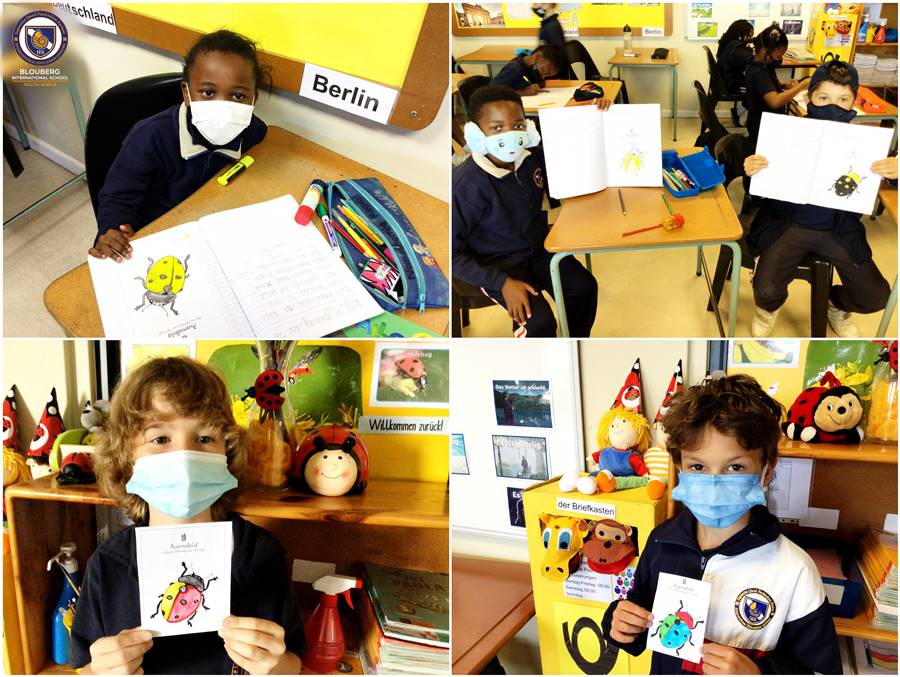
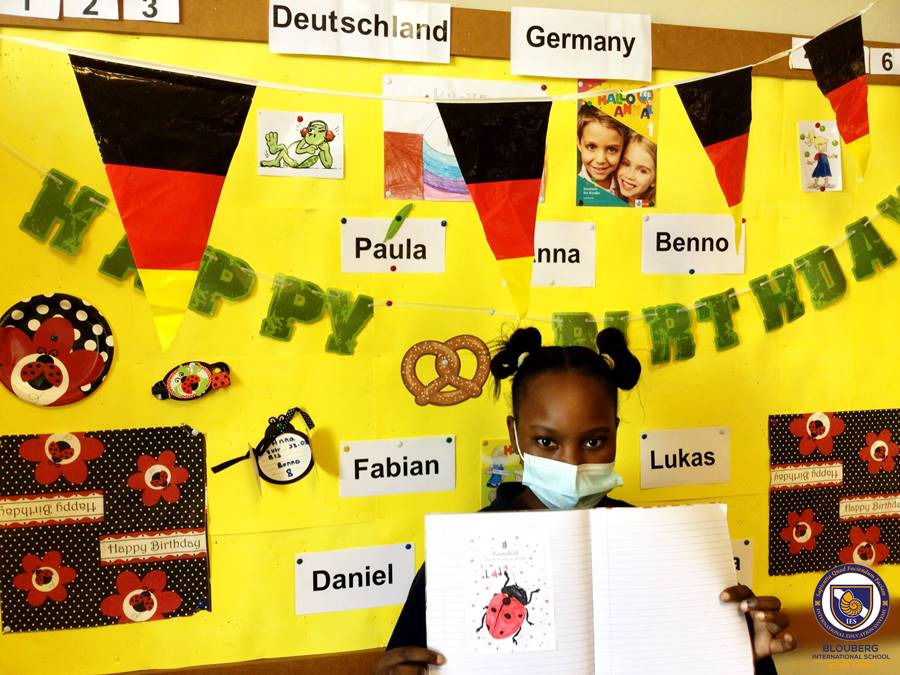
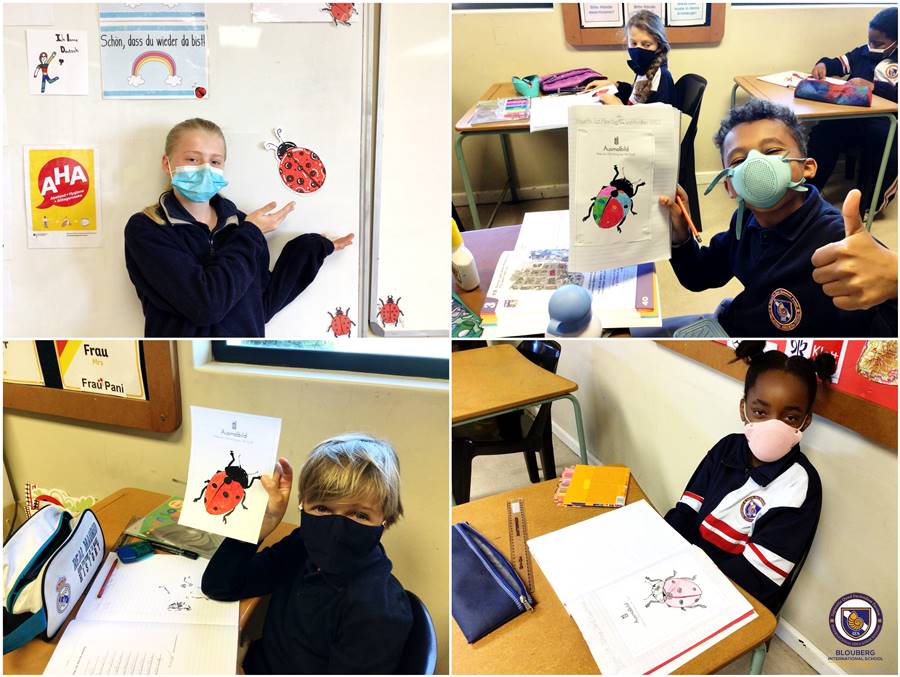
We also discussed the lifecycle of the Marienkäfer and we were fascinated by this little creature. Some students were also inspired to draw pictures of them and we included Marie in our greetings and songs at the beginning of the German lesson.
In Germany, the summer has come to an end and sadly the Marienkäfer are going into hibernation, but they will be back and are eagerly awaited next summer.
A student asked me this week if Marie the Marienkäfer will be returning to Germany and I was happy to let them know that she will be staying in South Africa to enjoy the coming summer months with us in our German classroom.
Have a good spring break.
Frau Kerstin Pani
Primary School German Teacher
Here are some links with more interesting information on the Marienkäfer:
https://www.dw.com/en/gl%C3%BCcksk%C3%A4fer/a-16555043
https://www.animalspot.net/ladybugs
https://www.natgeokids.com/za/discover/animals/insects/ladybird-facts/