
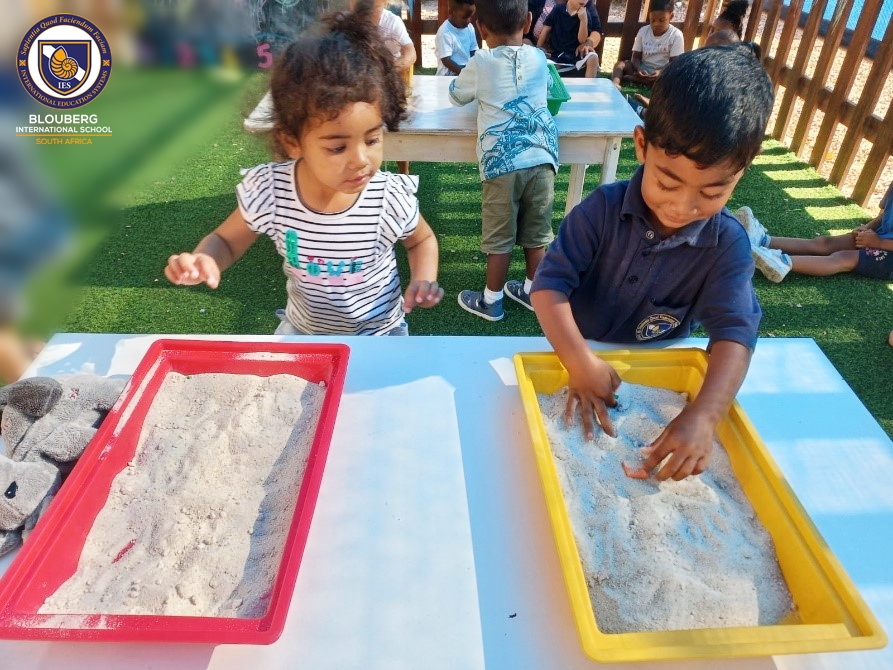
The Science of Play
‘Happy hearts and happy faces. Happy play in grassy places. That is how, in ancient ages, Children grew to be kings and sages.’ – Robert Louis Stevenson
Play is one of the most important aspects of a child’s life. Why? Because through play they develop their social skills, language and communication. Play can be considered a child’s “work” as it is how they learn, how they figure out who they are, how the world works and where they fit into it. It offers children a chance to exercise and develop muscle strength and with nothing more than little imagination, a playground can become a fortress, a submarine, or even a spaceship. Their brain can connect and refine pathways that enable them to feel loved, happy and safe.
Young children are natural artists and one of the keys to supporting your child’s playtime effectively is to not take over. Yes sure, it’s frustrating when they make a mess and when they aren’t “doing it right”, but to every answer, there is a question that needs to be asked. Ask them questions and let them answer for themselves. Don’t panic or get anxious when they stumble or stutter, the very idea that you are with them, at that moment, provides them with answers to questions they weren’t even asking.
Children do not need expensive or elaborate toys, as real play only requires toys and resources that are open-minded in nature. That is why so many children are more interested in the toy box that the actual toy. However, it is important to remember that as children grow, and their imagination extends outside the box, the toy inside will define what enjoyment should look like for the majority of their young adult life.
The Value of Play
You say that you love your children,
And are concerned that they learn today,
As am I, that’s why I’m providing
A variety of kinds of play.
You are asking what’s the value
Of having your children play?
Your daughter’s creating a tower,
She may be a builder someday.
You’re asking me the value
of blocks and sand and clay.
Your children are solving problems,
They will use that skill every day.
You’re saying that you don’t want your son
To play in that way.
He’s learning to cuddle a doll,
He may be a father someday.
You’re questioning the learning centers,
They just look like useless play.
Your children are making choices,
They’ll be on their own someday.
You’re worried your children aren’t learning
And later they’ll have to pay.
They’re learning a pattern for learning,
For they’ll be learners always.
– by Laurie Monopoli
So, I would like to end off and say, yes it may just be child’s play, but when you engage and make the most out of playtime, you may even find answers to questions you were never asked.
Jo-Anne Dickason
Nursery Teacher

Read More

Sound
“Tell me and I forget. Teach me and I remember. Involve me and I learn”. – Benjamin Franklin.
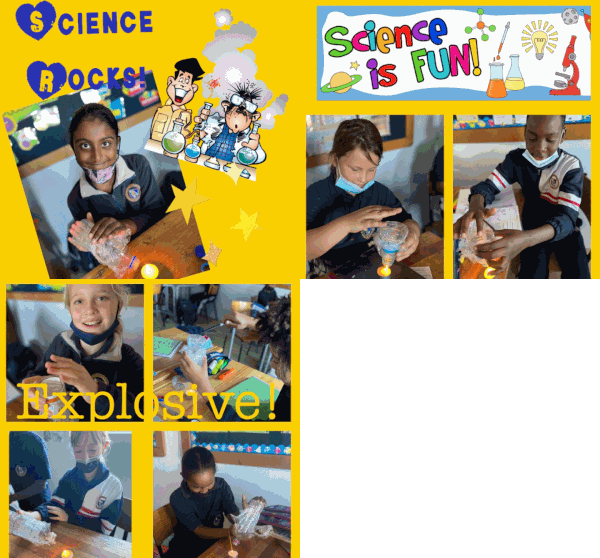
Our budding scientists in Year 5 have been learning all about how sound is created. As stated in the quote above by Benjamin Franklin, the best learning takes place when students are actively involved in the learning process. Hence, it was time for our students to put on their scientist hats and participate in some thrilling scientific experiments in class!
As seen in the pictures below, each student had to stretch a piece of plastic film tightly over the open end of a plastic bottle. They had to then light a small candle, causing endless excitement amongst the students! It was then that the fun started. The aim of the experiment was to test if sound vibrations travel through the air, as we cannot see them with our own eyes. If this theory was indeed correct, the flame would flicker when they tapped the bottom of their bottle!
And…EUREKA!
The experiment was a success and as any accomplished scientist would do…the experiment was done repeatedly and with much amazement by each student! After all the excitement, the lesson was concluded with some serious reflection, thinking, debating and discussion about our findings.
The best way to learn science is by doing science and to never stop questioning!
Jennifer Rose
Year 5 Teacher


Read More

Bright Science Sparks
“The Shadow Proves the Sunshine” – Switchfoot
The year 4’s have just completed a week of shadow investigation. On Monday morning we set out with a mission to discover how shadows move and change throughout the day. We started our lesson in groups by answering questions about shadows and light, discussing what we already know and what we still need to learn. It was key for every group to cooperate with one another by being polite and kind to the other members of the group. Sharing and taking turns was also a key factor in working towards a group agreement on their answers.
Our research starting point was making predictions about how the shadow would move or change. A simple upright pencil on cardboard was all we needed to set this test in motion. Our first observation was that light always travels in straight lines. Anything in the way would cause a shadow. Throughout the day, in fact every hour, we witnessed that our shadow moved to the east. Our pencil shadow was long in the morning. As the day progressed the shadow became shorter, being the shortest at noon. After midday the shadow of the pencil slowly grew in length again.
Our testing was not yet complete! Working in groups again, we investigated which objects were transparent, translucent and opaque. We also discovered that we could change the size of our shadow by moving closer or further away from our light source. After collecting and recording our observations over the course of the week, all our findings were crafted into games.
Looking back over this week it is clear that every Year 4 student has taken ownership in this investigation. In return, this will create a sure scaffolding for future light exploration.
Carol Blake
Year 4 Teacher


Read More

Arts And Crafts Club Key Stage 1
Every second week KS1 meet for our after school Arts & Crafts club run by myself and Ms Hierse. We introduced this club at the beginning of this year and it seems to have taken off wonderfully.
The students look so forward to being able to come and have the opportunity to fully express their artistic and creative talents. One of our biggest aims is to utilize as many recycled materials as possible. It is a passion of ours to witness the beautiful creations that are created from simple previously used items.
We hope to see the Arts & Crafts Club grow more and more throughout the year!
Siobhan Hendry
Year 2 Teacher

Read More
Primary School Music Programme
Watch our students perform click here…
Music builds a sense of belonging, discipline, confidence, creativity, movement skills, and cooperativeness.
BIS has a developmental music programme from Pre-Reception to Year 6. The music education programme offered is holistic, child focused and inclusive. All students have the opportunity to be actively involved in learning music through singing, playing and dancing. They have opportunities in the music classroom to compose, create and perform music while developing a repertoire of songs that target specific skills appropriate to their level of learning music.
The class music programme selects songs that foster tuneful singing and aural development. Creative movement is also integrated encouraging spatial awareness. Students learn graphic and traditional notation in rhythm and melody from Year 1 onwards.
Through dancing and movement they learn a lot about rhythm and tempo and through singing they learn all about pitches and note names. We have a few percussion instruments, like bells, boomwackers, ukulele and glockenspiels that the children play to learn about pitches and rhythm.
We have two choirs in the Junior school and also a band, a small violin ensemble as well as a marimba band. We also have an extensive instrument programme and have tuition in the following instruments, flute, brass instruments, guitar, clarinet, saxophone, piano, singing, drums and violin.
In a multicultural school, music makes connections across cultures and aids those who do not yet have good English skills. It links students with the immensely rich history and diversity of cultures.
Beverley du Plessis
Music Teacher
Read More
Who’s-Done-It Mystery Game
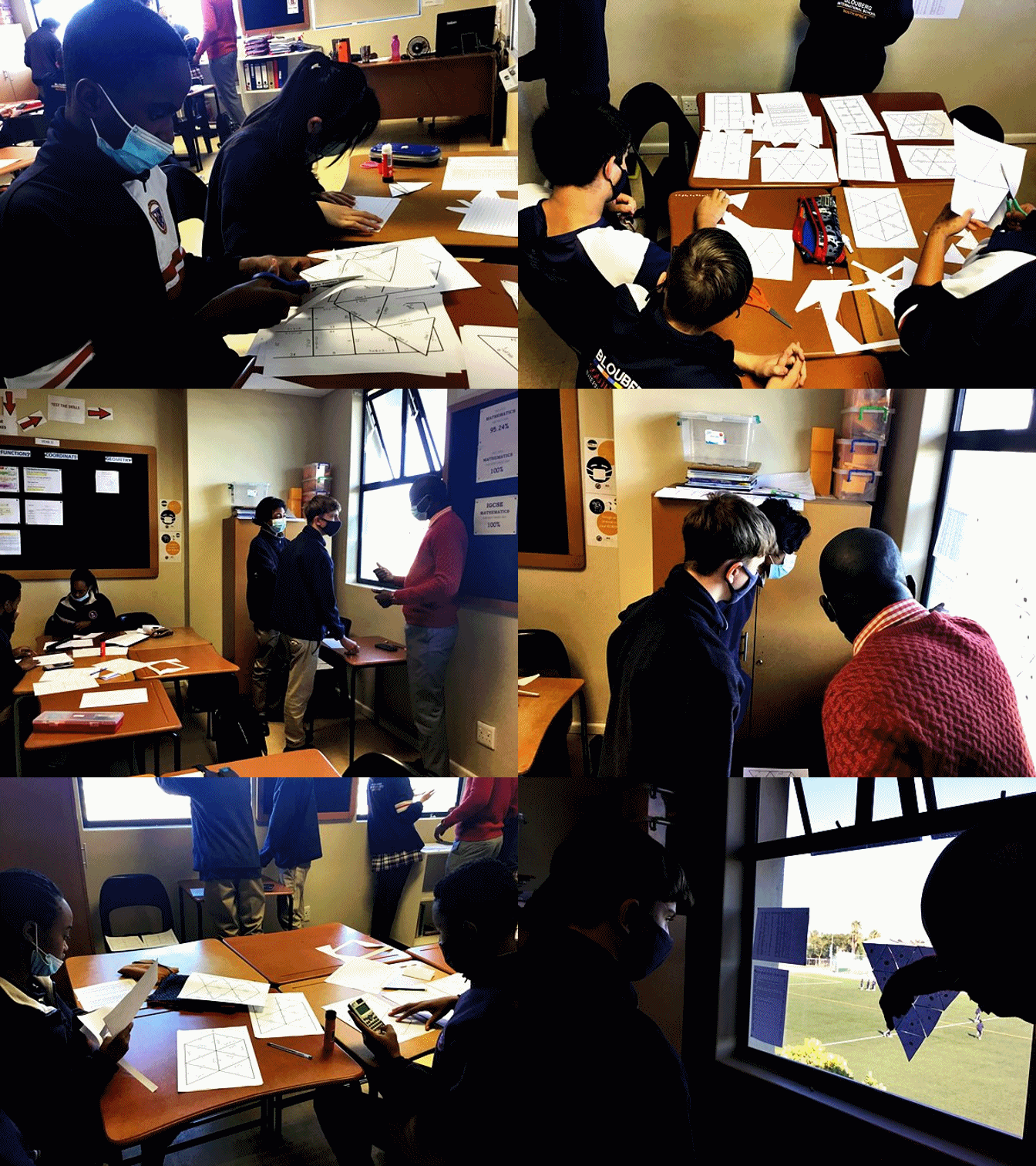
Learning mathematics is not fun for every student. At Blouberg International School, we believe in making mathematics fun and helping students love the learning journey. One way to do this is through interactive mathematics games, such as Who’s-Done-It Mystery – Death at the Jigsaw Shop.
Who’s-Done-It Mystery – Death at the Jigsaw Shop is an engaging mathematics mystery game to motivate Year 9 students to apply their mathematics skills independently to solve the mystery of a crime committed at the Jigsaw shop. The manager is dead, and the week’s takings have disappeared.
There are 32 suspects. There are 5 clues. Each clue gives a fact about the perpetrator and eliminates half of the suspects. The clues are jigsaws. To work out a clue, you must first make the jigsaw. Round the outer edge of the jigsaw are numbers. Each number represents a letter (a=1, b=2, c=3 etc.). The first letter of the clue is underlined and then the clue reads clockwise round the shape.
Students have the opportunity to apply a variety of mathematics skills to solve the mystery: fractions, percentages, directed numbers, and converting measurements.
This week, Year 9 mathematics students paired up, played the game, and managed to eliminate suspects and come up with the real perpetrator’s name.
Here are some of my students’ immediate reactions to this fun exercise:
- Detective Riley Hanning: “This is a serious case; someone’s life is involved here, and we ought to be precise and accurate!”
- Detective Ruby Lee Gallagher: “It’s fun and engaging. How I wish this was my everyday math lesson from Year 1.”
- Detective Oratile Tsotetsi: “This is obviously one of my favourite lessons. A double lesson went quickly without notice!”
Want to take up the challenge yourself?
See below files of evidence collected by the arresting police officer at the shop and try to come up with the perpetrator’s name. You can post your evidence and proofs to my email (given below).
Let’s enjoy mathematics as a family.
Mr Hebert Tapfuma
High School Mathematics Teacher
HOD Science & Mathematics
clue1clue2clue3clue4clue5storysuspects final list
Read More

BIS Interact Club – Peace Home Homework Programme
One of BIS Interact’s main focuses is improving the quality and accessibility of education in our communities.
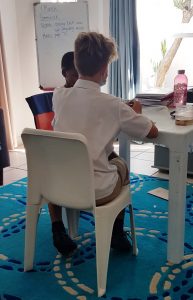
Next week our school will be celebrating Book Week. In commemoration of this, the BIS Interact Club will continue their weekly visits to ‘Peace Home’, a shelter for children with past challenges, who now have a safe environment thanks to their loving adoptive mother Aziza. Their task is to spend time with those children and assist them with their homework where possible.
This is an account of one of our member’s past visit to Peace Home:
A group of Interactors volunteered to go to “Peace Home” after school. We all hopped on the school bus feeling both excited and nervous. I myself was pretty nervous, as I had never been a tutor.
When we arrived, we were warmly greeted by Ms Nolan and the kids. They were very eager for us to help them with their homework. I was assigned a young boy with his maths. When we began he was struggling with adding and subtracting his fractions. I gave him some tips on how to easily do them. He quickly grasped the concept and no longer had any issues with his fractions. It felt very rewarding for both of us.
It was an amazing experience helping these kids. On our way back to school, we all shared the same good feeling. We all agreed we would volunteer again.
Oscar Berger (Year 11) – Interact Member
Read More
Stop Motion Animation
Stop-motion has been around, in one-way or another, for pretty much all of the history of cinema. It has been responsible for everything from visual effect showpieces and fantastic creatures to full-length features. Even though it has never been the world’s most popular form of filmmaking, it has always had an audience and avid followers. Many of us are familiar with movies like Wallace and Gromit, The Corpse Bride, Shaun The Sheep, Chicken Run, and even The Lego Movie. These are all examples of Stop Motion Animation. Stop motion is a discipline that combines parts and pieces from many different sectors of filmmaking. During the first term, the Year 6s learnt about stop motion animation. This is a fun, creative and hands-on project. The Year 6s put hard work and dedication in for Term 1 to complete their very own animations and then present it to the class.
Stop motion is an animation technique in which a camera is repeatedly stopped and started, frame-by-frame, in order to give inanimate objects and figures the impression of movement.
This takes time and patience from the person creating a Stop Motion Animation.
Instead of taking individual photographs of drawings, one starts taking photographs of an inanimate object, for example a puppet, and makes slight adjustments to its positioning between each shot. In doing this, you can create the illusion that the object in question is moving. This is the essence of what we call stop-motion animation, an umbrella term that encompasses many subsets, like Claymation, Pixilation, and Puppet Animation. We start off by watching videos on Stop motion animation. This is when the students get very excited doing their very own animation. We throw around some ideas and listen to what others think they will be doing. Research and ideas are key when creating a project like this. We learn about how to film, staging the backgrounds, how to move your objects and take photos, the lighting, the stability of the camera and lots and lots of patience. We then learn about the App, Stop Motion Animations Studio. This is a free app, if you want to become a Stop Motion animation creator full time or want to make animations for a longer period of time, you can purchase the app to unlock different features.
When the students are familiar with the app, we film a mock video. This is to see if they understood all the elements we learnt above. They use anything on their desks to bring to life, from erasers to scissors to pencils and even books.
The storyboard is then introduced where the planning comes in. They ask themselves questions like, what their animation will be called and what objects they will be using (Lego usually is their favorite). The beginning, plot and ending of their animation is also important.
There are different types of stop motion animation:
- Object-Motion — moving or animating objects.
- Claymation — moving clay.
- Pixilation — moving or animating people.
- Cutout-Motion — moving paper/2D material.
- Puppet Animation — moving puppets.
- Silhouette Animation — backlighting cutouts.
Filming then starts. Discussions and research continues to the very end, sometimes the students get better ideas and their animations change.
Benefits of Stop Motion Animation
- Offers children ownership and autonomy in the filmmaking process.
- Teaches children how stop motion animation works.
- Debunks the mechanics of how movie making happens.
- The creative constraint of the medium encourages problem solving.
- Stop-motion animation can help children learn about, visualize, and explain a variety of math concepts. From addition and subtraction to algebra and graphing, having children use stop-motion animation to solve and explain math problems gives children additional math practice and supports differentiated instruction.
Each year, the Year 6 students produce amazing stop motion animations. We can see the hard work and dedication they put into their animation. Have a look at some of the animations done by our BIS students over the years.
It is fun and educational; even you can give it a try.
Sonia Terblanche
ICT, Programming and Robotics Teacher
Leading By Example – Teacher Support System
“Teaching kids to count is fine, but teaching them what counts is best.” – Bob Talbert
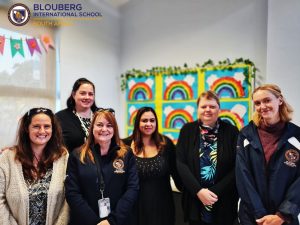
As teachers, we all strive towards one goal; for all our students to succeed. The KS1 and Foundation Phase teachers believe whole heartedly in a teacher support system where all teachers are encouraged, motivated and cared for each day by one another in order to be at our best for our students.
We, as teachers, feel that this support system is very important as its allows us to communicate our feelings, rely on each other, share our specific skills and strategies and build confidence in one another to stay ahead of the game in a rapidly-changing world.
We would like this support system to mirror how the students should want to care for each other as many students do not feel comfortable expressing their feelings to adults. A care buddy is the one friend you can speak to about anything that is going on in your life, whether it be positive or negative.
With the continuous support from all the teachers, the teachers have decided to follow a different system where their care buddy stays anonymous for the year. This care buddy is there to leave you notes of encouragement, recognition, to motivate you for a busy time ahead or a little treat to brighten up their day.
We would like to encourage students to follow this system and show kindness and support to their friends without reason because if they can make at least one friend smile in a day, it will create a ripple effect.
“Everyone who remembers his own education, remembers teachers, not techniques. The teacher is the heart of the educational system.” – Sidney Hook
Erin Hierse
Year 1 Teacher

Read More
The Human Body!
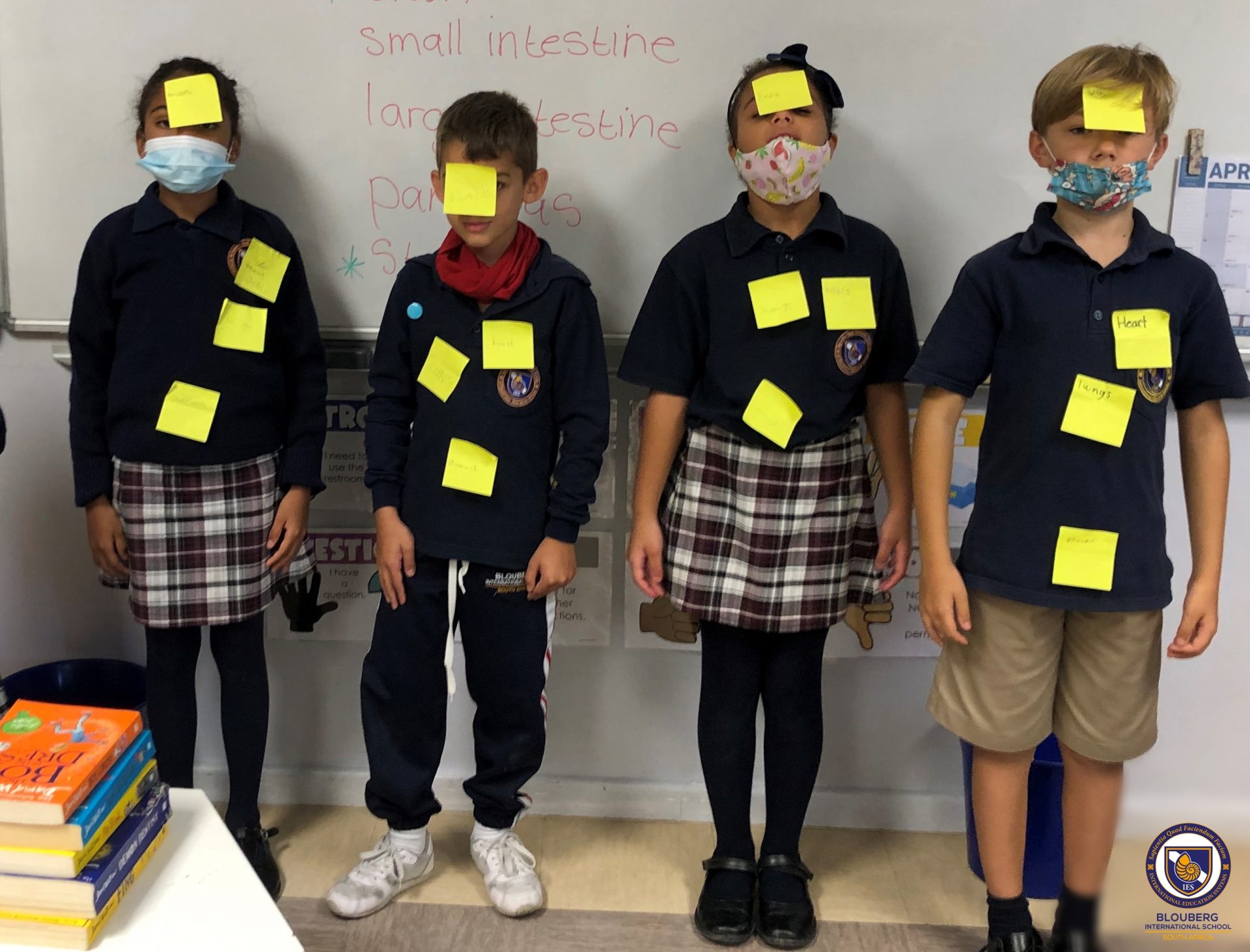
Our Year 3’s kick started Term 2 with an introduction from Pinky, the skeleton, to our next Science unit – The Human Body! After much giggles and squeals, students were told that by the end of the unit they would need to be able to ‘dress’ Pinky with his organs all in the right places.
But first…. do the students know where each organ in our body is? Well….no…. not quite…. not at first. In groups, students had to choose one classmate and using yellow stickies, placed them on to the student in the right spot. Needless to say, we had some very strange locations for our small and large intestines!
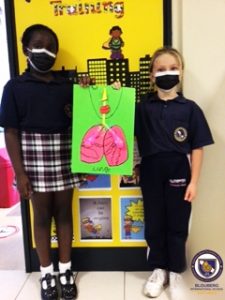
Throughout the unit, the class enjoyed very student-centred lessons, which included making their own stethoscope out of plastic bottles, tape and toilet paper holders. They then used their stethoscopes to listen to one another’s heart beats.
Another lesson involved students making a working lung model using cardboard, straws and balloons. In pairs, students designed and cut out their lungs. Next, they attached the straws and balloons. Then, they drew in their faces and for the grand finale…they blew out into their straws to simulate their working lungs.
The students had a fabulous time designing their models and thoroughly enjoyed the hands-on activities. Well done, Year 3! I think we are ready to ‘dress’ Pinky!
Mandy Goch
Year 3 Teacher


Read More