
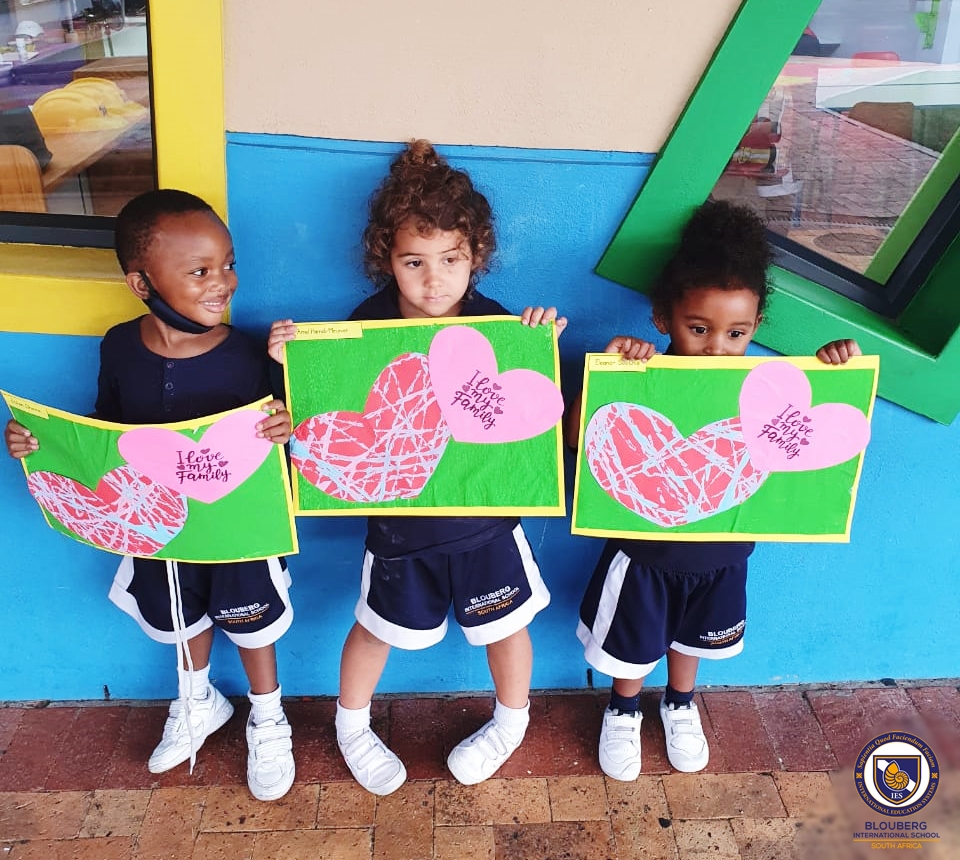
We are family!
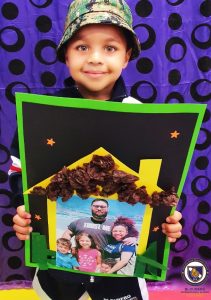
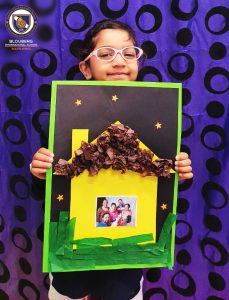
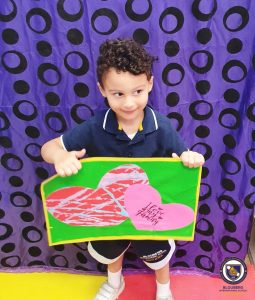
We are learning all about me and my family in Pre-Reception. Talking about our families at school gives the students the opportunity to talk about what is most important to them. This topic also helps them realise that family, the people we live with, is something we all have in common, regardless of how our families look! Some families have siblings, some have none, some families have parents, and some have none.
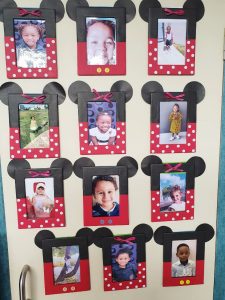
The students enjoyed learning rhymes and songs and reading about families. They brought photos of themselves to school and we made a “wall of me” as we are also like a family in class. We loved marble painting and made beautiful art. The students also presented their first show and tell by telling us all about their family.
Martie van Dyk
Pre-Reception Teacher


Read More
Making friends in Budapest
There is so much discussion about ‘all around the world’, interschool connections and online communication right now. Not only is it a fun way for children to explore the world around them, but they can also observe the learning of the other children they are in contact with.
This allows students the opportunity to become a part of the lives of people who live on the other side of the world. Unlike just showing a map of the world in the classroom or exciting pictures from countries we’re learning about, this vivid personal connection both inspires their learning and, in its own way, makes it more meaningful to them.
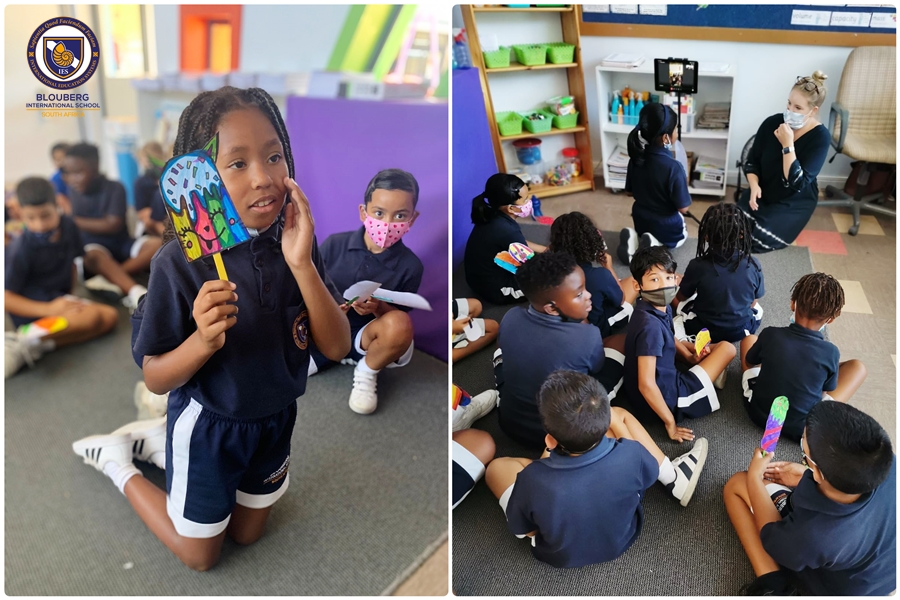
This week, our Year 2 students got to interact with children from our Budapest school. A country that most of them had never even heard of before.
It was so exciting for our students to see the other students, from our sister school, wearing the same uniform that they wear in a completely different environment.
The wonderful contrast of it being winter over there at the moment and summer here made for a very fun art idea. Our Year 2’s had to make and design their very own popsicles while the other children created their own snowmen and penguins. Students had an opportunity to come up one at a time and introduce themselves, while they very proudly showed off their art pieces.
This has been such an incredibly interesting and exciting experience. Mr. Swart also popped in for a visit to say hi and interact with the students.
A wonderful way to learn and a very unique way to explore the world around them. We can’t wait to meet up with our new friends again!
Siobhan Hendry
Year 2 Teacher

Read More
My Holiday!
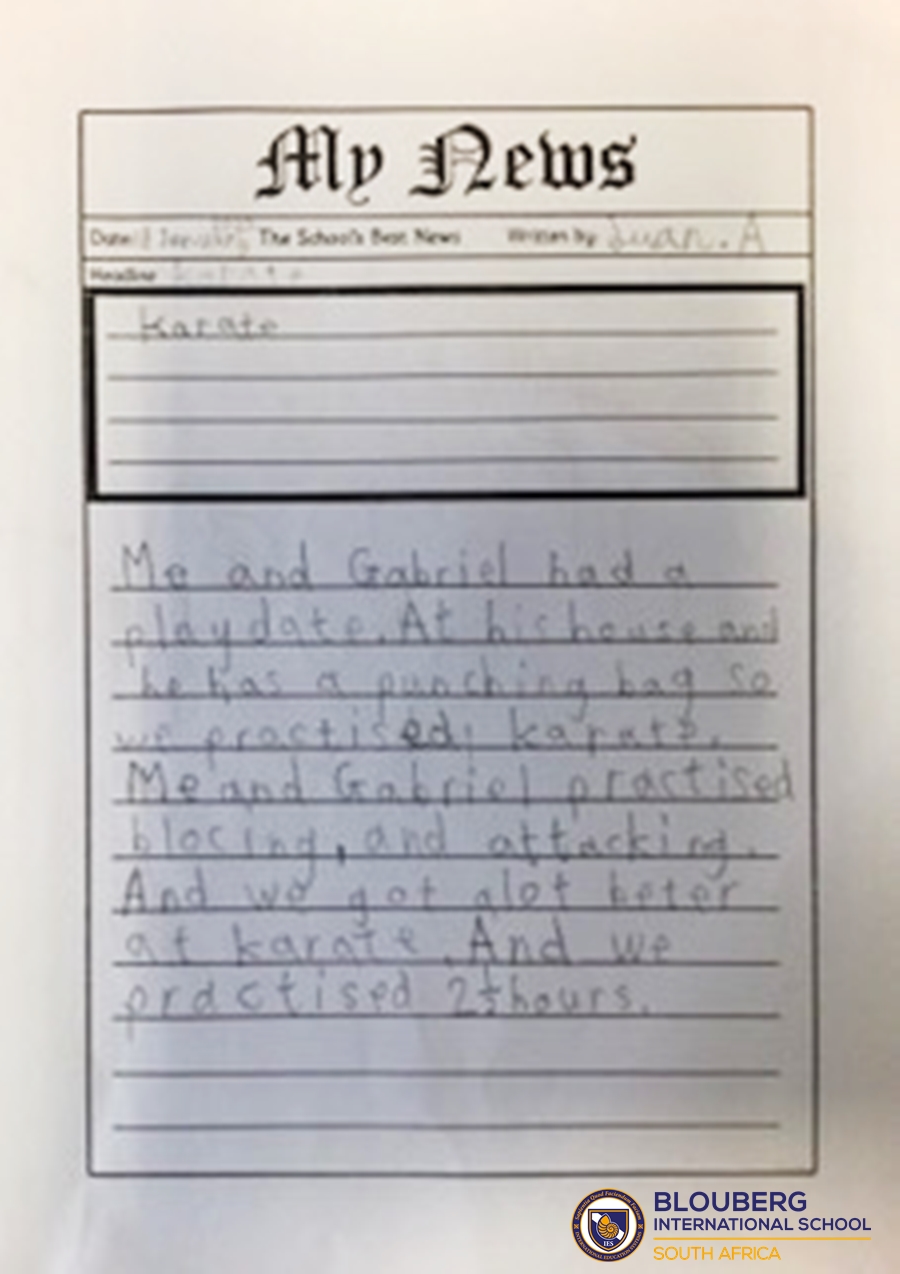
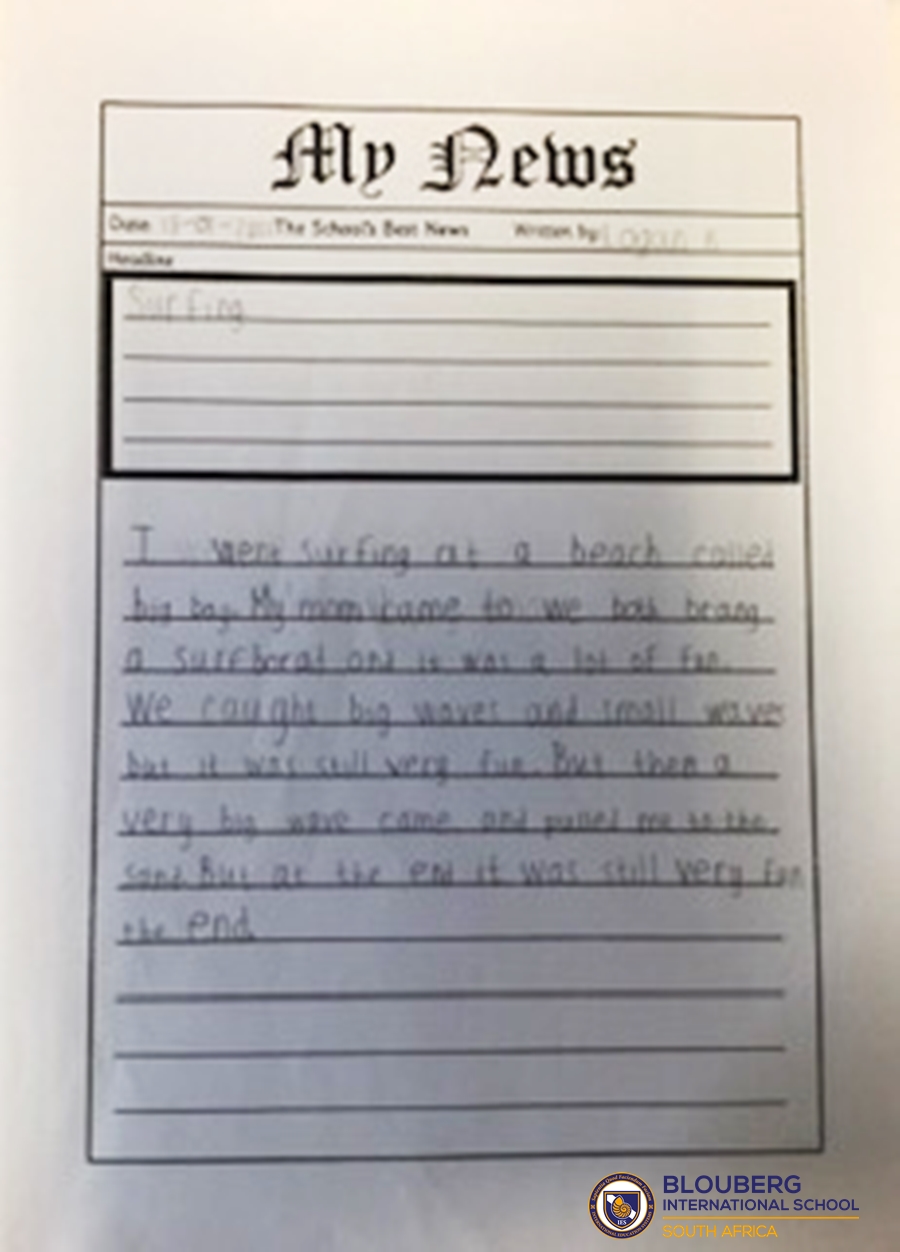
A huge welcome back to all our Year 3 students who arrived last week relaxed, recharged and ready to start a new school year. We kicked off the year with a three-part activity about their holiday. Students first shared with the class, any interesting activities that they had enjoyed during the holiday. This was also a great way in which to get to know the students as we chatted about surfing, zip lining, hiking and karate lessons, amongst other exciting adventures.
The second step involved the students drawing a ‘snapshot’ of themselves enjoying one activity during the holiday and then explaining their ‘snapshot’ to a classmate.
Lastly, the students wrote a few sentences in the form of a short news article to match their ‘snapshot’.
Thank you, Year 3, for a very interesting and informative start to the year!
Mandy Goch
Year 3 Teacher


Read More
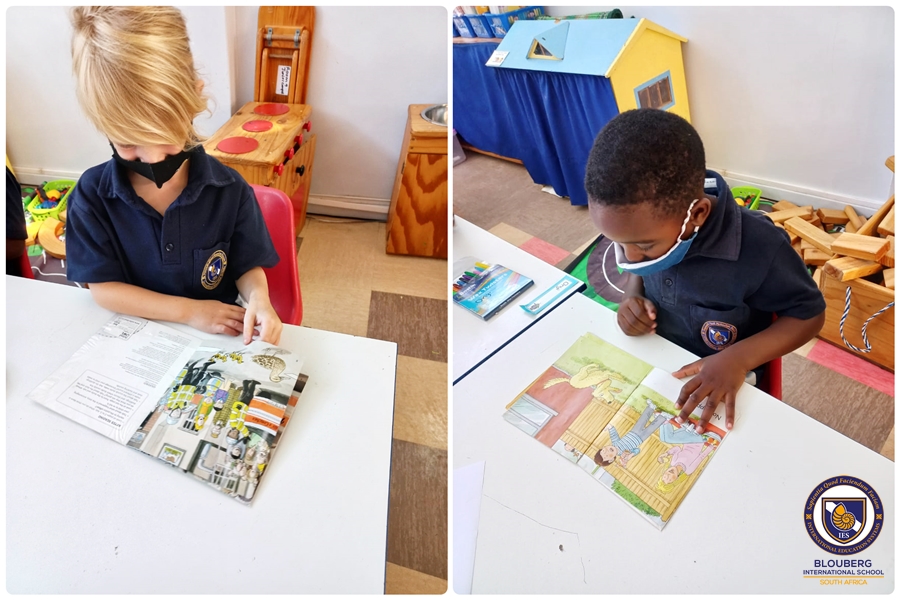
The Greatest Gift of Reading to Your Child
“Reading is fundamental. In fact, it is one of the most important ingredients to becoming all you can be.” Michael Stutman
“The more that you read, the more things you will know. The more you learn, the more places you’ll go.” Dr Seuss from the book “I Can Read with my Eyes Shut!”
Reading helps develop a child’s brain. Children that are exposed to listening to stories their parents read from an early age tend to do much better at school. From an early age they are being exposed to vocabulary and language development. They start using their minds to imagine and create which are some of the building blocks towards problem solving and critical thinking later.
“Children are made readers on the laps of their parents.” Emilie Buchwald
Did you know that although reading is so important, 800 million people around the world are illiterate? Many families have no books for children to read. Sadly, in this digital age, it is not just impoverished families that do not have books and don’t read to their children. So how can we develop a love of books and reading in our young children from early on?
Here are some ideas:
- Take your child to the library and sign them up for a library card
- Make bedtime stories a non-negotiable daily ritual
- Ask family and friends to give books as gifts for birthdays and special occasions
- Get books for cheaper from 2nd hand shops or garage sales
- Swop well-loved books your child has outgrown for “new” books from a friend
- Point out words and pictures on sign boards when driving and ask your child what it could mean
- Look for letters and words when out driving on car number plates and signs
- Model reading to your child by being a reader yourself
- Allow siblings to read to each other
- Look at the pictures in a book and allow your child to make up their own story
- Ask questions about the story whilst reading
- Draw a picture of what could happen next or even before they story takes place
- Let your child make their own story book by becoming the illustrator. A parent or sibling can write in the text.
What other ideas can you think of to instil a love of reading in your child? Please share these great ideas with your friends and family. Let us become a community of readers who are raising leaders to inspire a legacy of literacy and have fun in the process.
Bronwen Nuthall
Reception Year Teacher
WATCH: Nikraad reading A story in Reception
Read More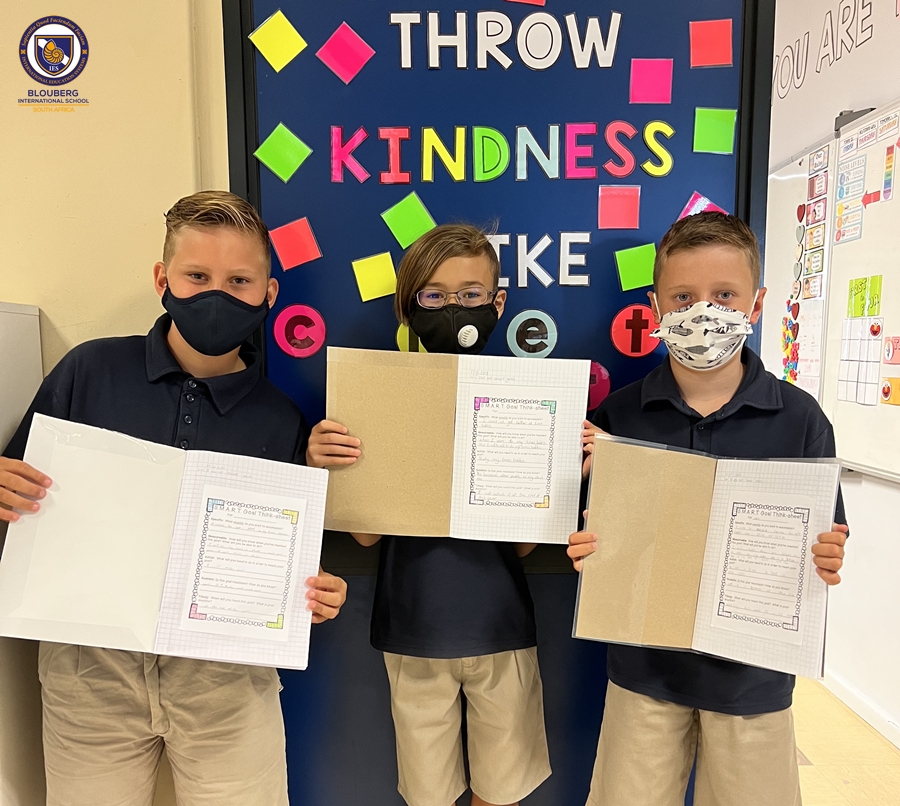
SMART Goals
As we started the new year and embraced the first term of 2022, we thought it was important for the Year 6 students to think about what they wanted to achieve during the term and set S.M.A.R.T goals for themselves for their core subjects.
During this week’s core lessons, we discussed the importance of setting goals and how the setting of goals can help us with responsibility as well as fostering a positive “can do” attitude which increases self-esteem. We moved on to discuss potential goals within each subject and asked the students what they wish to achieve, or what they would like to overcome to make them feel proud. Students shared their ideas of potential goals.
Once our students chose their goals for the term, we discussed how to set S.M.A.R.T goals, track their goals and set themselves up for success.
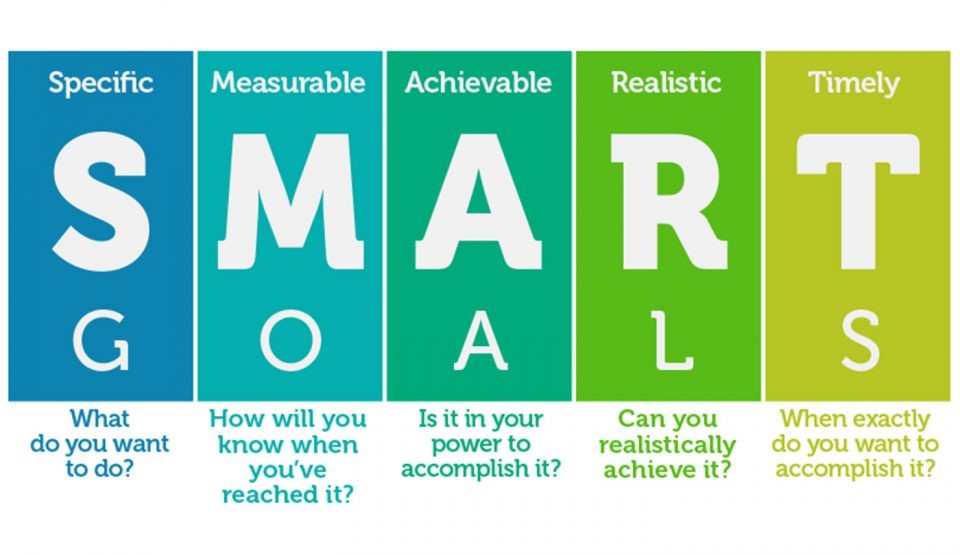
The acronym for SMART GOALS stands for:
S– Is the goal specific? What would you like to accomplish? The more specific the goal, the more focused you can be in reaching that goal.
M– Is the goal measurable? How will you know you have reached your goal? It is important to be clear about what you are working towards.
A– Is the goal achievable? Is it challenging, but not impossible? Taking it one small step at a time can help ensure success.
R – Is the goal relevant? Does thinking about reaching the goal inspire excitement? Being passionate about what you are working towards is a key to success.
T– Is the goal timely? Do you have a deadline by which you want to reach your goal? Setting an end date can help jump start motivation to begin working towards your goal.
We look forward to motivating and encouraging our students to reach their goals and reflect on it at the end of the term. At home, you can think about setting S.M.A.R.T goals with your children. Visit the website: https://madeinapinch.com/smart-goals-examples/ to learn more about setting these goals at home.
Katherine Nel
Key Stage 2 Coordinator and Year 6 Teacher

Read More
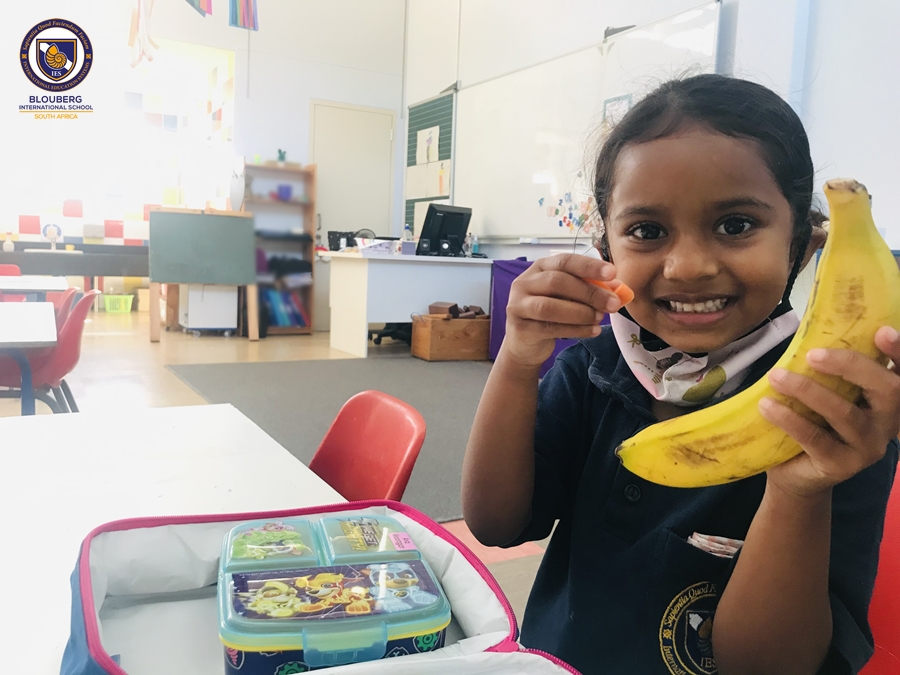
Traffic Light Eating
One of the best ways to help children eat healthy foods is to teach them Traffic Light Eating. Just like when we are driving a car, a traffic light tells us what to do:
Green means “GO”
Yellow means “Slow down”
Red means “STOP”

Green Light Foods
Green light foods are “grow” foods. You want to help children learn to eat as much as they want of these foods, which include all fruits and vegetables. Green light foods are: grown and not manufactured, low in calories, high in nutrients, colourful, and usually can be eaten raw.
Yellow Light Foods
Yellow light foods are “slow down” foods. These foods are okay to eat everyday, in moderation. Yellow light foods include: pasta, rice, bread, tortillas, noodles, eggs, lean meat, chicken, low fat yoghurt, nuts and seeds and whole grains.
Red Light Foods
Red light foods are “stop” and think foods. Red light foods are low in nutrients; high in calories, fat or sugar; or contain artificial sweeteners, hydrogenated oils, or trans-fats. They include: muffins, cakes, donuts, biscuits, cookies, sweets, chocolates, fast foods, pastries, chips, crisps and white bread.
Tips to Apply Traffic Light Eating
Traffic Light Eating makes eating healthy more fun. Learners are paying attention to what we eat, and setting a positive example is the key to turning healthy eating into a regular habit.
We we are excited to start using the Traffic light eating system at BIS.
Water is the healthy option and only drink allowed at school. Juices, cordials, Oros, milkshakes, yoghurt drinks should not be allowed and sent home unopened with an email explaining they are not allowed.
Each teacher from nursery up until Year 2 will display the traffic light eating poster in their classroom. The poster clearly shows which foods are healthy and allowed at school and which foods are not healthy and thus not allowed at school.
Aftercare will also help maintain the traffic light system in the Early/Aftercare. If a child attends a long day in aftercare or early care, then a separate healthy lunch box should be packed.
Red light foods: chocolates, muffins, cakes, sweets, chips, crisps, donuts, cookies, etc. should not be allowed in lunch boxes for class or after care and must be sent home.
Let’s make BIS a healthy eating school improving children’s health which in turn benefits their learning ability and behaviour.
Thank you for your ongoing support.
Charlotte Cronje and Cindy Nunan
Foundation and Key Stage 1 Teachers
Read More
Induction Day in Year 3
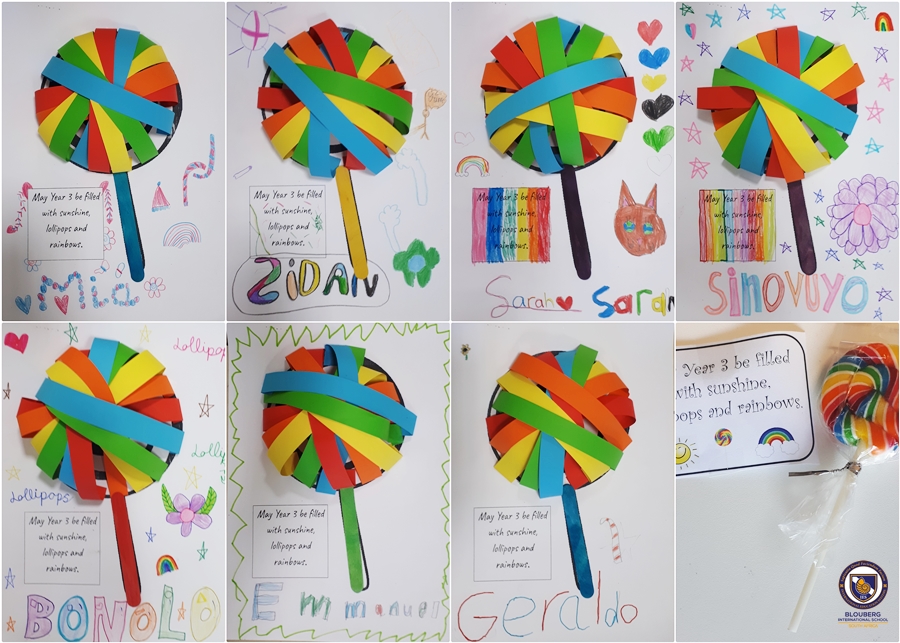
On Tuesday, the 30th of November 2021, our school held its annual Induction Day where the students get to spend some time with their new teacher for the next year.
It is always such an interesting morning. The students are anxious to find out where they are going the next year, and the teachers are anxious to find out who is coming to their class.
As humans, we like familiarity, and anything out of our comfort zone makes us either want to fight, or just kick our shoes off and bolt for the door. (Luckily, no teachers went missing. We were all accounted for.)
In Year 3, we made a 2D lollipop using different coloured strips of paper to cross-cross over each other and pop up. The students were so good at listening and following instructions. We were all so proud of them!
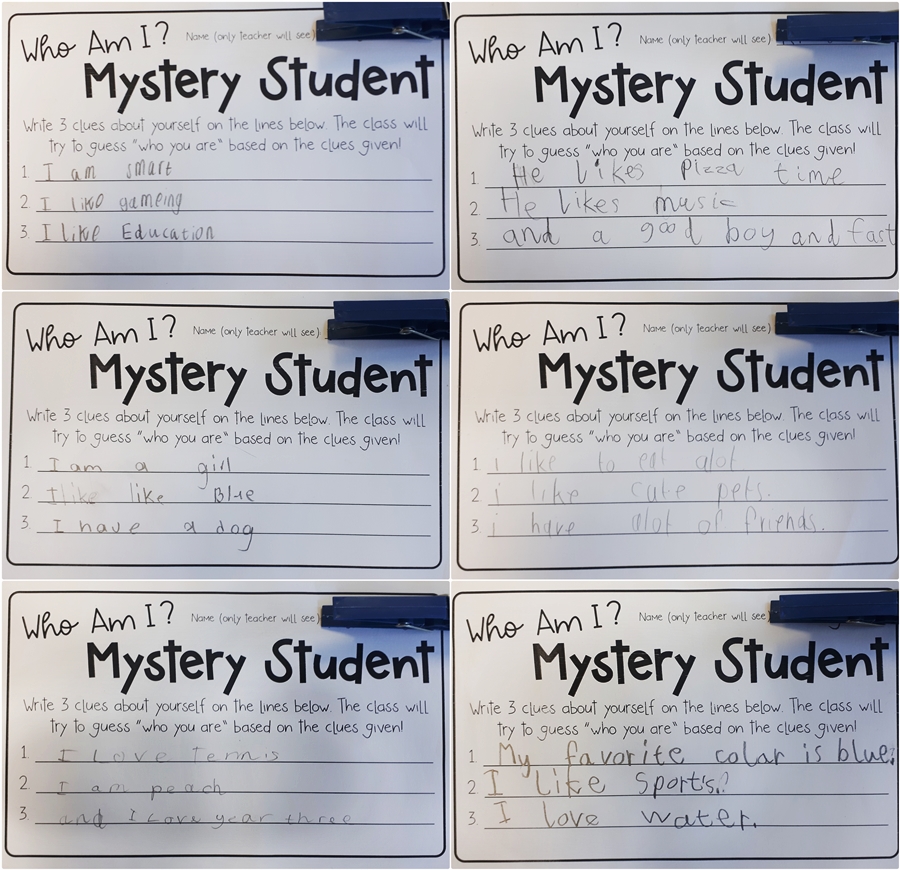
The students also got to play a game called, “Who am I?” Mystery Student. Each child wrote three clues about themselves and the class had to try to guess ‘who they are’ based on the clues given. It was amazing how well the students knew each other, even though they do not come from the same class. This will make the transition so much easier next year.
I asked the students what they are looking forward to in Year 3 next year, and this is what some of them had to say:
“Doing cool work”, “Learning new stuff”, “Writing good stories”, “Enjoying Life”, “Reading books and telling time”, “A locker with a door”, “Learning new subjects”, “Everything”.
The current Year 2 students were very happy to leave with a treat! I am certain that everyone had a fun-filled morning getting to know each other and just forgetting about Covid for an hour or two.
We are looking forward to seeing them again at the start of 2022.
Wendy Menton
Year 3 Teacher
Read More
Year 2 Art & Design Fun!
“You can’t use up creativity, the more you use, the more you have” – Maya Angelou
Design, Art and Technology in primary schools develop children’s skills and knowledge in design, structures, mechanisms, electrical control and a range of materials, including food. It also encourages creativity and drives them to think about important issues and develop problem solving skills.
Art and Design as a subject enables children and young people to actively contribute to the creativity, culture, wealth and well-being of themselves, their community and their nation. It teaches us how to take risks and so become more resourceful, innovative, enterprising and capable.
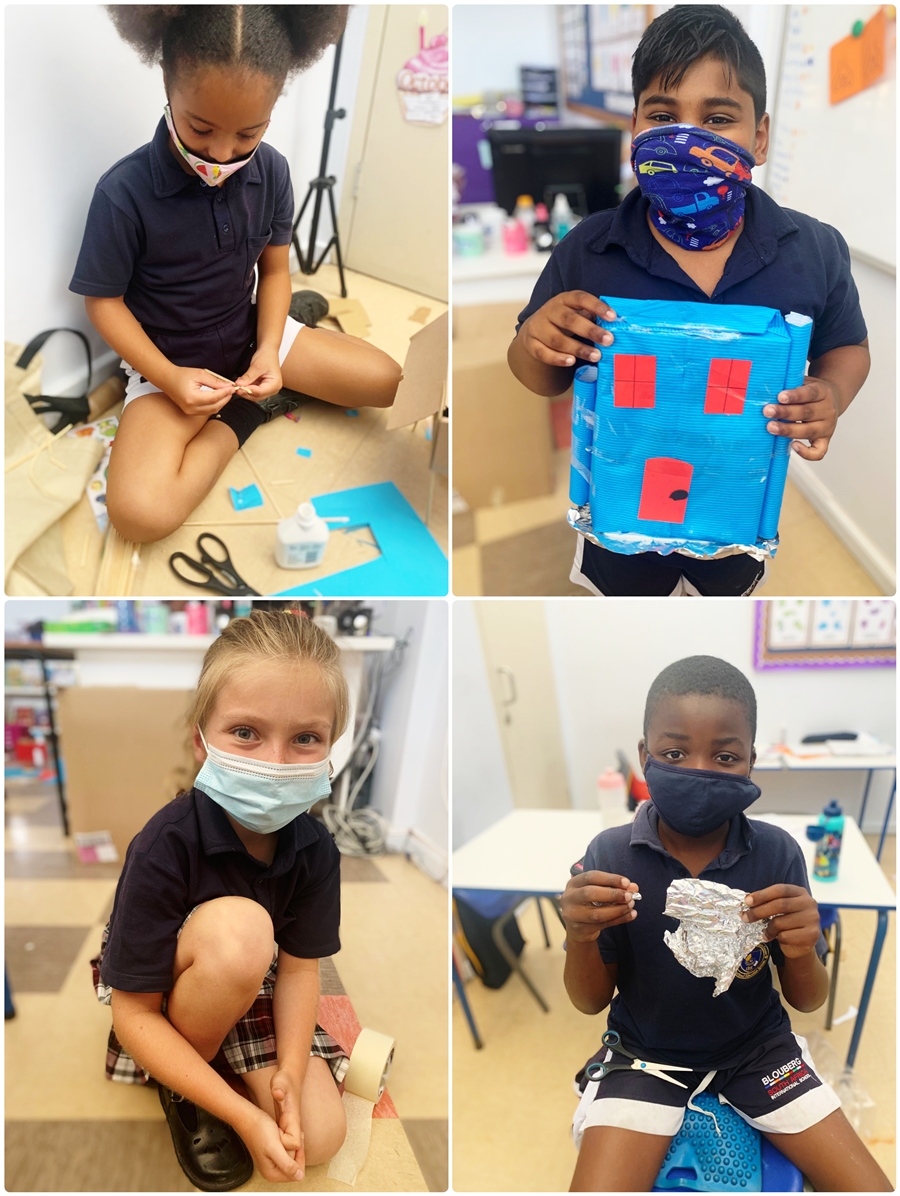
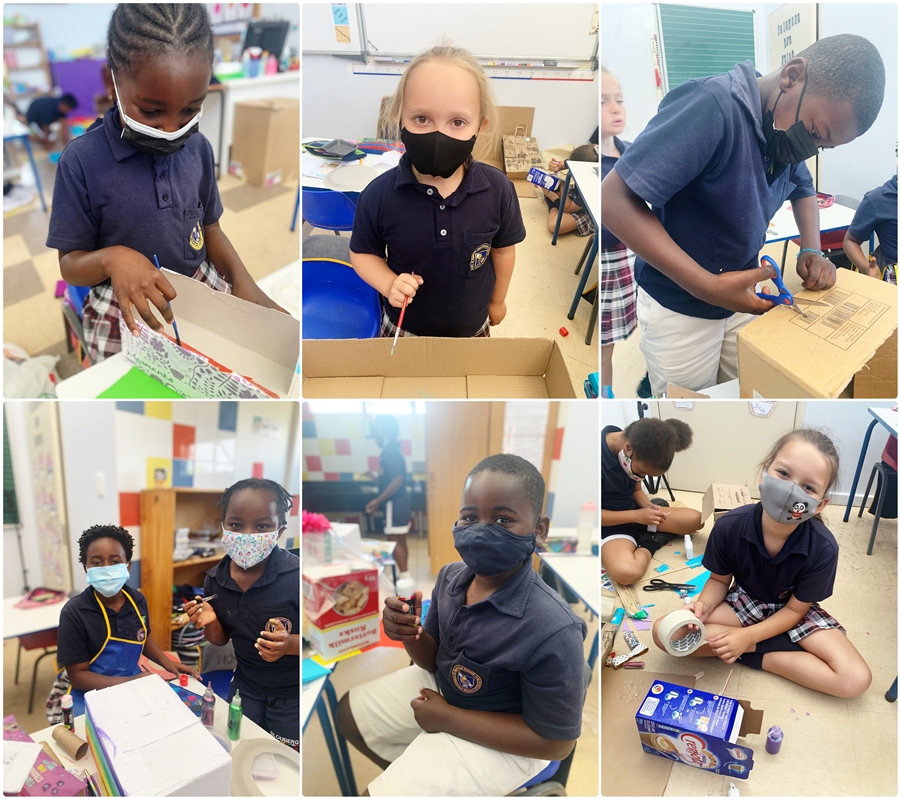
This term, for Art and Design, the Year 2’s have been learning all about what a living space is, and how it may look to different people and places all around the world. Throughout the term we have been looking at and learning about various kinds of homes as well as the kinds of people who may live there.
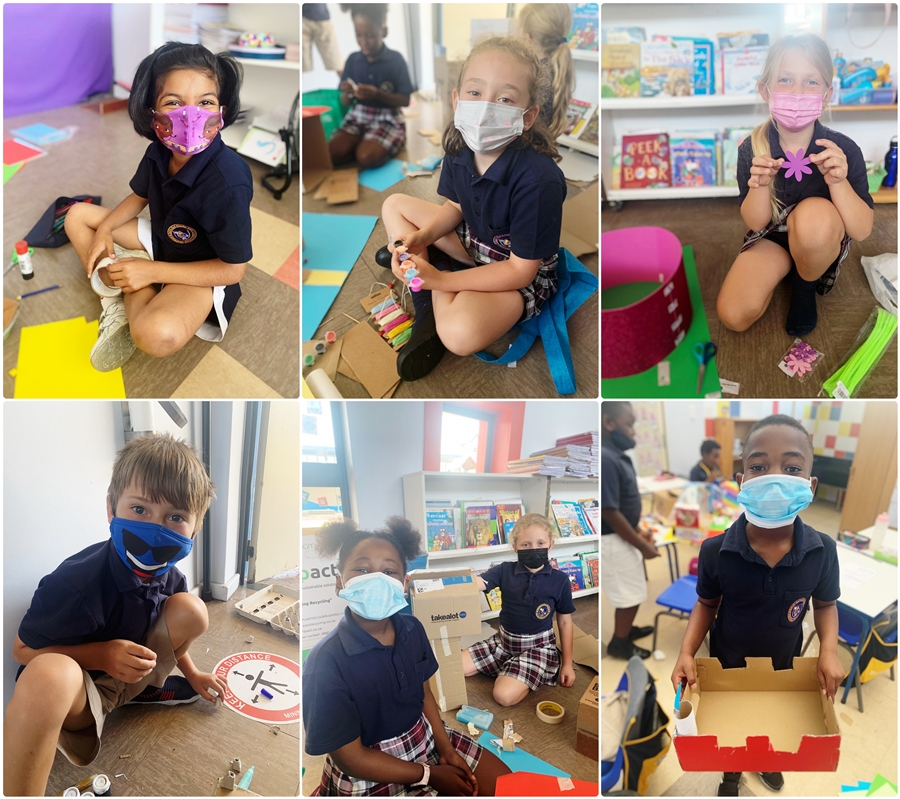
This week, each student was asked to choose the kind of home that interested them the most. Their task was to create a detailed plan showing how they would bring their chosen home to life. Then they were asked to bring all needed materials to school so they could begin the designing and building stage. We had all kinds of homes including, igloos, castles, boathouses, huts and even a tree house or two. So much fun was had!
Well done Year 2!
Siobhan Hendry
Year 2 Teacher
Read More

A Fun-filled Year of Growth and Learning in Foundation Stage
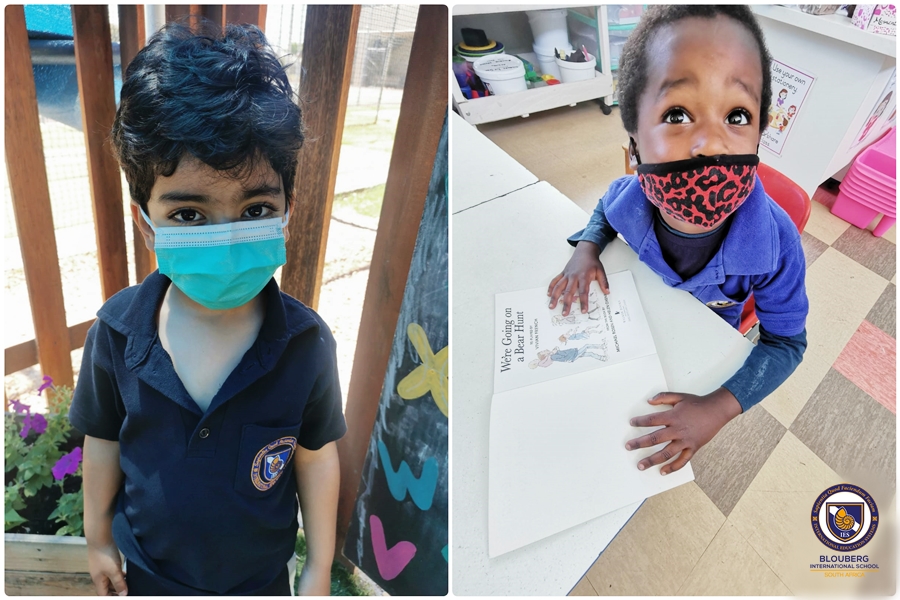
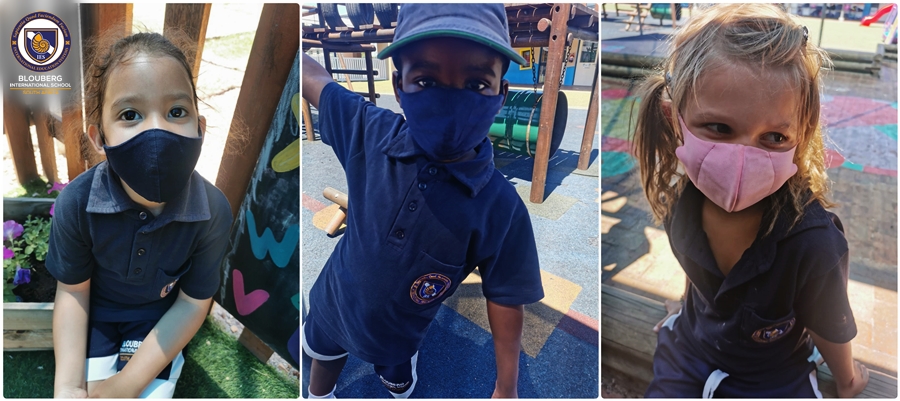
Our little ones have really grown from strength to strength this year with so much development taking place in all areas. It has been very rewarding to see them master many skills. Some have experienced the joy of writing their own name or cutting out a shape on a line. For others learning to read, write their own sentences or calculating sums has been a highlight.
On Tuesday, 30 November, the students will be meeting their new class teacher from the class they will be in next year. This is what the students are looking forward to: for 2022:
Nikraad Manoucheri: “I am looking forward to doing sums.”
Mackenzie Theunissen: “I am looking forward to doing homework.”
Liam Okebalidiet: “I am looking forward to learning to read.”
Joshua Mpako: “I am looking forward to finding new friends to play with.”
Isabella Oosthuizen:”I am also looking forward to making new friends.”
Myles Xegwana: “I am looking forward to meeting my new teacher and doing homework.”
Jadey Howes: “I am excited about wearing my new school uniform in Year 1.”
Arye: “I am looking forward to making new friends.”
Bronwen Nuthall
Reception Year Teacher
Read More
Monsters
The key to learning any language is practise. Therefore, oral presentations are a pivotal part of the German lesson and gives all the students the opportunity to show what they have learnt in class and to practice their pronunciation. This term in Year 5, we learnt all the vocabulary for naming and describing the body as well as describing the character of a person.
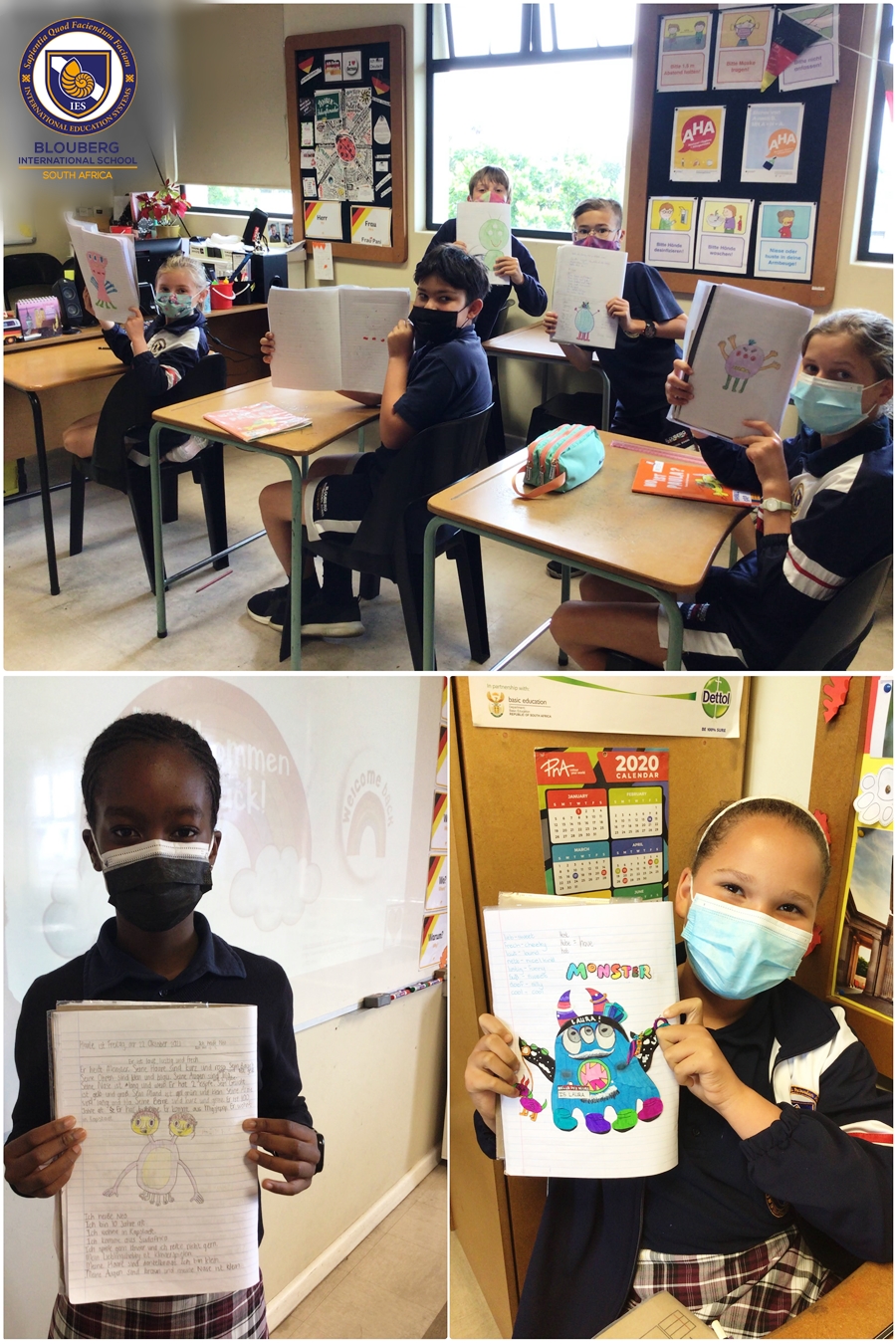
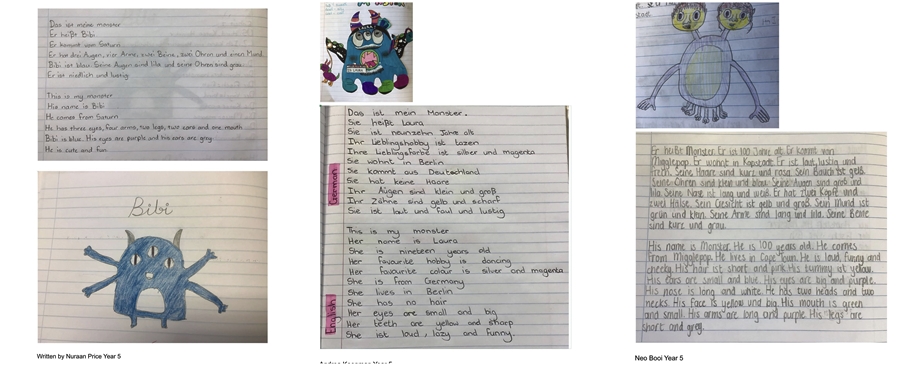
The project was to design a monster as colourful and different as possible and then to describe the monster using all the vocabulary including numbers, colours, plurals and grammar learnt in class.
The oral included a general introduction about the student and a description of their own body including colour of hair and eyes. A vital component to a good oral was using the sentence construction and vocabulary exactly as learnt in class so that all the students were able to understand the presentations.
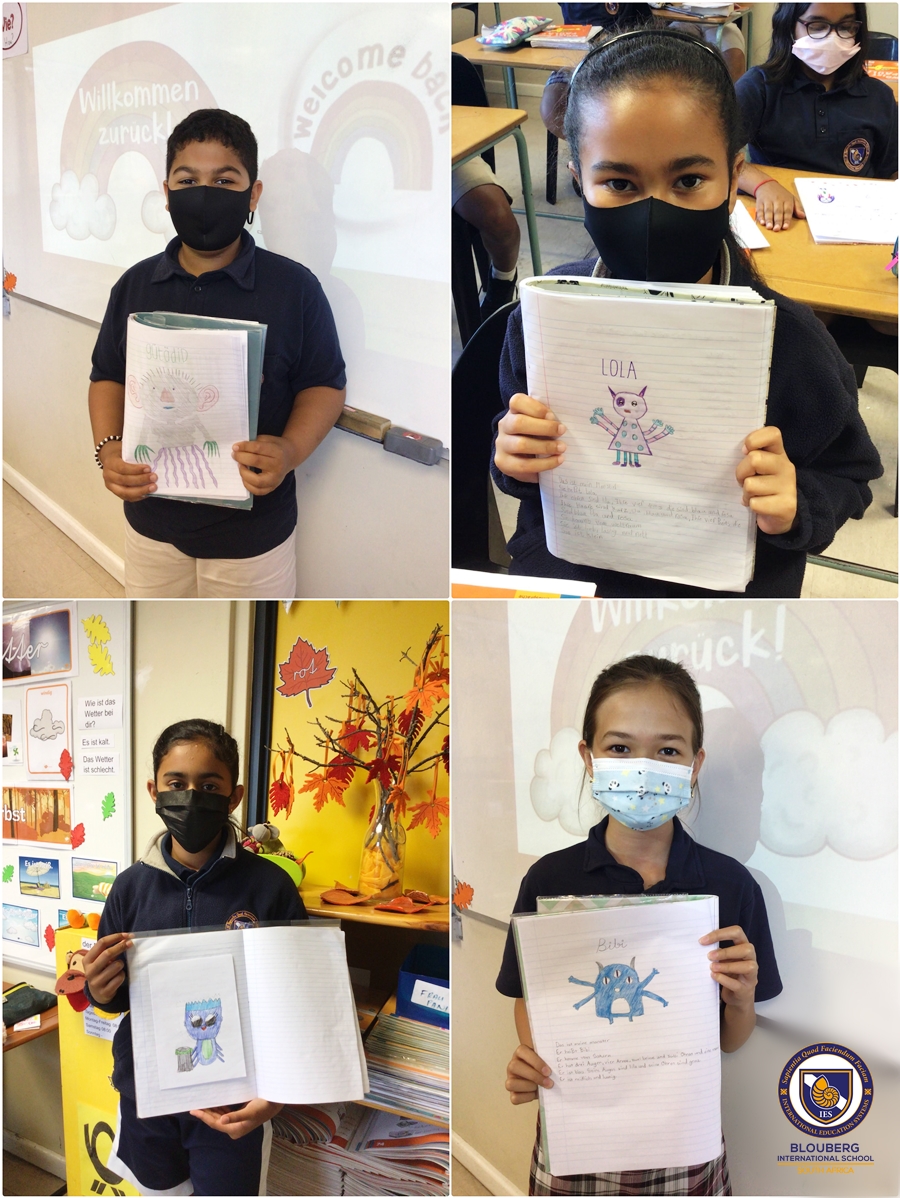
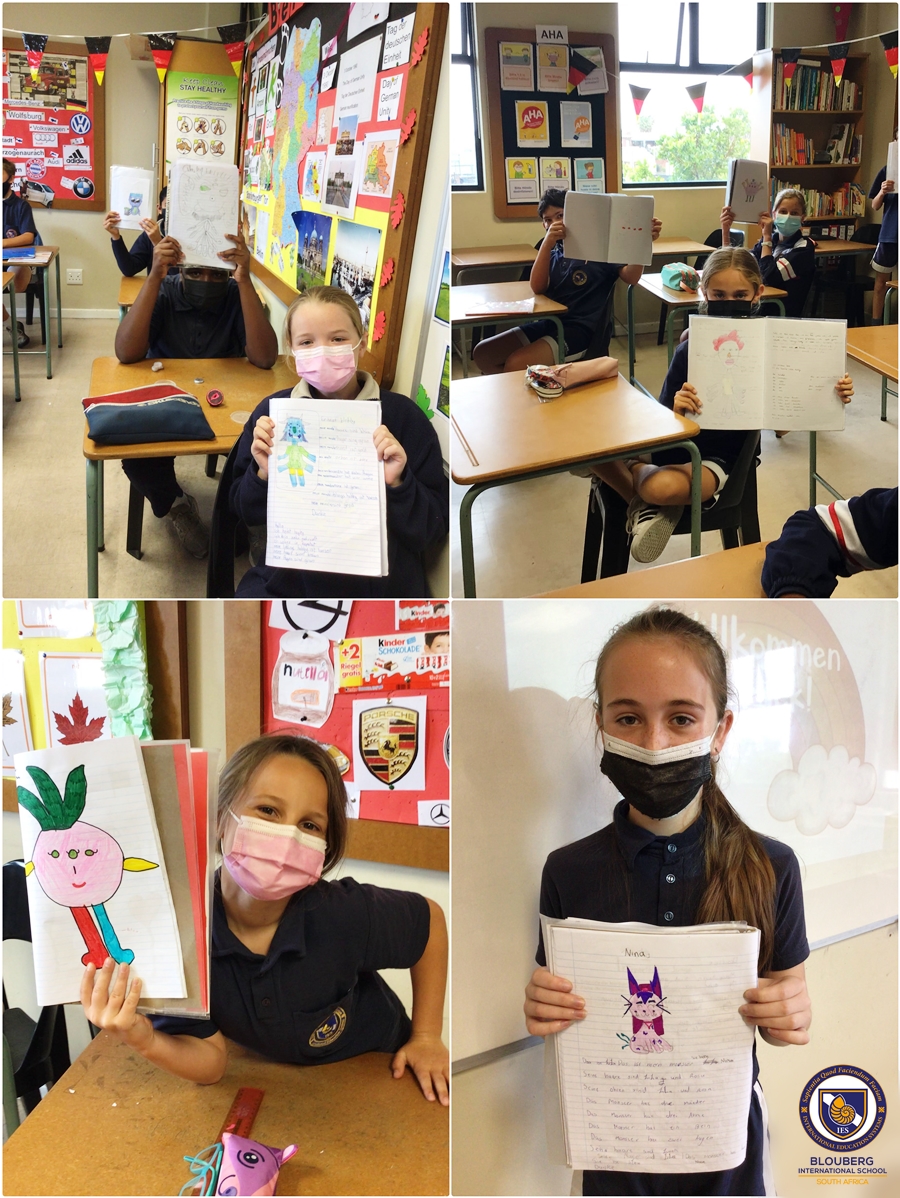
The Year 5’s invented many very interesting and original looking monsters and they were given very creative names. We were introduced to Gütädid, Laura, Bibi, Lola, Yu-de-cuta 1782, Nina, Blobby and Cerberus to name a few.
They came from very interesting places, as far as Pluto, and as close as Cape Town. They were very creative with all the colours then carefully naming them in German. They included many interesting amounts of body parts; 4 legs, 6 arms, 3 eyes, 2 heads and 2 necks. The description of the character of the monster included many similarities with the students themselves e.g. laut ,lustig und frech (loud, funny and cheeky). We also tested our listening skills, as the class was asked questions about the monster’s description to show understanding of what was presented.
Please see some examples of the students’ work in the photos attached. They did a great job in their presentations.
Well done Year 5’s and looking forward to continuing the journey in German with you next year in Year 6!
Frau Kerstin Pani
Primary School German Teacher

Read More