

Year 5’s Return To The Classroom
It has been quite a wonderful return of the Year 5’s this week. There was a little bit of nerves and worry, however it was quickly eclipsed by the excitement of seeing friends and teachers again.
Our first day back saw us going through our Covid-19 classroom rules and getting to listen to everyone share their experiences of Lockdown. Our online students then joined us and it was wonderful to see them all. We spent some time chatting and catching up.
Work continued full steam ahead and we got stuck into making Probability Spinners for our mathematics class. Both students, in class and online enthusiastically enjoyed this task.
Break times required a little creativity and fun social distancing games of “123 block”, handstand competitions, and even a little exercise.
We are exceptionally proud of our students, the ones returning and the ones online. Each of them have shown great tenacity and determination. It has not been easy to adjust and make changes to something they have known to be the normal, however their willingness to learn, stands stronger than any virus or pandemic state we may be facing.
To Quote Dr Seuss, “And I learned there are troubles of more than one kind, some come from ahead and some come from behind. But I’ve bought a big bat, I’m already you see. Now my troubles are going to have troubles with me!”
Nadia Mahomed
Year 5 Teacher


Padlet Has Me Thinking…
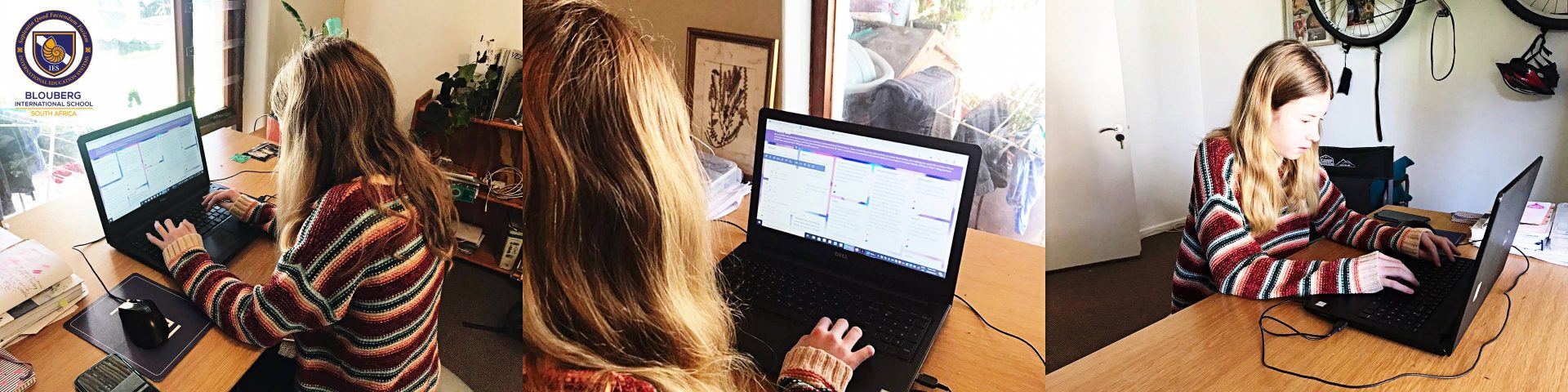
This term, the Year 6’s started off their English unit with poetry.
At the beginning of each term, I ask the students to brainstorm what they notice and wonder about a topic. As we are still online teaching, I created a Padlet Poetry Wall for the year group. Their first instruction was to post what they knew about the topic, what they want to know and then lastly, wait for their peers to post their responses. They needed to comment on at least 3 of their peer’s posts and provide them with constructive feedback.
The Year 6’s took this Padlet Poetry Wonder Wall and made it their own. Before I knew it quotes, pictures and even some of the student’s own poems were posted on the wall. After week 1 was completed, I had the students reflect on their week of learning and post one thing they had learned and one thing they were still unsure of.
The creativity and uniqueness of the Year 6 students never fails to astound me, and I am very impressed by how quickly they adapt to a new online tool. As we progress with our Poetry Unit, we will keep using our Wonder Wall to showcase our learning journey.
Katherine Nel
Year 6 Teacher
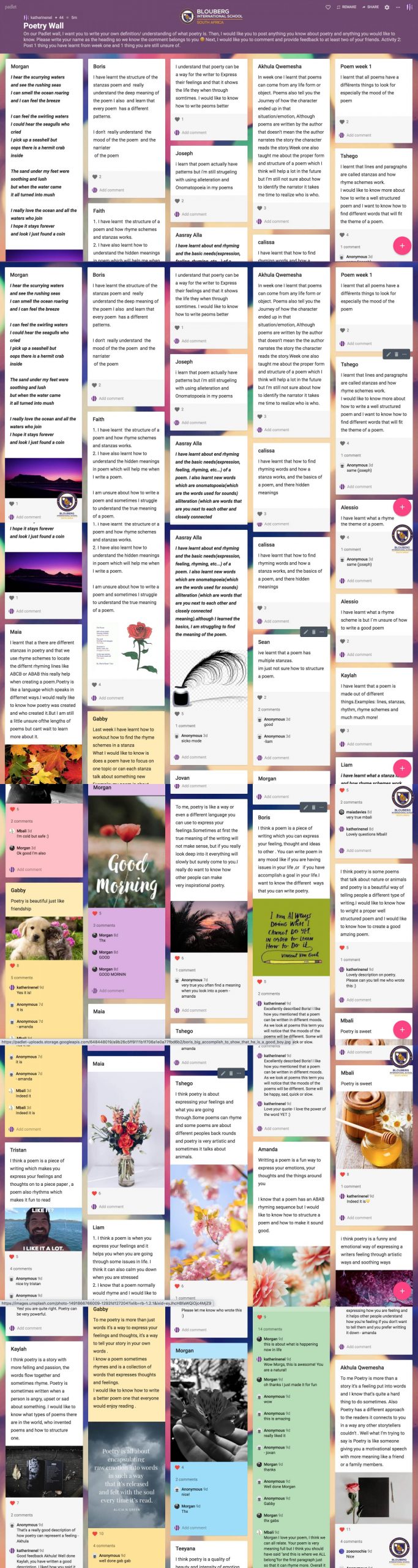
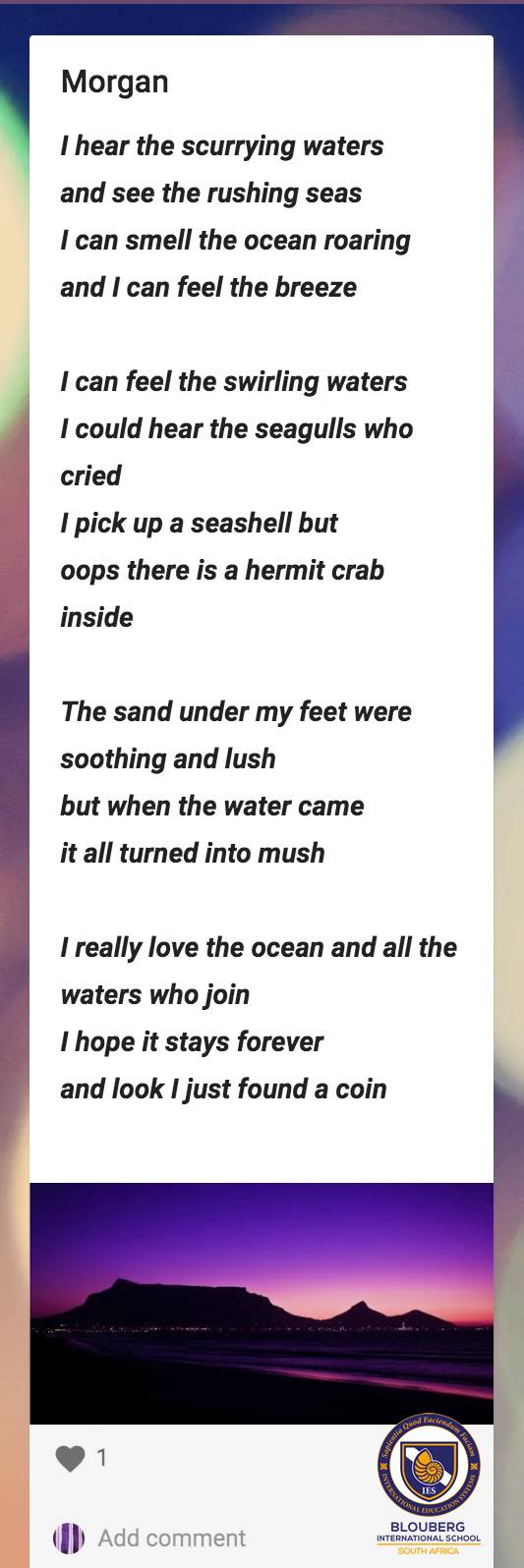
PHOTO: Morgan Glanville created her own poem, using the inspiration of water that we are currently exploring as a theme in our English Unit.

Coming Together
As BIS opens its doors for Term 3, I am certain that we are all excited, and perhaps a little nervous.
With the precautions we need to take to keep us all safe from Covid-19, I suspect that students, staff and parents alike are wondering what the school version of the “new normal” is going to be like. We are prepared for the technicalities of the term with masks, social distancing guidelines, hand sanitiser and a plan for hybrid teaching, but school has never just been about the technicalities of getting an education. One of the amazing strengths of our school is that it is a strong community, full of people who come together to learn, helping and supporting each other all the way. It is a community that emphasises the African Philosophy of Ubuntu meaning, “I am because we are.”
I see this sense of community everywhere – in the learners who asked me in my first Google Meet session if I could show them the classroom, in the teacher who turned off a projector so her diabetic colleague wouldn’t have to touch the button, in the students who are greeting each other so enthusiastically and so carefully, who are eager to share with their classmates after their holidays, in the parent who checked that I was keeping warm before asking me about the new term, in the teacher who told me her plan for how she is going to make sure that each child in her class feels welcome and loved as they begin to Term 3.
So, beyond our new regulations and systems, beyond our masks and hand sanitiser, my challenge to the students, staff and parents of BIS is this:
We are living in a time of uncertainty, of unfamiliar rules, and unintuitive distance from each other. Let’s make sure that these challenges bring us together instead of driving us apart. Let’s build the “new normal” out of little kindnesses and big hearts, and support each other as we do so.
Let’s do this, BIS!
Hannah Kirkaldy
Year 5 Teacher
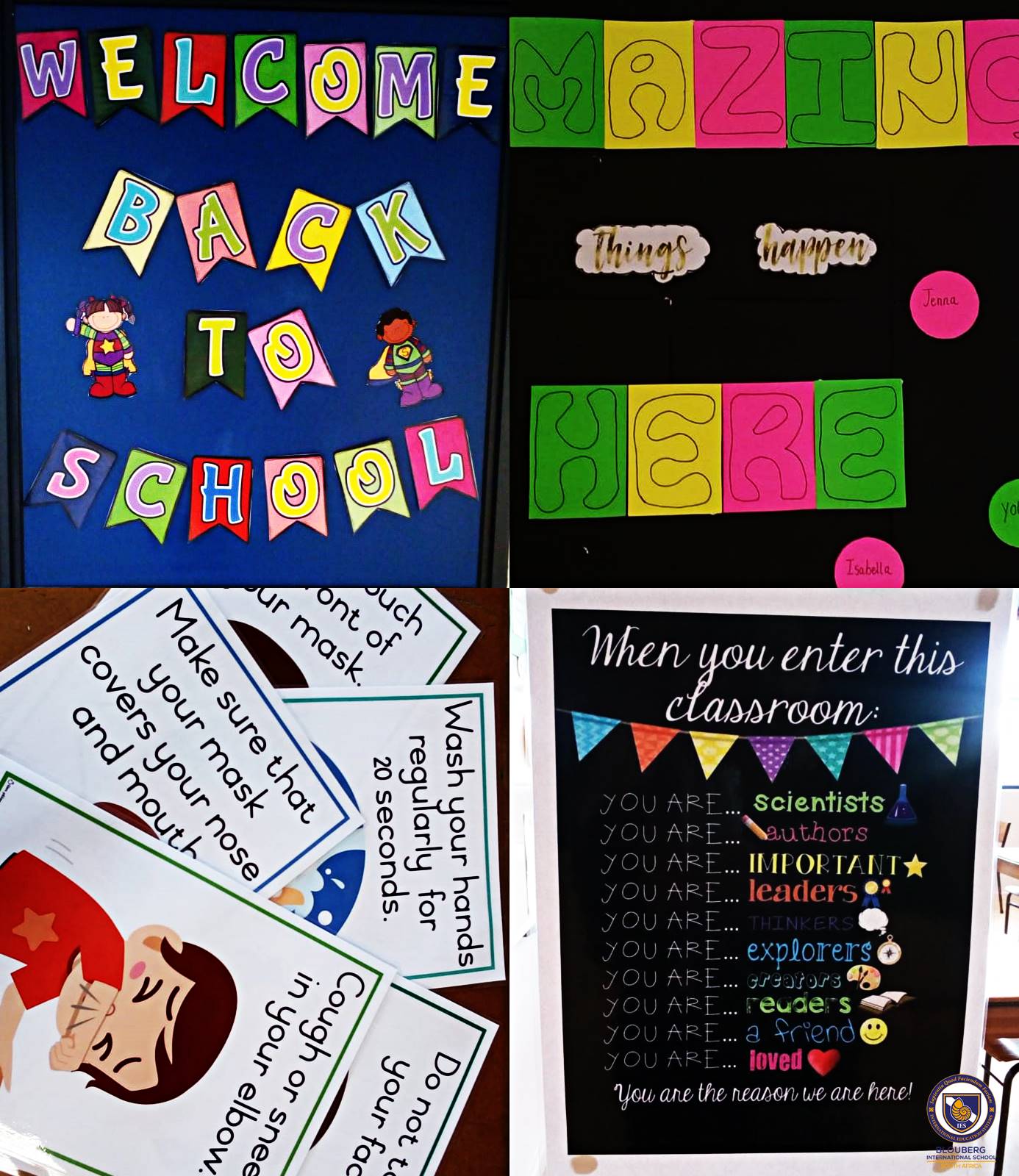
A Big, Warm Welcome Back!
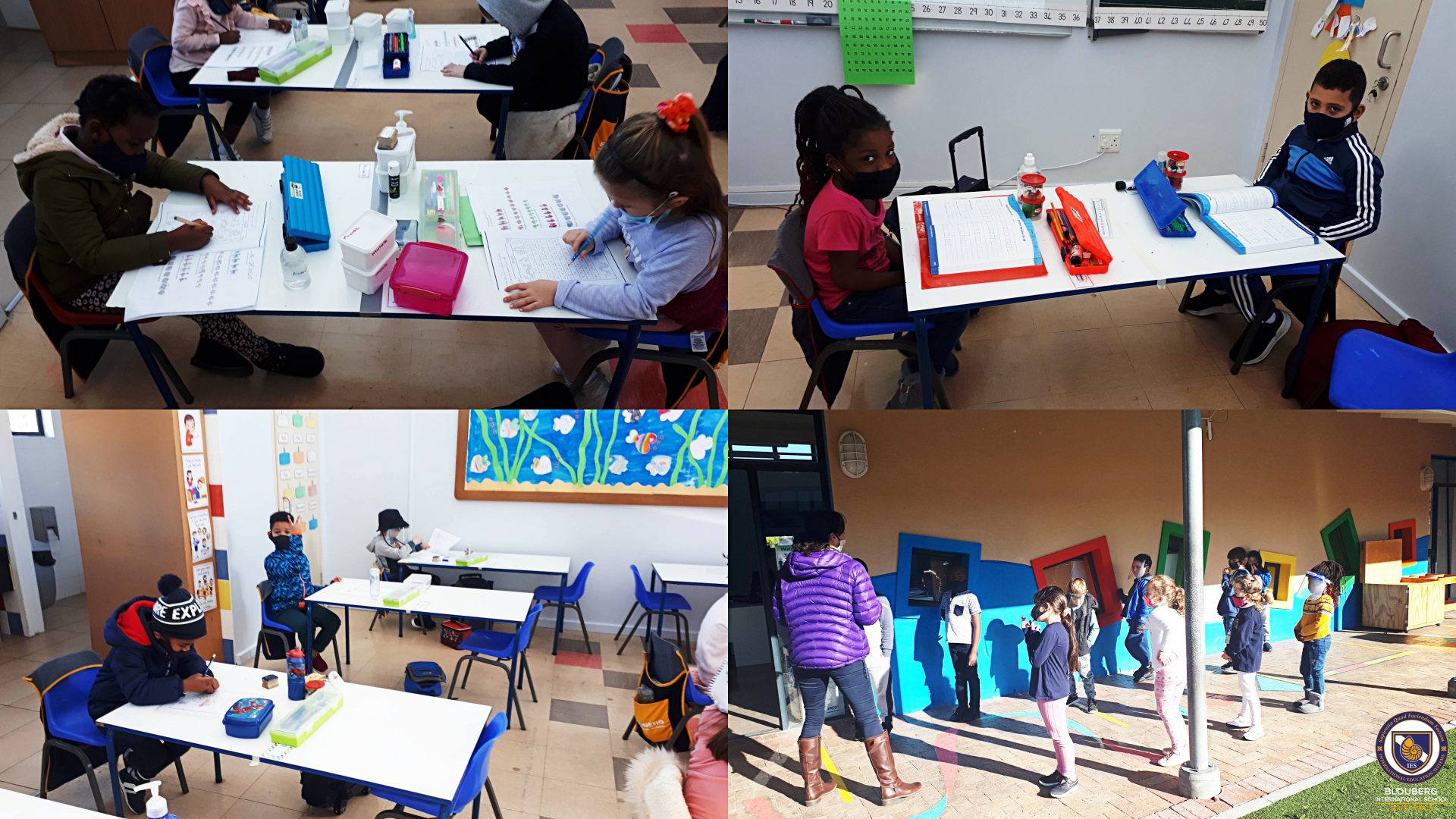
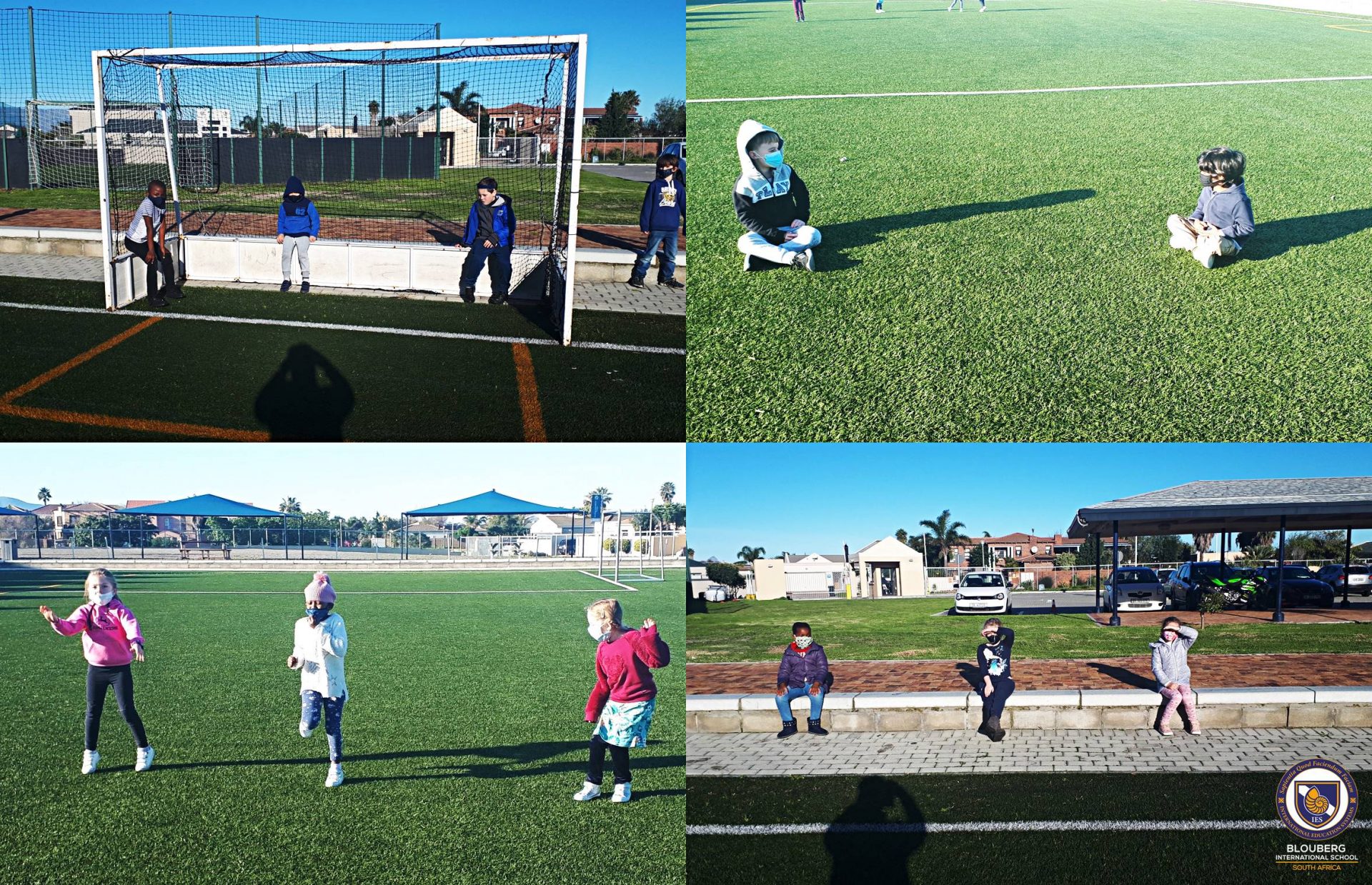
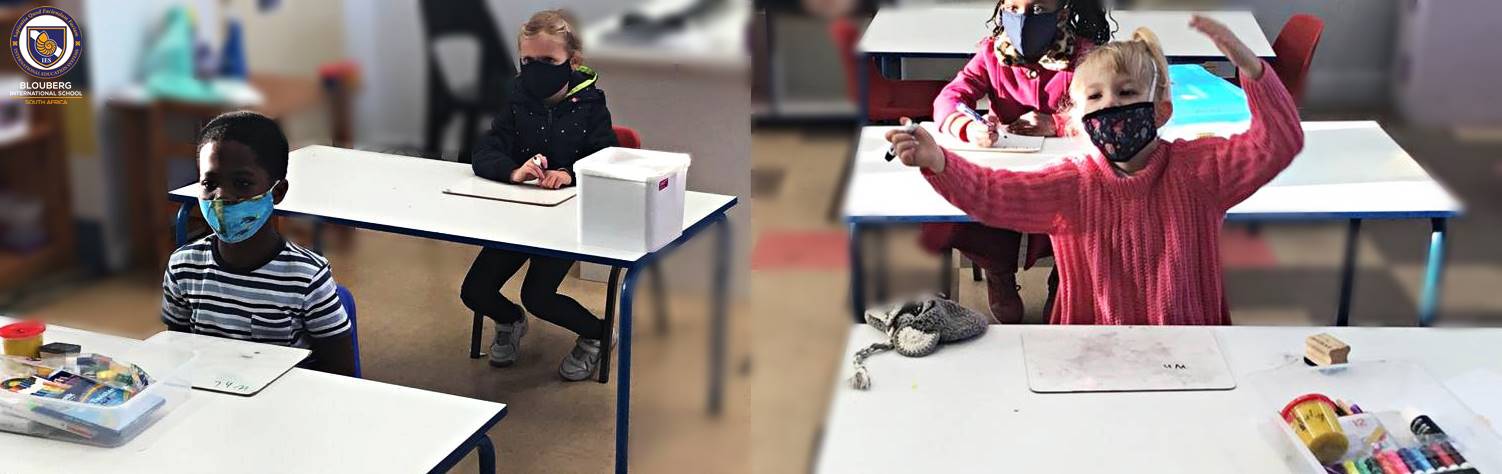
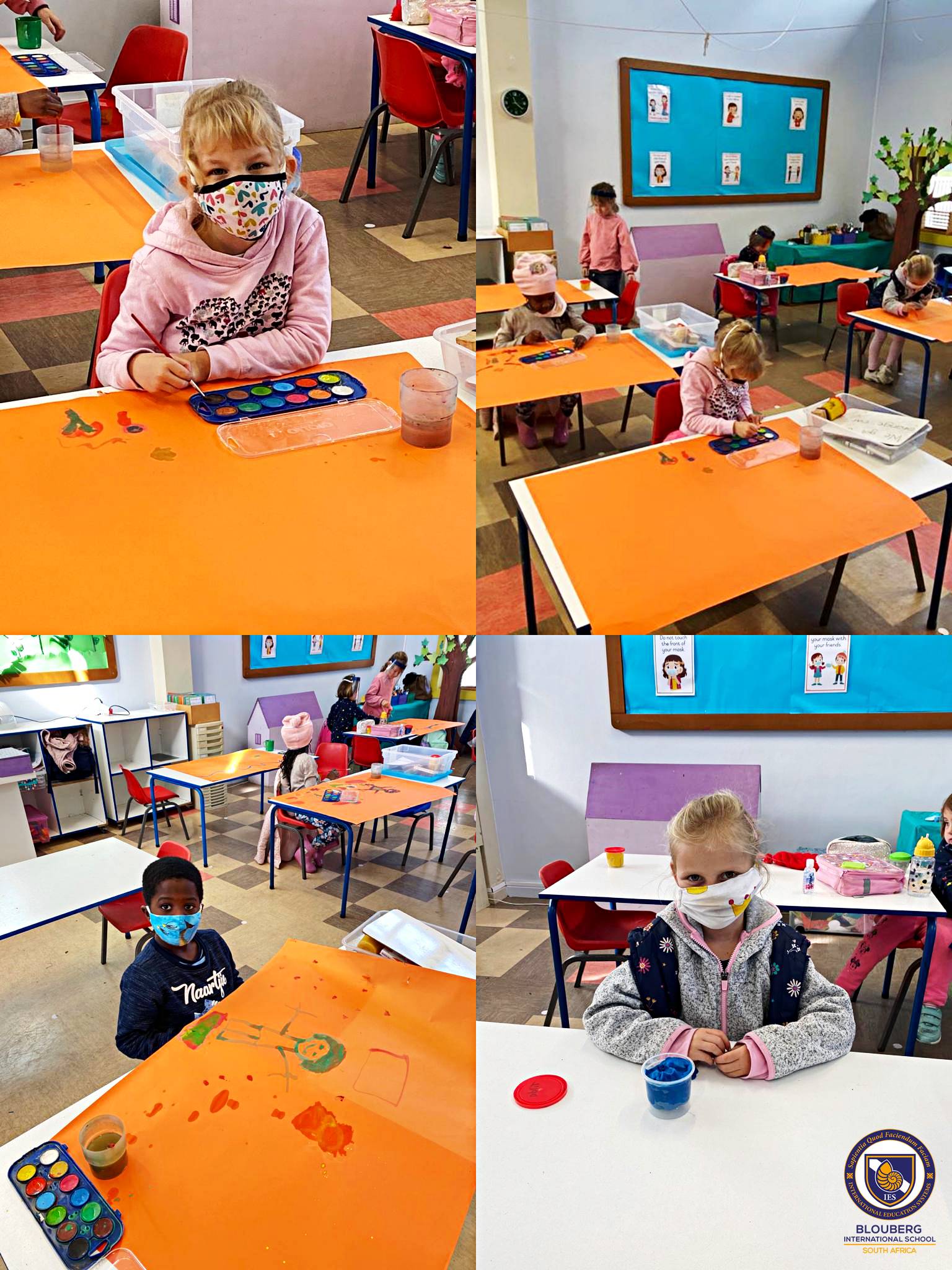
After much uncertainty from government, the Department of Education finally gave the nod for some grades to return to school. The good news came during the holiday and much needed to be done to prepare for the safe return of the children.
The school’s management team and staff worked hard to “reset” the school facilities to ensure COVID compliance for the safety of the children and staff. Deep cleaning, PPE, sanitizing and social distancing assurance became the new vernacular between teachers and staff.
I was certainly looking forward to some ‘normality’ in my life, and I am certain there are many others that felt the same.
The school break had finally come to an end and many children returned to school on Tuesday. It has been wonderful to hear the silence being filled by the laughter, banter and excitement of our children again. Many parents seemed just as excited as their children. Who would have thought that?
The children have done so well keeping their masks on at all times, sanitizing and washing hands constantly, and keeping social distance. Even during break, they still managed to have so much fun with their friends. It has been such an eye opener to realise how easily they adapt to change.
Well done to our SUPER STARS!
Wendy Menton
Year 1 Teacher
Back To School – Foundation Stage
Monique Crawley
Reception Teacher
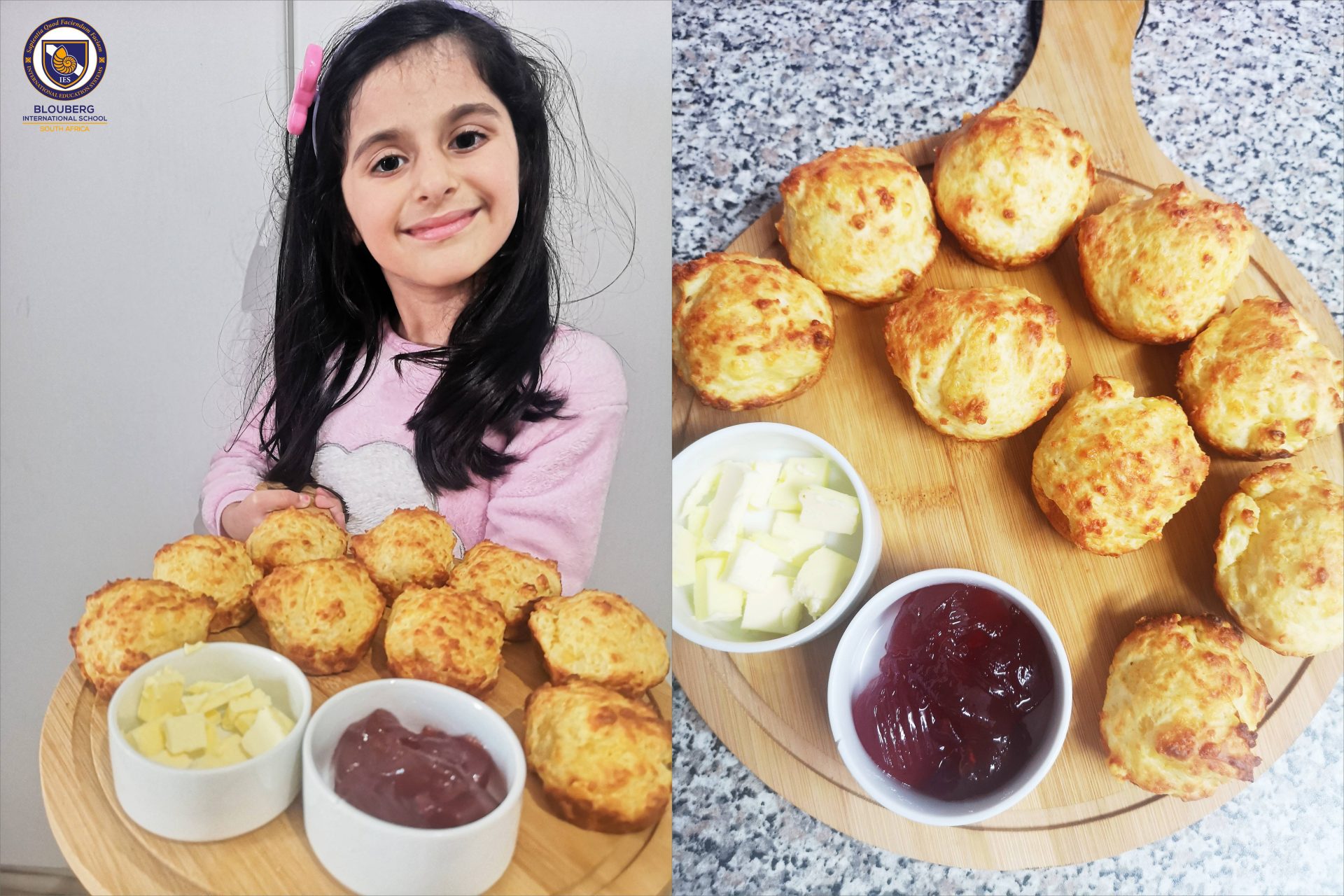
Master Chef Class
During the second term the Year 1 classes have had individual, small group and class Zoom meetings.
The class zoom meetings have been fun times to see friends, share news, play games and even dress-up. The students have really enjoyed seeing their classmates even though they can’t play together it has been a way to connect with each other. As their teacher it has been a chance to see the class and catch up with what they are doing and how they are coping.
On Friday, 5 June my class enjoyed another Master Chef class. This time they watched a cooking demonstration on how to make Cheese puffs. The students then received the recipe via email and were encouraged to bake some for their families. Judging from the photos I received, they are all budding chefs!
Ann Cordner
Year 1 Teacher
CHEESE PUFFS RECIPE:
1 cup flour
1 tsp baking powder
1 cup grated cheese
Salt and pepper
Mix these ingredients together.
1 egg (beat with a fork) add about half a cup of milk.
Mix with dry ingredients. Spoon into a muffin pan and bake at 220 for 10 minutes.
Recipe from: Gabriel Bamani
Year 1 Student

My Own Filter
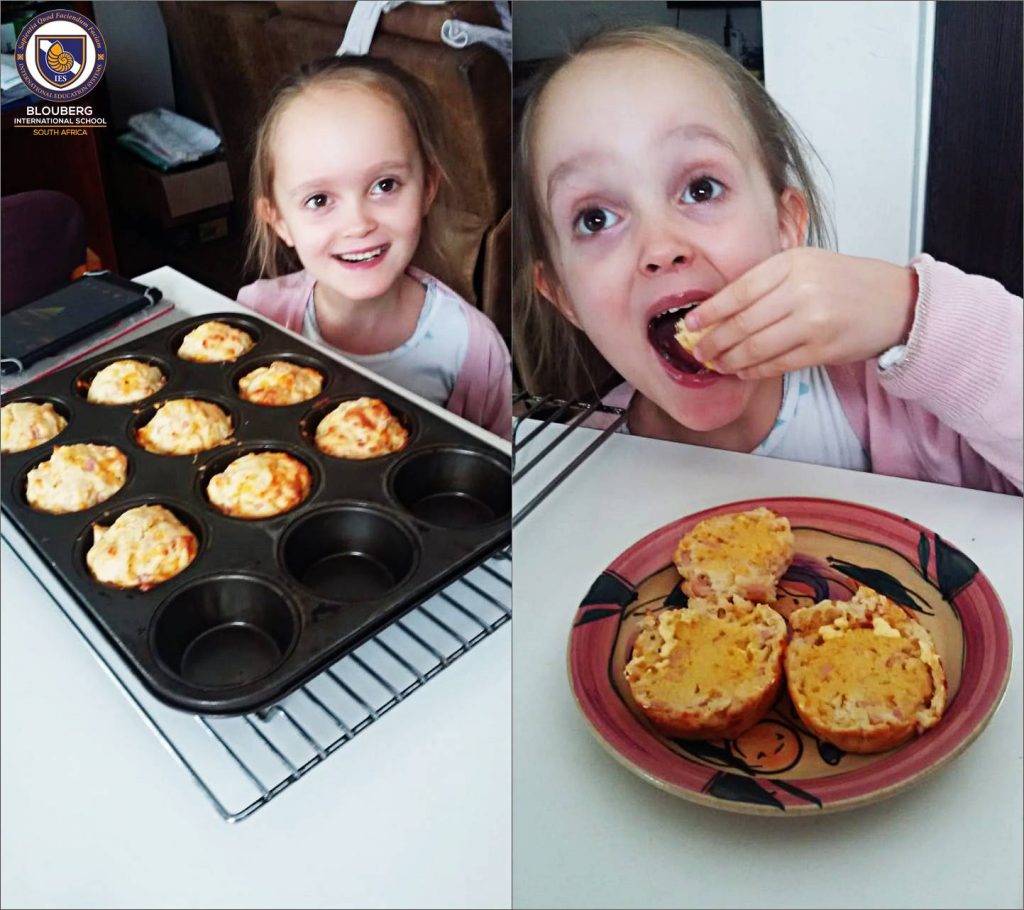
To end off our science chapter, “Material Changes”, for the term the Year 6 students explored how to make their own filtration system. Their goal for this activity was to discover that ground materials can clean and purify water before it is returned to the surface.
The criteria for the investigation was that their filter system needed to be durable and easy to use, have three layers and the layers needed to be made of ‘natural’ materials that they could find in their yards or nearby park. They could also make use of recyclable materials.
Let’s see what the Year 6’s had to say about their experience:
I really enjoyed my filtration project. It was so fun making the filter because you had to make important decisions on how you were going to layer your materials. It was really fun and I hope we get something like it again. – Maia Davies
What I liked most about the project was collecting all the materials especially the gravel because people were looking at us very weirdly. I enjoyed all of it and it was a great experience. – Glanville Morgan
What I enjoyed the most was experimenting with the different materials and finding out if they filtered the water. Knowing that a material that I tested worked and filtered the water made me fill with joy. I learnt that if natural filtration did not exist most of the fresh and clean water we have would be dirty. I also learnt that different materials have a different impact on how it changes the water. – Saumya Maharaj
I enjoyed making the actual filter, choosing what to put inside it and what should go in first. I learnt about how natural items ,like sand and rocks, can actually clean dirty water and about how charcoal removes toxins from dirty water without removing important minerals. – Faith Chivaka
The thing that I have enjoyed the most was how filtration works. We have learnt that the filtering system removes redundant or unwanted particles in dirty water. Filtration is a process used to separate solids from liquids using a filter medium that allows the fluid to pass through but not the solid. – Teeyana Shaik Mahomed
We would like to congratulate our students for doing a phenomenal job at completing this project.
Katherine Nel
Year 6 Teacher
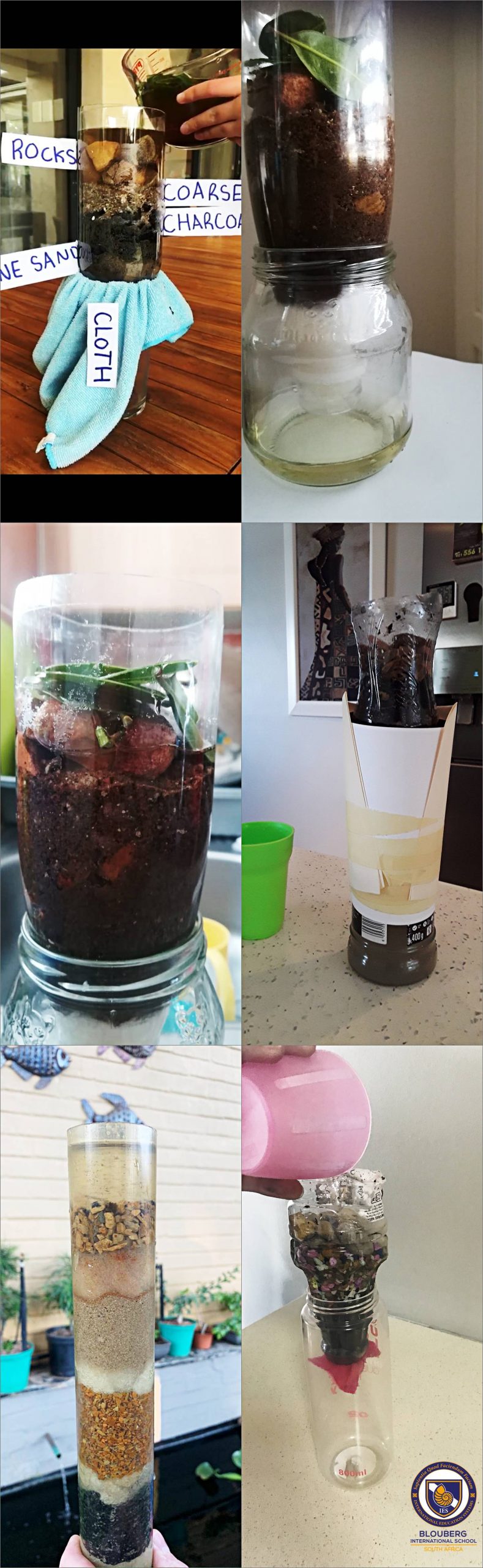

Year 4 – Online Can Be Fun
Some of the things we do on Fridays include:
1. We dress up, including themes such as funky hair/hats, bring a book, superhero’s, cool shades, character day and wear your favourite colour.
2. We played online games such as scavenger hunt, funny face screenshots, charades and amazing race.
3. We go on virtual tours all over the world. Recently, we visited the Amazon, Universal Studios Orlando, NASA and Pirates of the Caribbean.
4. We learn to draw. Our Year 4 students have created amazing drawings following ‘Art Hub’ on YouTube.
5. We do some amazing art. Learning about Picasso and Cubism and One Point Perspective.
6. Story time. We read some inspirational books using ‘Storyline Online’ on YouTube. We listened to Oprah reading the Hula Hoopin’ Queen and practiced our own Hula skills. We also listened to the inspirational story ‘The house that Jane built’ and our students shared some ideas of what they can do to help people in need.
We miss our friends and we miss our school, our teachers miss us too, BUT it hasn’t been all bad and we will get through this stronger than ever.
Marlize Keyser
Year 4 Teacher

A New Adventure With Online Learning
“The only way to make sense out of change is to plunge into it, move with it, and join the dance.” – Alan Watts
The Year 3 students have tackled learning from home with great eagerness, bravery and enthusiasm. There were a few expected hiccups along the way, and it has taken a few days for students, parents and teachers to adapt to this different style of learning. However, this is a wonderful opportunity for all to truly discover what they are capable of and to challenge themselves.
Our aim in Year 3 is to try and get the students to complete all tasks as independently as possible. We have tried to achieve this by simplifying the tasks, making it interactive and structuring the lessons in a clear and concise manner.
We do realise that our Year 3 parents are also lending their children a hand in helping them to understand exactly what to do and aiding the students to achieve their true potential, despite having their own work to complete from home. Thank you parents – you are truly appreciated!
This past week our Year 3’s have engaged in several exciting activities such as designing and creating their very own frame out of foil, conducting a cloud experiment and creating a food groups display.
We are so proud of all of you and can’t wait to see you back at school.
Alexia Holmes
Year 3 Teacher
Let Them Play!
As we face the COVID-19 pandemic, we are all confronted with uncertainty. Research tells us that uncertainty increases anxiety and worry in both children and adults. We cannot remove much of the uncertainty we currently face, but what we can do is look for opportunities to feel some certainty and control. For this reason, following a normal routine and having some structure to the day is likely to be useful for kids and parents.
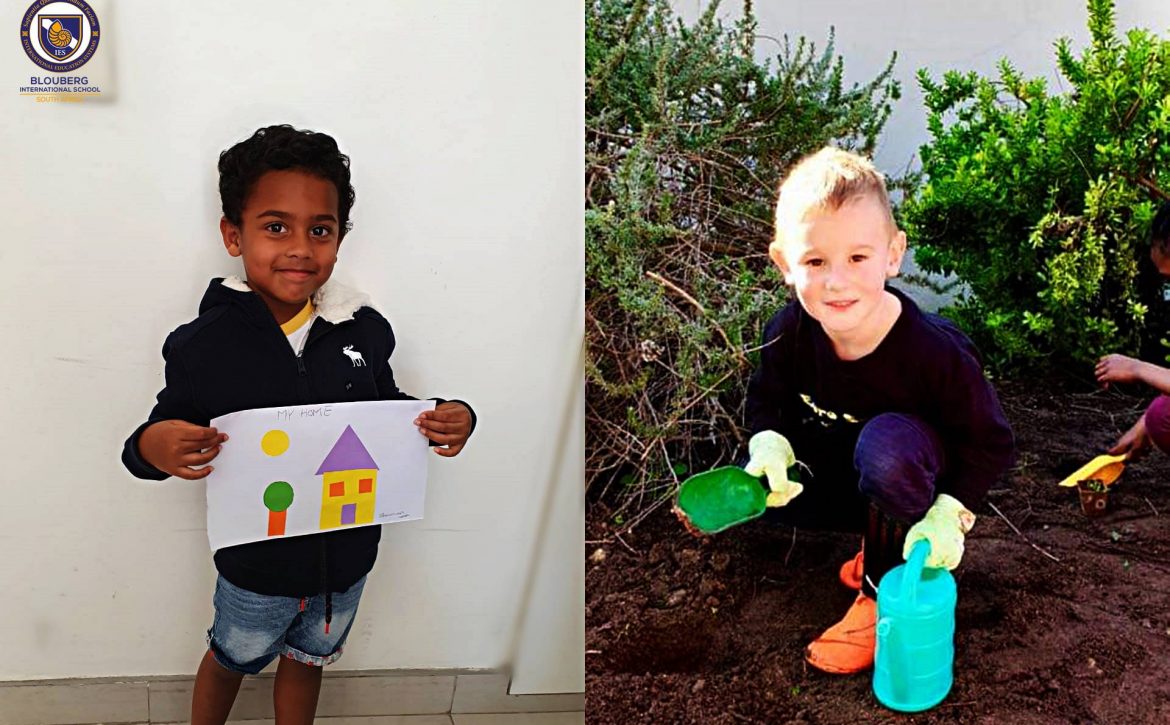
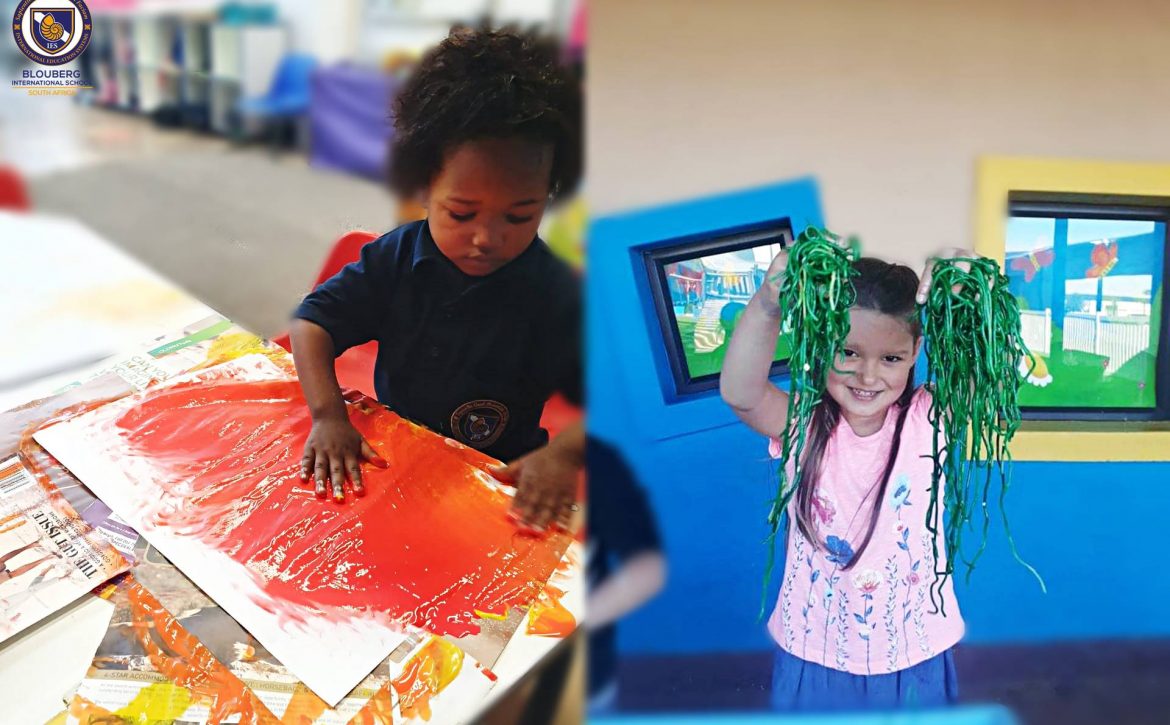
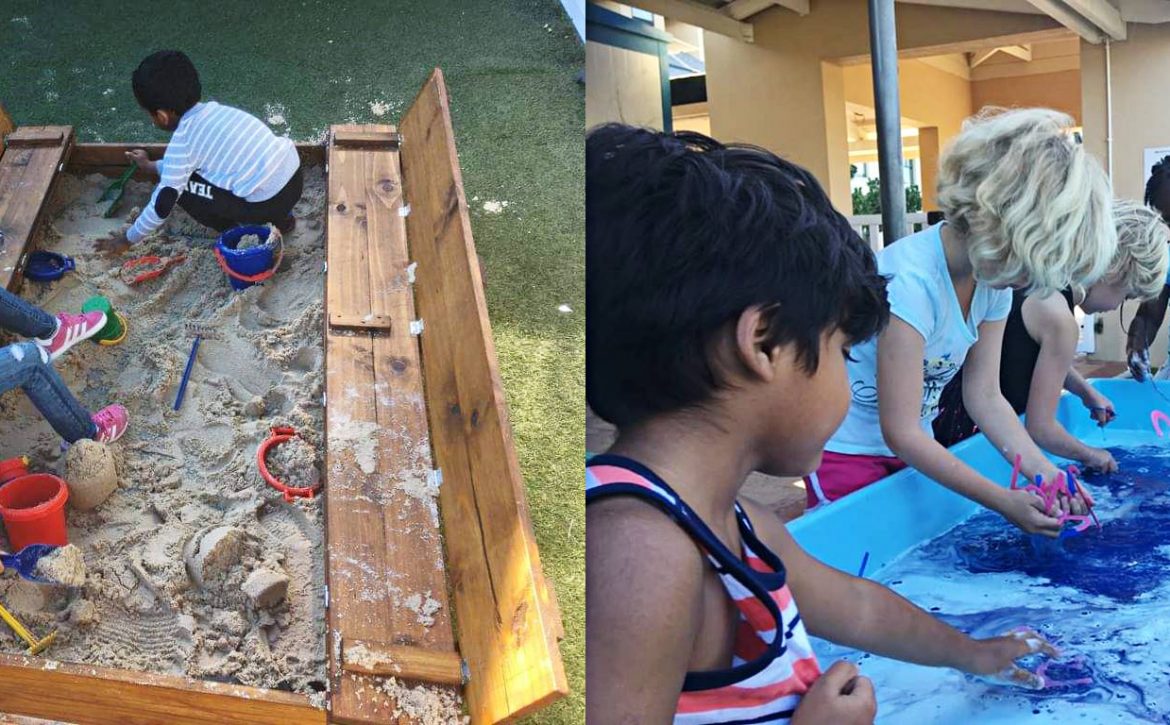
Attempting to school children at home puts pressure on parents at a time when anxiety is high. This is not helpful for them or their children. An alternative is to let the children play at certain times. The benefits of play are ranging. When children have more opportunities for play, they have better physical and mental health. It significantly decreases their stress levels, and more importantly it facilitates learning. Examples of play activities include building dens, dressing up, play dough or sensory play.
What is sensory play?
Sensory play includes any activity that stimulates a young child’s sense of touch, smell, taste, sight and hearing, as well as anything which engages movement and balance. Sensory play is not video games and TV. We use our sight and our hearing for those activities but sensory play involves actively engaging the senses to discover and explore the world around us.
Some examples of sensory play:
Sensory play for toddlers– observing light and shadow created by torch light on objects of different sizes, or watching colours mix and the patterns formed by finger painting.
Sensory play for pre-school aged children- creating shapes and playing with sand, or playing with musical instruments and listening to the tone and pitch as they strike or blow through instruments softly or forcefully.
The benefits of sensory play:
Many well-known early years pioneers such as Montessori, Froebel and Goldschmid recognised the importance of sensory play as a fundamental experience for a child’s growth and development. Such benefits include:
- Experimentation skills and recognition of the sense used during the exploration of different items.
- Attention and concentration by focusing on the given stimuli, such as exploring a light box or torches with coloured cellophane.
- Increased hand/eye co-ordination and both gross and fine motor skills.
A lack of sensory play leads to the brain not getting accurate information about its surroundings. As the child gets older, experts typically refer to this as a sensory processing disorder. A lack of sensory play may lead to a child with anxiety and poor coordination. It can also lead to difficulty learning and paying attention. It’s important to give the child ample practice in all the senses.
That is why its best to let them play!
Martie van Dyk
Reception Year Teacher